
Factory Code Decryption: Understanding Official Panerai Serial Numbers and References (2026)
Unraveling the intricate system Panerai employs for uniquely identifying its timepieces through official codes and secure databases is crucial for any serious collector or prospective owner. This isn’t just an academic exercise; it’s a fundamental step in authenticating a significant investment, often involving a genuine vs non-genuine finishing comparison, and understanding the provenance of a watch.
The Foundational Architecture of Panerai’s Identification System
Panerai’s commitment to meticulous traceability is evident in its multi-layered identification approach. From the moment a raw material enters the workshops to the final assembly and distribution, each component and ultimately the complete timepiece is assigned a unique identifier. This system is designed not just for inventory management, but as a robust defense against the rampant counterfeit market that has plagued the brand. Every genuine Panerai watch carries a distinct combination of reference codes and serial numbers, etched into the case and recorded in digital and physical documentation, forming an immutable chain of custody.
Evolution of Panerai’s Reference and Serial Numbering Conventions
The journey of Panerai’s coding structures reflects its rich history, marked by significant shifts from its military origins to its modern luxury status under Richemont. The pre-Vendôme era (prior to 1997) featured more rudimentary, often sequential numbering. The Vendôme era (1997-2000), and subsequently the post-Vendôme/Richemont era, brought about a more sophisticated, standardized system that we largely recognize today. Early models might simply have a sequential number, while later pieces adopted the “PAM” reference system, followed by specific series letters and individual serial numbers. Understanding these historical shifts is vital, as a legitimate pre-Vendôme piece will have a vastly different coding convention than a contemporary Luminor.
The Imperative for Official Standardized Codes in Authentication
In a market awash with counterfeits—estimated to be in the millions annually for Panerai—precise coding isn’t just a convenience; it’s a necessity. Official standardized codes prevent misidentification and form the bedrock of genuine product verification. Without a consistent and verifiable system, the value and integrity of the brand would collapse. These codes act as the watch’s DNA, allowing authorized dealers and service centers to cross-reference against global databases, confirming manufacturing details, movement type, materials, and even service history. Any deviation or inconsistency in these codes is an immediate red flag, often signaling a counterfeit or a tampered timepiece.
Expert Authentication Insight
For an initial legitimacy check, I always cross-reference known historical reference code patterns against current official Panerai documentation. For instance, if I’m looking at a “vintage” PAM XXXX, I’ll consult older catalogs and forums known for their meticulous historical data. Does the series letter align with the claimed production year? Does the reference number correspond to the stated movement and case material for that specific period? This quick alignment of known patterns with the watch in hand can weed out obvious inconsistencies before diving into deeper physical diagnostics.
Decoding the Panerai Reference Code (P. REF) Structure
The Panerai Reference (P. REF) code is an alphanumeric fingerprint for each watch model, offering a granular breakdown of its identity. Think of it as a condensed specification sheet, where each segment tells a story about the watch’s design and mechanical attributes.
Identifying Model Family and Case Designators (e.g., PAM, Radiomir, Luminor)
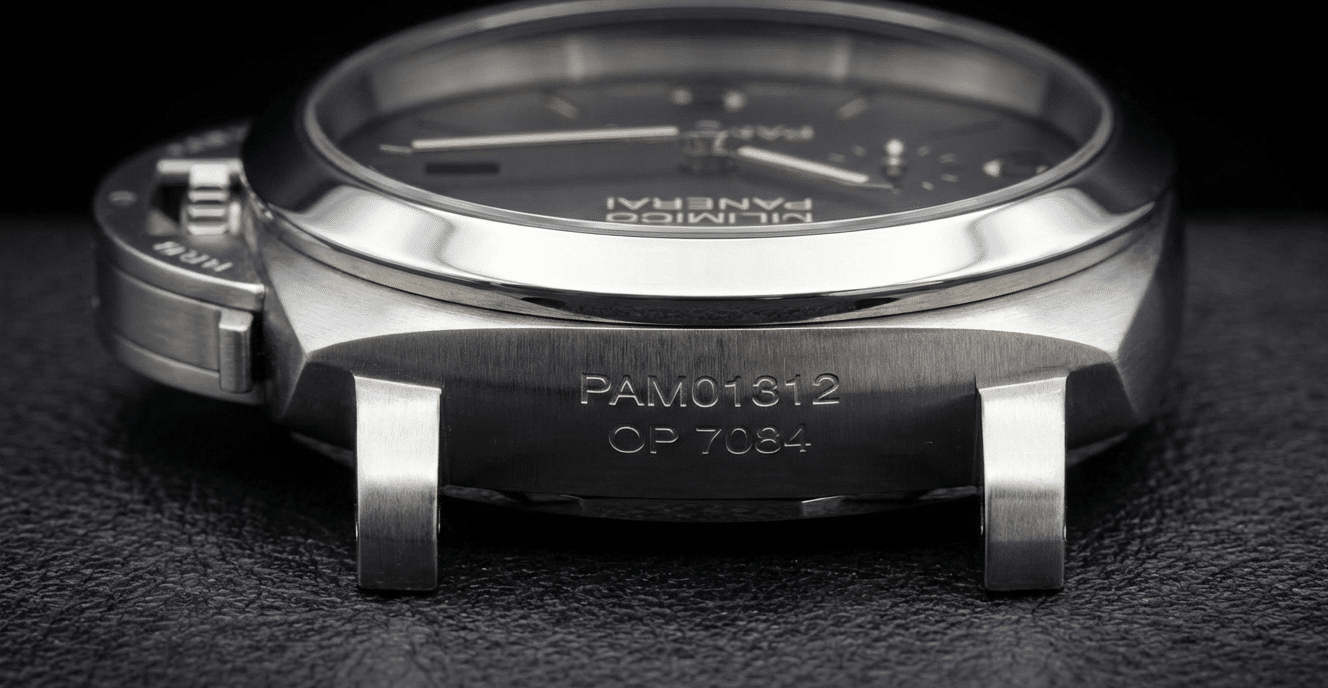
The initial characters in a Panerai reference code, most notably “PAM” followed by a numerical sequence, are the primary indicators of the watch’s fundamental collection and case architecture. “PAM” stands for Panerai Model. The subsequent numbers typically categorize whether it’s a Luminor, Radiomir, Submersible, or Luminor Due. For example, lower PAM numbers often denote classic Luminor or Radiomir models, while higher numbers tend to represent newer releases or more complex variations. This segment immediately places the watch within Panerai’s distinct design families, such as a Luminor’s robust crown guard versus a Radiomir’s wire lugs.
Interpreting Movement Caliber and Complication Indicators
Within the reference code, specific number blocks are dedicated to denoting the watch’s internal movement, its origin, and any integrated complications. This is where the engineering detail comes to light. A change in a single digit can signify a shift from an outsourced ETA movement to an in-house P.9000 series, or the addition of a GMT function, power reserve indicator, or even an Equation of Time complication. For instance, a PAM XXXX with a P.9000 movement will have a different reference variant than a visually similar watch housing a P.3000 manual-wind caliber. This level of detail is crucial for understanding the watch’s mechanical heart and its functional capabilities.
Material, Dial Configuration, and Special Edition Suffixes
The concluding elements of the reference code often specify nuanced details like case materials, dial aesthetics, and any limited edition status. This might include codes for stainless steel, titanium, bronze, or various gold alloys. Dial configurations, such as sandwich dials versus painted dials, or specific color schemes (e.g., blue, green, black) might also be encoded here. Finally, suffixes can indicate if the watch is part of a special production run, a boutique exclusive, or a numbered limited edition (e.g., “LE,” “SE”). These details are what differentiate seemingly similar models and often dictate their market value and collectibility.
Expert Authentication Insight
When examining a Panerai, I always compare the reference code found on the watch case (often between the lugs at 6 o’clock) and the accompanying warranty card with official Panerai catalogs. This isn’t just about matching numbers; it’s about checking for exact model alignment. Pay close attention to the material and complication consistency. Does the code for a bronze watch actually correspond to a bronze case in the catalog? Is the listed movement for a GMT model consistent with a true jumping hour hand? Discrepancies here are often the first sign of a “frankenwatch” or outright fake.
Deconstructing the Panerai Serial Number and Production Series
Beyond the model-specific reference code, each individual Panerai watch carries a unique serial number and is part of a defined production series. These identifiers are critical for establishing the watch’s singular identity and its place within Panerai’s manufacturing timeline.
The Significance of “OP” and “BB” Prefixes in Serial Numbering
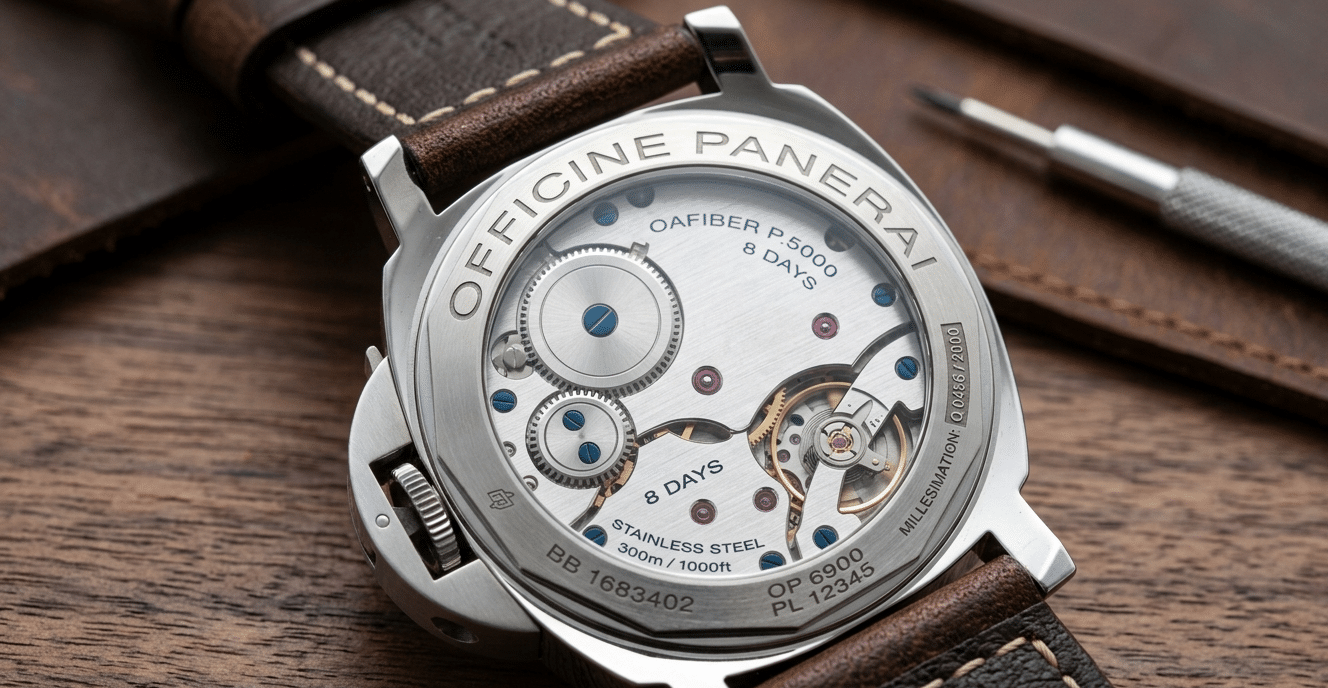
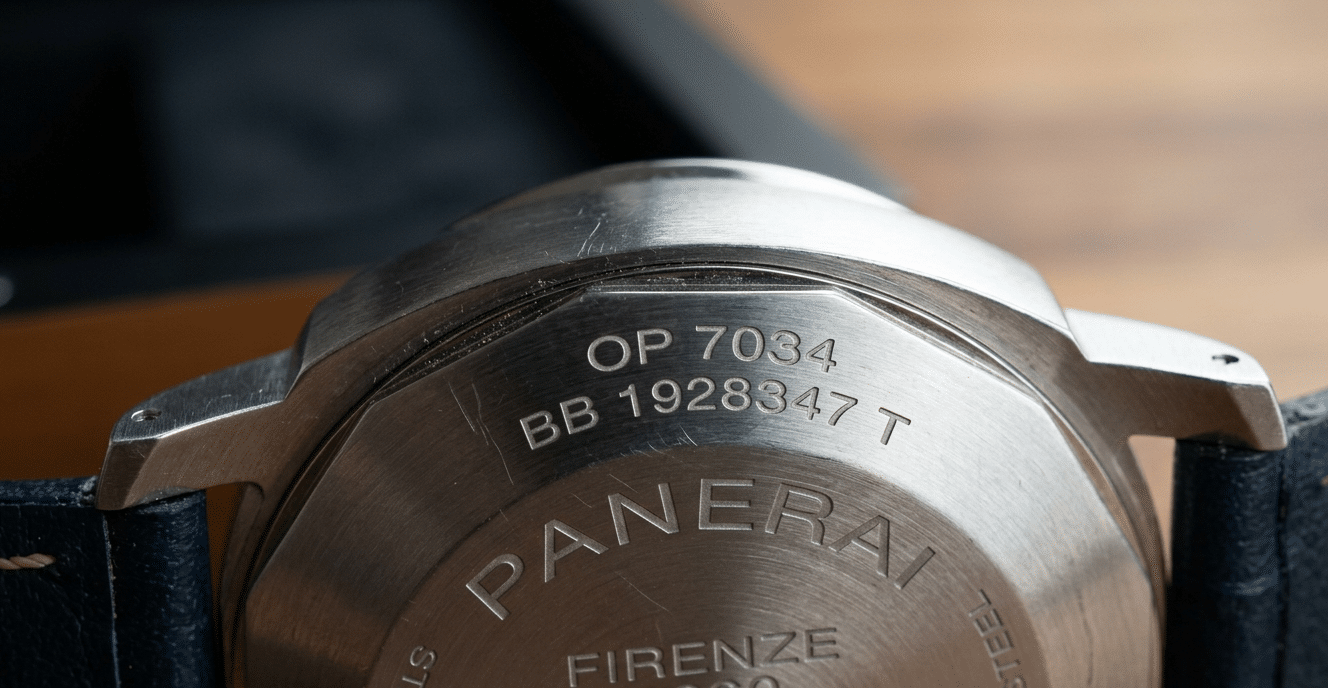
Historically, Panerai casebacks have featured prefixes like “OP” and “BB,” each carrying specific meaning. “OP” stands for “Officine Panerai,” signifying the brand’s official designation. “BB” stands for “Brevetto Brevettato,” which translates to “Patented Patent.” These prefixes, often followed by a numerical sequence, served as early serial number conventions. While their usage has evolved over the decades, understanding their historical context is important when authenticating older pieces. Modern Panerais typically use a more streamlined serial number format, but these historical markers remain a key part of the brand’s heritage and authentication lexicon.
Unpacking the Panerai Production Series Letter (e.g., A, B, C for 2026)
Panerai utilizes an alphabetical indicator, known as the Production Series Letter, to represent the specific production year or batch. This letter, found alongside the reference and serial numbers, is crucial for accurately dating a watch and verifying its context, especially for limited editions. For instance, a watch from the “A” series would be from an earlier production year than one from the “Z” series, with the letters progressing sequentially through the alphabet year after year. For 2026 models, we’d expect to see a letter far into the alphabet, representing the cumulative production years. This letter often dictates the total number of pieces made in a given year for a particular model, making it invaluable for collectors tracking rarity.
Individual Unit Numbering and Limited Edition Sequence
Within each production series, every Panerai watch is assigned a unique numerical identifier. This number ensures that no two watches from the same series are identical. For standard production models, this is a simple sequential number. However, for limited edition pieces, this individual unit number is often followed by a “X/Y” format, where “X” denotes the specific watch’s number in the sequence, and “Y” represents the total number of pieces produced in that limited run (e.g., “123/500”). This “X/Y” marking is a definitive indicator of a limited edition and is meticulously tracked by Panerai, adding to the watch’s provenance and value. It’s a critical detail for anyone buying or selling a rare Panerai.
Expert Authentication Insight
When physically examining a watch, pay close attention to the crispness and depth of the serial number engravings on the caseback. Genuine Panerai engravings are typically deep, precise, and consistent in font and spacing. Counterfeit watches, even high-end ones, frequently fall short here. Fakes often display shallow, inconsistent, or uneven etching, sometimes even appearing pixelated or dot-matrix generated rather than finely engraved. I’ve seen countless replicas where the serial number just feels “off” to the touch or looks sloppy under a loupe. Comparing the font style and spacing against known genuine examples (photos from official sources, not forums) is a quick way to spot a potential imposter.
Official Panerai Consumer Verification Pathways (2026)
Verifying a Panerai timepiece in 2026 goes beyond a quick glance at the dial. With the sophistication of modern counterfeits, consumers need to leverage the legitimate and secure channels provided by Panerai. This section guides you through the official pathways designed to confirm your watch’s authenticity.
Leveraging the Panerai E-Warranty System and Digital Certificates
Panerai has significantly invested in a robust digital ecosystem for warranty registration and certificate issuance, a critical component for all 2026 models and beyond. This system utilizes advanced encryption and, for newer releases, blockchain-enabled records to create an immutable proof of authenticity and ownership. When you purchase a new Panerai, the dealer registers the watch’s unique serial and reference numbers directly into this secure database. This digital certificate acts as a digital twin of your watch’s identity, providing verifiable provenance that is resistant to tampering.
The primary benefit to the consumer is unparalleled security. Unlike paper certificates, a digital record on a blockchain cannot be lost, forged, or altered. It offers a transparent, time-stamped history of the watch’s first owner and initial sale, significantly reducing the risk of purchasing a stolen or counterfeit item. This transparency also aids in understanding genuine retail pricing and the factors influencing it. This system is designed to provide immediate peace of mind, knowing your watch’s identity is logged in an unchallengeable format.
Cross-Referencing Data with the Physical Warranty Card and Booklet
Despite the rise of digital certificates, the physical warranty card and accompanying booklet remain essential components for Panerai authentication. For any Panerai acquired, especially those not exclusively using blockchain, these traditional documents contain crucial data points: the watch’s serial number, reference code, the authorized dealer’s stamp, and the date of purchase. It is imperative that this information precisely aligns with the watch itself and, where applicable, its digital records.
Any discrepancy between the physical card, the watch, and the digital certificate is an immediate red flag. I’ve seen cases where a physical card’s serial number was subtly altered to match a fake watch, or where the dealer stamp appeared legitimate but the digital record showed no corresponding sale. This cross-referencing isn’t just about validating the warranty; it’s a fundamental check against fraud. A genuine Panerai will always have consistent data across all its official identifiers.
Direct Verification Through Official Panerai Boutiques and Service Centers
For the most definitive confirmation of authenticity, interacting directly with an official Panerai boutique or authorized service center is the gold standard. These establishments have exclusive access to Panerai’s proprietary internal systems and are staffed by personnel trained specifically to identify genuine Panerai timepieces. They can perform a comprehensive check against the brand’s global database, verifying the watch’s serial number, reference code, and service history.
This method eliminates almost all uncertainty. When you bring your watch in, authorized personnel can not only cross-reference its details against their secure database but also physically inspect the watch using their expert knowledge, identifying nuances in finishing, movement components, and materials that even advanced replicas cannot perfectly mimic. This direct interaction offers a level of assurance that no amount of online research can provide, especially for high-value or vintage pieces.
Expert Authentication Insight
When dealing with 2026 Panerai models featuring e-warranty cards, a critical first step is to scan the embedded QR code. It’s not enough for the code to simply resolve to a web page; you must verify that the URL is an official Panerai domain (e.g., panerai.com or a specific, secure subdomain for their e-warranty system). Crucially, cross-check that the serial and reference numbers displayed on the resulting digital certificate perfectly match those engraved on your watch and, if present, on the physical warranty card. Any redirection to a generic or suspicious domain, or a mismatch in the displayed data, indicates a potential counterfeit or a manipulated document.
The Authorized Dealer’s Secure Verification Ecosystem (2026)
Authorized Panerai dealers operate within a highly secure and exclusive ecosystem, equipped with proprietary tools and databases designed to ensure the authenticity and traceability of every timepiece. Understanding these internal mechanisms provides critical insight into the robustness of Panerai’s anti-counterfeiting efforts.
Accessing the Proprietary Panerai Dealer Portal (2026 Version)
At the heart of the authorized dealer’s operation is the proprietary Panerai Dealer Portal. This secure, internal web application serves as the central nervous system for all official Panerai transactions. Dealers use this portal for a multitude of functions: registering new watch sales, managing inventory, ordering parts, and, most importantly for authentication, verifying the legitimacy of any Panerai timepiece. This system is directly connected to Panerai’s master database, providing real-time access to official records.
When a dealer inputs a watch’s serial and reference numbers into this portal, the system instantly cross-references them against all known official data. This includes manufacturing details, original point of sale, and any official service history. This immediate digital handshake with Panerai’s central records is a non-negotiable step in every legitimate transaction and provides an authoritative confirmation that the watch is recognized as genuine by the brand itself.
Utilization of the Global Panerai Service Network Database for Watch History
Beyond sales and inventory, authorized dealers and service centers also access the Global Panerai Service Network Database. This comprehensive ledger tracks the entire lifecycle of a Panerai watch from its first service onward. It meticulously records every repair, part replacement, and official maintenance performed on the timepiece, along with any registered ownership transfers. This database is a fortress of information, accessible only through official Panerai channels, and it creates an unbroken chain of custody and care for each watch.
For a discerning buyer, particularly in the secondary market, this database is invaluable. It provides an undeniable history of the watch’s health and provenance, confirming that it has been cared for by certified technicians using genuine parts. A watch with a complete, verifiable service history in this database offers a significant layer of confidence and often commands a premium, as it stands as incontrovertible proof of its authenticity and proper maintenance. I’ve seen watches with robust service records sell for thousands more, simply because their history was transparent and verifiable through this system.
Advanced Counterfeit Detection Modules within Dealer Software Suites
In the ongoing battle against counterfeiting, Panerai has integrated advanced detection modules directly into its dealer software suites. These specialized algorithms and visual databases are continuously updated, harnessing artificial intelligence and machine learning to flag potential counterfeit indicators. The modules analyze subtle patterns in serial numbers, reference codes, and even visual cues from high-resolution images, comparing them against databases of known genuine characteristics and reported counterfeit traits.
These sophisticated tools act as an augmented layer of expertise for authorized personnel. While a human eye might miss a minute discrepancy in font spacing or engraving depth, these modules are designed to catch such anomalies. They are a proactive defense mechanism, constantly evolving to counter the latest tactics employed by illicit manufacturers, ensuring that dealers have the most cutting-edge resources to maintain the integrity of the Panerai brand.
Expert Authentication Insight
To truly leverage the authorized dealer’s ecosystem, ask them to perform a “full system check” on your watch using their internal portal. This isn’t just a quick look-up. They should be able to confirm that your watch’s specific reference and serial numbers are not only recognized within Panerai’s global database but also that all associated details (model, movement, materials, original sale date) perfectly align with the watch in hand. If the system flags any inconsistencies or if the dealer seems hesitant to provide this comprehensive check, consider it a significant red flag. A legitimate Panerai will have an unimpeachable digital footprint within their system.
Debunking Unofficial ‘Market Codes’ and Third-Party Lists
In the quest for authenticity, many consumers turn to online forums and third-party websites for “market codes” or unofficial lists of serial numbers. While these resources can seem helpful, relying on them for Panerai verification is a dangerous gamble. This section exposes the inherent flaws and significant risks associated with unverified, non-official data sources.
The Genesis and Inherent Flaws of Forum-Based Code Compilations
Forum-based code compilations often originate from well-meaning enthusiasts attempting to document historical reference numbers, production series, or known “tells” of genuine watches. However, their genesis as user-generated content is also their greatest weakness. These lists frequently contain outdated, incorrect, or incomplete information, leading to rampant misidentification. What might have been accurate for a 2010 model could be entirely different for a 2026 release, yet these nuances are rarely updated or clarified.
Furthermore, without official verification, these lists are rife with errors introduced by misreadings, typos, or even intentional misinformation. I’ve encountered countless forum threads where conflicting data leads to endless debate, ultimately leaving the consumer more confused than before. Relying on such compilations for authentication is akin to trusting a whispered rumor over a notarized document; it simply doesn’t hold up under scrutiny and can instill false confidence in a counterfeit.
Risks Associated with Relying on Unverified Online Databases and Websites
Beyond forums, a plethora of unverified online databases and websites claim to offer Panerai serial number checks or reference code breakdowns. The risks associated with these platforms are substantial. They often lack official updates from Panerai, meaning their data quickly becomes obsolete as the brand introduces new models or revises its numbering conventions. Such issues highlight the need for reliable sources, including those offering a factory comparison for specific models. This data rot alone makes them unreliable for current authentication needs.
More critically, these sites are vulnerable to manipulation. Some may be inadvertently inaccurate, others maliciously designed to mislead. Counterfeiters can exploit these platforms, either by seeding them with false information to legitimize their fakes or by creating their own “verification” sites that always confirm a fake as genuine. Without an official stamp of approval from Panerai, any information gleaned from these sources must be treated with extreme skepticism.
How Counterfeiters Exploit and Manipulate Unofficial Information
The unfortunate truth is that counterfeiters are avid students of unofficial online guides and forum discussions. They actively monitor these sources to identify “tells” and discrepancies that consumers are taught to look for. By studying these unofficial resources, illicit manufacturers can refine their products, mimicking the known patterns and correcting the common flaws that online guides highlight. This creates a vicious cycle where consumers, relying on outdated or incomplete unofficial information, inadvertently provide a roadmap for counterfeiters to improve their fakes.
For example, if a forum post highlights a specific font error in a fake’s serial number, counterfeiters will quickly correct that error in subsequent batches. They use these “guides” to make their replicas pass casual, and even some intermediate, inspections. This makes the job of authenticating even harder for the average buyer, as the very information they seek to protect themselves is being used against them.
Expert Authentication Insight
Never take unofficial information at face value. If you find a reference code or serial number pattern on a forum or third-party site, immediately cross-reference it against an official* Panerai catalog, the brand’s official website, or, ideally, an authorized dealer’s verification. Pay meticulous attention to details: discrepancies in font, spacing between characters, the exact structure of the code, or even the presence/absence of certain symbols. For instance, if an unofficial list suggests a particular model always has a ‘BB’ prefix but your watch (or an official catalog) shows an ‘OP’ prefix for the same model year, that’s a significant red flag that the unofficial source is unreliable or outdated. Always defer to the official source; it’s the only path to genuine verification.
Beyond the Numbers: Complementary Panerai Authentication Techniques
While serial numbers and reference codes form the essential digital backbone of Panerai authentication, relying solely on them in the face of increasingly sophisticated counterfeits is a gamble no serious collector or buyer should take. The true test of authenticity often comes down to a meticulous physical examination, integrating forensic detail with the data. This section delves into the critical physical diagnostic techniques that complement code verification for a holistic approach to ensuring a Panerai’s legitimacy.
Detailed Inspection of Movement Caliber and Finishing
The movement, often the watch’s heart, is where many counterfeits reveal their true colors. Panerai, particularly with its in-house calibers like the P.9010, P.3000, and P.4000, employs specific finishing techniques and proprietary components that are exceedingly difficult for even the most advanced replica factories to perfectly replicate. Genuine Panerai movements, visible through a display caseback, will showcase intricate perlage finishing, precisely beveled edges on bridges, and screws that are thermally blued to a deep, consistent hue.
Conversely, while top-tier clone movements from factories like VS or XF have achieved remarkable functional parity (e.g., the VS P.9000 clone boasts an impressive 70-72 hour power reserve and true jumping hour GMT function on P.9010 variants, mirroring the genuine’s 72 hours), their aesthetic finishing typically falls short. I’ve observed numerous clone movements that, under magnification, reveal simpler machine patterns rather than the nuanced hand-finishing, generic shock protection systems (like Novodiac or Kif) instead of Panerai’s specified Incabloc, and rotor branding that, while attempting to mimic Panerai, lacks the crispness or specific font of the original. Even with 85% parts compatibility on some clones, that remaining 15% often comprises critical visual cues. A timegrapher can also be telling: a genuine P.9000 should run at 28,800 vph with an amplitude of 280-310°; any significant deviation, especially a lower beat rate of 21,600 vph, is a red flag often seen in budget clones.
Scrutiny of Case Construction, Engravings, and Finishing Details
Panerai’s distinctive cushion case, robust crown guard, and crisp engravings are iconic, yet they are also prime targets for counterfeiting. The precision of the case machining, especially the sharp, clean angles of the crown guard, is a key indicator. Genuine crown guards exhibit precise 90-degree angles with no visible tool marks or softening of the edges, even under high magnification. Replicas, even high-quality ones, often show minor rounding, slight asymmetry, or subtle machining lines that betray their origin. I’ve seen countless examples where the crown guard lever action feels less precise, or the pin securing it isn’t perfectly flush.
Engravings on the caseback—such as “OFFICINE PANERAI,” water resistance ratings, and specific model numbers—should be deep, consistent, and flawlessly executed. Counterfeits frequently display shallow, uneven, or less crisp engravings, particularly on the “OFFICINE PANERAI” text. Serial numbers themselves, whether laser-etched or machine-engraved, must be uniform in depth and font. Another often-overlooked detail is the strap attachment points: genuine Panerai straps fit flush with the case, exhibiting no gaps. Replicas, due to slight variations in lug hole placement or spring bar tolerances, often show noticeable 0.5-1mm gaps where the strap meets the case. While Panerai predominantly uses 316L stainless steel, which is easier for counterfeiters to source than Rolex’s 904L, the overall finishing (brushing, polishing) must be consistent with Panerai’s high standards across the entire case, with no abrupt transitions or uneven textures.
Analysis of Dial Print, Lume Application, and Hand Quality
The dial is the face of the watch, and Panerai’s sandwich dial construction and distinctive lume are critical elements to inspect. The sandwich dial, comprising two layers (a bottom layer with Super-LumiNova and a top layer with cutouts for markers), creates a unique depth and legibility. Top-tier replicas, like those from XF Factory, have mastered this, showing correct layer depth and proper lume fill without bleeding. However, even these can have tells: under 10x magnification, the cutout edges on some XF dials can appear slightly rougher than genuine, and older batches sometimes had a lume color that was slightly greener, rather than the cream or bright white of authentic Panerai. Budget fakes often use a faux-sandwich dial where markers are merely painted, lacking any real depth.
Lume application itself is crucial. Genuine Panerai utilizes Super-LumiNova Grade A, designed for exceptional brightness and longevity, often glowing for 8+ hours after a full charge. Replicas, even BGW9 variants, typically achieve 6-8 hours. The color should be consistent across all markers and hands, with no unevenness or smudging. Dial text, such as “Luminor” or “Panerai,” should be razor-sharp with no ink bleed or fuzzy edges, a common flaw in lower-quality fakes. Finally, the hands should be perfectly finished, with clean edges, proper polishing or brushing, and precisely applied lume. Any imperfections here, or signs of poorly cut or painted hands, indicate a counterfeit.
Expert Authentication Insight
Physical diagnostic: Use a 10x loupe to inspect the “SWISS MADE” text and minute markers on the dial for perfect alignment, consistent font, and absence of smudging or uneven application, which are common counterfeit flaws.
The Future of Panerai Authentication: Digital and Blockchain Horizons
As the sophistication of counterfeit watches continues to rise, traditional authentication methods, while still vital, are being augmented by cutting-edge digital technologies. Panerai, like other luxury brands, is exploring solutions that promise enhanced security, traceability, and immutable proof of ownership. The landscape for 2026 and beyond points towards a significant shift towards digital and blockchain-based authentication.
Implementation of NFTs and Blockchain-Based Digital Ownership Records (2026 Outlook)
The concept of Non-Fungible Tokens (NFTs) and blockchain technology is poised to revolutionize how luxury watches are authenticated and owned. Panerai has already begun experimenting with digital certificates for certain models, and by 2026, we can expect a broader implementation. Imagine a future where every new Panerai watch comes with a unique NFT, permanently linked to its serial number on a public or private blockchain. This NFT would serve as an immutable, tamper-proof digital certificate of authenticity and ownership. It would record the watch’s entire lifecycle, from its manufacture and initial sale to subsequent ownership transfers, service history, and even repairs. This digital ledger would provide undeniable proof of provenance, drastically simplifying verification for buyers and sellers, and making it virtually impossible for counterfeiters to forge a watch’s identity. For a collector, this means knowing with absolute certainty the watch’s history and ensuring its originality.
Advanced Micro-Tagging and Invisible Security Features
Beyond digital records, physical watches themselves are likely to incorporate advanced, invisible security features designed to thwart even the most meticulous counterfeiters. These could include microscopic engravings, unique material signatures detectable only with specialized scanning equipment, or even embedded DNA-based markers within components. These features would be virtually impossible to replicate without access to proprietary technology and materials. For example, a micro-tag could be embedded within the crystal or a movement component, verifiable through a dedicated scanner available only to authorized service centers or boutiques. This multi-layered approach—combining visible physical inspection, verifiable serial numbers, and invisible, high-tech security features—creates a formidable barrier against illicit replication, shifting the authentication burden from the consumer to specialized tools and expertise.
Implications for the Resale Market and Long-Term Value Protection
The widespread adoption of robust digital authentication systems, especially those leveraging blockchain, will have profound implications for the secondary market. Currently, verifying the authenticity of a pre-owned luxury watch can be a complex, often expensive, and sometimes ambiguous process. With NFTs and immutable digital records, this process becomes instantaneous and transparent. Buyers in the resale market can verify a watch’s authenticity and ownership history with a simple scan or digital lookup, significantly increasing buyer confidence and streamlining transactions. This enhanced trust will likely translate into higher, more stable resale values for genuine Panerai watches, as the risk of unknowingly purchasing a counterfeit is dramatically reduced. Furthermore, it will allow Panerai to maintain better control over its brand image and product integrity, protecting its long-term value against the erosion caused by the prevalence of high-quality fakes. This shift will fundamentally change how luxury watches are traded, providing a level of security and transparency that the market has long desired.
Expert Authentication Insight
Physical diagnostic: For watches equipped with 2026 digital certificates, verify the blockchain transaction hash and associated metadata using a dedicated Panerai app or official blockchain explorer to confirm ownership and authenticity.