
Deconstructing Genuine Retail Pricing: The Authorized Channel’s Structure
When considering a luxury timepiece, the price tag from an authorized dealer often sparks debate. Many assume it’s simply an inflated number, but the reality is far more complex. The official price of a genuine luxury watch from a “Big Factory” manufacturer is a meticulously constructed sum, reflecting a comprehensive array of costs that span from deep R&D to global retail presence and after-sales support. Understanding these components, as well as the nuances of factory code decryption, is crucial for any buyer looking to distinguish genuine value from deceptive discounts.
Manufacturer’s Production & Overhead Costs
The foundation of a genuine watch’s price lies in the immense investment made at the manufacturing level. This begins with extensive research and development, often spanning years to innovate new calibers, materials, or complications. For instance, developing a proprietary movement like Panerai’s P.9000 involves not just design but also rigorous testing and refinement to ensure performance and longevity.
Material sourcing is another significant factor. While Panerai typically uses 316L stainless steel, top-tier brands invest in specific alloy grades, such as Rolex’s Oystersteel (904L), or ethically sourced, flawless gems. Precision machining tolerances are measured in microns, requiring multi-axis CNC machines and highly specialized tooling to create components with exact dimensions and intricate finishing, like the perlage or Côtes de Genève seen on movement bridges. Skilled labor wages for master watchmakers, gem-setters, and expert polishers in Switzerland or other high-cost manufacturing nations are substantial. Finally, stringent quality control protocols, including certifications like COSC (Contrôle Officiel Suisse des Chronomètres) or METAS, along with internal testing standards, add layers of cost but guarantee performance and durability.
Brand Building, Marketing & Global Presence
Beyond the physical product, a significant portion of a luxury watch’s price contributes to the brand’s intangible value. This includes strategic expenditure on brand heritage storytelling, often involving historical research and detailed narrative crafting that connects the timepiece to a rich past. High-profile ambassador endorsements, like Sylvester Stallone or Arnold Schwarzenegger for Panerai, come with considerable fees but elevate brand visibility and desirability.
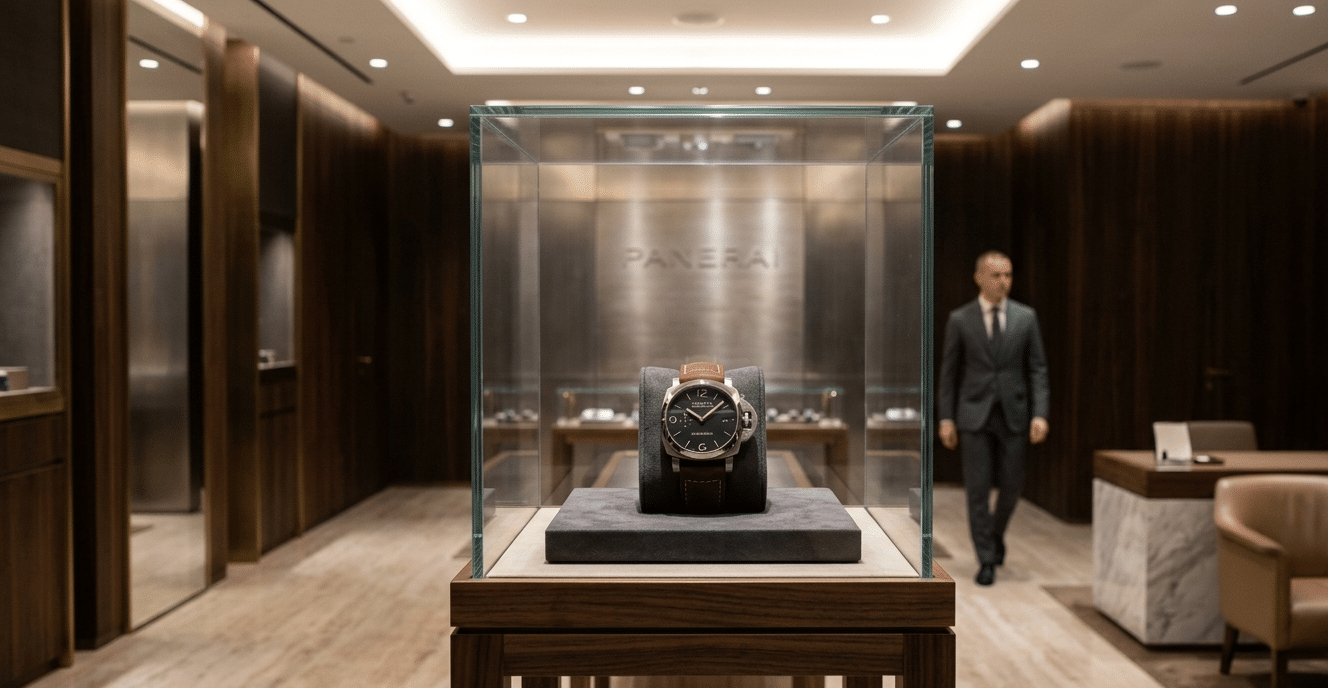
Global advertising campaigns, spanning digital platforms, glossy print magazines, and exclusive experiential events, are designed to maintain a consistent luxury image. The development of flagship boutiques in prime real estate locations worldwide, with bespoke interiors and highly trained staff, is another massive investment. All these efforts are essential for cultivating and maintaining the brand’s exclusive identity, ensuring that the watch is perceived not just as a time-telling device but as a symbol of status and craftsmanship.
Authorized Distribution, Logistics & Retailer Margins
Once a watch leaves the factory, it embarks on a journey through a complex global supply chain. This involves secure shipping, comprehensive insurance against loss or damage, and navigating various customs duties and import taxes as the watches cross international borders. Regional distribution hubs manage inventory and ensure efficient delivery to authorized points of sale.
Crucially, a significant portion of the retail price accounts for the essential profit margins of authorized retailers (ADs). These retailers provide much more than just a sales counter; they operate physical showrooms in high-rent locations, employ knowledgeable and trained sales staff, and offer immediate, personalized after-sales consultation. Their margin covers their operational costs, marketing contributions, and the significant capital tied up in inventory. This structured distribution network ensures authenticity, proper handling, and the provision of official warranty and service support, which are integral to the genuine luxury watch ownership experience.
Expert Authentication Insight
To understand the baseline for genuine pricing, always cross-reference the official Manufacturer’s Suggested Retail Price (MSRP) with publicly available price lists from multiple authorized dealers (ADs) across different regions. Most major brands provide these on their official websites, or ADs will readily provide them upon request. While minor discrepancies might arise due to local sales taxes, currency fluctuations, or specific regional promotions, any significant deviation—say, more than 5-10% below MSRP from an alleged “authorized” source—should immediately raise a red flag. This exercise helps establish the legitimate price floor and highlights any offers that are simply too good to be true, often indicating a non-genuine product or a grey market acquisition devoid of warranty.
The “Small Factory” Counterfeit Ecosystem: Origins and Operations
In stark contrast to the meticulously constructed pricing of genuine timepieces, the “small factory” counterfeit ecosystem operates under an entirely different set of rules. This illicit network specializes in producing non-genuine watches, commonly known as “replicas” or “fakes,” and thrives by bypassing the legitimate costs of R&D, brand building, and authorized distribution. Understanding their operational model reveals why their prices are drastically lower, but also why their products carry inherent risks.
Replica Manufacturing Tiers & Quality Variations
The world of counterfeit watch production is not monolithic; it’s a tiered system with significant variations in quality and sophistication. At the lowest end are the so-called “shitter factories,” which churn out watches using crude stamping techniques, generic and unreliable movements (like the basic DG2813 or unbranded automatic calibers), and the cheapest materials. These are often easily identifiable fakes, rife with obvious flaws in finishing, dial printing, and functionality.
Moving up, mid-tier operations might use clone ETA 2824/2836 movements and better-grade materials, but still cut corners on finishing and precision. For Panerai, factories like PF Factory occupy this space, offering decent aesthetics but often with incorrect case profiles or inferior movement performance. At the apex are the “super clone” operations, exemplified by factories like VS, XF, and ZF for Panerai. These attempt to replicate genuine finishing, materials (e.g., 316L steel, correct sapphire crystals), and even movement architecture (like the VS P.9000 clone with its 72-hour power reserve). However, even these high-end replicas exhibit varying degrees of success and notorious batch consistency issues, meaning quality can fluctuate even for the same model from the same factory.
Component Sourcing & Assembly Methods
The procurement channels for non-genuine components are largely unregulated and opportunistic. Counterfeiters often source generic movements from third-party manufacturers (e.g., Miyota, Seagull, Hangzhou), sometimes modifying them to superficially resemble genuine calibers. Substandard case and dial materials are common, with 304 stainless steel often used instead of 316L for cost savings, leading to inferior corrosion resistance. Low-quality or recycled parts, including seals, gaskets, and even hands, are frequently employed, compromising durability and water resistance.
Assembly methods in these “small factories” are typically geared for speed and volume, not precision or quality control. This often leads to critical shortcuts: poor dust sealing, which allows moisture and debris into the movement; misaligned parts like dials, indices, or date wheels; and inconsistent application of lume, resulting in uneven glow or bleeding. Unlike genuine manufacturers who invest in meticulous hand-finishing and stringent testing, counterfeiters prioritize quantity and superficial resemblance, leading to watches that look similar but lack the mechanical integrity and longevity of the authentic article.
Direct-to-Consumer & Unregulated Sales Channels
The distribution of counterfeit watches relies heavily on a shadowy digital infrastructure designed to evade detection and bypass consumer protection laws. This includes hidden forums, often requiring invitations or specific knowledge to access, and encrypted messaging applications like WhatsApp, Telegram, or WeChat, where transactions are conducted discreetly. Specialized websites, often temporary or frequently changing domains, also facilitate sales.
Logistical methods are equally evasive. Drop-shipping models obscure the true origin of the product, with packages often mislabeled as “watch parts,” “gifts,” or “machinery components” with declared values far below their actual (albeit illicit) price to reduce customs scrutiny. This unregulated environment means buyers have virtually no legal recourse in case of fraud, product defects, or non-delivery. The entire process is built on anonymity and a deliberate lack of transparency, leaving the consumer entirely vulnerable.
Expert Authentication Insight
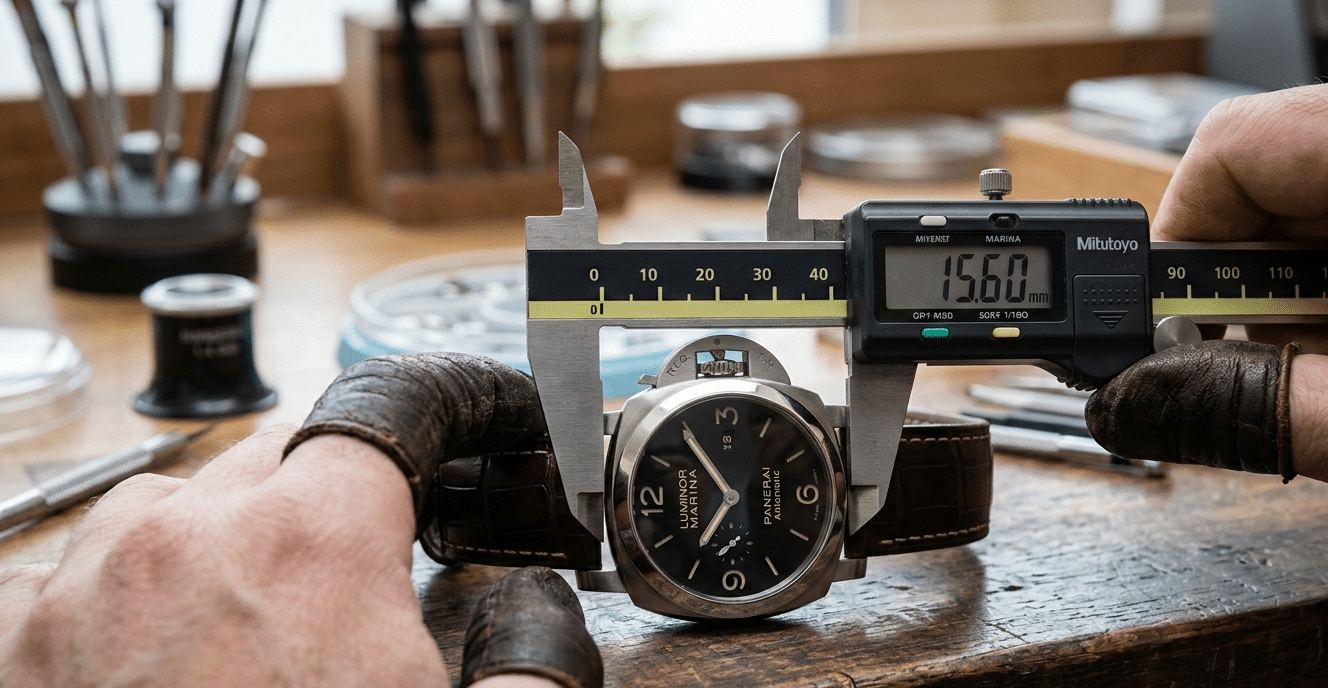
When assessing a watch suspected of being a replica, a digital caliper is an invaluable tool. Genuine luxury watches adhere to extremely precise dimensions for case thickness, lug width, and bezel diameter. Counterfeit operations, even the high-end ones, often struggle to replicate these exact measurements due to different tooling, slight variations in movement dimensions, or simply less precise manufacturing processes. For example, a genuine Panerai Luminor Marina 44mm should have a specific case thickness (often around 14.5mm depending on the model and movement). If a replica uses a thicker movement, the case might be 1-2mm thicker than genuine, a deviation easily caught with a caliper. Consistent deviations in these physical dimensions compared to verified genuine specifications are strong indicators of a non-genuine product, revealing the limitations of illicit manufacturing.
Distinct from outright counterfeits, the grey market presents a more nuanced challenge. Here, the products are genuinely authentic watches manufactured by “Big Factories,” but they bypass the authorized distribution channels. While these watches are real, their journey outside official networks creates critical implications for warranty, service, and ultimately, buyer protection. Navigating this segment of the market requires a clear understanding of its origins and inherent risks.
Sourcing Mechanisms & Supply Chain Loopholes
Genuine products enter the grey market through several channels, often exploiting loopholes in the brand’s controlled distribution. One common mechanism involves authorized dealers (ADs) who exceed their sales quotas or need to clear inventory. Faced with pressure from the brand to move units, they might sell watches at a discount to unauthorized third-party resellers, who then offer them to consumers below MSRP. Another significant source is parallel imports: watches purchased in regions with lower Manufacturer’s Suggested Retail Prices (MSRPs), perhaps due to local tax structures or market strategies, and then imported into markets where the official retail price is higher. This practice circumvents the brand’s intentional pricing and distribution strategy for specific territories, a key distinction when comparing [mid-tier factory value vs CPO benefits]. Additionally, brands might liquidate discontinued models or excess stock through non-AD channels, which can then trickle into the grey market.
Price Arbitrage and Dealer Incentives
The primary driver for grey market sellers is the opportunity for price arbitrage, allowing them to offer watches at significantly lower prices than authorized retailers. Their financial incentives stem from drastically reduced overheads: they typically don’t operate luxury showrooms, employ fewer staff, and contribute little to no brand marketing. This lean operational model allows them to absorb lower profit margins per unit while still being profitable. They also leverage currency exchange rates, buying in weaker currency markets and selling in stronger ones, or capitalize on bulk purchasing discounts that were never intended for resale outside authorized channels. While these practices benefit the grey market seller and offer a seemingly attractive price to the buyer, they fundamentally undermine the brand’s carefully managed market positioning and pricing integrity.
The Warranty Void: Manufacturer’s Stance
Perhaps the most critical implication of purchasing a watch from the grey market is the voiding of the manufacturer’s warranty. “Big Factory” manufacturers almost universally stipulate that their international warranties are valid only when the watch is purchased from an authorized dealer. This policy is explicitly stated in their terms and conditions and on their official websites. A watch bought from an unauthorized seller, even if brand new and genuine, typically loses its original manufacturer’s warranty coverage. This means that any manufacturing defects or performance issues that arise within the warranty period will not be covered by the brand, leading to significant and often unexpected future costs for the buyer, who will have to pay out-of-pocket for repairs that would otherwise have been free.
Expert Authentication Insight
When considering a grey market purchase, the international warranty card is your first line of defense, but it requires careful scrutiny. Insist on inspecting the physical card for proper stamping, dating, and the authorized dealer’s signature or stamp. A blank, undated, or improperly filled card is a major red flag, as is one that appears to have been altered. The ultimate verification step is to contact the brand’s official service center directly, providing the watch’s serial number and the details from the warranty card. They can confirm if the dealer listed is indeed authorized and if the warranty has been properly registered. Be aware that some grey market dealers might provide their own “warranty,” but this is a private agreement with no backing from the original manufacturer and offers a significantly inferior level of protection compared to a factory warranty.
The True Cost of “Cheaper” Watches: Beyond the Initial Transaction
When eyeing a watch with a significantly lower price tag than its authorized counterpart, the immediate savings can be intoxicating. However, a deeper dive into the long-term ownership experience reveals a landscape riddled with hidden financial and experiential penalties. These “cheaper” options, whether outright replicas or grey market genuine pieces, fundamentally alter the value proposition and often incur costs far exceeding the initial discount.
Lack of Manufacturer Warranty & Service Access
One of the most immediate and impactful consequences of purchasing a non-authorized watch is the complete forfeiture of the manufacturer’s warranty. “Big Factory” brands invest heavily in research and development, crafting proprietary movements and components that demand specialized care. This care is exclusively provided through their authorized service networks.
When you purchase outside this channel, you are effectively cut off from brand-specific parts—think unique escapement components, specialized gaskets for water resistance, or even specific lubricants engineered for a particular caliber. Authorized service centers are equipped with proprietary diagnostic tools and staffed by certified watchmakers who undergo rigorous, brand-mandated training. Without this access, any repair or routine maintenance on a complex luxury timepiece becomes a significant challenge. This often means relying on independent watchmakers who, while skilled, may lack the specific parts, tools, or up-to-date training for that particular movement. The judgment here is clear: what you save upfront, you often pay for many times over in compromised repairs or, worse, the inability to repair your watch at all.
Authentication Risk & Severely Depreciated Resale Value
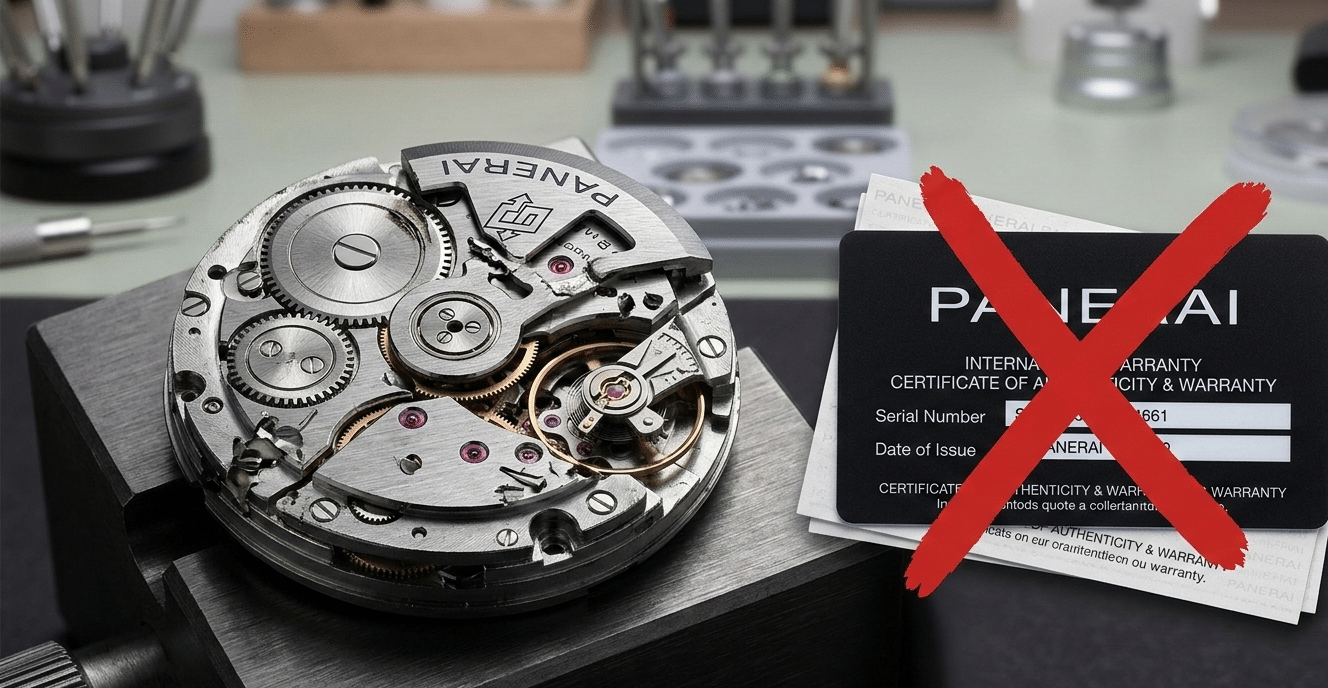
The allure of a replica often fades when considering its long-term market viability. Watches without a clear, verifiable provenance face an inherent difficulty in proving authenticity. This directly translates to severely depreciated, if not non-existent, resale value. While a high-quality “super clone” might fool the untrained eye, the absence of official documentation, combined with the legal risks associated with selling counterfeit goods, makes finding a buyer both challenging and potentially illegal for the seller.
Even genuine watches acquired through the grey market, while authentic, often suffer a hit to their resale value because they lack the original authorized dealer stamp on the warranty card, making their service history and initial purchase legitimacy harder to trace. The “savings” made on an unauthorized purchase are frequently dwarfed by the financial loss incurred when attempting to sell the watch. In many cases, a replica becomes a personal item with no market value beyond sentimental attachment, making it a financial dead end.
Repair Challenges & Parts Availability for Non-Genuine
The internal mechanics of a replica watch are where the “small factory” often diverges most significantly from the “big factory.” While some high-tier replicas, like a VS Factory Panerai P.9000 clone, might visually mimic the genuine movement, they are rarely 100% parts-compatible. This becomes a critical issue when repairs are needed. Genuine parts simply won’t fit, or if they do, their integration might compromise the movement’s integrity. For example, a replica movement might use different bridge designs or jewel settings that prevent the installation of genuine escapement components.
This forces repairs to rely on generic, lower-quality components that may not fit correctly, function reliably, or meet the performance standards of the original. This often leads to repeated failures, a cycle of ineffective repairs, and escalating long-term costs that quickly negate any initial price advantage. What seems like a bargain often turns into a “money pit” where the cost of maintenance eventually far exceeds the watch’s actual value.
Expert Authentication Insight
Attempt to register the watch’s serial number on the brand’s official website or app. For example, many major brands like Omega, Breitling, and even some Panerai models offer online registration. A failure to register, or an “unrecognized serial” message, is a strong, immediate indicator that the product is either non-authorized or non-genuine, as official channels would have this data.
Authentication Minefield: How to Identify Genuine Watches
In a market increasingly saturated with sophisticated replicas, the ability to confidently identify a genuine luxury timepiece is more critical than ever. This requires a multi-faceted approach, moving beyond superficial glances to a detailed examination of craftsmanship, mechanics, and accompanying documentation.
Visual Cues: Dial, Hands, Case & Bracelet Examination
The first line of defense in authentication lies in meticulous visual inspection. Genuine luxury watches, products of “Big Factory” precision, exhibit an unparalleled level of micro-finishing and consistency. Use a jeweler’s loupe (10x magnification is ideal) to scrutinize:
- Print Quality: Text on the dial (e.g., “Luminor Panerai,” “Swiss Made”) should be crisp, perfectly legible, and free from any bleeding, smudging, or inconsistent thickness. Indices should be perfectly aligned and have a precise, uniform depth.
- Luminescence: The application of lume should be even, without any bubbles, discoloration, or rough edges. Genuine lume, like Super-LumiNova Grade A, will glow consistently and for a specific duration. Replicas often show uneven application or a different glow color/longevity.
- Hand Finishing: Hands should have perfectly executed bevels, consistent polishing, and sharp edges. Any signs of burrs, uneven polishing, or slight bends are red flags.
- Case & Bracelet: Examine the consistency of brushing and polishing. Transitions between finishes should be sharp and clean. Bracelet end-links should integrate seamlessly with the case, with minimal gaps. Panerai replicas, for instance, might show slight rounding on crown guard edges or minor gaps at strap lugs under close inspection, whereas genuine pieces exhibit precise 90-degree angles and flush fits.
These minute details are incredibly difficult for “small factories” to replicate consistently across batches, making them tell-tale signs of authenticity.
Movement Inspection: Caliber, Finishing & Functionality
For watches with exhibition casebacks, the movement is a powerful authenticator. This often requires careful removal of the caseback by a skilled professional to avoid damage. Look for:
- Specific Caliber Number: Verify the engraved caliber number matches the model.
- Finishing Quality: Genuine movements showcase exquisite finishing like perlage (circular graining), Côtes de Genève (Geneva stripes), and perfectly polished or true heat-blued screws (which appear uniformly blue under specific light, unlike painted screws that can chip or appear purple). Clone movements, while functional, often display simpler, machine-stamped patterns without the fine hand-finishing.
- Engraved Text: Any text on the movement (e.g., brand name, jewel count) should be sharp, clear, and perfectly aligned.
- Functionality: Observe the consistency of the escapement beat. The rotor should wind smoothly and efficiently, without excessive noise or play. Panerai’s VS P.9000 clone, for example, successfully replicates the dual mainspring barrels and bidirectional winding, but minute finishing details often give it away under high magnification.
The movement is the heart of the watch; its quality and consistency are paramount indicators of authenticity.
Documentation, Packaging & Accessories Verification
The accompanying paraphernalia of a luxury watch is often overlooked but provides crucial authentication clues:
- Warranty Card: Inspect the font, paper quality, presence of holograms or security features, and ensure it’s correctly stamped and dated by an authorized dealer. Any misspellings, incorrect fonts, or poor print quality are immediate red flags.
- Instruction Manual: Check for print quality, accuracy of language, and correct model references. Replicas often have lower-quality printing or translation errors.
- Presentation Box: Assess the material quality, logo placement, and overall construction. Genuine boxes are substantial and meticulously crafted.
- Additional Accessories: Verify hang tags, chronometer certificates, or other accompanying documents for accuracy and quality.
Don’t just check the watch; verify the entire package. “Small factories” frequently cut corners on these less visible, but equally important, elements. A thorough super clone factory comparison often highlights these details, making them easier to spot than the watch itself.
Expert Authentication Insight
Use a Timegrapher (a device that measures a watch’s performance) to assess the movement’s amplitude, beat error, and daily rate. Compare these readings against known genuine factory specifications. For a genuine Panerai P.9000, you’d expect an amplitude of 280–310° and a beat rate of 28,800 vph. Inconsistent or significantly out-of-spec readings (e.g., amplitude below 260° or a wildly fluctuating daily rate) are strong indicators of a non-genuine or poorly serviced movement.
The After-Sales Abyss: Why Authorized Service is Non-Negotiable
The purchase of a luxury watch is not a one-time transaction; it’s the beginning of a long-term relationship that hinges on proper care and maintenance. The “after-sales abyss” refers to the stark difference in long-term ownership experience between authorized service centers and independent or unauthorized repair shops. For a genuine timepiece, authorized service is not merely a convenience—it’s non-negotiable for preserving its integrity, performance, and value.
Manufacturer Service Protocols & Specialized Training
“Big Factory” brands maintain an unparalleled standard of service through their authorized networks. This isn’t just about changing a battery; it’s a comprehensive process governed by rigorous protocols. Authorized watchmakers undergo extensive, brand-specific training programs, often directly at the manufacturer’s facilities. They have access to proprietary tools, diagnostic equipment, and a meticulously curated supply of genuine, brand-new replacement parts.
Furthermore, these centers adhere to specific lubrication schedules and testing methodologies mandated by the brand, ensuring that every service, from a simple gasket replacement to a complete movement overhaul, restores the watch to its original factory specifications. This includes critical aspects like maintaining the watch’s water resistance rating and ensuring its chronometric performance. This specialized approach is essential for preserving the watch’s integrity and its intended longevity.
Cost of Independent vs. Authorized Service: A Long-Term View
On the surface, independent service might appear more economical, with upfront costs often 20-40% lower than authorized centers. For example, a full service for a Panerai P.9000 movement might cost around $440-$770 at an authorized center, while an independent shop might quote $330-$550. However, this initial saving can be a false economy. Independent shops may use generic parts, lack the specialized knowledge of proprietary movements, or not have access to the latest brand-specific tools and technical updates.
This can lead to repairs that are not fully compliant with factory standards, potentially compromising water resistance, affecting accuracy, or even causing accelerated wear on other components. In the long run, these shortcuts can result in compounded problems, necessitating more frequent or more extensive repairs, ultimately costing the owner more. Authorized service, while a higher upfront investment, is a value-retaining cost that ensures the watch’s optimal performance and preserves its market value.
The Risk of Irreparable Damage & Loss of Value
The greatest peril of unauthorized repairs is the risk of irreparable damage and a significant, often permanent, loss of value. Instances abound where incorrect parts are used, leading to friction or premature wear within the movement. Improper sealing techniques can compromise water resistance, turning a dive watch into a liability. Inexperienced handling by an untrained watchmaker can result in scratched cases, damaged movements, or stripped screws.
Such interventions can make future authorized service impossible or prohibitively expensive, as the brand may refuse to work on a watch that has been tampered with or contains non-genuine parts. A watch that once held significant market value can quickly become a damaged, unserviceable keepsake, losing all its investment potential. The perceived savings from opting for unauthorized repair are a gamble where the risk of permanent harm to the timepiece far outweighs any potential short-term gain.
Expert Authentication Insight
Carefully check the condition of the caseback screws and, if visible, the internal movement screws. Signs of improper tools (e.g., stripped heads, burrs, or uneven wear patterns) or amateur opening (e.g., scratches around the caseback edge) are strong indicators of unauthorized tampering or previous non-factory service. This immediately raises questions about the watch’s service history and its adherence to manufacturer protocols.
In a market saturated with both sophisticated counterfeits and opaque grey market channels, acquiring a genuine luxury timepiece in 2026 demands a proactive, data-driven approach. This framework provides actionable strategies for prospective buyers to confidently authenticate their purchases, secure their investments, and ensure long-term satisfaction by understanding the critical distinctions between authorized and unauthorized sources.
Researching & Vetting Authorized Dealers (ADs)
The foundation of a secure genuine watch purchase lies with a verified authorized dealer. These “Big Factory” partners are the brand’s direct representatives, bound by strict agreements that ensure product authenticity, warranty validity, and proper after-sales support. For a U.S. buyer, identifying a reputable AD involves more than just a quick Google search.
Operational detail: Begin your research on the official brand website. Every legitimate luxury watch manufacturer maintains an up-to-date dealer locator. Cross-reference any prospective dealer against this list. Be wary of any retailer claiming to be an AD if they are not explicitly listed. Next, scrutinize customer reviews on platforms like Google Maps, Yelp, and dedicated watch forums (e.g., Watchuseek, Rolex Forums for specific brands). Look beyond superficial praise for patterns in service quality, sales staff knowledge, and their handling of after-sales issues. A strong AD will have staff who can articulate not just features, but also the nuances of a movement’s architecture, the brand’s service protocols, and the specific warranty terms. Understanding their return policies is crucial; genuine ADs will have clear, transparent policies, unlike many unregulated sellers who offer “all sales final” on high-value items. Finally, assess their expertise: do they have certified watchmakers on staff or directly affiliated with them? Can they answer detailed questions about specific models, production years, and even common service intervals? A true AD invests heavily in training and infrastructure, which directly benefits the buyer.
Understanding the International Warranty Card & Registration Process
The international warranty card is often overlooked but is arguably the most critical piece of documentation accompanying a new genuine watch. It is the direct link to the manufacturer’s guarantee of authenticity and performance, and its proper handling is non-negotiable.
Operational detail: When purchasing from an authorized dealer, the warranty card must be meticulously stamped, dated, and signed by the selling AD at the time of purchase. A blank or improperly filled card is a red flag, as it can void the manufacturer’s warranty. Many “Big Factory” brands now require online warranty registration, often handled by the AD themselves, or by the customer post-purchase using a unique QR code or serial number. This digital registration links your specific watch (via its serial number) directly to your ownership and the purchase date, activating the official warranty period. Without a correctly executed and registered warranty, any future service or repair will be treated as out-of-warranty, potentially costing thousands of dollars for issues that would otherwise be covered. This includes everything from routine maintenance to rectifying manufacturing defects. Always confirm the AD’s process for warranty activation and ensure you receive documentation proving registration, if applicable.
Leveraging Escrow Services & Buyer Protection for Pre-Owned
The pre-owned market for genuine watches offers significant value, but it is also a minefield of potential misrepresentation and outright fraud. For buyers venturing beyond authorized retailers for previously owned pieces, robust buyer protection mechanisms are essential.
Operational detail: Reputable third-party escrow services, such as those integrated into platforms like Chrono24’s Buyer Protection program or specialized luxury goods escrow companies, act as a neutral intermediary. They hold your payment securely until you receive and verify the watch’s authenticity and condition as described by the seller. This mitigates the risk of sending money directly to an unknown seller. Furthermore, seek out platforms that offer explicit authentication guarantees. Some high-end consignment services or online marketplaces employ their own watch experts to verify authenticity before listing, providing an added layer of security. When engaging in private sales, even with trusted forum members, always insist on a clear, written return policy, and consider using a service like PayPal Goods and Services (which offers buyer protection) rather than direct bank transfers. These measures are your best defense against inadvertently acquiring a non-genuine product or a watch with undisclosed issues, protecting both your financial investment and your peace of mind.
Expert Authentication Insight
Physical diagnostic: When considering any watch purchase, especially pre-owned or from a less familiar source, always request high-resolution, unedited photographs of the actual timepiece. Insist on specific angles: clear shots of the movement (if visible through a display caseback), the serial number (often engraved on the caseback or between the lugs), and any subtle imperfections. These detailed images allow for meticulous comparison against known genuine examples and specifications. Pay close attention to the crispness of dial printing, the finish of the hands, the alignment of markers, and the quality of engravings. Any pixelation, blurring, or refusal to provide specific angles should be a significant red flag, as it often indicates a seller attempting to obscure critical details that could reveal a non-genuine product.