
Patek Philippe Super Clone Factories — Reality-Based Comparison Table
| Factory | Production Philosophy | Primary Focus Models | Core Strengths | Structural Limitations | Batch Risk Level | Who It Actually Fits |
|---|---|---|---|---|---|---|
| PPF / PF | Stability-first, conservative execution | Nautilus, Aquanaut | Proportions, dial consistency, wearable balance | Movement realism, limited finishing ambition | Low–Medium | Long-term wearers who value predictability |
| 3K | Precision-driven, model-dependent | Nautilus, Calatrava, selected Aquanaut | Case geometry, thickness control, higher mechanical ambition | Uneven lineup stability, QC-sensitive | Medium | Buyers willing to choose models carefully |
| KB / GR | Speed-to-market, price-oriented | Nautilus, Aquanaut | Accessibility, fast new-release response | Visual inconsistency, batch volatility, weak after-sales | High | Budget-conscious buyers with clear risk awareness |
| ZF (System-Level) | Supply-chain backbone, not front-facing | Indirect across multiple lines | Mature assembly logic, shared tooling stability | No distinct Patek identity on its own | Low | Not a buyer-facing choice, but an influence |
| R8 / R Factory | Technical showcase, complexity-first | Tourbillon, skeleton, gem-set pieces | Real complex mechanisms, visual impact | Wearability, maintenance, daily reliability | Medium–High | Collectors seeking spectacle, not daily wear |
| V9 (Legacy) | Early complex-function experimentation | Nautilus complex variants | Historical role, early gap-filling | Outdated execution, surpassed by newer systems | Medium | Reference only, not a modern decision base |
| Other Legacy Names | Brand residue, not active innovation | Mixed / inconsistent | Name recognition only | Poor proportion control, outdated tooling | High | Generally not recommended for Patek |

This is not a ranking, and it is not a shortcut to certainty. A factory name does not guarantee quality, just as a familiar label does not ensure consistency. In the Patek super clone space, understanding how watches are actually made matters more than memorizing which factory is currently being praised. This guide exists to replace label-driven thinking with structural understanding, because the difference between a satisfying watch and a disappointing one is rarely decided by a name alone.
What follows is a patek super clone factories comparison built around real production behavior, not reputation. It functions as a patek replica factory guide in the practical sense: helping you understand how decisions are made, where compromises appear, and why two watches carrying the same factory name can age very differently on the wrist.
How the Patek Super Clone Factory System Actually Works
The Chinese super clone watch industry does not operate as vertically integrated factories in the traditional sense. What the market calls a “factory” is better understood as a coordination center inside the Guangzhou replica watch factories ecosystem. Cases, bracelets, dials, hands, and movements are often produced by different specialist suppliers, sometimes shared across multiple brands or factory labels.
Assembly happens in batches, not as a continuous, standardized line. One batch may use a slightly revised case mold, another may source dials from a different subcontractor, and movements can vary by supplier availability. This is why the idea that one factory always equals one quality level breaks down quickly in practice.
Within the broader China super clone watch industry, timing matters. A Nautilus assembled in March can differ subtly from one assembled in August, even if both carry the same factory sticker. These differences are rarely dramatic, but they are real, and over months or years of ownership, they accumulate. Understanding this production logic prevents misreading later comparisons as absolute judgments rather than context-bound observations.
PPF Factory — Strengths and Limitations Across Patek Lines
PPF’s reputation is built on restraint. It does not chase extremes, and that is both its strength and its limitation across the Patek catalogue.
What PPF Does Well
PPF tends to get proportions right more often than not. Case thickness, bezel width, and overall silhouette usually stay within a range that feels believable on the wrist, especially on Nautilus and Aquanaut references. This matters more in daily wear than microscopic detail, because proportion errors are the first thing experienced owners notice over time.
Dial execution is another area where PPF shows consistency. Text alignment, date window placement, and surface finishing are generally stable from batch to batch. You do not often see wild swings in dial tone or printing density. For many buyers, this stability is the appeal of a ppf patek super clone: it looks correct without trying to impress under harsh inspection lighting.
On both Nautilus and Aquanaut models, PPF’s design choices favor wearability. Bracelets articulate smoothly, rubber straps sit flat against the case, and nothing feels aggressively overbuilt. In long-term use, this moderation tends to age well.
Where PPF Compromises
PPF’s realism extends to its movement choices, and not always in a flattering way. The movement architecture prioritizes reliability and assembly ease over visual fidelity. It works, but it does not attempt to replicate the full mechanical theater of genuine Patek calibers. For some owners, this is acceptable. For others, it becomes a quiet disappointment once the caseback curiosity sets in.
Decoration is intentionally conservative. PPF does not chase excessive polishing, exaggerated engravings, or dramatic finishing. This avoids obvious tells, but it also means there is little to discover beyond first impressions. Over time, the watch remains competent rather than engaging.
Batch variation exists, even if it is narrower than average. Small adjustments in bracelet feel or dial finishing appear between production runs. They are rarely deal-breakers, but they reinforce the reality that a ppf nautilus aquanaut review from last year is not a guarantee for the piece arriving today.
3K Factory — Precision-Focused but Model-Dependent
3K’s reputation is earned when everything aligns, and fragile when it does not. This factory rewards correct model selection and punishes assumption.
3K’s Strengths in Patek Super Clones
When 3K gets a model right, the result can feel unusually precise. Case geometry is often its strongest suit. Edges, transitions, and thickness distribution tend to reflect careful measurement rather than visual approximation. On the wrist, this translates into a watch that feels intentionally shaped rather than generically similar.
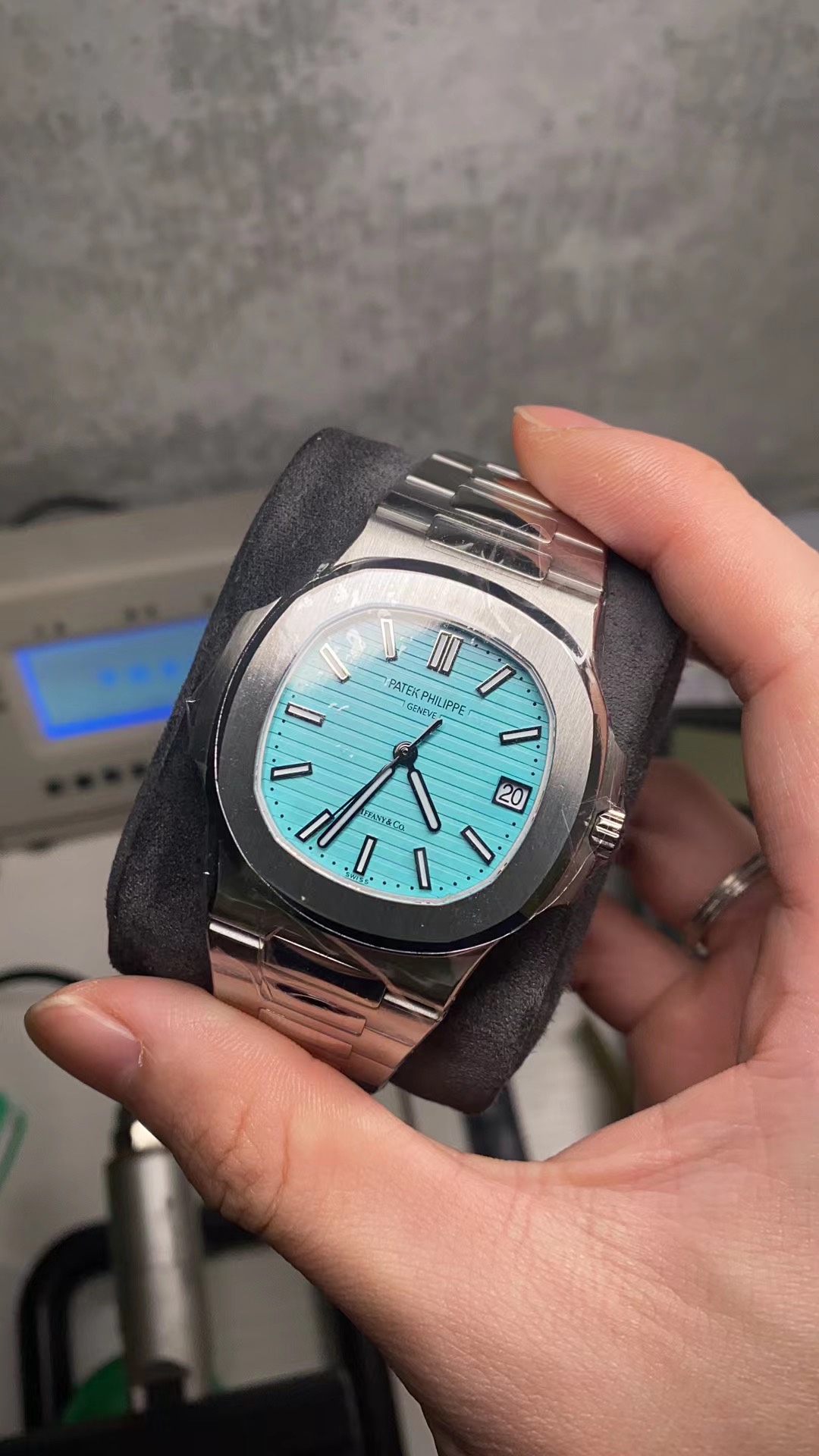
Dress-oriented references highlight this approach best. Calatrava models, in particular, benefit from 3K’s focus on proportion and restraint. Dial balance, hand length, and case slimness tend to work together, producing a watch that feels coherent rather than assembled from convincing parts.
In successful executions, a 3k patek super clone can feel mechanically confident as well. The experience of winding, setting, and wearing the watch often feels tighter and more deliberate than expected at this level.
Limitations and Model Sensitivity
3K’s precision comes at the cost of tolerance. It depends heavily on quality control, and when QC slips, flaws become obvious quickly. Small alignment errors or finishing inconsistencies stand out more because expectations are higher.
Not every product line receives equal attention. Some Nautilus and Aquanaut variations show uneven results across batches, particularly when demand pressures production speed. This is where disappointment often originates: buyers assume consistency across the catalogue, but 3K factory patek comparison only works model by model.
3K is not forgiving of blind trust. It rewards research and punishes assumption. When chosen carefully, it can outperform expectations. When chosen casually, it can feel inexplicably underwhelming.
KB / GR Factory — Where Value, Risk, and Inconsistency Meet
KB and GR exist because the market demands them. They fill the space between curiosity and commitment, where price sensitivity outweighs long-term certainty. Ignoring these factories would be dishonest, but over-romanticizing them would be worse. Understanding their role is essential to making sense of the broader kb factory patek replica and gr factory super clone landscape.
Why KB / GR Exists in the Market
These factories respond to speed and cost pressure. When a new Nautilus dial color appears or a limited Aquanaut reference gains attention, KB and GR are often among the first to react. Their production cycles are short, their tooling adjustments are rapid, and their pricing appeals to buyers who want access rather than refinement.
For some users, this makes sense. Entry-level exposure, short-term ownership, or curiosity-driven purchases all fit this profile. The watches are wearable, recognizable, and often visually convincing at first glance. This is why KB and GR continue to survive despite criticism. They are not mistakes in the system; they are a predictable outcome of how demand behaves.
| Lower Reward | Moderate Reward | Higher Reward | |
|---|---|---|---|
| Low Risk | — | PPF / PF Stable proportions, consistent dials, predictable wear experience | — |
| Medium Risk | ZF (System-Level) Reliable backbone, but not a direct choice | 3K (Selected Models) High precision when model choice is correct | R8 (Complex Pieces) Technical spectacle, not daily logic |
| High Risk | — | V9 (Legacy) Historically relevant, outdated today | KB / GR Fast access, visible variance, outcome-dependent |
Common Trade-Offs to Be Aware Of
Batch volatility is the defining risk. Two watches ordered weeks apart can differ in dial tone, bezel finishing, or bracelet feel. These are not theoretical issues. They appear repeatedly in real ownership cycles and explain why opinions about the same factory often contradict each other.
Visual consistency is another pressure point. Case proportions may look correct in photos, but edge sharpness, brushing uniformity, or engraving depth often vary. Over time, these inconsistencies become harder to ignore, especially for owners who wear the watch regularly rather than rotate it occasionally.
After-sales uncertainty completes the risk profile. Support depends heavily on the seller rather than the factory, and replacement parts may not match the original batch exactly. For buyers entering this tier, value comes with exposure. The watches can be satisfying, but they require acceptance of uneven outcomes.
Factory Differences Across Patek Models
No factory performs equally across all Patek lines. Assuming otherwise is the fastest way to make a poor decision. Each model family exposes different weaknesses and strengths, which is why a patek nautilus factory comparison rarely translates cleanly to Aquanaut or Calatrava.
Nautilus – Case and Bracelet Sensitive
Nautilus models punish imprecision. Brushing direction, bezel transitions, and bracelet articulation are immediately noticeable in daily wear. Small errors in finishing compound over time, especially as light hits the case from different angles.
Bracelet curvature matters more than many expect. A bracelet that looks correct flat can feel stiff or uneven once worn. Weight distribution also plays a role; imbalance reveals itself after hours, not minutes. This is where factory differences become obvious, even between watches that appear similar in photos.
Aquanaut – Strap and Comfort Driven
Aquanaut success is defined less by visual drama and more by comfort. Strap quality, flexibility, and how the case meets the rubber determine whether the watch disappears on the wrist or becomes a distraction.
Factories that cut corners here expose themselves quickly. Poor strap compounds stiffen with wear, and imperfect case-to-strap transitions create pressure points. This is why patek aquanaut factory quality cannot be judged by dial accuracy alone. Comfort reveals truth faster than appearance.
Calatrava – Proportion Over Hype
Calatrava models offer nowhere to hide. Without complex cases or integrated bracelets, proportion becomes the entire story. Dial balance, hand length, and case thickness define success.
Factories that chase surface finishing without controlling thickness often miss the point. A slightly bloated case or an over-polished bezel breaks the illusion immediately. In this segment, restraint outperforms ambition, which is why patek calatrava replica factory comparisons often favor quieter execution over visual flair.
Batch Consistency – The Most Ignored Factor in Factory Comparison
Factory names do not age watches; batches do. A highly praised release from last quarter says nothing definitive about what ships today. This disconnect sits at the center of clone watch batch consistency issues and explains much of the frustration buyers experience.
Factories adjust suppliers, tooling, and assembly pacing constantly. Even well-regarded names show measurable differences across months. Dial suppliers change. Bracelet finishing shifts. Movement regulation varies. None of this is dramatic enough to trigger announcements, but all of it affects ownership experience.
This is why current, real-world inspection matters more than reputation. A fresh, unfiltered set of photos tells you more about replica watch qc reality than a year-old endorsement ever could. The most reliable decisions are made close to the moment of production, not based on accumulated praise.
What Reviews Really Tell You (and What They Don’t)
Most reviews capture a moment, not a lifespan. They excel at showing what a watch looks like under controlled lighting, at ideal angles, often minutes after unboxing. They are far less reliable at predicting how the watch will feel after months of wear.
Commercial reviews tend to smooth over inconsistencies, focusing on what photographs well rather than what endures. Even honest reviewers cannot account for batch drift unless they handle multiple samples over time. This limitation sits at the heart of replica watch reviews explained properly.
Lighting hides flaws. Angles exaggerate strengths. Short-term impressions replace long-term friction. Clone watch review bias does not require dishonesty; it emerges naturally from how content is produced. Understanding this does not invalidate reviews, but it places them where they belong: as starting points, not verdicts.
How to Judge Factory Labels in Photos
Learning how to judge replica factory claims starts with unlearning trust in labels. Photos are tools, not proof, and factory identifiers inside them are among the weakest signals available.
Label Stickers, Cards, and Engravings
Stickers mean very little. They are easy to apply, remove, or replace, and they often change hands multiple times before a watch reaches an end user. Cards and tags follow the same logic. They travel well, but they do not anchor truth.
Engravings carry slightly more weight, but only when understood correctly. Caseback codes, movement markings, or clasp engravings can suggest a production lineage, yet none of them are immutable. Many are shared across batches or reused when tooling remains unchanged. Treat them as supporting details, not conclusions. Belief begins to drift into error the moment a label becomes the deciding factor.
What Photos Can and Cannot Prove
Super clone factory photos can show surface truths. You can evaluate case shape, dial alignment, brushing direction, and obvious finishing flaws. You can compare proportions and identify glaring inconsistencies. These are valid uses of imagery.
What photos cannot reveal is more important. They do not show movement regulation quality, long-term wear comfort, bracelet stretch over time, or how tolerances behave after months of use. They also hide batch variance unless multiple examples are presented side by side. Photos assist judgment, but they cannot replace it.
Other Factories Often Mentioned — Why Most Don’t Change the Decision
Beyond PPF, 3K, and KB/GR, several factory names still circulate in seller narratives, but few materially affect real-world decisions. ZF functions more as an upstream backbone than a standalone Patek choice, influencing supply chains and assembly logic rather than offering a distinct philosophy. R8 operates in a separate category altogether, focused on complex showcases like tourbillons and skeletonized pieces that prioritize technical display over daily-wear stability. V9 and similar legacy names matter mainly as historical reference points, having filled gaps before newer approaches overtook them. In practice, expanding the factory list adds recognition but rarely adds clarity. Most outcomes in the current Patek super clone landscape are still shaped by a small number of production mindsets, not by an ever-growing catalog of labels.
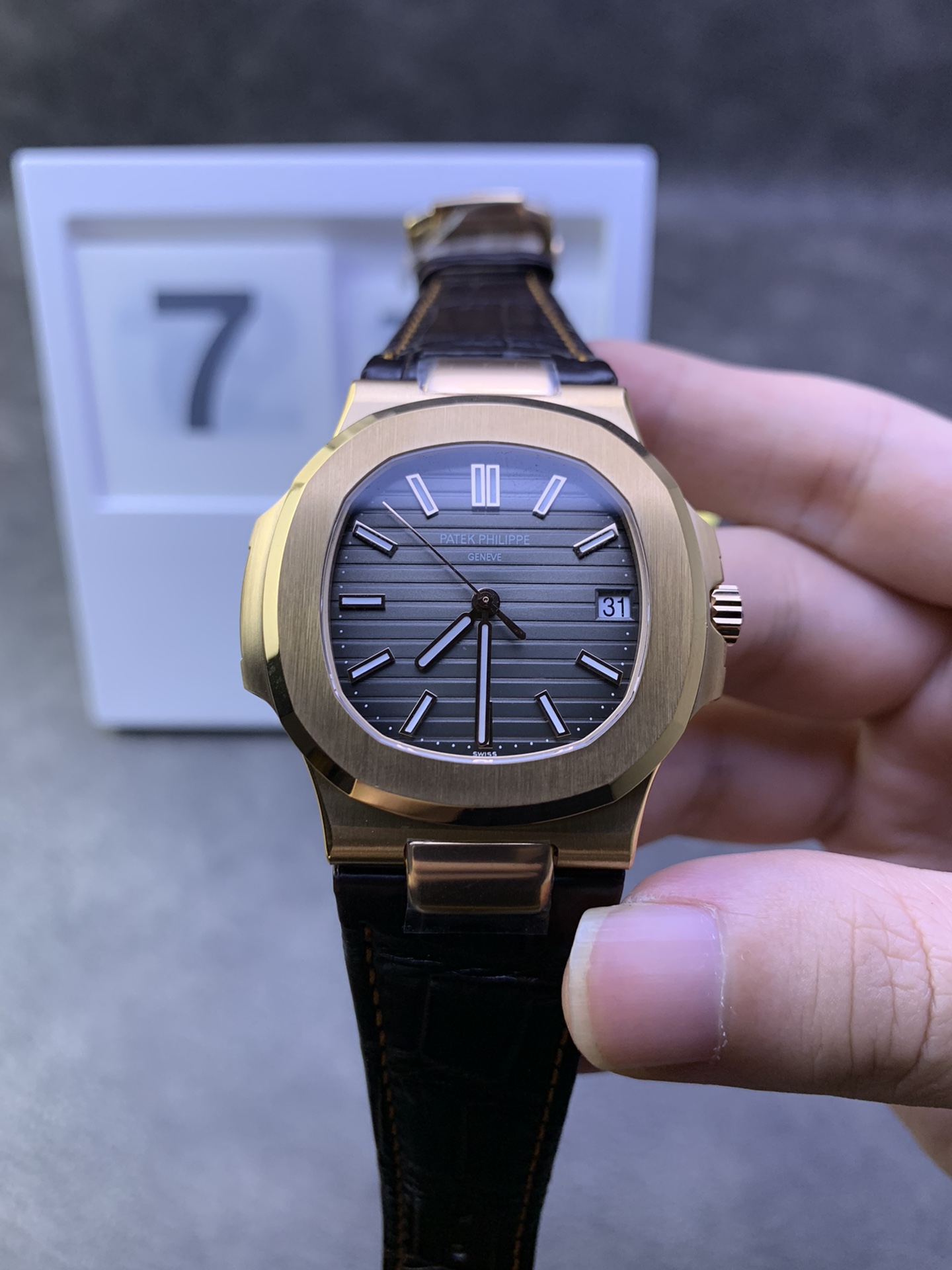
Which Factory Is “Best” for You? The Right Question to Ask
The wrong question asks for a winner. The useful question asks for alignment. Which clone factory is best patek depends entirely on what you value when the novelty fades.
If stability matters most, factories with conservative design choices and narrower batch variance tend to satisfy longer. They trade excitement for predictability and reward owners who wear their watches often rather than admire them occasionally.
If appearance dominates your priorities, precision-focused factories can deliver striking results when the right model is chosen. The risk is not invisibility; it is inconsistency. Success depends on selecting proven references rather than assuming catalog-wide strength.
If budget sensitivity defines your decision, acceptance becomes part of ownership. Lower entry cost often brings higher variance, weaker after-sales support, and the need for realistic expectations. Patek super clone factory advice at this level is less about avoidance and more about informed consent.
Final Thoughts – Factories Don’t Buy Watches, People Do
Factories shape outcomes, but judgment determines satisfaction, and the final decision belongs to the person who will live with the watch, not the label attached to it.