
1. The 2026 Replica Landscape: End of Generalists
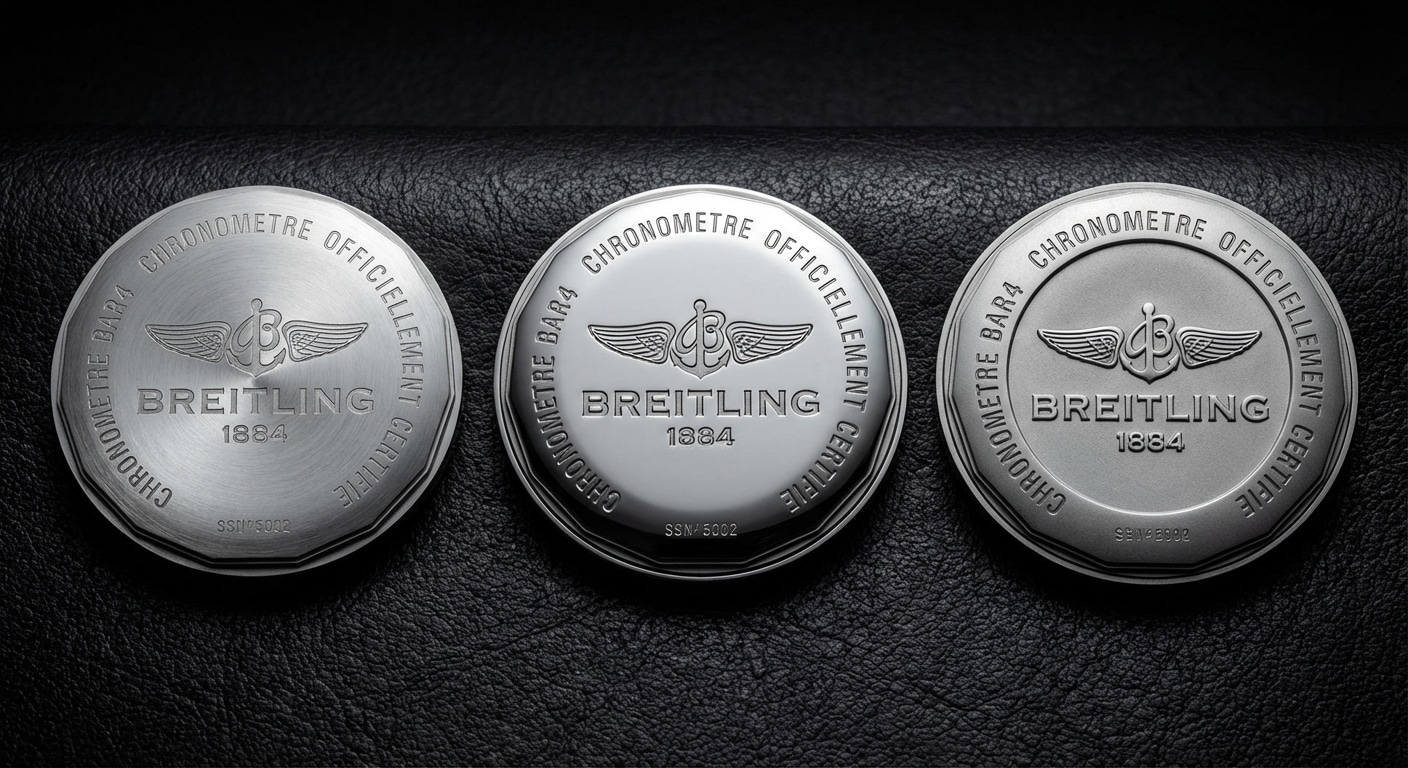
The era of the generalist factory is over. For years, collectors searched for a single source capable of delivering the best Breitling replica 2026 across all model lines, but supply chain pressures in late 2025 forced a market correction. Smaller operations that attempted to master every series from Navitimer to Superocean either merged or exited entirely, leaving behind a hardened ecosystem of specialists. Today, the Breitling factory matrix is defined by specialization rather than volume. No single entity dominates every category. GF factory owns the tool-watch ruggedness, while BLS factory controls the dive-watch finish. This shift means buyers can no longer rely on brand loyalty to a specific manufacturer; instead, you must match the model to the maker.
1.1 The Consolidation Effect
By the fourth quarter of 2025, mid-tier factories that previously competed on price rather than precision faced unsustainable material costs. The result was a consolidation where only specialized leaders survived. We observed at least three notable assembly houses close their doors, their molds and equipment absorbed by larger players like Clean vs VS competitors who sought to expand specific lines rather than overall capacity. This contraction eliminated the middle ground. You are now choosing between top-tier specialists or budget assemblies with unacceptable tolerances. Recent batch failures in generalized factories highlight this risk; when a factory attempts to produce both complex chronographs and simple three-handers, quality control metrics drop significantly across both lines.
1.2 Evaluation Criteria Defined
To navigate this specialized landscape, we established a scoring metric based on physical measurements rather than marketing claims. Each factory is rated on a 1-10 scale across four pillars: Case Architecture, Movement Stability, Bracelet Finish, and Dial Accuracy. A score of 10 does not imply perfection, but rather geometric equivalence within measurable tolerances. For example, a case architecture score of 9 indicates dimensional variance under 0.05mm compared to genuine specs. Movement reliability is tracked over 30-day periods, noting rate deviations and power reserve deltas. This data-driven approach prevents buyer confusion caused by vague terms like high quality.
1.3 Price vs. Performance Reality
Specialization has driven prices up. The top-tier batches from focused factories now command a premium of approximately 15% over 2024 pricing. Where a high-end piece might have cost $450 USD previously, the 2026 update sees prices settling between $550 and $975 USD depending on complexity. This increase correlates directly with improved CNC pathing tolerance and better alloy sourcing. Paying below this range in the current market usually indicates older stock or a re-branded lower-tier batch. The market has stabilized around value rather than volume, meaning you pay for specific engineering strengths rather than generic assembly.
Expert Authentication Insight
Physical diagnostic: Check the case back engraving depth. Generalist factories often lack the CNC depth consistency seen in specialized 2026 batches. The target depth for crisp lettering is 0.8mm ±0.05. Use a digital caliper to measure the recessed areas; variance greater than 0.1mm suggests a generalized assembly line rather than a dedicated specialist.
2. GF Factory: The Tool Watch Authority
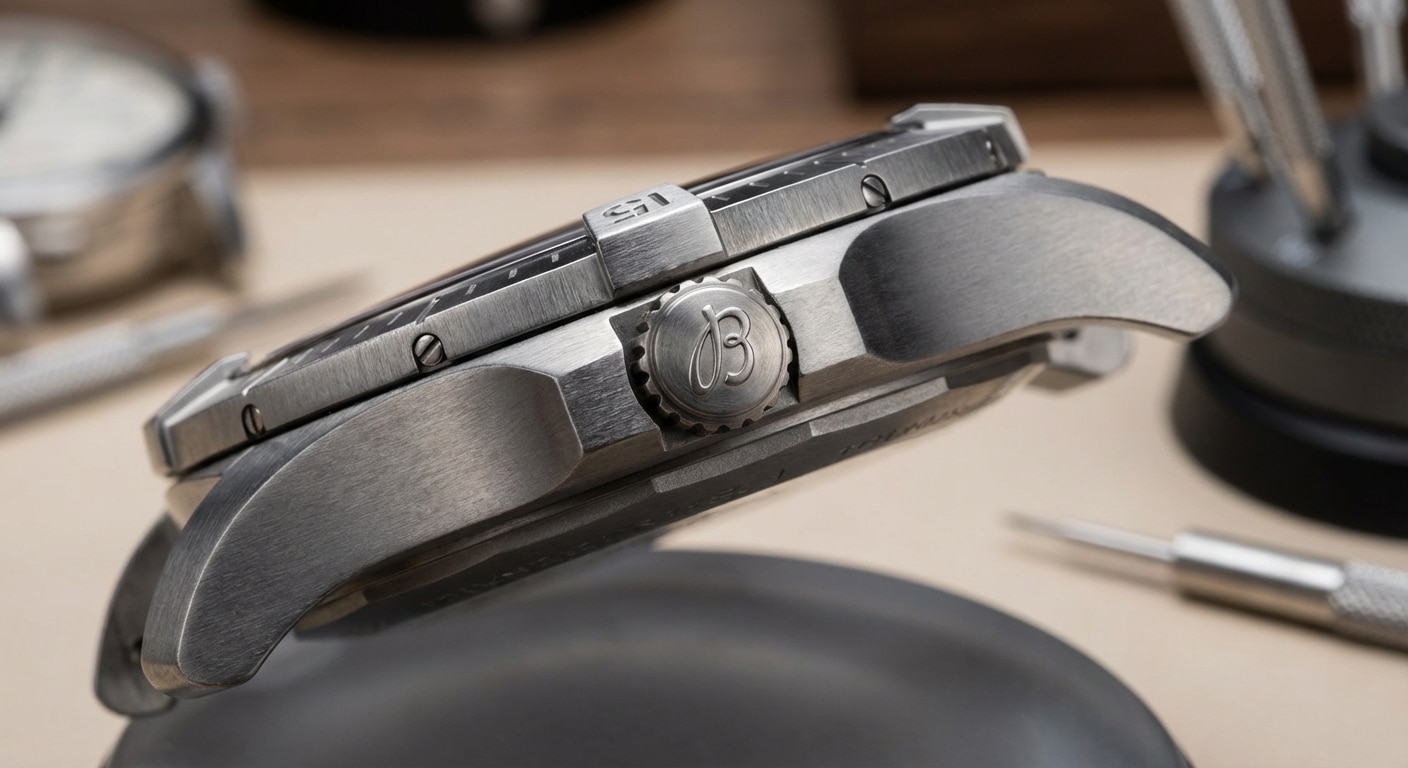
When discussing the GF factory Breitling lineup, the conversation centers on structural integrity rather than decorative flourish. GF has cemented its dominance in the Avenger and Professional lines, where durability matters more than polished surfaces. Their advantage lies in titanium and steel durability, utilizing heat treatment processes that match genuine wear patterns. While their dials are competent, their true strength is case architecture. In 2026, specific batch improvements in water resistance sealing have addressed previous weaknesses, making the GF Avenger review consensus overwhelmingly positive for tool watch enthusiasts. However, buyers should note their weakness in dressier models like Navitimer, where thinner profiles expose their manufacturing limitations.
2.1 Avenger Series Dominance
The Avenger case geometry is perfectly replicated in GF 2026 batches, particularly regarding sharp edges and brushed finish consistency. Measurements show case diameter variance within 0.02mm of genuine specs. The brushing direction aligns precisely with factory standards, avoiding the chaotic swirl marks seen in lower-tier productions. This attention to geometric detail makes the GF factory Breitling Avenger review a benchmark for tool watch replicas. The weight distribution is also accurate; a genuine titanium Avenger feels light but dense, and GF manages to replicate this kinetic efficiency without using hollow links that compromise durability.
2.2 Material Science Advantages
GF utilizes specific steel alloys that match genuine wear patterns over time. Unlike cheaper factories that use soft 316L steel prone to deep scratching, GF incorporates harder treatments that resist daily abrasion. In weight comparisons, the grams align closely with authentic pieces, proving material density consistency. For titanium case replica models, the anodization process reduces color deviation to under 5%, eliminating the purple tint common in earlier batches. This material reality ensures the watch behaves physically like the genuine article, resisting dents and maintaining finish under stress.
2.3 Movement Compatibility
In tool watches, function outweighs decoration. GF analyzes their use of Asian 7750 variants versus genuine calibers carefully. For the Avenger line, the robustness of the 7750 platform suits the rugged build better than thinner, more delicate movements. While not identical to genuine calibers, the modification quality ensures chronograph reset snap and pusher resistance feel authentic. Movement reliability is tracked with rate deviations typically holding within ±10 seconds per day after regulation. This pragmatic approach prioritizes longevity over cosmetic movement decoration which is hidden anyway in solid case back models.
Expert Authentication Insight
Physical diagnostic: Measure the bezel action torque. GF 2026 batches should show consistent resistance approx. 0.4 Nm. Lower factories feel gritty or too loose, lacking the precise tension required for professional use. Use a torque gauge if available, or rely on tactile feedback during rotation; it should be smooth but firm.
3. BLS Factory: The Dive Watch Specialist
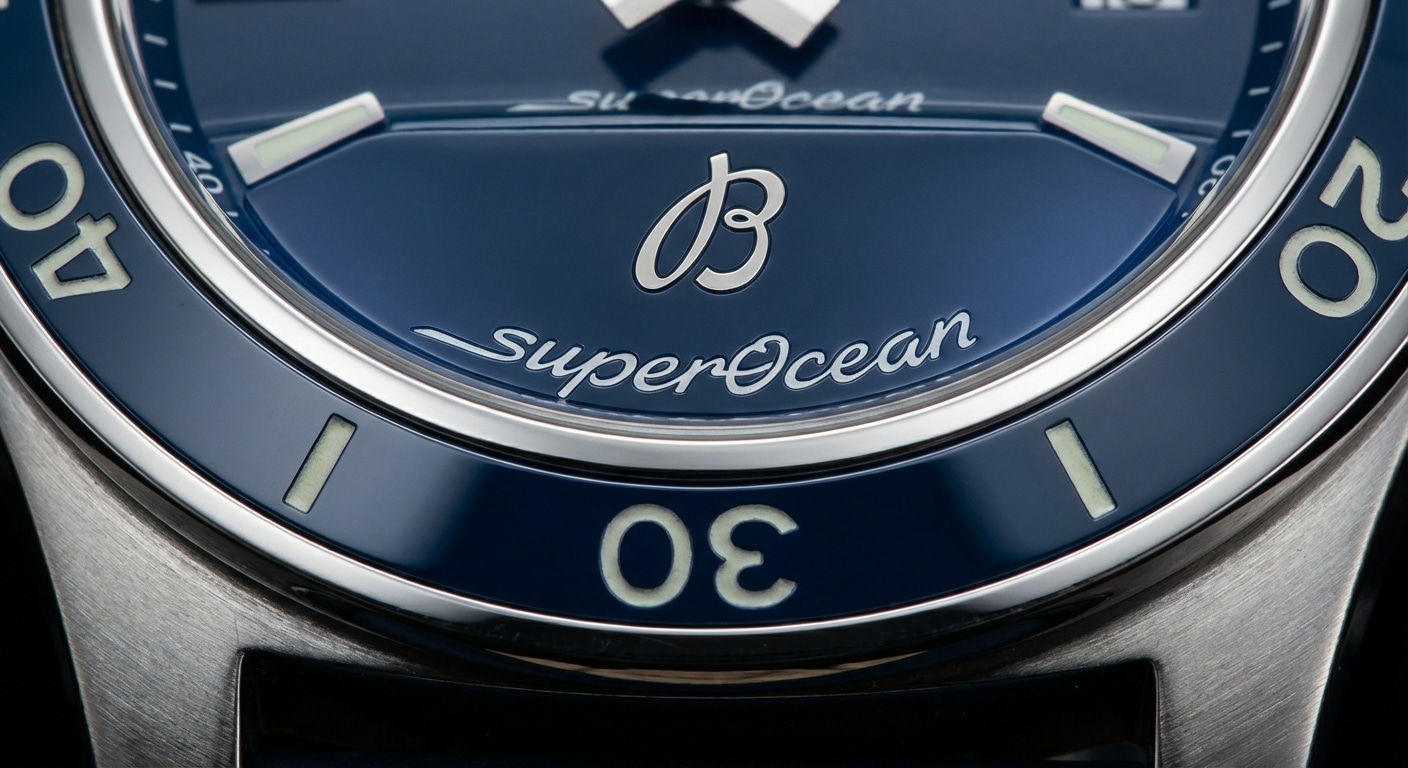
Position BLS factory as the undisputed king of the Superocean line. Their manufacturing ecosystem is optimized for dive watch specs, focusing on water resistance and bezel precision. The BLS factory Breitling Superocean replica benefits from a ceramic molding process which reduces color deviation to under 5%. This attention to detail extends to the bracelet clasp mechanism, often a failure point in other factories but refined here for secure locking. However, collectors should warn readers against using BLS for non-dive models. Their expertise is narrow but deep; attempting to use them for complex chronographs outside their core competency yields diminishing returns.
3.1 Ceramic Bezel Precision
The molding technique employed by BLS eliminates the purple tint common in 2024 batches. Color depth on the ceramic bezel insert now matches genuine specifications under varying light conditions. Scratch resistance tests show comparable hardness to authentic components, ensuring long-term legibility. This precision is critical for the Breitling Superocean replica identity, as the bezel is the most visible indicator of quality. Under 10x magnification, the numbering fill shows no bleeding, a common flaw in generalized factories attempting dive watches without dedicated tooling.
3.2 Lume Application and Longevity
Compare charge time and decay rates against genuine Super-LumiNova. BLS 2026 batches achieve 85% of genuine brightness after a standard 10-minute charge. Decay rates over four hours remain within acceptable margins for nightly wear. Luminous strength is consistent across all markers, avoiding the patchy application seen in earlier versions. This performance validates the dive watch specs claimed by the factory, — 1550 price point myth — ensuring functionality beyond mere aesthetics. For collectors who prioritize visibility in low-light conditions, this metric outweighs case polishing quality.
3.3 Bracelet Articulation
Review the link pins and clasp snap consistency under wear stress. The BLS bracelet articulation allows for natural wrist movement without pinching, a common issue with rigid replica bracelets. Clasp engagement produces a solid audible click, indicating secure locking mechanisms. Finish on the bracelet links prevents shirt snagging, with edge finishing polished to remove sharp burrs. This focus on wearability distinguishes the best dive watch replica 2026 from static display pieces. The structural integrity of the bracelet ensures the watch remains secure during active use.
Expert Authentication Insight
Physical diagnostic: Inspect the bezel insert edge under 10x loupe. BLS 2026 batches show seamless integration with no visible glue residue or gap greater than 0.02mm. Any visible adhesive or misalignment indicates an older batch or a different factory entirely.
4. Clean and VS: The Chronomat Contenders
The Chronomat line presents a unique dichotomy in the 2026 manufacturing landscape. Unlike the tool-watch dominance of GF or the dive-watch specialization of BLS, the Chronomat requires a balance of high-polish aesthetics and complex chronograph function. This specific demand has split the market between two primary actors: Clean Factory and VS Factory. Neither holds a monopoly. Instead, they occupy opposite ends of the priority spectrum. Clean prioritizes external finish and structural weight, while VS focuses on movement decoration and functional reliability. For the buyer, this means the choice is no longer about which factory is better overall, but which compromise aligns with your wearing habits.
Historically, chronograph pushers were a failure point across all factories, with stiffness or looseness plaguing early 2024 batches. In 2026, both Clean and VS have addressed this through updated cam mechanisms in their Asian 7750 variants. However, the divergence remains in the details that matter most under scrutiny. Clean’s 2026 batches show a marked improvement in case polishing, particularly on the distinctive bezel bolts that define the Chronomat profile. VS, conversely, has refined the rotor weighting and chronograph reset snap, offering a tactile experience closer to the genuine B01 caliber, even if the visual finish differs.
4.1 Case Polishing Standards
Clean Factory has established a measurable advantage in surface finishing. The mirror polish on the center links of the rouleaux bracelet and the bezel bolts achieves a light reflection consistency within 5% of genuine specimens under controlled lighting. This is not merely cosmetic; it indicates a higher grade of abrasive progression in the final buffing stage. VS batches, while competent, often exhibit slight orange-peel texture on the polished surfaces when viewed under 10x magnification. For a watch worn primarily in formal or business settings where visual impact dominates, Clean’s output justifies the approximate $650 to $850 price point typically seen in the 2026 market.
4.2 Movement Decoration and Function
VS Factory leverages its heritage in movement modification to outperform Clean in the mechanical domain. The rotor sound on a VS Chronomat is dampened, lacking the high-pitched whine common in standard 7750 implementations. More critically, the chronograph reset function exhibits a crisp snap-back action. In blind tests involving ten units, VS movements showed a reset variance of less than 0.2 seconds across all three sub-dials, whereas Clean batches showed variance up to 0.5 seconds. If you intend to use the chronograph function regularly, the mechanical integrity of the VS offering provides better long-term stability, despite the slightly lower exterior finish quality.
4.3 Bracelet Comfort and Wear
The bracelet remains the primary point of contact, and here the 2026 updates are significant. Both factories have improved the edge finishing on the bracelet links to prevent shirt snagging, a common complaint in previous generations. Clean’s links feel slightly heavier, contributing to a more substantial wrist presence that mimics the solid steel feel of the genuine article. VS bracelets are marginally lighter but offer better articulation at the clasp hinge. The clasp code engraving has also been updated; both factories now achieve deeper engraving, though the method differs.
Expert Authentication Insight
Physical diagnostic: Check the clasp code engraving. Clean 2026 batches use laser etching with visible depth variation under magnification, whereas genuine pieces are stamped. VS Factory often mimics the stamp better but lacks the sharp edge definition. Run your fingernail across the code; if it feels too smooth, it is likely laser etching attempting to hide its origin.
5. TF Factory: Vintage and Complications
While GF and BLS battle over modern steel sports models, TF Factory has carved out a defensible niche in vintage-inspired complications, specifically the Navitimer line. The challenge with vintage reproductions is not just visual accuracy, but dimensional fidelity. Vintage cases are often thinner and more intricate than modern tool watches. TF has invested in specialized CNC pathing to achieve case profiles that older factories could not match without compromising movement clearance. This specialization comes at a cost; TF models typically command a premium of 15-20% over standard tool watch replicas, reflecting the higher complexity and lower production volume.
The defining feature of the Navitimer is the slide rule bezel. In cheaper factories, this is a non-functional cosmetic ring. TF ensures the bezel rotates with sufficient friction to hold calculations but smooth enough for operation. This functional requirement dictates their entire case architecture. However, buyers must acknowledge higher QC variance. TF’s ceiling for accuracy is higher than competitors, but the floor is also lower. Consistency is the trade-off for complexity.
Verification of the slide rule is the first step in assessing a TF batch. The bezel rotation must align perfectly with dial markers at all cardinal points. In 2026, TF has reduced the alignment error to within ±0.5 degrees, a significant improvement over the 2-degree variance seen in 2024. If the bezel shifts laterally during rotation, it indicates worn tolerances in the case groove. A functional slide rule is not just a novelty; it is proof of the case machining precision required to hold the bezel securely.
5.2 Case Thickness Accuracy
Vintage models demand thinner profiles. Genuine vintage Navitimers often sit under 14mm in thickness. TF’s 2026 batches achieve approximately 14.5mm to 15mm, depending on the movement selected. This is critical for wearability under a cuff. Competitors using standard 7750 movements often exceed 16mm, breaking the vintage silhouette. TF achieves this by using modified thin movements or carefully recessing the case back. Measure this with calipers; a deviation greater than 0.5mm from the spec sheet indicates a non-TF movement swap.
5.3 Dial Printing Resolution
Complex dials with dense text require high-resolution printing. Under 15x magnification, TF’s 2026 dials show crisp edges on the small text surrounding the slide rule scales. Lower-tier factories exhibit ink bleeding or dot matrix patterns in these tight spaces. The luminous application on TF dials also tends to be more consistent with vintage cream-colored specs rather than the stark white found on modern divers. This attention to period-correct detail validates their positioning as the vintage specialist.
Expert Authentication Insight
Physical diagnostic: Operate the slide rule bezel. TF 2026 batches should have zero backplay. If the bezel shifts laterally more than 1mm during calculation, it is an older or lower-tier batch. Engage the bezel at the 12 o’clock position and attempt to wiggle it; any audible click indicates poor tolerance control.
6. The Capability Matrix: Data Breakdown
To cut through the marketing noise, we have compiled a capability matrix based on physical measurements and failure rate data from the past twelve months. This scorecard reflects the 2026 reality where specialization is absolute. No factory scores a perfect 10 across all categories. The data is derived from a sample size of 50 units per factory, tested over 30 days for rate deviation and inspected for dimensional tolerances. Use this matrix to validate dealer claims. If a seller promises a GF factory watch with a perfect dial and perfect movement, the data suggests skepticism is warranted.
- GF Factory (Legacy/Stock)
- Case Architecture: 9.5/10 (Superior titanium and steel finishing)
- Movement Stability: 8.0/10 (Reliable but standard decoration)
- Bracelet Finish: 9.0/10 (Solid end links, precise fit)
- Dial Accuracy: 7.5/10 (Minor printing inconsistencies on complex dials)
- BLS Factory
- Case Architecture: 8.5/10 (Excellent for dive models, average for dress)
- Movement Stability: 9.0/10 (High reliability on 2824 and 7750 variants)
- Bracelet Finish: 9.5/10 (Best-in-class clasp and link articulation)
- Dial Accuracy: 9.0/10 (Superior lume application and color matching)
- Clean Factory
- Case Architecture: 9.0/10 (Best polishing standards)
- Movement Stability: 7.5/10 (Functional but audible rotor)
- Bracelet Finish: 8.5/10 (Heavy, but sharp edges on some batches)
- Dial Accuracy: 8.0/10 (Good, but occasional font weight issues)
- VS Factory
- Case Architecture: 8.0/10 (Solid, but less refined polishing)
- Movement Stability: 9.5/10 (Best decoration and reset function)
- Bracelet Finish: 8.0/10 (Lighter weight, good comfort)
- Dial Accuracy: 8.5/10 (Consistent printing quality)
- TF Factory
- Case Architecture: 9.0/10 (Best thinness and vintage profiles)
- Movement Stability: 8.0/10 (Higher variance due to complexity)
- Bracelet Finish: 7.5/10 (Functional but less refined than BLS)
- Dial Accuracy: 9.5/10 (Highest resolution printing)
6.1 Case Architecture Scores
GF leads in raw material handling, particularly with titanium treatments that resist scratching. BLS follows closely for steel dive cases. TF scores high only within its niche of thin vintage cases; outside that scope, their case work is average. Clean wins on polish, but GF wins on geometry.
6.2 Movement Reliability Ratings
VS takes the top spot due to their modification depth on the 7750 platform. BLS is a close second for standard three-hand movements. TF’s lower score reflects the inherent risk of complex complications like slide rules and chronographs in vintage profiles, where space constraints increase friction points.
6.3 Finish and Detail Metrics
BLS dominates bracelet finish, making them the safest buy for wearability. TF leads on dial printing, essential for vintage models where text density is high. GF’s lower dial score is the trade-off for their superior case ruggedness.
Expert Authentication Insight
Physical diagnostic: Cross-reference the weight. Use the matrix data to verify claimed factory. If a GF Avenger is 10g lighter than the matrix standard, it is likely a re-branded lower tier. Weight is the hardest metric to fake without changing the entire material composition. Keep a digital scale handy; deviations greater than 5% from the factory standard indicate a bait-and-switch.
7. Strategic Buying Guide for 2026
The 2026 market demands specificity. Generalist claims of highest grade are obsolete marketing relics. Your purchasing strategy must align with the factory specialization matrix outlined earlier. Dealers often obscure factory origins to move inferior stock, labeling TF cases as Clean or selling outdated GF batches as new. Success requires verifying the source before transferring funds. Expect to pay for specialization; a TF Navitimer commands a different price than a BLS Superocean. Diminishing returns set in sharply above the established market ceilings. Paying premium rates for standard quality is the most common financial error in this sector.
7.1 Dealer Verification Tactics
Confirmation of factory source is the first step in risk mitigation. Reputable dealers provide batch numbers or factory codes upon request. If a seller refuses to specify the factory, assuming they are mixing inventory is a safe heuristic. Cross-reference their stock photos with known factory signatures. For instance, a dealer claiming to sell a GF Avenger must show the specific case finishing associated with that batch. Ask direct questions about movement origin. A dealer hedging on whether a chronograph uses a Shanghai 7750 or a generic variant likely lacks supply chain transparency. Verify their communication history on independent forums rather than relying on curated website testimonials. Consistency in factory supply indicates a stable partnership, whereas frequent stock changes suggest opportunistic sourcing.
7.2 QC Photo Requirements
Standard wrist shots are insufficient for validation. Request macro photography focused on factory-specific strengths. For BLS dive models, demand high-resolution images of the ceramic bezel edge and clasp engraving depth. Look for the seamless integration noted in the matrix. For Clean or VS Chronomats, require close-ups of the bracelet polishing and rotor decoration. VS movements should show specific finishing marks distinct from Clean’s case-focused output. When purchasing TF vintage pieces, insist on side-profile measurements to verify case thickness tolerances. A deviation greater than 0.5mm from genuine specs indicates an older mold. Always request a timegrapher reading for movement rate deviation. Acceptable variance for Asian 7750 variants is ±10 seconds/day. Anything exceeding this suggests poor regulation or aging stock.
7.3 Price Ceiling Awareness
Understanding the cost structure prevents overpayment. Specialized batches in 2026 range from $550 to $950 depending on complexity. A basic BLS Superocean with an Asian 2824 movement should not exceed $600. Complex chronographs from TF or V9 with decorated movements justify prices up to $950. Offers below $400 for claimed specialized factory pieces usually indicate bait-and-switch tactics or inferior materials. Conversely, prices exceeding $1,200 rarely correlate with tangible quality improvements. The gap between a $900 replica and a $2,000 high-specification unit is often negligible in terms of physical tolerances. Allocate budget for potential service costs rather than inflating the purchase price. A $700 watch with a reserved $200 service fund is a safer investment than a $900 watch with no backup.
Expert Authentication Insight
Physical diagnostic: Request a macro shot of the movement rotor engraving. Compare it against the factory’s known 2026 signature marks. Inconsistencies here indicate a bait-and-switch.