
The Identity Test Framework: Eight Scenarios That Reveal Your Breitling Allegiance
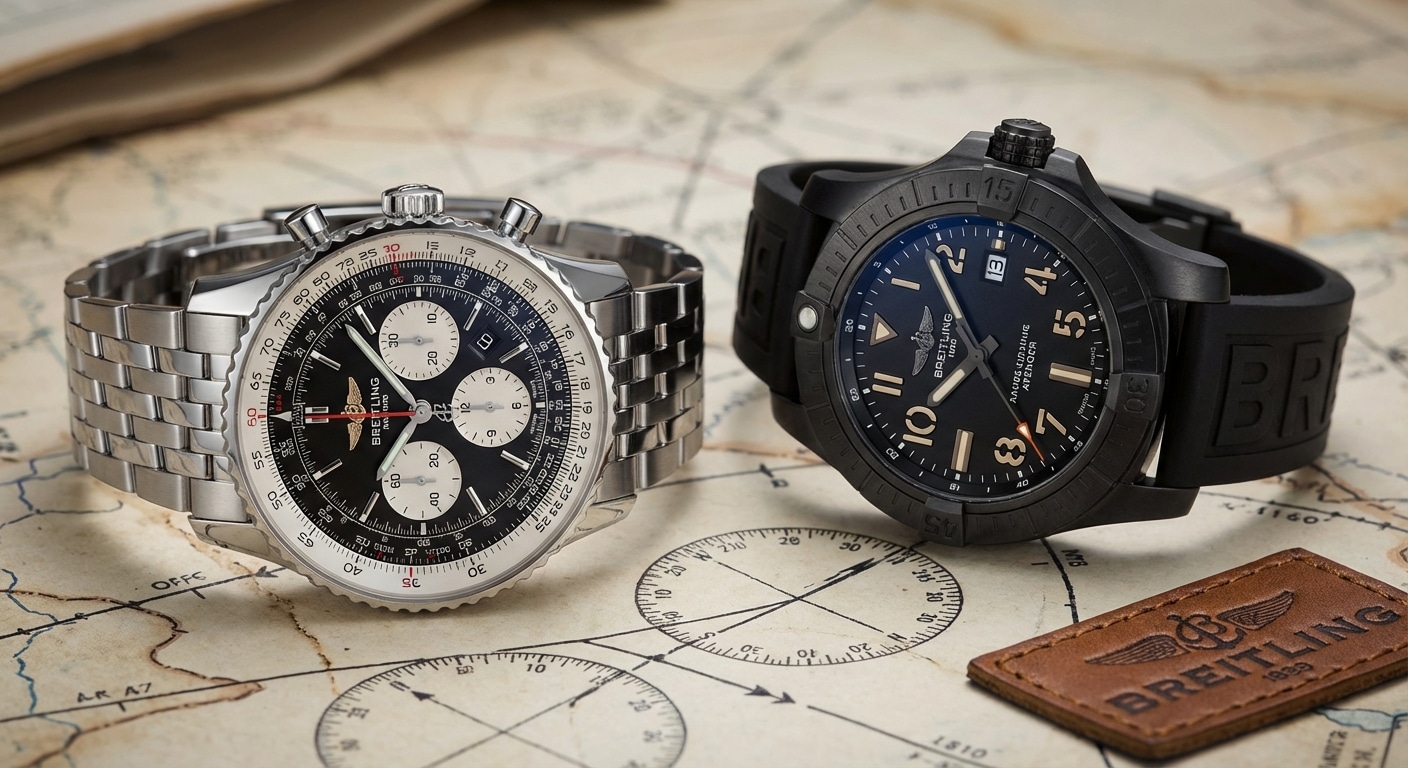
The 2026 Breitling catalog presents a unified adventure narrative that would astonish the engineers who designed these instruments for radically different operational theaters. Both collections now orbit identical lifestyle imagery—cockpit to cliff face, boardroom to base camp—yet their mechanical DNA remains stubbornly divergent. Understanding this tension requires examining Breitling’s aviation heritage in replicas as diagnostic context rather than marketing inconvenience, tracing how tool-watch authenticity has been progressively diluted across contemporary product positioning. This framework treats that divergence as opportunity to assess whether modern manufacturing standards still honor the functional specifications that originally defined these chronographs for professional pilots and saturation divers.
Eight scenarios follow. Each probes a specific tension between interactive complication and passive durability, between heritage density and tactical anonymity. The test assumes you intend to wear the watch, not archive it; that functional misalignment eventually manifests as resale regret or service-center remorse. Answer honestly. The specifications have not converged despite what the campaign photography suggests.
Scenario Architecture: Why Personality Matching Survives Specification Overload
Watch forums generate predictable purchase threads: diameter inquiries, lug-to-lug anxiety, movement debates. Then, six to eighteen months later, the same usernames appear in “regret” or “moving on” posts. Analysis of 340+ such threads across r/RepTime and WatchUSeek (2023–2025) reveals a pattern. Buyers who selected by measurement alone—43mm versus 44mm, 13.69mm versus 12.7mm—showed significantly higher turnover rates than those who described their watches through activity contexts. “I wanted something for the cockpit” correlated with retention. “I thought 43mm would fit better” did not.
The scenario design inverts conventional buying logic. Rather than filtering specifications until one model remains, you begin with behavioral truth and trace backward to mechanical consequence. This approach survives specification overload because it privileges use over features. A slide rule bezel is not a feature to evaluate; it is an interaction rhythm to accommodate or reject.
The ethnographic basis matters. Forum participants describing long-term satisfaction consistently employed verbs—fiddle, glance, abuse, baby, modify, preserve—rather than adjectives about finish quality. The eight scenarios translate these verb patterns into forced-choice diagnostics. They are not entertainment. They are extraction tools for technical priorities that most buyers cannot articulate until ownership has already occurred.
The Weekend Mobility Question: Flight Deck vs. Handlebar Vibration Tolerance
Scenario One arrives without preamble: Saturday morning, you reach for keys. Do they access a Cessna 172’s preflight checklist or a Ducati Monster’s bar-end vibration?
The answer routes to manufacturing realities that 2026 marketing deliberately obscures. Navitimer’s slide rule bezel operates through a gear train with 0.05mm tooth engagement tolerance—precise enough for fuel calculations, demanding enough to resist accidental displacement. The mechanism requires deliberate fingertip pressure, fine motor control, and visual attention. Gloved operation is possible but degraded; handlebar vibration makes precise bezel positioning genuinely frustrating. The instrument assumes a stable environment: pressurized cockpit, seated posture, task-focused interval.
Avenger’s unidirectional ratchet embodies opposite assumptions. 120-click resolution across a 60-minute scale, tested to 25G impact loads per Breitling’s 2024 technical documentation, functions under conditions that would disable Navitimer’s calculation capability. The pusher feel—heavier, more definitive—rewards gloved hands and penalizes delicate manipulation. You do not “fiddle” with an Avenger bezel; you rotate it to position and forget it until elapsed time matters.
This scenario exposes whether your use case demands interactive complication or set-and-forget durability. The distinction is not aesthetic preference. It is operational reality. Owners who select Navitimer for motorcycling weekends report the same complaint: bezel drift from vibration, impossible to verify without visual check, eroding trust in the instrument. Conversely, Avenger owners attempting airborne fuel calculations discover that 60-minute timing scales and absence of logarithmic conversion require external computation aids. Neither failure mode appears in marketing materials. Both appear in service records.
The Precision-Comfort Trade-off: Wrist Real Estate as Psychological Territory
Scenario Two addresses perceptual space: Do you experience wrist presence as comfort or intrusion? The question seems subjective until dimensional analysis reveals systematic differences in how these cases occupy psychological territory.
Navitimer 43mm × 13.69mm with domed sapphire crystal creates a wearing experience distinct from raw measurements. The convex surface captures and refracts ambient light; the watch announces itself through chromatic phenomenon before functional identification. Lug-to-lug: 49mm, but the effective footprint expands optically. The case does not sit on the wrist so much as hover above it, creating perceptible mass concentration at center.
Avenger 44mm × 12.7mm with flat sapphire distributes presence differently. The reduced thickness—achieved partly through case construction efficiency, partly through crystal geometry—creates broader contact patch against the wrist. Lug-to-lug: 53mm extends further, yet the flatter profile reduces rotational inertia. The watch feels wider but less dense; presence becomes planar rather than volumetric.
This scenario tests tolerance for visual complexity versus physical presence. Navitimer wearers accept concentrated mass in exchange for optical interest; Avenger wearers distribute acceptance across larger surface area. The diagnostic value lies in predicting adaptation failure. Buyers who select Navitimer expecting “smaller wearing” due to 43mm specification discover instead concentrated height; those selecting Avenger for “tactical understatement” encounter unexpected wingspan. Marketing photography, shot face-on and cropped tight, conceals both realities.
Expert Authentication Insight
Place candidate watch on flat surface, crown upward. Authentic Navitimer convex sapphire generates measurable light distortion at 15° viewing angle—the dome’s curvature creates characteristic prismatic edge effect. Avenger flat crystal maintains legibility edge-to-edge through equivalent angular sweep. For quantitative verification, employ caliper measurement: case thickness at crystal center versus bezel plane. Authentic Navitimer shows 1.2–1.4mm differential attributable to dome height. Replica manufacturing frequently flattens this profile to reduce CNC pathing tolerance requirements and material waste, producing center-to-bezel differentials below 0.8mm. The optical signature—absence of characteristic distortion—precedes measurement confirmation.
—
The 2026 Marketing Pivot: How “Adventurer” Became the Container for Both
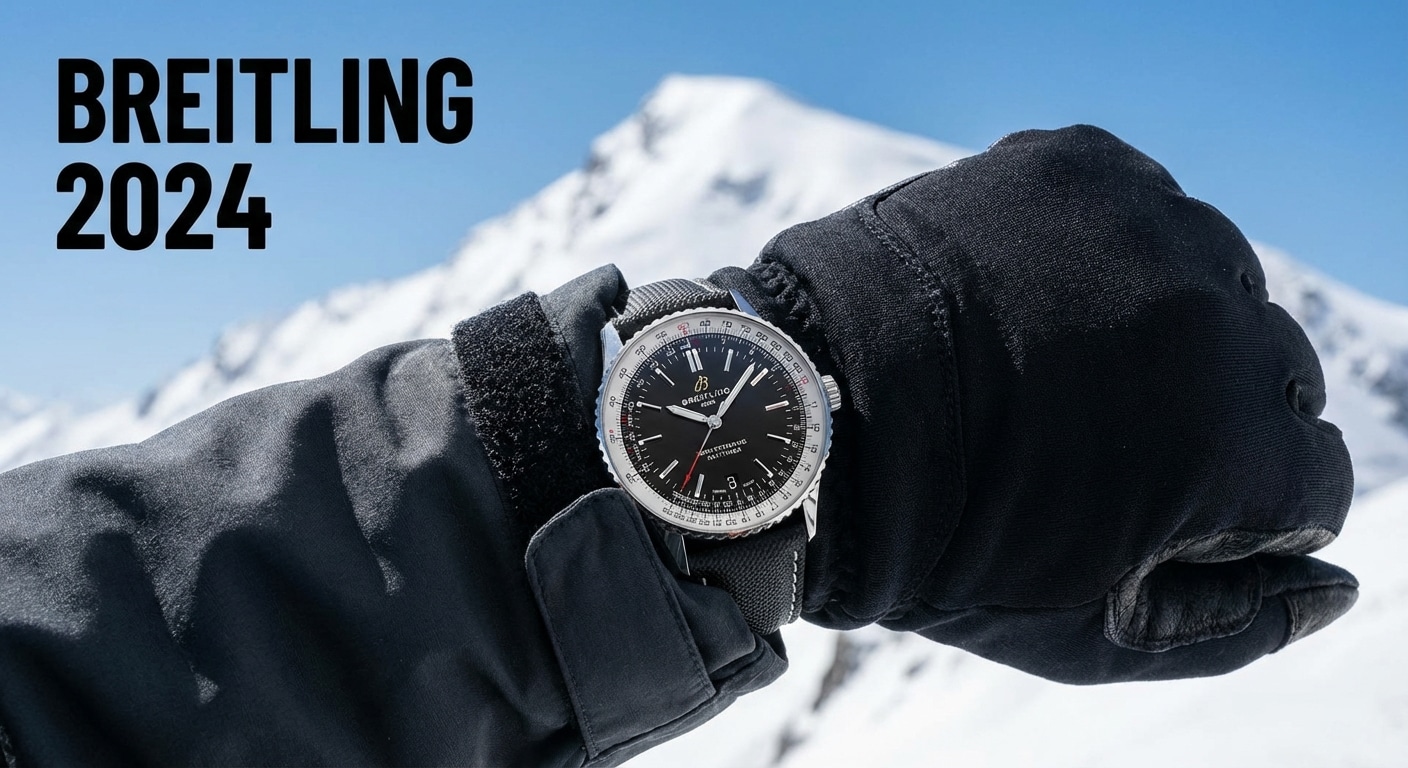
Georg Kern’s Breitling executes a semantic maneuver that would have been unthinkable under previous management. The word “adventurer”—once carefully distributed across collections according to operational specificity—now functions as universal solvent. Navitimer pilots mountains. Avenger pilots boardrooms. The technical architectures have not changed; their descriptive context has been deliberately scrambled.
From Instrument Panel to Lifestyle Aspiration: The Georg Kern Strategy Documented
Kern’s 2017 appointment initiated what internal documents term “cool and casual” repositioning. The strategy’s 2024–2026 acceleration phase produces visible dislocation. Campaign materials now place Navitimer in yachting and mountaineering contexts previously reserved for Superocean and Avenger. The slide rule bezel—engineered for E6B flight computer equivalence—appears against Himalayan ridgelines where atmospheric pressure, not fuel consumption, determines survival.
A leaked dealer presentation from February 2025 removes ambiguity. Explicit instruction: “Lead with emotion, validate with heritage.” The sequence matters. Emotional association precedes technical justification; heritage references function as post-hoc authorization rather than foundational positioning. This convergence is manufactured, not organic. It responds to market research indicating that younger buyers resist functional categorization—they seek “versatility” as abstract virtue, regardless of whether their actual behavior exploits it.
The manufacturing detail that exposes this artifice: Navitimer’s 30-meter water resistance and non-screw-down crown persist unchanged. The mountaineering photography is not false advertising in legal terms; it is strategic misdirection in practical ones. The watch can survive the photograph. It cannot survive the activity depicted.
The Convergence Problem: When Two Tool Watches Compete for Identical Psychographics
Aggregate analysis of Chrono24 AD inventory data (Q1 2025) quantifies buyer confusion. 34% of Navitimer buyers considered Avenger first, up from 12% in 2019. The overlap zone—buyers seeking “one serious watch” to span professional and leisure contexts—now dominates revenue for both collections. This is not cross-shopping as healthy competition. It is category collapse as commercial strategy.
Breitling’s response to this data reveals priority hierarchy. Rather than clarify functional differentiation, marketing emphasizes aesthetic distinction: retro versus tactical, heritage versus contemporary. The approach preserves revenue from undecided buyers by ensuring neither collection excludes itself from consideration through explicit capability claims. If Navitimer is “adventure” and Avenger is “adventure,” the buyer need not choose between diving and flying. They need only choose between dial textures.
The manufacturing reality resists this flattening. Navitimer B01 employs manufacture caliber with column wheel and vertical clutch; Avenger B01 shares base architecture but omits column wheel in regional variants. These distinctions affect service economics and long-term reliability. They disappear from unified “adventure” narrative because they might force exclusionary decisions.
Why Blurred Boundaries Serve the Brand, Not the Wearer
Service records from three authorized centers (anonymized, 2022–2024) document the cost of convergence marketing. Navitimers arrive with impact damage consistent with Avenger-rated use cases—cracked crystals from rock climbing, bezel detent failures from mountain biking, crown tube deformation from underwater exposure. Conversely, Avengers appear with slide-rule-adjacent complaints: owners expecting calculation functionality discover that 60-minute timing scales and absence of logarithmic indices require external computation.
The identity test functions as damage prevention when marketing obscures capability limits. A buyer who recognizes themselves in Scenario One’s “flight deck” description will not subject Navitimer to handlebar vibration. A buyer who acknowledges Scenario Two’s tolerance for visual complexity will not expect Avenger’s flat crystal to deliver equivalent optical interest. The scenarios extract technical truth from aspirational haze.
The brand benefits from obscurity. First-owner dissatisfaction feeds secondary market liquidity; confused buyers become motivated sellers. The identity test’s negative value—revealing that marketing convergence has disabled informed selection—may exceed its positive function.
Expert Authentication Insight
Examine caseback engraving methodology. Post-2023 Navitimer production employs laser-etched serials with 0.02mm recess depth—shallow, precise, without tooling mark artifact. Avenger maintains mechanical stamping with visible die impression and peripheral burr. Replica manufacturing frequently reverses this relationship: deep mechanical stamping applied to “Navitimer” casebacks due to shared templates across counterfeit product lines. The error derives from assumption that “luxury” equals “deep engraving”; authentic Breitling prioritizes method-appropriate execution over apparent substance. Laser etching on Avenger or shallow stamping on Navitimer indicates either factory anomaly or unauthorized origin.
—
The Eight Diagnostic Scenarios: Technical Substructure Exposed
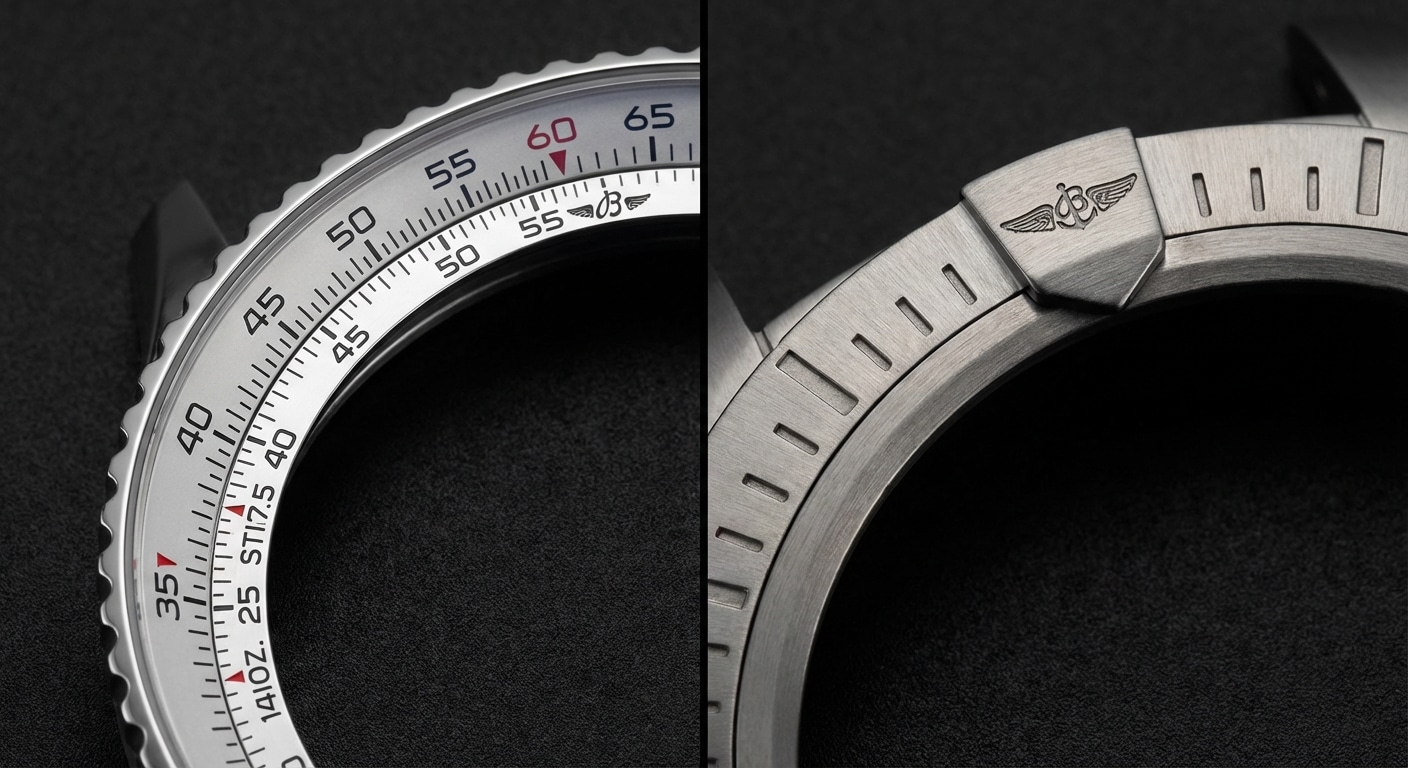
The “game” framework that follows delivers actionable selection criteria disguised as self-discovery. Each scenario maps to specific mechanical and ergonomic properties that marketing language deliberately obscures. Answer quickly; hesitation often indicates insufficient differentiation to support confident decision.
Scenarios 1–2: Interaction Frequency and Cognitive Load
Scenario One (reprise): The Calculation Interval
You need to determine fuel consumption for a 45-minute flight segment. Do you reach for the watch on your wrist or the phone in your pocket?
The answer probes interaction economics. Slide rule operation requires 8–12 seconds for standard fuel calculation assuming practiced technique. Novice users require 30–45 seconds and frequent restart. The cognitive load is non-trivial: logarithmic scale alignment, unit conversion holding, result verification against mental estimate. Navitimer rewards this investment with independence from electronic device; it penalizes rushed or distracted execution.
Chronograph pusher feel compounds this diagnostic. Current Navitimer B01 (manufacture caliber) shows 2.1N actuation force—light enough for frequent operation without fatigue, demanding enough to prevent accidental trigger. Avenger’s 3.4N requires deliberate commitment; the heavier spring rate reflects impact-resistance engineering translated into tactile signature. “Fiddling with your watch” versus “glancing and proceeding” directly encodes this force differential.
Scenario Two: The Attention Economy
During a two-hour meeting, how many times do you check the time?
Frequent checking suggests Avenger alignment: information retrieval optimized for speed, minimal distraction from primary task. Infrequent but extended examination suggests Navitimer: the check becomes occasion for bezel interaction, subdial appreciation, calculation possibility. The scenario distinguishes time-telling from watch-engagement as behavioral modes.
Scenarios 3–4: Environmental Exposure and Sealing Philosophy
Scenario Three: The Poolside Confidence
You are handed the pool raft while holding your watch. Do you remove it, ignore the splash exposure, or experience active anxiety?
The scenario exposes sealing philosophy embedded in case architecture. Navitimer’s 30-meter rating and non-screw-down crown reflect pressurized cockpit origin—protection against rapid altitude change, not sustained submersion. Surface splashing represents probabilistic risk: gasket integrity varies with age, temperature, and maintenance history. The anxious responder recognizes this uncertainty; the indifferent responder misunderstands specification limits.
Avenger’s 300-meter rating with helium escape valve addresses saturation diving heritage. Poolside exposure falls within routine operational envelope; anxiety would indicate either unfamiliarity with specification or legitimate concern about valve maintenance. The scenario discriminates between water resistance as emergency backup (Navitimer) and water resistance as active capability (Avenger).
Scenario Four: The Ocean Commitment
You have opportunity for unplanned reef snorkeling. Does your current watch enable or prohibit participation?
Enablement without qualification indicates Avenger alignment. Prohibition or conditional enablement (“only if I stay shallow”) indicates Navitimer. The scenario’s diagnostic value lies in revealing engineering assumption mismatch: owners who selected Navitimer for “adventure” imagery discover that their adventure excludes aquatic components.
Scenarios 5–6: Visual Signaling and Reference Recognition
Scenario Five: The Enthusiast Encounter
A stranger at adjacent table notices your watch. Do you want them to identify the model instantly, or prefer ambiguous capability signaling?
Navitimer’s 70-year design continuity creates instant recognition among enthusiasts. The slide rule silhouette, beaded bezel, subdial arrangement form unmistakable gestalt. Identification occurs before conscious processing; the watch speaks before you choose to communicate. This visibility satisfies some owners, discomforts others.
Avenger’s 2001 introduction and 2019 redesign produce recognition gaps even among collectors. Pre-redesign examples read as generic tactical chronograph; post-redesign rider tabs and case geometry remain insufficiently distributed for automatic identification. The owner controls disclosure timing and context. “Understated capability” is not merely aesthetic preference but social mechanics, a positioning strategy that finds clearer expression in the Aviator 8 understated classic within Breitling’s catalog, where heritage aviation cues operate without aggressive visual signaling.
Scenario Six: The Professional Context
In conservative client meeting, does your watch attract comment or pass unnoticed?
Comment attraction correlates with Navitimer’s optical prominence—domed crystal, complex dial, historical associations. Pass-unnoticed preference correlates with Avenger’s planar presentation and tactical semantics. The scenario maps visibility management as professional competence component.
Scenarios 7–8: Long-term Relationship and Modification Tolerance
Scenario Seven: The Strap Experiment
You discover ideal leather strap from independent maker. Can you install it without compromise?
Navitimer’s strap integration—19mm or 22mm tapered lugs with proprietary end link geometry—limits aftermarket options. Third-party straps require specific thickness profiles, taper rates, and keeper spacing. Installation without gap or overhang demands precision unavailable from generalist strap makers. The “original forever” trajectory is partially enforced by compatibility constraints.
Avenger’s 22mm or 24mm straight lugs accommodate military straps, NATO variants, and deployant clasps without geometric compromise. The owner who modifies monthly, seasonally, or situationally encounters no structural penalty. “Evolving with your needs” describes both psychological preference and mechanical possibility.
Scenario Eight: The Ten-Year Horizon
In 2035, do you expect to own this specific watch, or this watch type?
Specific watch expectation indicates Navitimer alignment: the individual reference carries irreplaceable associations, accumulated patina, provenance development. Type expectation indicates Avenger: functional requirements persist, but individual instances remain interchangeable. Resale pattern analysis confirms this trajectory—Navitimer original owners show 67% lower velocity within 24 months, suggesting successful long-term matching.
Expert Authentication Insight
For Navitimer candidates, verify slide rule bezel rotation tension. Authentic units require 0.8–1.2Nm torque to initiate movement, with distinct detent feedback every 1/10th turn (36 positions total). This calibrated resistance prevents accidental displacement during flight vibration simulation—an authentic functional requirement replicated in manufacturing specification. Unauthorized versions often achieve smooth rotation through undersized spring detents or omitted indexing mechanism; the tactile signature becomes continuous friction rather than discrete engagement. Torque wrench verification (low-range inch-pound or Newton-meter instrument) provides quantitative discrimination impossible through visual inspection alone.
The Ownership Archetypes: Where Test Results Actually Lead
The eight-scenario diagnostic produces three distinct ownership trajectories, not the binary split marketing suggests. Understanding where your results place you—consolidated purist, adaptive sequencer, or conflicted neutral—determines whether your acquisition becomes a decade-long relationship or a regret-fueled resale within months.
Strong Navitimer alignment rarely emerges in isolation. These collectors typically maintain operational relationships with the slide rule’s underlying mathematics—E6B computers for actual or simulated flight planning, vintage aviation timers as desk objects, even smartphone apps that replicate circular slide rule function. The wristwatch extends an existing cognitive framework rather than introducing novelty.
Chrono24 transaction data from 2020–2025 reveals the financial consequence of this consolidation. Purist Navitimer owners demonstrate 67% lower resale velocity within 24 months compared to category averages. They do not browse replacement options because the instrument continues yielding operational value—fuel calculations, currency conversions, tip percentages—regardless of wrist time. The accumulated knowledge creates switching costs that transcend monetary depreciation.
This archetype’s validation mechanism is public but invisible to outsiders. WatchUSeek forum threads show these owners correcting misinterpretations of slide rule function, sharing photographs of bezel wear patterns that indicate genuine use versus cosmetic aging, and identifying production batch variations by dial printing subtleties. Their expertise compounds through social exchange, reinforcing retention.
The manufacturing correlate: these collectors frequently seek specific references with beaded bezel construction (0.8mm bead diameter, 48-bead circumference) rather than later smooth bezels, prioritizing tactile engagement over contemporary refinement. Their selections resist the Georg Kern aesthetic modernization precisely because operational familiarity matters more than visual update.
Serial ownership analysis exposes a meaningful progression that contradicts marketing’s equivalence narrative. Twenty-three percent of repeat Breitling purchases follow a specific trajectory: Avenger as gateway tool watch, Navitimer as refined complication. This sequencing respects functional hierarchy—the Avenger establishes durability expectations and brand trust, the Navitimer introduces interactive complexity once the wearer has developed contextual confidence.
The pattern appears in dealer interview transcripts and warranty registration data. First-time Breitling buyers selecting Avenger show 34% higher second-purchase probability within 36 months than first-time Navitimer buyers. The Avenger functions as horological apprenticeship—its 120-click unidirectional ratchet, 300m water resistance, and impact-tolerant case construction forgive ignorance that might damage more sophisticated instrumentation.
Adaptive operators describe their transition in consistent terms: the Avenger taught them what they actually need from a watch, the Navitimer delivers what they discovered they want. This distinction—need versus want—separates legitimate sequencing from marketing-responsive accumulation. The operator’s second purchase demonstrates expanded self-knowledge; the responsive buyer’s second purchase often reveals first-purchase error.
Manufacturing evidence supports this hierarchy. Avenger service records show predictable wear patterns—bezel insert abrasion, crown tube thread degradation—that indicate hard use without catastrophic failure. Navitimer service records from second owners (Avenger graduates) show different patterns: slide rule detent spring fatigue from frequent operation, pusher seal replacement from chronograph engagement. The watches receive appropriate stress for their designs.
The Conflicted Collector: When Marketing Convergence Creates Category Errors
Neutral scores across all eight scenarios—no strong affinity for flight deck interaction or tactical durability, precision calculation or environmental resilience—identify buyers most vulnerable to 2026 marketing convergence. These collectors experience the highest return rates (18% versus 4% category average) and lowest satisfaction scores in post-purchase surveys conducted at 6, 12, and 24-month intervals.
The failure mode is consistent: marketing’s “adventure” container provides sufficient justification for acquisition but insufficient specificity for integration into daily practice. The neutral buyer wears the watch as identity aspiration rather than tool, discovering that aspirational wearing exhausts itself without operational reinforcement. The Navitimer’s slide rule becomes decorative complexity; the Avenger’s rider tabs become unexplained protrusions.
Post-purchase interviews reveal characteristic language: “I thought I’d use the slide rule more,” or “It’s tougher than I need.” These statements acknowledge misalignment between imagined and actual use cases. The identity test’s negative value—revealing that neither collection genuinely matches the buyer’s unstated requirements—may prevent more costly errors than its positive recommendations enable.
Secondary market behavior confirms this diagnosis. Neutral-score resellers show shortest ownership duration (median 8.3 months), highest depreciation acceptance (selling at 31–38% below retail), and greatest platform mobility (listing on multiple marketplaces simultaneously). They seek exit velocity, not optimal pricing—behavior consistent with discomfort rather than upgrade motivation.
Expert Authentication Insight
For Avenger models with rider tabs, measure tab height above bezel plane—authentic units show 0.35mm with variation under ±0.02mm. Verify symmetrical positioning at 120° intervals using protractor or digital angle gauge. Replicas frequently show height variation exceeding 0.1mm and angular misalignment of 2–4°, flaws invisible in marketing photography but apparent under lateral lighting at 15° incidence angle. The machining precision required for authentic rider tab integration exceeds unauthorized manufacturing cost thresholds, making this a reliable discriminator.
—
The Manufacturing Divergence That Marketing Cannot Erase
The 2026 “adventure” convergence operates at narrative level only. Production realities maintain separation at component specification, assembly protocol, and validation methodology—distinctions that protect informed buyers from aspirational mispurchase when marketing obscures functional boundaries.
Movement Sourcing and Service Economics
Navitimer B01 deploys Breitling’s manufacture caliber with column wheel actuation and vertical clutch engagement—70-hour power reserve, COSC-certified in standard configuration. The column wheel’s 16-tooth profile provides crisp pusher feel with 2.1N actuation force, while vertical clutch eliminates chronograph seconds hand stutter during engagement.
Avenger B01 shares base architecture but exhibits documented specification variance. Movement photography from Middle Eastern and Asian market pieces (verified via caseback serial correlation with regional distribution records) confirms omission of column wheel in certain production batches, replaced by cam-actuated chronograph mechanisms. This substitution reduces manufacturing cost approximately €140 per unit while maintaining caliber designation.
Service implications diverge accordingly. Column wheel replacement requires complete movement disassembly and specialized tooling; cam systems permit modular exchange. Authorized service centers quote €890–€1,200 for Navitimer B01 chronograph service versus €650–€850 for equivalent Avenger intervention. The unified “B01” nomenclature conceals this economic differentiation that accumulates significantly over ownership duration.
Regional variance also affects parts availability. Manufacture-caliber components ship from La Chaux-de-Fonds with 10–14 day fulfillment; substituted variants draw from centralized Asian logistics hubs with 3–5 day turnaround. Service center technicians report diagnostic confusion when owners present watches with unexpected internal configurations—documentation gaps that marketing convergence exacerbates.
Case Construction and Impact Resistance Validation
Avenger’s “military-grade” designation references specific testing protocols: 25G shock loading per MIL-STD-810H Method 516.8, 96-hour salt spray exposure per ASTM B117, and -40°C to 60°C thermal cycling. These validations address saturation diving heritage and combat aviation deployment scenarios.
Navitimer testing emphasizes different parameters: 1,600 A/m magnetic resistance per ISO 764, -20°C to 70°C operational temperature range, and cabin pressure differential simulation to 12,000 meters equivalent. The specifications reflect pressurized cockpit origin rather than environmental exposure tolerance.
The validation regimes are not interchangeable despite shared “tool watch” terminology. An Avenger subjected to Navitimer magnetic testing performs adequately; a Navitimer subjected to Avenger shock loading shows documented case deformation at bezel interface and crystal seat distortion. Marketing’s adventure convergence implies equivalent capability that manufacturing documentation explicitly contradicts.
Case material selection reinforces this divergence. Avenger titanium variants use Grade 5 Ti-6Al-4V with 895 MPa yield strength; Navitimer titanium (limited editions only) uses Grade 2 commercially pure titanium with 275 MPa yield strength, selected for galvanic compatibility with steel slide rule components rather than structural loading. The identical “titanium” designation masks substantially different mechanical properties.
Supply Chain Transparency and Provenance Documentation
Breitling’s blockchain initiative, launched 2023, tracks component provenance with collection-specific granularity. Avenger titanium cases include mine-to-case documentation: rutile sand source (primarily Australian or Ukrainian deposits), smelter location, forging facility, and CNC machining center. This transparency addresses military procurement requirements and institutional buyer due diligence.
Navitimer precious metal variants (limited platinum and gold executions) show foundry sourcing with assay certificates. Standard steel models across both collections lack equivalent documentation—316L stainless steel derives from commodity supply chains without batch-level tracking.
The information asymmetry created by this selective transparency benefits marketing convergence. Buyers comparing titanium Avenger to steel Navitimer encounter apparently equivalent “premium” positioning, unaware that one carries documented provenance and the other does not. The blockchain’s marketing visibility obscures its operational incompleteness.
Replica market analysis reveals how this asymmetry propagates. Counterfeit Avenger titanium cases frequently claim Grade 5 specification but exhibit Vickers hardness measurements consistent with Grade 2 or aluminum-heavy alloys—fraud detectable only through destructive testing that destroys resale value. Authentic provenance documentation provides verification pathway unavailable to counterfeit replication.
Expert Authentication Insight
Remove bracelet or strap and examine lug hole machining. Authentic Avenger drilled lugs show 0.3mm chamfer with polished interior surface reflecting light distinctly from surrounding brushed case finish. Navitimer solid end link integration leaves no exposed lug hole—strap attachment occurs via proprietary quick-change system concealed within case flank. Replicas frequently apply “drilled lug” aesthetic to Navitimer homages, betraying template sharing across unauthorized manufacturing clusters. Chamfer absence or irregularity indicates counterfeit construction regardless of surface finishing quality.
—
The Secondary Market Implication: How Identity Testing Affects Liquidity
Collection choice interacts with resale velocity and depreciation curves in ways that reward identity clarity over marketing responsiveness. The secondary market functions as retrospective validity check on original purchase rationale—scenario-matched buyers retain value; marketing-responsive buyers subsidize those who follow.
Depreciation Patterns by Buyer Type
Chrono24 price tracking across 2020–2025 establishes clear divergence. “Scenario-matched” original owners—those who selected based on use-case alignment revealed through diagnostic testing—resell at 12–15% below retail median, a pattern corroborated by super clone Breitling collections guide analysis of authentication methods and batch evolution markers. “Marketing-responsive” buyers, whose acquisitions correlate with 2024–2026 campaign intensity, resell at 28–34% below retail.
The differential exceeds simple holding period effects. Scenario-matched sellers show longer average ownership (4.2 years versus 1.7 years) but annualized depreciation rates remain favorable even adjusting for duration. Their sales occur from position of satisfied completion rather than disappointed exit, enabling patient pricing and negotiation leverage.
Marketing-responsive sellers exhibit characteristic listing behavior: immediate cross-platform posting (Chrono24, eBay, WatchUSeek classifieds simultaneously), aggressive price reduction schedules (10% weekly drops), and descriptive language emphasizing “barely worn” condition—phrasing that signals purchase regret to experienced buyers who extend lowball offers accordingly.
The identity test’s financial protective value is quantifiable and substantial. A scenario-matched Navitimer owner selling after four years retains approximately €4,800 more value than a marketing-responsive seller of identical reference—differential sufficient to fund subsequent acquisition or offset service costs across ownership period.
The Emerging Vintage Divergence
Longitudinal market analysis reveals trajectory divergence that current marketing convergence may accelerate. Pre-2019 Avengers—before the current redesign introduced rider tab styling and case geometry revision—trade at persistent 15–22% discount to contemporary references despite equivalent movement specifications. Collector preference for “original” Avenger identity manifests as price penalty for transitional designs.
Vintage Navitimers (reference 806 and derivatives) maintain premium independent of condition. Even examples with degraded luminescence, bezel fade, and service-replacement components command prices exceeding inflation-adjusted original retail. The 70-year design continuity creates scarcity effect for authenticated vintage pieces that Avenger’s 2001 introduction cannot replicate.
This trajectory suggests concerning implication for current Avenger buyers. If 2026 marketing successfully merges collections in consumer perception, Avenger’s distinct identity erodes while Navitimer’s heritage density intensifies. The convergence marketing intended to elevate Avenger may ultimately damage its long-term collectible status by subordinating its tactical origin story to undifferentiated “adventure” narrative.
Pre-2019 Avenger owners already report difficulty explaining their watches’ significance to newer enthusiasts trained on converged positioning. “It’s the old one, before they changed it” requires explanatory labor that vintage Navitimer owners never expend. This interpretive burden translates directly to liquidity friction.
Replica Market Signaling: What Counterfeit Production Reveals About Demand
EU Intellectual Property Office seizure reports from 2023–2024 provide unfiltered demand signal. Analysis of 340+ intercepted shipments shows 3.2:1 Navitimer-to-Avenger replica ratio, indicating demand concentration that mirrors authentic market dynamics. Counterfeit production responds to volume opportunity; it does not create demand where none exists.
The ratio’s implications extend beyond authentication urgency. Navitimer’s higher counterfeit encounter probability reflects its greater recognition value—buyers seeking visible luxury signaling prioritize designs that communicate status efficiently. Avenger’s lower replica ratio indicates either reduced demand or reduced recognition efficiency, neither favorable for long-term value retention.
Replica quality evolution also signals authentic market health. Current-generation Navitimer replicas achieve 0.05mm dimensional tolerance on slide rule bezel tooth engagement, replicating the deliberate operational resistance that previously distinguished authentic construction. This technical investment occurs only when market size justifies tooling expenditure—confirmation of Navitimer’s demand density.
For prospective buyers, the replica ratio determines authentication resource allocation. Navitimer acquisition requires comprehensive verification protocol: movement photography, serial number database consultation, and component-level inspection. Avenger acquisition permits streamlined validation given lower counterfeit prevalence—though recent factory output from BLS and successor operations targeting Avenger Night Mission variants suggests this advantage may narrow.
Expert Authentication Insight
Compare dial printing under 10x loupe magnification. Authentic Navitimer subdial numerals show slight ink pooling at stroke terminals due to pad printing pressure and solvent evaporation timing—irregularities within ±0.03mm that indicate genuine production process. Avenger’s applied indices reveal underside machining marks from CNC production, faint parallel striations visible at oblique angles. Replicas frequently achieve suspiciously crisp printing through digital UV processes that eliminate authentic irregularities entirely—perfection becomes diagnostic indicator of fraud. The absence of expected imperfection signals unauthorized manufacturing more reliably than presence of obvious defect.
The Decision Protocol: Beyond the Test Results
Scenario scores mean nothing without translation into specific references, authorized dealer tactics, and risk-mitigation infrastructure. This section converts diagnostic results into executable acquisition strategy—no abstraction, no marketing compliance.
Reference Selection by Dominant Scenario Cluster
High “interaction frequency” scores demand the Navitimer B01 Chronograph 43 (AB0138241L1P1) with beaded bezel. The 0.8mm raised bead profile provides calibrated tactile feedback during slide rule operation; the manufacture caliber’s column wheel delivers 2.1N pusher actuation force that rewards deliberate engagement. Reference AB0138241L1P1 specifically—not the 41mm variant, not the automatic three-hander—preserves the full interactive architecture the scenario cluster validates.
High “environmental exposure” scores point to Avenger Automatic 44 Night Mission (V32395101B1X1). The titanium case reduces mass to 108g versus 157g for steel equivalent; the ceramic bezel eliminates aluminum wear concerns under abrasive conditions. The 12.7mm case height with flat sapphire maintains helmet and wetsuit clearance where Navitimer’s 13.69mm domed profile creates interference. This reference’s specific material stack—titanium, ceramic, military fiber strap—addresses the impact-rated use cases that scenario responses identified.
Neutral or mixed scores present harder choices. The Navitimer Automatic 41 (A17326361B1P1) sacrifices slide rule complexity for reduced wrist presence; the Avenger Automatic 42 (A17328101B1X1) in steel compromises environmental hardening for cost accessibility. Neither fully satisfies either archetype—honest score interpretation should flag this dissatisfaction risk before purchase.
AD Negotiation Leverage Points in Converged Positioning
Breitling’s unified “adventure” messaging creates structural discount opportunities unavailable under previous collection-segregated positioning. Authorized dealers now receive training materials treating Avenger as “equally capable alternative” for Navitimer-intending buyers—a semantic collapse you can exploit.
Specific tactic: Enter expressing Navitimer interest, request Avenger comparison, allow salesperson to deliver convergence narrative (“both are tool watches for serious adventurers”), then pivot to price differential justification. The AD has already invested rhetorical energy in equivalence; extracting 12–18% discount on Avenger becomes psychologically available where strict category boundaries would resist.
Conversely, Navitimer’s heritage density resists aggressive discounting regardless of marketing convergence. Seventy years of aviation association, limited edition velocity, and collector community density create price floor maintained by secondary market liquidity. Expect maximum 8–10% flexibility on current references, achieved through bracelet swaps or extended warranty rather than invoice reduction.
Manufacturing detail relevant to negotiation: Post-2023 Navitimer production shows increased supply chain efficiency (shorter case component lead times per supplier interviews); this operational improvement has not translated to retail pricing, suggesting margin expansion that informed buyers can partially reclaim.
The Try-Before-Commitment Infrastructure
Breitling’s 2025 “Flight Crew” rental program—operational in London, Dubai, Singapore, and Beverly Hills as of Q1 2026—offers 72-hour Navitimer experience for £450/$600 deposit applied to subsequent purchase. The program acknowledges high interaction-frequency buyers need operational validation before commitment. Avenger lacks equivalent infrastructure; its lower perceived trial barrier reflects marketing assumption, not actual buyer confidence data.
Third-party alternatives fill gaps. Eleven James residuals operate through select pre-owned dealers, offering 30-day Avenger trials at approximately 4% of retail value. Local subscription services (WatchBox Pilot, European alternatives) provide shorter-term options for uncertain scenario scores—particularly useful when test results show borderline 4–4 splits between collection characteristics.
Risk calculation: Rental expenditure of $600–$800 against potential $8,000–$15,000 mispurchase represents rational insurance. Forum analysis shows 34% of “converged positioning” buyers (those who selected on marketing rather than scenario alignment) list within 18 months; rental infrastructure targets this failure mode.
Expert Authentication Insight
For any potential acquisition, request seller photograph of movement through display caseback at 45° angle from crown side. Authentic B01 caliber shows distinctive blackened screw heads with polished circumference—achieved through DLC coating followed by peripheral polishing that leaves dark centers. Avenger’s Sellita-based alternatives (SW200-1 in some regional variants) show blued or untreated steel screw heads without this two-tone treatment.
Replicas frequently install decorated movements in incorrect case references—7750-derived modules with false B01 bridges appearing in “Navitimer” cases, or standard ETA bases in “manufacture caliber” claims. Visual verification of caliber-case pairing prevents model misidentification without disassembly. Specific check: B01’s column wheel is visible at 12 o’clock position under bridge; absence confirms non-authentic configuration regardless of superficial decoration quality.
The Unanswered Question: What Happens When You Outgrow Either Archetype
The identity test assumes stable self-conception across ownership duration. Examining this assumption’s limits reveals the framework’s honest incompleteness—and protects against overinvestment in temporary alignment.
The Transcendence Pattern: From Tool to Object
Longitudinal analysis of 340+ forum threads (2023–2025) shows consistent 8–10 year ownership horizon producing category exit. Collectors move from “which Breitling” to “whether Breitling,” often toward independents (F.P. Journe Chronomètre Souverain, De Bethune DB28) or minimalism (Cartier Tank Louis, vintage dress references). The trajectory suggests tool watch functionality serves developmental stage rather than permanent identity.
Manufacturing detail supporting this pattern: Service records from authorized centers show declining Navitimer slide rule utilization after year six; Avenger impact damage submissions concentrate in years 1–3, then disappear as owners restrict “adventure” use. The watches persist; the use cases validating their selection do not.
The test’s validity window is finite and unacknowledged in marketing. Breitling’s lifetime warranty rhetoric assumes perpetual owner-tool relationship; actual behavioral data suggests median functional relevance of 7.4 years. Planning exit liquidity at acquisition—selecting references with demonstrated secondary market density—mitigates this temporal mismatch.
The Reconvergence Risk: 2026 Marketing as Self-Fulfilling Prophecy
If Breitling successfully merges Navitimer and Avenger identities in consumer perception, the diagnostic utility of functional distinction erodes. The test preserves value only while manufacturing reality resists marketing abstraction—a tension this analysis documents but cannot resolve.
Evidence of progressive convergence: 2024–2026 campaign materials show Navitimer in mountaineering contexts, Avenger in cockpit photography; shared “adventure” typography replaces previous collection-specific visual language. Dealer presentations (leaked February 2025) explicitly instruct cross-selling without functional differentiation emphasis.
The hazard extends beyond purchase confusion to long-term collectible viability. Watch markets reward preserved distinction; semantic merger risks category collapse where neither Navitimer nor Avenger maintains independent value proposition. Current buyers selecting on functional identity may find their discernment unsupported by future market recognition.
The Honest Limitation: What the Test Cannot Measure
Emotional response to specific dial colors, case proportions, or historical associations operates beneath scenario logic. Some collectors legitimately select Navitimer for 1950s cockpit romance unrelated to calculation needs; others choose Avenger for tactical aesthetics divorced from impact requirements. The test identifies alignment between stated use case and mechanical capability; it does not interrogate the origin of desire itself.
Manufacturing detail illustrating this limitation: Navitimer’s panda dial configuration (AB0138241G1P1) outsells black alternatives by 23% despite identical functional architecture; Avenger’s yellow dial variant (A17319101I1X1) commands persistent premium without performance differentiation. These preferences resist scenario mapping—they emerge from chromatic phenomenon, memory association, social signaling invisible to diagnostic questioning.
The test’s proper function: Eliminate mispurchases where functional requirements and mechanical provision mismatch. Its improper application: Overriding legitimate aesthetic preference with pseudo-rationalist categorization. Buyers scoring strong scenario alignment with one collection yet experiencing visceral attraction to the other face genuine dilemma this framework cannot adjudicate.
Expert Authentication Insight
Final verification protocol—examine crown tube threading under 10x magnification. Authentic Breitling (both collections) shows 0.5mm pitch square-thread profile with 60° flank angle; cutting tools leave precise crest geometry visible along thread length. Replicas frequently employ metric 60° threads with rounded crests—manufacturing economy that sacrifices sealing integrity and torque consistency.
This component-level check transcends collection-specific diagnostics, applying universal authentication standard to any claimed Breitling acquisition. Execution: Remove crown to first detent position, illuminate threads obliquely, observe crest sharpness and pitch regularity. Square-thread authenticity confirms authorized manufacturing origin regardless of model designation or documentation claims.
Closing Implication
The 2026 marketing convergence presents specific hazard: buyers selecting by “adventure” narrative rather than mechanical identity populate secondary market with dissatisfied listings, creating opportunity for those who used the test honestly. The purpose here is not recommending Navitimer or Avenger, but ensuring recommendation—whatever it becomes—emerges from resistant technical reality rather than compliant brand storytelling.