
The Foundation: Accurate Wrist Measurement Beyond Circumference
Buying a Panerai super clone is an investment in a specific aesthetic, and nothing kills that aesthetic faster than a watch that looks ridiculous on your wrist. Too often, buyers fixate on the advertised case diameter, or worse, just guess based on online photos. This leads to a frustrating cycle: an eagerly anticipated replica arrives, only to look absurdly large or feel profoundly uncomfortable. The reality is, simple wrist circumference is a deceptive metric for Panerai, a brand known for its commanding presence. To get it right, by consulting a 42mm Panerai clone guide, you need a precise, multi-dimensional approach to wrist measurement. This isn’t about “bigger is better”; it’s about informed fit.
Measuring Circumference: The Starting Point
While not the sole determinant, wrist circumference is where most people begin, and it provides a foundational number. To measure correctly, grab a soft tailor’s tape measure. Wrap it snugly around your wrist, just below the wrist bone – the spot where you naturally wear a watch. Ensure it’s tight enough that it doesn’t slide around, but not so tight that it pinches your skin. Record the measurement in millimeters. Common mistakes here include measuring over clothing (adding false bulk) or holding the tape too loosely (inflating the number). Get this right, and you have a baseline, but understand its limitations for Panerai.
The Critical Flat Wrist Width Measurement
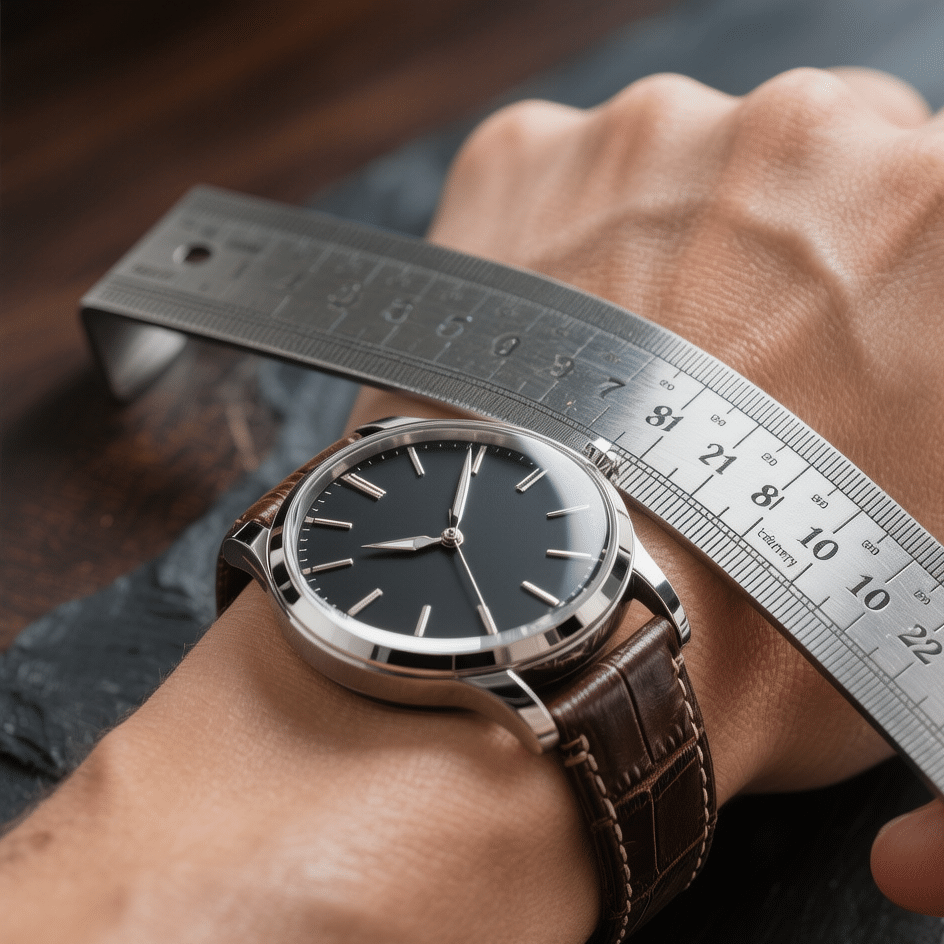
This is where most sizing guides fall short, and it’s absolutely critical for Panerai. Your flat wrist width directly dictates how much watch case you can actually accommodate across the top of your wrist without unsightly lug overhang. Use a pair of digital calipers for the most accuracy, or a rigid ruler if calipers aren’t available. Place your hand palm-down on a flat surface, wrist relaxed. Measure the distance across the top of your wrist, from the prominent bone on one side to the bone on the other. This isn’t a circumference; it’s a straight-line measurement of the flat surface where the watch case will sit. This dimension is paramount because the watch’s lug-to-lug distance (the measurement from the very top of one lug to the very bottom of the opposite lug) must* be less than or equal to this flat wrist width to prevent the watch from “floating” or hanging over the edges of your wrist.
Assessing Wrist Shape and Density: Round vs. Flat Profiles
Beyond the numbers, your wrist’s actual shape plays a significant role in how a watch wears. Some wrists are more rounded, almost cylindrical, while others are flatter and broader across the top. A flatter wrist often has more surface area to distribute a watch’s footprint, allowing it to visually integrate a larger diameter watch more seamlessly without excessive overhang. Conversely, a rounder wrist can make the same watch appear bulkier, more like a “can” perched on top, even if the flat wrist width is technically sufficient. This visual and tactile assessment helps you understand your wrist’s inherent tolerance for larger cases, especially Panerais known for their robust dimensions.
Expert Sizing Diagnostic
The “Ruler Test” is a quick, practical way to gauge your wrist’s profile. Rest your hand palm-down on a table, keeping your wrist relaxed. Take a standard ruler and place it flat across the top of your wrist, where the watch head would sit. Observe how it rests. If the ruler makes significant, firm contact with your skin across its entire width without tilting or wobbling, you likely have a flatter wrist profile. This suggests you can often accommodate watches with a larger lug-to-lug measurement without visual overhang. If, however, the ruler balances precariously, tilts easily to one side, or primarily makes contact only at the edges of your wrist, then you have a rounder wrist. This indicates a lower tolerance for watches with substantial lug-to-lug dimensions, as they’ll tend to “bridge” your wrist rather than conform to it. This diagnostic quickly informs your maximum acceptable lug-to-lug.
Decoding Panerai Case Geometry: Luminor vs. Radiomir Fit Dynamics
Panerai watches are notorious for wearing larger than their stated case diameter, a phenomenon driven by their distinctive design language. This isn’t just marketing; it’s a fundamental aspect of their geometry. The fit dynamics of a Luminor are radically different from a Radiomir, even if they share a similar nominal diameter. Understanding these subtle but critical distinctions is key to selecting a super clone that truly suits your wrist, rather than just theoretically fitting it.
Luminor’s Crown Guard: The Visual & Wearing Impact
The iconic crown guard is the defining feature of the Luminor case, but it’s also the primary reason these watches wear significantly larger than their stated diameter. This lever-actuated device, designed to ensure water resistance, extends substantially beyond the case edge. Visually, it adds considerable effective width to the watch, creating a more imposing presence that can overwhelm smaller wrists. Practically, this extension means a 44mm Luminor might feel and look more like a 47-48mm watch. This aggressive protrusion also has real-world wearing consequences: it can catch on shirt cuffs, making it challenging to wear under long sleeves, and for some, it can dig uncomfortably into the back of the hand during wrist articulation. For super clone buyers, the quality of this crown guard’s machining and its subtle contours are also key tells of a top-tier replica versus a budget option.
Radiomir’s Wire Lugs: Elegance and Deceptive Proportions
In contrast to the Luminor’s integrated, chunky lugs and crown guard, Radiomir models often feature elegant wire lugs. These can make the watch appear more compact and less visually intrusive from the top, fostering an illusion of smaller size. However, this is where the flat wrist width measurement becomes crucial. While the wire lugs are less obtrusive, their overall lug-to-lug distance can still be substantial, especially on larger Radiomir cases. If this lug-to-lug exceeds your flat wrist width, you’ll still experience overhang, even if the wire lugs themselves are slender. Furthermore, the way the strap integrates with these wire lugs—often with a gap or a specific attachment mechanism—can subtly alter the perceived size and how the watch balances on the wrist. A well-fitted Radiomir should have its wire lugs curving naturally with the wrist, not extending beyond its edges.
Thickness and Weight: Beyond Diameter for Daily Wear
Panerais, by nature, are substantial watches, and thickness and weight are often overlooked factors that profoundly impact daily wearability. Many super clone Panerais, especially those with clone movements like the VS P.9000/P.9010, have achieved impressive accuracy in case thickness. However, some variants or earlier generations of replicas might have slightly thicker cases due to movement adaptations. A thicker case (e.g., 15mm+) can feel top-heavy, making the watch less stable on the wrist and prone to rotating. It also dramatically affects cuff clearance, making it difficult to wear with anything but the loosest sleeves. The overall weight, particularly for larger steel or bronze super clones, can also contribute to fatigue over a full day’s wear. A watch that looks good for a photo might become an annoyance in practice if it’s constantly catching on things or reminding you of its heft.
Expert Sizing Diagnostic
The “Mirror Test” is an indispensable tool for evaluating true Panerai fit. Instead of obsessing over how the watch looks when you crane your neck to stare directly at it, put on your chosen Panerai super clone (or a similarly sized placeholder) and step back. View yourself in a full-length mirror from a distance of 3-5 feet. This perspective mimics how others will see the watch on your wrist and, more importantly, allows you to observe the watch in proportion to your entire body. Look for lug overhang, overall visual balance, and how the watch integrates with your arm and hand. Does it dominate your wrist? Does it look like a “dinner plate” or a natural extension? The mirror test often reveals proportions that are distorted when you’re looking directly down at your wrist, providing a more honest assessment of its visual impact.

The “Sweet Spot” Formula: Matching Panerai Diameter to Your Wrist Profile
Moving beyond qualitative assessments, it’s time for actionable formulas. The goal here is to give you concrete thresholds and guidelines, translating your unique wrist measurements into an optimal Panerai super clone case diameter. This isn’t about rigid rules, but about establishing a “sweet spot” that balances visual appeal with genuine wearing comfort, especially for designs as distinctive as Luminor and Radiomir.
Circumference-to-Diameter Ratio: A Starting Guideline
While circumference alone is insufficient, it can serve as a preliminary filter. A commonly referenced, albeit general, guideline suggests that for every inch of wrist circumference, there’s an acceptable range of case diameters. For example, a 6.5-inch (approximately 16.5 cm) wrist might comfortably handle Panerai super clones in the 42-44mm range. A 7.5-inch (approximately 19 cm) wrist could potentially manage 44-47mm. It’s a loose rule, and ignores the crucial flat wrist width, but it helps narrow down initial options. The key takeaway here is to treat this as a starting point* and not a definitive answer; many Panerai fans with smaller wrists confidently wear larger models, but usually, they have a flatter wrist profile that can accommodate the lug-to-lug.
Flat Wrist Width & Lug-to-Lug: The Non-Negotiable Match
This is the golden rule for Panerai sizing. The watch’s lug-to-lug distance is the absolute maximum horizontal span it will occupy on your wrist. For a proper fit, this dimension must not* exceed your measured flat wrist width. If it does, the lugs will visibly hang over the edges of your wrist, creating an awkward, ill-fitting look and often leading to discomfort. For reference, a 44mm Luminor super clone (like the popular PAM005) typically has a lug-to-lug of around 53mm-54mm. A 47mm Radiomir super clone might have a lug-to-lug closer to 56mm-58mm, despite its wire lugs. You need to verify the lug-to-lug of your desired super clone model (most reputable sellers provide this) and compare it directly to your own flat wrist width. If the watch’s lug-to-lug is greater, it simply won’t fit well, regardless of how much you want it to.
The “80% Rule” for Ideal Visual Balance
To ensure a watch doesn’t overwhelm your wrist and still allows for some visual “breathing room,” consider the “80% Rule.” This guideline suggests that the watch case diameter (excluding the crown and crown guard, which add to effective width but aren’t part of the core case measurement) should ideally occupy no more than 80% of your flat wrist width. For instance, if your flat wrist width is 55mm, an ideal case diameter would be no more than 44mm (55mm * 0.80). This rule helps prevent the “dinner plate” effect, where the watch looks disproportionately large and covers too much of your wrist’s surface. For a comprehensive sizing system functionality review, it’s a heuristic for aesthetic balance, designed to ensure the watch looks integrated, not imposed.
Expert Sizing Diagnostic
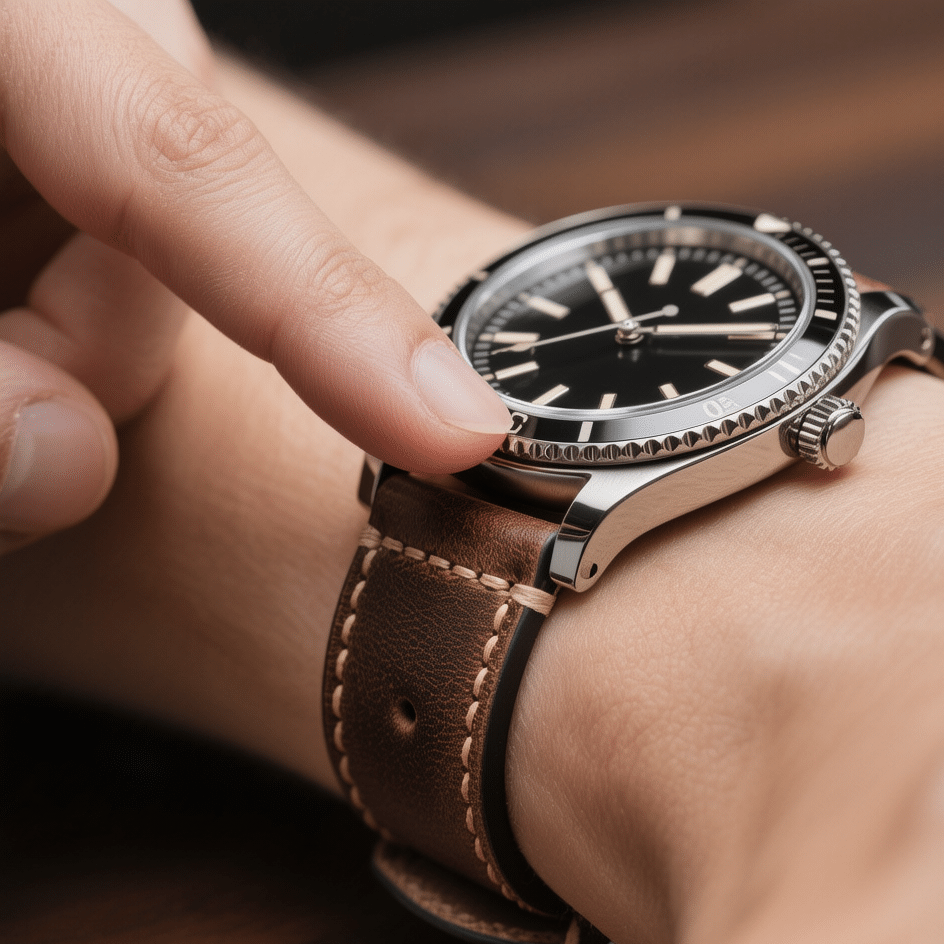
The “Strap Gap Test” is a simple yet revealing check for proper fit. Once you have a watch on your wrist, fasten the strap comfortably. Now, look for any visible gap between the strap and your wrist directly beneath the lugs. If you see a significant gap, it’s a clear indicator that the watch’s lugs are lifting off your wrist. This means the watch is too large for your wrist’s curvature, even if the lug-to-lug measurement technically falls within your flat wrist width. An ideal fit allows the lugs to curve down and hug your wrist, with the strap emerging smoothly without a noticeable gap. A watch that doesn’t pass this test will not only look awkward but will also tend to wobble and be less comfortable, signaling an ill-fitting watch regardless of its stated diameter.
Common Sizing Pitfalls & How to Avoid Them with Super Clones
Even with the most precise measurements, buyers often fall prey to common misconceptions when selecting Panerai super clone sizes. These traps can lead to an expensive replica that sits unworn in a drawer. Understanding these pitfalls is crucial to making an informed decision that balances aesthetics, comfort, and the unique characteristics of Panerai’s design.
The “Bigger is Better” Trap for Panerai Replicas
Panerai built its reputation on large, bold watches, leading many to believe that “bigger is always better.” However, this is a significant trap when it comes to super clones. An overly large replica doesn’t just look disproportionate; it actively diminishes the watch’s aesthetic and comfort. Panerai’s cushion cases, especially the Luminor with its prominent crown guard, already wear larger than their stated diameter. When you factor in the robust, often heavier, super clone movements—like the VS P.9000, which aims for genuine weight and thickness—an ill-fitting large case becomes a burden.
What’s the consequence? A watch that looks like a “dinner plate” on your wrist, constantly catching on shirt cuffs, desk edges, or digging into your hand. The novelty of a large watch quickly wears off when it becomes a daily annoyance. The true appeal of Panerai lies in its confident, well-proportioned presence, not in sheer size for size’s sake.
Ignoring Lug-to-Lug for Panerai’s Unique Cases
One of the most critical mistakes buyers make is focusing solely on case diameter while neglecting the lug-to-lug dimension. For Panerai, this oversight is particularly egregious. Unlike many other brands, Panerai’s prominent lugs and the distinctive Luminor crown guard significantly extend the watch’s effective footprint on the wrist. A 44mm Luminor with its crown guard can easily wear like a 47mm watch from another brand.
The lug-to-lug measurement, which dictates how much of your wrist the watch truly occupies from top to bottom, is the non-negotiable factor. If the watch’s lug-to-lug distance exceeds your flat wrist width, you’ll experience unsightly “lug overhang.” This not only looks awkward but also prevents the watch from sitting flush, leading to discomfort and an unstable feel on the wrist. Always verify the lug-to-lug of your chosen super clone model against your own flat wrist measurement before committing.
The Illusion of Online Photos vs. On-Wrist Reality
The internet is a double-edged sword for watch enthusiasts. While it provides access to countless images, professional product photography often creates an illusion of perfect fit, even for watches that are genuinely oversized. Expert photographers use specific angles, lighting, and wrist models to make every watch appear well-proportioned, regardless of its actual dimensions. This is particularly true for Panerai super clones, where marketing images can be highly curated.
Relying solely on these idealized images for sizing is a recipe for disappointment. What looks good in a carefully composed picture might be a chunky, uncomfortable behemoth on your actual wrist. The only way to truly gauge fit is through objective measurement and, ideally, by trying on a watch of similar dimensions in person or by applying the diagnostic tests outlined in this guide. Don’t let the allure of online visuals override the reality of your wrist measurements.
Expert Sizing Diagnostic
The “Wrist Articulation Test” is a crucial diagnostic for assessing practical fit beyond static measurements. Put on the Panerai super clone (or a similarly sized watch) and fully flex your wrist through its natural range of motion—bend it up, down, and side to side as you would during daily activities. Pay close attention to how the watch interacts with your body. If the lugs dig into your hand or wrist bones, or if the watch significantly restricts any natural movement, it’s a clear indication that the watch is too large for your wrist, regardless of how it appears when your wrist is held still. This test reveals the true ergonomic limitations that numbers alone cannot capture.
Panerai Super Clone Model-Specific Sizing Recommendations
While general principles apply, Panerai’s various model lines have distinct design cues that fundamentally alter their on-wrist presence. A 44mm Luminor wears differently than a 44mm Radiomir, and a 47mm Submersible is a different beast entirely. Tailoring your sizing decision to the specific model’s characteristics is key to a perfect fit.
Luminor Marina (44mm, 47mm) Fit Considerations
The Luminor Marina, epitomized by the PAM005 (a 44mm variant and one of the most replicated Panerais), is defined by its iconic crown guard. This patented device, while visually distinctive, significantly extends the watch’s effective width and adds to its overall perceived bulk. A 44mm Luminor will always wear larger than a 44mm watch without such a prominent protrusion.
- For wrists under 6.75 inches (17cm) flat width: A 44mm Luminor, even a super clone, will likely be the absolute upper limit. The crown guard might feel intrusive or cause lug overhang. Consider the 42mm Luminor Due models, which offer a similar aesthetic in a more wearable package.
- For wrists between 6.75 and 7.5 inches (17-19cm) flat width: A 44mm Luminor is often the sweet spot, providing significant wrist presence without being overwhelming. A 47mm Luminor will likely push the boundaries of comfort and visual proportionality, especially if your wrist is rounder.
- For wrists over 7.5 inches (19cm) flat width: A 47mm Luminor super clone can be accommodated, offering that signature large Panerai look. However, always prioritize the lug-to-lug measurement not exceeding your flat wrist width, as the crown guard will still add considerable visual mass.
Radiomir (45mm, 47mm) Proportionality Insights
Radiomir models, such as the classic Radiomir 1940 PAM00572, offer a more elegant and historically rooted Panerai aesthetic. They lack the crown guard, featuring either wire lugs or integrated lugs that flow more subtly from the case. While often perceived as less bulky than Luminors, their cases are still substantial, and their lug-to-lug can be deceptively long.
- Wire Lugs: Radiomir models with wire lugs (e.g., some 45mm references) can sometimes appear smaller from the top-down, but the actual lug-to-lug distance can still be significant. These models often integrate well with flatter wrists due to the less aggressive lug design.
- Integrated Lugs: The Radiomir 1940 line, with its more conventional yet still robust integrated lugs, demands careful attention to lug-to-lug. A 47mm Radiomir 1940, despite its lack of a crown guard, will occupy substantial real estate on the wrist.
The key for Radiomir super clones is to remember that while the visual “width” might be reduced without the crown guard, the overall case diameter and lug-to-lug remain substantial. For a comprehensive Panerai size and wearing guide, they benefit greatly from a flatter wrist profile that can absorb their considerable dimensions without appearing to float.
Submersible (42mm, 47mm) & Other Variants: The Diver’s Fit
The Submersible line, exemplified by models like the PAM00968, represents Panerai’s dedicated dive watches. These are inherently tool watches, often thicker, heavier, and more robust than their Luminor or Radiomir counterparts. Their aesthetic allows for a slightly different interpretation of “proportion.” A diver’s watch is expected to be chunky, so minor overhang or a more imposing presence might be acceptable to some buyers.
- Thickness and Weight: Submersible super clones, especially those with complex movements or materials like Carbotech (which V6 Factory excels at replicating), can be quite heavy. Even a 42mm Submersible can feel substantial due to its height and density.
- Tool Watch Aesthetic: The rugged, utilitarian design of the Submersible means that strict adherence to the “80% rule” might be relaxed slightly. A 42mm Submersible can wear much like a 44mm Luminor, while a 47mm Submersible is truly for those with larger wrists or a preference for an unapologetically bold statement.
When considering a Submersible super clone, factor in not just diameter and lug-to-lug, but also the significant case thickness and overall heft. These watches are designed for impact and endurance, and their fit reflects that purpose.
Expert Sizing Diagnostic
The “Strap Compatibility Check” is often overlooked but vital. An ill-fitting case can severely limit your strap options, directly impacting comfort and aesthetics. Once you’ve considered a Panerai super clone model, examine its lug width and the position of its lug holes. Ensure that the design allows for a wide range of comfortable strap options—be it thick leather, rubber, or even a robust NATO. If the case design (e.g., very short lugs, awkwardly placed lug holes) forces you into only one or two specific strap types, it can compromise the long-term wearability and customization potential, even if the case dimensions seem okay on paper. A well-fitting watch should offer strap versatility, not restrict it.
Beyond the Numbers: Personal Preference & Real-World Compromises
While precise measurements and objective diagnostics form the bedrock of smart Panerai super clone sizing, the reality of watch ownership extends beyond mere numbers. Ultimately, a watch is a personal item, and comfort, visual appeal, and how it integrates into your daily life are equally important. This section guides you through making informed compromises and understanding the subjective elements of fit.
The Comfort Factor: How a Watch “Feels”
Measurements provide a baseline, but wearability is key. A watch can have ideal dimensions on paper yet feel utterly uncomfortable on the wrist. This “comfort factor” is highly subjective and encompasses several elements:
- Weight Distribution: Panerai super clones, especially those with VS Factory’s robust clone movements (like the P.9000), can be weighty. How that weight is distributed across the case, and how it balances on your wrist, makes a huge difference. A top-heavy watch, even if technically “sized” correctly, can feel unwieldy.
- Material Feel: The texture of the caseback against your skin, the smoothness of the case edges, and the pliability of the strap all contribute.
- Long-Term Wear: A watch that feels fine for an hour might become irritating after a full day. Digging crown guards, sharp case edges, or a strap that pinches can make an otherwise perfect-looking watch unbearable.
Prioritize how the watch feels* over extended periods. If it causes any discomfort, no amount of perfect measurement will make it a keeper.
Visual Aesthetics: Your Personal Style and Confidence
Strict sizing rules are guidelines, not commandments. Some individuals, with a strong sense of personal style and confidence, can pull off watches that technically fall outside the “ideal” proportion for their wrist. This isn’t about ignoring lug overhang; it’s about owning the look.
Panerai’s bold aesthetic lends itself to making a statement. If you genuinely prefer a larger, more dominant wrist presence and are comfortable with a watch that pushes the boundaries of conventional sizing, then that personal preference holds weight. The goal is to encourage self-assessment of how a watch looks* to you, the wearer, and how it aligns with your overall style, not just how it measures against a ruler. A watch you love and feel confident wearing will always be a better choice than one that’s technically “perfect” but leaves you uninspired.
Strategic Strap Choices to Influence Perceived Size
The strap you choose can dramatically influence the perceived size and overall balance of your Panerai super clone. This is an often-underestimated tool for fine-tuning the fit and aesthetic of your watch:
- Thicker Leather/Rubber Straps: A robust, thick leather or rubber strap can visually “balance” a larger Panerai case, making it appear more integrated with the wrist. The added bulk of the strap can help distribute the watch’s weight and make the overall package feel more cohesive.
- Tapered vs. Non-Tapered: A strap that tapers significantly might make a large watch appear even larger by contrast, while a non-tapered strap (common on Panerais) maintains a consistent visual width that can complement the case.
- Color and Material: Darker, matte straps can sometimes make a watch appear slightly smaller or more understated, while lighter or glossy straps can draw more attention to the watch head.
Experimenting with different strap types, materials, and thicknesses is a practical way to subtly alter the perceived size and comfort of your Panerai super clone, allowing you to fine-tune its fit without changing the watch itself.
Expert Sizing Diagnostic
The “Daily Activity Simulation” is the ultimate real-world test for any watch, especially a Panerai super clone. Don’t just try the watch on for a few minutes; wear it (or a similarly sized stand-in) for a full day, performing all your typical activities: typing at a desk, driving, reaching for objects, putting on and taking off jackets, and even sleeping. Observe how it interacts with your clothing (does it snag on cuffs?), furniture (does it bump into desk corners?), and your natural movements. Does it dig into your hand when you flex your wrist? Does it feel top-heavy during quick movements? This simulation reveals practical fit issues, comfort nuances, and potential annoyances that static measurements or quick try-ons simply cannot capture. It’s the final, crucial step to ensuring your chosen Panerai super clone truly integrates into your life.
Choosing the right Panerai super clone size goes far beyond simply picking a diameter. The definitive approach prioritizes your precise flat wrist width and the watch’s lug-to-lug dimension as the primary decision-makers. While the “bigger is better” myth persists, an optimal fit ensures both harmonious visual balance and genuine wearing comfort, transforming your replica from a mere object into a seamless extension of your style.
Empowered with the measurement techniques and model-specific insights detailed here, you’re equipped to confidently navigate the Panerai super clone market. Apply the “Ruler Test,” the “Mirror Test,” the “80% Rule,” and the “Wrist Articulation Test” to your decision process. By doing so, you’ll avoid the common pitfalls of oversized watches and secure a replica that not only looks exceptional but feels right on your wrist—a true testament to informed buying.