
If you came here looking for a magic sentence that makes a patek philippe super clone movement “basically the same as genuine,” you’re going to be disappointed—and that’s the point. The replica watch movement reality is less romantic and more mechanical: most of what you’re being sold as “movement authenticity” is a mix of workable engineering, cosmetic theater, and selective truth.
What matters is not whether a movement looks like a Patek through a caseback photo. What matters is what it does over months of daily wear, how it behaves when it’s under-wound, how it reacts to shocks, how consistent it is across batches, and whether the watch stays pleasant to live with when the novelty fades. If you anchor your expectations there, you stop getting played by buzzwords and start making decisions like an owner.
Why Patek Philippe Movements Are the Hardest to Replicate
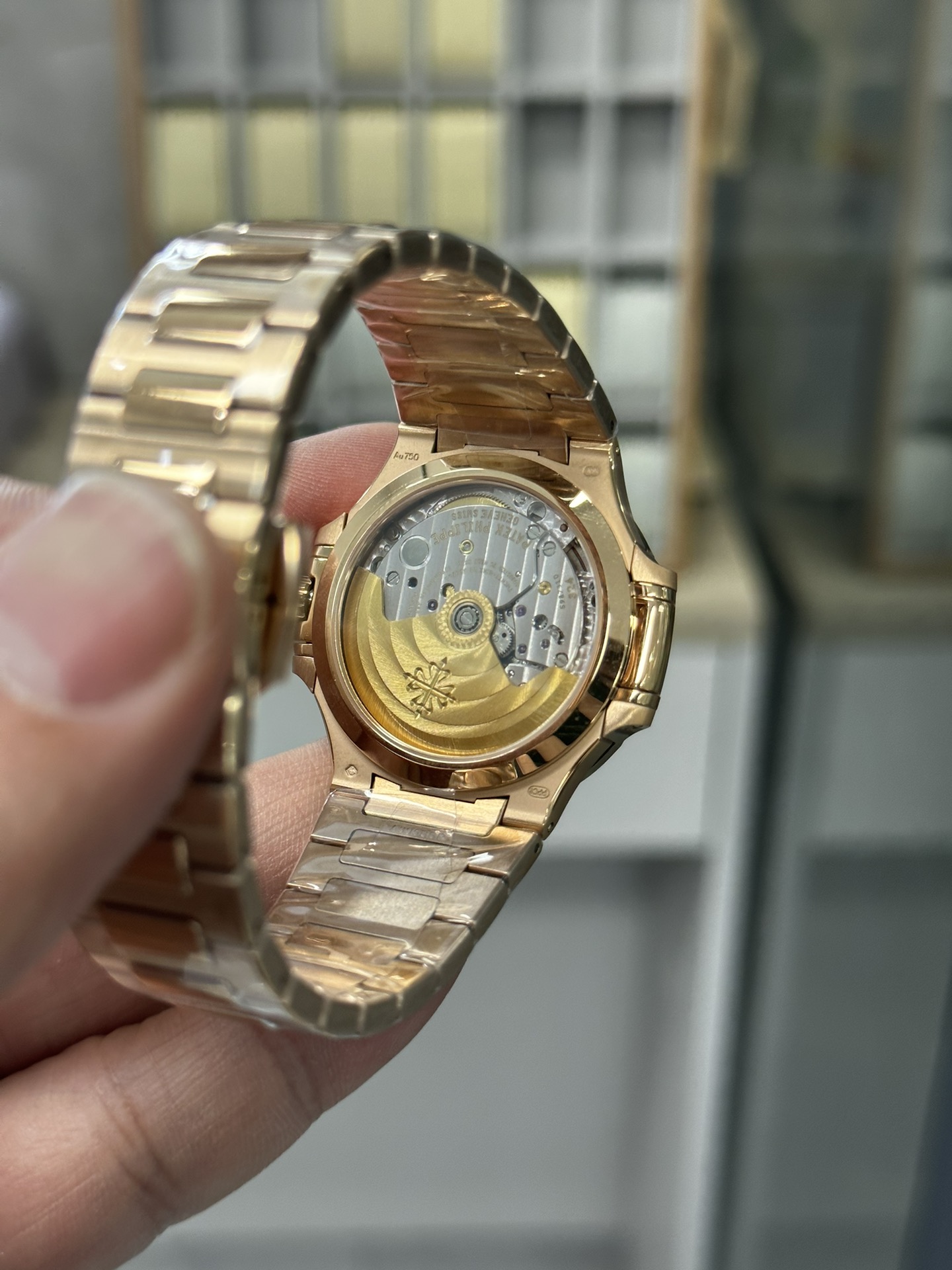
A patek philippe movement replica is hard for a simple reason: Patek’s “difficulty” isn’t just complication count. It’s proportion, thinness, and finish that are tied to the structure itself. When people name Cal. 240 or 26-330, they’re not talking about branding. They’re talking about architecture that was designed to be slim, stable, and beautiful without relying on brute thickness or oversized parts.
Ultra-thin changes everything. A movement that lives in a tight vertical space has less room to hide tolerance errors, less margin for shock absorption, and fewer places to “cheat” with thicker plates or taller gear stacks. In the real world, those constraints are exactly where clones start to feel like clones. They can be accurate on a timegrapher today and still develop a harsher winding feel, more audible rotor noise, or more sensitivity to position as wear accumulates.
Bridge shapes and spacing are another quiet barrier. On many watches, you can fake the look with a plate that resembles the original layout. On Patek, the bridges don’t just look a certain way; they sit where they sit because the train is designed around them. When you see a replica that “matches the bridge design,” you’re often seeing a cosmetic solution sitting on top of a different underlying geometry. That mismatch doesn’t always break function, but it tends to show up in serviceability, long-term consistency, and how the movement feels when it’s actually used rather than photographed.
Then there’s finishing. Handwork isn’t a vibe; it’s labor and process control. The edges, the uniformity of polishing, the cleanliness around jewel settings, the consistency of screws and countersinks—those are all repeatable only if the factory is willing to burn time and reject parts. In most replica ecosystems, the economics punish rejection. That is one of the clearest luxury replica movement limitations: the market pays for the appearance of high finishing more readily than it pays for the discipline behind it.
The Myth of “1:1 Patek Movements” in the Replica Market
“1:1 movement” is the most profitable phrase in the room because it’s vague enough to survive anything you can prove. If you’re buying replicas, you should assume that the patek replica movement myth will be presented as certainty, and the truth will be packaged as “details you don’t need to worry about.”
What Sellers Mean by “1:1 Movement”
Most of the time, “1:1” means a decorated movement—an ordinary, proven base with an added layer that imitates the original’s visual identity. You’ll see a plate shaped to resemble the genuine bridge layout, laser-etched text to mimic engravings, and rotor markings that look convincing at a glance. The watch winds, it runs, it tells time, and the back looks familiar in a listing photo. That’s the sales pitch.
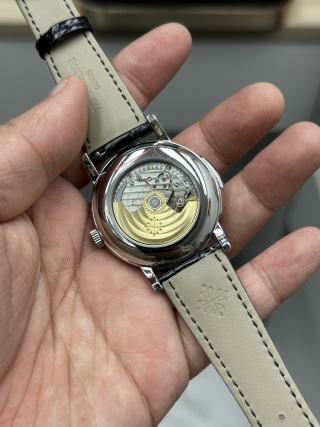
The problem is that visual similarity is not structural similarity. A decorated plate doesn’t change the gear train design. It doesn’t change how the automatic system is engineered. It doesn’t change the thickness constraints that define genuine Patek calibers. It usually doesn’t even change the fundamental service path, because underneath the cosmetics you still have a different architecture that was chosen for availability, cost, and predictable assembly.
The easiest way to spot the gap is to think like an owner, not a collector of screenshots. If a movement’s “upgrade” is mostly cosmetic, the lived experience is where the difference shows up: winding sound, rotor feel, the way the watch behaves when it’s not worn for a day, the stability of the seconds hand under small shocks, and the consistency of timekeeping across weeks rather than hours. If those lived traits are average, the “1:1” label is just a sticker.
Why No Factory Can Truly Clone a Patek Movement
The honest answer to why patek movements can’t be cloned is not morality or mystery—it’s cost, tooling, and incentives. A true clone requires more than copying dimensions. You need the full chain: high-precision machining, materials and heat-treatment discipline, controlled finishing, consistent assembly, and a service ecosystem that can keep the product alive after it leaves the factory. That is an industrial project, not a marketing claim.
The market size doesn’t support it. The number of buyers who can reliably tell the difference between a decorated plate and a genuine-architecture clone is small, and even fewer are willing to pay what a true clone would actually cost. So factories optimize for what sells: close-enough appearance, acceptable function, and predictable output. That’s not incompetence; it’s rational production behavior.
There’s also the thinness trap. Reproducing an ultra-thin caliber isn’t like making a thicker sports-watch movement and shaving a millimeter. Thinness forces the whole system to behave differently, especially under shock and in long-term wear. Clones can get the watch to run, but matching the genuine balance of thinness, durability, and refinement is a different task. You can brute-force the look, but you can’t brute-force the physics.
That’s the core of the super clone movement truth: “real” in this space usually means the watch is wearable, stable, and consistent—not that it is a one-for-one mechanical duplicate. If you keep that definition in your head, a lot of replica watch marketing tricks stop working on you.
What Movements Are Actually Used in Patek Super Clone Watches
The reality of Patek Philippe super clone movements is far more grounded than most marketing language suggests. These watches are not driven by mythical replicas of Geneva-finished calibers. They are powered by practical, industrial solutions designed to look convincing, run consistently, and survive daily wear without drama. Understanding those choices matters more than memorizing movement names.
Common Base Movements Used in China & Guangzhou
Most Patek super clone movements are developed and assembled in China, with Guangzhou being the primary industrial hub. This matters because the ecosystem there is optimized for volume stability, parts availability, and repeatable assembly, not for recreating Swiss artisanal traditions.
The most common foundations are modern Chinese automatic movements and heavily modified ETA-style architectures. These are not crude mechanisms. Many are robust, well-understood designs refined over years of mass production. Their appeal is not romance but predictability. They hold time within acceptable ranges, tolerate inconsistent winding habits, and can be regulated or serviced without heroic effort.
Factories choose these bases because they solve real problems. Ultra-thin profiles can be approximated. Central seconds and date functions behave normally. Power reserve is sufficient for everyday use. When something fails, replacement is possible. None of this sounds glamorous, but it is exactly why these movements dominate the patek super clone movement China supply chain and why guangzhou replica watch movement production looks the way it does.
What they do not do is replicate Patek’s original architecture. Gear train geometry, bridge layout, and energy flow remain fundamentally different. That gap is intentional. Closing it would multiply cost and reduce reliability, which defeats the purpose of a wearable replica.
Decorated Plates – What They Do and What They Don’t
Decorated movement plates exist to satisfy the eye, not to transform the machine. They add visual cues that resemble Patek layouts: bridge shapes, engraved text, faux hand-finishing patterns. Through a display back, they create familiarity.
What they do not do is change how the movement works. The underlying gear ratios, jewel placement, winding direction, and shock protection remain exactly what they were before decoration. A decorated movement replica may look closer to a Cal. 324 or 26-330 at a glance, but it behaves like the base movement it was built on.
This distinction matters because many buyers confuse appearance with equivalence. Decoration does not make a movement thinner, smoother, or more refined in operation. It only makes it less visually jarring when someone looks through sapphire. For closed-back models, it is largely irrelevant.
Geneva Seal, Engravings & Other Visual Traps Explained
The fastest way to waste attention in the replica world is to obsess over symbols that were never meant to apply here. Some details are meaningful in genuine Swiss watchmaking. In replicas, they are often just noise.
What the Geneva Seal Really Means (and Why It Doesn’t Apply Here)
The Geneva Seal is not a logo. It is a certification system tied to geography, regulation, inspection, and finishing standards enforced within a specific legal framework. It governs how parts are made, finished, assembled, and even how movements are serviced over time.
In replicas, the seal is a graphic element. It has no regulatory weight, no inspection behind it, and no promise attached. Seeing it on a movement plate inside a replica does not elevate quality. It simply signals an attempt to mirror prestige without replicating process.
Treating a Geneva Seal replica watch marking as anything more than decoration leads to false expectations. It is better understood as a stylistic reference, not a quality claim.
Engravings, Rotor Text & Jewel Color Tricks
Laser engravings, rotor inscriptions, and jewel color matching are some of the easiest details to copy and some of the least important to live with. They photograph well. They impress at first glance. They do almost nothing for ownership experience.
Factories know this, which is why these elements are often pushed aggressively in sales descriptions. The logic is simple: fake vs real movement details are easier to argue visually than mechanically. But once the watch is on the wrist, these details disappear from relevance.
What matters is how the rotor winds, how quietly the movement runs, and how consistently it keeps time. Engraving depth and jewel tint do not improve any of that. They are visual comfort, not functional value.
Movement Differences Across Patek Super Clone Models
Not all Patek models place the same demands on a replica movement. Case design, wearing context, and visual exposure change what matters and what can be safely ignored.
Nautilus Super Clone Movements (5711 / 5712)
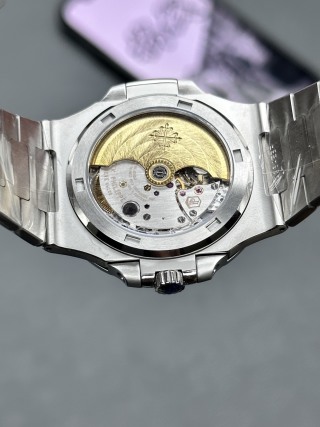
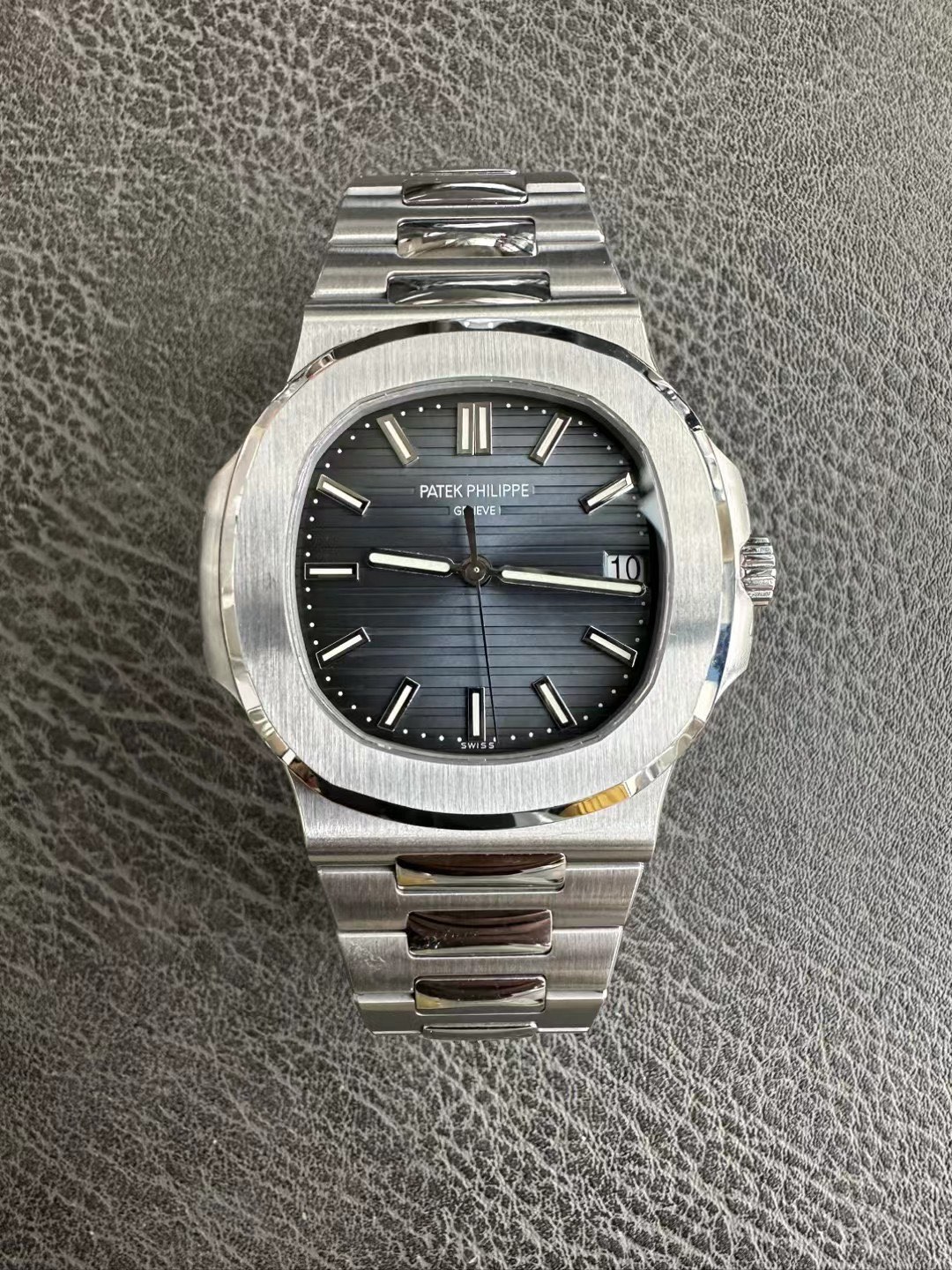
For Nautilus models, stability wins. The case is slim, the profile iconic, and the watch is often worn as a daily piece. A patek nautilus super clone movement does not need mechanical theatrics. It needs consistent thickness, reliable date function, and acceptable winding efficiency. In practice, simpler movement configurations outperform more ambitious ones here. The visual priority is the dial, the case shape, and the bracelet integration. As long as the watch wears correctly and runs without fuss, the movement complexity fades into the background.
Aquanaut Super Clone Movements (5167 / 5968)
Aquanaut replicas benefit from context. These are sport-oriented designs with rubber straps and a more casual wearing pattern. An aquanaut replica movement can tolerate slightly thicker profiles and less visual refinement without breaking the illusion.
Durability matters more than mimicry. Sweat resistance, shock tolerance, and winding resilience are more relevant than how closely the bridges resemble Swiss originals. In this category, industrial reliability aligns well with how the watch is actually used.
Calatrava Super Clone Movements (5227 / 5296)
Dress models expose movement fantasies faster than any other category. Thin cases, restrained dials, and formal expectations leave little room for compromise. A calatrava super clone movement is more likely to be judged for what it is not. Open casebacks, minimalist aesthetics, and closer inspection make decorative shortcuts obvious. This is why chasing extreme movement “likeness” in Calatrava replicas often leads to disappointment. The better approach is restraint: accept functional divergence and focus on overall proportion and finishing instead of internal mimicry.
In these models especially, understanding limits prevents regret. The watch either works as a visual homage, or it doesn’t. No amount of engraved text changes that.
Factory Reality Check – PPF, 3K and Others
Factory names matter less than people think, but ignoring how different factories think leads to bad expectations. The real divide is not quality versus quality. It is restraint versus spectacle.
Stability vs Decoration – Different Factory Philosophies
Some factories build movements with the assumption that the watch will be worn. Others build movements assuming the watch will be inspected.
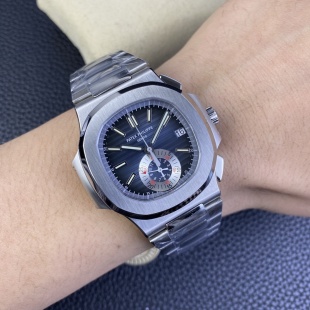
PPF has historically leaned toward restraint. Their approach to the patek super clone factory movement is pragmatic: proven base architecture, controlled decoration, and fewer experiments that could destabilize long-term use. The movements are rarely the most visually impressive under magnification, but they tend to behave predictably over time. Noise levels, winding efficiency, and parts tolerance are treated as priorities rather than afterthoughts.
3K takes a different stance. The ppf vs 3k patek movement comparison is often framed as “old versus new,” but the real distinction is ambition. 3K invests heavily in visual and structural mimicry. Bridge layouts are closer, engraving placement is more aggressive, and open-back appeal is clearly part of the design brief. When it works, the result is impressive. When it doesn’t, the risk usually shows up in regulation sensitivity or batch variance rather than immediate failure. Other factories fall somewhere between or outside these poles. Some emphasize decoration almost exclusively, stacking visual cues until the movement looks convincing in photos but offers no functional advantage. Others strip things back to the bare minimum and accept that the movement will never pass close scrutiny, betting instead on reliability and ease of service.
None of these philosophies are inherently wrong. Problems arise only when buyers assume that visual intensity automatically equals mechanical superiority.
What Actually Matters More Than Factory Names
Factory names change. Supply chains shift. Staff move. What persists is process discipline.
Quality control matters more than branding. A well-regulated movement from a less celebrated factory will outperform a poorly checked movement from a famous one. Batch consistency matters because replica movements are not isolated products; they are produced in runs, and small tolerances compound quickly. One good review does not protect you from the next inconsistent batch.
After-sales controllability matters even more. Access to replacement parts, familiarity among independent watchmakers, and predictable failure modes all influence ownership experience. The best replica movement factory is not the one with the loudest reputation but the one whose output behaves the same six months later as it did on day one.
What Actually Matters When Choosing a Patek Super Clone Movement
This is where decision-making should narrow, not expand. The right movement choice is rarely about chasing the highest specification. It is about aligning expectations with use.
If You Care About These Things, Focus Here
Start with proportion. Case thickness, dial-to-hand spacing, and crown feel shape the entire wearing experience. A movement that forces compromises here will never feel right, regardless of how authentic it looks through sapphire.
Next is overall completion. Smooth date changes, stable amplitude, and quiet winding indicate that the movement was chosen for function, not marketing. These qualities reveal themselves over weeks, not minutes. Finally, long-term stability outweighs novelty. Movements that have been used across multiple generations tend to age more gracefully. In any serious how to choose patek super clone discussion, durability beats cleverness almost every time.
Who Should Stop Obsessing Over Movements
Most daily wearers do not need to care this much. If the watch has a closed caseback, the movement is largely invisible. If the watch is worn casually, minor mechanical differences disappear into routine use.
For these users, movement anxiety often creates more dissatisfaction than protection. The replica watch movement buying guide most people actually need is simple: does it fit correctly, run consistently, and avoid obvious faults? If the answer is yes, further obsession adds little value. Super clone patek advice becomes counterproductive when it shifts focus away from how the watch lives on the wrist and toward fantasies of internal perfection.
Final Thoughts – Understanding Limits Is the Real Luxury
A Patek super clone explained honestly reveals that restraint, not illusion, is what protects satisfaction, and the reader alone decides how far that understanding should shape their choice.
Below is a decision-oriented comparison table focused specifically on Patek Philippe super clone movements, viewed from practical ownership angles rather than factory hype.
It is written to be read, not sold to.
Patek Philippe Super Clone Movement Comparison
Factories, Movement Reality, Cost, and Ownership Impact
| Dimension | PPF | 3K | PF / ZF Line | Other Visual-Heavy Factories |
|---|---|---|---|---|
| Primary Philosophy | Stability-first, restrained | Structure & visual ambition | Conservative reliability | Visual impact over mechanics |
| Movement Base | Modified Chinese automatic / ETA-style architecture | Proprietary integrated clone-style architecture | Modified Chinese automatic | Mixed Chinese automatics with heavy decoration |
| Structural Similarity to Genuine PP | Moderate | High (relative, not absolute) | Low to moderate | Low |
| Decorated Plates | Minimal, functional | Extensive, closer bridge layout | Minimal | Aggressive, sometimes excessive |
| Rotor & Engravings | Present but understated | Highly detailed, visually convincing | Basic | Often exaggerated |
| Geneva Seal Usage | Rare, usually avoided | Sometimes present as visual reference | Rare | Common as decoration |
| Movement Thickness Control | Good, slightly thicker than genuine | Very good, closer to genuine profiles | Acceptable | Inconsistent |
| Winding Efficiency | Stable, predictable | Strong but batch-sensitive | Stable | Varies widely |
| Noise & Vibration | Low | Low to moderate depending on batch | Low | Often inconsistent |
| Regulation Consistency | High | Medium to high | High | Low to medium |
| Long-Term Stability | Proven, conservative | Promising but batch-dependent | Proven | Unpredictable |
| Serviceability | High, parts familiarity | Moderate, more proprietary | High | Low |
| Batch Consistency | Strong | Variable | Strong | Weak |
| Typical Price Range (USD) | 400–550 | 550–750 | 380–520 | 300–600 |
| Best Use Case | Daily wear, long ownership | Display-back models, visual focus | Daily wear, low stress | Short-term ownership, visual appeal |
| Risk Profile | Low | Medium | Low | Medium to high |
| Who It Suits | Buyers prioritizing peace of mind | Buyers who value visual authenticity | Buyers who want reliability without hype | Buyers chasing “looks right in photos” |
Model-Specific Movement Tolerance Overview
| Model Line | Movement Sensitivity | Recommended Approach |
|---|---|---|
| Nautilus (5711 / 5712) | Medium | Prioritize thickness control and winding stability over visual mimicry |
| Aquanaut (5167 / 5968) | Low | Robust base movement matters more than decoration |
| Calatrava (5227 / 5296) | High | Avoid movement obsession; accept structural limits or skip entirely |
| Open Caseback Models | Very High | Only worth considering if decoration is restrained and execution is clean |
Practical Interpretation
- Factory names do not equal outcomes. Process discipline and batch control matter more than reputation.
- Decoration increases visual confidence, not mechanical quality.
- Price differences mostly reflect ambition, not reliability.
- The “best replica movement factory” depends on how the watch is worn, not how it is photographed.
One-Sentence Position
The most satisfying Patek Philippe super clone movement is not the one that claims to be closest to Geneva, but the one that quietly behaves the same way six months after you stop thinking about it.