
While most buyers look for a specific model, Vacheron Constantin collectors often face a factory-level dilemma between the two dominant market forces: PPF (representing modern high-tech manufacturing) and MKS (representing classic, established reliability). This guide abandons the standard single-watch review format to conduct a head-to-head “Battle of Methodologies,” comparing how these two giants handle case finishing, Miyota movement adaptation, and quality control to help you decide which manufacturing philosophy aligns with your standards.
The Context: Why Compare PPF and MKS for Vacheron?
The “Modern vs Classic” Divide
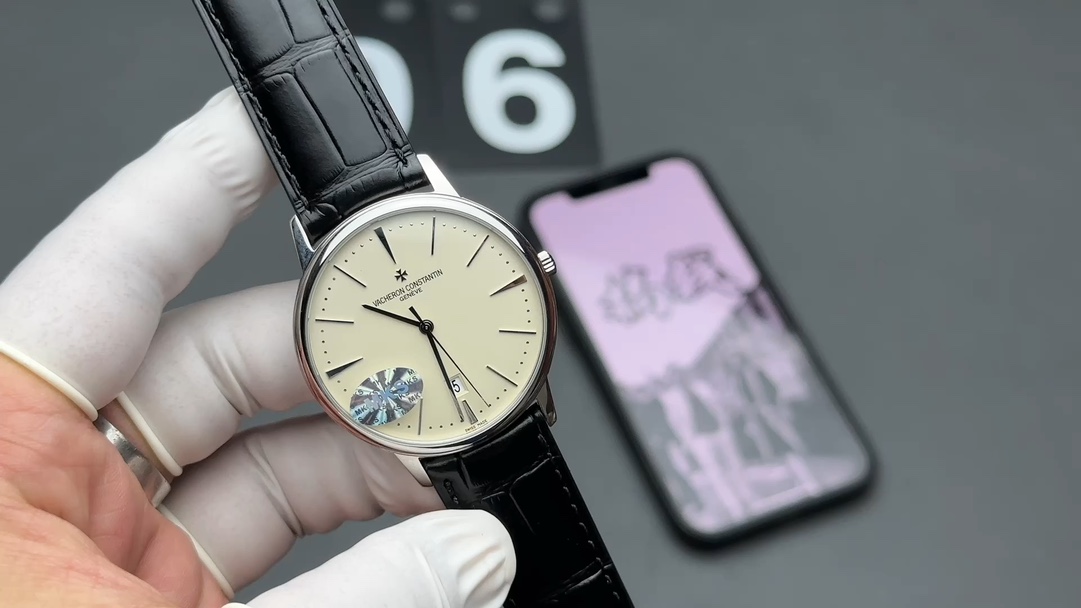
The fundamental split between these two manufacturers lies in their target eras within the Vacheron Constantin timeline. PPF has aggressively captured the modern sports aesthetic, dominating the production of the Overseas 4500V and the neo-retro Historiques 222 with sharp, angular case designs that require advanced CNC capabilities. In contrast, MKS rules the traditional dress and neo-vintage sector, specifically the Patrimony series and the older Overseas 47040 generation. This distinction is not merely about catalog selection but reflects a divergence in tooling; PPF invests in multi-axis machining centers necessary for modern integrated bracelets, while MKS maintains traditional stamping and polishing lines suited for classic round cases.
Despite their differing exterior aesthetics, a direct comparison is mechanically valid because both factories rely heavily on the Citizen Miyota 9015 base movement. This Japanese calibre, with its 3.9mm profile and 28,800 vph frequency, is the only robust industrial engine thin enough to approximate Vacheron’s ultra-thin genuine specifications without resorting to unstable modified clones. Consequently, the PPF vs MKS vacheron comparison becomes a study in modification capability: seeing how two different engineering teams solve the same problem of quieting the 9015’s noisy unidirectional rotor while fitting it into a sub-10mm case.
Price Tier Convergence
Both factories operate within the critical upper-mid to high-end pricing bracket, typically landing between 400and 600 depending on the specific reference and dealer margins. This pricing convergence forces a direct value comparison, as the buyer is not choosing between a budget tier and a premium tier, but rather between two competing definitions of “Super Clone” quality. MKS generally positions itself as the high-value option, offering reliable case construction and decent leather work for a slightly lower entry price, while PPF commands a “modern tax” for its complex steel bracelet articulation and dial finishing.
Judgment Tip: The “Era” Test
Before analyzing quality metrics, perform a simple chronological check on the genuine watch you intend to replicate. If the reference is a current catalog piece introduced post-2016 (like the Overseas Gen 3), you are almost exclusively within PPF territory due to their modern tooling standards. If the watch is a classic reference from the pre-2015 era (such as the Patrimony 85180 or Overseas Gen 2), you are firmly in MKS territory where their MKS Vacheron specialization excels. Attempting to find a PPF version of a classic dress watch will yield zero results, just as seeking an MKS version of the latest 4500V will result in inferior, outdated case geometries.
Round 1: Case Geometry and Polishing Standards
MKS: The Art of the Rounded Edge
MKS approaches case finishing with a traditional methodology that prioritizes the “soft” tactile feel characteristic of luxury dress watches. On models like the Patrimony 85180, the factory utilizes extensive hand-polishing on the lugs and bezel to ensure there are no sharp burrs or aggressive steps that could catch on a shirt cuff. This results in a seamless, liquid-like reflection on the curved case sides, mimicking the gold stamping techniques used in genuine horology. However, this heavy polishing can sometimes lead to slightly softened lug definition, where the separation between the case body and the strap attachment point lacks the absolute architectural crispness of the genuine precious metal prototype.
PPF: The Precision of Sharp Lines
In direct contrast, PPF’s strength lies in the execution of modern integrated sports watches like the Overseas 4500V, where sharp transitions are the primary indicator of quality. PPF utilizes high-precision CNC milling to create distinct separation lines between the brushed top surfaces of the Maltese Cross bezel and its polished flanks. [IMAGE: Macro shot comparing the sharp bezel angles of a PPF Overseas vs the softer edges of an MKS Patrimony] The Vacheron replica case finishing on a PPF unit reflects light in distinct, organized bands rather than a continuous curve, achieving the “industrial luxury” look required for modern sports pieces. If a collector observes a PPF case that looks overly soft or rounded, it indicates a failure in the final surfacing stage rather than a design choice.
Thickness Management
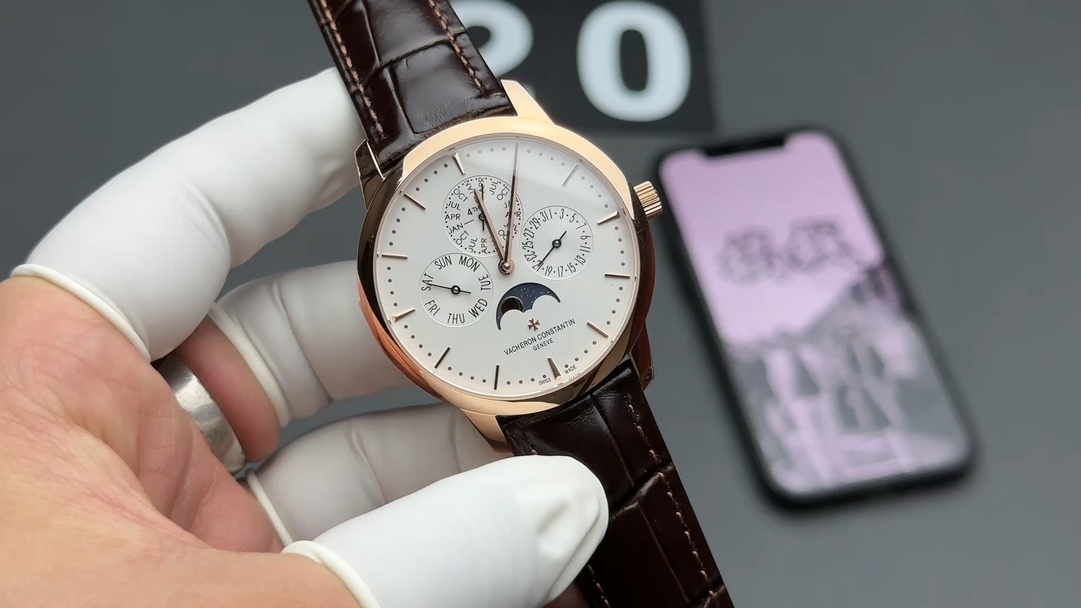
The handling of vertical thickness reveals a distinct prioritization of aesthetics versus engineering stability between the two contenders. PPF aggressively pursues the “Ultra-Thin” ideal, managing to compress the Historiques 222 case down to the 8.5mm range by minimizing the clearance between the Miyota 9015 rotor and the caseback. This pursuit of VC super clone case thickness accuracy sometimes compromises acoustic dampening, as there is less material to insulate movement noise. MKS takes a more conservative approach, often accepting a +1mm variance (e.g., making a 9mm watch 10mm) to ensure the movement has adequate breathing room and shock protection. This results in an MKS watch that feels slightly stouter on the wrist but often suffers from fewer rotor-scraping issues out of the box.
Judgment Tip: The “Fingernail” Test
To evaluate the machining precision of your specific unit, run your fingernail across the transition point where the brushed lug meets the polished bevel. On a PPF sports model, this transition should be distinct enough to physically “catch” your fingernail, confirming that the brushing and polishing were applied in separate, masked stages. On an MKS dress model, the transition from the bezel to the mid-case should feel seamless and fluid, offering no resistance to the touch. If you perform this test on a PPF 4500V and feel a smooth, slippery edge, the watch has been over-polished, destroying the geometric integrity intended by the design.
Round 2: Dial Execution and Detail Fidelity
Sunburst vs. Matte/Curved
The most immediate visual differentiator in a Vacheron replica dial comparison is how each factory handles light interaction, and as analyzed through the factory-specialist dial execution benchmarks in the 8F Factory Overseas dial light-behavior and sunburst execution guide, PPF dominates the modern sector by mastering the galvanic sunburst finish required for the Overseas 4500V and Historiques 222, producing a radial brush pattern that transitions from deep midnight to electric azure depending on angle of incidence, while MKS specializes in the complex geometry of the Patrimony “pie-pan” dial where the surface curves downward at the periphery, demanding a refined pad-printing process to keep the minute track crisp across changing vertical planes—a technique MKS has iterated over a decade of dial-accuracy evolution.
Logo and Font Precision
When inspecting the textual elements under 10x magnification, the divergence in manufacturing philosophy becomes stark. MKS prioritizes legibility and stability, utilizing slightly bolder font weights that anchor firmly to the dial substrate, ensuring high yield rates and consistent alignment on their dress models. PPF attempts to replicate the razor-thin, modern serif fonts used by Vacheron Constantin post-2018, a high-risk approach that captures the delicate aesthetic but introduces QC liabilities like the infamous “floating A” in the “VACHERON” logotype. The technical trade-off here is clear: PPF offers a higher ceiling for visual fidelity with the PPF dial sunburst effect, but carries a statistically higher risk of micro-misalignments compared to MKS’s conservative precision.
Judgment Tip: The “Cross” Alignment Check
For prospective PPF buyers, the critical QC step involves checking the applied Maltese Cross logo at the 12 o’clock position; on the Overseas, this independent component must be perfectly centered between the baton markers, as deviations here are common assembly errors. On MKS Patrimony units, the inspection should focus on the printed cross logo for any signs of ink bleeding or “smudging,” which occurs when the transfer pad slips on the curved dial surface. If the cross arms lack sharp, defined points on an MKS dial, the pad pressure was incorrectly calibrated during the stamping phase.
Round 3: Movement Engineering (The Miyota War)
Rotor Silencing Techniques
Since both manufacturers utilize the Citizen Miyota 9015—a movement notorious for its unidirectional winding noise—the PPF vs MKS movement noise comparison relies entirely on their respective modification strategies. MKS typically employs a traditional horological approach, applying heavier viscosity Moebius D5 oils to the rotor bearings to dampen the metallic hiss of the free-spinning weight. PPF, constrained by the tighter tolerances of their ultra-thin cases, relies more on the acoustic insulation of the case architecture itself to muffle the sound. Consequently, while neither factory completely eliminates the characteristic “Miyota wobble,” MKS units often exhibit a smoother, albeit still audible, rotation compared to the tighter, higher-pitched resonance found in un-serviced PPF examples. For related movement context, see the movement hub.
Decoration Plates and “Backside” Reality
The visual presentation of the movement through the exhibition caseback reveals where the budget allocation differs between the two giants. PPF invests significantly in VC replica movement decoration, utilizing separate deco plates with deep, chemically etched Geneva Stripes and rhodium-plated rotors that closely mimic the visual weight of the genuine Calibre 5100/5200. MKS, operating at a value-focused price point, often resorts to simpler laser etching directly onto the Miyota bridges or basic rotor stickers on their older reference 47040 models. This results in a PPF movement that passes the “glance test” on the wrist, whereas MKS movements are best viewed as reliable engines rather than aesthetic displays.
Judgment Tip: The “Shake” Test Expectation
Buyers must manage their expectations regarding the Miyota 9015 noise reduction: if you shake an MKS watch, expect a “dry” but consistent whirring sound indicative of standard bearing friction. If you shake a PPF model, the sound may be more “damped” or muffled due to the solid steel construction, but the vibration on the wrist will be sharper due to the thinner case walls. If absolute silence is a priority for a formal setting, factor in an additional $50 budget for a local watchmaker to apply specialized silencing grease, as neither factory delivers a genuinely silent rotor out of the box.
Round 4: Bracelet and Strap Integration
MKS Leather Quality
When evaluating the tactile experience of the MKS Patrimony or Traditionnelle lines, the factory-supplied strap represents the single most significant compromise in the package. To maintain their competitive price point, MKS utilizes a standard “genuine leather” grade strap that is stiff, plasticky, and prone to cracking at the pin-buckle holes after moderate use. This material lacks the supple, porous texture of genuine alligator skin, creating a jarring disconnect between the high-quality case finishing and the strap that secures it. Experienced collectors universally treat the MKS strap as “packaging material” rather than a wearable component, acknowledging that the factory focuses its budget entirely on the watch head geometry rather than soft goods.
PPF Integrated Bracelet Mastery
In sharp contrast, PPF’s expertise lies in the complex engineering of integrated steel bracelets for the Overseas 4500V and Historiques 222, and as detailed in the integrated-bracelet machining tolerance and articulation standards documented in the VC replica China factory bracelet engineering and finishing discipline guide, the manufacturing precision is critical because each link incorporates internally chamfered edges to prevent hair pulling while the articulation points are machined to allow the bracelet to pool liquidly rather than hold rigid, angular shapes; this level of Vacheron Overseas bracelet replica quality stems from PPF applying the same CNC protocols used on their top-tier Patek Nautilus clones, extending through to the folding clasp where distinct internal blasting and polishing rival the genuine Maltese Cross clasp mechanism.
The Quick-Change Mechanism
A defining feature of the modern Overseas architecture is the user-friendly quick-change system, which PPF has successfully reverse-engineered. Unlike the fixed spring bars found on MKS’s older 47040 models, the PPF 4500V features a spring-loaded catch mechanism integrated directly into the bracelet end-link, allowing users to swap between steel, rubber, and leather without tools. This mechanical complexity adds significant manufacturing cost but is essential for the “one watch, three looks” versatility that defines the modern Overseas ownership experience.
Judgment Tip: The “Drape” Assessment
Action: When evaluating a PPF steel model via QC photos or in hand, hold the watch head horizontally and let the bracelet hang freely. A high-quality PPF bracelet quality specimen will drape vertically in a straight line without “kinking” or getting stuck at the link junctions. For MKS buyers, the immediate action is financial rather than inspection-based: factor in an additional 40−60 for a MKS leather strap replacement from a specialized Vietnamese leather maker like Ziczac to elevate the watch to NWBIG (Not Worth Buying In Genuine) status.
Round 5: Price vs. Value Analysis
The “Modern Tax” on PPF
Analyzing the PPF vs MKS price difference reveals a consistent premium of 50−100 for PPF models, a cost directly attributable to the exponential increase in machining hours required for modern integrated cases. The multi-faceted bezel of an Overseas 4500V or the crenelated bezel of a 222 requires 5-axis CNC milling and significantly more hand-finishing time than a round Patrimony case. Furthermore, you are paying a “Modern Tax” for the hype associated with the current Vacheron catalog; PPF knows they hold a monopoly on high-grade current-production replicas and prices their products to match the high demand for “Instagram-ready” sports watches.
MKS as the Value King
MKS retains its position as the “High Value” choice by focusing on models that are inherently simpler to manufacture. The stamped and polished case of a Patrimony 85180 requires fewer tooling changes and less raw steel than an integrated sports watch, allowing MKS to deliver a “Super Clone” grade mid-case at a mid-tier price point. For collectors who prioritize the dress watch aesthetic, this creates a massive value arbitrage: you receive 95% of the visual impact of a gold dress watch for approximately 70% of the price of a PPF sports model. This VC replica cost analysis confirms MKS as the logical entry point for collectors new to the Vacheron brand who are unwilling to commit to the near-$600 bracket.
Judgment Tip: The Complexity Calculator
Action: Use a simple visual heuristic to determine if the price is justified: count the angles. If the watch features a complex geometric bezel and a steel bracelet (Overseas), the PPF premium is a necessary manufacturing cost. If the watch is a simple three-hand dress piece with a round case, paying PPF prices yields diminishing returns; in this scenario, the best value VC replica is undeniably the MKS, as you are paying for the watch, not the machining complexity. For related cost context, see the Vacheron price analysis.
Strategic Selection: Which Factory for Which Series?
The Patrimony / Traditionnelle Decision
Verdict: MKS. The decision here is absolute: MKS is the undisputed leader for the Patrimony and Traditionnelle lines. PPF does not effectively compete in this sector, and any attempt to find a “better” version from a different factory will likely lead to lower-grade alloy cases or inaccurate dial curvature. The best factory for vacheron patrimony is MKS, specifically for the reference 85180, where their mastery of the curved dial and closed caseback construction creates a replica that is virtually indistinguishable from genuine on the wrist.
The Overseas Decision (4500V vs 47040)
Verdict: Split. The Overseas lineage is divided by generation. If you desire the modern “Gen 3” 4500V with the clear caseback and quick-change strap system, PPF (or its sister factory ZF) is the only viable option. However, if you prefer the rugged, classic aesthetic of the “Gen 2” 47040 “Deep Stream” with its solid caseback and guilloché dial, MKS is the superior choice. Buying an MKS expecting a modern 4500V look will result in disappointment, as their molds are strictly based on the pre-2016 archival specifications.
The Historiques 222 Decision
Verdict: PPF. For the Historiques 222, PPF is currently the primary viable option for a high-grade replica. They have successfully leveraged their expertise from replicating the Patek Nautilus to nail the ultra-thin, angular case geometry of the 222. While other factories like V9 or 8F offer budget versions, they fail to capture the sharp, brutalist transitions that define this 1970s revival piece. The PPF 222 vacheron stands alone as the only version that accurately mimics the monolithic gold feel of the original.

Judgment Tip: The “Caseback” Rule
Action: Use the caseback as your primary filter. If you demand a display back to view the movement, you are restricted to PPF or ZF modern models, accepting the visual “tell” of the decorated Miyota 9015. If you prefer the security of a closed caseback—which conveniently hides the rotor and movement size discrepancies—the MKS 47040 review consensus confirms it as the safer “NWBIG” choice. For related selection context, see the series-factory matching guide.
Verdict: The Specialist vs. The Modernist
Choose MKS If…
You are a collector who values traditional horological aesthetics and wears suits or formal attire regularly. MKS is the correct choice if you prioritize “Set and Forget” reliability and the “less is more” philosophy of dress watches. The ideal MKS buyer is value-conscious, willing to swap a strap to achieve perfection, and prefers the discretion of a classic Patrimony over the flash of a modern sports watch.
Choose PPF If…
You are chasing the current “Hype” watch aesthetic and require a timepiece that stands up to scrutiny in a casual, short-sleeve environment, where PPF becomes the mandatory choice for buyers prioritizing high-end bracelet finishing and dynamic sunburst dial behavior as framed by the PPF vs MKS factory suitability matrix for modern vs classical VC deployments, and the ideal PPF buyer accepts the premium paid for complex PPF or MKS Vacheron replica machining while remaining comfortable with the slightly louder acoustics of a display-back sports watch in exchange for uncompromised visual execution.
Judgment Tip: The One-Sentence Decision
Action: Buy MKS for the Dress Watch Hall of Fame; Buy PPF for the Sports Watch Integrated Steel perfection. They are not rivals competing for the same wrist; they are masters of different domains, and the best VC replica factory is simply the one that builds the specific era of Vacheron you wish to wear today. For related ownership context, see the after-sales and warranty guide.