
In Panerai replicas, the movement matters more than the case or dial.
That statement makes some people uncomfortable, especially those who focus on case shape, lume color, or crown guard engraving. But after enough real ownership cycles, repairs, and side-by-side comparisons, the pattern becomes obvious: a Panerai replica lives or dies by what’s inside it.
This is not a guide about genuine Panerai calibers, heritage, or watchmaking philosophy. This is a replica buyer’s movement guide, written from the perspective of what actually exists in the Guangzhou clone supply chain, what survives daily wear, and what quietly fails six months later.

Every serious Panerai clone movement you will encounter comes out of Guangzhou. That doesn’t mean everything from Guangzhou is good, but it does mean there is no alternative ecosystem. Understanding which movement structures Guangzhou can reliably execute—and which it still struggles with—is the difference between a wearable watch and an expensive problem.
Why Movement Matters More Than Anything in Panerai Replicas
Most Panerai replicas fail because of movement issues, not appearance. The dial can look perfect and the case can be beautifully finished, but once the movement is wrong, the watch becomes thick, awkward, unreliable, or short-lived.
Thickness is the first giveaway and the first practical problem. Panerai designs are deceptively simple, but many models rely on movements that sit deep and wide inside the case. When a replica uses a modified or stacked movement instead of a true clone architecture, the case grows taller. That extra thickness changes how the watch wears, how the crown guard sits, and how the caseback feels against the wrist. Even buyers who don’t know why something feels “off” usually sense it within days.
Function synchronization is the second issue. Panerai replicas often claim correct GMT behavior, hour-jump date setting, or power reserve functionality. In reality, many movements only imitate these functions cosmetically. Date changes tied to the wrong hand, GMTs that behave like simple 24-hour indicators, or power reserve claims that don’t translate into real-world use all trace back to movement shortcuts. These shortcuts don’t always fail immediately, but they create long-term stress inside the mechanism.
Long-term stability is where movement choice becomes unavoidable. Decorated or heavily modified movements may run fine at first, but added plates, relocated components, or forced geometry increase wear. Owners usually encounter this after months, not days: declining accuracy, inconsistent winding efficiency, or sudden stoppage. At that point, cosmetic quality no longer matters. Repairs become difficult, and replacement often costs nearly as much as the watch itself.
This is why experienced Panerai replica buyers talk about movements first and models second. Case and dial details can be fixed, tolerated, or ignored. Movement architecture cannot.
Overview of Panerai Clone Movements (What You Actually Find in Replicas)
Despite the variety of Panerai models on the market, the movement landscape inside replicas is far narrower than most buyers expect. In practice, almost all Panerai clone movements fall into a small number of structural categories, and each category carries a very different risk profile. Understanding these categories matters far more than memorizing model numbers.
Automatic vs Manual Panerai Movements (Replica Reality)
In the replica world, automatic Panerai movements carry significantly higher risk than manual ones. This is not a theoretical concern; it shows up repeatedly in thickness problems, functional inconsistencies, and long-term reliability issues.
Automatic Panerai clones attempt to replicate complex layouts: central seconds deletion, offset balance wheels, jumping hour systems, GMT modules, and multi-day power reserves. When these elements are not built into the movement from the ground up, factories rely on stacked plates or mechanical compromises. The result often looks correct through a display caseback but behaves differently under daily use. Winding efficiency drops, wear increases, and serviceability becomes limited.
Manual Panerai replica movements are structurally simpler and far more forgiving. The architecture is direct, torque paths are short, and there is less mechanical stress over time. These movements tolerate manufacturing variance better and remain stable even with average finishing. This is why many long-term Panerai replica owners quietly gravitate toward manual-wind models after experiencing automatic failures.
This division sets up the rest of the discussion. P.5000-style manual movements and P.9000/P.9010-style automatic movements live in completely different risk categories, even before factory execution is considered.
“Clone” vs “Decorated” Movements – Big Difference
The most common misunderstanding in Panerai replicas is confusing visual similarity with structural authenticity. A movement can look like a clone and still behave like a heavily modified base.
A true clone movement is designed to match the original architecture: component placement, gear train layout, balance position, and functional flow are aligned from the start. Thickness is controlled at the design level, not corrected later. These movements tend to age predictably because stress distribution matches the intended geometry.
A decorated or modified movement starts from a generic base, often with added plates or relocated visual elements to mimic appearance. Balance wheels may be shifted visually but not structurally. Bridges may hide incorrect gear paths. Date or GMT functions may be rerouted instead of integrated. On day one, the watch looks convincing. Six months later, accuracy drifts, winding feels uneven, or components fail without warning.
One practical way buyers identify fake “integrated” movements is thickness behavior. If a Panerai replica sits noticeably taller than expected or feels top-heavy on the wrist, it is often compensating for internal stacking. Another sign is function mismatch: hour hands that cannot jump independently, dates that advance incorrectly, or power reserve claims that don’t translate into real runtime.
In Panerai replicas, appearance can be staged. Structure cannot. Once you learn to separate true clone architecture from decorative imitation, movement reliability stops being mysterious and starts becoming predictable.
P.9000 vs P.9010 – Super Clone Reality Explained
The P.9000 and P.9010 dominate modern Panerai replicas, but they do not represent the same level of risk. On paper they look similar. In real-world replica ownership, they behave very differently.
What the P.9000 Is in Panerai Clones
In replica terms, the P.9000 is the first automatic Panerai movement that crossed from “decorated imitation” into genuinely usable clone architecture. Its importance has nothing to do with prestige and everything to do with mechanical layout.
A proper P.9000 clone controls thickness at the base level. When executed correctly, the case profile stays close to expectations and the watch wears flat rather than top-heavy. This alone eliminates one of the most common automatic Panerai replica failures.
Balance wheel placement is another defining trait. In true P.9000 clones, the balance sits in the correct lower-right position rather than being visually shifted under a plate. This matters because it reflects correct gear train routing instead of cosmetic relocation. When the balance is structurally correct, timekeeping stability improves and long-term wear becomes more predictable.
Date adjustment behavior is the final practical checkpoint. Real P.9000-style clones allow hour-hand–based date changes rather than relying on midnight cycling hacks. This reduces mechanical stress and reflects an integrated design instead of a patched solution. When these three elements line up—controlled thickness, correct balance placement, and proper date logic—the P.9000 clone becomes a genuinely usable automatic movement.
What the P.9010 Changes (And Why It Matters in Replicas)
The P.9010 raises the bar in ways that expose factory limitations. It is slimmer, more compact, and less tolerant of shortcuts. That makes it attractive on spec sheets and risky in practice.
In replicas, the tighter vertical profile of the P.9010 leaves almost no room for stacked corrections. Any deviation in machining accuracy, gear alignment, or plate thickness shows up immediately as winding inefficiency or premature wear. What works in a P.9000 clone may fail outright when compressed into a P.9010 footprint.
The P.9010 also demands higher precision in balance and bridge alignment. Factories that can decorate a movement to look correct often struggle to keep it running correctly over time. As a result, many P.9010-labeled replicas look convincing at first glance but rely on fragile tolerances that degrade with daily wear.
This is why P.9010 clones are not universally safe just because they exist. Only a small subset of factories can execute them consistently, and even then, quality varies by batch. The margin for error is simply smaller.
P.9000 vs P.9010 – Which Is Safer for Replica Buyers?
For new buyers, the P.9000 clone is the safer choice without debate. It offers a wider tolerance window, proven long-term stability, and fewer catastrophic failure modes. Even average executions tend to remain wearable over time.
For experienced buyers who understand movement behavior, wear patterns, and maintenance expectations, a well-executed P.9010 clone can be acceptable. But it requires selectivity, realistic expectations, and a higher tolerance for risk.
In replica Panerai ownership, the P.9000 rewards consistency. The P.9010 rewards caution.
P.5000 Manual Wind Movement – Why It’s the Safest Panerai Replica Choice
If the goal is reliability rather than technical ambition, the P.5000-style manual wind movement remains the safest Panerai replica choice. This is not because it is exciting, but because it avoids nearly every failure pattern seen in automatic clones.
What Is the P.5000 Movement in Replicas?
In replicas, the P.5000 is a manually wound movement built on a Unitas-style architecture. That structure defines everything that matters: large plates, slow beat rate, direct power transmission, and minimal complication layering.
There is no rotor, no stacked automatic module, and no need to disguise incorrect geometry. The movement fills the case naturally, which keeps thickness under control and eliminates balance relocation tricks. Torque delivery is straightforward, and wear points are predictable.
From a practical standpoint, this means fewer parts under stress and fewer things that can drift out of tolerance over time. Even when finishing quality varies, the core structure remains forgiving. That is why P.5000-style replicas tend to keep running long after more complex movements begin to degrade.
P.5000 vs Unitas Clone – What’s the Real Difference?
Mechanically, there is no fundamental difference. A P.5000 clone and a Unitas clone share the same backbone. The gear train, winding layout, and power flow are effectively identical.
The differences live in decoration and presentation. P.5000 clones often feature reshaped bridges, engraved plates, and modified balance cock designs to resemble Panerai-specific layouts. Unitas clones may look more generic, especially through a display caseback.
These visual changes do not improve reliability. They also do not reduce it when done properly. What matters is the underlying architecture, not the branding language attached to it. When buyers are told a P.5000 clone is “completely different” from a Unitas-based movement, that claim is usually marketing rather than mechanics.
Understanding this prevents overpaying for cosmetic language and keeps expectations grounded in real-world performance.
Who Should Choose a P.5000-Based Panerai Replica?
New buyers benefit the most from P.5000-based replicas because they eliminate complexity. There is less to break, fewer functions to misunderstand, and far lower maintenance risk.
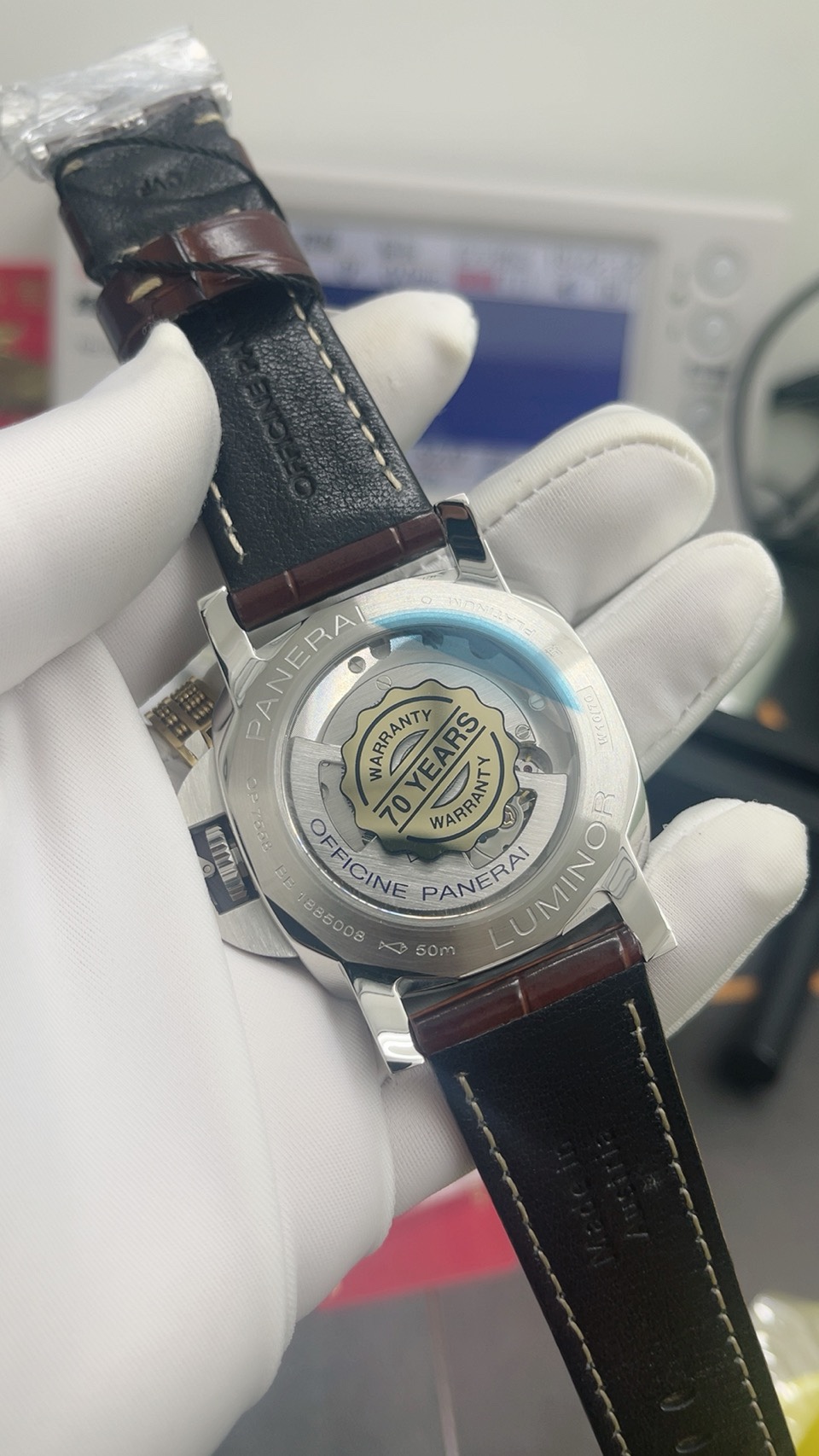
Long-term wearers also favor this movement because it ages predictably. Accuracy remains stable, servicing is straightforward, and parts compatibility is wide. Even after years of use, problems tend to be gradual rather than sudden.
For anyone who values low maintenance over technical spectacle, the P.5000 manual wind movement is not just safe—it is sensible.
Power Reserve in Panerai Clones – Truth vs Marketing
Power reserve is one of the most abused numbers in Panerai replicas. It is easy to print “3 Days” on a dial. It is much harder to deliver consistent energy over time without stressing the movement.
Claimed Power Reserve vs Real-World Performance
The “72 hours” claim appears on many Panerai clone listings, but the number itself means very little. In practice, many movements that advertise three days of power only achieve it under ideal conditions: full wind, minimal friction, and no real-world interruptions.
What matters is not how long the movement can run once, but how predictably it delivers power across repeated cycles. Some replicas will technically run close to 72 hours but lose amplitude sharply after the first day. Others maintain stable timekeeping for 48 hours and then stop cleanly. The second scenario is far preferable.
In replica ownership, stability always beats headline numbers. A movement that reliably delivers two strong days of power with consistent amplitude will outperform a fragile three-day design over months and years of wear.
Which Panerai Clone Movements Actually Hold Power Well?
Movements that hold power well in replicas share structural traits, not marketing labels. They use simple, direct gear trains. They avoid excessive layering. They rely on mainsprings that are not pushed to their physical limits.
Manual wind architectures perform best here because the energy path is short and losses are minimal. Automatic movements with properly integrated barrels can also perform well, but only when the design was built around the power reserve from the start rather than stretched to meet a number.
When power reserve claims align with structural reality, the watch feels consistent. Winding effort remains even, timekeeping doesn’t collapse late in the cycle, and the movement stops predictably instead of stalling.
Stable Panerai Clone Movements vs Movements to Avoid
Over time, certain movement types prove themselves through repeated ownership and long-term use. Others consistently create problems regardless of how good they look out of the box.
Proven Stable Panerai Replica Movements
Long-term tested Panerai clone movements tend to fall into a few clear categories. Manual wind movements based on large, simple architectures remain the most reliable. They tolerate wear, handle repeated winding cycles, and maintain accuracy without frequent intervention.
Well-integrated automatic movements with correct base geometry also perform consistently when thickness and function are controlled at the design level. These movements age gradually rather than failing suddenly, which makes them manageable even when servicing is limited.
The common thread is structural honesty. When a movement does not need to pretend to be something else, it usually survives.
High-Risk Panerai Clone Movements to Avoid
High-risk movements share predictable warning signs. Plate-modified constructions that disguise generic bases are the most common problem. They rely on added layers to mimic appearance, which increases thickness and internal stress.
Function mismatches are another red flag. Hour hands that cannot adjust independently, dates that change through awkward cycling, or GMT indicators that do not behave logically all point to compromised architecture.
Abnormal thickness is often the final signal. When a Panerai replica feels taller than expected or sits awkwardly on the wrist, it is usually compensating for internal stacking. These watches may run initially, but long-term reliability is poor.
In Panerai replicas, movements fail in patterns. Learning those patterns is far more useful than believing claims.
How to Choose the Right Panerai Clone Movement (Decision Framework)
Choosing a Panerai clone movement is less about taste and more about tolerance. Tolerance for risk, tolerance for maintenance, and tolerance for long-term uncertainty. The right choice becomes obvious once those limits are clear.
Choose Based on Experience Level
If this is your first Panerai replica, complexity works against you. Manual wind movements with simple architecture offer the highest margin for error and the lowest chance of unpleasant surprises. They forgive imperfect winding habits, inconsistent wear, and limited technical knowledge.
Experienced buyers operate differently. They understand how movements behave as they age, how to spot early warning signs, and when a watch needs intervention. For them, a well-executed automatic clone can be acceptable, but only because they know what failure looks like before it becomes catastrophic.
Choose Based on Wearing Frequency
Daily wear favors simplicity. Movements that are wound regularly and worn consistently benefit from stable torque delivery and minimal internal friction. Manual wind and well-integrated automatic movements perform best here.
Occasional wear exposes weaknesses. Automatic movements that rely on marginal winding efficiency or stretched power reserves tend to stall, drift, or behave unpredictably when left idle. If the watch will spend time off the wrist, simpler movements suffer less.
Choose Based on Maintenance Tolerance
Low maintenance tolerance points toward manual wind designs. They require less intervention, fewer specialized parts, and age more predictably.
Higher maintenance tolerance allows for more complex automatic movements, but only if the buyer accepts that servicing may be necessary and not always straightforward. If sending a watch out for repair feels like a burden, complexity is not your friend.
Taken together, the framework is straightforward: less experience, less wear, or less patience all point toward simpler movement choices.
Panerai Movement–Based Model Recommendations
Looking at Panerai replicas through the movement lens naturally leads to model selection. The case and dial become secondary once the movement decision is made.
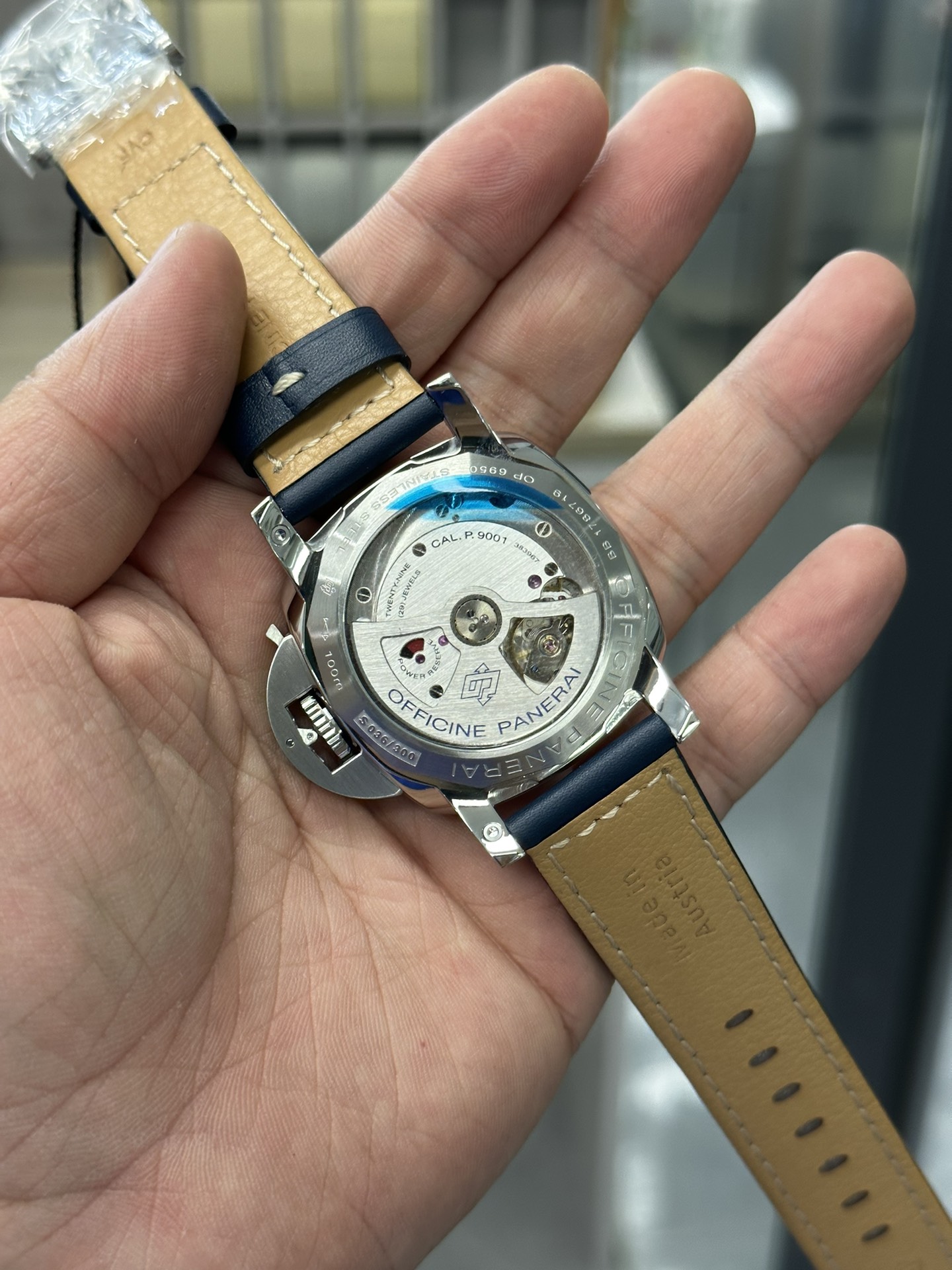
P.5000-style manual movements align best with models like PAM111 and PAM127. These watches wear naturally, remain mechanically honest, and deliver long-term reliability with minimal attention.
P.9000-based automatic movements suit models such as PAM312. They offer functional convenience without pushing tolerances too far, making them a balanced option for buyers who want automation without excessive risk.
P.9010-style movements appear in models like PAM1312. These watches demand higher execution quality and greater buyer awareness. When done well, they can be satisfying. When done poorly, problems surface quickly.
Choosing the movement first simplifies everything that follows.
Final Advice – In Panerai Replicas, Movement Choice Beats Everything
In Panerai replicas, the safest path is choosing a movement that matches how you actually wear and maintain a watch, not how convincing it looks in photos.
| Movement Type | Structural Reality | Typical Risk Level | Long-Term Stability | Common Failure Pattern | Best For |
|---|---|---|---|---|---|
| P.5000-style Manual | Unitas-based, direct power train, no rotor | Low | Very stable | Gradual wear only | Beginners, daily wear, low maintenance |
| Unitas Decorated | Same core as P.5000, cosmetic bridges | Low | Very stable | None structural | Buyers who don’t care about display accuracy |
| P.9000 Clone (Integrated) | Proper thickness, correct balance placement | Medium-Low | Stable if well executed | Normal aging | Buyers wanting automatic convenience |
| P.9010 Clone (Slim Auto) | Tighter tolerances, less margin for error | Medium-High | Batch dependent | Winding inefficiency, drift | Experienced buyers only |
| Modified Auto (Plated) | Generic base + stacked plates | High | Poor | Thickness issues, sudden failure | Should be avoided |
| Fake “Integrated” Clone | Visual similarity only | Very High | Unpredictable | Date/GMT mismatch, breakdown | Never recommended |