
The RM Replica Paradox: Extreme Design, Extreme Expectations, Extreme Disappointment
The fantasy begins with an image: Rafael Nadal smashing a forehand, a $1.2 million watch on his wrist, seemingly indestructible. It’s the allure of Richard Mille—a fusion of avant-garde engineering, motorsport aesthetics, and a price tag that cements it as a billionaire’s toy. For many, the entry point to this world isn’t a seven-figure bank transfer, but a $600 transaction on a dealer’s website. The promise is the silhouette, the shock, the awe. The reality is often a different story, which is why understanding what a super clone means in Richard Mille replica watches and why the term 11 perfect is mostly marketing is a critical step for any serious buyer navigating movement guides and factory comparisons.
This isn’t a guide to the best RM super clone factory. It’s a reality check. The central, uncomfortable truth is that Richard Mille replicas disappoint not primarily because they are bad fakes, but because they magnetically attract desires that a replica is fundamentally unequipped to satisfy. The gap isn’t just in microns of carbon fiber or grams of titanium; it’s in the psychological contract between buyer and object. We’re going to diagnose four archetypal Richard Mille replica buyer profiles to answer the core question: who actually enjoys this, and who is almost guaranteed to feel that sharp sting of RM replica disappointment?
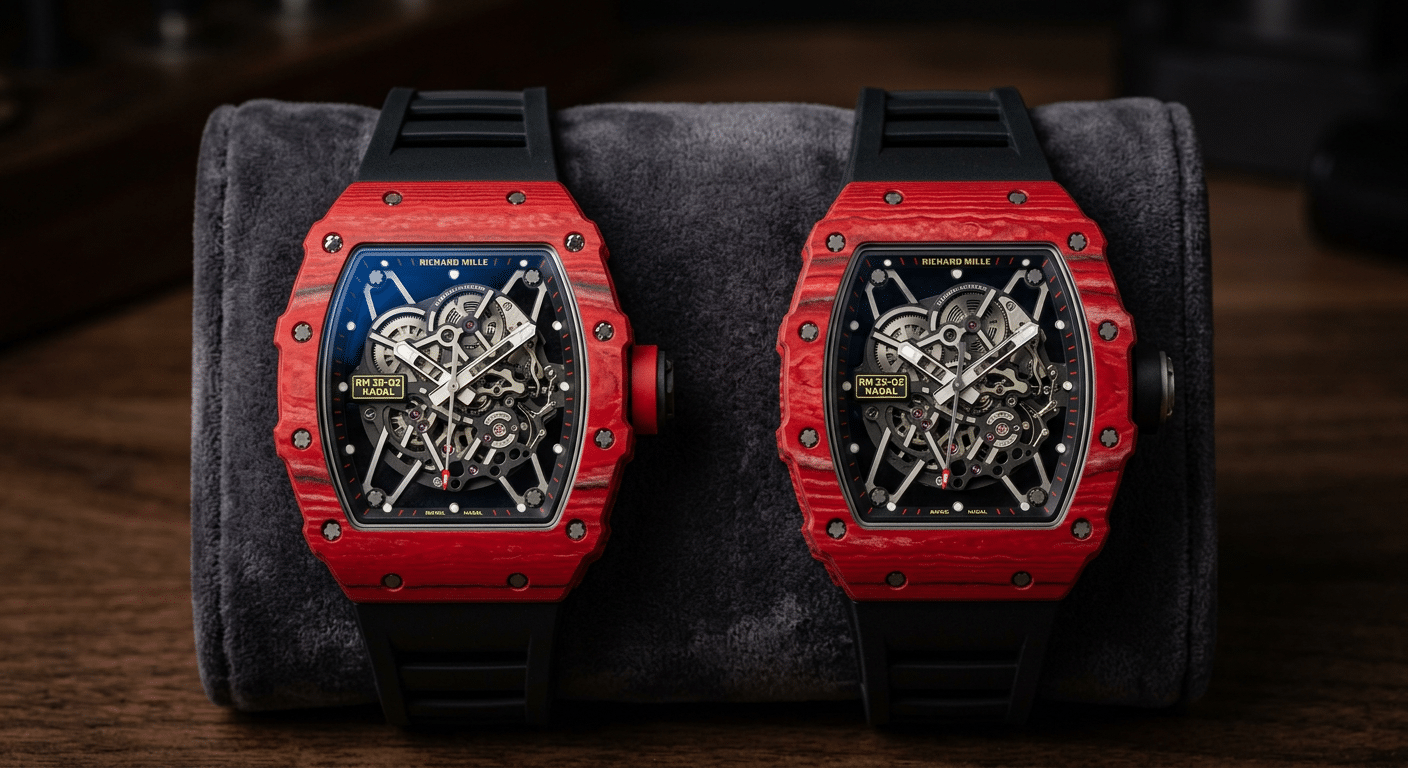
Why RM Isn’t Just Another Luxury Watch to Clone
Cloning a Rolex Submariner is an exercise in precision forgery. Cloning a Richard Mille is an exercise in theatrical illusion. A Submariner’s value is rooted in timeless design, proven utility, and brand legacy—things a super clone can mimic with terrifying accuracy. An RM’s value is an alchemy of radical material science, space-age mechanical architecture, and a cult of exclusive performance. The genuine article isn’t just a watch; it’s a demonstrator piece for what’s possible when cost is no object.
This creates a unique paradox for the Richard Mille super clone. The very features that define the brand—the skeletonized dial revealing a movement of grade 5 titanium, the case made from proprietary NTPT Carbon TPT, the ethereal lightness—are the most expensive and technically complex to replicate authentically. A replica can copy the shape, but it cannot replicate the soul of the engineering. It can mimic the look of complexity, but not the substance of it. This sets the stage for a specific type of buyer regret, one less about “being called out” and more about the slow, creeping realization that the object on your wrist delivers none of the tactile or experiential qualities that define the genuine article.
The Fantasy vs. The Machine: Where Replicas Inevitably Fall Short
The fantasy is owning a piece of horological hypercar technology. The machine you receive is a clever assembly of decorated Chinese movements, generic carbon composites, and stainless steel painted to look like titanium. The divide isn’t merely technical; it’s experiential.
Imagine the fantasy: the whisper-quiet, silky sweep of a genuine RM’s rotor, the crisp, precise action of its pushers, the almost disconcerting lightness of a sub-50 gram case that defies its substantial look. Now, the replica reality: a rotor that buzzes and grinds audibly, pushers that feel mushy or gritty, and a watch that weighs a tangible 20-40 grams more than its genuine counterpart. The fantasy is about feel and performance. The replica is, ultimately, about image. When your motivation is the former but your purchase delivers only the latter, RM clone problems become a matter of personal expectation, not just quality control.
Expert Authentication Insight
An authenticator’s first check is never with a loupe. It’s in the hand. The weight is wrong—every time. A genuine RM 35-02 weighs about 50 grams with its strap; even the best replicas clock in at 70-80 grams. Pick it up and the heft betrays it immediately. Next, listen. Flick your wrist. The genuine movement is almost silent; a replica’s rotor often emits a distinct, cheap-sounding whirr. Finally, look at the caseback from an angle. The finish on the hidden surfaces and the edges of the movement plates on a replica will show machining marks or lack the fine, consistent satin brushing of genuine titanium. These aren’t “upon close inspection” details; they are immediate, visceral experiences that shatter the illusion before a magnifying glass ever comes out.
Profile 1: The Visual Impact Hunter – Buying the Silhouette, Ignoring the Soul
This is the most common Richard Mille replica buyer. Their motivation is pure, unfiltered visual drama. They want the jaw-dropping, conversation-starting, status-projecting silhouette of an RM on their wrist. They are buying the shape, the color, the radical aesthetic. In their mind, the watch is a statement piece, a bold accessory that screams “look at me” from across the room. For them, the RM replica for looks is a perfect solution—or so they believe.
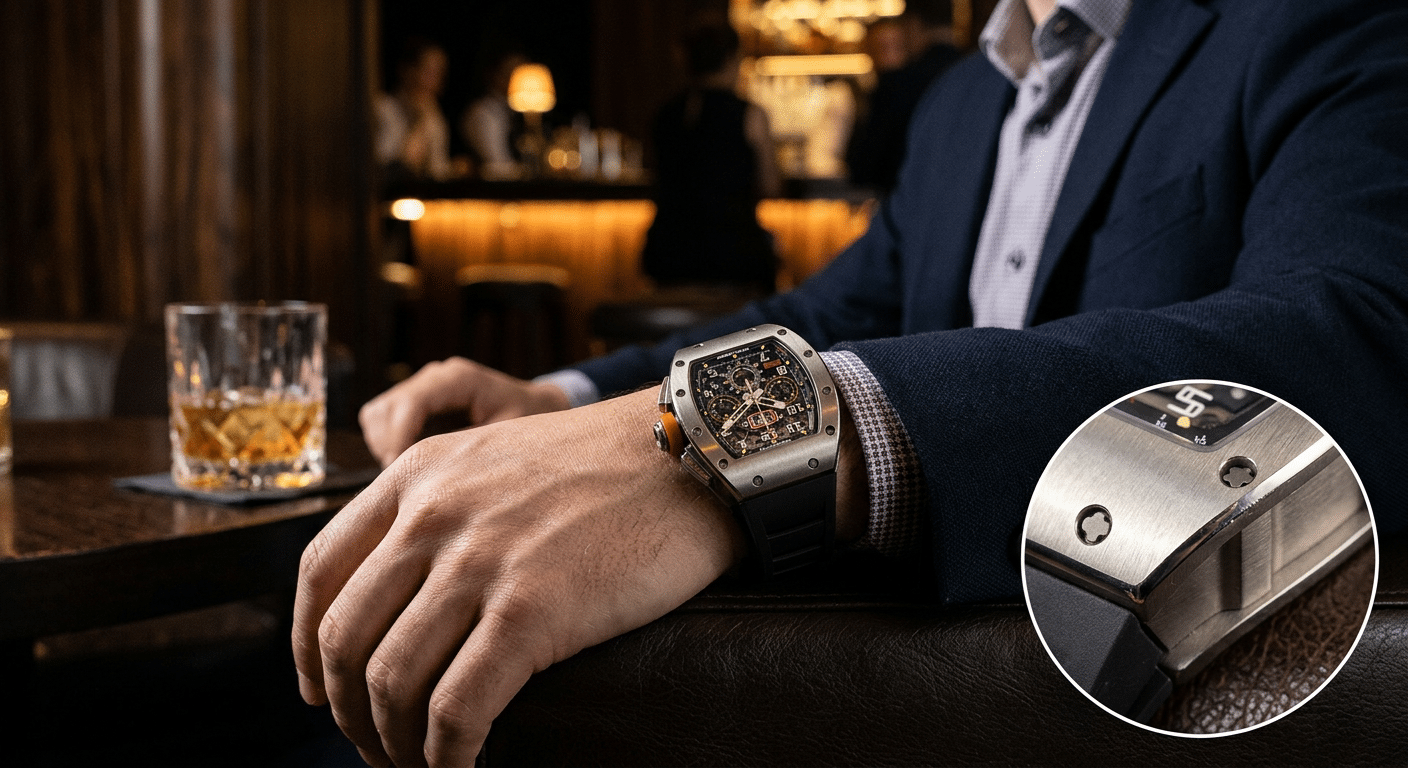
The “10-Foot Rule” Fallacy in High-Design Replicas
The Visual Impact Hunter operates on the “10-Foot Rule”: if it looks right from across the table, it is right. With a more conventional watch, this logic can hold. With Richard Mille’s extreme architecture, it often backfires. The very distinctiveness that draws them in—the complex, multi-level case, the sharp angles, the intricate skeletonization—creates more surfaces, edges, and details that must be perfect. A Submariner has a simple, polished bezel. An RM 055 has a case with complex curves, layered materials, and visible screws from every angle.
At 10 feet, the silhouette works. At 2 feet, the story changes. The forged carbon pattern might look splotchy or too uniform. The rubber gaskets might be the wrong shade of grey. The bevel on a case edge might be blunt where it should be razor-sharp. The visual impact watch they bought to withstand distant glances often crumbles under any casual, closer observation. The design is so iconic that its flaws, when they exist, become equally iconic tells.
The Daily Wear Reality: Noise, Weight, and Tactile Letdowns
This is where the fantasy meets the wrist and disintegrates. The Visual Impact Hunter’s dream involves looking like a tech billionaire or a champion athlete. The reality involves living with a machine that constantly reminds you it’s a facsimile.
The first shock is often auditory. In a quiet room, office, or car, the replica’s rotor can sound like a distant, angry bee trapped in the case. The second is tactile. That chunky, technical crown and pushers they admired in photos? They might feel loose, gritty, or lack the satisfying, damped click of the genuine article. The third, and perhaps most telling, is the RM clone weight feel. They expected a feather-light marvel of modern materials. They get a watch with noticeable heft, because the movement inside is brass and steel, not titanium. The disconnect between the “high-tech” visual and the mundane physical reality is a constant, low-grade source of replica watch tactile disappointment.
Expert Authentication Insight
For this profile, the tell isn’t in the microscopic details; it’s in the macro execution of the materials that create the visual impact. A genuine RM’s carbon case has a deep, three-dimensional, wood-grain-like pattern with subtle color variation. Many replicas, even good ones, have a carbon pattern that looks flat, overly glossy, or has stark, contrasting black-and-white fibers that appear painted-on. Furthermore, the junction where the case meets the strap—often a complex, curved interface—is a frequent fail point. On replicas, the fit can be imperfect, with visible gaps or a strap that doesn’t follow the case contour seamlessly. This critical point of material and construction integrity is a core focus of any comprehensive first Richard Mille super clone checklist, which provides a practical buying framework before you spend anything. From 10 feet, it’s an RM. From 2 feet, the materials and construction simply don’t possess the same depth and integrity.
Profile 2: The Mechanical Tourist – Fascinated by the Skeleton, Unprepared for the Reality
This buyer is drawn in by the spectacle of mechanics. They are captivated by the idea of a “machine on the wrist,” the mesmerizing view of gears and wheels in motion through a skeletonized dial. For them, the appeal of a skeleton watch replica is intellectual and aesthetic; they want to see the heart beating. They might even specifically seek out a replica tourbillon RM, captivated by the rotating cage, even if it’s a faux complication. Their intentions feel purer than the status seeker’s, but they are often setting themselves up for a different kind of frustration.
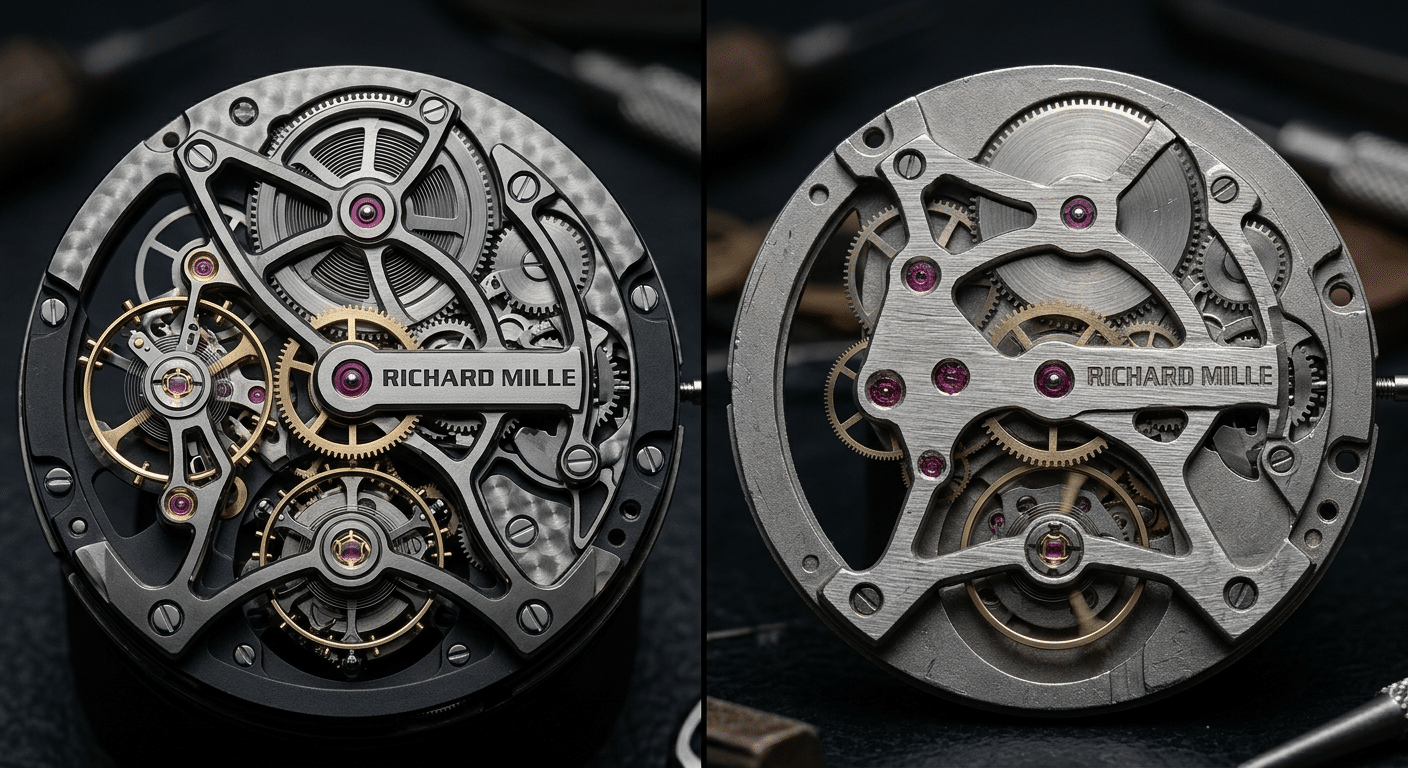
The Illusion of Complexity: Decorated Plates vs. Real Engineering
The Mechanical Tourist sees a busy, openworked dial and imagines a miniature marvel of micro-engineering. What they’re usually looking at is a clever piece of theater. Top-tier replicas use custom base plates that mimic the architecture of a genuine RM caliber, but the movement underneath is often a heavily decorated, off-the-shelf Chinese automatic (like a Hangzhou or Seagull). The bridges are stamped and painted to look like titanium. The “tourbillon” might be a static decoration or a simple balance wheel masquerading as one.
The genuine RM movement is a purpose-built, architectural statement. Every bridge is milled from solid grade 5 titanium, with sharp, hand-finished anglage (beveled edges) and a matte, technical finish. The replica movement is a generic engine dressed up for a party. Under a loupe, the illusion breaks: the finishing is rough, the edges are soft, the “jewels” may be painted on, and the overall layout lacks the three-dimensional depth and cohesion of the real thing. The buyer wanted complexity and got a convincing facade.
Legibility and Durability: The Practical Costs of an Open Dial
The romance of a skeleton dial fades quickly at 7:45 AM when you’re trying to catch a train and can’t instantly read the time. Skeleton watch problems with legibility are real. With so much visual noise from the movement, the hands can get lost, especially in low light. The openworked design also means there’s far less structural material protecting the movement from shocks, dust, and magnetic fields.
Furthermore, that beautiful, complex movement you bought to admire is also more fragile and more expensive to service when (not if) it eventually needs it. A local watchmaker likely won’t touch it, and sending it back to China is a hassle. The Mechanical Tourist, who bought the watch as a piece of mechanical art, often finds themselves with a delicate, hard-to-read object that inspires more anxiety than admiration over time.
Expert Authentication Insight
The dead giveaway for any expert examining a skeletonized RM replica is the balance wheel. A genuine Richard Mille almost universally uses a free-sprung, variable-inertia balance wheel—a high-end feature with tiny, adjustable weights on the rim and no regulator index. Over 95% of replicas use a standard balance with a regulator arm (the little lever that speeds up or slows down the watch). This is a fundamental architectural difference, visible at a glance with a loupe. It’s the horological equivalent of popping the hood on a “Ferrari” and finding a commonplace engine block. It instantly reveals the machine as a thoughtful imitation, not a twin of the original engineering.
Profile 3: The Social Symbol Seeker – Purchasing Perceived Status, Inviting Scrutiny
This is the buyer playing the most dangerous game. Their primary motivation isn’t horological appreciation or even aesthetic admiration; it’s the RM replica for status. They see the iconic tonneau case as the ultimate shortcut, a direct injection of perceived wealth, success, and cutting-edge taste. The fantasy is powerful: for a few hundred dollars, you can project the aura of a $300,000 wrist. It’s the ultimate social flex. And it is, by a significant margin, the most likely path to regret.
The core miscalculation here is about audience and plausibility. Wearing a replica of a ubiquitous luxury watch like a Rolex Submariner operates in a gray area of social assumptions—many people own them, many are fakes, and most observers don’t look closely. A Richard Mille exists in a completely different social stratum.
Why RM is the Worst “Flex” Replica You Can Choose
Richard Mille is not just expensive; it is niche, exclusive, and context-specific. Genuine owners are typically ultra-high-net-worth individuals, elite athletes, or A-list celebrities. The watch is a known trophy asset. Therefore, wearing one makes an extreme statement that immediately raises questions about your background, your career, and your net worth. You are not blending into a sea of luxury watches; you are planting a flag on a very exclusive, very scrutinized peak.
This invites attention from the exact people you should fear: those who know enough to be suspicious. At a business dinner, the finance partner who owns a Patek might glance at your wrist with curiosity. At a social gathering, the one watch enthusiast in the room will make a beeline for you. The Richard Mille social flex doesn’t ward off scrutiny; it magnetizes it. You have chosen to replicate the single most conspicuous, conversation-starting watch in the world, guaranteeing that anyone with even passing horological knowledge will engage. And they will be looking for tells.
The Anxiety of the Charade: Living With a Lie on Your Wrist
This leads to the inevitable psychological tax: replica watch anxiety. The initial confidence boost evaporates, replaced by a low-grade hum of vigilance. Every handshake becomes a potential exposure, as someone might feel the watch’s weight (a dead giveaway—replicas are often 20-40 grams heavier). Every gesture risks the faint, telltale buzz of a rotor that doesn’t sound like a $100,000 titanium micro-rotor. You find yourself keeping your left hand on the table, or in your pocket, or strategically angled away.
You’re not wearing a watch; you’re maintaining a performance. The irony is profound: the item purchased to project unshakeable confidence becomes a source of subtle, persistent insecurity, a dilemma often explored in a detailed Richard Mille super clone guide. The fear of getting called out on a fake watch can outweigh any pleasure derived from its look. The charade consumes more mental energy than the watch is worth.
Expert Authentication Insight
The social-setting tells are brutal in their simplicity. An expert—or even a knowledgeable enthusiast—needs no loupe. Across a dinner table, the first giveaway is often the case thickness, especially on models like the RM 011 or RM 67-02. The replica is almost always noticeably chunkier. The rotor noise is another; a genuine RM movement is whisper-quiet, while a replica’s standard rotor can emit a distinct, gritty whirr when you move your arm. The action of the crown and pushers feels different: genuine RM actions are crisp, engineered; replicas often feel vague or gritty. Finally, the strap quality and fit are often poor, with gaps or a cheap rubber smell. In a social context, these aren’t minor details; they’re the entire story.
Profile 4: The Informed Enthusiast – The Only Profile With a Fighting Chance
This is the anti-profile. The informed replica buyer enters the arena with their eyes wide open, armed with research and divorced from illusion. They are, first and foremost, a watch nerd. Their motivation isn’t social climbing; it’s intellectual and tactile curiosity. They see a top-tier RM super clone not as a counterfeit, but as a fascinating technological and cultural artifact—a replica as reference material.
This buyer appreciates Richard Mille’s audacious design language and engineering ethos as a concept. They understand that owning the genuine article is out of reach, but the desire to understand its form, its ergonomics, and its construction is intense. For them, the replica is a 3D study model, a way to engage with a design philosophy they admire without the seven-figure entry fee. Their satisfaction is derived from the object itself and the meta-narrative of its creation, not from any reflected status.
The “Study Piece” Mentality: Appreciation Over Aspiration
The core mindset here is that of a collector of interesting objects, not symbols. This is the RM super clone study. They will spend hours comparing their APSF RM 35-02 to high-resolution genuine photos, not to feel bad about the differences, but to appreciate the factory’s ingenuity in solving certain problems. They marvel at how ZF tackled the case geometry of the RM 016, or how the Dandong movement decorators approximated the look of titanium bridges. They discuss the merits of different carbon weaves on forums. The replica is a puzzle to be understood, a point of discussion with other enthusiasts who “get it.” The social currency here is knowledge, not wealth.
Clear-Eyed Expectations: Where This Buyer Finds Genuine Enjoyment
This profile finds enjoyment precisely where others find disappointment. They enjoy the appreciating replica design and engineering for what it is: a clever, industrial product from Guangzhou. They accept the weight discrepancy, the rotor noise, and the finishing shortcuts as inherent parts of the deal. Their pleasure comes from wearing a visually striking, conversation-starting piece of mechanical art that they fully understand is a simulacrum. They can admire the comfort of the tonneau shape, the legibility challenge of the skeleton dial, and the sheer wrist presence, all while being completely transparent about the watch’s provenance. There is no charade, and therefore, no anxiety.
Expert Authentication Insight
For this buyer, the expert insight is part of the appeal. They would nod along knowing that the most definitive tell—the indexed balance wheel versus the genuine free-sprung balance—is a compromise born of manufacturing reality, not a personal failure. They might even point it out to a curious friend. They understand that the “death point” for authentication, as Chinese reviewers call it, is the movement architecture. They buy the replica knowing that under a loupe, the story ends. But for them, the story was never about passing a loupe test; it was about exploring the design language of Richard Mille on their own wrist, with a budget that allows for such an experiment.
The Decision Matrix: Mapping Your Motivation to Your Likely Outcome
Analysis is useless without application. Below is a diagnostic tool to bridge the gap between your desire and the likely reality. Be brutally honest with your answers.
Key Questions to Ask Yourself Before Clicking “Buy”
Answer these candidly. Your answers will place you squarely in one of the profiles above.
- Primary Motivation: When you imagine wearing the watch, what feeling are you chasing? Is it the admiring glances of others, the personal satisfaction of owning a complex machine, the thrill of a visual statement, or the intellectual curiosity of studying a replica?
- Social Context: Where and around whom will you wear it? Are you in circles where a genuine RM would be plausible? Are you prepared for technical questions from watch-savvy people?
- Tolerance for Flaws: Can you enjoy a watch while knowing its movement is 20 grams heavier, its rotor buzzes, and its balance wheel is the wrong type? Or will those details gnaw at you?
- Long-term View: Is this a short-term thrill or a long-term piece in a collection? Are you prepared for potential movement failure in 3-5 years with limited repair options?
The Satisfaction Probability Spectrum: From Regret to Appreciation
Based on the profiles, here is the stark landscape of RM clone satisfaction:
- The Social Symbol Seeker: Highest Probability of Regret. The psychological burden and risk of exposure typically outweigh the brief status high. The watch becomes a source of anxiety, not confidence.
- The Visual Impact Hunter: High Risk of Disappointment. Initial excitement fades as tactile and auditory realities set in. The “10-foot rule” fails under daily wear, leading to shelf life of weeks or months.
- The Mechanical Tourist: Moderate to High Risk of Frustration. The novelty of the skeleton view wears off, revealing a mundane movement and poor legibility. The object fails to deliver on its mechanical promise.
- The Informed Enthusiast: The Only Likely Path to Enjoyment. With expectations managed and motivation aligned, this buyer can derive long-term pleasure from the replica as a study piece and wrist-worn sculpture. Satisfaction is high because it was never contingent on deception or unattainable perfection.
Expert Authentication Insight
Even if you self-identify as the Informed Enthusiast and pass your own test, perform this final, grounding exercise. Pick up any object that weighs about 40 grams (a standard AA battery weighs about 24g). Hold it. That’s roughly how much extra weight is in your replica’s movement due to brass and steel instead of titanium. That weight difference is the inescapable, physical truth of the object on your wrist. It is the fundamental compromise. Can you wear that knowledge—and that literal heaviness—every day and still find joy in the design? If the answer is yes, you might be ready. If that fact alone deflates the fantasy, you have your answer.
The ultimate question isn’t about which factory makes the best RM 011. It’s this: Are you buying a watch, or are you buying a story? If you need the story to be ‘I own a Richard Mille,’ you will lose. The replica cannot write that story for you; it will only highlight the plot holes. If your story is ‘I’m fascinated by this insane piece of design and want to explore a version of it,’ you might—just might—win. Choose your motivation first. The watch is secondary.