
Introduction – Why Omega Movements Matter
When you dive into the world of high-end watches, the movement sits at the core of what defines performance, feel, and long-term durability. In the context of super clone omega movement guide, “movement” isn’t a marketing buzzword—it refers to the mechanical heart that drives every tick and function of the watch. In genuine Omega timepieces, the movement’s structure directly influences how consistently a watch keeps time and how resilient it is against everyday stresses. In the replica space, differentiating between superficial dial and case details versus what’s genuinely happening inside the movement itself is essential for understanding real versus perceived quality.
At the center of Omega’s technical identity is the Co-Axial escapement, originally developed by George Daniels. This escapement design reduces sliding friction between components, extending service intervals and helping maintain stable accuracy over time compared with traditional Swiss lever escapements. That design is one reason why movements such as the 8400, 8500, and 9300 are highly regarded in the authentic watch world—and why omega co-axial movement replica efforts are often judged by how closely they emulate this core mechanism rather than by external aesthetics alone. It’s not just about how a clone looks; it’s about whether the complex interaction of gears, springs, and escapement can perform similarly to the original under real wear conditions, an area where most clones still fall short.
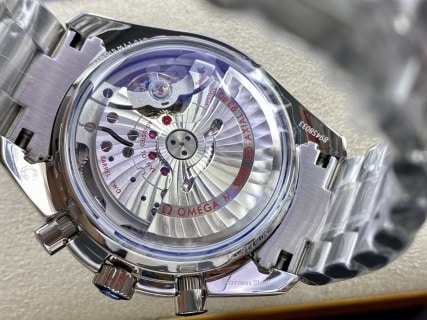
Omega’s focus on anti-magnetism and structural stability in its modern calibers further compounds the challenge for replica makers. Magnetic fields from everyday electronics can dramatically disrupt timing accuracy unless the balance spring and surrounding components are made from non-magnetic materials. Genuine Omega movements often use silicon balance springs and other high-performance alloys to achieve resistance to fields up to 15,000 gauss, a technological benchmark that most clones cannot match materially, even if they mimic the shape or engravings of the original. i
Omega’s Co-Axial Escapement: Heartbeat of a Super Clone
At the heart of any omega co-axial escapement clone effort is the challenge of reproducing how a Co-Axial escapement actually functions. A traditional Swiss lever escapement relies on sliding friction between the pallet fork and escape wheel teeth to regulate energy. In contrast, the Co-Axial design interposes an additional wheel and jewel configuration that separates impulse and locking surfaces. This reduces continuous sliding contact in favor of more direct impulse transmissions that, in theory, cause less wear and require less lubrication over long periods—a key advantage in terms of long-term stability and maintenance intervals.
Illustratively, a three-tier Co-Axial escapement uses three planes of interaction between escape wheel, intermediate wheel, and pallet surfaces. This differs from the typical two-plane leverage seen in Swiss levers. The effect on operation is subtle in a static image but profound in practice: frictional losses are lowered and energy flows more directly from mainspring to balance. The precision gaps and interaction surfaces needed for this mechanism to work reliably are microscopic and demand tight tolerances in manufacture. That is the core reason why true functional replication is difficult; it isn’t enough to duplicate the appearance of parts, the spacing and metallurgy must also support continuous oscillation with minimal energy loss.
For clones, the difficulty isn’t merely cosmetic replication of wheel shapes or engravings, it’s achieving the same functional geometry and material behavior such that the escapement genuinely works as intended under load. Most replica movements can mimic the look of a Co-Axial layout but cannot replicate its precise performance because they lack the ultra-tight machining tolerances and specialized materials required to hold stable escapement geometry. In practical terms, that means many clones will run, but their energy transfer efficiency, wear characteristics, and long-term timing stability often remain inferior compared with the genuine Co-Axial design.
This technical challenge is where co-axial vs lever escapement comparisons become more than academic: a Swiss lever escapement’s relative simplicity makes it easier to replicate functionally at lower cost, while a true Co-Axial mechanism places significantly higher demands on movement fabrication and parts consistency. That’s why the omega clone movement technical comparison almost always comes back to escapement performance when enthusiasts and builders evaluate what distinguishes a “super clone” from a standard clone.
Omega Calibre 8500: The Foundation
8500 Specifications (Genuine vs Replica)
The Omega Calibre 8500 laid the groundwork for modern Co-Axial movements and remains a baseline for many clones trying to mimic its layout and performance. On genuine examples, this movement was designed as a robust automatic with chronometer certification and technologies that push stability beyond traditional designs:
Genuine Omega Calibre 8500 Specs
| Specification | Details |
|---|---|
| Movement Type | Automatic, in-house with Co-Axial escapement |
| Jewels | 39 |
| Power Reserve | ~60 hours |
| Vibration Frequency | 25,200 vph (3.5 Hz) |
| Balance | Free-sprung with silicon hairspring in later versions |
| Chronometer | COSC certified |
| Barrels | Twin barrels mounted in series |
| Additional | Co-Axial escapement reduces friction |
This combination of twin barrels, a Co-Axial escapement, and a free-sprung balance made the 8500 not just chronometer-accurate but also engineered for consistent performance in varied conditions—a significant evolution over older lever-escapement designs.
Replica Reality
In the super clone space, movements that carry omega 8500 replica movement labels vary significantly in origin and sophistication:
- VS Factory (VSF) clones have become among the most referenced 8500 reiterations in the replica community. Some sources note that VSF has reengineered the movement by studying genuine examples and creating parts that visually match original layouts, including barrel positioning and balance wheel placement.
- These clones often claim performance similar to genuine parts on paper, such as a visible layout and quick-set hour setting functions.
- However, practical reports from watchmakers and owners indicate that true serviceability and parts availability for these clone 8500 movements are limited. When they fail, spare parts are rare, and many watchmakers will avoid servicing them, meaning reliability over the long term tends to lag behind genuine Omega movements.
- Accuracy figures for these clones are often cited in the ±5 s/day range out of the box, but values can vary widely based on assembly quality and regulation, and documented servicing remains difficult compared to real chronometer movements.
Because super clone 8500 accuracy hinges more on assembly finesse than on a strict mechanical equivalence to the original, owning one demands realistic expectations around long-term stability and repair options.
What Makes 8500 Important for Replica Market
The Omega Calibre 8500 holds a unique place in both genuine and clone markets because it marked Omega’s shift to fully in-house Co-Axial designs after years of modified base movements. In the original watch world, the 8500 became a workhorse across lines such as the Seamaster Aqua Terra and Planet Ocean, valued for its balance of power reserve, stability, and relatively straightforward service profile given its advanced design.
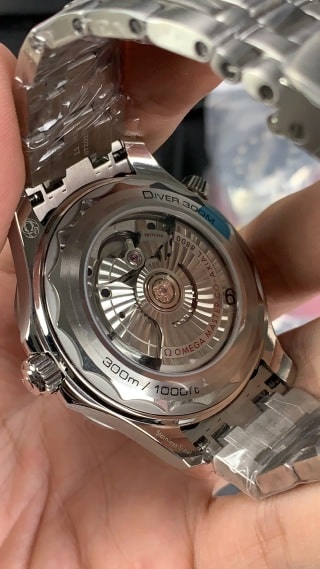
For replica producers, the 8500 movement importance lies in this historic and functional position: it’s complex enough to feel like a genuine horological engine, yet old enough that the original design details are accessible for reverse engineering without violating newer patent protections. As a result, many early high-end replicas used the 8500 design as a technical benchmark. This set a baseline for what the replica community began to call “super clone” movements—those that aim to duplicate not only external dial and case fidelity but also movement layout, quick-set functions, and the visual presence of features like twin barrels and Co-Axial gear trains.
In practice, such movements are often judged more on how convincingly they mimic the layout and basic functions of the genuine 8500 than on deeper technical equivalence. That’s because real Co-Axial escapement performance and consistent long-term accuracy are extremely difficult to reproduce without manufacturing capacity at the level of Omega itself.
Omega Calibre 9300 / Chronograph Movements
Special Features of 9300 (and Genuine Spec Data)
The Omega Calibre 9300 stands out within Omega’s movement lineup because it is not just a time-only engine but a fully integrated chronograph designed for precision, durability, and smooth operation. Unlike simple three-hand movements, the 9300 incorporates multiple chronograph-specific mechanisms while maintaining key Omega technologies such as the Co-Axial escapement and a silicon balance spring. Its architecture reflects decades of horological evolution and investment into chronograph design.
Here’s a clear summary of its core technical features:
| Specification / Feature | Omega Calibre 9300 (Genuine) |
|---|---|
| Movement Type | Automatic chronograph with Co-Axial escapement |
| Jewels | 54 |
| Power Reserve | ~60 hours |
| Frequency | 28,800 vph (4 Hz) |
| Barrels | Twin barrels in series |
| Chronograph Mechanism | Column wheel with vertical clutch |
| Balance Spring | Silicon (Si14) |
| Chronograph Functions | Central chronograph seconds, 12-hour & 60-min subdial |
The combination of a column wheel and vertical clutch means chronograph engagement is crisp and consistent. The column wheel acts like a control hub for the start, stop, and reset functions, while the vertical clutch permits smooth transmission of power to the chronograph seconds hand without the jumping or jolting typical of older lateral clutch systems.
The Co-Axial escapement and silicon balance spring enhance long-term stability and resistance to wear, while the higher beat rate (28,800 vph) supports more fluid motion and improved timekeeping potential compared with lower frequency calibers.
These technical elements make the 9300 more complex—not merely in the number of parts but in how those parts interact under load and over time.
Replica Reality for Chronographs
Replicating the internal structure of a chronograph like the 9300 is significantly more difficult than cloning a three-hand movement such as the 8500 or 8900. The technical obstacles lie in both mechanics and serviceability:
- Chronograph complexity: Genuine column wheel and vertical clutch mechanisms require precision machining and careful regulation. In the replica world, even when a chronograph movement visually imitates these systems, the functional fidelity often falls short because the tolerances and material qualities needed for reliable chronograph engagement are not achieved at typical clone manufacturing scales.
- Simplification strategies: Some clone movements reduce complexity by using less precise chronograph actuation systems or approximating the column wheel with cheaper cam systems. These approaches can look convincing from the caseback but offer inferior tactile feedback and timing precision compared with the genuine 9300 architecture.
- Service and wear: Chronograph clones that attempt to match the 9300’s functions often suffer from higher wear and more frequent lubrication needs. Vertical clutch systems demand very fine alignment; without it, the chronograph seconds hand may not reset cleanly to zero or may display erratic motion—issues that are rare in properly manufactured genuine movements.
- Notable clone attempts: Some manufacturers, such as OM Factory, have invested significant time reworking clone chronograph movements to include functional subdials and chronograph wheels that resemble the genuine layout. While this represents a leap beyond basic clone movements that only pretend to have chronograph functions, the overall durability and mechanical equivalence typically remain lower than an authentic 9300.
In short, omega 9300 clone movement efforts vary widely in quality. At best, they provide a convincing visual mimic with some functioning chronograph features, but they rarely match the nuanced interplay of column wheel, vertical clutch, and escapement that defines the genuine movement’s long-term performance.
Beyond 8900: What About 8800 & Other Calibers

In modern Omega lineup evolution, the Calibre 8800 has emerged as a noteworthy next step beyond the 8500/8900 family. It shares core design principles like the Co-Axial escapement and silicon balance spring but shifts toward updated materials, finishing, and sometimes slight adjustments to power reserve or tolerance profiles. The 8800 is often used in newer models such as recent versions of the Seamaster Diver 300M and other sport collections, showing Omega’s intent to refine and streamline its movement offerings without losing the core performance attributes of earlier designs.
In the replica market, the demand for omega 8800 clone movement has grown as collectors seek movements structurally closer to the genuine new-generation calibers. Some clone makers, including segments of the VS Factory ecosystem, reportedly attempt to match the 8800’s layout and performance characteristics more closely than older clone designs, improving visual fidelity and functional engagement. This has led to a trend where well-executed 8800 clones offer better compatibility with genuine cases and dials, as well as smoother operation than earlier generations of clones.
However, just like with chronographs, achieving true material equivalence—especially regarding anti-magnetic properties and precision over time—remains an inherent limitation in the clone space. Buyers should differentiate between superficial structural similarity and deeper mechanical equivalence when evaluating these movements.
“Beat Rate ≠ Stability”: A Scientific Explanation
When evaluating omega movement stability, it helps to start with a simple observation: two movements spinning at the same beat rate—say 25,200 vph—can perform very differently in real-world timekeeping and longevity. Beat rate, often used as shorthand for smoothness or precision, only tells part of the story. What actually determines stability over months and years is a combination of materials, precision tolerances, lubrication quality, and spring behavior under load. For example, a genuine Omega Co-Axial movement operates with finely tuned escapement geometry, high-grade alloys, and optimized lubricants designed to maintain amplitude and accuracy over extended use. The Co-Axial escapement’s reduced friction design further enhances this balance, allowing the mechanism to hold closer to its regulated rate longer without frequent service.
By contrast, even a well-constructed clone with the same nominal beat rate often uses more cost-limited materials and looser machining tolerances. Lower-grade alloys for the balance spring can change elasticity more quickly with temperature or shock. Lubricants not tailored for micro-scale friction points tend to dry or migrate faster, reducing amplitude and letting timing wander. Surface finish on gear teeth and pallet jewels influences micro-sliding resistance, so two movements at 25,200 vph might show similar sweep at rest but diverge widely once worn daily. Basic clone movements often perform acceptably at first, but over weeks of wear the effective power flow into the balance drops as friction increases—a reality mirrored in many timing test reports comparing clones to genuine movements.
One empirical lens for this is timing data: a genuine Omega chronometer movement might reliably hold within a few seconds per day over extended wear, thanks to its composite of optimized materials, Co-Axial escapement design, and professional regulation. In contrast, a clone with similar beat rate may run within ±5 s/day immediately after assembly—impressive for a replica—but that figure typically drifts more quickly with wear and environmental changes because of less stable hairspring alloys, sub-optimal lubrication, and part-to-part variation. The upshot is that beat rate alone doesn’t capture the interplay of energy transmission efficiency, friction management, and material resilience that underpin long-term stability, a distinction that enthusiasts and watchmakers emphasize when comparing clone watch accuracy vs reliability.
The Replica Movement Factory Landscape (VS / OMF / ZF)
Facility-Level Comparison
In the world of super clone movements, the factory responsible for production often defines how close a movement can approach genuine performance in both appearance and function. Differences in vs factory omega movement, omf omega movement replica, and zf omega movement clone outputs emerge most clearly at the stages where precision machining, parts sourcing, and quality control intersect.
VS Factory (VSF). Among clone makers discussed in industry forums and enthusiast reviews, VSF is widely noted for prioritizing movement fidelity. Their approach often involves creating custom clone movements that mimic both layout and certain functional behaviors of genuine calibers rather than simply decorating a generic base movement. This means tooling parts to match the shape, bridge placement, and beat rate of the original. Many collectors cite VSF examples that deliver close performance on timing machines and smoother second-hand sweep than generic movements, a sign that tolerances and assembly focus have real impacts beyond superficial look-alikes. ([turn0search14])
OM Factory (OMF). OMF is sometimes seen as positioned slightly below the top tier in movement sophistication, with offerings that target strong visual and functional mimicry but with serviceability and long-term stability that can vary. Enthusiast discussions around OMF often note that while their clone movements look convincing and hit many technical checkboxes, the nuances of material selection and regulation consistency may lag VSF in sustained timing stability. ([turn0search13])
ZF Factory (ZF). ZF has extensive experience with detailed case and dial replication across luxury models, and their movement offerings typically strive for a balance between visual authenticity and functional reliability. While perhaps not as focused on pure movement innovation as some VSF designs, ZF clones often achieve stable performance through tight control of parts finish and assembly. Their work on certain Swiss clone movements is regarded in enthusiast circles as offering solid reliability, especially in non-chronograph calibers where the mechanical load and complexity are lower. ([turn0search3])
Across all these factories, a common theme emerges: the technical barriers in omega clone movement technical comparison are not merely in copying part shapes but in matching material quality, surface finish, and assembly precision. Differences in these areas influence how closely a clone can track original timing behavior and how much maintenance or regulation intervention will be needed over time. In practical watch-making terms, the internal quality control standards of these factories—ranging from CNC tolerance checks to timegrapher regulation—create the hierarchy that collectors and reviewers reference when comparing super clone movement options.
(For further context on how these factories fit into broader manufacturing ecosystems and decision frameworks, see the China Replica Watch Factory Guide.)
Which Super Clone Omega Movement Should You Buy?
When choosing a clone movement, consider how you intend to use the watch and what expectations you bring. A daily wear piece prioritizes best omega clone movement reliability, while a piece for occasional wear or display might emphasize aesthetic match.
- Daily Wear: Look for movements from top-tier factories like VSF or ZF with demonstrated stability in actual wear conditions and documented timing results near ±5 s/day initially. In this segment, durability, ease of regulation, and parts availability can make a noticeable difference in longevity without frequent service.
- Collector: For collectors who value internal mechanics and want closer alignment with genuine calibers, movements that combine visual authenticity with real functional features (like twin barrels or simulated co-axial architecture) provide deeper satisfaction, even if occasional servicing is needed.
- Entertainer: If your priority is aesthetic impact and convincing visual proximity to genuine Omega — for instance, during social display — a clone movement that visually mirrors the original but may require occasional timing tweaks can suffice.
A simple comparison across these segments clarifies trade-offs:
| Use Case | Priority | Clone Movement Consideration |
|---|---|---|
| Daily Wear | Reliability & consistency | Top-tier clone with stable timing |
| Collector | Mechanical fidelity | Movement that mimics genuine function |
| Entertainer | Visual authenticity | Strong aesthetic match, moderate functional performance |
Choosing the right movement isn’t just about names or brands; it’s about aligning technical possibilities with your real-world expectations for how the watch will be worn and maintained.
Conclusion – Understand Before You Choose
Understanding the technical realities of super clone Omega movements helps ground decisions in clear mechanical expectations rather than marketing claims.