
Introduction
This article is written from a technical and practical standpoint rather than a moral or legal one. The modern mechanical watch industry is no longer defined by a single manufacturing center or a single philosophy of production. Swiss luxury movements and Chinese-manufactured clone movements now coexist in the same global ecosystem, often discussed in the same conversations by collectors, watchmakers, and enthusiasts who care more about how things are built and how they perform over time than about slogans or origin myths.This comparison examines Swiss watch movements vs Chinese-manufactured movements from a technical and long-term ownership perspective, focusing on engineering decisions rather than branding narratives.
The purpose here is not to defend brands, criticize manufacturers, or frame the discussion in ethical absolutes. It is to examine how different movement-making systems arrive at different results, using real mechanical structures, production logic, and long-term ownership behavior as the reference point. When people say two movements “look the same” or “feel the same,” they are often responding to surface similarity without understanding the engineering decisions underneath. This comparison aims to make those decisions visible.
From a collector-level perspective, modern manufacturing capability matters. CNC machining, CAD-based design, and globalized supply chains have reshaped what is technically achievable outside Switzerland. At the same time, Swiss brands continue to pursue long-term consistency, service predictability, and institutional control in ways that are not always obvious from visual inspection alone. Understanding both sides requires stepping away from emotional framing and focusing instead on how movements are designed, regulated, produced, and maintained in real-world conditions.
How Swiss Luxury Watch Movements Are Designed and Manufactured
Movement Architecture and Original Engineering
Swiss luxury movements are defined less by individual features than by architectural continuity. When brands like Rolex, Omega, or Patek Philippe design an in-house movement, they are not starting from a blank page each generation. They are iterating on architectures that may already be decades old, refining energy flow, component geometry, and service behavior across multiple product cycles.
This long-term approach shapes the entire movement layout. Gear train placement, barrel size, calendar construction, and automatic winding systems are chosen not only for immediate performance, but for how they behave after ten or twenty years of use. A movement like Rolex’s 3135 or Omega’s 8500 family reflects hundreds of small decisions accumulated over time, each constrained by what came before. That constraint is intentional. It allows manufacturers to predict wear patterns, standardize service procedures, and maintain compatibility across generations.
Original engineering in this context does not mean constant reinvention. It means controlling the full architecture so that improvements can be introduced without destabilizing the system. This is why Swiss in-house movements often appear conservative. They prioritize repeatability and longevity over experimental novelty, even when newer solutions might offer short-term advantages on paper.
Regulation Systems: Free-Sprung Balance vs Index Regulation
One of the most discussed differences between Swiss luxury movements and many Chinese-manufactured movements lies in regulation systems. Free-sprung balances are often presented as inherently superior, but their real value lies in what they optimize for, not in any inherent magic.
In a free-sprung system, rate adjustment is achieved by altering the inertia of the balance wheel rather than changing the effective length of the hairspring. This design reduces the number of interacting variables once regulation is complete. Over long periods, especially across large production batches, this approach offers greater consistency. It also minimizes the risk of accidental rate changes caused by shock or minor deformation.
Index-regulated systems, by contrast, are easier to adjust and faster to regulate during assembly. They allow watchmakers to achieve excellent short-term accuracy with less time investment. The trade-off appears over years rather than days. As lubrication ages and components wear, index systems tend to drift more predictably, but also more noticeably, requiring more frequent intervention.
Neither system exists in isolation. They reflect different optimization goals. Swiss manufacturers prioritize batch uniformity and long service intervals across millions of watches. Other producers may prioritize flexibility, adjustability, or cost efficiency, especially when movements are expected to be replaced rather than supported indefinitely.
Why High-End Brands Prefer Free-Sprung Systems
High-end brands favor free-sprung balances because they align with a manufacturing philosophy built around durability and predictability. When a brand commits to servicing a movement for decades, it benefits from a regulation system that resists accidental disturbance and ages in a controlled manner. The reduced reliance on fine regulator pins also simplifies long-term behavior under shock and temperature variation.
This preference is not about technological exclusivity. It is about tolerance management. Free-sprung systems demand tighter manufacturing tolerances in balance wheels, hairsprings, and adjustment screws. These tolerances increase production cost and reduce flexibility, but they also allow brands to lock in performance once regulation is complete. For manufacturers operating at large scale with centralized service networks, that trade-off makes sense.
Movements optimized under different economic and service assumptions may reasonably arrive at different solutions. The presence or absence of a free-sprung balance is therefore best understood as a signal of manufacturing intent rather than a universal measure of quality.
How Chinese-Manufactured Clone Movements Are Developed
Reverse Engineering vs Original Design
Chinese-manufactured clone movements are best understood through the lens of reverse engineering, a process that is neither unusual nor controversial within industrial manufacturing. In aerospace, automotive, and consumer electronics industries, reverse engineering is routinely used to study successful products, understand their functional logic, and develop alternatives that meet similar performance goals under different constraints. Mechanical watch movements are no exception.
In this context, reverse engineering does not aim to replace intellectual property or replicate brand identity. The practical objective is functional similarity: matching dimensions, energy flow, complication behavior, and overall compatibility with existing cases and dials. The emphasis is on how a movement works rather than on who originally designed it. This distinction matters because it shapes engineering priorities from the outset.
Where Swiss in-house movements evolve through internal iteration, clone movements typically begin with teardown analysis. Components are measured, tolerances mapped, and functional sequences documented. From there, engineers decide which elements must be reproduced precisely and which can be adapted without breaking compatibility. The result is not a one-to-one duplication of intent, but a mechanically interpretable version of an existing system, optimized for different production realities.
This approach explains why clone movements often achieve high surface similarity while diverging subtly in internal logic. The goal is not to recreate the original design philosophy, but to achieve reliable operation within a constrained cost and supply environment. Understanding this difference helps explain both the strengths and the limitations that follow.
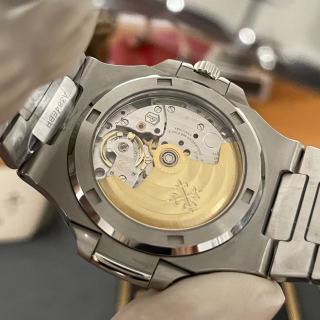
Two Main Technical Approaches in Clone Movements
Fully Rebuilt Architecture (Full-Layout Clone Movements)
The most technically ambitious approach involves fully rebuilding the original movement architecture from the ground up. Movements modeled after Rolex’s 3135, 3235, or chronograph calibers like the 4130 fall into this category. These are not adaptations of existing base movements, but complete layout reconstructions intended to match original dimensions, gear train positions, and complication logic.
From an engineering perspective, this is where difficulty increases sharply. Matching a full architecture requires precise control over gear ratios, tooth profiles, pivot diameters, and vertical stack height. Calendar mechanisms, in particular, introduce complexity. Date jump timing, finger strength, and instantaneous switching behavior depend on cumulative tolerances across multiple components. Small deviations compound quickly.
The gear train itself presents another challenge. Energy transmission efficiency depends not only on correct ratios but on surface finish, hardness, and alignment. Even when CAD models closely resemble the original, manufacturing variation can alter long-term behavior. This is why some early full-layout clone movements showed promising specifications on paper but struggled with consistency over time.
What these movements demonstrate, however, is manufacturing capability rather than imitation. Producing a working full-layout clone requires mastery of machining, assembly, and regulation at a level far beyond entry-grade movement production. Whether or not every iteration succeeds, the existence of these movements reflects a deliberate push toward architectural competence rather than cosmetic similarity.
Base Movement + Decorative or Functional Modification
The second approach is more pragmatic and far more common. Instead of rebuilding an entire architecture, manufacturers start with a proven base movement, often ETA-derived designs such as the 2824 or 2892, and modify it to meet external compatibility or visual requirements. This may involve altered bridge layouts, repositioned automatic winding components, or additional functional modules layered onto the base caliber.
These modified movements prioritize serviceability and stability. Base calibers like the 2824 are well understood, mechanically forgiving, and widely supported in the aftermarket. By retaining the core gear train and escapement, manufacturers reduce development risk and improve predictability. Modified bridges allow the movement to visually align with a target layout without fundamentally altering the operating system underneath.
From an ownership perspective, this approach often produces more consistent results. Regulation is simpler, parts availability is broader, and long-term maintenance is more straightforward. The trade-off lies in architectural authenticity. While external dimensions and visual cues may align closely with a specific reference, internal logic remains that of the base movement.
These hybrid solutions reveal a different optimization strategy. Instead of pursuing full structural equivalence, they focus on functional reliability within known limits. In practice, many collectors and watchmakers recognize this approach as mechanically conservative, but often more durable over extended use. It reflects an understanding that not every application requires a fully reconstructed architecture to deliver acceptable performance.
Accuracy and Timekeeping Performance in Real-World Use
Factory Regulation vs Long-Term Stability
Out-of-the-box accuracy is often a misleading metric. Many modern mechanical movements, regardless of origin, can be regulated to impressive daily rates when new. It is not unusual to encounter Chinese-manufactured movements that leave the factory running within a narrow daily deviation, sometimes rivaling certified Swiss chronometer figures during their initial months of use. This performance is real, not exaggerated, and reflects genuine improvements in machining accuracy and assembly control.
The divergence appears over time. Swiss luxury movements tend to prioritize consistency across years rather than peak performance on day one. Their regulation philosophy assumes that lubrication will age, components will settle, and the watch will experience a wide range of positions and environments. As a result, average daily rate may change slowly, but predictably. The curve is shallow.
Many clone movements, particularly those regulated aggressively at the factory, show steeper curves. Initial accuracy can be excellent, but positional variance and amplitude loss tend to emerge sooner as tolerances accumulate. This does not imply failure; it reflects a different balance between production efficiency and long-term drift control. The practical difference is not whether a movement can be accurate, but how long it remains so without intervention.
Collectors who track performance over years often notice that Swiss movements behave less dramatically as they age. The watch does not suddenly become inaccurate; it gradually moves out of specification. Clone movements may deliver more variability, with some examples remaining stable for extended periods and others requiring adjustment earlier. Consistency, rather than absolute accuracy, is where Swiss manufacturing maintains its advantage.
Position Variance, Temperature, and Magnetism
Mechanical timekeeping is sensitive to environment, and this sensitivity exposes deeper material and design priorities. Position variance is one of the clearest indicators. Movements designed with tighter balance tolerances and more uniform hairspring behavior tend to show smaller rate differences between dial-up, crown-down, and vertical positions. Swiss luxury movements generally invest heavily in this area, not because it improves headline accuracy, but because it smooths real-world performance across daily wear patterns.
Temperature sensitivity follows a similar logic. Advanced alloys and refined hairspring materials reduce thermal expansion effects, narrowing rate deviation across seasonal changes. Movements produced under different cost and sourcing constraints may rely on more conventional alloys that perform well within normal conditions but react more noticeably at extremes. This is not a flaw so much as a reflection of material selection priorities.
Magnetism further illustrates the point. High-end Swiss movements increasingly assume exposure to modern magnetic environments and are engineered accordingly, either through material choice or structural isolation. Many clone movements remain mechanically traditional in this respect. They function well under ordinary conditions but respond differently when exposed to strong fields. The distinction is not about capability, but about which risks the movement is designed to tolerate without intervention.
Durability, Wear, and Expected Service Life
Component Wear and Tolerance Accumulation
Durability in mechanical movements is governed less by individual failures than by cumulative effects. Friction, micro-deformation, and tolerance stack-up determine how a movement ages. In systems designed for long service life, these factors are managed conservatively. Gear teeth are finished to reduce surface abrasion, pivots are supported to limit lateral play, and load paths are distributed to avoid concentrated stress.
In movements built under different economic assumptions, tolerances are often optimized for manufacturability rather than long-term variance control. Each individual deviation may be small, but over years of operation, these deviations compound. The result is not sudden malfunction, but gradual loss of amplitude, widening positional differences, and reduced power transmission efficiency.
This is why two movements that appear identical when new can diverge significantly after extended use. One ages quietly, the other less predictably. The difference lies not in visible defects, but in how the system absorbs wear. From an engineering standpoint, this is a question of tolerance budgeting rather than craftsmanship alone.
Lubrication Strategy and Service Philosophy
Lubrication reveals perhaps the clearest philosophical divide. Swiss luxury movements are designed around predictable service cycles. Lubricants are selected for known aging characteristics, and oiling points are specified to ensure stable performance until scheduled maintenance. The expectation is that the movement will be serviced, not replaced, and that its internal condition will remain within controlled parameters until that time.
Many clone movements follow a more cost-efficient logic. Lubrication may be optimized for initial performance and simplified assembly, with the understanding that replacement is often more economical than comprehensive restoration. This does not make the approach inferior, but it does change ownership dynamics. Instead of planning for decades of service, the system anticipates shorter operational horizons with acceptable performance throughout that window.
For owners, this distinction matters more than origin. A movement designed for predictable servicing rewards long-term stewardship. A movement designed for economical replacement favors flexibility and lower commitment. Neither philosophy is universally better, but they lead to very different expectations once the watch has been worn for years rather than months.
Materials and Finishing – What Actually Matters
Balance Wheels, Hairsprings, and Alloys
Material choice defines the operating boundaries of a movement more than any decorative feature. Balance wheels and hairsprings operate within what can be described as a performance envelope, a range of conditions under which rate stability, shock resistance, and thermal behavior remain predictable. The wider this envelope, the more forgiving the movement becomes over long-term use.
High-end Swiss movements invest heavily in alloy development to widen this envelope. Balance wheels are designed to maintain inertia under temperature change, and hairsprings are engineered to resist magnetism and deformation. These material properties are not primarily visual. Two hairsprings may appear similar in color or shape, yet behave very differently once exposed to real-world variables. Visual similarity does not imply comparable elasticity, fatigue resistance, or thermal stability.
In other manufacturing contexts, material selection often prioritizes availability, cost control, and ease of forming. These choices still support accurate timekeeping within normal conditions, but they narrow the performance envelope. The movement performs well when treated gently and predictably, and becomes more sensitive when pushed outside those boundaries. This is not a defect; it is an intentional trade-off that reflects different assumptions about use, service, and replacement.
Jewels, Gears, and Shock Protection Systems
Jewels are frequently misunderstood. The number of jewel bearings in a movement is far less important than their placement, quality, and integration with surrounding components. A well-supported pivot with properly finished jewel holes reduces friction and wear far more effectively than simply adding more jewels to less critical locations.
Gear construction follows a similar logic. Tooth geometry, surface finish, and material hardness determine how efficiently energy moves through the train. Even small differences in polish or alignment can alter long-term wear patterns. Movements designed for extended service life tend to emphasize uniformity and conservative loading. Others accept higher localized stress in exchange for simpler manufacturing and lower cost.
Shock protection systems further highlight these differences. Geometry matters. The shape and tension of shock springs, the clearance around balance pivots, and the metallurgy of the components all influence how well a movement absorbs impact. Systems optimized for long-term durability aim to protect against repeated minor shocks as much as against occasional severe ones. Alternative systems may focus on basic protection sufficient for everyday use, accepting a narrower margin under extreme conditions. These decisions are structural, not cosmetic.

Visual Similarity vs Mechanical Identity
Why Modern Movements Can Look Nearly Identical
Modern manufacturing has made visual convergence inevitable. CNC machining and CAD-based design allow complex geometries to be reproduced with impressive accuracy. Bridges, plates, and rotors can be shaped, finished, and engraved to closely resemble almost any reference design. From an open caseback, many movements now appear indistinguishable at a glance.
This visual alignment often leads to the assumption that internal mechanics must be equally aligned. That assumption does not hold. Visual similarity reflects external geometry, not internal behavior. Two movements can share bridge layouts and decorative finishes while differing in tolerances, materials, and assembly standards that only reveal themselves over time.
The ability to produce visually convincing movements is a testament to global manufacturing capability, not a guarantee of mechanical equivalence. What matters is how the movement behaves after years of winding, shock, and environmental exposure. Visual inspection captures none of that.
Example Case: The 4130 Chronograph Architecture in the Daytona Platform
The 4130 chronograph architecture is a useful reference point because it represents a rare case where layout decisions, not decoration, define the user experience. Designed around a fully integrated chronograph rather than a modular stack, the 4130 places emphasis on energy efficiency, vertical clutch engagement, and reduced component count. In practical terms, this results in a chronograph that can run continuously with minimal impact on amplitude and long-term rate stability.
From an engineering standpoint, reproducing a 4130-style layout is not primarily a visual challenge. The real difficulty lies in synchronizing gear train tolerances, clutch engagement pressure, and chronograph reset geometry within a compact vertical profile. Small deviations in column wheel indexing or clutch surface finish may not affect short-term operation, but they become visible after extended use through reset inconsistency or gradual amplitude loss.
What makes the 4130 especially relevant in a comparative discussion is that its performance characteristics are structural rather than cosmetic. The smooth pusher feel, stable running seconds, and low chronograph drag are outcomes of architecture, not finishing. Any movement that adopts this layout, regardless of manufacturing origin, is constrained by the same mechanical realities. Visual similarity alone cannot deliver the same behavior unless those structural decisions are executed within tight tolerances over time.
What Experienced Watchmakers Actually Look For
When experienced watchmakers assess a movement, they do not begin with appearance. Their attention moves quickly to interaction points: how smoothly gears engage, how consistently amplitude holds across positions, and how evenly components respond to regulation. These observations require disassembly, measurement, and repeated handling over time.
Finishing details matter, but not as decoration. Polished surfaces reduce friction. Clean edges reduce stress concentration. Uniform screw engagement signals controlled assembly. These cues indicate how carefully a movement was built and how it is likely to age.
This level of evaluation is not about identifying or labeling a movement. It is about understanding its mechanical character. Watchmakers develop an intuitive sense of whether a system is designed to be maintained indefinitely or to operate acceptably within a limited lifecycle. That judgment cannot be made from photographs or casual inspection. It emerges from repeated exposure to how movements behave once the initial novelty has worn off.
Servicing, Parts Availability, and Ownership Experience
Manufacturer-Supported vs Market-Supported Ecosystems
The difference in servicing experience between Swiss luxury movements and Chinese-manufactured movements is best described as centralized versus decentralized support. Swiss brands operate within tightly controlled service ecosystems. Parts distribution, technical documentation, tooling standards, and training are managed centrally. This structure exists to protect consistency. When a movement returns for service, the brand expects it to leave within a defined performance window, regardless of where or when it was produced.
This model favors predictability. Service intervals are planned, parts compatibility is maintained across generations, and the movement is treated as a long-term asset rather than a consumable component. The cost of this system is rigidity. Access is limited, timelines can be long, and servicing decisions are often standardized rather than tailored.
Chinese-manufactured movements function within a market-supported ecosystem. Parts circulate through multiple channels, technical knowledge is distributed informally, and service outcomes depend heavily on the individual watchmaker. This structure offers flexibility. Components can often be replaced, modified, or substituted without centralized approval. At the same time, outcomes vary. Two identical movements may receive very different treatment depending on who services them and what parts are available at that moment.
Neither ecosystem is inherently superior. Centralized support prioritizes uniformity and long-term continuity. Decentralized support prioritizes adaptability and cost control. The ownership experience reflects which of these values matters more to the individual wearer.
Replacement vs Restoration Logic
Servicing strategy ultimately shapes how a movement is owned. Swiss luxury movements are built around restoration logic. The expectation is that worn components will be replaced, tolerances reset, and the movement returned to a known baseline repeatedly over its lifetime. This approach rewards owners who view a watch as a long-term companion, one that justifies ongoing investment.
Many Chinese-manufactured movements align more naturally with replacement logic. When performance degrades beyond a certain point, replacing the movement or major assemblies can be more practical than pursuing full restoration. This strategy reduces downtime and cost, and it suits owners who value functional continuity over historical preservation.
These logics appeal to different types of owners. Restoration favors continuity and legacy. Replacement favors efficiency and flexibility. Neither approach implies carelessness or commitment; they simply reflect different assumptions about how mechanical objects fit into a person’s life.
Final Perspective – Two Different Philosophies, Two Different Goals
Swiss luxury movements and Chinese-manufactured clone movements represent two coherent engineering philosophies shaped by different priorities, and understanding those priorities allows collectors to choose with clarity rather than assumption.
Optional FAQ
Are Chinese-manufactured movements mechanically advanced today?
Yes, they are mechanically advanced in ways that would have been difficult to imagine even a decade ago. Modern Chinese-manufactured movements demonstrate high competence in machining accuracy, functional integration, and short-term timekeeping performance. Complex architectures, long power reserves, and refined automatic winding systems are no longer exceptional. What separates them from Swiss luxury movements is not a lack of capability, but a different optimization target. These movements are designed to achieve functional parity within defined cost, sourcing, and lifecycle constraints, rather than to anchor a multi-decade service strategy. Measured on technical execution alone, many are unquestionably advanced; measured on institutional continuity and long-term variance control, they follow a different path.
Can clone movements achieve COSC-level accuracy?
They can, and some do, at least in controlled conditions and during early ownership. COSC-level accuracy is fundamentally a regulation outcome, not a guarantee of long-term behavior. With competent adjustment, stable lubrication, and favorable positional balance, many clone movements are capable of running within chronometer tolerances for extended periods. The distinction emerges over time and across populations. Swiss chronometer-certified movements are designed to deliver that level of performance consistently across large batches and to maintain it predictably as components age. Clone movements may reach the same numbers, but with greater variability between individual examples and a higher likelihood of drift as tolerances accumulate.
Why visual similarity does not equal long-term reliability
Visual similarity reflects external geometry and finishing, not internal stress management. Bridges, plates, and rotors can be made to look nearly identical while differing significantly in material quality, surface treatment, and tolerance control. Long-term reliability depends on how friction is distributed, how wear accumulates, and how the movement responds as lubrication degrades. These behaviors are invisible at first glance and often only become apparent after years of use. Two movements may look indistinguishable through a caseback, yet diverge steadily as one absorbs aging quietly and the other responds more unevenly. Visual convergence is easy to achieve; mechanical equivalence over time is not.