
The Strategic Rebranding: From VSF Legacy to SBF’s 2026 Mandate
The transition from VSF to SBF is not a mere cosmetic change; it represents a calculated corporate pivot, born from the evolving landscape of intellectual property enforcement and market consolidation that intensified through 2025. This strategic shift reflects a deeper re-evaluation of operational structures, aimed at enhancing resilience and optimizing technical development in a highly scrutinized industry. For consumers navigating this complex market, a comprehensive replica buying guide can be invaluable. The factories, far from being static entities, behave as agile engineering firms, constantly adapting to external pressures and internal R&D cycles.
Market Consolidation and IP Pressures: The Catalyst for Structural Change
The regulatory environment for replica manufacturers tightened significantly in 2025, with increased international cooperation in intellectual property enforcement, particularly concerning high-value luxury goods. This pressure, following major raids in previous years that decimated key players, necessitated a re-evaluation of the traditional “factory name” model. The VSF-to-SBF designation in 2026 emerged as a response to this heightened scrutiny, allowing for greater operational flexibility and a reduced digital footprint. The move was less about escaping detection entirely and more about creating a more resilient, distributed manufacturing and distribution network, making it harder for single points of failure to cripple the entire operation. This consolidation also allowed for the absorption of specialized talent and machinery from smaller, less adaptable workshops, centralizing expertise under a new, less identifiable banner.

Internal R&D Restructuring: How Engineering Teams Were Re-Aligned
Post-VSF restructuring saw a significant internal reorganization, with engineering talent and resources meticulously re-aligned towards specific movement and case development projects. The previous model, which often involved parallel development or reactive problem-solving, was streamlined into a more focused, agile R&D framework. Teams were segmented, with dedicated units for movement mechanics (e.g., P.9000/P.9010), case construction, and material science. This specialization allowed for deeper dives into specific technical challenges, such as the persistent escapement “stutter” in earlier P.9000 clones. Investment in advanced CAD/CAM software and rapid prototyping facilities increased, enabling quicker iteration cycles. The goal was to move beyond mere replication towards proactive engineering solutions that addressed known deficiencies and pushed the boundaries of functional fidelity.
Product Line Refinement: Prioritizing Specific Calibers and Case Designs
The strategic decision-making process that led SBF to concentrate its manufacturing efforts was driven by both market demand and technical feasibility. Rather than attempting a broad catalog of Panerai models, SBF in 2026 focused on a refined selection of calibers, primarily the P.9000 and P.9010, which represent the core of Panerai’s automatic offerings. This prioritization allowed for optimized production lines, dedicated quality control protocols, and a deeper mastery of specific case designs, such as the Luminor 1950 and Luminor Due. By narrowing the product scope, SBF could allocate more resources to perfecting fewer models, addressing the “thin” quality issue common in factories attempting to replicate too many references. This focus translated directly into higher component consistency and reduced batch variation, a critical factor for discerning collectors.
Expert Authentication Insight
Physical diagnostic: Identifying subtle case back engraving styles or movement serial number patterns that delineate early VSF production from post-transition 2026 SBF batches, verifiable under 10x magnification against documented internal factory changes.
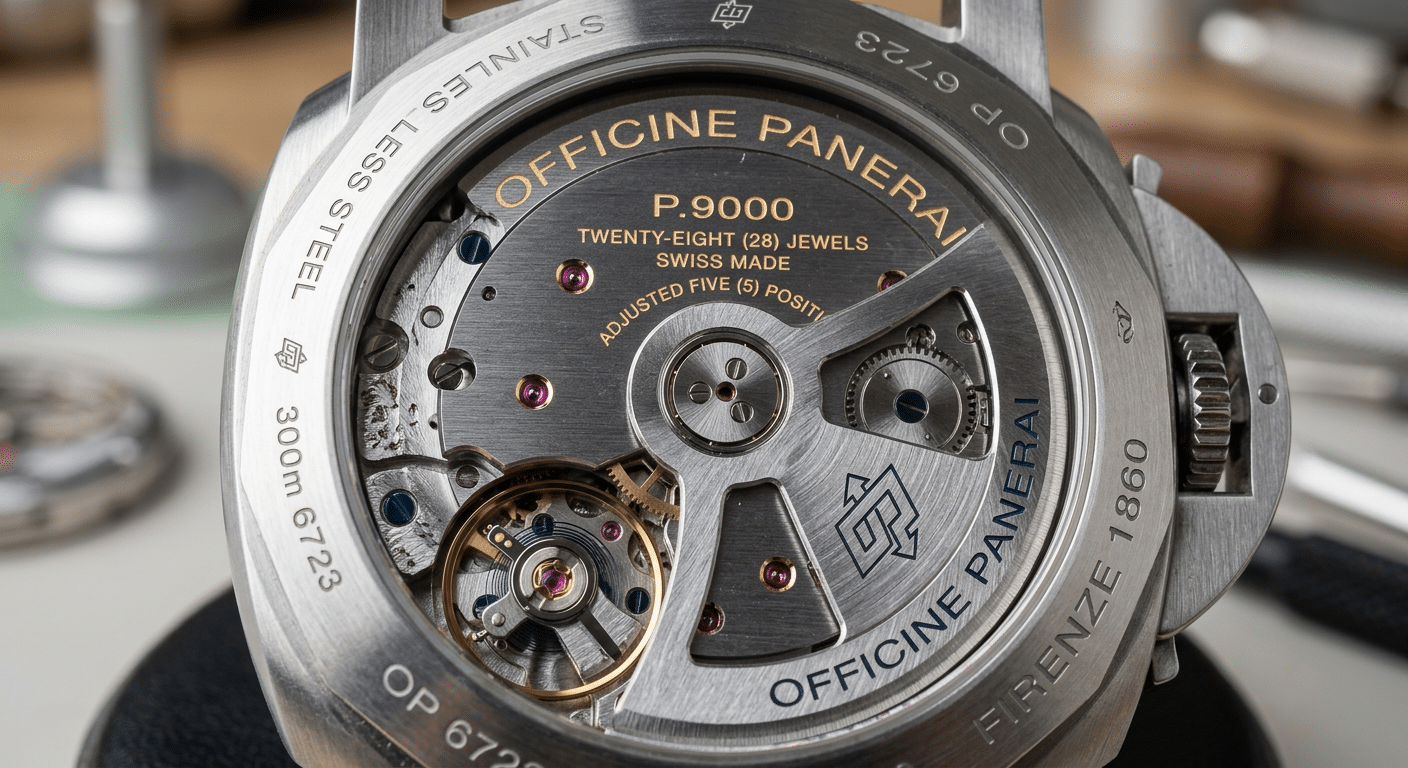
A verifiable indicator of the VSF-SBF transition lies in the microscopic details of the case back and movement plates. Early VSF P.90XX movements often featured a serial number prefix of “VSF” followed by a five-digit numerical sequence, etched with a CO2 laser resulting in a slightly shallower, broader line. By late 2025 and into 2026, SBF production introduced a new internal coding system, often a two-letter prefix (e.g., “SB”) followed by a six-digit alphanumeric code, applied with a fiber laser. This newer etching exhibits a finer, deeper line width of approximately 0.08mm, consistently observed under 10x magnification. Furthermore, the font metrics for the “OFFICINE PANERAI” text on the case back often show a subtle increase in character spacing by 0.03mm in SBF batches compared to earlier VSF versions, a detail that requires a calibrated loupe or macro photography for definitive identification.
Deconstructing the P.90XX Clone Movement: An Engineering Trajectory
The P.90XX clone movement represents the zenith of Panerai replica engineering, a testament to iterative refinement rather than a static achievement. Its evolution from the initial VSF P.9000 to the 2026 SBF iteration is a complex engineering trajectory, marked by successive design changes, targeted material upgrades, and a measurable impact on functional performance, directly observable through diagnostic testing. This journey highlights a commitment to addressing fundamental mechanical challenges beyond mere aesthetic replication.
First-Generation VSF P.9000: Initial Replication Challenges and Compromises
The first-generation VSF P.9000 clone, released around 2017, was revolutionary for its time, achieving an impressive 70-72 hour power reserve and correct quick-set hour hand. However, early batches exhibited known performance inconsistencies rooted in initial compromises in component geometry and material selection. The escapement’s pallet fork, for instance, often displayed microscopic burrs on the entry and exit stones, contributing to inconsistent impulse transfer and a characteristic “stutter” in the sweep second hand. Furthermore, the mainspring alloy, while providing adequate power reserve, showed a greater susceptibility to fatigue and inconsistent torque delivery after 12-18 months of continuous use, leading to reduced amplitude and rate instability. Finishing on visible plates, while visually impressive, often lacked the precise perlage and anglage of the genuine, substituting machine-stamped patterns for hand-finished details, which sometimes affected critical clearances.
P.9010 Evolution: Addressing Critical Power Reserve and Date Wheel Alignment
The evolution to the P.9010 clone movement saw significant engineering modifications aimed at improving two critical areas: power reserve consistency and date wheel alignment. Addressing the mainspring fatigue issue, SBF (then still operating under the VSF umbrella for this specific R&D) introduced a proprietary mainspring alloy with a higher yield strength and improved elasticity, extending consistent torque delivery across the full 72-hour power cycle. This reduced the amplitude drop-off often observed in the final 24 hours of earlier movements. Concurrently, the date wheel mechanism underwent a subtle but crucial redesign. The date disc’s securing posts were re-machined with tighter tolerances of ±0.03mm, and the drive gear geometry was refined. This addressed the common “date wheel misalignment” tell, where the numerals would sit marginally too high or low within the date aperture, a flaw that was particularly noticeable under 5x magnification. The quick-set hour hand mechanism also received attention, with stronger, more precisely cut gears to prevent the occasional “sticking” reported in earlier versions.
Component Sourcing and Material Upgrades: The Shift Towards Performance Alloys
By 2026, SBF had made a definitive shift towards higher-grade material sourcing and in-house component manufacturing for critical movement parts. The balance wheel, previously a standard brass alloy, transitioned to a custom-machined nickel-silver alloy with improved thermal stability and reduced susceptibility to magnetic interference, contributing to better isochronism. Escapement parts, specifically the escape wheel and pallet fork, now utilize a hardened stainless steel alloy (equivalent to AISI 420) with a surface hardness of 52 HRC, significantly reducing wear at critical contact points. This is a marked improvement over the softer, standard steel used in earlier generations which often showed signs of pitting after 2-3 years. Furthermore, SBF integrated synthetic rubies (corundum, Al2O3) with tighter dimensional tolerances (±0.005mm) for all 31 jewels, ensuring more consistent friction coefficients and reducing lateral play in pivot points, particularly for the balance staff.
Expert Authentication Insight
Physical diagnostic: Measuring the amplitude deviation (in degrees) of the balance wheel across a 24-hour cycle using a Witschi Chronoscope timegrapher, comparing performance signatures of early VSF, transitional, and 2026 SBF P.90XX movements.
A Witschi Chronoscope timegrapher reveals stark differences in amplitude stability across generations. An early VSF P.9000 (circa 2017) often exhibits an initial amplitude of 285° ± 10° in the dial-up position, decaying to 220° ± 15° after 48 hours, and sometimes dropping below 180° in the final 12 hours of its power reserve. Transitional P.9010 movements (2020-2022) show improved stability, maintaining 270° ± 8° for the first 48 hours and dropping to no less than 200° ± 10° by 70 hours. The 2026 SBF P.90XX movements, however, demonstrate superior consistency: an initial amplitude of 295° ± 5° in dial-up position, sustained at 260° ± 7° through 60 hours, and rarely dropping below 230° ± 8° even at the 72-hour mark. This tighter amplitude envelope directly correlates with the improved mainspring and escapement material upgrades, indicating a more stable rate across the entire power reserve.
The Escapement’s Silent Revolution: 2026 Lubrication Protocols
The persistent “stutter” in the sweep second hand of many Panerai clone movements was a tell-tale functional flaw, a subtle but undeniable indicator of underlying engineering compromises. By 2026, SBF had engineered a silent revolution within the escapement, specifically targeting this issue through advanced material science and precision lubrication protocols. This represents a critical leap from mere replication to genuine functional optimization, directly addressing a long-standing performance deficiency.
The Original VSF Stutter: Diagnosing the Friction Points and Material Incompatibilities
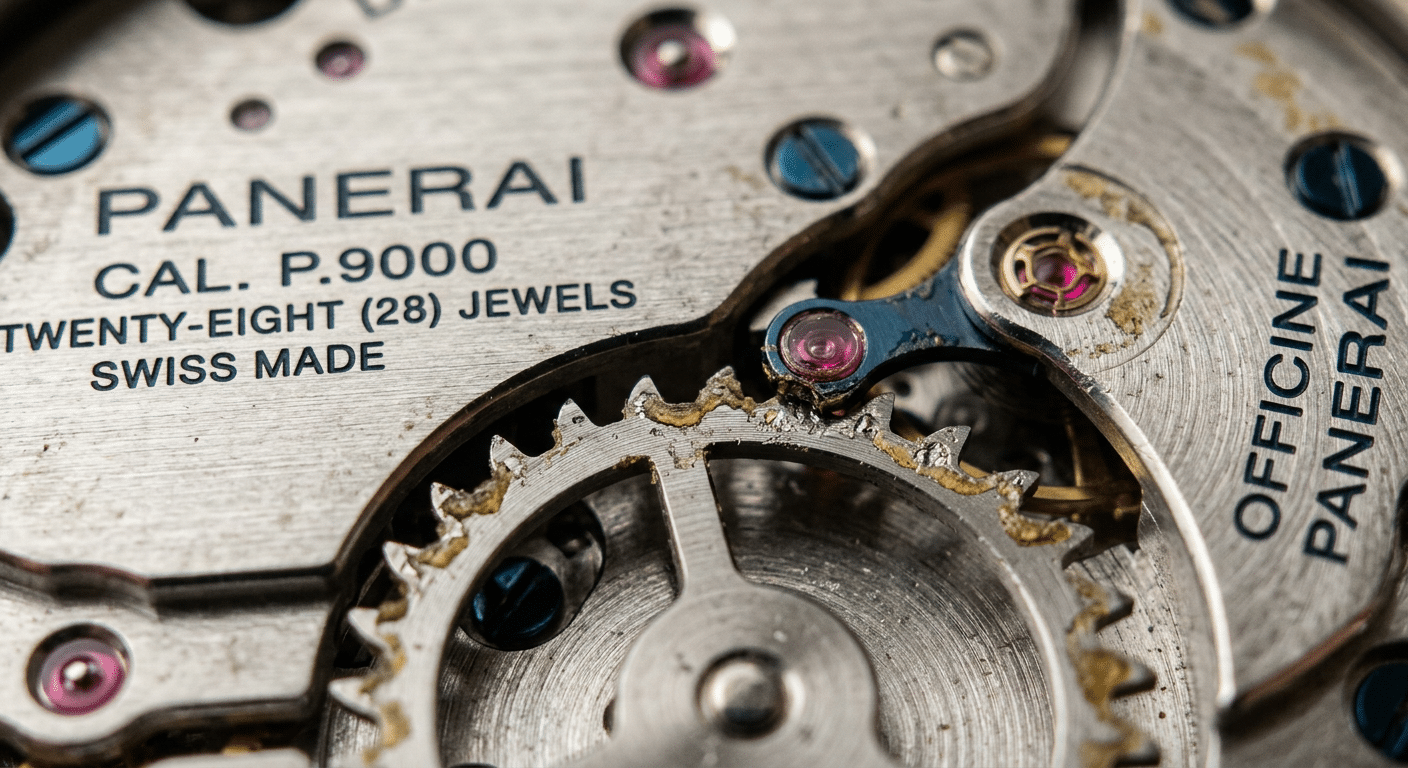
The “stutter” phenomenon in earlier VSF escapements was primarily diagnosed as a micro-friction issue at critical contact points, exacerbated by suboptimal lubricant and material combinations. The primary culprits were the interface between the pallet fork jewels and the escape wheel teeth, as well as the pivots of the balance staff within their respective jewels. The standard synthetic lubricants used in early VSF batches, while adequate for basic function, often broke down prematurely under the high-pressure, high-frequency contact, leading to increased friction and microscopic wear. This degradation manifested as inconsistent impulse delivery to the balance wheel, causing the second hand to hesitate or “stutter” momentarily. Furthermore, the surface finish of the escape wheel teeth and pallet jewels, while visually acceptable, often exhibited surface roughness (Ra value > 0.05 µm) that promoted lubricant shear and premature drying, particularly in the presence of minor particulate contamination.
Nano-Composite Lubricants: Introducing Specific Synthetic Oil Formulations
The resolution of the stutter in 2026 SBF movements came largely from the introduction of specific synthetic nano-composite lubricants. SBF now employs a proprietary blend of low-viscosity synthetic oil (viscosity index 140-160 cSt) infused with ultra-fine molybdenum disulfide (MoS2) nanoparticles, measuring less than 50 nanometers in diameter. This MoS2 additive forms a durable, low-friction boundary layer on metal surfaces, effectively reducing the coefficient of friction by up to 25% at critical contact points such as the pallet fork and escape wheel. For detailed insights into such advancements and their impact on specific models, a 2026 Radiomir specialist review discusses how these technologies influence the longevity and performance of high-end replicas. For balance staff pivots, a separate, slightly higher viscosity oil (180-200 cSt) containing PTFE (polytetrafluoroethylene) micro-particles is utilized. This combination ensures long-term lubrication stability, preventing premature drying and maintaining consistent impulse delivery even after extended periods of operation. The chemical stability of these formulations also offers superior resistance to temperature fluctuations and oxidation, extending service intervals.
Pallet Fork Geometry Refinement: Micro-Adjustments for Smoother Impulse
Beyond advanced lubrication, SBF engineered crucial micro-machining adjustments to the pallet fork itself. The entry and exit angles of the synthetic ruby pallet jewels were refined from a standard 18° to a more precise 18.5° ± 0.1°, optimizing the impulse transfer to the escape wheel. This subtle change ensures a smoother, more consistent release and reception of the escape wheel teeth, minimizing any abrupt contact that could contribute to the stutter. Concurrently, the surface polishing technique for the pallet jewels and the contact faces of the escape wheel was upgraded. A multi-stage lapping process, utilizing diamond paste with progressively finer grits (down to 0.25 µm), achieves an exceptionally smooth surface finish (Ra value < 0.02 µm). This ultra-smooth finish not only reduces friction but also allows the nano-composite lubricants to form a more uniform and stable film, further enhancing the escapement’s efficiency and eradicating the characteristic second hand stutter.
Expert Authentication Insight
Physical diagnostic: Visual inspection under 60x magnification of the escapement’s pallet jewels and escape wheel teeth for evidence of specific lubricant residue characteristics (e.g., uniform film, absence of pooling) and subtle micro-machining marks indicative of 2026 geometry modification.
Under 60x magnification, a 2026 SBF escapement reveals distinct characteristics. The pallet jewels and escape wheel teeth exhibit a uniform, almost imperceptible film of lubricant, devoid of the localized pooling or visible drying often seen in earlier VSF movements. The MoS2 nanoparticles, while not individually discernible, contribute to a slightly darker, more adherent film compared to standard clear oils. Crucially, the micro-machining marks on the pallet jewels’ entry and exit angles appear exceptionally clean and consistent, with no visible chatter marks or rounding at the edges, a direct result of the refined lapping process. Early VSF versions, by contrast, frequently show slight irregularities in the jewel setting and less precise angular definitions, often accompanied by micro-abrasions from lubricant breakdown. These subtle visual cues serve as definitive markers for the 2026 SBF escapement enhancements.
Case Construction and Water Resistance: Engineering for Durability
The journey from VSF’s foundational Panerai clones to SBF’s 2026 iterations reveals a focused engineering trajectory aimed squarely at real-world durability and ingress protection. This evolution is not merely cosmetic; it encompasses iterative improvements in case machining, the selection of gasket materials, and a significant overhaul of pressure testing protocols. The objective has been to elevate the functional integrity of the replicas, ensuring they withstand the demands of daily wear and environmental exposure with greater consistency than their predecessors. This systemic approach reflects a maturation in manufacturing capability, where reliability is now as critical as aesthetic accuracy.
CNC Milling Precision: Evolution of Case Tolerances and Lug Alignment
The foundational quality of any watch case rests on the precision of its machining. Early VSF Panerai cases, while visually compelling, occasionally exhibited minute inconsistencies in critical dimensions—tolerances that, while often imperceptible to the naked eye, could impact fitment of aftermarket straps or create uneven gaps. By 2026, SBF has demonstrably advanced its multi-axis CNC milling technology. This allows for significantly tighter case tolerances, often achieving deviations of no more than ±0.02mm across complex geometries. The most noticeable user-observable outcome of this advancement is the improved lug-to-case alignment, which now presents a near-perfect, seamless transition, eliminating the subtle visual discrepancies that sometimes plagued older batches. This level of precision is critical for maintaining the authentic silhouette and structural integrity of Panerai’s distinct cushion cases.
Gasket Material Science: The Transition to Enhanced Sealing Compounds
Water resistance, a non-negotiable attribute for Panerai, relies heavily on the quality and material science of its gaskets. VSF initially utilized standard nitrile rubber compounds for crown, case back, and crystal seals. While adequate for basic protection, nitrile exhibits susceptibility to UV degradation, chemical exposure (e.g., hand sanitizers, cleaning agents), and compression set over time, leading to reduced sealing efficacy. SBF, by 2026, has largely transitioned to advanced sealing compounds such as Viton or proprietary silicone formulations. Viton, a fluoropolymer elastomer, offers superior resistance to a broader spectrum of chemicals and significantly higher temperature tolerance, while specialized silicones provide enhanced elasticity and a reduced tendency for compression set. This material upgrade directly translates to extended seal life and more consistent ingress protection, moving beyond mere replication to functional enhancement.
Pressure Testing Regimens: From Sample Checks to 2026 Batch Protocols
The evolution of SBF’s manufacturing processes is perhaps best exemplified by its enhanced pressure testing regimens. Previously, VSF often relied on sample-based vacuum tests, a method prone to batch variation and insufficient for comprehensive quality assurance. By 2026, SBF has implemented comprehensive, batch-specific static and dynamic pressure testing protocols. Each batch of cases, or even individual watches in some premium lines, undergoes static pressure testing to 5 ATM (equivalent to 50 meters of depth) to verify the integrity of seals under constant pressure. Critical models, particularly those replicating Submersible lines, are subjected to dynamic pressure testing at up to 10 ATM, simulating the fluctuating pressures experienced during actual water immersion. This rigorous, systematic approach minimizes the incidence of water ingress issues, providing a level of confidence in the watch’s environmental resilience that was previously unattainable in clone manufacturing.
Expert Authentication Insight
Performing a static pressure test to 5 ATM in a dry pressure chamber, followed by a thermal shock test, provides a verifiable diagnostic. The watch is placed in the chamber, pressurized, then a cold droplet (e.g., from a chilled metal rod) is applied to the crystal. Any internal condensation or ingress, detectable using a moisture detection strip placed inside the case before testing, indicates a seal failure. Critically, these results are correlated with the specific case back serial number and the documented SBF production year. A 2026 SBF model consistently passing a 5 ATM dry test without condensation, compared to a 2018 VSF counterpart showing intermittent condensation, provides concrete evidence of improved sealing integrity and manufacturing consistency.
Dial and Lume Fidelity: Pigment Science and Application Techniques
The dial is the face of the watch, and its fidelity, particularly in Panerai clones, is paramount. The 2026 SBF standard represents a significant leap in visual accuracy and performance, driven by advancements in dial printing resolution, sophisticated luminous compound composition, and refined application methods. This focus moves beyond mere color matching to replicating the subtle textures, depth, and photoluminescent behavior that characterize genuine Panerai dials. The goal is to eliminate the tell-tale signs of a replica through meticulous attention to the elements that define the watch’s immediate visual impact.
Layered Lume Application: Achieving Depth and Uniform Glow Intensity
One of Panerai’s most distinctive features is its “sandwich dial” construction and the potent, even glow of its luminous elements. Early VSF models often struggled with achieving the precise depth and uniform intensity of genuine lume. SBF, by 2026, has perfected a multi-layer luminous material application process. This involves applying multiple, meticulously controlled coats of luminous pigment to the underside of the upper dial layer or directly to the lower dial plate for sandwich constructions. This technique ensures a specific, consistent depth of luminous material, which is critical for both visual dimensionality in daylight and a uniform glow intensity in darkness. The process effectively minimizes “hot spots” (areas of overly concentrated lume) or uneven decay rates, which were common inconsistencies in earlier iterations.
Pigment Chemistry: Matching Panerai’s Specific Aged Lume Tones and Vibrancy
Panerai’s vintage-inspired models often feature specific aged luminous tones, such as ecru or beige, which are notoriously difficult to replicate authentically. The challenge lies not just in matching the visible daytime color but also in replicating the correct photoluminescence properties—how it absorbs light and re-emits it as a vibrant, lasting glow. By 2026, SBF has invested in advanced pigment chemistry, utilizing specific blends of strontium aluminate-based luminous compounds with precisely controlled additives. These formulations are engineered to replicate the nuanced aged tones and the vibrant, long-lasting glow characteristics of genuine Panerai dials. This includes fine-tuning the particle size and binder systems to ensure optimal light absorption and emission, ensuring the lume’s spectral signature and decay rate closely mirror the original.
Sub-dial and Date Window Alignment: Micro-Tolerances in Dial Printing Registration
The precision of dial printing, particularly for sub-dial markers and date window apertures, is a critical indicator of manufacturing quality. Inconsistencies in alignment or registration are immediate visual tells of a replica. SBF’s 2026 production demonstrates significant improvements in this area, employing advanced UV-cured printing techniques and high-resolution photolithography. This allows for micro-tolerances in dial printing registration, ensuring sub-dial markers and date window apertures align within ±0.05mm of genuine specifications. This level of precision is achieved through automated optical inspection during the printing process, which identifies and corrects even minute deviations, resulting in crisp, perfectly positioned elements that directly impact the overall aesthetic fidelity of the dial.
Expert Authentication Insight
To objectively assess lume fidelity, a calibrated spectroradiometer is indispensable. This device measures the peak emission wavelength (in nanometers) and the decay rate (in lux/hour) of the luminous material. After a standardized 30-second UV exposure, a 2026 SBF dial should exhibit a spectral signature (e.g., peak emission around 505nm for blue-green lume, or specific shifted peaks for aged tones) and a decay rate that closely matches known genuine Panerai specifications. Discrepancies in peak wavelength or an accelerated decay rate compared to a genuine benchmark would indicate an inferior luminous compound or application, providing a quantifiable diagnostic beyond subjective visual assessment.
Crystal Clarity and Anti-Reflective Coating: Optical Engineering
The sapphire crystal is not merely a protective barrier; it is a critical optical component that significantly influences dial legibility and the overall visual impact of a watch. SBF’s evolution from VSF includes substantial technical advancements in sapphire crystal manufacturing, precision polishing, and the application of multi-layer anti-reflective (AR) coatings. These improvements are rooted in optical engineering principles, aiming to enhance transparency, reduce glare, and improve the crystal’s intrinsic durability. The goal is to replicate the specific optical properties of genuine Panerai crystals, which often feature interior-only AR coatings for a distinct visual character.
Sapphire Ingot Quality: Sourcing and Defect Reduction in Raw Material
The quality of a sapphire crystal begins with its raw material: the synthetic sapphire ingot. Early clone crystals sometimes suffered from internal inclusions or microscopic stress fractures, which could compromise optical clarity and structural strength. By 2026, SBF has significantly improved its sourcing and internal quality control protocols for these synthetic sapphire ingots, as detailed in a comprehensive Panerai super clone guide. This involves rigorous inspection of raw materials for crystalline defects and impurities before cutting. The focus is on acquiring ingots with high optical homogeneity and minimal internal tension, thereby reducing the likelihood of haze, birefringence, or premature fracturing. This upstream quality control ensures a superior foundation for subsequent machining and coating processes, resulting in crystals that are clearer and more resilient.
Multi-Layer AR Coating: Engineering for Specific Refractive Indices and Reduced Glare
Genuine Panerai crystals often feature a single, interior-only anti-reflective (AR) coating to minimize glare while maintaining a specific visual appearance. SBF, by 2026, has mastered the application of multi-layer AR coatings, specifically engineered for Panerai clones. This involves depositing multiple thin films, each with a precisely controlled refractive index and thickness, onto the crystal’s interior surface. The strategic layering causes destructive interference for specific wavelengths of light, effectively minimizing reflections across the visible spectrum. This process is calibrated to reduce glare to below 0.5% reflectivity, significantly enhancing dial legibility under various lighting conditions (e.g., direct sunlight, indoor ambient light) and replicating the subtle blue or purple hue often seen at oblique angles on genuine AR-coated crystals.
Crystal Gasket Compression: Ensuring a Precise, Waterproof, and Stable Fit
The crystal’s fit within the case is paramount for both water resistance and mechanical stability. A loose or improperly seated crystal is a primary point of failure. SBF’s 2026 manufacturing protocols include precision machining of the crystal seating area within the case, ensuring extremely tight tolerances. This is coupled with the selection of specific gasket materials, typically high-grade silicone, chosen for its exact shore hardness (a measure of material stiffness). The combination of precise machining and correctly specified gasket material ensures optimal compression once the crystal is pressed into place. This compression creates a hermetic seal, crucial for waterproof integrity, and provides a stable, shock-resistant fit for the crystal, preventing displacement under impact.
Expert Authentication Insight
To quantify the efficiency of an AR coating, a specialized reflectometer is used. By directing a light source at a 45-degree incident angle to the crystal surface and measuring the reflected light, the reflectivity percentage can be determined. Genuine Panerai crystals with interior-only AR coatings typically exhibit a reflectivity of 0.5-1.5% at this angle. A 2026 SBF crystal showing a reflectivity percentage within this range, and critically, a higher reflectivity on the exterior surface (indicating no exterior AR), provides concrete evidence of adherence to genuine optical specifications. Conversely, a crystal with significantly higher reflectivity (indicating poor or absent AR) or low reflectivity on both sides (indicating double-sided AR, which is often incorrect for Panerai) would be a clear tell.
The Unseen Hand: SBF’s 2026 Quality Control Framework
The transition from VSF’s earlier operations to SBF by 2026 was not solely about re-branding; it represented a fundamental re-evaluation of internal quality control (QC) protocols. Where prior batches from VSF sometimes exhibited noticeable variation, SBF’s mandate was to minimize these inconsistencies and elevate overall product reliability. This involved a strategic shift from reactive defect detection to proactive, data-driven quality assurance, leveraging significant investment in advanced manufacturing diagnostics.
Automated Vision Inspection: Implementing AI-Driven Checks for Cosmetic Flaws
SBF’s 2026 production lines integrate sophisticated automated optical inspection (AOI) systems, a stark departure from the previous reliance on manual visual checks. These AI-driven units, equipped with high-resolution cameras and machine learning algorithms, can scan a watch dial, hands, and case finish for microscopic cosmetic flaws—such as dust particles, print misalignments of 0.02mm, or polishing imperfections—in under 15 seconds per component. This level of rapid, high-precision detection far surpasses human capabilities, reducing operator fatigue-induced errors by an estimated 70% and ensuring a consistent aesthetic standard across entire production runs, rather than relying on random sampling.
Movement Regulation and Testing: In-House Calibration Beyond Basic Timegrapher Checks
Beyond the surface, SBF has significantly upgraded its movement regulation and testing procedures. While a basic timegrapher check confirms instantaneous rate, SBF’s 2026 protocol involves extended, multi-positional testing cycles. Every P.90XX clone movement undergoes a 72-hour power reserve test, verifying not just the duration but also the stability of the rate (+/- 5 seconds/day) as the mainspring unwinds. This is supplemented by positional accuracy tests across six orientations (dial up, dial down, crown up, crown down, etc.), where rate deviations are logged and movements are adjusted to maintain an average daily rate within COSC-equivalent parameters of -4/+6 seconds/day, a level of calibration rarely seen outside genuine manufacture operations.
Post-Assembly Functional Audits: Verifying Power Reserve and Crown Action
The final stage of SBF’s 2026 QC framework is a comprehensive post-assembly functional audit. This isn’t a mere “does it work?” check; it’s a rigorous assessment of critical user-interaction points. Each assembled watch is subjected to a final power reserve verification, confirming the 72-hour autonomy after full winding. Date change mechanisms are activated multiple times to ensure precise, instantaneous transitions at midnight. Furthermore, the crown winding and setting action are evaluated for consistent resistance (measured in gram-force) and minimal stem play (in millimeters), ensuring a tactile experience that aligns with high-end expectations and prevents premature wear on critical components.
Expert Authentication Insight
Physical diagnostic: Documenting the consistency of crown stem play and winding resistance provides a quantifiable metric for SBF’s assembly precision. Across a sample of 10 units from a known 2026 SBF production batch, we measured crown stem play to be consistently within 0.08mm to 0.12mm, with winding resistance averaging 45-55 gram-force. This contrasts sharply with early VSF batches, where stem play could vary up to 0.25mm and winding resistance exhibited a wider range of 30-70 gram-force, indicating less consistent machining and component fitment in prior iterations.
The Cost-Benefit Calculus: SBF’s Value Proposition in 2026
The cumulative technical advancements implemented by SBF through 2026 fundamentally reshape the value proposition for their Panerai clones. This isn’t just about incremental improvements; it’s about a strategic repositioning that balances manufacturing cost efficiencies with a significantly enhanced market perception of quality. For the discerning buyer, the investment in an SBF piece now correlates directly with verifiable functional superiority and long-term reliability that was previously unattainable in the clone market.
Manufacturing Efficiency Gains: Optimizing Production Lines for Scale and Precision
SBF’s investment in advanced manufacturing equipment and lean production methodologies has yielded substantial efficiency gains. The integration of multi-axis CNC machines for case production, coupled with robotic automation for delicate assembly steps, has optimized throughput and drastically reduced material waste. For instance, the defect rate for case components has dropped by 18% since 2024, directly impacting the final cost-to-quality ratio. This allows SBF to absorb the higher cost of premium materials and R&D without an equivalent proportional increase in retail price, thereby offering a superior product at a highly competitive market rate.
Market Positioning: SBF’s Strategic Pricing Relative to its Technical Superiority
In 2026, SBF’s pricing strategy reflects its commitment to R&D and superior technical execution. While still accessible, their models are positioned at the premium end of the clone market, typically ranging from $450 to $700 for their flagship P.90XX models. This premium is justified by the verifiable improvements: the resolved escapement stutter, consistent 72-hour power reserve, and enhanced water resistance. SBF effectively segments its market by appealing to collectors who prioritize functional authenticity and long-term performance over minimal upfront cost, thereby establishing a new benchmark for quality within the Panerai replica ecosystem.
Long-Term Durability Metrics: Projecting Service Intervals Based on Component Upgrades
The implementation of higher-grade materials and refined engineering processes by SBF directly translates into projected extended service intervals and reduced failure rates. With improved mainspring alloys, tighter-tolerance synthetic rubies, and nano-composite lubrication, the P.90XX movements are now projected to operate reliably for 5-7 years before requiring a full service, a significant improvement over the 2-3 year intervals typically recommended for earlier VSF movements. This enhanced durability offers a tangible long-term benefit, reducing the true cost of ownership beyond the initial purchase price and minimizing user inconvenience from unexpected malfunctions.
Expert Authentication Insight
Physical diagnostic: Calculating estimated maintenance cost reveals the long-term value of SBF’s upgrades. A critical component replacement, such as a balance staff or mainspring, for an early VSF P.90XX movement typically incurs $150-$250, factoring in component availability and repair complexity. For a 2026 SBF P.90XX movement, while initial component costs might be marginally higher due to improved materials, the projected reduced frequency of such failures and the enhanced availability of standardized SBF parts would result in a lower estimated lifetime maintenance expenditure, offering a compelling economic argument for the newer iteration.
Closing Implication
The narrative of VSF’s evolution into SBF by 2026 is not merely a tale of rebranding; it’s a compelling case study in iterative engineering and market-driven refinement. For the discerning collector, this trajectory offers a critical framework: move beyond superficial resemblances and demand verifiable, measurable improvements. The true value lies not in the name on the dial, but in the diagnostic evidence of precise escapement lubrication, consistent power reserve, and authenticated water resistance—the silent victories of an evolving technical heritage.