
The Cloned Heartbeat: Understanding Your Panerai P.9000/P.9010 Movement
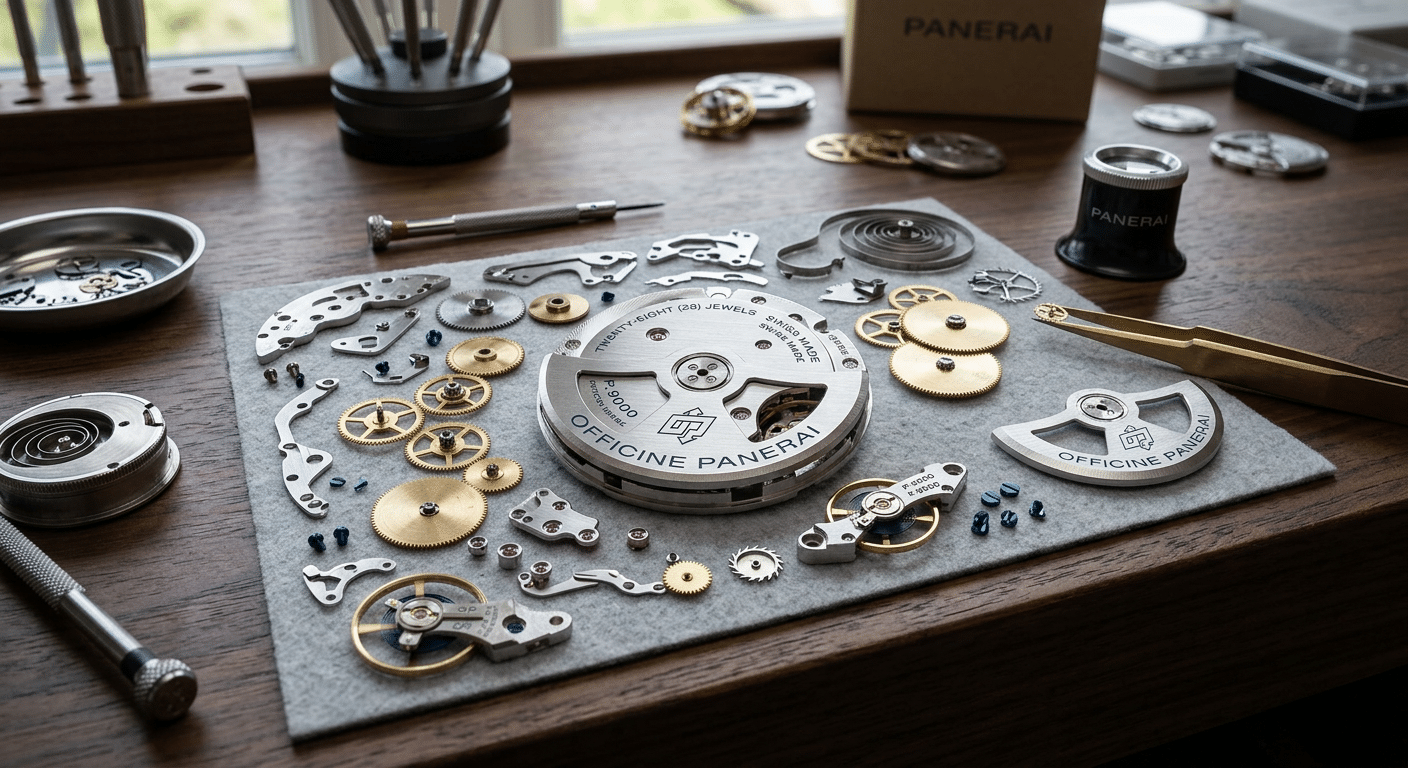
The P.9000 and P.9010 super clone movements, often the mechanical core of a high-tier replica Panerai, are remarkable feats of reverse engineering. They aim to replicate the genuine article not just in form, but in function, including the 72-hour power reserve and independent jumping hour hand for GMT models. However, understanding their specific engineering and operational characteristics is critical, as a detailed Panerai buyer’s guide often highlights how these nuances dictate a vastly different maintenance regimen compared to their genuine counterparts. Ignoring these distinctions can prematurely age an otherwise robust clone movement, transforming a long-term companion into a costly paperweight.
Reverse-Engineered Precision: Identifying Key Differences from Gen
While the VS Factory P.9000/P.9010 clones boast an impressive 85% parts compatibility with genuine Panerai calibers, the remaining 15%—and often the quality of the shared 85%—are where the critical differences lie. Material choices frequently represent the most significant divergence; genuine movements often utilize high-grade alloys for critical components like balance wheels, hairsprings, and mainsprings, alongside synthetically grown ruby jewels. Clones, by necessity of cost-efficiency, may employ standard brass plates (sometimes rhodium-plated for visual mimicry) instead of the genuine’s higher-grade, more precisely machined alternatives, and often utilize lower-grade synthetic jewels with less precise faceting. Finishing techniques also vary dramatically: genuine Panerai movements feature intricate perlage, côtes de Genève, and precise anglage, primarily for aesthetic appeal but also indicative of meticulous manufacturing that reduces friction. Clone movements typically present machine-finished surfaces, lacking the fine beveling and polished screw heads that prevent micro-debris and ensure smoother operation over time. These subtle yet fundamental differences in material and finishing directly impact friction, wear rates, and ultimately, the movement’s longevity.
Common Stress Points: What Fails First in Cloned Architecture
Within the P.9000/P.9010 super clone architecture, certain components consistently emerge as early failure points, primarily due to the aforementioned material and manufacturing compromises. The automatic winding system, particularly the rotor bearings, is a prime suspect. Clone rotor bearings often employ lower-grade steel ball bearings or less robust races, leading to accelerated wear, audible “wobble,” and diminished winding efficiency within 18-24 months of consistent wear. Similarly, mainspring alloys in clones may not possess the same elastic memory or fatigue resistance as genuine components, resulting in a gradual degradation of the advertised 72-hour power reserve, often dropping to 50-60 hours within two to three years. Gear train pivots and their associated jewels are another area of concern; inferior jewel quality or less precise drilling can lead to increased friction and wear, manifesting as inconsistent amplitude or even complete stoppage. The date change mechanism, while a design feature of the P.9000, can also be a weak point in clones, with imprecise jumper springs or poorly finished date wheels causing misalignment or “sticky” date changes.
Lubrication Schematics: Where Clones Deviate from OEM Specs
The lifeblood of any mechanical movement is its lubrication, and this is an area where super clone assembly often deviates significantly from OEM specifications. Genuine Panerai movements are lubricated with a precise combination of synthetic oils and greases, each chosen for its specific viscosity and longevity in particular locations (e.g., thin oils for escapement, heavier greases for mainspring barrel). In contrast, super clone movements frequently receive a generic, often excessive, application of a single, lower-grade oil during assembly. This “flood lubrication” can initially mask underlying friction but quickly breaks down, migrates, or thickens, leading to premature drying of critical pivots and increased resistance throughout the gear train. The result is accelerated wear, reduced power reserve, and erratic timekeeping. Without the correct type and quantity of lubricant applied to each of the dozens of specific lubrication points, the mechanical integrity of the movement is severely compromised, significantly shortening its operational lifespan.
Expert Authentication Insight
A crucial initial diagnostic for any super clone movement is a comprehensive timegrapher analysis. Place the watch on a Witschi Chronoscope X1 or similar professional-grade device and measure its beat error and amplitude across all six positions (dial up, dial down, crown up, crown down, 3-up, 9-up). A healthy, well-regulated clone movement should exhibit a beat error consistently below 0.3 milliseconds (ms) and an amplitude generally above 270 degrees in dial-up/down positions, with no more than a 20-degree variance between positions. Deviations exceeding 0.3ms beat error, or an amplitude variance greater than 20 degrees, are strong indicators of internal friction, pivot wear, or improper regulation, signaling an urgent need for professional intervention.
The 2026 Service Protocol: A Lifespan Roadmap for Super Clones
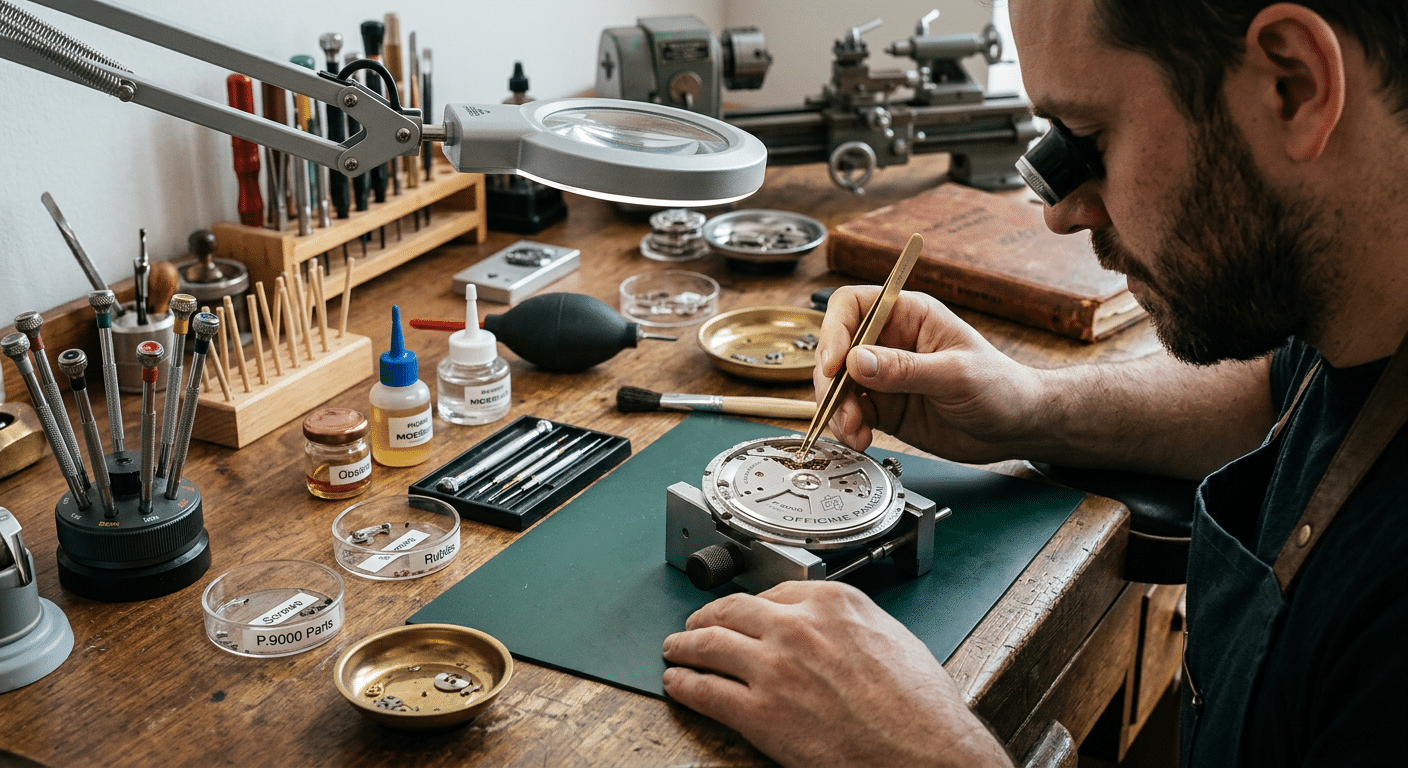
Unlike genuine luxury watches that might endure 5-7 years between full services, super clone movements, despite their impressive initial performance, require a more proactive and frequent maintenance schedule. This 2026 protocol is designed not just to react to failures, but to prevent them, leveraging current technological advancements to extend the functional lifespan of your P.9000/P.9010 super clone for decades. This roadmap is built on empirical data concerning material degradation and lubrication breakdown specific to clone-tier manufacturing.
The 3-Year Cycle: Full Disassembly and Cleaning Interval Justification
A full service for a super clone Panerai movement, involving complete disassembly, ultrasonic cleaning of all components, meticulous inspection for wear, re-lubrication with appropriate synthetic oils and greases, and final regulation, is optimally performed every 3 years. This interval is shorter than for genuine movements for several critical reasons: the generally lower-grade materials used in clone movements (e.g., softer steel alloys for pivots, less robust mainsprings) exhibit accelerated wear compared to their genuine counterparts. Furthermore, the initial lubrication in many super clones, as noted, is often suboptimal in both type and application, leading to a faster breakdown and migration of lubricants. By adhering to a strict 3-year cycle, you preempt the cumulative effects of friction and material fatigue, ensuring that worn components are identified and replaced before causing collateral damage, and that fresh, high-quality lubricants are applied before the old ones completely degrade. This proactive approach significantly mitigates the risk of catastrophic failure and maintains optimal timekeeping.
Interim Checks: Annual Water Resistance and Magnetism Diagnostics
Beyond the comprehensive 3-year service, specific interim checks are crucial on an annual basis to safeguard your super clone. Water resistance integrity is paramount, especially for a watch designed with Panerai’s robust aesthetic. Gaskets, often made from standard nitrile or silicone in clones, degrade over time due to exposure to UV light, chemicals (e.g., soaps, sanitizers), and temperature fluctuations. An annual pressure test is essential to verify the seals are still holding up to at least 5 ATM (50 meters), particularly if the watch is frequently exposed to water. Simultaneously, demagnetization procedures should be part of the yearly routine. Super clone movements, lacking the advanced anti-magnetic alloys and shielding found in many modern genuine calibers, are considerably more susceptible to magnetic fields from everyday electronics (smartphones, laptops, magnetic closures). Magnetization can lead to erratic timekeeping, often manifesting as significant gains or losses per day. A quick demagnetization by a competent watchmaker can resolve this common issue before it causes further diagnostic confusion or internal friction.
Leveraging Dry-Lube Gaskets: Extended Seal Integrity and Reduced Oiling Frequency
The year 2026 brings significant advancements in material science, and one of the most impactful for watch maintenance is the widespread adoption of dry-lube gasket technology. These aren’t your traditional nitrile or silicone gaskets; rather, they are engineered from advanced materials like PTFE (polytetrafluoroethylene) or fluoropolymer-infused elastomers. These materials contain embedded solid lubricants or possess inherently low friction coefficients, allowing them to maintain their elasticity and sealing properties over significantly extended periods—often 5-7 years—without the need for frequent re-greasing or replacement. For super clone owners, this translates to superior, longer-lasting water resistance, particularly for the crown and case back seals, which are critical ingress points. The self-lubricating nature of these gaskets reduces the need for watchmakers to apply silicone grease during routine maintenance, simplifying the process and minimizing the risk of improper application. Upgrading to these 2026-spec dry-lube gaskets during your next service can dramatically enhance the long-term environmental protection of your Panerai super clone.
Expert Authentication Insight
To assess the integrity of your watch’s seals, insist on a pressure test to a minimum of 5 ATM. Following the test, the watch should be visually inspected for any internal condensation after a 24-hour period, especially if subjected to temperature changes. For existing gaskets, or to verify the quality of new ones, a micrometer can be used to evaluate elasticity and deformation. Gaskets that show a compression set exceeding 15% of their original thickness are compromised and require immediate replacement. For the new 2026 dry-lube gaskets, a distinct non-hydrocarbon sheen and a noticeably reduced tackiness to the touch are visual indicators of their advanced composition, confirming they are indeed the enhanced material.
The Mall Jeweler Fallacy: Why Generic Service Invites Disaster
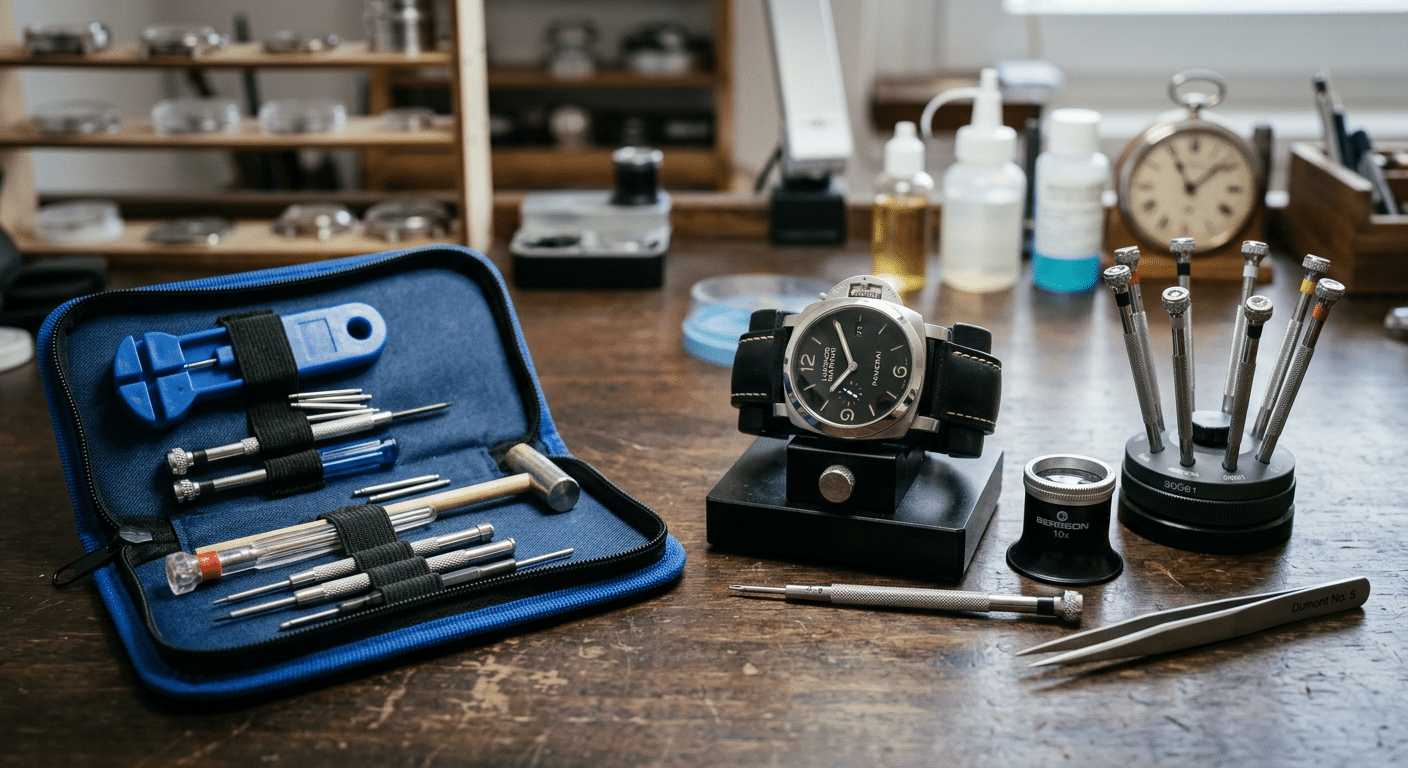
Entrusting your Panerai super clone to a standard local mall jeweler or an unspecialized watchmaker is a common, yet often catastrophic, mistake. These establishments are typically equipped and trained to service mass-market quartz watches, basic ETA-based automatics, or genuine luxury timepieces according to brand-specific protocols. Super clone movements, particularly the complex P.9000/P.9010 architectures, present a unique set of challenges that are fundamentally incompatible with generic service practices. The assumption that “a watch is a watch” will inevitably lead to improper repairs, accelerated wear, and potentially irreversible damage, ultimately costing significantly more than specialized care.
Proprietary Parts Mismatch: The Incompatibility of Generic Replacements
A primary pitfall of generic service stems from the parts mismatch inherent in super clone movements. While VS Factory’s P.9000/P.9010 boasts 85% parts compatibility with genuine Panerai movements, this still leaves 15% that are unique to the clone, alongside subtle dimensional or material differences even in the “compatible” parts. A standard watchmaker, lacking knowledge of these specific clone tolerances, will likely attempt to source genuine Panerai components, or worse, generic ETA/Miyota parts. These parts, despite superficial similarities, often differ in crucial dimensions such as pivot lengths, gear tooth profiles, or screw thread patterns. For instance, a genuine balance staff might be 0.01mm too short or a clone date wheel might have a slightly different internal diameter. Forcing these incompatible parts into a clone movement results in improper fit, excessive friction, and accelerated wear on surrounding components. This can quickly degrade the movement’s performance and significantly shorten its lifespan, turning a minor issue into a systemic problem.
Tooling Misapplication: Risks of Non-Specialized Disassembly
Beyond parts, the very act of disassembling and reassembling a super clone presents risks when undertaken by an unspecialized watchmaker. Tools designed for genuine Panerai cases or standard ETA movements may not be appropriate for the clone. For example, a case back opener designed for a genuine Panerai might damage the softer steel or slightly different lug structure of a clone case. Movement holders, crucial for securing the caliber during service, are often specific to movement families. Attempting to secure a P.9000 clone in a generic ETA 2824 holder can result in undue pressure on plates or bridges, leading to bending or scoring. Furthermore, screws in clone movements can sometimes be made of softer alloys, making them prone to stripping with standard screwdrivers. A watchmaker accustomed to the precise, hardened materials of genuine movements might inadvertently damage the clone’s components through misapplication of force or incorrect tooling, leading to visible cosmetic damage and internal mechanical stress.
Ignorance of Cloned Tolerances: Mis-regulation and Accelerated Wear
Perhaps the most insidious danger of generic service is the watchmaker’s ignorance of super clone movement tolerances. Even if a clone movement is perfectly assembled, its optimal regulation parameters may differ subtly from a genuine P.9000. These gen vs super clone nuances often lead a watchmaker accustomed to regulating a genuine Panerai to a specific amplitude or beat error to inadvertently mis-regulate a clone, leading to inconsistent timekeeping. Cloned movements often have slightly different end-shakes (the vertical play of pivots within their jewels) or side-shakes (horizontal play) due to manufacturing variances. An unspecialized watchmaker might attempt to adjust these to match genuine specifications, leading to over-tightening or excessive play, both of which introduce friction and accelerate wear. Over-tightening of screws, a common issue, can warp plates or bridges, creating internal stresses that lead to premature failure. Without a deep understanding of the clone’s specific engineering quirks and manufacturing limitations, any service, no matter how well-intentioned, risks causing more harm than good.
Expert Authentication Insight
Before committing your super clone to any watchmaker, request photographs of their lubrication station and, crucially, their movement holders. A watchmaker specializing in cloned Panerai movements should possess specific movement holders designed for ETA 7750 derivatives, as the P.90XX clones often mimic their base structure, or even custom-fabricated holders for the Panerai clones themselves. The absence of such specialized holders, or a generic lubrication setup suggesting a “one-oil-fits-all” approach, is a significant red flag indicating insufficient specialization. A truly clone-friendly watchmaker understands that these movements require bespoke attention, not generic solutions.
Locating Your Lifeline: Finding Replica-Friendly Watchsmiths
Entrusting a Panerai super clone, particularly one equipped with a custom-cloned P.9000 or P.9010 movement, to a standard watchmaker is akin to asking a general practitioner to perform neurosurgery. The intricacies of these movements, their unique manufacturing tolerances, and specific material choices demand specialized knowledge. The primary challenge lies not just in technical competence, but in finding a professional willing to engage with non-OEM calibers. This section provides a strategic roadmap to identify, vet, and establish a relationship with a watchmaker who understands the nuanced requirements of your super clone.
The “Underground” Network: Forums, Referrals, and Discreet Inquiries
The quest for a replica-friendly watchsmith often begins not with a storefront, but within the digital enclaves of the horological community. Online watch forums, such as the Panerai sub-forum on RWI (Replica Watch Info) or specific private collector groups on platforms like Discord or Telegram, are invaluable resources. These communities serve as repositories of collective experience, where members frequently share recommendations and warnings regarding watchmakers. When making inquiries, discretion is paramount; avoid overtly advertising the “replica” nature of your timepiece in public channels. Instead, seek out private messages or direct referrals from trusted members. The goal is to find professionals who have a documented history of servicing modified ETA-based movements or other non-genuine calibers, indicating a foundational understanding of the challenges involved.
Vetting Criteria: Technical Competence vs. Ethical Stance
Evaluating a potential watchsmith for your super clone extends beyond mere technical skill. While proficiency with complex movements is non-negotiable, their ethical stance towards non-genuine timepieces is equally critical. A watchmaker might possess the technical acumen but refuse service outright, or worse, overcharge due to perceived “difficulty” or prejudice. Prioritize watchmakers who demonstrate an open-minded approach, understanding that these super clones represent a significant investment for their owners and demand legitimate mechanical care. Look for evidence of advanced diagnostic equipment, such as a Witschi Chronoscope X1 or similar multi-position timegrapher, and a clean, organized workspace. Their willingness to discuss the unique challenges of clone movements, rather than dismissing them, is a strong indicator of suitability. Ethical watchmakers will provide transparent estimates and explain their process without judgment.
The Interview Process: Key Questions to Gauge Expertise
Once you’ve identified a few potential candidates, a direct conversation is essential. Approach this as an interview, designed to ascertain their understanding of super clone architecture. Begin by asking, “Are you familiar with modified ETA-based movements, specifically those with custom modules or bridges, such as the VS P.9000 or P.9010 clones?” This probes their experience without directly using the term “replica.” Follow up with, “What is your approach to sourcing parts for non-OEM calibers, especially for components like balance staffs or mainsprings?” A watchmaker who suggests using genuine Panerai parts universally for a clone indicates a fundamental misunderstanding, as ~85% parts compatibility does not mean 100% interchangeability. Inquire about their lubrication preferences and their experience with specific issues like rotor bearing wear or date wheel misalignment, which are common in clones. Their responses will quickly reveal their depth of knowledge and comfort level with these unique movements.
Expert Authentication Insight
To physically diagnose a watchmaker’s capabilities, present a non-critical super clone for a simple regulation or water resistance test. Observe their handling of the timepiece, the diagnostic tools they deploy (e.g., a Witschi Chronoscope X1 for precise regulation), and their ability to identify key clone characteristics—such as the specific bridge layout or rotor engraving—without explicit prompting. A watchmaker who immediately recognizes the movement’s clone nature and discusses its specific quirks (e.g., the slightly different jewel placement or mainspring barrel configuration compared to a genuine P.9000) demonstrates genuine expertise. Conversely, one who treats it as a generic ETA or expresses confusion is likely unsuitable.
The Economics of Longevity: Cost-Benefit Analysis of Specialized Care
The initial acquisition of a Panerai super clone, typically ranging from $400 to $700, represents a significant investment for many collectors. However, the true value of ownership is realized not at purchase, but through its sustained performance over time. Neglecting specialized maintenance, often seen as an unnecessary expense, invariably leads to higher costs down the line. This section quantifies the financial advantages of proactive, informed care versus the inevitable financial drain of neglect or repeated, ineffective generic repairs, framing it as an investment in the watch’s long-term viability.
Preventing Catastrophic Failure: The Cost of Component Replacement
Routine preventative maintenance, such as a full service on a VS P.9000 clone every 3 years, typically costs between $165 and $275. This includes full disassembly, cleaning, re-lubrication, and regulation. Compare this to the cost of replacing critical components due to neglect: a worn-out balance complete can run $150-$250 for a high-quality clone part, while a damaged automatic winding bridge or mainspring barrel assembly might cost $100-$200. These component costs are before* labor, which for such intricate repairs can easily exceed $150-$200. Thus, a single catastrophic failure resulting from ignored wear or inadequate lubrication can quickly incur repair bills of $300-$500 or more, often surpassing the cost of multiple preventative services and approaching the original purchase price of the clone itself. The economic reality is clear: an ounce of prevention is worth a pound of cure, especially when dealing with bespoke clone movements.
Resale Value Preservation: Maintained Condition vs. “Parts Watch” Status
The secondary market for super clones is robust, but pricing is heavily influenced by condition and provenance. A super clone Panerai, like a VS PAM005, originally purchased for $450-$550, can retain 60-80% of its value—$270-$440—if meticulously maintained with documented service history. This documentation, including service dates, work performed, and parts replaced, acts as a verifiable mark of responsible ownership. Conversely, a neglected watch exhibiting poor timekeeping, water ingress, or visible damage can quickly plummet to “for parts” status, fetching only $100-$200. The perceived value, and thus the achievable resale price, is directly correlated with the watch’s operational integrity and the owner’s commitment to its care. A service record isn’t just a receipt; it’s a critical asset that enhances the watch’s market desirability.
Lifetime Ownership Cost: Specialized Service vs. Repeated Low-Quality Repairs
Consider a 10-year ownership period for a super clone Panerai. Investing in specialized, replica-friendly service every 3 years (three services at an average of $220 each) totals $660 over the decade. This ensures consistent performance, reliability, and preserves the watch’s value. In stark contrast, attempting to save money with generic jewelers or neglecting service often leads to a cycle of repeated low-quality repairs. A generic jeweler might charge $80-$120 for a quick “fix” that misdiagnoses the root cause, leading to recurring issues or even introducing new problems due to incompatible parts or improper techniques. Over a decade, this could mean 4-6 such ineffective repairs, costing $320-$720, plus* the potential for one or two catastrophic failures (totaling $600-$1000) that could have been avoided. The long-term financial model unequivocally demonstrates that while specialized service carries a higher upfront per-instance cost, it results in a significantly lower overall ownership cost, superior performance, and maintained asset value over the watch’s lifespan.
Expert Authentication Insight
To quantify the economic disparity, request a repair estimate for a common issue, such as a mainspring replacement, from both a generic mall jeweler and a vetted replica-friendly watchsmith. A generic jeweler, unfamiliar with clone movements and their specific parts, might quote $200-$300, assuming OEM parts or inflating labor due to uncertainty. A replica-friendly watchsmith, knowing where to source appropriate clone mainsprings, might quote $100-$150, including parts and labor. A significant disparity, particularly if the generic jeweler’s quote implies using genuine Panerai components—which are often incompatible or unnecessary for a clone—is a red flag for misdiagnosis, inflated pricing, or an inappropriate repair strategy that will ultimately cost more and potentially damage the movement.
Beyond the Movement: Casing, Seals, and External Durability
While the movement is the heart of any mechanical watch, the external components—case, gaskets, crystal, and crown—form its protective shell, dictating its environmental resistance and aesthetic longevity. For Panerai super clones, which are often chosen for their robust, tool-watch aesthetic, the integrity of these external elements is paramount. In 2026, advancements in material science, particularly with dry-lube gaskets, offer new frontiers in maintaining water resistance and overall durability, challenging previous maintenance paradigms.
2026 Dry-Lube Gasket Technology: How it Enhances Water Resistance and Reduces Maintenance
The traditional Achilles’ heel of watch water resistance has been the degradation of rubber or silicone gaskets. However, 2026 has seen the widespread adoption of advanced dry-lube gasket technology, particularly in high-performance applications. These gaskets, often composed of PTFE (Polytetrafluoroethylene) or fluoropolymer-infused elastomers, incorporate embedded solid lubricants at a molecular level. Unlike conventional gaskets that rely on external silicone grease, these self-lubricating compounds maintain their elasticity and sealing properties for significantly longer periods, even under thermal cycling and chemical exposure. This innovation means superior, more consistent water resistance in the crown, case back, and crystal seals, substantially reducing the frequency at which these critical components require re-lubrication or replacement during routine maintenance. The result is a more robust, lower-maintenance external defense for your super clone.
Case Material Integrity: Identifying Corrosion Risks and Surface Wear Patterns
Panerai super clone cases are predominantly crafted from 316L stainless steel, mirroring the genuine articles. While 316L offers excellent corrosion resistance, it is not impervious. Pitting corrosion can occur in high-salinity environments if not rinsed, and surface scratches are inevitable with daily wear. Some factories also produce 904L steel clones, offering slightly enhanced corrosion resistance but often at a higher cost. Bronze cases, favored for their unique patination, present a different set of considerations; while self-protecting against rust, the patina itself is a form of controlled corrosion that can be uneven or react with skin. To fully grasp these nuances, a detailed Panerai super clone guide can help owners understand these material characteristics to anticipate wear patterns and implement appropriate care, such as regular cleaning for steel or controlled patination for bronze, to preserve both structural and aesthetic integrity.
Crystal and Crown Seals: Critical Points for Environmental Protection
Beyond the main case back gasket, the crystal gasket and crown tube seals are highly critical, yet often overlooked, points of environmental protection. Crystal gaskets, typically made from nylon or synthetic rubber, are subjected to constant compression and thermal expansion, making them prone to hardening and cracking over time. A compromised crystal seal is a direct pathway for moisture and dust to enter the movement. Similarly, the crown tube seal, which experiences frequent friction from winding and time setting, is a common failure point. Even minor damage, such as a microscopic tear or excessive wear, can immediately compromise the watch’s stated water resistance. Regular inspection of these areas by a skilled watchmaker, especially during interim checks, is crucial to prevent internal damage and maintain the watch’s functional integrity. The integrity of these components directly impacts the overall lifespan of the watch, far beyond just its aesthetic appeal.
Expert Authentication Insight
To definitively assess external durability and water resistance, a vacuum test (dry test) on the case is indispensable. A pressure drop exceeding 0.05 bar over 60 seconds indicates a definite seal compromise, pinpointing a potential entry point for moisture. Following this, a visual inspection under magnification is crucial to confirm the presence and condition of the 2026-spec dry-lube gaskets. These advanced gaskets often exhibit a distinct, subtle non-hydrocarbon sheen and a noticeable reduction in tackiness compared to older, greased seals. Replacement is indicated if the gasket exhibits visible cracking, significant compression set (exceeding 15% of its original thickness), or if the vacuum test fails despite no obvious external damage. This proactive diagnostic approach ensures the watch’s protective shell remains impenetrable.
Common Ailments & Preventative Measures for Cloned Calibers
While the P.9000 and P.9010 super clone movements represent a significant leap in reverse-engineering, they are not immune to specific vulnerabilities. Understanding these frequent ailments, often rooted in material choices or manufacturing tolerances, is critical for proactive maintenance. A diagnostic approach allows owners to intercept minor issues before they escalate into costly failures, preserving the movement’s intended performance for its full service interval.
Rotor Bearing Wear: The Source of “Wobble” and How to Mitigate
The audible “wobble” and perceived lateral play in an automatic movement’s rotor, a common complaint among super clone owners, frequently stems from accelerated wear in the rotor bearing. Unlike genuine calibers that often employ high-grade ceramic ball bearings or more robust steel alloys, many super clone P.9000/P.9010 movements utilize lower-grade steel bearings or less precisely machined races. This, combined with inconsistent or insufficient lubrication during assembly, leads to premature degradation. As the bearing wears, friction increases, reducing winding efficiency and shortening the effective power reserve. In severe cases, excessive rotor play can cause the rotor to contact the movement plates or bridges, generating metallic debris and potentially damaging other components. Preventative action involves a 3-year service cycle to inspect, clean, and re-lubricate the rotor bearing, or replace it with a higher-grade aftermarket equivalent if significant play is detected. Mindful wear, avoiding excessive shocks, also reduces stress on this critical component.
Date Wheel Misalignment: Understanding Its Mechanical Root and Prevention
Date wheel issues, manifesting as misalignment, incomplete changes, or a “sticky” feel during adjustment, are frequently observed in super clone P.9000/P.9010 movements. These problems often trace back to two primary areas: an imprecise date jumper spring or poorly finished teeth on the date wheel itself. The jumper spring is responsible for precisely indexing the date wheel, and if its tension is incorrect or its geometry slightly off, the date display will not center correctly in the aperture. Similarly, burrs or uneven finishing on the date wheel’s teeth can cause resistance, leading to incomplete or delayed changes. A crucial preventative measure is to strictly avoid changing the date between 9:00 PM and 3:00 AM (21:00-03:00). During these hours, the date change mechanism is engaged, and manual adjustment can force components against each other, bending the jumper spring or damaging the delicate teeth of the date wheel, exacerbating existing manufacturing variances.
Power Reserve Degradation: Causes and Calibration Strategies
A super clone Panerai P.9000/P.9010 movement, when new and properly serviced, should deliver a power reserve of 70-72 hours. Degradation, often manifesting as a power reserve dropping below 60 hours within 12-18 months, can be attributed to several factors. The most common include a worn or fatigued mainspring that no longer stores its full energy potential, or excessive friction throughout the gear train. This friction can arise from inadequate or dried-out lubrication, microscopic debris, or even slight misalignments in the jewel settings or pivot points. Inefficient automatic winding, often linked to the rotor bearing wear discussed previously, also contributes by failing to fully wind the mainspring during typical wear. Calibration strategies involve a full movement service: complete disassembly, ultrasonic cleaning, inspection for worn components (especially the mainspring and critical pivots), and re-lubrication with appropriate synthetic oils and greases. A new mainspring, typically costing $25-45 for a clone-compatible unit, can restore the movement to its factory-specified power reserve, assuming other friction points are addressed.
Expert Authentication Insight
To diagnose these common ailments, conduct a systematic physical assessment. Gently shake the watch with an arc of approximately 45 degrees; any excessive lateral movement or a pronounced grinding sensation from the rotor indicates advanced bearing wear. Next, manually advance the date via the crown, paying close attention to the snap and alignment. A sluggish, hesitant, or off-center date change suggests issues with the date jumper spring or wheel. Finally, after fully winding the watch manually, place it on a timegrapher. While amplitude and beat error across positions provide general health indicators, a consistent drop in amplitude below 250 degrees or a power reserve measurement significantly below 65 hours after 24 hours of full wind points directly to internal friction or mainspring fatigue. These initial diagnostics, performed without opening the case, offer a robust preliminary assessment of the movement’s health.
The “Sustainable Ownership” Mindset: From Buyer to Steward
The journey with a Panerai super clone extends far beyond the initial purchase. To truly maximize its potential and ensure it remains a reliable companion, collectors must transition from a purely transactional “buyer” mentality to that of a responsible “steward.” This shift in perspective acknowledges that a mechanical object, particularly one with the complexity of a P.9000/P.9010 clone, requires ongoing care, informed decision-making, and a long-term commitment to its mechanical well-being. Sustainable ownership isn’t about ignoring the watch’s origin but embracing its engineering and ensuring its functional longevity, transforming a replica into a lasting heirloom.
Valuing Mechanical Integrity: Beyond the Initial Purchase Price
The P.9000 and P.9010 super clone movements are engineering marvels in their own right, representing hundreds of hours of reverse engineering and manufacturing ingenuity. To view them solely through the lens of their initial $400-$600 cost is to miss the deeper value. Their functional lifespan, whether it be 5 years or 50, is a direct consequence of the care they receive. Neglecting routine maintenance, exposing them to harsh conditions without adequate sealing, or entrusting them to unqualified watchmakers undermines the very mechanical integrity that makes them desirable. Cultivating an appreciation for the intricate dance of gears, springs, and levers within, and recognizing that ongoing care is an investment in the longevity of that craftsmanship, fosters a sense of stewardship. This perspective ensures that the watch doesn’t become a disposable commodity but a valued mechanical instrument designed to endure.
The Role of Documentation: Service Records as a Mark of Provenance
Meticulous service records are not merely bureaucratic formalities; they are the tangible history of a mechanical watch, especially a super clone. A detailed log documenting dates of service, specific operations performed (e.g., full cleaning, lubrication, mainspring replacement, gasket changes), and any parts replaced, elevates a watch beyond a generic item. For a super clone, where factory origin and initial quality can vary, a proven service history adds a critical layer of verifiable care. This documentation aids future watchmakers in diagnosing issues, informs potential buyers of its well-maintained condition, and significantly enhances its perceived value beyond its original purchase price. A watch with a clear service provenance is a testament to responsible ownership, transforming it from a “replica” into a “well-cared-for timepiece” with a documented life.
Building a Trust Network: Your Watchsmith as a Partner
The single most impactful decision for sustainable super clone ownership is establishing a long-term relationship with a trusted, replica-friendly watchsmith. This individual or establishment should not be viewed merely as a repair service but as an indispensable partner in the watch’s ongoing health. A good watchsmith understands the unique nuances of cloned architecture, sources appropriate parts, and provides transparent advice. They are an extension of your commitment to the watch’s longevity. This partnership is built on mutual trust: the watchmaker trusts you to be transparent about the watch’s origin, and you trust them with the intricate mechanics. Over time, this relationship ensures consistent, informed care, preventing repeated misdiagnoses or inappropriate repairs that shorten a super clone’s life.
Expert Authentication Insight
To establish and verify a commitment to sustainable ownership, the most direct physical diagnostic tool is the comprehensive service log. This log should be a physical or digital document, detailing not only the dates of service but also specific work done, parts replaced (with any associated costs), and the watchmaker’s notes. When presenting a watch for assessment or potential resale, the presence of such a log immediately signals responsible stewardship. A log indicating a consistent 3-year service interval, for example, verifies proactive care. Conversely, a lack of any documentation, particularly for a watch over 5 years old, suggests neglect, which will be reflected in its performance and perceived value. This documented history transforms abstract care into a tangible asset.
Closing Implication
The fear of a super clone’s short life is a relic of an uninformed past. With the 2026 Longevity Manual in hand, you’re no longer just a buyer; you’re a knowledgeable steward. The choice to invest in specialized care transforms a ‘what if it breaks’ anxiety into a ‘this will last’ certainty. Embrace this protocol, and your Panerai super clone will not only endure but will become a testament to informed ownership, ticking confidently through the decades, a true companion rather than a fleeting acquisition.