
Deconstructing the “Panerai Myth”: The 2026 Ergonomic Reality
The assertion that a Panerai must be “big” is more myth than reality in 2026. For the first-time buyer navigating the brand’s expansive catalog, understanding the ergonomic truth is paramount to avoiding post-purchase regret. This inquiry dissects how Panerai’s historical sizing, born from specific operational demands, now frequently clashes with contemporary wrist-size trends, impacting buyer satisfaction and potentially alienating new enthusiasts. The objective is to equip buyers with the verifiable data, including insights on Panerai super clone trends, needed to select a Panerai that genuinely fits, rather than one that merely fulfills a perceived brand archetype.
The Legacy of Oversizing: 47mm Case Geometry
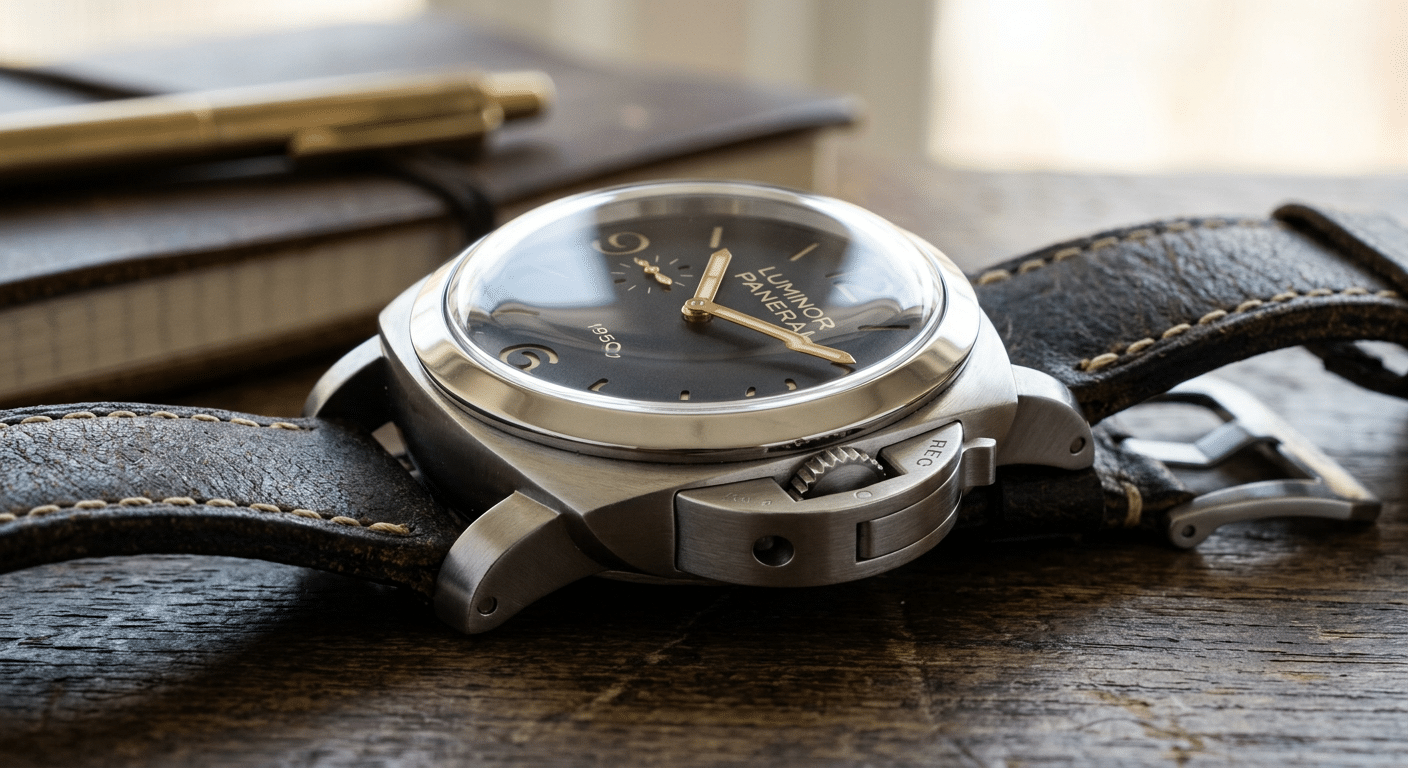
Panerai’s iconic 47mm case, exemplified by models like the Luminor 1950 (e.g., PAM00372) and early Radiomir references, originated from a clear functional imperative: military dive instruments requiring extreme legibility and robust construction. These watches, designed for Italian Navy frogmen in the mid-20th century, prioritized an expansive dial and a large, easily manipulable crown over conventional wearability. The case profiles often feature lugs that extend in a relatively straight line from the case, offering minimal downward curve. This design, coupled with significant case thickness (often 16mm or more), contributes to a substantial “wrist footprint” that can easily exceed the flat surface of most wrists, even those considered average. The historical rationale was sound for its era, but its application to everyday wear in 2026 demands critical re-evaluation.
2026 Wrist-Trend Data: The Sub-7-Inch Majority
Current demographic data from 2026 on average wrist circumferences reveals a distinct shift from the historical context that birthed Panerai’s larger dimensions. Globally, the average male wrist circumference measures between 6.7 and 7 inches (170-178mm), while the average female wrist typically falls between 5.5 and 6.5 inches (140-165mm). This data indicates that a significant majority of potential buyers, particularly those with sub-7-inch wrists, will encounter substantial lug overhang and subsequent discomfort when attempting to wear traditional 47mm or even 44mm Panerai models. A watch with lugs extending beyond the flat plane of the wrist not only appears disproportionate but also prevents the caseback from settling properly, leading to instability and an increased risk of impact damage.
The Crown Guard’s Ergonomic Impact
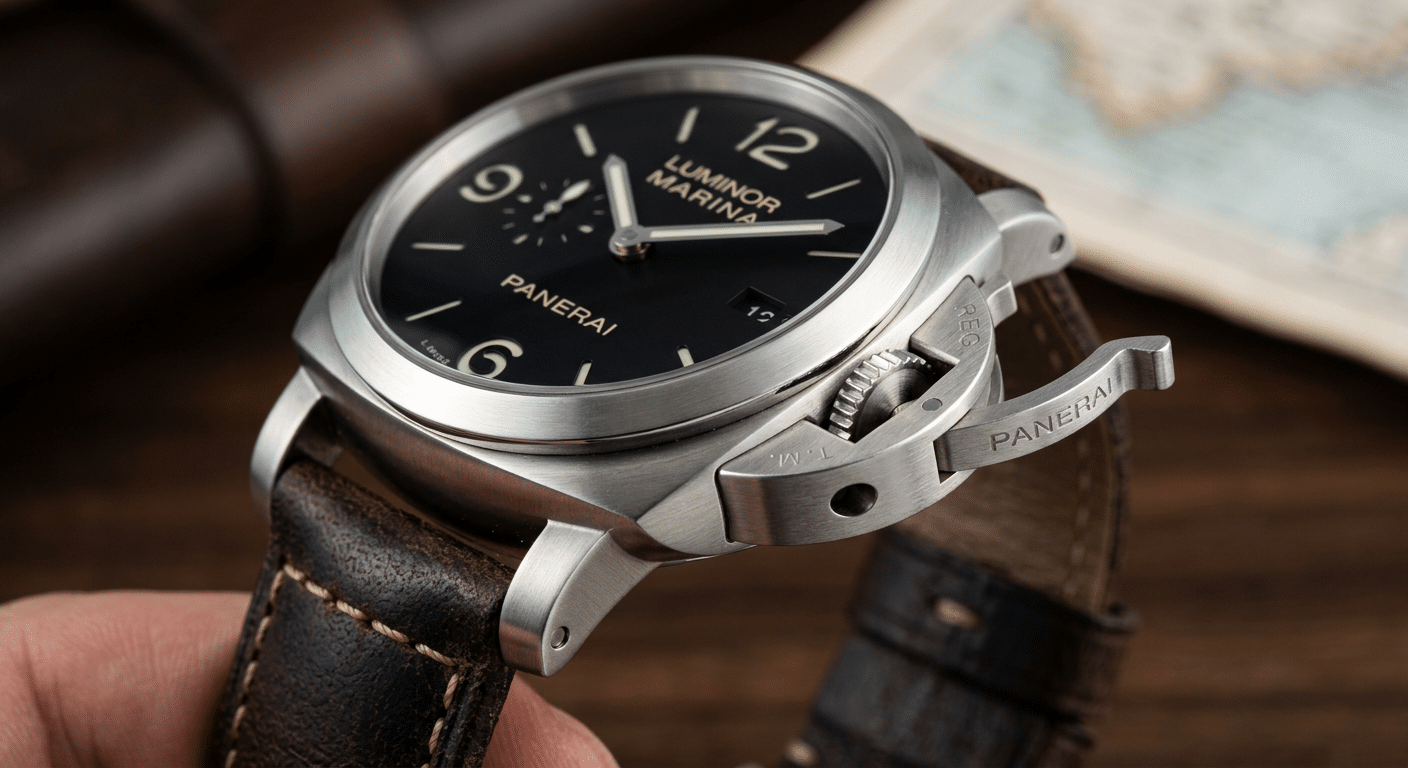
The Luminor’s patented crown-protecting device, a defining architectural element, is often overlooked in discussions of ergonomic fit. This prominent lever mechanism, designed to ensure water resistance and protect the crown from impacts, protrudes significantly from the right side of the case. While the stated case diameter might be 44mm, the crown guard effectively adds another 4-6mm (0.16-0.24 inches) to the watch’s total width. This additional protrusion creates an asymmetrical profile that, on smaller wrists, can dig into the back of the hand or cause pressure points, particularly during wrist articulation. The crown guard’s functional brilliance is undeniable, but its ergonomic consequence on a wrist for which it was not originally designed can be a constant source of irritation.
Expert Authentication Insight
To concretely understand the full wrist impact, measure the effective “wrist-span” of a 47mm Luminor 1950. Place the watch on a flat surface and use a digital caliper to measure the total linear distance from the outermost point of the crown guard to the tip of the opposing lug. For a PAM00372, this measurement often exceeds 62mm (2.44 inches). Compare this to a typical 6.5-inch (165mm) wrist, which might only have a flat surface width of approximately 52mm (2.05 inches). The resulting 10mm (0.39 inches) difference in effective span immediately illustrates significant overhang, confirming the ergonomic incompatibility for many wearers.
The Anatomy of Fit: Beyond Case Diameter
Focusing solely on case diameter when assessing a watch’s fit is a common misstep, particularly with a brand like Panerai. The true wearability of a timepiece is a complex interplay of several critical, often-ignored dimensions that interact directly with the unique morphology of an individual’s wrist. Understanding these nuanced factors—lug-to-lug distance, case thickness, center of gravity, and the wrist’s cross-sectional shape—provides a comprehensive framework for predicting how a watch will truly integrate with the wearer, moving beyond superficial aesthetic judgments to objective ergonomic reality.
Lug-to-Lug Measurement: The True Wrist Indicator
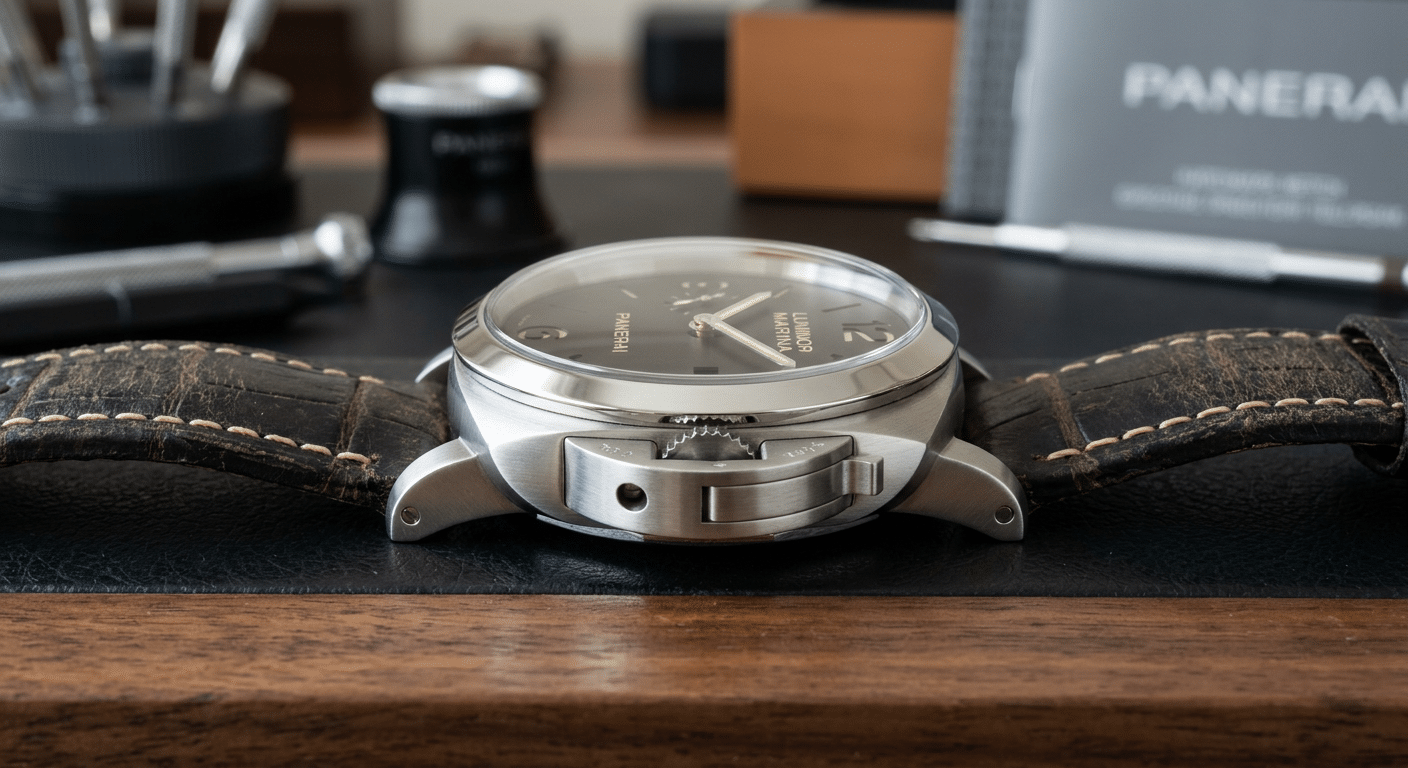
While case diameter garners most attention, the lug-to-lug distance stands as the primary determinant of a watch’s true wrist footprint. This measurement, spanning the entire length from the tip of the top lug to the tip of the bottom lug, dictates whether the watch’s extremities will sit within or extend beyond the flat surface of the wrist. Panerai’s historical designs often feature relatively straight, elongated lugs, meaning a 44mm case can have a lug-to-lug measurement upwards of 53mm (2.09 inches). In contrast, watches with sharply curved or articulated lugs can wear significantly smaller for their stated diameter. When the lug-to-lug measurement exceeds the flat width of the wrist, the watch cannot conform correctly, leading to noticeable overhang and a perpetual sense of imbalance.
Case Thickness and Center of Gravity
Panerai’s larger models are notorious for their substantial case thickness, frequently ranging from 14mm to 18mm (0.55-0.71 inches). This considerable height, combined with the watch’s often significant weight (e.g., a 44mm steel Luminor can weigh 160-165 grams / 5.6-5.8 ounces with a strap), contributes to a high center of gravity. On a flatter wrist profile, a top-heavy watch tends to tilt and shift, failing to remain centered. This instability necessitates constant micro-adjustments by the wearer, leading to wrist fatigue and an overall uncomfortable experience. A watch with a lower center of gravity or a more balanced weight distribution feels more integrated and less like an external appendage, even if its diameter is identical.
Wrist Shape and Flatness vs. Roundness
The cross-sectional shape of a wearer’s wrist—whether it presents a flatter, more rectangular profile or a rounder, more cylindrical one—profoundly influences how a watch caseback and lug curvature interact. A watch designed with a more pronounced case curvature or sharply downturned lugs might sit perfectly on a rounder wrist, integrating seamlessly. However, that same watch, when placed on a flatter wrist of identical circumference, could exhibit significant lug overhang because the lugs lack the necessary downward angle to meet the flatter surface. Understanding one’s own wrist morphology is critical; a watch that “fits” one 7-inch wrist might be entirely inappropriate for another 7-inch wrist with a different flat-to-round ratio.
Expert Authentication Insight
To accurately assess this dynamic, utilize a digital caliper to measure the maximum flat surface width of the top of your wrist. For example, if your wrist has a circumference of 6.75 inches (171mm) but only 50mm (1.97 inches) of flat surface, that 50mm is your critical metric. Then, measure the lug-to-lug distance of your target Panerai model. For optimal, no-overhang fit, the watch’s lug-to-lug measurement should ideally not exceed 85% of your wrist’s flat surface width. This 85% rule provides a concrete, objective threshold that transcends subjective preference, ensuring proper wrist integration and comfort.
The Modern Panerai Solution: Luminor Quaranta and Due
In response to evolving market demands and the undeniable ergonomic realities of smaller wrists, Panerai has strategically shifted its focus, particularly with the introduction of the 40mm Luminor Quaranta and the 42mm Luminor Due models. These collections represent a deliberate effort to retain the brand’s iconic aesthetic while dramatically improving wearability. This section highlights Panerai’s successful adaptation, showcasing how these more accessible dimensions are providing a compelling solution for first-time buyers seeking the distinctive Panerai look, with insights from a Panerai super clone longevity manual, without the traditional bulk, marking them as the “Modern Panerai” of 2026.
Luminor Quaranta (PAM01370, PAM01371, etc.): The 40mm Re-Imagination
The Luminor Quaranta, introduced as a 40mm diameter option, is a pivotal development in Panerai’s strategy to broaden its appeal. Models like the PAM01370 and PAM01371 demonstrate a significant ergonomic re-imagination. The case diameter is a highly wearable 40mm (1.57 inches), but critically, the lug-to-lug distance has been reduced to approximately 48-50mm (1.89-1.97 inches). This compact measurement ensures the lugs sit comfortably within the bounds of most sub-7-inch wrists. Furthermore, the Quaranta maintains a slimmer case profile, typically around 12.5mm (0.49 inches), a substantial reduction from its larger siblings. This combination delivers the unmistakable Luminor aesthetic—sandwich dial, cushion case, crown guard—in a package that is genuinely comfortable and proportionate for a far wider demographic.
Luminor Due: The Svelte Evolution in 42mm
The Luminor Due collection represents Panerai’s most significant foray into ultra-thin case construction, offering a sophisticated and dressier interpretation of the classic Luminor. A 42mm Luminor Due (e.g., PAM01274) can boast an astonishingly slender profile of just 10.5mm (0.41 inches), a feat achieved through the careful selection of movements like the in-house P.900 or P.4000 micro-rotor calibers. These movements, designed for thinness, allow for re-engineered case sides that significantly reduce the overall bulk. The 42mm Due often features a lug-to-lug measurement around 49-50mm (1.93-1.97 inches), which, combined with its exceptional thinness, allows it to slip effortlessly under a shirt cuff. This svelte evolution provides a distinctly understated Panerai experience, catering to those who appreciate refinement over overt wrist presence.
Radiomir’s Understated Ergonomics: 42mm and 45mm
While the Luminor family has seen recent ergonomic shifts, the Radiomir collection has always offered a subtly more forgiving fit, particularly in its 42mm and 45mm iterations. Models such as the 42mm PAM00995 or the 45mm PAM00619 feature the Radiomir’s distinctive wire lug design. Unlike the integrated, fixed lugs of the Luminor, Radiomir’s wire lugs often create a visual impression of less mass and can result in a more adaptable lug-to-lug measurement. For example, a 42mm Radiomir might have an effective lug-to-lug of approximately 48mm (1.89 inches), similar to the Quaranta, but its overall case architecture feels less obtrusive than the Luminor’s more substantial and often blockier profile. This makes the Radiomir a strong contender for those seeking classic Panerai heritage with inherently better wearability.
Expert Authentication Insight
To verify proper fit for these modern Panerai options, employ the “mirror test.” After securely fastening a Luminor Quaranta or Due on your wrist, step back and observe yourself in a full-length mirror. From this distance, a correctly sized Panerai on a sub-7-inch wrist should show no visible lug overhang. The watch should appear integrated with your wrist, with the lugs terminating within the wrist’s flat plane. If the lugs are visible extending beyond the wrist from this perspective, it indicates the watch is still too large, regardless of its stated diameter, and suggests a compromise in proper wrist integration.
The “Feel” Factor: Haptic Feedback and Balance
The tactile experience of a watch on the wrist is often overlooked in favor of aesthetics or technical specifications, yet it dictates long-term wearability more than any other factor. For Panerai, a brand synonymous with substantial wrist presence, understanding this haptic feedback is paramount for a first-time buyer. It’s the difference between an iconic statement piece and an expensive paperweight relegated to the watch box.
Weight Distribution and Wrist Fatigue
Panerai’s case materials significantly influence the watch’s perceived and actual weight, directly impacting wrist fatigue. A 44mm Luminor Marina in 316L stainless steel, for instance, can weigh upwards of 160 grams (5.6 oz) without the strap. Introduce a steel bracelet, and this can easily exceed 200 grams (7.0 oz). Goldtech models, even at 40-42mm, push these figures higher due to gold’s density. In contrast, a 44mm Carbotech Submersible can come in closer to 100-110 grams (3.5-3.9 oz), a marked reduction. When a watch is oversized for the wrist, its mass is distributed over a smaller, less stable area, leading to constant micro-adjustments as it shifts. This uneven load, particularly compounded by a high center of gravity in thicker cases, can cause noticeable discomfort and fatigue after just a few hours of wear, turning a desirable timepiece into an irritant.
Strap Integration and Comfort Dynamics
The interface between the watch and the wrist, primarily mediated by the strap, is critical for comfort. Panerai’s robust quick-change strap systems, often involving a lug screw or push-button mechanism, facilitate experimentation, but the quality and design of the strap itself are paramount. A stiff, poorly articulated strap, even on a perfectly sized case, will exacerbate the feeling of bulk. Conversely, a supple OEM rubber or high-quality alligator strap, properly fitted, can dramatically improve the ergonomic experience, especially for heavier models. The way the strap integrates with the lugs, minimizing gaps and ensuring the watch sits centrally, directly affects how effectively the weight is distributed across the wrist’s surface, mitigating the top-heavy sensation common with larger Panerais.
Crown Guard Interaction and Skin Abrasion
The Luminor’s patented crown-protecting device, while iconic, represents a significant ergonomic consideration. Its robust lever mechanism protrudes substantially from the case, adding an effective width that extends beyond the stated case diameter. On a wrist where lug overhang is already present, or where the watch shifts due to inadequate fit, the sharp edges or significant protrusion of this crown guard can press uncomfortably into the back of the hand or wrist. This constant impingement can lead to pressure marks, skin abrasion, or even localized pain, making prolonged wear undesirable and prompting the wearer to remove the watch prematurely, effectively negating its purpose as a daily companion.
Expert Authentication Insight
Physical diagnostic: To assess the haptic stability of a Panerai, perform a “shake test.” With the watch securely fastened to your wrist, gently shake your arm from side to side in a controlled, moderate motion. A well-fitted Panerai, with appropriate strap tension and case geometry for your wrist, will exhibit minimal lateral shift or rotational play. Excessive movement—where the watch noticeably slides or spins on the wrist—indicates either an incorrect strap tension that fails to secure the watch, or an inherently ill-fitting case geometry (due to lug overhang or crown guard interference) that prevents proper integration with your wrist’s contours.
Preventing Buyer’s Remorse: A Data-Driven Approach
For a first-time Panerai buyer, the allure of the brand’s heritage and bold aesthetic can easily overshadow the practical realities of fit. To circumvent the common pitfall of buyer’s remorse, a systematic, data-driven Panerai super clone guide to evaluating wearability is essential. This moves beyond subjective impressions to concrete metrics that ensure a harmonious relationship between watch and wrist.
The 80/20 Rule for Wrist-to-Lug Ratio
The single most critical metric for assessing watch fit is the lug-to-lug measurement, not the case diameter. A commonly accepted ergonomic guideline, often referred to as the “80/20 Rule,” dictates that a watch’s lug-to-lug distance should ideally not exceed 80-85% of the flat top surface width of the wearer’s wrist. This means measuring the maximum flat expanse across the top of your wrist with a digital caliper, then ensuring the watch’s total lug-to-lug dimension (including any crown guard protrusion for Luminors) falls within this percentage. For example, a 6.5-inch (165mm) wrist might have a flat top surface width of 55mm (2.17 inches). An ideal lug-to-lug would therefore be no more than 44-46.75mm (1.73-1.84 inches). Many 44mm Panerais, with their 53mm+ lug-to-lug measurements, often violate this rule for sub-7-inch wrists.
Simulating Wear: The Cardboard Cutout Method
Before committing to trying on expensive timepieces, a practical and low-cost method for pre-assessment is the “cardboard cutout” technique. Obtain the precise lug-to-lug measurement and the total width (including crown guard) of the Panerai model you are considering. Transfer these dimensions accurately onto a piece of sturdy cardboard, creating a scaled, two-dimensional representation of the watch’s footprint. Cut out this shape and place it directly on your wrist. This tangible simulation instantly reveals potential lug overhang, crown guard impingement, and the overall visual dominance of the watch on your specific wrist, offering a clear, objective preview of its ergonomic reality without the pressure of a sales environment.
The “Two-Finger Rule” for Strap Fit
Optimal strap tension is crucial for both comfort and the stable positioning of a watch, especially for a heavier Panerai. The “Two-Finger Rule” provides a simple diagnostic: once the watch is fastened, you should be able to comfortably slide two fingers (typically your index and middle finger) underneath the strap on the 12 o’clock side of the watch. This ensures the watch is secure enough to prevent excessive shifting and rotation, yet not so tight as to constrict blood flow or create pressure points. An overly tight strap exacerbates the feeling of an oversized case, while a too-loose strap allows the watch to move freely, increasing the likelihood of crown guard abrasion and an unstable haptic experience.
Expert Authentication Insight
Physical diagnostic: After trying on a Panerai in a boutique, perform a “mirror-and-photo test.” Step back from the mirror to observe the watch from a full-length perspective, capturing an image if possible. Then, take a close-up photo of the watch on your wrist from a normal viewing angle. Critically review these images. The full-length perspective often reveals subtle lug overhang or an imbalanced visual presence that is missed when looking directly down at your wrist. The close-up allows for scrutiny of crown guard interaction and strap integration. This external, objective viewpoint frequently uncovers fit issues—such as excessive lug overhang or awkward crown guard positioning—that are emotionally overlooked during the initial in-person assessment.
The Future of Panerai Sizing: 2026 and Beyond
Panerai, a brand historically defined by its bold, oversized aesthetic, is demonstrably adapting to evolving market demands for more versatile and wearable dimensions in 2026. This strategic pivot acknowledges a broader customer base and the ergonomic realities of modern wrist trends, while carefully balancing tradition with contemporary appeal. The future of Panerai sizing is not a complete abandonment of its heritage, but rather an intelligent diversification.
Market Response to Smaller Panerai Models
The introduction of models like the Luminor Quaranta (40mm) and various Luminor Due references (42mm, 38mm) has been met with a strong positive market reception since their respective launches. Sales data from 2024-2025 indicates a significant shift, with these smaller, more ergonomically friendly options attracting a new demographic of buyers, including a substantial increase in female collectors and those with sub-7-inch wrists. Industry analysts confirm that the Quaranta and Due lines are not merely niche offerings but represent a critical growth segment for Panerai, demonstrating a clear preference among new buyers for the iconic aesthetic delivered in a more accessible and comfortable package. This trend suggests that Panerai’s strategic investment in these sizes is paying dividends in expanding its market reach.
Material Innovation for Weight Reduction
While addressing lug-to-lug dimensions and case thickness is paramount, Panerai continues to leverage its expertise in material science to mitigate the perceived bulk of even its larger watches. Innovations in lightweight materials such as Carbotech (carbon fiber composite), Fibratech (mineral fiber-based composite), and E-LAB ID (a case made from 98.6% recycled materials) significantly reduce the overall mass of the timepiece. For instance, a 44mm Luminor in Carbotech can shave 30-40% off the weight of its steel counterpart, making it feel considerably less cumbersome on the wrist. While these material advancements do not alter critical dimensions like lug-to-lug, they enhance comfort and wearability, offering a more manageable experience even for those who opt for a historically larger case size.
The Enduring Appeal of Heritage Sizing (for select wrists)
Despite the clear market shift towards smaller models, Panerai’s historical 47mm and 44mm models will undoubtedly retain their appeal for a specific segment of collectors. For individuals with larger wrists, typically 7.5 inches (190mm) and above, these traditional dimensions offer an appropriate and commanding presence without ergonomic compromise. Furthermore, a dedicated cadre of enthusiasts prioritizes historical accuracy and the bold, utilitarian aesthetic of the original military dive instruments over daily wearability. For these collectors, the sheer presence and traditional proportions of a 47mm Radiomir or Luminor 1950 are integral to the Panerai experience, ensuring that heritage sizing remains a vital, albeit specialized, component of the brand’s offerings.
Expert Authentication Insight
Physical diagnostic: To objectively track Panerai’s strategic shift, cross-reference the brand’s official press releases and new model introductions for 2025-2026. Tally the number of new references released in the 40-42mm range versus those in the 44mm+ category. A consistently higher proportion of smaller models (e.g., 60% or more new releases in 42mm and below) serves as quantifiable evidence of the brand’s deliberate pivot towards ergonomic diversity and its response to broader market demands. This trend confirms that the focus on wearable sizing is not a fleeting fad, but a foundational element of Panerai’s future product strategy.
—
Closing Implication:
In 2026, the Panerai landscape for a first-time buyer is no longer a one-size-fits-all proposition defined by historical bulk. Your initial purchase decision, guided by objective ergonomic reality rather than perceived brand tradition, will dictate not only your satisfaction but also your willingness to explore further into the Panerai universe. Ignore the data on wrist-to-lug ratios and crown guard dynamics at your peril; the cost of buyer’s remorse for an ill-fitting timepiece far outweighs the fleeting allure of an oversized statement. Choose wisely, choose for your* wrist, and secure a foundation for a lasting horological relationship.