
By 2026, the replica landscape had already blurred lines. The emergence of top Panerai super clones like the 2027 Panerai Luminor 1950 3 Days GMT Power Reserve clone, indistinguishable even to seasoned eyes, marked a new era. Its perfectly weighted “real gold” case, the crisp, synchronized fly-back of its cloned Rattrapante chronograph, and its flawless dial finishing were not just improvements; they were symptoms of a fundamental shift in manufacturing capability. We’ve moved beyond simple imitation; we’re entering an age of parallel industrial precision.
The Current Apex: 2026 Super Clone Manufacturing Baseline
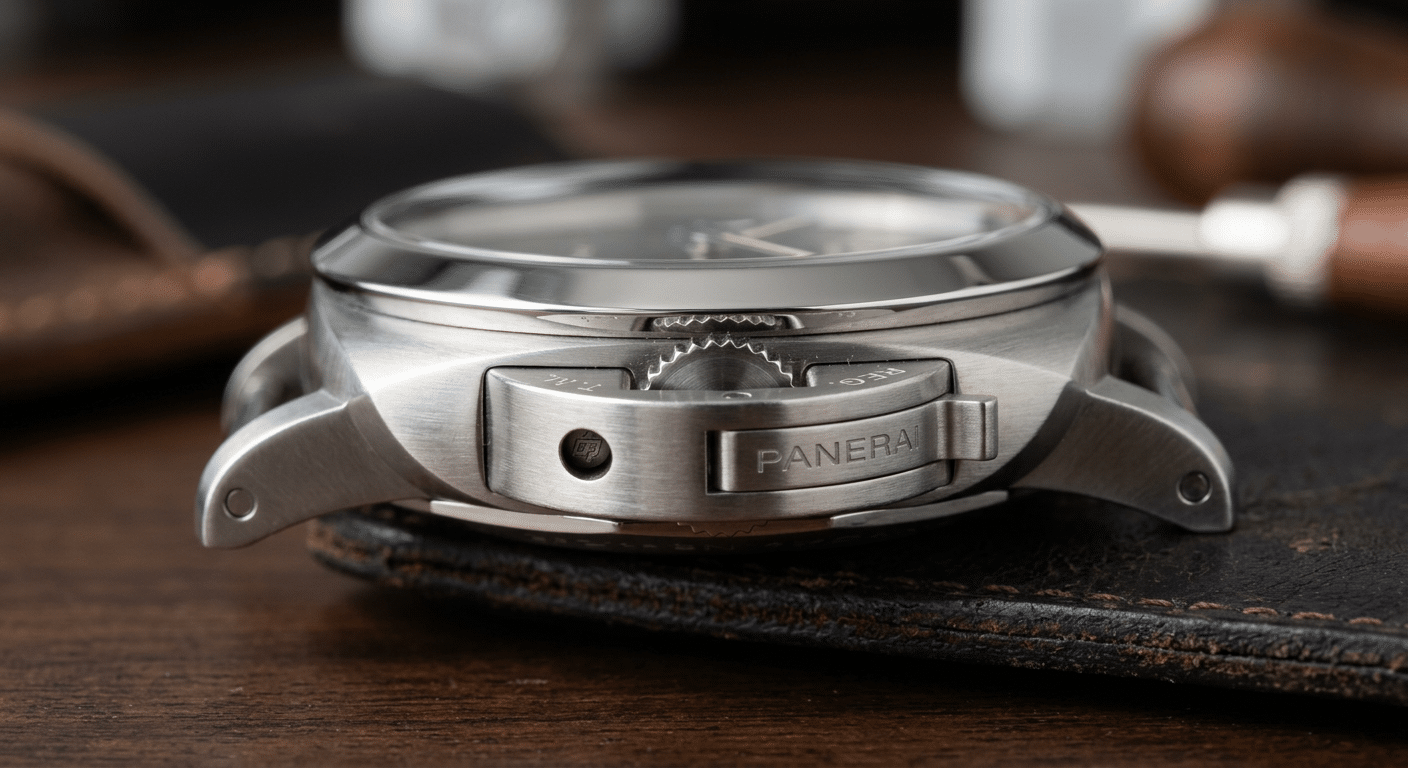
As of 2026, the super clone sector for Panerai has achieved remarkable fidelity, pushing the boundaries of traditional manufacturing to near-identical replication for many core models. This baseline represents the highest achievable quality before the anticipated integration of more disruptive technologies. Factories have honed their craft using established techniques, addressing previous tells with iterative improvements rather than fundamental shifts. The focus remains on meticulous reverse engineering and optimization of existing processes to close the gap with genuine articles.
Precision CNC Machining and Case Geometry
The foundation of any high-fidelity Panerai replica lies in its distinctive case. Current super clone manufacturers utilize multi-axis Computer Numerical Control (CNC) machines capable of achieving sub-micron tolerances, replicating the complex curvature of Panerai’s cushion cases, the sharp lines of its bezels, and the intricate mechanics of its crown guards. While external surfaces often present a convincing facade, slight variations in the internal lug curvature or the specific tension required for the crown guard lever mechanism have been persistent challenges. Solutions have involved advanced programming algorithms and iterative refinement cycles, where CAD models are continuously adjusted against physical measurements of genuine pieces. However, this process is still limited by the inherent wear characteristics of cutting tools and the material stress induced during machining, often resulting in minute, detectable inconsistencies upon forensic examination.
Dial Printing and Lume Application Fidelity
Panerai’s iconic sandwich dials and clear, legible indices demand exceptional precision in printing and luminescence application. Super clone factories employ high-resolution pad printing techniques to achieve crisp text and markers, coupled with multi-layer Super-LumiNova application to mimic the genuine article’s glow and texture. Despite these advancements, microscopic bleeding around printed elements or an uneven texture in the applied lume have been common tells. To counter this, automated vision systems equipped with high-magnification cameras now inspect each dial post-print, identifying flaws at a sub-pixel level. The primary limitation here is not technical but aesthetic: replicating the precise, often irregular, aged patina of vintage tritium dials remains an artistic endeavor that current technical processes struggle to reproduce authentically, often resulting in too-uniform or artificially aged appearances.
Movement Finishing and Decoration Emulation
For Panerai clone movements, which are often reverse-engineered from ETA calibers or proprietary Panerai designs like the P.9000 series, the focus has been on emulating the visual finishing rather than true haute horlogerie craftsmanship. Automated brushing, perlage (circular graining), and Geneva stripes are applied using specialized machines, creating a superficial resemblance to genuine movements visible through display casebacks. The core problem lies in the absence of genuine hand-finishing nuances—the subtle, tactile depth and sharpness of polished bevels or the precise, consistent application of perlage that characterize high-end watchmaking. While advanced laser etching and specialized abrasive tools have improved the visual consistency, they cannot replicate the artisanal quality that comes from human interaction with the movement components. The tactile depth and sharpness of true haute horlogerie finishing remain difficult to achieve at industrial scale for replica products.
Expert Authentication Insight
For authentication at this level, a purely visual assessment is insufficient. A microscopic examination, typically at 100x magnification, is essential. Specific attention is paid to internal case angles and lug-to-case joints, searching for residual tool marks or machining inconsistencies. Genuine Panerai cases exhibit highly uniform radius curves and clean internal surfaces, often reflecting a combination of forging and precision milling. Replicas, even at the super clone level, frequently show minor chatter marks, slight variations in radius uniformity, or less refined internal transitions when compared directly against known genuine CAD data and physical examples. These minute deviations are critical indicators of non-genuine manufacturing processes.
The Inevitable Trickle-Down: 3D Metal Printing’s Impact
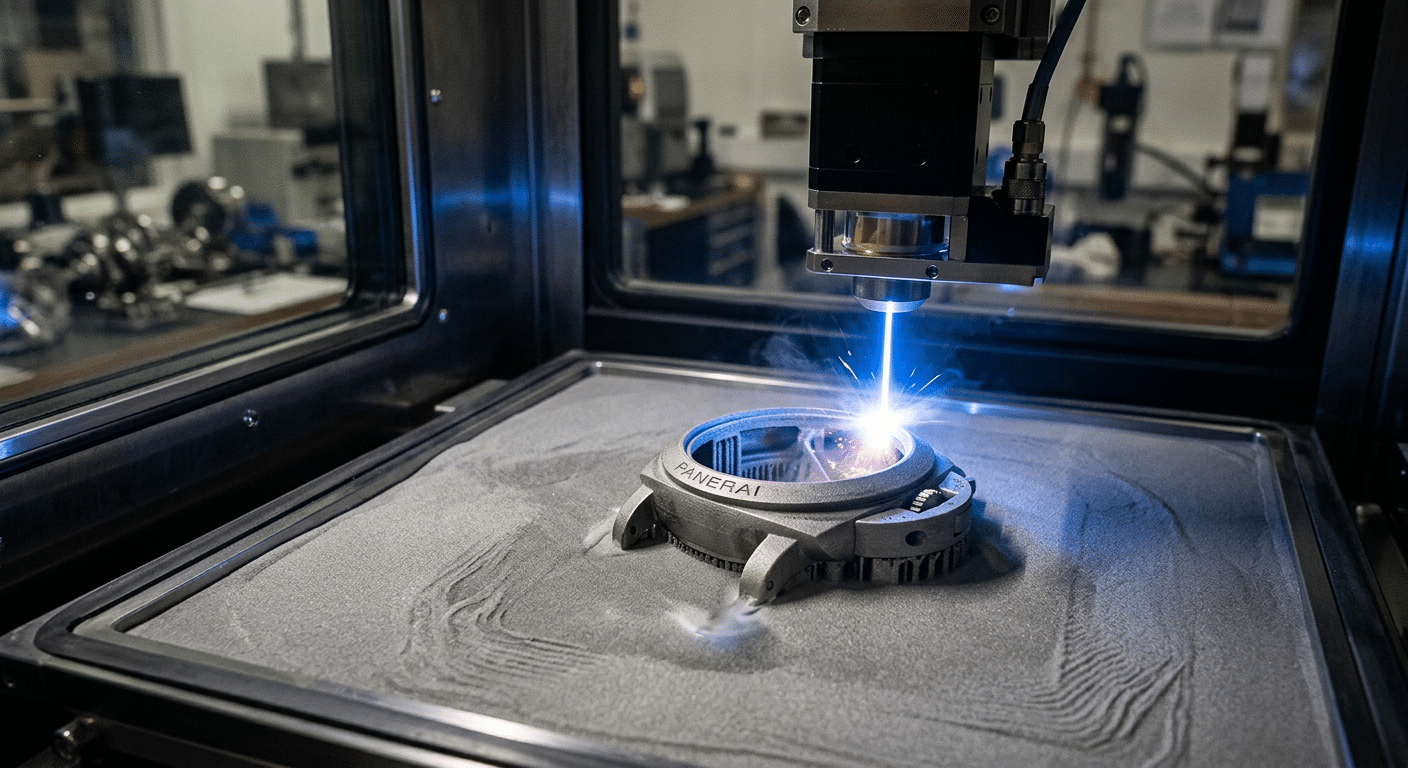
The industrial adoption of 3D metal printing, or Additive Manufacturing, has reached a critical mass in 2026, and its inevitable trickle-down into the super clone ecosystem is set to redefine what’s possible by 2027. This technology offers unparalleled freedom in complex geometries and material customization, promising to overcome many of the limitations of traditional subtractive manufacturing.
Selective Laser Melting (SLM) for Case Components
Selective Laser Melting (SLM) involves fusing powdered metal, such as 316L or 904L stainless steel, or even titanium, layer by layer, using a high-powered laser. This process is ideally suited for creating Panerai cases and intricate components like crown guards or bezel inserts with geometries difficult to achieve via conventional milling. The initial challenge with SLM has been inherent porosity within the printed parts and a relatively rough surface finish, necessitating extensive post-processing. However, optimized laser parameters, coupled with Hot Isostatic Pressing (HIP) for increased density and reduced porosity, are providing solutions. The primary limitation for super clone factories remains the high capital cost of SLM equipment and the comparatively slower production speeds for bulk items when contrasted with efficient CNC machining lines.
Direct Metal Laser Sintering (DMLS) for Movement Parts
Similar to SLM, Direct Metal Laser Sintering (DMLS) is being explored for creating small, complex movement components. This could include bridges, levers, or even specific escapement parts from alloys previously considered difficult or impossible to machine precisely. The benefit lies in rapid production of highly intricate parts without the need for extensive tooling. A key problem has been material property inconsistencies, such as variable hardness or elasticity, within DMLS-produced parts. The solution is emerging through specific alloy development tailored for additive processes, which ensures more uniform mechanical properties. Nevertheless, the extremely fine precision and mirror-like surface finish required for critical friction points within a watch movement still necessitate post-machining or polishing, adding a secondary step to the DMLS process.
Rapid Prototyping and Iterative Design Cycles
One of the most immediate benefits of 3D printing for the super clone industry is the acceleration of the reverse-engineering process. By enabling rapid prototyping, new clone designs and internal movement modifications can be iterated and tested with unprecedented speed. This significantly reduces the time-consuming manual adjustments that previously characterized the development cycle. The integration of digital CAD/CAM systems with direct print output allows for immediate physical realization of design changes. The limitation here is not technological, but human: it requires a new generation of highly skilled CAD engineers who possess a deep understanding of watch micro-mechanics and material science to fully leverage the capabilities of additive manufacturing.
Expert Authentication Insight
The advent of 3D metal printing necessitates new authentication techniques. X-ray micro-computed tomography (micro-CT) scanning becomes a crucial tool for examining internal case structures. This non-destructive method can reveal characteristic layer lines or subtle density variations inherent to additive manufacturing processes. Genuine Panerai cases, typically forged or milled from solid billets, exhibit a uniform, homogenous internal structure. The presence of these micro-CT signatures, even after extensive post-processing, would be a definitive indicator of a non-genuine component, marking a shift from surface-level inspection to internal structural analysis.
AI-Driven Quality Control: Precision at Scale
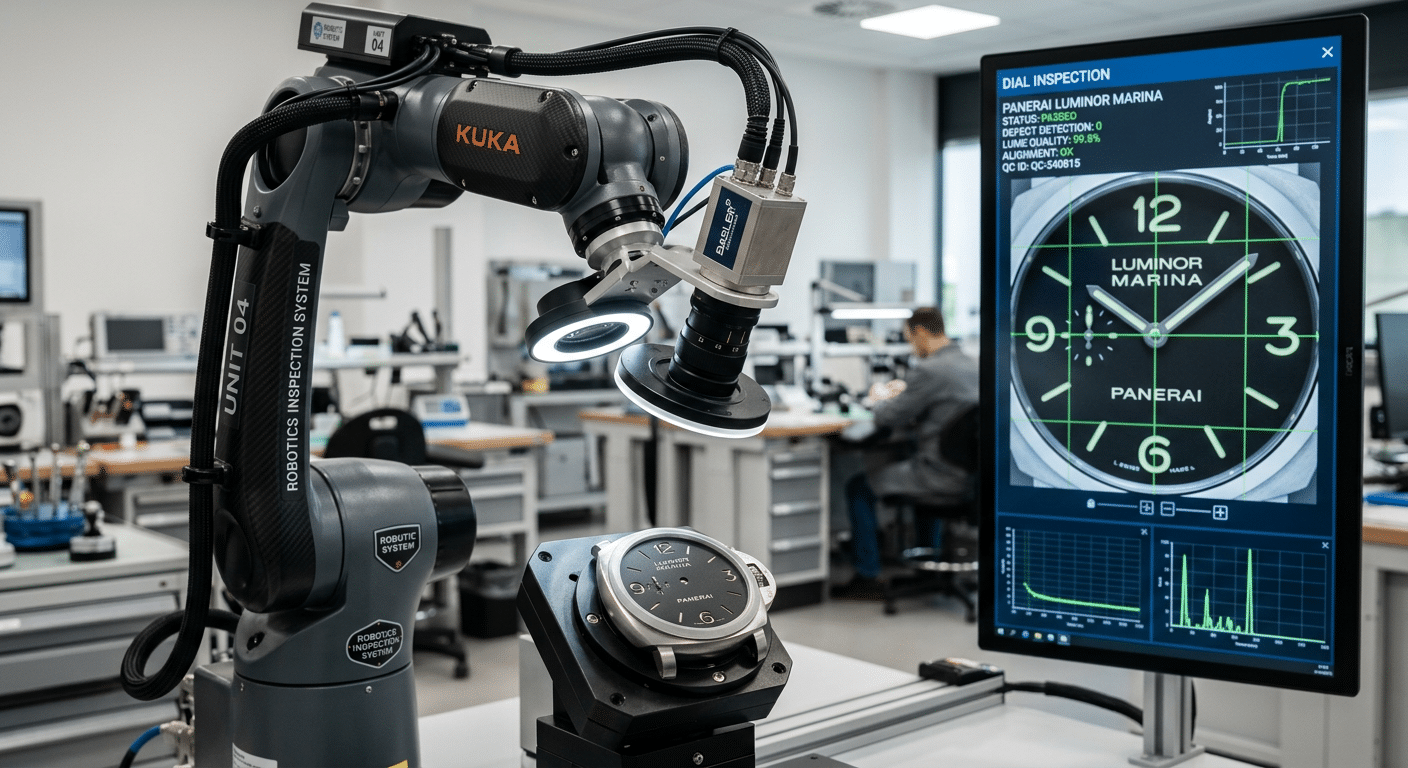
The integration of Artificial Intelligence (AI) and advanced Machine Vision systems is poised to revolutionize quality control in super clone factories by 2027, elevating consistency and flaw detection capabilities far beyond human inspection. This shift moves away from subjective human judgment towards objective, data-driven analysis, enabling precision at an unprecedented scale.
Automated Visual Inspection (AVI) for Dial & Hand Perfection
AI-powered Automated Visual Inspection (AVI) systems are transforming the examination of watch dials and hands. High-resolution cameras, coupled with deep learning algorithms, are trained on vast datasets of both genuine and flawed components. These systems can analyze dial printing alignment, lume application uniformity, and even microscopic polishing defects on hands at sub-pixel resolution. The problem AVI solves is human fatigue and the inherent subjectivity in flaw detection. While a human inspector might miss a 0.05mm misalignment after hours of work, an AI system maintains consistent vigilance. The primary limitation, however, is the difficulty in categorizing “acceptable” minor variations versus “critical” flaws without continuous, nuanced human oversight and retraining, especially for aesthetic judgments that are not purely binary.
Robotic Assembly and Tolerance Verification
Collaborative robots, or cobots, are increasingly being deployed in repetitive assembly tasks within super clone production lines. These systems perform delicate operations with high precision, such as placing hands or fitting movement components. Crucially, they are integrated with in-line metrology sensors that provide real-time verification of component fit and movement tolerances. This addresses the problem of inconsistent assembly pressure or component alignment, which can lead to functional issues or cosmetic flaws. Force-feedback robotics, capable of sensing and adjusting pressure, further enhance precision. The main limitation is the initial programming complexity required to handle the diverse, delicate, and often irregularly shaped components of a watch movement, demanding significant upfront investment in software and engineering expertise.
Predictive Maintenance and Material Anomaly Detection
Beyond direct inspection, AI systems are now monitoring the manufacturing ecosystem itself. These systems analyze data streams from sensor networks installed on CNC machines, pad printers, and other equipment, as well as raw material batches. Their goal is the early detection of potential defects or inconsistencies before they impact final product quality. This proactive approach mitigates issues like unforeseen material defects (e.g., impurities in steel, inconsistencies in lume powder) or machine wear that could lead to a batch of flawed components. The solution involves feeding vast amounts of historical data into predictive algorithms to identify patterns indicative of impending problems. However, this requires extensive historical data and a robust sensor infrastructure, which can be costly and complex to implement and maintain effectively.
Expert Authentication Insight
For authentication in an AI-driven manufacturing landscape, non-contact optical profilometry becomes indispensable. This technique uses light to measure the surface topography of components like dial surfaces and hands, identifying micro-texture irregularities or print inconsistencies that deviate from genuine specifications. Such authentication methods are crucial for any Panerai first-time buyer guide, as an AI-driven printing process might produce an almost perfectly uniform texture, but its micro-structure could be subtly different from a genuine, traditionally manufactured dial. These deviations, often indicative of automated, rather than human-influenced, precision limits, provide objective data points for authentication that are invisible to the naked eye or even standard magnification.
Material Science Breakthroughs: “Real Gold” Cases and Alloys
By 2027, the relentless pursuit of material fidelity in the super clone sector will extend beyond mere aesthetic mimicry, pushing into the realm of functional replication for precious metals. The goal is to produce cases that not only look identical to genuine gold or proprietary alloys but also replicate their tactile feel, wear characteristics, and long-term stability without incurring the prohibitive cost of solid precious metal. This shift reflects a deeper understanding of material science trickling down from high-end industrial applications.
Advanced PVD/DLC Coatings with Enhanced Durability
Traditional PVD (Physical Vapor Deposition) and DLC (Diamond-Like Carbon) coatings on replica watches have historically been a weak point, prone to premature fading, scratching, or chipping, particularly on high-wear areas like case edges and bracelets. The next generation, however, leverages advancements in material science to create multi-layered structures infused with genuine gold particles or advanced ceramic matrices. This involves a more sophisticated deposition process where layers are graded, meaning a gradual transition in material composition and hardness from the base steel to the outermost, precious metal-mimicking layer. This significantly enhances adhesion and overall wear resistance, effectively solving the problem of a coating that simply “rubs off.” While still a surface treatment, these new formulations offer extreme color stability and resistance to superficial abrasion, dramatically improving the long-term aesthetic integrity of gold-toned cases. The limitation remains deep impacts; a significant gouge will still expose the underlying base metal.
“Gold-Wrapped” Technology for Non-Fading Aesthetics
The true breakthrough in precious metal replication by 2027 will be the widespread adoption of “gold-wrapped” technology, a significant leap beyond electroplating. This novel method involves mechanically bonding a thin, genuine layer of 18k or 22k gold—typically 20-50 microns thick—onto a base metal substrate like 316L stainless steel. This is achieved through high-pressure lamination or co-extrusion processes, creating a true metallurgical bond rather than a chemical deposition. Unlike electroplating, which can be as thin as 2-5 microns and prone to wear-through, the “gold-wrapped” layer offers a non-fading, non-peeling exterior that genuinely feels like solid gold to the touch. This technique directly addresses the weight discrepancy of solid gold replicas, allowing for a substantial, precious-metal exterior without the mass or cost of a fully cast gold case. The critical engineering challenge lies in ensuring the long-term integrity of the bond and the uniformity of the gold layer across complex case geometries.
Proprietary Alloy Development for Specific Aesthetics
Beyond gold, super clone factories are investing in proprietary alloy development to mimic Panerai’s unique materials like Carbotech (carbon fiber composite) or Bronzo (bronze). This isn’t about simply sourcing a similar material; it involves reverse-engineering the exact visual and tactile properties. For example, creating a specific stainless steel or titanium alloy with controlled alloying elements and specialized heat treatments can replicate the subtle coloration, hardness, and surface finish of Panerai’s proprietary metals. The challenge lies in precisely matching the material’s response to machining, brushing, and polishing to achieve an indistinguishable aesthetic. This requires substantial R&D investment and a deep understanding of metallurgy, moving replica production closer to genuine material science innovation rather than just copying.
Expert Authentication Insight
Physical diagnostic: X-ray Fluorescence (XRF) spectroscopy will become the primary non-destructive tool for authenticators. An XRF scan can precisely determine the elemental composition and thickness of gold layers or surface coatings. This allows for immediate differentiation between solid gold, gold-wrapped cases (revealing the underlying base metal and gold layer thickness), and PVD coatings (identifying the presence of gold particles within the coating matrix). Furthermore, XRF can identify non-standard alloys, such as a titanium replica of Bronzo, by revealing the absence of copper or the presence of unexpected elements in the spectral analysis, providing an unequivocal and quantifiable verdict.
Cracking High-Complication Movements: The Rattrapante Challenge
The replication of high-complication movements, long considered the final frontier for super clones, is poised for a significant breakthrough by 2027, with the Rattrapante (split-seconds chronograph) leading the charge. This intricate mechanism, known for its dual chronograph hands allowing for intermediate time readings, represents a monumental challenge due to its micro-tolerances and complex interplay of springs, levers, and cams. Successfully cloning such a movement signifies a new era where functional complexity no longer serves as an automatic authentication barrier.
Reverse Engineering Complex Chronograph Modules
The initial hurdle for cloning Rattrapante movements like Panerai’s P.2006 or P.9100 variants involves meticulously reverse-engineering their complex chronograph modules. This process begins with the complete deconstruction of genuine movements, followed by high-resolution 3D scanning to create precise digital models of every cam profile, lever geometry, and clutch mechanism. Computer modeling and simulation then analyze the kinematics and dynamics of these components, identifying critical microscopic tolerances and specific spring tensions essential for reliable functionality. The primary problem lies in the sheer number of interacting parts and the exact forces required for their synchronized operation. While 3D scanning provides the geometry, sourcing or manufacturing specialized springs and friction components with precise material properties and elastic moduli remains a significant limitation, often requiring bespoke solutions rather than off-the-shelf parts.
Precision Gear Train Manufacturing for Smooth Operation
A Rattrapante’s smooth operation hinges on an exceptionally precise gear train, where any backlash, excessive friction, or inconsistent timing can render the complication unreliable. Super clone factories are now employing advanced micro-machining and gear hobbing techniques to produce gear trains with sub-micron tolerances. This involves specialized cutting tools and CNC programs to achieve optimized tooth profiles that minimize friction and ensure consistent power transmission. Surface treatments, such as diamond-like carbon (DLC) coatings or specialized lubricants, are also being applied to critical friction points to further reduce wear and enhance operational smoothness. The tactile experience of operating a chronograph—the crispness of the pusher engagement, the synchronized fly-back of the split-seconds hand—is directly dependent on this precision manufacturing. The high cost of specialized micro-gear manufacturing equipment, however, means this level of fidelity is restricted to top-tier clone movements.
Automated Assembly and Calibration of Complications
The manual assembly and calibration of a Rattrapante mechanism are highly skilled, time-consuming processes, even for genuine manufacturers. By 2027, super clone factories will increasingly deploy robotic systems to perform these delicate tasks with unprecedented consistency. Vision-guided robotics, equipped with high-resolution cameras, will precisely pick, place, and secure the intricate components of the Rattrapante. Automated calibration jigs, integrated with real-time optical feedback, will then fine-tune spring tensions and lever alignments to ensure correct operation and synchronization. This automation addresses the problem of human fatigue and subjective error, enabling scale production of complex movements. The primary limitation lies in the initial programming complexity, which requires highly specialized engineers familiar with watch micro-mechanics to account for minute variations in component tolerances.
Expert Authentication Insight
Physical diagnostic: Specialized acoustic analysis of the chronograph functions will emerge as a critical authentication technique. When a genuine Rattrapante’s pushers are engaged—start, stop, reset, and split-seconds activation—they produce a distinct sonic signature. This signature, characterized by specific sound frequencies, durations, and decay profiles, is a direct result of the exact material properties, geometries, and lubrication of its internal components. Clone movements, even those with high visual fidelity, will inevitably exhibit subtle variations in these acoustic fingerprints due to differences in alloy composition, spring tension, or surface finishes. Expert ears, aided by high-fidelity microphones and spectral analysis software, can detect these minute deviations, providing a non-visual tell that bypasses even the most advanced aesthetic replication.
Beyond Aesthetics: Functional Fidelity and Durability
The future of super clones extends far beyond visual indistinguishability; by 2027, the focus will shift to replicating the functional performance and long-term durability of genuine Panerai watches. This means achieving comparable water resistance, chronometric accuracy, power reserve, and material stability, ensuring that a super clone not only looks the part but also performs reliably under real-world conditions for an extended period. This represents a significant leap from mere imitation to engineering parity.
Enhanced Water Resistance and Case Sealing Technologies
Achieving genuine-level water resistance, particularly for Panerai’s dive-oriented models, has historically been a significant challenge for replicas. By 2027, super clone factories will adopt advanced gasket materials, such as Viton or proprietary synthetic rubbers, known for their superior chemical resistance and compression set characteristics compared to standard nitrile O-rings. More critically, automated pressure testing protocols, mirroring ISO 6425 standards, will be integrated into the production line. Robotic gasket insertion ensures consistent compression and seating, while every finished watch undergoes 100% automated pressure testing, often in both static and dynamic conditions, to verify its water resistance rating. This systematic approach tackles the problems of inconsistent sealing and material degradation. However, the inherent limitations of non-OEM caseback and crown tube designs—which often lack the precise threading or multi-gasket systems of genuine components—will still prevent exact equivalence to Panerai’s 300m+ ratings, with 100-150m being a more realistic and verified benchmark for daily wear.
Movement Chronometry and Power Reserve Optimization
The performance of clone movements will undergo significant refinement, moving beyond simply matching beat rates and towards achieving tighter chronometric standards and extended power reserves. This involves fine-tuning critical components such as balance wheels (potentially using free-sprung designs), mainsprings (using higher-grade alloys for consistent torque), and escapements (optimizing geometry for efficiency). Automated regulation systems, utilizing laser-guided adjustments, will calibrate movements to tighter daily rate tolerances, often within +/- 5 seconds per day, mirroring COSC-like performance. Power reserve optimization will see clone movements consistently achieving 60-70 hours, driven by improved mainspring quality and reduced friction throughout the gear train. While these advancements significantly enhance user experience—reducing the need for frequent time setting and winding—the fundamental design constraints of reverse-engineered movements, which may not incorporate all the proprietary innovations of genuine calibers, will continue to present a ceiling for ultimate performance.
Long-Term Material Stability and Wear Resistance
The true measure of functional fidelity is long-term durability. Future super clones will incorporate research into anti-corrosion treatments for internal movement components, such as specialized galvanic platings or non-ferrous alloys, to prevent degradation over years of operation. For external surfaces, hardened coatings—like ceramic composites or advanced nitriding processes—will be applied to steel and titanium cases, significantly increasing scratch and abrasion resistance. This addresses the problem of premature wear and material fatigue that often afflicts lesser replicas. The goal is to ensure that a super clone maintains its aesthetic and functional integrity not just for months, but for several years, mimicking the longevity expected from a genuine luxury timepiece. The key limitation here is the cost-benefit analysis: the investment required for these long-term durability enhancements must align with the replica market’s pricing expectations.
Expert Authentication Insight
Physical diagnostic: A rigorous, multi-faceted testing protocol will be essential. This includes controlled immersion testing in a hyperbaric chamber, where the watch is subjected to increasing pressure depths while internal humidity sensors detect any micro-leaks. A subsequent multi-position chronometer test, conducted on a precise timegrapher across six different orientations (dial up, dial down, crown up, crown down, etc.), will verify timekeeping stability and amplitude consistency under varying gravitational forces. Deviations from genuine performance benchmarks in either water resistance integrity or chronometric stability, especially across different orientations, will provide conclusive evidence of non-genuine origin. This comprehensive approach moves beyond static visual checks to dynamic, verifiable performance metrics.
The Supply Chain & Reverse Engineering Ecosystem of 2027
The advanced super clone market for Panerai, by 2027, operates not as a monolithic entity but as a sophisticated, distributed ecosystem. This infrastructure has evolved to mitigate risks, optimize production, and rapidly iterate on new models, fundamentally mirroring, and in some cases, outmaneuvering, the agility of legitimate manufacturing networks. The pursuit of near-perfect replication, as detailed in any comprehensive Panerai super clone guide, necessitates a supply chain capable of sourcing and producing components to exacting standards, often leveraging the same industrial advancements driving legitimate industries.
Global Sourcing of Specialized Materials and Components
The fidelity of 2027’s Panerai super clones hinges on an intricate global network capable of supplying high-grade materials and specialized components. Factories now routinely source 316L stainless steel and titanium alloys from established mills, often the same ones supplying legitimate watch components, ensuring chemical composition and mechanical properties are within acceptable tolerances. Sapphire crystals, for instance, are procured from specialized Asian manufacturers, capable of producing domed crystals with precise internal anti-reflective (AR) coatings that mimic genuine Panerai specifications, often costing between $15-30 per unit for a complex shape. Lume compounds, specifically BGW9 or Super-LumiNova equivalents, are acquired through channels that can guarantee specific chromaticity and luminescence decay rates, crucial for replicating Panerai’s distinctive dial glow. The challenge lies not just in sourcing, but in maintaining consistency; a batch variation in steel hardness or sapphire purity can lead to visible tells. The solution has been a diversification of suppliers and the establishment of direct, long-term relationships with smaller, specialized manufacturers who can meet stringent, albeit unofficial, quality control benchmarks. However, this reliance on an opaque, often grey-market network means that traceability and accountability for material origin remain significant limitations, vulnerable to geopolitical shifts or enforcement crackdowns.
Advanced Tooling and Die Manufacturing Capabilities
The ability to replicate Panerai’s distinctive case shapes, intricate crown guards, and precise movement bridges by 2027 is a testament to significant investment in advanced tooling. High-precision Electrical Discharge Machining (EDM) and wire-cut EDM are now standard, enabling the creation of complex dies and molds with sub-micron accuracy. This technology is critical for achieving the sharp internal angles, precise lug curvature, and consistent brushing patterns seen on genuine Panerai cases. For instance, replicating the Luminor 1950 case requires dies capable of forming the distinct cushion shape with seamless transitions, while the crown guard lever demands precise cuts for its interlocking mechanism. The problem historically was achieving the exact geometry and surface finish of OEM tooling, which often involved proprietary processes. The solution has been the widespread adoption of sophisticated CAD/CAM software, often reverse-engineered from genuine component scans, combined with highly skilled machine operators who can program and maintain these advanced systems. This allows for iterative refinement, where a design can be digitally tweaked and a new die produced within days, rapidly closing the gap on aesthetic discrepancies. The primary limitation remains the substantial capital expenditure required for state-of-the-art EDM and wire-cut EDM machines, each costing upwards of $150,000 to $500,000, which restricts such capabilities to the top-tier super clone factories.
Decentralized Production and Distribution Networks
By 2027, the super clone industry has largely abandoned centralized, high-volume production facilities in favor of more decentralized manufacturing nodes. This strategic shift is a direct response to historical enforcement raids, which often targeted large, identifiable factories. Now, a single “factory” might be a network of specialized workshops: one for case machining, another for dial printing, a third for movement assembly, and separate units for final assembly and quality control. This distributed model enhances resilience against detection and disruption; a raid on one component manufacturer does not cripple the entire production line. For example, a batch of Luminor cases might be machined in Dongguan, dials printed in Shenzhen, and movements assembled in Guangzhou, with final integration occurring in a smaller, less conspicuous workshop. The problem with centralized points of failure has been effectively addressed. The solution involves smaller, specialized workshops, often employing fewer than 20 individuals, and the use of complex, encrypted logistics channels for moving components between these nodes and eventually to distributors. This network also employs sophisticated anti-detection strategies, such as shipping components rather than finished watches across borders, or utilizing multiple, low-value declarations. The primary limitation is the increased overhead and coordination challenges inherent in managing such a complex, geographically dispersed, and covert operation, which inevitably adds to the final cost of a super clone, pushing prices for top-tier Panerai models to the $450-$700 range.
Expert Authentication Insight
Physical diagnostic: Forensic analysis of packaging materials, serial number etching patterns (e.g., laser vs. mechanical engraving), and the consistency of accompanying documentation, revealing subtle differences in production and distribution methods. For instance, a genuine Panerai serial number is typically laser-etched with a consistent depth and font, often appearing almost “burnt” into the steel. Super clones, while improving, may still show dot-matrix patterns, inconsistent depth, or slight irregularities in font spacing under 20x magnification. Packaging, though often replicated down to the grain of the wood box, can sometimes betray its origin through the quality of the hinge mechanism or the precise color match of the interior velvet lining compared to verified genuine examples.
Authentication in the Era of Near-Perfection: A New Paradigm
The relentless march of super clone technology, particularly for Panerai, has by 2027 rendered traditional authentication methods largely obsolete. The visual cues that once served as reliable tells have been systematically eliminated, forcing a fundamental shift towards technologically-driven diagnostic approaches. The era of “near-perfection” demands a new paradigm where the human eye is no longer the ultimate arbiter of authenticity.
Beyond Visual Inspection: The Limit of Human Expertise
By 2027, the visual fidelity achieved by top-tier Panerai super clones has reached a point where even the most seasoned experts struggle to make definitive judgments based solely on visual inspection, even with a 10x loupe. The perfect alignment of dial text, the crispness of the sandwich dial cutouts, and the consistent application of lume have all been largely mastered. The problem is that human perception, inherently subjective and prone to fatigue, is easily fooled by such high-quality replicas. A clone Luminor Marina PAM005, for example, can replicate the weight, feel, and aesthetic nuances so closely that a side-by-side comparison with a genuine article, without specialized tools, yields ambiguous results. The solution lies in a complete reliance on objective, measurable data derived from advanced instruments. This means moving beyond qualitative assessments and into quantitative analysis of material composition, micro-geometries, and functional performance. The primary limitation is the continuous need for training and significant investment in new diagnostic tools, as the target for replication constantly shifts and improves.
Non-Destructive Testing (NDT) for Internal Verification
The increasing sophistication of super clones necessitates an equally sophisticated arsenal of Non-Destructive Testing (NDT) methods for internal verification. X-ray fluorescence (XRF) spectroscopy is now routinely employed to precisely determine the elemental composition of case materials, confirming whether it is indeed 316L stainless steel or a lower-grade alloy, and to analyze the precise gold content and thickness of any precious metal coatings. Spectral analysis, using techniques like Raman spectroscopy, can identify the molecular structure of sapphire crystals, lume compounds, and even gasket materials, revealing subtle chemical signatures that deviate from genuine specifications. Advanced microscopy, extending beyond simple optical magnification to scanning electron microscopy (SEM) with energy-dispersive X-ray spectroscopy (EDS), allows for ultra-high-resolution imaging of surface textures and cross-sectional analysis of material layers, identifying characteristic layer lines from 3D printing or specific finishing techniques. The problem is that destructive testing, which might definitively reveal internal construction, is not feasible for valuable items. The solution is comprehensive NDT protocols that can probe the internal structure and material composition without causing any damage. However, the interpretation of the complex data generated by these instruments requires specialized knowledge and access to extensive databases of genuine component analyses, which remains a significant limitation for most authentication services.
The Role of Blockchain and Digital Provenance
In response to the physical indistinguishability of advanced super clones, genuine manufacturers are increasingly exploring and adopting blockchain-based digital certificates of authenticity. By 2027, the concept is to link a unique, immutable digital token to each physical watch, recording its manufacturing details, ownership history, and service records on a distributed ledger. This creates a verifiable, tamper-proof record of provenance that cannot be replicated. For example, a Panerai Luminor could have a QR code or NFC tag embedded in its caseback or movement, which, when scanned, pulls up its entire blockchain history, confirming its authenticity. The problem with traditional authentication often stems from the ease of replicating physical documentation, serial numbers, and even service papers. Blockchain offers a secure digital ledger as a solution. However, the limitation lies in the adoption rates by manufacturers, the interoperability of different blockchain platforms, and consumer understanding and trust in such digital systems. Without widespread industry adoption and a user-friendly interface, its effectiveness in combating clones remains constrained.
Expert Authentication Insight
Physical diagnostic: Combined use of Raman spectroscopy to analyze specific material molecular structures (e.g., sapphire crystal composition, metal alloy signatures) and micro-spectrophotometry to map color and reflectivity profiles of dials and bezels, comparing against a verified genuine reference database. For instance, the specific blend of Super-LumiNova for Panerai’s cream-colored lume has a distinct Raman spectrum, which a clone’s BGW9 equivalent, while visually similar, will not perfectly match. Similarly, the unique reflectivity curve of a genuine Panerai ceramic bezel, when mapped by a micro-spectrophotometer, can be differentiated from even a high-quality clone ceramic.
Ethical & Market Implications of Advanced Clones by 2027
The proliferation of hyper-realistic Panerai super clones by 2027 carries profound consequences, not just for collectors, but for the entire luxury watch market, challenging established norms of value, exclusivity, and ethical conduct. This technological leap forces a critical re-evaluation of what constitutes authenticity and how it impacts an industry built on intangible allure.
Erosion of Brand Value and Perceived Exclusivity
The potential for widespread availability of nearly indistinguishable replicas poses a significant threat to the perceived value and exclusivity of genuine luxury watches. When a Panerai Luminor Marina super clone, costing $500-600, can visually and functionally mimic a $8,000 genuine piece, the intrinsic “luxury” appeal, which is built on scarcity, craftsmanship, and authenticity, begins to erode. The problem is that the emotional connection and aspirational status associated with owning a genuine Panerai are diluted when a visually identical alternative is readily accessible. Manufacturers are forced to shift their focus from mere product quality, which is increasingly matched by clones, to intangible values such as heritage, unique brand experiences, and the narrative behind the watch. However, it is inherently difficult to quantify and protect such intangible value in a market increasingly fixated on physical fidelity. The psychological impact on genuine owners can be substantial, as their investment and pride are undermined by the prevalence of near-perfect imitations.
Shifting Collector Behavior and Authentication Responsibility
The rise of advanced super clones fundamentally alters collector behavior. By 2027, collectors are significantly more skeptical, demanding verifiable provenance and advanced authentication services for any significant purchase. The days of trusting a seller’s word or a cursory visual inspection are over. This shifts a considerable burden onto sellers, auction houses, and manufacturers to provide irrefutable proof of authenticity. The problem is the pervasive uncertainty in the secondary market, where even experienced buyers can be duped. The solution necessitates increased due diligence, reliance on certified experts equipped with advanced diagnostic tools, and a demand for transparent, verifiable histories for each timepiece. The limitation is the cost and accessibility of such advanced authentication. A comprehensive NDT examination could cost $200-$500 per watch, a barrier for many transactions, and the number of truly equipped and knowledgeable experts remains limited. This creates a two-tiered market: one where verified authenticity commands a premium, and another where uncertainty drives down prices.
The Unseen Economic Impact on the Watch Industry
The economic impact of high-fidelity replicas on the legitimate watch industry is often underestimated and extends far beyond direct sales losses. By 2027, the proliferation of advanced super clones represents significant financial losses for genuine manufacturers, authorized dealers, and the secondary market. While a $500 replica might not directly displace an $8,000 sale for a high-net-worth individual, it saturates the market, reduces overall brand desirability, and makes it harder for legitimate sellers to differentiate their product. Furthermore, the cost of legal enforcement, technological countermeasures (like developing blockchain solutions), and continuous product innovation to stay ahead of cloners is substantial. The problem is direct, unauthorized competition that leverages industrial advancements without bearing the immense R&D, marketing, and ethical costs of the genuine article. The solution involves a multi-pronged approach: robust legal enforcement, continuous technological innovation to create features difficult to replicate (e.g., truly proprietary alloys or highly complex, integrated movements), and a renewed focus on brand experience. However, the difficulty of effectively combating a decentralized, adaptable, and globally distributed illicit industry remains a formidable limitation.
Expert Authentication Insight
Physical diagnostic: Trace element analysis (e.g., Inductively Coupled Plasma Mass Spectrometry – ICP-MS on micro-samples) of specific components like lubricants or gasket materials to detect non-OEM chemical signatures, indicating a non-genuine origin. Even the smallest trace elements in the proprietary oils used in a genuine P.9000 movement, or the specific chemical composition of a Viton gasket, can be analyzed at parts-per-billion levels to reveal a non-standard manufacturing source. This level of forensic detail, while costly and often destructive, represents the ultimate arbiter of authenticity when visual and surface-level material analyses are no longer sufficient.
Closing Implication
The impending era of hyper-realistic Panerai super clones, driven by the democratization of advanced manufacturing, demands a radical recalibration of how we perceive authenticity. For collectors, the days of relying solely on visual cues are over; the future necessitates a forensic approach, demanding verifiable digital provenance and the specialized insights of experts equipped with industrial-grade diagnostic tools. Ignore this shift, and the line between genuine and imitation will not just blur—it will vanish, leaving a market where trust is a commodity more precious than gold.