
The Cartier Replica Trap: Why “Super Clone” Claims Miss the Mark
In the complex world of replica watches, the term “super clone” often acts as a siren song, promising near-perfect fidelity to the genuine article. For buyers eager to experience the luxury of a Cartier without the prohibitive price tag, a super clone decision map can be incredibly compelling. Who wouldn’t want a watch that’s indistinguishable from the original, packed with features that sound identical to the real deal?
However, the pursuit of a “super clone” Cartier based solely on a seller’s feature list is where many buyers fall into a trap. Unlike brands that emphasize intricate movements or robust engineering, Cartier’s enduring appeal is rooted deeply in its unique aesthetic language: flowing silhouettes, precise proportions, and an almost architectural approach to design. This means that many of the “premium” features touted by replica sellers—like “Swiss movements,” “exact weight,” or “engraved rotors”—are either red herrings, easily faked, or simply less critical to the overall “Cartier feel” than other, more subtle elements. Are you buying a feature list, or a feeling?
The Allure of “Super Clone” Marketing for Cartier
The replica market thrives on aspiration. Sellers understand that buyers are searching for proxies of luxury, and they lean heavily into technical-sounding specifications that appear to bridge the gap to authenticity. For Cartier, this often means highlighting features that, on paper, sound impressive. The implication is that a replica boasting these elements has achieved a level of perfection that justifies its price and earns the “super clone” moniker. This narrative distracts from the true challenges of replicating a Cartier: its subtle curves, its delicate dial work, and its overall visual harmony.
The Fundamental Misunderstanding of Cartier’s Appeal
Cartier is not about raw horsepower or complicated mechanics; it’s about art and design. A Tank, a Santos, or a Ballon Bleu captivates with its form, its balance, and the precise execution of its iconic elements. When a replica seller focuses on an engraved rotor that no one will see, or a movement that, while “Swiss,” doesn’t contribute to the watch’s visible accuracy or slimness, they fundamentally misunderstand or intentionally misdirect from what makes a Cartier special. The brand’s identity is defined by its silhouette, its dial’s crispness, the cabochon’s luster, and the way it elegantly drapes on the wrist. These are the true measures of a Cartier replica’s success, not a checklist of internal components.
Beyond Feature Lists: A New Evaluation Framework
To navigate the murky waters of Cartier replicas, buyers need to shift their focus from superficial claims to the foundational elements that truly define the brand. This article aims to provide that new framework. We will dissect the most overrated “super clone” features and re-educate buyers on what actually matters: the mastery of Cartier’s unique silhouette, the discipline in dial execution, the critical importance of case thickness, and the coherence of overall finishing. By understanding these priorities, you can avoid common pitfalls and make a significantly smarter purchase decision.
Expert Authentication Insight
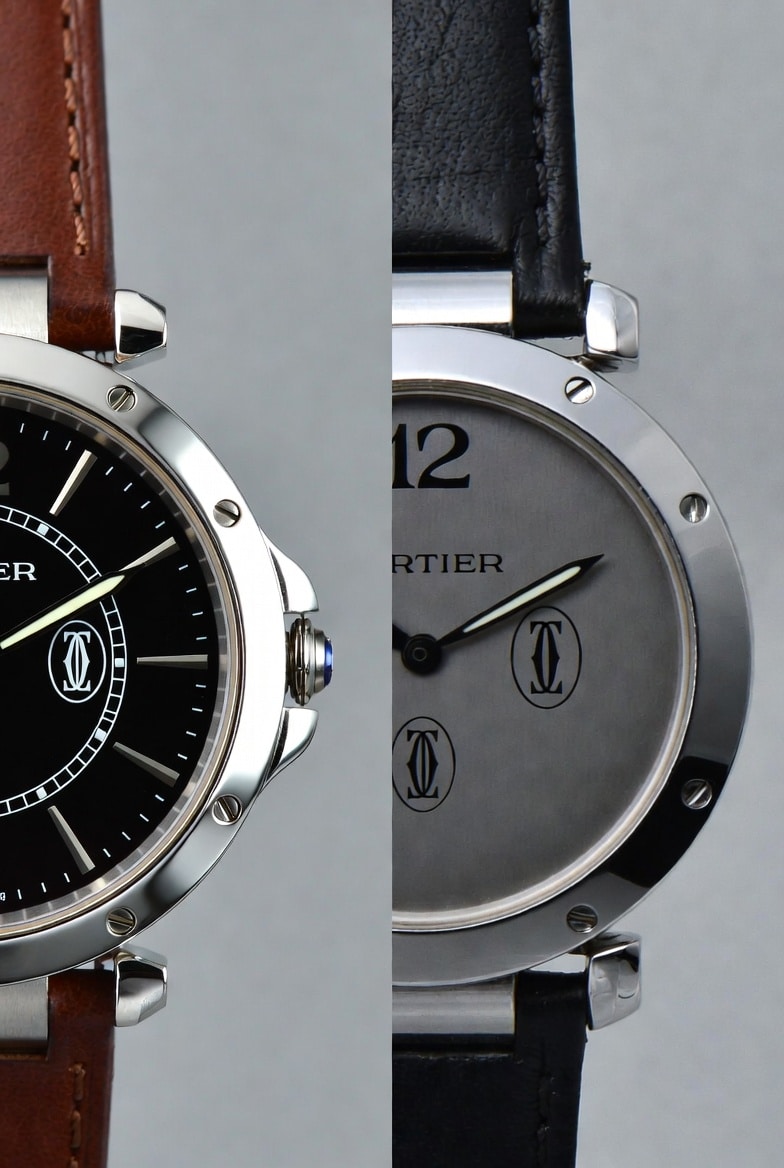
When evaluating a Cartier replica, the first critical assessment often happens before any loupe comes out. Place the replica next to a genuine Cartier (or a high-resolution image of one). Notice the overall “stance” of the watch on a flat surface or on the wrist. Even the best “super clones” can exhibit immediate, albeit subtle, proportional discrepancies that no list of advertised features can overcome. This might be a slightly off-angle lug, a bezel that’s a hair too thick, or a case that doesn’t quite flow with the same elegance. This holistic visual impression, rather than individual components, is often the first tell.
The “Swiss Movement” Myth: Why It’s Irrelevant for Cartier Replicas
Among the most frequently touted “super clone” features in replica watch listings is the claim of a “Swiss movement.” This phrase conjures images of precision engineering and horological heritage, leading buyers to believe they’re getting a superior product. For a Cartier replica, however, this claim is almost universally misleading, largely irrelevant, or outright deceptive, serving primarily to inflate prices rather than enhance value.
Decoding “Swiss Movement” in the Replica World
When a replica seller claims a “Swiss movement,” buyers typically envision a genuine ETA or Sellita caliber, identical to those found in many entry-level luxury watches. In reality, the “Swiss movement” in a Cartier replica usually falls into one of three categories:
- Mislabeled Chinese Clone: The most common scenario. Many high-quality Chinese movements (like the Sea-Gull ST2130, a clone of the ETA 2824) are rebranded as “Swiss” to appeal to buyers. While these movements can be reliable, they are not Swiss in origin.
- Extremely Low-Grade Swiss Movement: Less common, but some replicas might use a genuinely Swiss-made movement, typically a very basic, undecorated quartz Ronda movement, or a mechanical movement stripped of any finishing or higher-grade components. These are often far from the quality expected of a “Swiss” caliber in a genuine luxury watch.
- Refurbished/Old Stock Swiss Movement: With ETA’s restrictions on external sales, new, genuine Swiss mechanical movements are scarce. Any “Swiss ETA” in a replica is almost certainly a used, refurbished, or “franken” movement, pieced together from various parts, with no guarantee of quality or longevity.
The practical implication is that you’re almost never getting the genuine article implied by the marketing, and even if you are, its pedigree might be questionable.
Chinese Clones vs. Genuine Swiss: Performance Realities
Let’s be clear: a well-made Chinese automatic movement, such as the Sea-Gull ST2130 (a common choice for 42mm Cartier Ballon Bleu replicas) or a reliable Japanese Miyota 9015 (often found in Santos replicas), can offer perfectly acceptable performance for a replica. They typically provide accuracy within ±15-30 seconds per day, which is perfectly adequate for daily wear and often comparable to what a basic genuine Swiss movement delivers under normal conditions. They are also generally serviceable by a competent watchmaker. The key difference isn’t necessarily daily accuracy under normal conditions, but rather stability in extreme environments (temperature fluctuations, strong shocks) and long-term reliability. However, for a replica that costs a fraction of the genuine, this marginal difference in extreme performance is rarely worth the premium attached to a dubious “Swiss movement” claim.
Why Cartier’s Appeal Isn’t Movement-Centric
Crucially, Cartier’s allure rarely hinges on its internal mechanics. Unlike brands that showcase elaborate tourbillons or intricate complications through exhibition casebacks, most Cartier models, especially the popular Ballon Bleu and Santos, feature solid casebacks. The movement remains unseen. Even on models with small exhibition windows, the focus is on the overall design, not the movement’s finishing or architecture. Therefore, whether the movement inside is “Swiss” or a well-regarded Chinese or Japanese alternative makes little practical difference to the wearer’s experience or the watch’s visual authenticity. What truly matters is that the watch keeps reliable time and is easily serviceable, not the country of origin of its unseen engine.
Expert Authentication Insight
For replicas with solid casebacks, one of the few tactile clues about the movement inside is the rotor’s noise and vibration. Genuine ETA/Sellita movements, even basic ones, typically have a smoother, quieter rotor feel compared to many Chinese clones, which can sometimes be louder or exhibit more noticeable wobble. If the movement is visible through an exhibition caseback (though rare for popular Cartier replicas), inspect the markings. Many replica movements will brazenly engrave “SWISS MADE” or even fake caliber numbers onto clearly non-Swiss movements. A keen eye, or a quick cross-reference with known replica movement types, can expose these fabrications.
Engraved Rotors and Casebacks: Flashy Details That Don’t Define Quality
Another common tactic employed by replica sellers to elevate a watch to “super clone” status is to highlight the presence of detailed engravings on the rotor or caseback. While intricate engravings can indeed be a hallmark of luxury watchmaking, for Cartier replicas, these are often flashy details that distract from more fundamental quality indicators. The mere existence of an engraving is far less important than its quality and, more importantly, its relevance to the overall authenticity of the watch.
The Illusion of Engraving as a Quality Metric
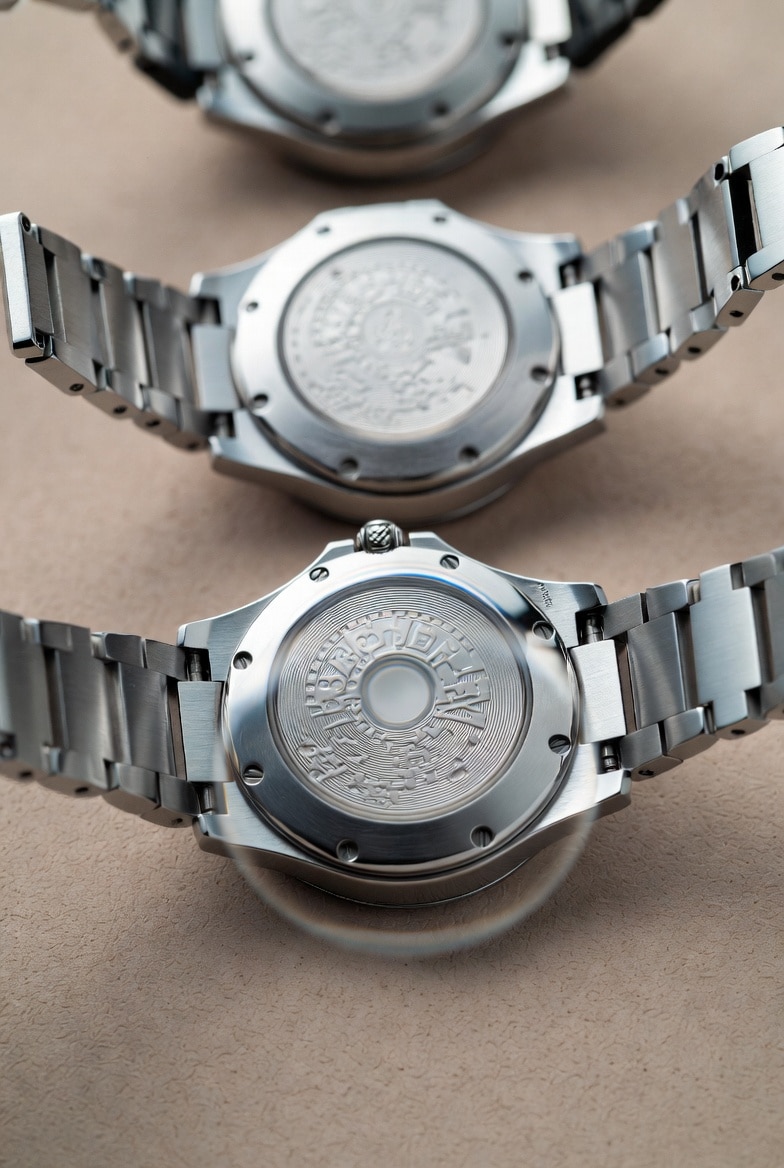
Sellers will often boast about “deep, precise engravings” on the movement rotor or the caseback, implying a level of craftsmanship akin to the genuine article. However, for many popular Cartier models like the Ballon Bleu or Santos, the caseback is solid, rendering any rotor engraving completely invisible. Even on models with exhibition casebacks, Cartier’s movements are often utilitarian rather than highly decorated, making overly elaborate replica rotor engravings a potential “tell” rather than a mark of authenticity. The focus on these often-hidden details pulls attention away from the watch’s visible, defining characteristics.
Common Flaws in Replica Engravings
While the presence of engraving is easy to achieve, the quality* of that engraving is a different story. Replica engravings frequently suffer from several tell-tale flaws:
- Shallow Depth: Genuine engravings typically have a distinct depth and crispness. Replicas often feature laser etchings that are too shallow, lacking the tactile feel and visual impact of true engraving.
- Blurry or Uneven Edges: Close inspection often reveals fuzzy, imprecise, or inconsistent lines, especially on small text or intricate logos. The edges may appear rounded rather than sharp.
- Inconsistent Alignment: Text or logos might be slightly off-center, crooked, or misaligned relative to other elements on the caseback.
- Tool Marks or Burrs: Poorly executed engravings can leave behind microscopic tool marks, rough edges, or burrs, indicative of rushed or low-quality manufacturing.
- Incorrect Font or Size: The font style, size, or spacing of engraved text (e.g., “Cartier,” “Swiss Made,” serial numbers) may not perfectly match the genuine watch.
A perfectly replicated engraving on a watch with a fundamentally flawed silhouette or dial is a poor trade-off. The effort and cost should be directed where it makes the most visual impact.
Prioritizing Visible Aesthetics Over Hidden Details
For a brand like Cartier, which prioritizes outward elegance and visual coherence, the perfection of a hidden engraving pales in comparison to the accuracy of the case shape, the crispness of the dial, or the quality of the hands. These are the elements that are constantly visible and define the watch’s “Cartier-ness.” A buyer should always prioritize the visible aesthetics that make the watch convincing on the wrist over a detail that requires a loupe and a dissembled watch to appreciate. Don’t let a flashy but hidden detail distract you from glaring errors in the watch’s primary visual components.
Expert Authentication Insight
To properly evaluate an engraving, a jeweler’s loupe (10x-20x magnification) is essential. Examine the sharpness and depth of the lines. Genuine Cartier engravings are precise, with clean, defined edges and uniform depth. Replica engravings, by contrast, often appear shallow, blurry, or have uneven lines, especially noticeable on intricate details or small text. Look for any tell-tale tool marks or burrs around the edges of the engraving, which are common signs of lower-quality production. The consistency across multiple engraved elements also reveals a lot about the factory’s attention to detail.
The “Exact Weight” Illusion: What It Actually Means (and Doesn’t)
In the world of replica watches, few claims are as frequently trotted out by sellers, or as eagerly absorbed by buyers, as “exact weight.” It sounds reassuring, doesn’t it? The idea that your replica Cartier will possess the same satisfying heft as the genuine article, a tangible sign of its fidelity. But for Cartier, this pursuit of numerical exactness is largely an illusion and, critically, a distraction from far more important aspects of replica quality.
While a substantial, well-balanced feel in a watch is undoubtedly desirable, achieving truly exact* weight in a replica is incredibly difficult and, more often than not, irrelevant to the overall wearing experience or visual accuracy. It’s a metric that sounds impressive on a spec sheet but crumbles under practical scrutiny.
The Physics and Practicality of “Exact Weight”
The concept of “exact weight” is fraught with variables. A genuine Cartier watch’s weight is a function of its materials (steel, gold, platinum, crystal, movement components), its dimensions, and the precision of its manufacturing. Replicas, by their very nature, often involve compromises. Subtle differences in the grade of 316L steel used, the thickness of plating (if any), or the specific components of the replica movement can all lead to minor weight discrepancies. Even variations in case finishing or the density of the sapphire crystal can contribute to a few grams’ difference.
Consider it this way: two different cars can have the same curb weight, but one might drive like a dream, and the other like a clunky mess. Their shared weight tells you little about their actual performance or build quality. Similarly, a replica might hit a target weight, but if its proportions are off, its dial is sloppy, or its finish is poor, that numerical accuracy is meaningless. It’s like having a perfectly weighted statue that’s sculpted incorrectly.
Material Differences and Their Impact on Mass
The most significant material factor impacting weight is often the metal itself. While top-tier Cartier replicas use 316L stainless steel, matching the genuine article, the game changes dramatically for models originally made in precious metals. A solid 18K gold Cartier will be significantly denser and heavier than a stainless steel replica, even a gold-plated one. Claiming “exact weight” for a gold model replica is almost always a fabrication, as achieving true gold density without using actual gold is impossible. Even high-quality gold plating or “wrapped” gold will add some mass, but it will never perfectly match the specific gravity of solid gold. This is a crucial point for buyers considering gold-toned replicas.
Why Tactile Feel Trumps Numerical Weight for Cartier
Ultimately, a buyer’s perception of a watch’s “weight” is far more psychological and holistic than a simple number on a scale. It’s about the overall “heft” and, more importantly, the “balance” of the watch on the wrist. When considering a Cartier replica assessment, a replica that feels substantial, well-distributed, and comfortable, even if it’s a few grams off the genuine specification, provides a far more convincing and satisfying experience than one that might numerically match the weight but feels awkward, top-heavy, or cheap due to poor construction or an imbalanced design.
What truly matters is how the watch settles on your wrist, how it feels when you move, and how its perceived quality aligns with its visual presentation. A well-proportioned, beautifully finished replica with a slightly different weight will always outperform an “exact weight” replica that falls short on the fundamental aesthetic qualities that define Cartier.
Expert Authentication Insight
While exact weight is hard to verify without specific gravity tests (impractical for buyers), a quick tactile comparison with a known genuine Cartier of the same model can reveal gross discrepancies. However, more importantly, assess the balance of the watch on the wrist. A well-balanced replica feels substantial and comfortable, irrespective of a few grams difference. An imbalanced watch feels cheap, regardless of its total mass.

Screw Alignment: A Distraction from True Craftsmanship
For many replica watch enthusiasts, the alignment of screws – whether on the caseback, bracelet links, or bezel – has become an almost obsessive litmus test for quality. Sellers are quick to highlight “perfect screw alignment” as a mark of a “super clone.” While aesthetically pleasing, this detail is often an overblown metric that distracts buyers from more significant indicators of a Cartier replica’s true craftsmanship and fidelity.
The Myth of Perfect Screw Alignment in Watches
The idea that all screws on a genuine luxury watch, including a Cartier, are always perfectly aligned in their slots is a myth. Even on authentic watches, variations can occur due to the manufacturing process, the specific torque applied during assembly, or the design of the screw itself. Some screws, particularly those on casebacks, are designed to be tightened to a specific tension, and their final alignment is often a secondary consideration to achieving a secure seal. Bracelet screws, too, can exhibit minor variations in alignment across a production run.
Therefore, proclaiming “perfect screw alignment” as a definitive marker of “super clone” quality is often a misdirection. A replica might achieve this, but it doesn’t automatically mean the rest of the watch is equally well-made.
Assembly Variations vs. Fundamental Flaws
When screw alignment is off in a replica, it often points to minor assembly issues rather than fundamental flaws in the watch’s core components. Perhaps the screws were not tightened consistently, or the screw heads themselves have slight manufacturing tolerances. While not ideal, these are often superficial cosmetic concerns that have little bearing on the watch’s structural integrity or its visual accuracy from a normal viewing distance.
The danger here is that buyers can become so fixated on this one detail that they overlook critical errors in elements that are far more visible and central to Cartier’s identity. Imagine a replica with perfectly aligned bracelet screws but a glaringly incorrect case silhouette, a misprinted dial, or hands that are the wrong shape. The “perfect” screws become irrelevant in the face of these more profound aesthetic failures.
Redirecting Focus from Minor Details to Major Aesthetics
For Cartier, a brand defined by its distinctive design language, the visual hierarchy of importance is clear. The case shape, the delicate balance of the dial, the unique Roman numerals, the iconic blued hands, and the cabochon crown are paramount. These are the elements that create the “Cartier look.” Screw alignment, particularly on a solid caseback or inside a bracelet link, is a detail that is often hidden or minimally visible.
Instead of obsessing over whether every screw slot points in the same direction, buyers should prioritize the consistency of screw quality and finish. Are the screw heads clean, sharp, and free of burrs? Do they match the finish of the surrounding metal (polished or brushed)? These details speak more to the overall attention to manufacturing quality than a subjective interpretation of “perfect” alignment.
Expert Authentication Insight
Observe the screw head slot (e.g., flathead, Phillips) and its finish. Genuine Cartier screws often have a precise, clean slot and a polished or brushed finish that matches the surrounding hardware. Replica screws might have rougher edges, inconsistent slot depth, or a different finish. For actual alignment, a quick visual check is sufficient, but do not overemphasize it; look for consistency across multiple screws.
The Unseen Imperative: Mastering Cartier’s Silhouette and Proportions
Having debunked some of the most common, yet often misleading, “super clone” claims, it’s time to shift focus to what truly defines a convincing Cartier replica: its silhouette, curvature, and overall proportionality. These are the “unseen imperatives” – elements that are less flashy to market but absolutely foundational to capturing the essence of a genuine Cartier. For a brand that built its legacy on distinctive design rather than movement complexity, getting these right is not just important; it’s everything.
The Art of Cartier’s Case Design: Curves and Lines
Cartier’s iconic models – the elegant Tank, the bold Santos, the whimsical Ballon Bleu, the sophisticated Pasha – are instantly recognizable not because of their movements or the depth of their engravings, but because of their unique visual architecture. Each model boasts a distinctive case silhouette, a specific interplay of curves and straight lines, and a characteristic way it sits on the wrist. The “Tank” isn’t just a rectangular watch; it’s a specific set of proportions, lug designs, and case profiles. The “Ballon Bleu” is defined by its “pebble-like” case and integrated crown guard that gives it a three-dimensional, almost floating appearance.
These design elements are incredibly subtle, yet profoundly impactful. They are the brand’s DNA, and replicating them accurately requires not just precision machining but also an artistic understanding of form and balance. This is where many replicas, even those boasting “Swiss movements” and “exact weight,” falter.
Common Proportional Errors in Cartier Replicas
Even slight deviations in key dimensions or curvatures can fundamentally alter the “Cartier look” and immediately betray a replica’s origin to a discerning eye. Common proportional errors in Cartier replicas include:
- Case Thickness: Often, replica movements necessitate a thicker case than the genuine, especially for models designed to be slender. This can make an elegant dress watch appear bulky and less refined.
- Lug Curvature and Length: The way the lugs extend from the case and curve to hug the wrist is critical. Incorrect lug length or an unnatural curve can make the watch sit improperly or appear disproportionate.
- Bezel Width and Profile: A bezel that is too thick, too thin, or has an incorrect profile can significantly change the watch’s perceived size and overall aesthetic.
- Crystal Dome or Flatness: The specific curvature or flatness of the sapphire crystal contributes to the watch’s profile and how light interacts with the dial. Any deviation here can make the watch look “off.”
- Crown Integration: For models like the Ballon Bleu, the crown guard and the cabochon itself are integral to the case’s flow. Replicas often struggle with the seamless integration and correct size/shape of these elements.
These are the hardest elements for replica factories to get right, and they are immediate “tells” for anyone familiar with the genuine models. A replica can have all the advertised “features” but still “look wrong” if its fundamental silhouette is compromised.
How Subtle Deviations Betray a Replica’s Origin
The true “super clone” distinction for a Cartier lies in its ability to master these nuanced aspects of design. It’s not about a single feature, but about the overall visual harmony and the feeling of authenticity that comes from precise execution of the brand’s core aesthetic principles. A fraction of a millimeter in thickness, a slightly different angle on a lug, or an imperceptible change in the curve of a case side can be the difference between a replica that “passes” and one that immediately screams “fake.”
Buyers need to train their eyes to look beyond the obvious. Request profile shots, angled views, and side-by-side comparisons with high-resolution images of genuine models. These are the views that reveal the truth about a replica’s silhouette and proportions, which are far more impactful than any “exact weight” or “Swiss movement” claim.
Expert Authentication Insight
Place the replica side-by-side with a high-resolution image of the genuine model (or the gen itself). Pay close attention to the transition points: where the lugs meet the case, the curvature of the case sides, the profile of the bezel, and the exact dome or flatness of the crystal. Use a ruler or caliper to compare key dimensions like lug-to-lug, case width, and especially the curve of the case back.
Dial Discipline: The True Test of a Cartier Replica’s Face
The dial is the undeniable focal point of any watch, and for Cartier, it’s often the most visually complex and brand-defining element. Far from being a mere canvas, a Cartier dial is a masterclass in intricate detailing and precise execution. This is where a replica’s quality is most immediately apparent, and where “super clone” claims frequently fall apart under scrutiny. No amount of boasting about internal movements can obscure a flawed dial; it’s a highly visible tell that instantly betrays a watch’s true origin.
The Intricacies of Cartier Roman Numerals and Printing
Cartier’s Roman numerals are iconic, but their precise execution is a common stumbling block for replicas. Genuine Cartier dials feature crisp, immaculately printed numerals with specific font weights and proportions that are instantly recognizable. Replicas often struggle with the sharpness of the print, leading to blurry edges, inconsistent thickness, or even incorrect font styles. Look closely at every numeral, especially the fine lines and serifs. Any sign of paint bleed, uneven application, or a slightly “fuzzy” appearance is a significant red flag.
Beyond the numerals, the minute track, brand signature, and any additional text (like “Automatic” or “Swiss Made”) must also be perfectly rendered. For instance, many Cartier dials feature a subtle “Cartier” signature hidden within one of the Roman numerals (often the VII). The quality of this micro-printing is a strong indicator of factory discipline. Imperfections here, though tiny, are magnified by their direct visibility and contribute to an overall sense of inauthenticity. When evaluating, always request high-magnification photos of the dial from sellers, as these details are often impossible to discern from standard listing images.
Hand Quality: Bluing, Shape, and Finish
Cartier’s blued-steel hands are another signature element, particularly on models like the Ballon Bleu. The genuine article displays a vibrant, consistent deep blue color achieved through a heat-treatment process, giving them a distinct luster that shifts with the light. Replica blued hands frequently miss this mark, appearing purplish, too dark, or inconsistent in hue. They might also show uneven finishes, pitting, or scratches that are absent on genuine pieces.
Beyond color, the shape and finish of the hands are equally critical. Cartier hands, often sword-shaped, are precisely cut with sharp edges and a smooth, polished surface. Replicas can exhibit rougher edges, incorrect proportions, or a duller finish that lacks the refined gleam of the original. For a more in-depth understanding of these subtle differences, a super clone Cartier guide elaborates on how any deviation in these aspects, from the tip of the hand to its pivot, contributes to a less convincing replica.
Guilloché, Texture, and Dial Furniture Accuracy
Many Cartier dials, especially on dressier models, feature exquisite guilloché patterns or other textured finishes. These are meant to catch and play with light in a sophisticated way, adding depth and visual interest. Replicating these textures accurately is incredibly challenging. Genuine guilloché is uniform in pattern depth and sharpness, with clean, defined lines. Replica attempts often appear shallow, inconsistent, or lack the crispness, sometimes resembling a stamped pattern rather than a finely engraved one.
Similarly, applied markers (if present) or other dial furniture must be perfectly aligned and finished. Any misaligned markers, smudged indices, or poorly finished applied elements instantly compromise the dial’s integrity. These micro-details accumulate to define the overall impression of luxury and authenticity. A jeweler’s loupe (10x-20x magnification) is indispensable here; it will reveal the crispness, consistency, and precision that differentiate a high-quality replica from a mediocre one.
Thickness and Case Construction: The Underrated Metrics of Authenticity
While buyers often fixate on a watch’s diameter, the thickness and overall case construction are arguably more crucial—and frequently overlooked—indicators of a Cartier replica’s quality. For a brand renowned for its elegant, often slim profiles, even minor deviations in thickness can fundamentally alter the watch’s presence on the wrist and betray its replica status. A watch that wears too thick or feels clumsily constructed, despite other “super clone” features, simply fails the Cartier test.
The Challenge of Replicating Cartier’s Slim Profiles
Many of Cartier’s most iconic designs, such as the Tank Louis Cartier or the Santos-Dumont, are celebrated for their elegant thinness. This slim profile is not just an aesthetic choice; it’s a testament to sophisticated engineering. Replicas face a significant hurdle here: the movements commonly used in them (like the Sea-Gull 2824 or Miyota 9015) are often thicker than the proprietary or highly optimized movements found in genuine Cartiers. This necessitates a thicker case, compromising the sleek lines and elegant wearability that define the original.
A difference of even 0.5mm to 1mm in case thickness can be profoundly noticeable on the wrist, especially for a dressier watch. It can transform a refined, understated timepiece into something bulky and less comfortable. Buyers should always ask sellers for precise thickness measurements and side-profile photos, then compare them against the official specifications of the genuine model. This is particularly important for models where thinness is a key design feature.
Movement Thickness vs. Aesthetic Fidelity
The internal mechanics of a watch directly influence its external dimensions. While replica factories may achieve impressive visual fidelity for the dial and case shape, they often struggle to house a standard replica movement within a case designed for a much thinner, custom-made genuine caliber. This often results in compromises:
- Bulky Casebacks: To accommodate a thicker movement, the caseback might be overly convex or protrude more than the genuine, altering the watch’s profile and how it sits on the wrist.
- Thicker Bezels or Mid-Cases: Sometimes the entire mid-case or bezel is slightly thickened to absorb the extra height, subtly distorting the watch’s proportions and making it appear less refined.
The irony is that a “Swiss movement” claim (often dubious itself) can sometimes lead to a less* authentic-feeling replica if that movement demands a thicker case. For Cartier, where the movement is often hidden by a solid caseback, the aesthetic fidelity of the thickness far outweighs the origin of the internal mechanism.
Case Integration and Finish: Beyond the Surface
Beyond mere thickness, the overall construction and integration of the case components speak volumes about replica quality. This includes how the crystal sits flush with the bezel, the seamless integration of the crown guard (if present), and the precision with which the case components (bezel, mid-case, caseback) fit together. Genuine Cartiers exhibit smooth, well-finished transitions between these elements, with no sharp edges or gaps. Replica cases, by contrast, can feel less refined. Running a finger along the edges of the case and bezel can reveal subtle differences: genuine pieces will have a smooth, almost organic feel, while replicas might feel sharper, less polished, or show minor inconsistencies.
The quality of the case finishing—the polishing, brushing, and the crispness of the lines where these finishes meet—is also integral. A well-constructed case should present a cohesive, high-quality feel that complements the watch’s visual appeal. A clumsily constructed case, even if dimensionally close, will lack the luxurious tactile experience of a genuine Cartier.
Finishing Coherence: Where a Cartier Replica Lives or Dies
Beyond individual features, the ultimate arbiter of a Cartier replica’s quality is the overall coherence* and *consistency* of its finishing. This isn’t just about whether a surface is polished or brushed; it’s about how meticulously those finishes are applied across every component and how seamlessly they transition from one to another. This is where the overall “luxury feel” is either achieved or irrevocably lost, and it’s often the most expensive and difficult aspect for replica manufacturers to master consistently.
The Harmony of Polished and Brushed Surfaces
Cartier watches employ a sophisticated interplay of polished and brushed surfaces to create visual depth and highlight their elegant forms. Bezels are often mirror-polished, cases might feature fine brushing on their flanks with polished chamfers, and bracelets can combine satin-brushed links with polished intermediate links. A truly high-quality Cartier replica must not only replicate these individual finishes but also ensure they are executed flawlessly and harmoniously across the entire watch.
Under various lighting conditions, a genuine Cartier will reveal uniform brushing lines without swirls or patches, and mirror-like polishing that is free from haziness, ripples, or orange-peel texture. In contrast, replicas often suffer from inconsistent brushing (e.g., lines that change direction or density), dull or uneven polishing, or visible tool marks. These imperfections, even if subtle, break the illusion of luxury and immediately signal a replica.
Precision in Transitions and Edges
The points where different finishes meet—for example, where a polished bezel transitions to a brushed case band, or where a polished chamfer runs along a brushed lug—are critical indicators of craftsmanship. Genuine Cartier watches feature sharp, clean lines at these transitions, with no bleed-over from one finish to another. The edges are crisp and well-defined, yet smooth to the touch, reflecting meticulous hand-finishing or extremely precise machine work.
Replica finishing frequently falters here. Transitions can be soft, blurry, or uneven, lacking the definitive separation seen in genuine pieces. Edges might feel rough, or show signs of imprecise machining and hurried polishing, such as slight waviness or inconsistent angles. These details, often only visible under close inspection, accumulate to undermine the watch’s perceived quality and authenticity. A lack of precision in these areas suggests a factory that prioritizes speed and cost over true fidelity.
The Cumulative Impact on Perceived Luxury
Finishing coherence is not merely about individual components; it’s about how they collectively contribute to the watch’s overall impression. Even if a replica’s dial is “correct” and its silhouette “close,” a lack of consistent, high-quality finishing will betray its origin. The subtle micro-details—a perfectly executed chamfer, a uniform brushed surface, a mirror polish that reflects light without distortion—are what accumulate to create the tactile and visual sensation of a high-end luxury watch. When these details are absent or poorly executed, the watch feels less refined, less “expensive,” and ultimately, less convincing as a Cartier.
Examining the watch under different light sources and rotating it slowly is crucial. Look for uniformity, reflectivity, and the crispness of all surfaces and edges. Any inconsistencies, micro-scratches from poor handling, or a general dullness indicates a lower-tier replica that has not mastered this fundamental aspect of luxury watchmaking. This is the ultimate test of a replica factory’s discipline and attention to detail.
Building Your Cartier Replica Evaluation Framework
Navigating the replica watch market, especially for a brand as nuanced as Cartier, can feel like a minefield of misleading claims. Sellers often trumpet features that sound impressive but are either easily faked, secondary to Cartier’s true appeal, or outright irrelevant. To cut through this noise and make truly informed decisions, you need a robust evaluation framework that prioritizes what genuinely matters for a convincing Cartier replica. It’s time to shift your focus from superficial talking points to the foundational elements that define Cartier’s unique aesthetic.
Prioritizing Visual Accuracy: The Cartier Hierarchy
Forget the linear checklist. For Cartier, evaluating a replica demands a hierarchical approach. We’ve debunked the “Swiss movement” myth, the hype around “exact weight,” the superficiality of “engraved rotors,” and the overemphasis on “screw alignment.” These are the distractions, the red herrings that draw your attention away from the core identity of a Cartier watch. Instead, a truly high-quality Cartier replica masters a different set of challenges, those that define the watch’s visible essence and tactile experience:
- Tier 1 (Paramount and Non-Negotiable):
- Silhouette and Proportions: This is the soul of any Cartier. The unique case shapes—the flowing curves of a Ballon Bleu, the crisp lines of a Tank, the architectural presence of a Santos—must be spot-on. Any deviation in lug curvature, case thickness, or bezel width instantly betrays the replica.
- Dial Discipline: The face of the watch, with its iconic Roman numerals, precise printing, and signature blued hands, is a critical tell. Crispness, correct font, accurate color, and consistent texture are paramount.
- Thickness Discipline: Especially for elegant Cartier models, a slim profile is essential. Replicas that are even 0.5-1mm too thick lose the delicate balance and refined wearability of the genuine article.
- Finishing Coherence: The consistent quality of polishing, brushing, and the seamless transitions between surfaces across the entire watch dictate its perceived luxury. Uneven finishes or sloppy edges are immediate giveaways.
- Tier 2 (Secondary, but Still Important if Tier 1 is Met):
- Crown Cabochon Quality: While not a primary tell, a dull or poorly cut synthetic spinel can detract from the overall impression.
- Bracelet/Strap Quality: The fit, finish, and comfort of the bracelet or strap, including the clasp, contribute to the wearing experience.
- Tier 3 (Overrated and Often Misleading):
- “Swiss Movement” Claims: As discussed, often deceptive and largely irrelevant for solid-caseback Cartier models.
- Engraved Rotors/Casebacks: Easily faked, often hidden, and don’t speak to core watchmaking quality.
- “Exact Weight” Claims: Difficult to verify, often psychologically driven, and less important than overall balance and feel.
- Screw Alignment: A minor assembly detail that rarely indicates fundamental quality flaws and can even vary in genuine pieces.
A Step-by-Step Checklist for Discerning Buyers
When evaluating a potential Cartier replica, arm yourself with critical questions and a sharp eye. Here’s how to apply this new framework:
- Demand High-Resolution, Varied Photos: Don’t settle for stock images. Request clear, well-lit photos from multiple angles: head-on, side profile, three-quarter view, macro shots of the dial (especially numerals, text, and hands), and close-ups of the case edges and crown.
- Compare Against Genuine References: Open high-quality images of the exact* genuine model on a separate screen. Compare side-by-side. Pay obsessive attention to:
- Silhouette: Does the overall shape, especially the curvature of the case and lugs, match?
- Thickness: Request actual caliper measurements from the seller. Compare directly to official specs.
- Dial Details: Scrutinize Roman numeral font, printing crispness, “Cartier” hidden signature (if applicable), and blued hand color/shape under magnification.
- Finishing: Look at how light reflects off the case. Are brushed surfaces uniform? Are polished surfaces mirror-like? Are the transitions between them sharp and clean?
- Assess Tactile Quality (If Possible): If you can handle the watch, feel its overall balance on the wrist. Does it feel substantial yet refined, or clunky and unbalanced? Run your finger along the edges for smoothness.
- Question “Superficial” Feature Claims: If a seller leads with “Swiss movement” or “exact weight,” acknowledge it, but immediately pivot to the critical visual aspects. Ask specific questions about the elements in Tier 1.
- Verify the Crown Cabochon: Look for a clear, vibrant blue (not purple or murky) synthetic spinel that is well-set and smoothly polished.
Moving Beyond Hype: What to Demand from Sellers
Empower yourself by becoming a more demanding and informed buyer. A reputable seller of high-quality replicas will understand your scrutiny and should be able to provide the detailed information you need. If a seller is evasive, offers only generic answers, or refuses to provide specific photos or measurements, consider that a significant red flag. You are not just buying a product; you are investing in a representation of a luxury aesthetic. Demand transparency, demand specifics, and demand proof that the replica excels where it truly counts.
Expert Authentication Insight
The ultimate test, and often the most revealing, is a direct, side-by-side comparison with a genuine Cartier. If you can’t access a physical genuine piece, use multiple high-resolution comparison photos. The “gut feeling” you develop from this exercise is invaluable. It’s not just about individual flaws; it’s about the overall stance of the watch, how light plays across its surfaces, and the immediate visual harmony (or lack thereof). A truly excellent replica doesn’t just mimic features; it captures the essence of Cartier, a quality that transcends a mere list of specifications and is immediately apparent to a discerning eye.
Stop buying into the marketing. Start looking for the real tells. For Cartier replicas, your decision-making filter should be clear and prioritized: First, verify silhouette, dial, thickness, and overall finish. Only then consider secondary features like movement origin, engraved details, exact weight, or screw alignment. By focusing on these critical, observable metrics, you’ll be equipped to cut through the noise and confidently identify a truly high-quality replica that captures the essential “Cartier-ness.”