
The First Decision: Why Cartier Super Clone?
Stepping into the world of Cartier watches is to enter a realm of timeless elegance, iconic design, and a certain je ne sais quoi that few brands can capture. Their designs—from the pioneering Santos to the regal Tank and the whimsical Ballon Bleu—are instantly recognizable and universally admired. As interest in these iconic timepieces grows, so does the market for various interpretations. For those seeking to understand the intricacies of Cartier replica vs super clone versions, a detailed guide is essential. For many, the allure is undeniable, yet the price of entry into genuine Cartier ownership remains a significant barrier.
This is where the concept of a “super clone” enters the picture, offering a high-fidelity alternative that captures the essence and aesthetic precision of Cartier at a fraction of the cost. If you’re a first-time buyer navigating this market, this guide is designed to cut through the noise and provide a structured decision path tailored to your priorities. We’re not here to offer a general overview of all replicas, but to help you pinpoint your* ideal Cartier super clone for a first purchase.
Defining “Super Clone” in the Cartier Context
When we talk about a “super clone” in the Cartier replica market, we’re referring to a watch that achieves exceptional external fidelity. This means the case dimensions, dial printing, crystal clarity, and overall finish are remarkably close to the genuine article. It’s about a level of detail that makes the watch virtually indistinguishable from the authentic piece to the casual observer, and often even to the trained eye without specialized equipment.
However, it’s crucial to understand that “super clone” does not always mean a 1:1 movement clone, especially for Cartier’s more complex in-house calibers. While some super clones might feature decorated movements designed to mimic the aesthetics of a genuine Cartier caliber visible through an open caseback, many others use reliable, off-the-shelf automatic or quartz movements that are perfectly functional but not visually identical to their genuine counterparts. The focus for best Cartier replica quality is often on the external presentation, which is what 99% of people will ever see.
The Allure of Cartier: Why Replicas Thrive
Cartier’s designs are not just watches; they are statements of style, history, and sophistication. The brand’s ability to blend jewelry and horology, to create pieces that feel both classic and contemporary, ensures its enduring appeal. This strong design language, combined with the often-simpler mechanicals (especially for many dress models), makes Cartier an ideal candidate for high-quality replication. Factories can focus their efforts on perfecting the external aesthetics—the curves of a case, the precision of a dial, the iconic cabochon crown—without needing to reverse-engineer highly complex, visible movements that would dramatically increase cost and technical difficulty.
The demand for high-quality Cartier clone watches stems from this desire to experience that iconic design and luxurious feel without the prohibitive price tag. It’s about access to an aesthetic legacy that has defined elegance for over a century.
Managing Expectations: What a Super Clone Isn’t (and What It Is)
For a replica watch beginner, it’s easy to fall into the trap of expecting absolute perfection. A Cartier super clone is a marvel of reverse engineering and manufacturing, but it is not a “perfect clone” in every conceivable aspect. There will almost always be microscopic differences, or “tells,” that a professional authenticator with specialized tools might identify. These can range from the minutiae of dial printing under extreme magnification to the exact finishing of an unseen movement component.
What a super clone is*, however, is an incredibly faithful reproduction that delivers an authentic wearing experience and visual impression. It’s a watch that allows you to enjoy the design, the wrist presence, and the confidence that comes with wearing a beautifully crafted timepiece, without the financial commitment of a genuine one. The goal here isn’t to deceive, but to appreciate. By understanding these distinctions upfront, you can approach your first purchase with realistic expectations and avoid the common “fear of choosing wrong” that often paralyzes first-time buyers.
Filter 1: Your Budget & What It Buys (The Realistic Entry Point)
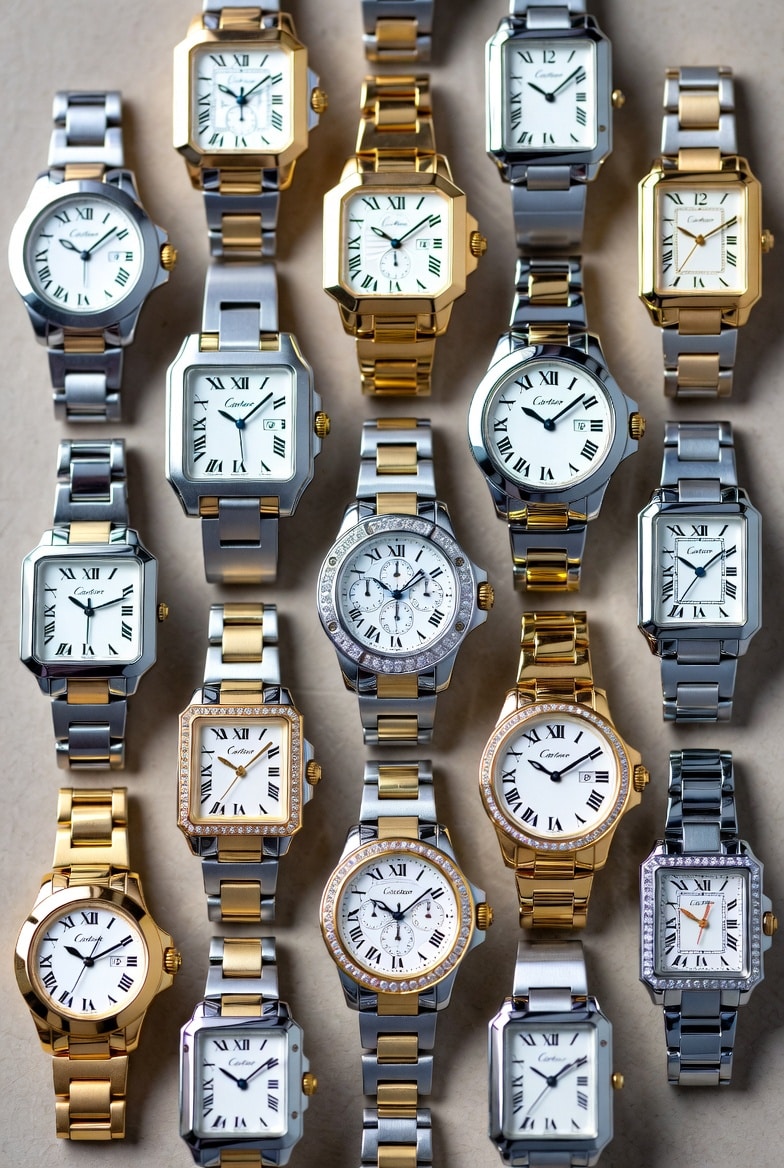
Your budget is arguably the single most critical filter for your first Cartier super clone purchase. It dictates the level of fidelity, the quality of materials, and the sophistication of the movement you can expect. For Cartier replica price points, we’ll segment the market into three realistic tiers for first-time buyers, keeping in mind that these are general guidelines and prices can fluctuate.
Under $350: Entry-Level Choices & Hidden Risks
In this budget range, you’re looking at what some might call “mid-tier” replicas rather than true “super clones.” While outwardly similar to genuine Cartier models, these pieces will likely have noticeable compromises upon closer inspection. Expect to see less refined case finishing, often lacking the sharp edges or subtle curves of the genuine article. Dial printing might be slightly thicker or less crisp, and the crystal might not have the same clarity or anti-reflective properties. Movements in this range are typically basic Chinese automatics or quartz, which, while functional, might not be as reliable or long-lasting as those in higher tiers. For a first-time buyer, this price point carries hidden risks: while seemingly affordable, the compromises in quality can lead to disappointment, and you might find yourself wanting to upgrade very quickly. This isn’t the best value Cartier replica for a truly satisfying experience.
$350-$550: The Super Clone Sweet Spot for Cartier
This is where the magic happens for most Cartier super clone enthusiasts, and it represents the best value Cartier replica for a first purchase. In this sweet spot, you gain access to the reputable factories known for their commitment to external fidelity. You can expect significantly improved case finishing, often with CNC-machined components and meticulous polishing that closely matches genuine pieces. Dial printing will be sharp, precise, and often replicated down to the subtle “secret signature” on certain models. Sapphire crystals with good clarity are standard, and the iconic cabochon on the crown will be well-executed. Movements will typically be reliable Japanese automatics (like the Miyota 9015 or Seiko NH series) or high-quality quartz. While not always a 1:1 visual clone of the movement, these provide excellent timekeeping and durability. This range offers an impressive balance of quality, accuracy, and aesthetic appeal, making it the ideal entry point for a truly satisfying super clone budget guide experience.
$550+: Premium Factories & Niche Models
Venturing above $550 puts you into the realm of the absolute pinnacle of Cartier super clones. Here, you’ll find the most meticulous attention to detail, often from factories that specialize in specific Cartier models and invest heavily in R&D. This tier might include models with custom-decorated movements designed to mimic genuine Cartier calibers, especially for watches with exhibition casebacks. The materials are top-notch, often indistinguishable from genuine. This is also where you might find more niche or complex Cartier models that are challenging to replicate, yet these premium factories manage to do so with remarkable accuracy. While the price might seem high for a replica, it reflects the advanced manufacturing techniques, superior material sourcing, and painstaking efforts to achieve near-perfect fidelity. For those seeking the very best and perhaps a more complex model, this is the territory of high-end Cartier replica options.
The True Cost: Beyond the Price Tag (Shipping, QC, etc.)
First-time buyers often overlook the ancillary costs associated with purchasing a super clone. The listed price from a dealer is rarely the final amount you’ll pay. Factor in shipping costs, which can vary significantly based on your location and the shipping method. There’s also the crucial aspect of Quality Control (QC). Reputable dealers will provide QC pictures and videos before shipping, allowing you to inspect the watch for any flaws. This process is invaluable, but it can sometimes lead to delays or the need for a different watch if issues are found. Payment processing fees, especially for international transactions, can also add a small percentage to the total. Always budget an additional 10-15% beyond the watch’s listed price to cover these often-overlooked expenses, ensuring a smoother and less stressful purchasing experience.
Filter 2: The Cartier Aesthetic – Matching Your Style & Wrist Presence
Cartier’s diverse collections offer something for every taste, from understated elegance to bold statements. Your personal style and how you envision wearing the watch are crucial in narrowing down your choices. This section will help you align your aesthetic preferences with specific Cartier super clone models, highlighting their strengths and common replica nuances.
Classic & Elegant: The Tank (Must & Louis), Ballon Bleu, Panthère
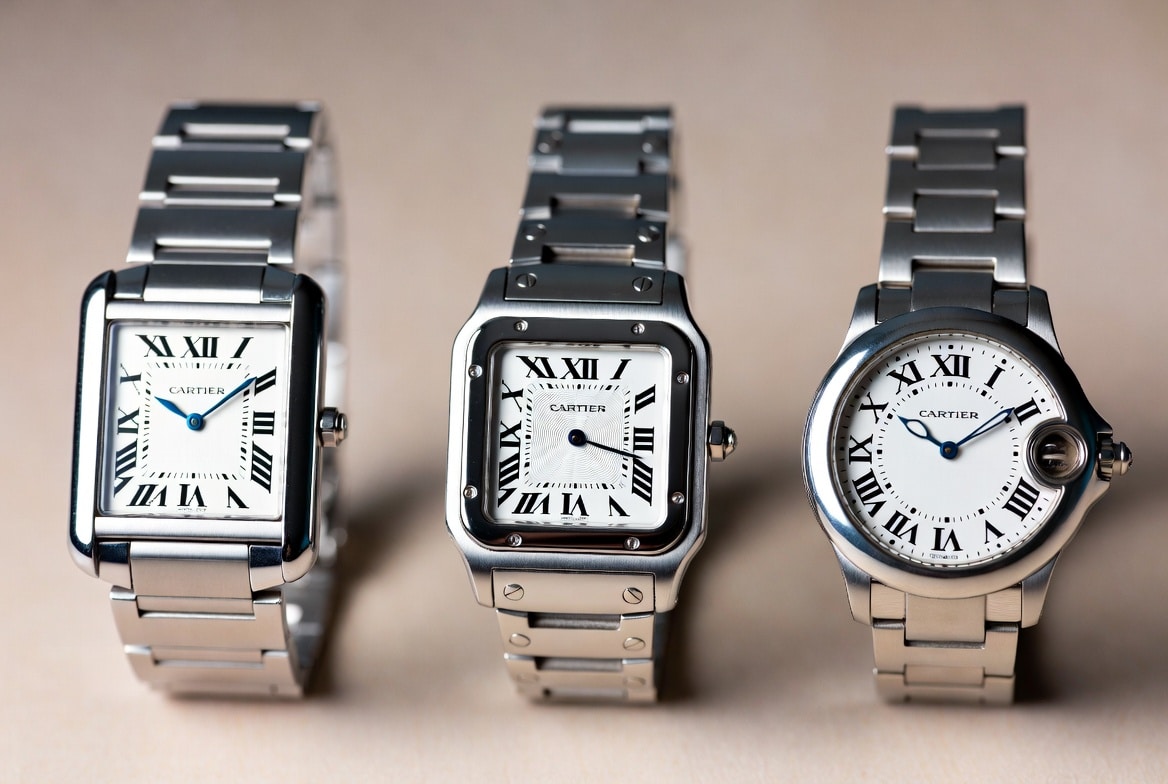
These collections embody Cartier’s legacy of refined sophistication, perfect for formal occasions or adding a touch of timeless class to everyday wear. They are often favored for their sleek profiles and understated luxury. Cartier Tank super clone and Cartier Ballon Bleu replica models are particularly popular in this category.
Tank Super Clone Nuances: Dial Printing and Case Proportions
The Tank, especially the Tank Must and Tank Louis, is a quintessential dress watch. Its rectangular case and Roman numerals are iconic. For a super clone, pay close attention to the dial printing: the sharpness and thickness of the Roman numerals, and the clarity of the “Cartier” and “Swiss Made” text. The “secret signature” (a tiny “Cartier” embedded in one of the Roman numerals, often at VII or X) is a key detail that top-tier replicas, such as those from AF factory for the Tank Must, meticulously reproduce. Case proportions, particularly the straight, clean lines and the seamless integration of the lugs with the strap, are also critical. A good Tank replica should feel slender and perfectly balanced on the wrist, echoing the original’s elegant simplicity. The Tank Must, with its accessible pricing for genuine models, also sees high-fidelity quartz replicas that excel in thinness and reliability.
Ballon Bleu Super Clone: Bezel & Cabochon Challenges
The Ballon Bleu, with its distinctive round-yet-domed case and integrated crown guard, presents unique challenges for replicas. The most critical elements to scrutinize are the polished bezel, which should have a smooth, mirror-like finish without ripples, and the blue cabochon crown. A high-quality super clone will feature a cabochon that is vibrant, translucent, and perfectly set, often made from synthetic spinel. Many lower-tier replicas struggle with a dull or cloudy cabochon. The “fish-eye” distortion effect of the domed sapphire crystal, especially on larger models, should also be present and clear. Factories like AF and V6 are known for their strong Cartier Ballon Bleu replica versions, particularly the 42mm mechanical and 33mm quartz models.
Iconic & Bold: The Santos-Dumont, Santos de Cartier
For those who prefer a watch with a stronger presence and a pioneering spirit, the Santos collections are an excellent choice. These models blend historical significance with a more robust, often sporty, aesthetic. The Cartier Santos super clone is a staple in this category.
Santos Super Clone: Bezel Screws and Bracelet Quality
The Santos de Cartier, with its distinctive square case and visible bezel screws, is a design icon. The screws on the bezel are a critical “tell” for replicas: they should be perfectly aligned, flush with the bezel, and have a polished finish. Any misalignment or rough edges can immediately give away a replica. For the bracelet, look for smooth articulation of the links, precision of the quick-release system (QuickSwitch, if replicated), and the overall comfort on the wrist. Top factories like GF and V6 excel in replicating the Santos de Cartier, often using a reliable Miyota 9015 movement, which is well-suited for the closed caseback of many Santos models. The finish of the brushed and polished surfaces on the case and bracelet should be sharp and distinct.
Santos-Dumont Super Clone: Ultra-Thin Case Considerations
The Santos-Dumont, a more elegant and often thinner iteration of the Santos, prioritizes a dressier aesthetic. For super clones, the challenge lies in replicating its ultra-thin profile. While the Santos de Cartier can tolerate a slightly thicker replica, the Santos-Dumont’s charm is its svelteness. Replicas of the Santos-Dumont, especially those with quartz movements, can achieve remarkable thinness, making them excellent choices for those prioritizing authentic case dimensions. Pay attention to the crispness of the Roman numerals and the blued steel hands, which should have a deep, consistent blue hue. A good Santos Dumont clone will capture the minimalist elegance of the original.
Unique & Distinctive: Calibre de Cartier (If Reputable Reps Exist)
Cartier also offers collections that stand out with more contemporary or distinctive designs. The Calibre de Cartier, with its bolder, more masculine presence and partial open-heart dial on some models, represents a departure from the brand’s more traditional offerings. While less commonly found as high-fidelity super clones compared to the Tank or Santos, a reputable replica of a Calibre de Cartier would need to excel in replicating its robust case construction and, if applicable, the intricate details of its visible movement. However, due to the complexity of replicating a visible in-house movement, truly “super clone” versions of open-caseback or open-heart Calibre models are rare and often come with significant compromises in movement aesthetics or reliability.
The “Under-the-Radar” Choice: Less Common but Highly Authentic Reps
Sometimes, the most satisfying first purchase isn’t the most popular model. Certain Cartier designs, while perhaps not as globally recognized as the Tank or Santos, can be excellent choices for super clones due to their simpler construction or the specific expertise of a factory. For example, the Panthère de Cartier, with its unique bracelet articulation and often quartz movement, can be replicated with surprising accuracy by factories that master its intricate link design. Similarly, some less-demanded models might have a dedicated factory that has perfected their specific nuances. These “under-the-radar” choices can offer a unique blend of high fidelity and distinctiveness, often with fewer common “tells” simply because fewer people are scrutinizing them. Consider your personal style and whether a slightly less ubiquitous, yet impeccably replicated, Cartier model might be a better fit for your first best Cartier replica style.
Filter 3: The Critical Factor of Thickness & Wearability
For many first-time buyers, the dimensions of a replica watch often take a backseat to aesthetics or movement type. But when it comes to Cartier, ignoring thickness is a critical misstep. Cartier’s design language, particularly for its iconic dress watches, is built on a foundation of elegant thinness. While some buyers might be swayed by overrated Cartier features, an overly thick replica doesn’t just feel wrong; it immediately broadcasts its inauthenticity to anyone with a discerning eye, and more importantly, to the wearer.
The difference of even a millimeter or two might seem negligible on paper, but on the wrist, especially under a shirt cuff, it can transform a sleek, understated timepiece into a bulky, awkward presence. This is particularly true for models like the Tank, Panthère, or Santos-Dumont, where slenderness is a core design pillar.
Why Thickness Matters Most for Cartier Replicas
Cartier’s genuine models, especially the dressier lines, are celebrated for their svelte profiles. The original Tank Louis Cartier, for example, defined what a dress watch could be: discreet, elegant, and almost disappearing on the wrist. When a replica attempts to capture this essence but falls short on thickness, the entire illusion breaks down. The watch loses its intended character, feels less refined, and often becomes uncomfortable to wear for extended periods.
The primary reason replicas often struggle with thickness is the movement. Genuine Cartier watches frequently use custom-designed, ultra-thin movements (like the Cal. 076 or specific manual-wind calibers for the Tank Louis) that allow for their slender cases. Replicas, on the other hand, often rely on readily available, thicker off-the-shelf movements (like Miyotas, Seagulls, or even standard quartz modules) that require a beefier case to accommodate them. This compromise is a fundamental trade-off in replica manufacturing.
The Ultra-Thin Challenge: Tank Must, Tank Louis, Santos-Dumont
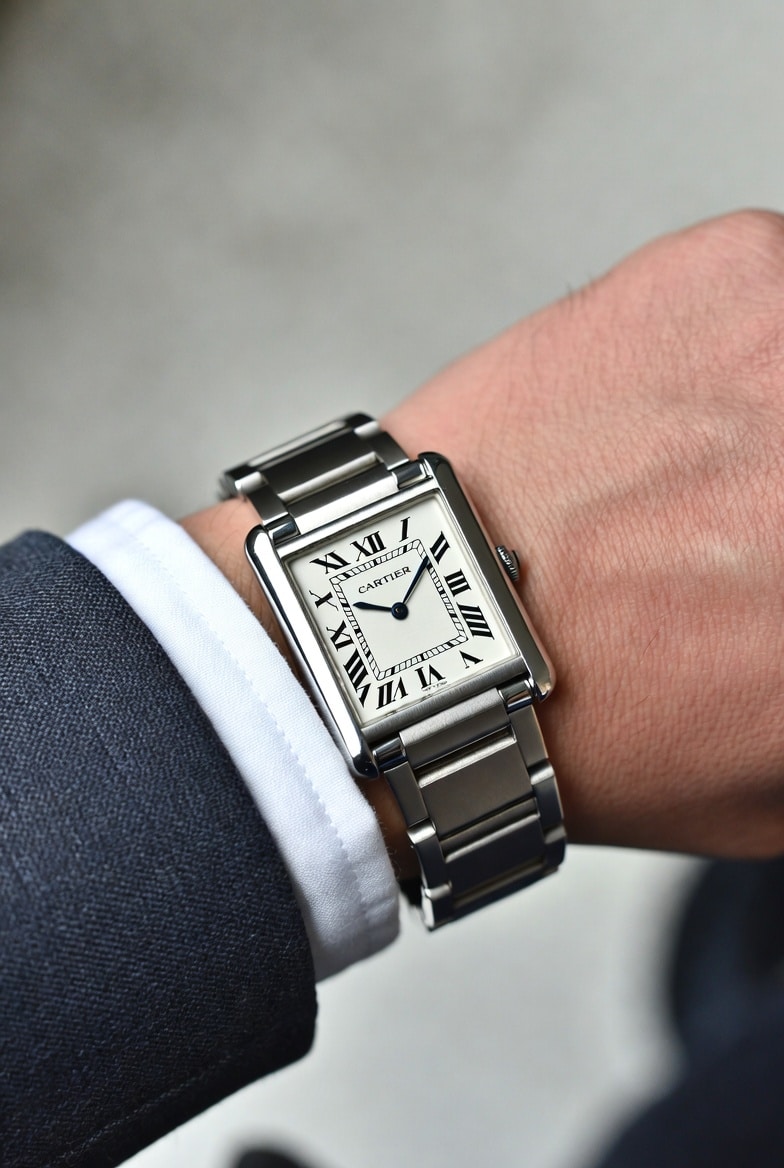
These specific Cartier collections are paragons of thinness, making them the most challenging for replica manufacturers to get right. For a first-time buyer, understanding these nuances is paramount.
Gen vs. Replica Thickness Comparison: Key Models
- Cartier Tank Must: A genuine Tank Must (large quartz model) measures around 6.6mm thick. The best super clones often come in at 7.5mm to 8mm. While this 1-1.5mm difference might seem small, it’s noticeable on such a flat, rectangular watch. For mechanical versions, the difference can be even more pronounced.
- Cartier Tank Louis Cartier: The original icon, often even thinner in its manual-wind iterations, can be around 6.1mm. Replicas of the Tank Louis are less common but would face similar thickness challenges, potentially reaching 7-8mm or more, which significantly alters the wearing experience of such a classic dress piece.
- Cartier Santos-Dumont: The large model of the genuine Santos-Dumont is a remarkably thin 7.3mm. Replica versions, even the better ones, often hover around 8.5mm to 9mm. This difference, again, impacts the elegant, almost weightless feel of the original, making the replica feel more substantial and less refined.
- Cartier Ballon Bleu 33mm: The reference material notes that the K3 factory’s 33mm Ballon Bleu replica measures 9.96mm, which is very close to the genuine’s thickness. This demonstrates that for some models and factories, thickness can be exceptionally well-replicated, offering a strong “safe bet” if thinness is a priority.
When considering one of these models, you must actively inquire about the specific dimensions of the replica you’re looking at. Factory specifications can vary, and what one seller considers “thin” might still be noticeably thicker than the genuine article.
Accepting a Thicker Replica: When Compromise is Okay
Not all Cartier models suffer equally from thickness discrepancies, nor do all wearing scenarios demand absolute fidelity to the original’s slender profile. For some sportier or larger Cartier models, a slight increase in thickness might be less of a deal-breaker:
- Cartier Santos de Cartier: While the Santos is still an elegant watch, its more robust case and integrated bracelet mean that an extra millimeter or two in thickness (e.g., a genuine Large Santos is 9.08mm thick; a replica might be 10-11mm) is often less jarring than on a Tank. Its inherent wrist presence can absorb the difference more gracefully.
- Cartier Calibre de Cartier: This is a more modern, sportier design that naturally has a bit more bulk. If reputable replicas exist, their thickness variations might be less noticeable or acceptable to the wearer, as the expectation for ultra-thinness isn’t as high.
The key is to set your expectations realistically. If you’re buying a replica of a classic dress watch where thinness is paramount, be prepared to either pay a premium for a truly exceptional (and rare) thin replica or accept a compromise. For watches that are inherently thicker or more robust in their genuine form, the replica thickness might be a less critical factor.
The Feel on the Wrist: Beyond Just Millimeters
Thickness isn’t just about the number on a spec sheet; it’s about the overall “feel” and wearability. A watch’s perceived thickness can also be influenced by its lug design, case shape, and weight distribution. A replica that’s merely thicker but also poorly balanced can feel top-heavy or uncomfortable, even if the millimeter difference isn’t extreme.
Consider how the watch will integrate into your daily life. Will it be worn with formal attire, where it needs to slide effortlessly under a cuff? Or is it a weekend casual piece? Your personal sensitivity to watch dimensions and your wearing habits should heavily influence how much weight you give to this “thickness filter.” For many, discovering an otherwise perfect replica feels wrong simply because it lacks the delicate, elegant profile that defines Cartier.
Filter 4: Movement Priorities – Visual Fidelity vs. Mechanical Expectation
Beneath the perfectly replicated dials and cases of Cartier super clones lies a crucial differentiator: the movement. For a first-time buyer, understanding the various types of movements and their implications is essential for managing expectations regarding authenticity, reliability, and ultimately, satisfaction. This isn’t just about whether it tells time; it’s about how it tells time, what it looks like (if visible), and what kind of ownership experience it offers.
Quartz Movements: The “Set and Forget” Option for Dress Watches
Quartz movements are powered by a battery and regulated by a vibrating quartz crystal, offering exceptional accuracy and minimal maintenance. For many Cartier replicas, especially the thinner, more elegant models, a quartz movement is often the most pragmatic and, surprisingly, the most “authentic” choice for a super clone.
When a Quartz Super Clone is the Best Choice (e.g., Tank Must)
Consider models like the Cartier Tank Must or smaller Panthère watches. Many genuine versions of these watches are sold with quartz movements because it allows for an incredibly thin case profile – a signature Cartier aesthetic. A replica with a quartz movement can often achieve a thickness that’s almost identical to the genuine, something mechanical movements struggle with. For instance, the reference material mentions that some 33mm quartz Ballon Bleu replicas use Swiss Ronda quartz movements, the same brand found in genuine Cartier quartz watches.
The advantages are clear: superior accuracy, no need for winding, and significantly lower cost. The primary “trade-off” is the lack of a sweeping second hand (if present) and the absence of mechanical artistry. But for a closed-caseback dress watch worn for its style and discretion, a high-quality quartz replica offers remarkable fidelity and convenience, minimizing the “tells” that a thicker, incorrect mechanical movement might introduce.
Standard Automatic Movements: Miyota/Seiko & Closed Casebacks
Many Cartier super clones, particularly the larger and more masculine models, utilize standard automatic mechanical movements. These are typically reliable workhorse movements from manufacturers like Miyota (e.g., Miyota 9015) or Seagull (e.g., Seagull ST2130, a clone of the ETA 2824).
The 9015/2824 Clones: When Visual Decoration Matters
These movements offer the satisfying sweep of a mechanical second hand and the romance of traditional watchmaking. For watches with closed casebacks, such as the 42mm Ballon Bleu or the Santos de Cartier, these movements are an excellent choice. The “reference report” confirms that 42mm Ballon Bleu super clones from AF and V6 factories often use the Seagull 2824, and the large Santos de Cartier often uses the Miyota 9015. Since the movement isn’t visible, its exact appearance is irrelevant; what matters is its reliability and timekeeping.
Some factories go a step further, decorating these standard movements to mimic the appearance of genuine Cartier calibers. This is common for watches with display casebacks where the movement is visible. However, it’s crucial to understand that a decorated Miyota 9015, while aesthetically improved, is still fundamentally a Miyota 9015, not a genuine Cartier movement.
True “Clone” Movements: For Open Caseback Models (e.g., Santos)
A “true clone” movement in the replica world refers to a movement specifically designed to visually replicate a genuine caliber, often down to the bridge shapes, rotor design, and engraving. This is typically found in watches with exhibition casebacks, where the movement is meant to be seen.
For Cartier, examples might include a clone of the Cal. 1847 MC or Cal. 1904-PS MC, which are Cartier’s in-house automatic movements. The K3 factory’s “076 clone” movement for the 33mm/36mm Ballon Bleu, which offers a genuine one-click date setting and 48-hour power reserve, is a good example of an attempt at a more authentic mechanical experience.
The Limitations of Clone Movements: Reliability & Servicing
While visually impressive, clone movements come with their own set of considerations. They are often more complex to manufacture and can sometimes be less reliable than their simpler Miyota or Seagull counterparts. Quality control can be inconsistent, and finding parts or watchmakers willing to service these specialized clone movements can be challenging. The “reference report” highlights that genuine Cartier movements are proprietary and not available on the market, meaning all replica movements are alternatives. While the Seagull 2824 is robust for normal wear, extreme conditions or prolonged use might reveal its limitations compared to a genuine Swiss movement.
Understanding Power Reserve & Accuracy Expectations
Regardless of the movement type, it’s important to set realistic expectations for power reserve and accuracy. A standard automatic movement in a super clone will typically have a power reserve of 38-48 hours. Accuracy, while often good, won’t match COSC-certified chronometer standards. Expect daily deviations of +/- 5-15 seconds for most automatics. Quartz movements will be far more accurate, often within a few seconds per month.
Prioritize your needs: If visual fidelity of the movement through an open caseback is paramount, you’ll need a good clone movement and should accept potential compromises on long-term reliability or servicing ease. If you simply want a reliable mechanical watch that looks perfect from the outside, a closed-caseback model with a robust Miyota or Seagull is an excellent choice. If ultimate thinness and hassle-free operation are your goals, a well-made quartz super clone is often the smartest move for a first-time buyer.
Your First Purchase Mindset: Safe Bets vs. Passion Picks
Entering the Cartier super clone market can feel like navigating a minefield of choices. For a first-time buyer, understanding the nuances of a super clone buying guide isn’t just about the watch itself, but about establishing confidence and setting the stage for future collecting. Before you commit, it’s crucial to assess your own risk tolerance and core motivation: are you looking for a “safe bet” that minimizes potential pitfalls, or are you ready to chase a “passion pick” that might come with its own set of challenges?
The “Safe Bet” First Super Clone: Minimizing Risk & Maximizing Confidence
A “safe bet” first super clone is a model that has been perfected by replica factories over time, boasts high external fidelity, and uses reliable, commonly available movements. These are the watches that are least likely to disappoint a novice buyer, offering maximum satisfaction with minimal headache. The goal here is a smooth, positive entry into the replica world.
Characteristics of a Safe First Cartier Replica
- High Fidelity & Few “Tells”: These are models where replica factories have achieved near-perfect external replication. Critical details like dial printing, case finishing, crystal clarity, and cabochon quality are consistently excellent. The “reference report” highlights the 42mm Ballon Bleu (closed caseback) and some 33mm Ballon Bleu (quartz/076 clone) as exceptionally high-fidelity options.
- Closed Caseback: This is a major advantage. Since genuine Cartier movements are proprietary and not replicated 1:1, a solid caseback hides any movement discrepancies, making it much harder to distinguish from the genuine article. Models like the 42mm Ballon Bleu and the large Santos de Cartier often come with closed casebacks.
- Reliable Movements: Quartz movements (for thin models) or robust, widely used automatics like the Miyota 9015 or Seagull ST2130 (for closed-caseback automatics) ensure good timekeeping and easier servicing if needed.
- Common & Well-Documented: These models have been reviewed extensively, meaning you can easily find information on their strengths, weaknesses, and which factories produce the best versions.
- Steel Construction: As noted in the “reference report,” steel models are the safest choice. Gold plating or two-tone designs are prone to color inaccuracies and fading over time, which can quickly expose a replica.
Examples of “safe bet” Cartier super clones include the Cartier Tank Must (quartz versions for ultimate thinness), the 42mm Ballon Bleu (steel, closed caseback), and the medium/large Santos de Cartier (steel, closed caseback). These models offer a high degree of “out-of-the-box” satisfaction for a first-time buyer.
The “Passion Pick” First Super Clone: Accepting Imperfection for Desire
A “passion pick” is a model you deeply desire, perhaps a unique design, a specific complication, or a limited edition, even if its replica version might have more noticeable flaws or be harder to perfect. This approach prioritizes personal aesthetic preference over absolute fidelity or risk aversion.
When to Take a Calculated Risk for a Dream Watch
Choosing a passion pick for your first replica means you’re willing to accept certain compromises. This might include:
- Open Casebacks with Clone Movements: If you love the visual mechanics of an open caseback, you might opt for a Santos de Cartier with a clone movement. However, be aware that while visually similar, these movements may not match the reliability or serviceability of a genuine Cartier caliber.
- More Complex Designs: Models with intricate dials, specific complications (like a moon phase or power reserve indicator), or unique case shapes often present greater replication challenges. The “tells” might be more apparent upon close inspection.
- Gold or Two-Tone Models: If a solid gold Tank Louis or a two-tone Panthère is your dream, you’ll need to accept the inherent risks of plating/color matching. While “wrapped gold” options offer better durability, they still carry a higher risk of being exposed compared to a steel version.
- Less Common Models: Sometimes, a less popular genuine Cartier model might have a surprisingly good replica, but the information and community support might be scarcer.
Taking a calculated risk for a passion pick is entirely valid, especially if that specific watch truly speaks to you. However, for a first-timer, it requires more thorough research, a higher tolerance for potential imperfections, and a willingness to understand the specific trade-offs involved. It’s about accepting that “perfection” might be unattainable for that specific model, but the joy of wearing your desired style outweighs the minor flaws.
The Long-Term Perspective: Resale Value & Future Purchases
Your first super clone purchase can significantly influence your future replica journey. A positive experience with a “safe bet” often builds confidence, allowing you to explore more adventurous “passion picks” later on. Conversely, a disappointing first purchase due to overlooked flaws in a “passion pick” can lead to frustration and disengagement.
While “resale value” isn’t a primary consideration for replicas in the same way it is for genuine watches, the desirability and ease of moving a well-replicated, popular model (a “safe bet”) will always be higher than a more problematic “passion pick.” Consider if this first purchase is a stepping stone or an end in itself. If it’s a stepping stone, a safe bet might be the wiser initial move, allowing you to learn the ropes and refine your preferences before investing in a more challenging replica.
The Decision Map in Action: Recommended Paths for First-Time Buyers
Having navigated the critical filters of budget, style, thickness, movement, and your personal buying mindset, it’s time to synthesize these choices into concrete, actionable recommendations. This section serves as your decision map, guiding you towards specific Cartier super clone models and, where appropriate, the factories known for their best versions. Each path is tailored to a distinct buyer profile, explaining precisely why these models align with your cumulative priorities.
Path 1: The Pragmatic & Discreet Buyer (Budget-Friendly, Classic Style)
You prioritize a timeless, elegant aesthetic that’s easy on the wallet, demands minimal fuss, and offers exceptional discretion. Thickness is a key concern, and a “set and forget” experience is highly valued.
-
Recommended: Tank Must (Quartz)
- Why it fits: The Tank Must, especially with a quartz movement, offers superb fidelity for its price point, typically ranging from $300-$400 USD. Factories like AF Factory or BV Factory are known for their strong renditions. The quartz movement ensures near-perfect thickness (often within 0.5-1mm of the genuine’s ultra-thin profile, around 6.6mm-7.5mm total), hassle-free operation, and excellent reliability. Its classic, understated design and closed caseback mean fewer “tells” and a highly discreet presence on the wrist.
- Trade-off: While not a mechanical movement, for a thin dress watch, the quartz caliber is often a benefit, contributing to its slimness and “grab-and-go” convenience.
-
Recommended: Ballon Bleu (Small, Closed Caseback)
- Why it fits: For those preferring a rounder, yet equally elegant, silhouette, the smaller 33mm Ballon Bleu with a closed caseback from AF Factory or V6 Factory is an excellent choice ($350-$450 USD). The smaller size and closed caseback effectively conceal the simple automatic (often NH05A-based) or quartz movement. This model’s unique “round but not round” shape is iconic yet understated, making it versatile for various occasions.
- Trade-off: Pay close attention to QC photos for the quality of the blue cabochon and bezel finishing, as these are critical details. Some automatic versions might have a “ghost date” position when setting the time, a minor but present quirk.
Path 2: The Iconic & Balanced Buyer (Mid-Range Budget, Versatile Style)
You seek an iconic Cartier piece that strikes a balance between versatile style and solid build quality. You’re willing to invest a bit more for a mechanical movement and appreciate a watch that transitions seamlessly from casual to semi-formal settings.
-
Recommended: Santos de Cartier (Medium, Closed Caseback)
- Why it fits: The 35.1mm medium-sized Santos de Cartier is highly versatile and fits a wide range of wrists. GF Factory and 3K Factory are leaders here, known for their exceptional case finishing, accurate thickness (around 8.8mm-9.0mm, very close to genuine), and the excellent QuickSwitch bracelet system ($400-$500 USD). The closed caseback effectively conceals the reliable Miyota 9015 automatic movement, ensuring robust performance.
- Trade-off: The Miyota 9015’s rotor can be audibly noisy or have a slight “wobble,” though this is a minor point for a closed-caseback watch and generally not noticeable during wear.
-
Recommended: Panthère (Medium, Quartz)
- Why it fits: For a distinctive and elegant choice, the Panthère offers a unique bracelet design and a refined aesthetic. Many reputable sources offer excellent quartz versions, ensuring perfect thinness and reliability ($300-$450 USD). The intricate bracelet is a key feature, and good replicas articulate beautifully on the wrist, making it a comfortable and stylish statement piece.
- Trade-off: While highly desirable, the Panthère is less common in the super clone market than the Tank or Santos, so finding a top-tier example might require more diligent searching and careful QC, especially regarding bracelet articulation and finishing.
Path 3: The Aesthete & Detail-Oriented Buyer (Higher Budget, Specific Look)
You have a discerning eye for specific details and prioritize aesthetic fidelity above all else. You’re prepared to invest more for a replica that perfectly captures the essence of a particular Cartier design, even if it means opting for a manual-wind movement or a less common model.
-
Recommended: Santos-Dumont (Large, Quartz/Manual)
- Why it fits: The Santos-Dumont is a masterclass in elegant thinness, a characteristic that demands precise replication. The best quartz versions, from factories like F1 Factory (if available) or others specializing in thin models, achieve near-genuine thickness (e.g., 7.3mm for gen, good reps aim for 7.5mm-8.5mm), offering incredible wearability and an understated elegance ($350-$550 USD). Manual-wind options also exist, appealing to those who appreciate the tactile experience of winding a watch.
- Trade-off: While manual-wind movements align with its vintage appeal, they might not be as convenient for daily wear as an automatic. Achieving perfect thinness with an automatic movement in this model is a significant challenge for replicas.
-
Recommended: Tank Louis (Manual)
- Why it fits: The Tank Louis is the quintessential Tank, often produced in precious metals by Cartier. A steel replica with a well-executed manual-wind movement (such as a decorated ETA 2824 clone or similar) can offer excellent proportions and a truly classic, period-correct feel ($400-$600 USD). The manual winding experience enhances its traditional charm, making it a favorite among purists.
- Trade-off: This is a higher price point for a steel replica, and the manual winding might not appeal to all buyers. The best fidelity is typically found in steel versions, as replicating the precise color and durability of genuine gold is extremely difficult for replicas.
Path 4: The Mechanical Enthusiast (Prioritizes Movement, Open Caseback)
You are deeply drawn to the intricate mechanics of a watch and prioritize an automatic movement, perhaps even desiring a visible movement through an open caseback. You understand and accept the inherent challenges of replicating complex Cartier calibers.
-
Recommended: Santos de Cartier (Large, Open Caseback, Clone Movement)
- Why it fits: The larger 39.8mm Santos de Cartier can accommodate a decorated clone movement (e.g., a Miyota 9015 or Sea-Gull 2824 base, meticulously decorated to resemble a Cartier in-house caliber) behind a display caseback. Factories like GF Factory or 3K Factory excel in this area ($450-$600+ USD). This allows you to appreciate the “engine” of the watch, satisfying a core mechanical curiosity.
- Trade-off: While beautifully decorated, these movements are not 1:1 clones of Cartier’s proprietary in-house calibers (like the 1847 MC or 1904-PS MC). Visible differences will be apparent to a trained eye, and long-term reliability and servicing can be more complex than with simpler, more common movements. This is truly a “passion pick” where the visual appeal of a mechanical movement outweighs absolute authenticity of the caliber itself.
What to Do Next: From Recommendation to Purchase
With a clearer path in mind, your next crucial step is to engage with a reputable dealer. Prioritize clear communication, request detailed Quality Control (QC) pictures and videos of the exact watch you’ll receive, and don’t hesitate to ask specific questions about the factory, movement, and dimensions. Avoid impulse purchases; a well-informed decision is your best defense against disappointment. Verify all specific factory and model details against your chosen path before committing to a purchase.
Post-Purchase Confidence: What to Expect and How to Enjoy Your First Cartier Super Clone
Congratulations on making an informed decision about your first Cartier super clone! The journey doesn’t end at purchase; understanding the ownership experience and managing expectations are key to long-term satisfaction. Here’s what to expect and how to truly enjoy your new timepiece.
The Reality of Ownership: Accepting Minor Imperfections
It’s crucial to remember that no replica, no matter how “super clone” it claims to be, is 100% perfect. Genuine watches, even at vastly higher price points, can have microscopic imperfections. For super clones, minor flaws are common and usually only visible under extreme magnification or specific lighting conditions. These might include a tiny speck of dust on the dial, a minuscule variation in the cabochon’s color, or a barely perceptible misalignment of a bezel screw. The goal of a super clone is to look excellent on the wrist in normal viewing conditions, not to pass a jeweler’s loupe inspection with zero discrepancies. Embrace these minor quirks as part of the replica experience; they typically don’t detract from the overall aesthetic or wearing pleasure.
Care & Maintenance for Your Super Clone Cartier
Proper care is essential to prolonging the life and appearance of your super clone. Treat it like any fine watch:
- Cleaning: Regularly wipe your watch down with a soft, lint-free cloth to remove fingerprints and smudges. For deeper cleaning, a slightly damp cloth can be used on the case and bracelet, followed by thorough drying.
- Avoid Extremes: Protect your watch from extreme temperatures, direct sunlight for prolonged periods, and strong magnetic fields, which can affect timekeeping.
- Water Resistance: Crucially, assume your super clone is NOT waterproof, regardless of any claims. While some may offer decent water resistance for splashes, avoid swimming, showering, or submerging it. Water damage is a common and costly issue for replicas.
- Winding (for automatics): If you don’t wear your automatic watch daily, you may need to manually wind it (typically 20-30 turns of the crown) or use a watch winder.
- Avoid Opening: Unless you are a skilled watchmaker, do not attempt to open the caseback. This can introduce dust, damage the movement, and compromise any water resistance.
Troubleshooting Common Issues & When to Seek Help
Most super clones perform admirably, but occasional issues can arise. Understanding what’s normal and when to seek assistance is key:
- Timekeeping: Expect your automatic super clone to keep time within +/- 10-20 seconds per day. Few replicas are regulated to COSC standards, so minor daily variations are normal. Quartz movements will be far more accurate.
- Rotor Noise: Movements like the Miyota 9015 are known for a slightly audible rotor noise or “wobble.” This is characteristic of the movement, not a defect.
- Power Reserve: The stated power reserve (e.g., 40 hours) might be slightly less than advertised. This is common.
- When to Contact Your Dealer: You should reach out to your dealer if the watch completely stops, exhibits significant timekeeping issues (e.g., gaining/losing more than a minute a day), or arrives with visible damage or non-functioning complications. A reputable dealer will assist with troubleshooting or warranty claims.
The Joy of Wearing: Confidence, Not Concealment
Ultimately, the purpose of acquiring a Cartier super clone is to enjoy the beauty and design of an iconic timepiece. Wear your watch with confidence, appreciating the craftsmanship and design that drew you to it. The satisfaction comes from your personal connection to the piece and the value it brings to your collection, not from any pretense. Your well-researched decision should empower you to wear it proudly, knowing you’ve made an informed choice that aligns with your priorities and budget. Your first super clone is a personal statement, a celebration of design, and a testament to your discerning taste.
The journey into the world of Cartier super clones, while initially daunting, can be incredibly rewarding when approached with a structured mindset. You’ve navigated the intricate landscape of budget, aesthetic, wearability, movement, and personal risk tolerance. The “best” first Cartier super clone isn’t a singular, universally agreed-upon model; rather, it is the one that aligns most precisely with your* individual priorities and expectations.
To finalize your decision, consider this ultimate filter:
- If you prioritized discretion, ultra-thinness, and a “set-and-forget” experience, your path is clear to a Tank Must (Quartz) from AF Factory or BV Factory.
- If you sought a versatile icon with excellent overall fidelity and a reliable mechanical heart, the Santos de Cartier (Medium, Closed Caseback) from GF Factory or 3K Factory is your ideal next step.
- If your focus was on exquisite detail and a specific, elegant aesthetic, valuing form over an automatic movement, then a thin Santos-Dumont (Large, Quartz/Manual) or a classic Tank Louis (Manual) from a specialized factory like K11 is your destination.
- And if the allure of a visible mechanical movement captivated you, accepting the nuances of clone calibers, the Santos de Cartier (Large, Open Caseback, Clone Movement) from GF Factory or 3K Factory awaits.
You are no longer a beginner overwhelmed by choice, but an informed and decisive buyer ready to make your first Cartier super clone purchase. Your next step is clear: armed with this knowledge, confidently engage with a trusted dealer, request those crucial QC photos, and prepare to welcome a meticulously chosen timepiece into your collection. This isn’t just a purchase; it’s the beginning of an appreciation for horological design, made accessible on your terms.