
A reader-first outline written for search intent: “Should I care about regulated vs free-sprung movements when choosing a watch or a replica Rolex?”
The Difference Between Regulated and Free-Sprung Movements — And Why It Matters More Than You Think
Most people don’t start by asking about regulated movement meaning or free-sprung balance. They start with something much simpler: their watch is no longer on time. One morning you check your phone, glance at your wrist, and notice the gap. Maybe it’s a favorite daily piece, maybe it’s a replica Rolex with a super clone movement you were proud to finally pick up. It used to line up perfectly. Now it’s a few seconds fast. A week later, it’s more than that.
So you search “why is my mechanical watch running fast” or “replica Rolex accuracy problem” and fall into a maze of diagrams, balance wheels, and terms that feel written for watchmakers, not owners. Pages talk about tolerances and test positions but rarely answer the real question in your head: What is happening inside my watch, and do I need to worry?
This is where the difference between regulated and free-sprung movements stops being abstract. It’s not just about how the balance wheel looks in a photo. It’s about how often you’ll see your watch drift, how predictable that drift feels, how easy it is to correct, and what long-term ownership will cost you in time and attention. Once you connect these structures to your daily routine, the topic becomes less like a technical manual and more like a practical choice in how you want your watch to behave.
Why Watch Owners Keep Asking About These Two Movements
When a watch is new, most people don’t think about its movement at all. It just works. You set the time once, enjoy the weight on your wrist, and trust it to follow your day. The first doubts usually arrive quietly. Maybe after a long workweek you notice your super clone movement is a few seconds ahead of your phone. Maybe you see your replica Rolex losing a bit of time every night on the nightstand. At first it feels small, but it nags at you. Mechanical watches are supposed to be precise. Why is yours drifting?
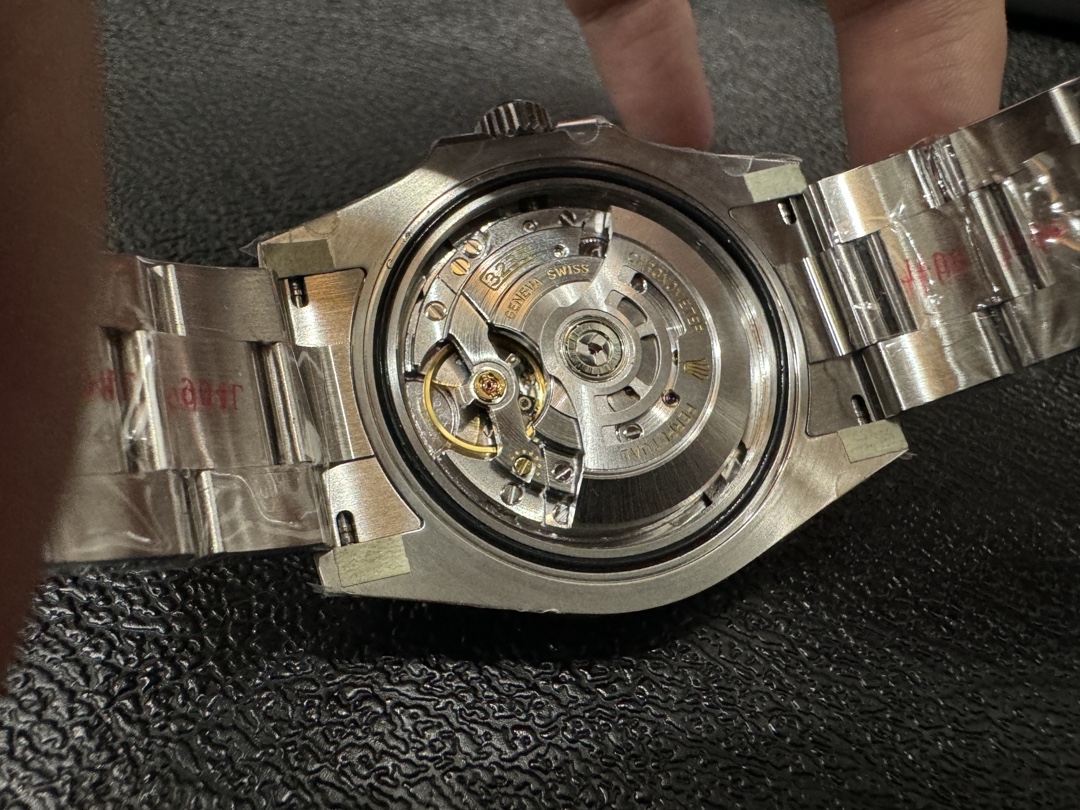
You start searching for answers and suddenly you’re faced with two phrases over and over: regulated movement and free-sprung balance. The problem is, most explanations assume you already speak the language of watchmaking. They talk about amplitude, inertia, and adjustment positions, and leave you with more questions than you had at the start. What you really want isn’t a lecture. You want to understand what’s inside your watch in plain terms, and how that choice affects your day-to-day experience.
That’s why these two movement types matter so much. They describe not only how the watch was built, but how it will behave when you rush to catch a train, type on a keyboard all day, or toss it onto the nightstand at midnight. The labels “regulated” and “free-sprung” sound technical. In reality, they are shortcuts for bigger ideas: how stable the watch is, how often the accuracy will change, and whether you’ll be able to do anything about it yourself.
The Moment Accuracy Problems Push Owners to Start Researching
For many owners, the turning point is very specific. You wake up, grab your phone, and check the time before heading out. Then you look at your watch, almost out of habit. The difference might be only five or ten seconds, but once you see it, you can’t unsee it. If it’s a mechanical watch you care about, that gap starts to feel personal. You may think, Is something wrong? Did I bump it? Is this normal for a mechanical watch?
Over the next few days, you start tracking it without even trying. You glance at the time more often. You wonder whether your daily time deviation is getting worse. This small mismatch between phone and wrist is how most people discover that “accuracy” in a mechanical world is more of a range than a promise. It’s also what sends them online, searching for terms like mechanical watch timing issue, trying to figure out if they are dealing with a problem or just meeting the limits of the technology.
That curiosity is healthy. It’s the first step from simply owning a watch to understanding it. But it also sets you up for the next challenge: sorting through explanations that feel like they were written for someone else.
Why Online Explanations Often Make Things More Confusing
Once you start reading, you quickly see the pattern. Articles explain how balance wheels oscillate, how escapements lock and unlock, how lubricants age. Many dive straight into COSC standards or lab test results that sound impressive but don’t answer what you actually feel when you wear the watch. You were looking for a clear watch movement explanation. What you found feels closer to a technical training manual.
It doesn’t help that a lot of guides talk about regulated movements and free-sprung balances as if one is simply “better,” without saying for whom or in what circumstances. You read phrases like “improved stability in multiple positions” or “superior chronometric performance,” yet no one explains what that means when your watch spends most of its time on your wrist, on your desk, or on your nightstand.
This article aims to be a simplified watch regulation guide that respects your time and your perspective. The goal is not to turn you into a watchmaker. It’s to connect the way these systems are built with the way they actually behave in your life.
What Owners Actually Want to Know (Not What Manuals Tell Them)
When you strip away all the technical language, the core questions watch owners keep coming back to are simple and very human:
Will my watch stay reasonably stable if I wear it every day?
If it starts to drift, is it going to keep getting worse?
Can I fix a small timing issue myself, or do I need to find a watchmaker?
Most manuals don’t talk about practical watch accuracy in those terms. They list tolerances and service intervals. They rarely tell you what to expect when you put the watch on in the morning, bump it against a desk, spend an hour at the gym, then throw it on the nightstand before bed. The purpose of this comparison is to answer those user-focused questions. A regulated movement and a free-sprung movement behave differently when faced with the same routine. Understanding that difference gives you more than a technical spec sheet. It helps you make a user-focused movement comparison that matches how you actually live with your watch.
What a Regulated Movement Really Looks Like in Daily Wear
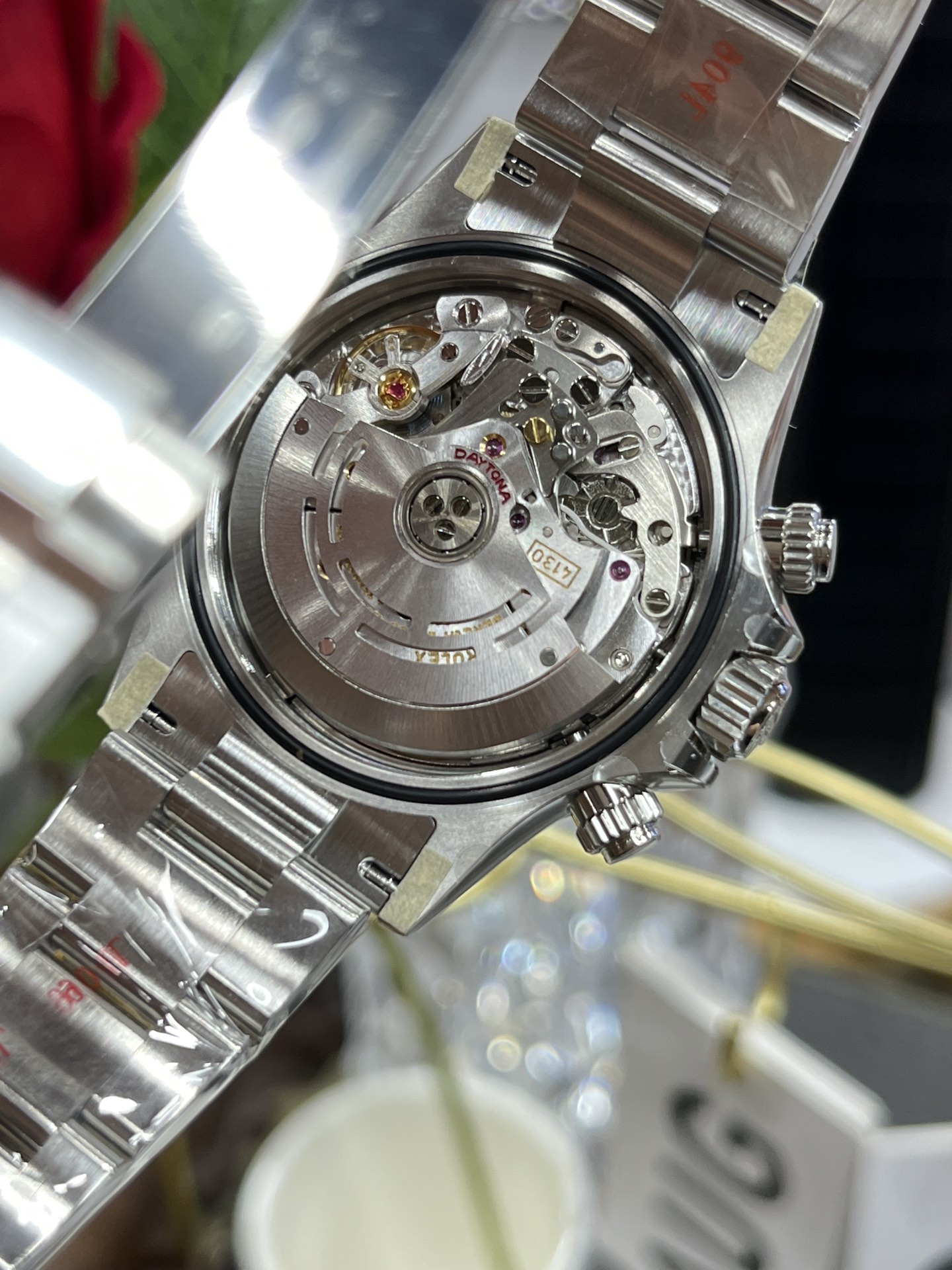
Open the back of many everyday mechanical watches—including a lot of replica Rolex 2824 builds or super clone 3135 regulated models—and you’ll see something that looks surprisingly simple. Near the balance wheel there are two small metal “ears” standing over the hairspring. They sit close to the thin spiral and frame part of its length. That small assembly is the heart of a regulated movement watch.
Those ears are part of the regulator arm. When a watchmaker—or sometimes a brave owner—slides the arm slightly in one direction, it shortens the active length of the hairspring. Slide it the other way, and it lengthens it. Shorter means the spring “breathes” faster and the watch runs quicker. Longer means slower breathing and slower timekeeping. This is the basic idea behind how to adjust watch accuracy in a regulated system, and it’s one reason these designs have been used for decades. They are direct, understandable, and responsive.
In daily wear, that responsiveness is both a strength and a weakness. Small changes in how the watch is handled, stored, or worn can nudge the system. The same design that lets someone correct a small timing error also means the movement is more sensitive to the little knocks and shifts that come with real life.
How the Regulator Arm Changes the Watch’s Timing
The easiest way to picture the regulator arm is to imagine putting your fingers partway down a spring. If you hold the spring near the end and flick it, it oscillates slowly. If you pinch it closer to the middle, the part that can move is shorter, so it vibrates faster. The regulator does something similar to the hairspring, but on a tiny scale.
When the arm moves inward, it effectively clamps the hairspring at a slightly different point. The balance wheel now works with a shorter active length, which increases its speed and makes the watch gain time. Move the arm outward and the active length increases, slowing down the oscillation. This is why a small adjustment can shave or add several seconds per day. The mechanism is simple enough that many owners feel comfortable trying it, especially on a replica Rolex 2824 or a regulated super clone 3135 where parts are easier to source.
But this sensitivity also means the movement is open to influence. A hard bump can alter where the hairspring sits between the regulator pins. Temperature changes can affect how the spring and metal parts behave. Even strap tightness can subtly change how the watch rests and how gravity pulls on the balance in different positions. Timing sensitivity is built into the design.
Why Many Owners Try Home Adjustments (And What Usually Goes Wrong)
If you spend any time in watch forums, you’ll see the pattern repeat. Someone posts timegrapher screenshots or daily readings, showing a mechanical watch running +10 or +15 seconds a day. They ask if they can adjust it themselves. The idea of improving performance at home is appealing. It feels empowering. Many regulated movement owners decide to try.
The first step often seems simple: remove the caseback, find the regulator, and nudge it with a small tool. Sometimes it works. The rate moves closer to zero, and the owner feels satisfied. But other times, especially when the hands are less steady or the tool slips, the hairspring gets touched directly. A slight twist or a displaced coil can turn a manageable deviation into a serious problem. The watch might start running wildly fast or slow. In the worst cases, it stops.
This doesn’t mean you should never adjust a regulated watch at home. It means you should respect the risk that comes with that choice. For some people, the chance to adjust a watch at home is part of the appeal. For others, the potential for hairspring damage makes professional adjustment the better option. Knowing that trade-off is key to understanding regulated movement risks.
Environmental Factors That Influence Regulated Movements
Even if you never touch the regulator, the world around you will. Mechanical watches live in changing conditions. A cold morning commute, a hot office, a quick workout, or hours at a keyboard all have small but real effects on the movement. In a regulated design, those effects can be easier to feel.
Temperature shifts change how the hairspring behaves and how lubricants flow. Keyboard vibrations and desk bumps nudge the balance around its axis and may alter how the spring interacts with the regulator pins. Wearing the watch loosely versus tightly changes which positions it spends the most time in during the day. Over days and weeks, these influences can create patterns in mechanical watch stability issues that owners start to notice—running slightly faster on active days, slower when the watch is left dial-up overnight.
Positional variance and temperature effect on accuracy are not flaws in the design; they are part of how regulated systems respond to real life. Some owners find that “alive” feeling charming. Others find it frustrating. Which camp you fall into often decides how you feel about this type of movement long term.
What Makes a Free-Sprung Movement Feel More “Serious”
If you open a movement with a free-sprung balance—common in higher-end designs and many replica Rolex 3235 super clone builds—the view is different. The area around the balance wheel looks cleaner. There is no regulator arm crossing over the hairspring, no small ears framing its length. Instead, you see a balance with tiny screws or weights along its rim. The hairspring sits in the center, free from any external clamp controlling its effective length.
This absence of a regulator is not just a styling choice. It changes how the movement reacts to everyday life. Because the hairspring length stays fixed, its breathing rhythm isn’t altered by bumps, shifts, or minor shocks in the same way. The structure leans toward calm behavior rather than quick adjustment. Many owners describe a good free-sprung balance Rolex style movement as feeling “quietly competent” on the wrist. It doesn’t demand attention. It just keeps going.
In daily wear, that can be a major advantage. Where a regulated movement might show noticeable changes in rate after a week of busy commuting and gym sessions, a well-executed free-sprung system tends to hold its line better. Accuracy and stability in a free-sprung watch don’t come from one dramatic feature. They come from the whole setup being less exposed to small disturbances.
Why the Clean Layout Without a Regulator Matters
The clean layout is more than just visual appeal. When there is no regulator pressing on the hairspring, one major source of variation disappears. The spring is allowed to expand and contract in a more symmetrical way, cycle after cycle. That symmetry, combined with the use of balance wheel weights, is what controls the timing instead.
Think about how you live with a watch. You walk to work, sit at a desk, tap your wrist on the edge while typing, take calls, and maybe head to the gym in the evening. Each of those actions creates small shocks and changes in position. In a regulator-free movement, those forces still reach the watch, but the hairspring is less likely to get nudged against pins or shifted slightly off center. Commuting vibration, office movement, and workouts are still part of your day, but they don’t influence the timing as easily.
This is why regulator-free movement designs are often linked to better shock resistance and position performance. It’s not that they are invincible. It’s that they remove one fragile point of contact and replace it with a system tuned more through inertia than pressure.
The Slow, Skilled Adjustment Process Watchmakers Must Use
The trade-off for this stability is that adjustment becomes a more specialized task. In a regulated system, moving a small arm changes the timing quickly. In a free-sprung design, watchmakers adjust the balance by turning minuscule screws or moving micro-weights on the rim. Each change alters the inertia of the wheel. More inertia means slower oscillation; less means faster.
This process takes time. A watchmaker may need to make a tiny adjustment, test the watch, observe its rate in different positions, and then make further changes. Fine-tuning a free-sprung movement is closer to art guided by measurement than a simple turn-and-done repair. It requires calm, experience, and a feel for how the movement responds over hours rather than minutes. For an owner, this means two things. First, you are unlikely to adjust this kind of watch yourself. Second, when done well, free-sprung movement tuning often results in a balance that behaves more consistently over the long term. The patience invested up front shows up later as steady performance.
Why Free-Sprung Stability Shows Up Only After Months of Wear
The most interesting thing about free-sprung systems is that their real benefit doesn’t always show on day one. When a watch is new or freshly serviced, both regulated and free-sprung movements can post impressive numbers. The difference appears as your routine settles in. You go through hot summers and cold winters. You travel, work late, skip weekends of wear, or wear the watch nonstop.
Over that time, owners often report that free-sprung watches feel more predictable. Seasonal timing behavior still exists—no mechanical system is completely immune—but the swings tend to be smaller and more uniform. The watch might gain a few seconds during a hotter period or lose a touch in colder months, yet it does so in a way you can learn and account for.
This long-term accuracy stability is what many people are paying for when they choose a high-end movement stability design, whether in an original piece or in a well-built super clone 3235. You don’t get a dramatic transformation overnight. You get a quieter, more even relationship with time as months pass. For some owners that subtle, long-horizon benefit is worth far more than any single number printed on a spec sheet.
How These Two Movements Change Your Real-World Experience Over Months or Years
When you first put on a mechanical watch, the movement type feels abstract. Regulated or free-sprung, it all looks the same from the outside. The difference starts to show up not in days, but in months. This is where mechanical watch stability really begins to matter. You stop staring at specs and start noticing patterns: how often you have to reset the time, how far it drifts when you leave it over a weekend, and whether your replica Rolex daily wear feels trustworthy or a little unpredictable.
With a regulated movement, the experience can feel energetic but sometimes inconsistent. It responds quickly to lifestyle changes—new routines, more travel, extra time at the gym. A free-sprung movement usually tells a slower story. It might not be “perfect” in the first week, but as months pass it often settles into a rhythm that feels calm and familiar. Long-term accuracy comparison isn’t about a single test result. It’s about how the watch behaves once it has lived your life with you for a while.
H3: How Regulated Movements Behave Through Daily Habits
If you wear a regulated movement every day, you eventually see how closely it reflects your habits. A week spent mostly at a desk, hands on a keyboard, might show one kind of drift. Add a few intense gym sessions or more time walking and the rate shifts again. The watch becomes a small mirror of your routine. That’s part of the appeal, but it’s also why regulated movement drift is such a common topic among owners.
You might notice that on days when you’re more active, the watch gains a bit more time. When you leave it crown-up on the nightstand, it slows slightly. Sleep positions matter, too. Some people find their watch runs fastest when it rests dial up overnight, slower in another position. These daily wear time variations are not defects. They are a natural side effect of a system that is easy to influence—by you, by gravity, and by every little bump your wrist takes.
H3: How Free-Sprung Movements Develop a Predictable Rhythm
A good free-sprung movement tells a quieter story. At first, the numbers may not look dramatic. It might gain a few seconds here, lose a few there. But as the weeks roll into months, a pattern emerges. You start to notice that the deviation is consistent. The watch may run slightly fast overall, but it does so in the same way every week. That predictable accuracy is what owners begin to value.
Instead of reacting sharply to each day’s activity, a stable free-sprung timing pattern feels like a slow, steady beat in the background of your life. You don’t need to think about it every morning. You just check it now and then and see the same story: a small, repeatable offset that you learn to anticipate. For many people, that emotional experience—less noise, fewer surprises—is more important than chasing a perfectly flat line on a timing machine.
Seasonal and Temperature Effects You Will Notice Over Time
Over a full year, you’ll see another layer of behavior: how the watch responds to cold and heat. In winter, metal contracts and lubricants can thicken slightly, which may cause a small slow-down. In summer, warmth can speed things up. Temperature impact on watch accuracy is subtle day to day, but clear when you look back across months.
Regulated movements usually show these seasonal accuracy changes more dramatically. Their sensitivity means that temperature, position, and the way the hairspring sits between the regulator pins all combine into visible swings in rate. A free-sprung movement still feels the seasons, but the absence of a regulator touching the hairspring tends to smooth out the peaks and dips. The result is often less variation, and more of that familiar, steady rhythm that owners grow to trust.
When a Regulated Movement Makes More Sense for You
Not every watch owner needs maximum stability at any cost. For many people, the best choice is the one that fits their budget and their curiosity. If you’re just getting into replica Rolex pieces or super clone models and you like the idea of understanding what’s happening under the caseback, a regulated movement can be the right starting point. It offers real regulated movement benefits without locking you into expensive servicing from day one.
Maybe you don’t mind resetting the time now and then. Maybe you actually enjoy knowing you can adjust the watch at home if the rate drifts more than you like. Speaking directly: if your priority is learning and experiencing the mechanics rather than chasing perfection, a regulated movement is often a more honest match than a high-priced alternative. It doesn’t pretend to be untouchable. It invites you in.
Ideal for Owners Who Want a Hands-On Experience
Some people enjoy the idea that their watch reacts to them—and that they can react back. If you like to tinker, read forums, and experiment carefully, a regulated movement is a natural fit. You can track performance over a week, make a tiny adjustment, then see the impact. It feels like tuning an instrument rather than simply owning a sealed device.
DIY watch adjustment is not without risk, but that’s part of the appeal for certain owners. The movement becomes a beginner-friendly platform for understanding how balance, hairspring, and gravity play together. You may never open your phone to see how it works, but a mechanical watch built on a regulated system almost invites you to peek inside. For some, that interaction is the whole point of owning a mechanical piece.
When Budget Meets Practical Functionality
There’s also a straightforward financial side. Regulated movements sit at the core of many entry-level super clone models because they deliver reliable performance without pushing costs into the stratosphere. If you’re building a small collection, or if this is your first serious replica Rolex, it makes sense to keep the total spend reasonable while still getting a true mechanical experience.
An affordable movement choice doesn’t mean you’re settling. It means you’re aligning expectations with reality. A well-regulated piece can serve as a practical watch ownership solution for years, especially if you’re willing to accept small variations and occasional adjustments. You get the feel of a mechanical watch, the freedom to tune if needed, and the option to invest in more complex movements later if you decide the hobby is worth going deeper into.
How Regulated Movements Support Learning and Experimentation
For many enthusiasts, the first regulated movement becomes a classroom. You learn how wearing the watch dial up versus crown down changes the rate overnight. You see how a week of heavy use compares with a week of light desk duty. You notice how a minor tweak to the regulator arm shows up in your time checks. This watch learning curve builds skills you keep, even if you later move on to free-sprung designs.
Adjustment practice, done slowly and carefully—or even just observed through regular time checks—turns an abstract machine into something you understand. You start to recognize what “normal” looks like for your watch. That knowledge stays with you when you handle other pieces, original or replica. In that sense, a regulated movement is not only a mechanism. It’s training for your eye, your patience, and your expectations.
When a Free-Sprung Movement Is Worth the Extra Cost
A free-sprung movement makes sense when you care more about how the watch behaves over long stretches of time than about being able to tweak it yourself. You might already have experience with regulated systems and now want something calmer, more stable, and less reactive to every bump. Or you might be drawn to higher-end builds, like a replica Rolex Submariner super clone, where the movement is designed from the start with long-term stability in mind.
The value here isn’t in bragging rights. It’s in the everyday feeling that your watch is quietly doing its job without asking for attention. High-end movement stability is not about never drifting. It’s about drifting in a way that feels controlled and consistent, so you can trust what you see when you glance at your wrist.
For Owners Who Prioritize Stability Over Adjustability
If you’re honest with yourself and realize you’re not going to open a caseback, a regulated system’s adjustability may not benefit you at all. What you really want is a watch that runs steadily with minimal fuss. In that case, choosing a stable performance movement with a free-sprung balance is often the smarter move. Low-maintenance accuracy is an emotional comfort as much as a technical feature. You don’t have to keep second-guessing whether your routine is knocking the rate around. You don’t feel the same pressure to keep checking and correcting. For many owners, especially those who wear one main watch most days, that quiet reliability is exactly what they hoped a mechanical piece would deliver.
The Preferred Choice for Higher-End Replica Rolex Models
Look at many premium super clone builds that follow modern Rolex architecture and you’ll see free-sprung systems more often, especially in interpretations of Submariner, GMT-Master, and Day-Date models. The design language of these watches pairs well with a movement that’s meant to stay composed through a wide range of conditions.
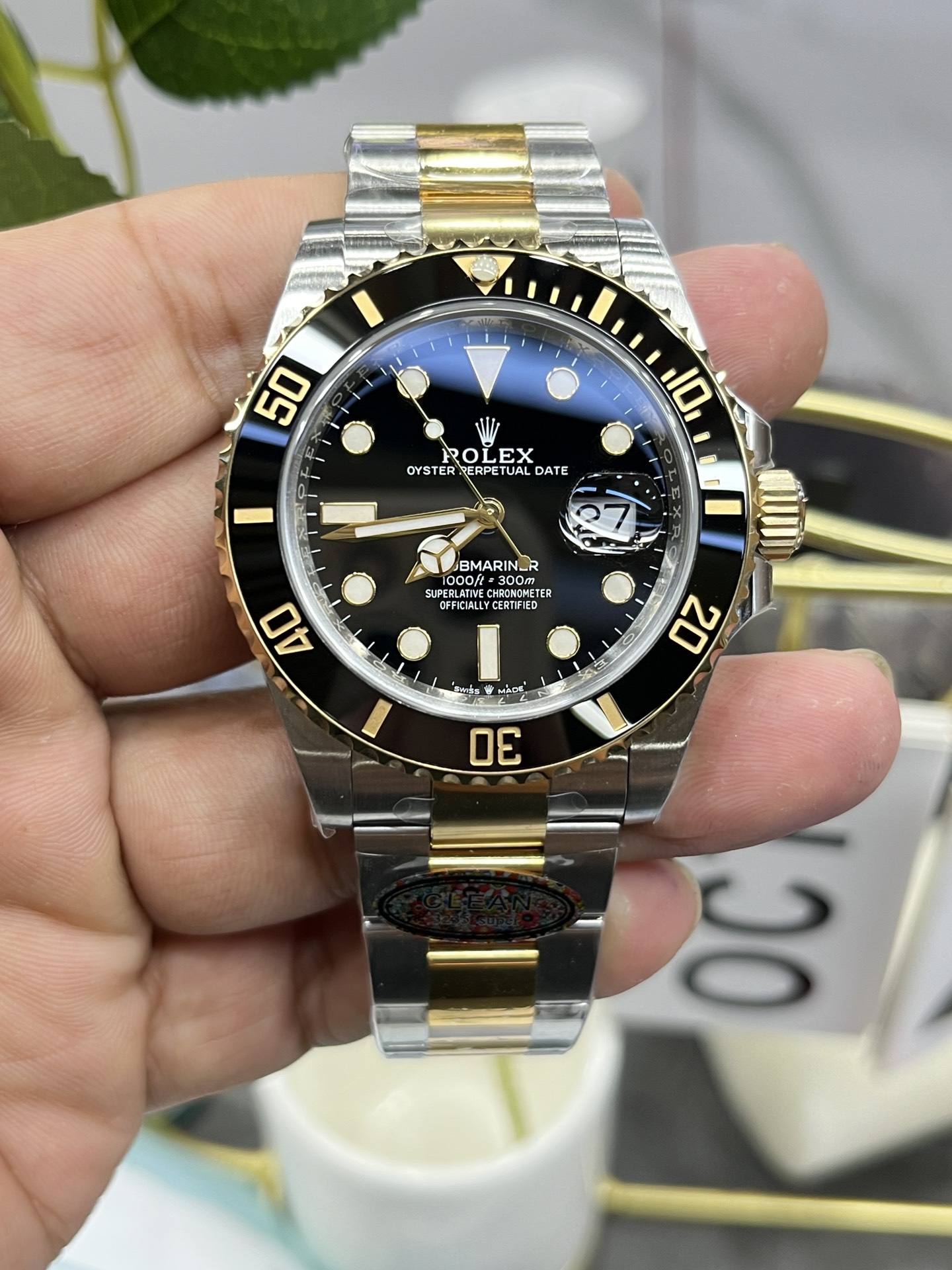
A Rolex-style free-sprung design is about alignment between case, dial, and engine. These watches are built to be worn, not babied. The movement choice reflects that intent. It’s not purely about copying the original spec sheet; it’s about mimicking the way those watches are meant to behave in the real world—steady, repeatable, and resistant to the kind of lifestyle that would knock a more sensitive system off balance.
How Free-Sprung Movements Handle Real Life Better Over Time
Imagine a typical week: daily commuting with your wrist brushing against doors and rails, long hours at a desk, maybe some outdoor activities or a few sessions at the gym. Every one of those actions sends small shocks into the watch. No movement is immune, but a well-executed free-sprung system tends to absorb these events with less long-term impact.
Shock resilience is not just about surviving a single hard hit. It’s about how the rate looks after months of many small ones. Real-world stability shows up in the way your watch keeps a similar pattern from week to week, even as your schedule changes. You don’t see sudden swings tied to a specific workout or trip. Instead, you get a smooth, slowly evolving picture of how the watch and your lifestyle interact. For people who want their watch to feel like a reliable tool rather than a delicate project, that difference is worth paying for.
My Take After Seeing Hundreds of Movements Over the Years
After spending time around many different builds—originals, replicas, and super clones—you learn that movements rarely behave exactly the way the spec sheet suggests. On paper, a free-sprung system looks like the obvious winner. In practice, things are more nuanced. I’ve seen regulated movements stay impressively stable with careful setup and gentle wear. I’ve also seen free-sprung balances lose their edge after an unlucky impact or poor servicing.
These experiences shape how I look at watchmaker insights in general. Real-world movement performance isn’t a clean graph. It’s a mix of design, assembly quality, how the watch is worn, and how often it’s maintained. The movement type is a big piece of the puzzle, but it isn’t the whole picture.
The Gap Between Theory and Reality in Watch Performance
In theory, you’d expect every free-sprung watch to outperform every regulated watch under the same conditions. In reality, movement behavior in practice depends on details: how well the parts are finished, how carefully the watch was regulated or tuned, and how it’s handled day to day. I’ve seen modest regulated pieces hold a tighter daily rate than more ambitious designs, simply because they were well built and worn gently.
I’ve also watched high-end free-sprung movements struggle after early shocks or poor initial setup. Real accuracy observations don’t always match the brochure. That doesn’t mean the theory is wrong. It just means real life adds variables—owner habits, environmental conditions, service quality—that no diagram can fully capture.
The Personality Each Movement Type Brings to Ownership
Over time, you start to feel that each movement style has its own personality. A regulated system feels interactive. It reacts quickly to your life and can invite you to react back, whether by adjusting the regulator or simply changing how you store the watch at night. It can be a little moody, but also engaging.
A free-sprung super clone movement feels more reserved. It doesn’t swing as sharply with every change in your day. It prefers to keep its own pace, asking less from you in return. From an ownership experience standpoint, neither personality is better in some absolute sense. It’s more about which one matches how you like to relate to your watch—hands-on and involved, or calm and mostly invisible.
What Most Owners Eventually Learn After Years of Wearing Watches
After years of wearing different pieces, most owners discover that their priorities change. At first, the ability to adjust a watch or chase tiny improvements can feel exciting. Later, the appeal of a piece that simply runs steadily, with minimal effort, starts to grow. It’s common to see people begin with regulated movements, learn from them, and eventually gravitate toward more stable systems once the novelty of constant tweaking wears off.
That long-term replica watch ownership insight is important: your first choice doesn’t have to be your final one. You might start with a regulated super clone to learn and experiment, then decide later that you prefer the set-and-forget nature of a free-sprung build. Or you might realize you love the interactivity and never leave it behind. Understanding how each movement behaves over time just gives you better tools to make those choices on your own terms.
So Which One Should You Choose?
By now, you’ve seen that this isn’t a simple “A is better than B” situation. Choosing a watch movement is less about winning a technical argument and more about deciding what kind of ownership you want. When you choose a watch movement—regulated or free-sprung—you’re really choosing how involved you want to be, how much variation you can live with, and how much you value quiet stability over time.
A good regulated vs free-sprung decision starts with honest questions, not brand claims. Do you enjoy the idea of opening a caseback one day, or does that thought make you nervous? Do a few seconds of drift over a week bother you, or do you see it as part of the charm of mechanical time? Are you wearing one main replica Rolex daily, or rotating several super clone pieces so each one sees less wrist time? Your answers shape the right direction more than any lab result ever will.
The Everyday Trade-Off Between Control and Stability
On one side, you have control. A regulated movement gives you a direct link to what’s happening inside the case. If you’re willing to learn and move slowly, you can influence how the watch behaves. That can be deeply satisfying. For some owners, that hands-on connection is the reason they chose a mechanical super clone movement in the first place. They like the idea that their choices—how they store the watch, whether they adjust it, how they wear it—have visible effects.
On the other side, you have stability. A free-sprung design asks you to step back and let the system do its job with less interference. It’s built for owners who would rather live with a steady, predictable rate than tweak their watch every few months. Lifestyle matters here. If you’re very active, travel often, or just don’t want to think about your watch beyond enjoying it, a more stable setup may align better with your user lifestyle impact realities. The core super clone movement choice factors aren’t mysterious: how much deviation you tolerate, how much time you want to invest, and how you expect the watch to fit into your day.
What Matters More Than Specs or Marketing Claims
It’s easy to get pulled into marketing language and spec sheets. Numbers have a way of sounding decisive—“+/- 2 seconds a day,” “multi-position tested,” and so on. But once you live with a watch, you realize the experience is harder to reduce to a line item. What matters most is how the watch feels on your wrist, how consistent it is over weeks, and whether you trust it enough not to double-check it every time you glance at your phone.
A realistic replica real-world movement evaluation focuses on feel and pattern, not just peak performance. Does the watch behave the same way from Monday to Friday? Does it keep a similar rate across different seasons? Does it make you relaxed when you check it, or slightly tense? Those are small signals, but they’re the ones that tell you if the watch and its movement type fit your personality and expectations. In the end, a movement that looks perfect on paper but never feels quite right in daily life isn’t a win.
A Closing Thought That Respects Reader Autonomy
At this point, you have enough information to know what each path looks like, and you don’t need anyone to choose for you. Regulated systems offer interaction and learning. Free-sprung designs offer calm and continuity. Both can be satisfying, and both can disappoint if they’re matched to the wrong kind of owner. Your rep Rolex ownership preference is valid either way.
You’ll feel the difference more than you’ll measure it, and the right choice depends on how you live with your watch. I know what I prefer, but the final call is yours.