
Back in the early days — when you learned the ropes in Guangzhou’s markets, it felt more like joining a family than entering a factory zone. If you wanted the full picture of how the China super clone watch factory scene grew into a global powerhouse, you start at Zhanxi (站西) and follow the people, not the ads. That’s where the market rules, the slang, and the hierarchy were born — and where factories like VS Factory made their reputations.
The Origin of the Super Clone Market
The story of the replica watch trade isn’t about a single factory. It’s a network: market bosses, family-run stalls, workshop bosses who control batches of movements, and a handful of upstream factories that actually make or source the critical parts. In Guangzhou you quickly learn the vocabulary — 站西等级 (Zhanxi ranks), 放货 (who gets shipped what and when), 代工 (OEM/contract work), and 圈口 (bezel/case-ring craft). Those words aren’t academic — they’re the operating system of the whole industry.
What made Zhanxi special was the mix of trust and rules. Most businesses there run family-style: people who’ve known each other for a generation, with unspoken standards about pricing, inventory allocation, and who you can trust to handle expensive parts. Break the rules — undercut, lie about parts, or mess with supply chains — and your name spreads faster than any online review. That’s why reputation mattered more than slick marketing.
If you trace the lineage of movement suppliers, you’ll see the same names crop up: Seagull (海鸥), Dandong, Shanghai, Mingzhu — and many small shops that rework, relabel, or “dress up” those base calibers. The market evolved through small engineering gains: a better bezel fit here, a more convincing dial print there, a clearer back engraving — step by step the “super clone” idea was born: not just a lookalike, but something that behaved much like the original.
Why Zhanxi became the epicenter
- centralized logistics (easy to move limited-run batches);
- dense supplier networks (cases, hands, bezels, movements all within walking distance);
- an internal enforcement of norms (keeps power concentrated among established players).
The Rise of Letter Factories (C, VS, ZF, GF, etc.)
There’s a phase in the market where certain upstream workshops stopped being anonymous parts shops and started being brands in their own right — we call them the “letter factories”: C, VS, ZF, GF, and the rest. These factories weren’t branded for retail so much as for insiders; sellers would say, “Get the C-waterproof Sub,” and everyone knew the spec and the price.
When N factory (N厂) got hit by trouble, it left a vacuum. C stepped in not by accident but by capability — their ceramic bezel work (圈口) was and still is top-tier. Once they proved they could do ceramic that looked and wore like the real thing, orders swarmed in. That brought leverage: C could control supply, do selective allocations, and yes — practice deliberate scarcity to jack up demand. Sound familiar? It’s market craft, not magic.
VS Factory’s rise reads like a careful chess move. OR Factory used to be the hot name — everyone pushed their Seamaster-style pieces because back then OR’s back-to-front finishing and transparent casebacks matched the originals in feel. People talked about the difference a correct movement makes: OR used Seagull-type 2824s early on, and later switched to Wuhan 2824; that swap didn’t sit well with market buyers because the movement feel and finishing changed. Reputation is fragile. When OR stumbled — and the fallout hit its associated GF operations too — VS moved quietly and deliberately: better coaxial-style one-piece movements, calendar-setting behavior that mirrored the genuine models (adjust via the hour hand, not a quick-set hack), and small finishing touches that matter to collectors.
What differentiates the top letter factories
- Technical finesse: ceramic bezels, case finishing, consistent lug-to-case tolerances.
- Movement work: either reworked high-grade base calibers (2813/Mingzhu, 8215/Citizen-type, 2824 clones) or proprietary one-piece/“integrated” clones that mimic functions like date-setting.
- Supply control: who gets allotted what and when — the old “放货” rules.
- After-sales stance: big factories back their batches and can rework returns; small shops can’t.
And then there’s the human drama: bosses who overreach, money disputes, even arrests — the industry gossip fuels a reshuffle faster than any market report. OR’s fall and GF’s fading didn’t just remove competitors; they rearranged the supply chains and opened windows for VS and others who were patient and meticulous.
This whole ecosystem — from Mingzhu 2813-style budget bases to modified Hangzhou 3135/3235 patterns, to high-end integrated one-piece movements — is why the Guangzhou watch market remains the beating heart of the China super clone watch factory world. VS Factory’s story takes shape within that web: not just a flash-in-the-pan maker, but a player that learned how to time its moves, understand upstream constraints, and play the long game on quality and allocation.
Core Movements Used by VS Factory
In the lower tiers, movements like Mingzhu 2813, Wuhan 2824, and Hangzhou 3135 were common. They’re reliable, inexpensive, and easy to source, but they lack the finesse and functional consistency of high-end originals. Dandong, Seagull, and Shanghai produce solid bases, but the real leap came when VS started integrating its own coaxial automatic movements.
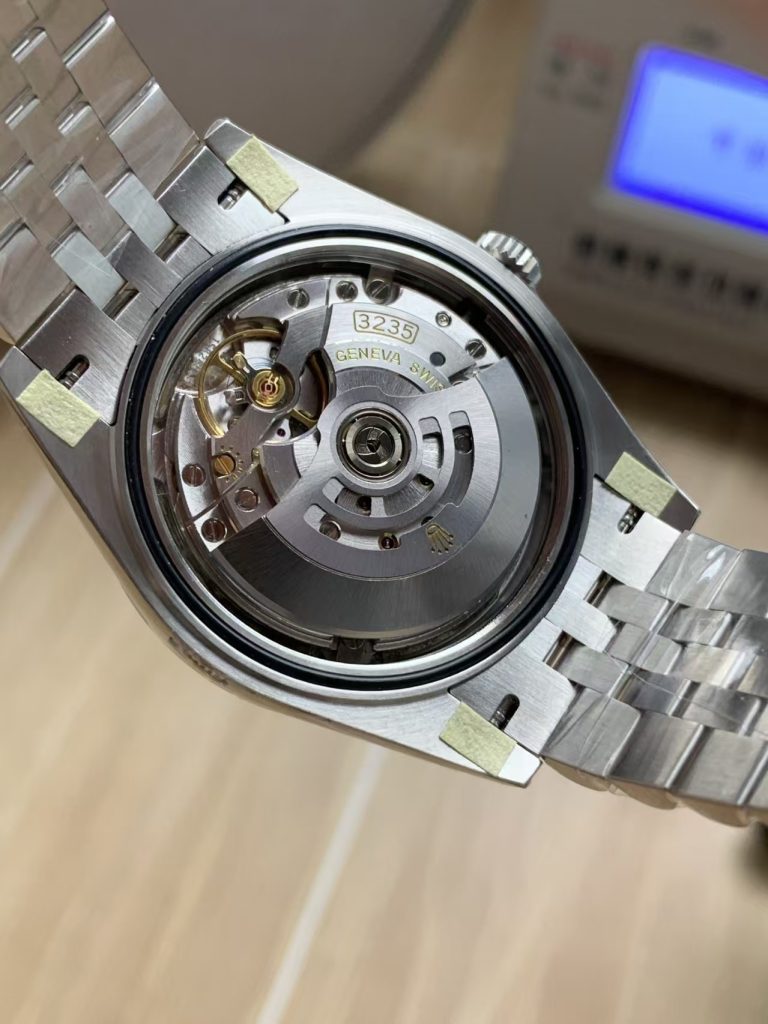
Take the VS Omega Seamaster 300 for example: the integrated coaxial movement isn’t just a label. The calendar adjusts directly via the hour hand, just like the genuine Omega — a detail most other factories ignored or hacked around with quick-set tricks. The rotor spins with a similar weight and finish, the bridges mirror Omega’s polishing patterns, and even the sound of the winding has that subtle, reassuring click. These aren’t marketing claims; they’re operational realities verified by watchmakers and seasoned collectors in the field.
The VS coaxial also achieves consistent amplitude and accurate day-date function over long periods, something that older 2813 or 8215 clones often struggled with. In short, it’s a movement designed for both authentic feel and durability, not just visual mimicry.
Real vs. Replica: Understanding “Clone Quality”
Within the industry, there’s a clear distinction between base movements and “clone quality” watches. Mingzhu, Wuhan, and Hangzhou calibers are easy to identify by their finishing, materials, and weight. A Mingzhu 2813, for instance, will always feel slightly rougher and run with less precision compared to a VS-integrated movement.
The term 仿机 (replica movement) usually refers to watches that copy major brands externally but cut corners internally: bridges are thinner, engravings are shallow, and winding feels inconsistent. VS Factory’s approach is different. Every plate, screw, and rotor is inspected for symmetry and polish. The brushing on lugs, the beveling of edges, and the engraving on rotors are engineered to closely match the original.
“A watch isn’t just about keeping time,” insiders often say. “It’s about symmetry, polish, and how close your rotor engraving is to the real deal.” VS understood this, and that’s why its pieces — particularly the Seamaster and other high-profile clones — are trusted by collectors and sellers alike. While competitors often stop at surface-level imitation, VS Factory treats every movement as a miniature work of art.
This philosophy explains why the factory consistently occupies the top tier of the China super clone watch market: it’s not just about copying; it’s about replicating the experience of owning the original, movement by movement, detail by detail.
Material Innovation in Replica Watchmaking
In the world of super clone watches, material choices matter just as much as movement precision. VS Factory built its reputation not only by perfecting movements but also by pushing material innovation in ways that competitors rarely dared to attempt.
From Electroplating to Full Gold Wrapping
The journey from basic electroplating (包金) to sophisticated gold-wrapping techniques is a story of trial, error, and market education. Early on, workshops would apply water-based plating or thin electroplating to mimic gold finishes. Prices varied: a 500 RMB watch might only get a passable coat that dulled quickly, an 800 RMB version improved the thickness and color accuracy, and 1,500 RMB models used more careful layering and better alloys, giving a near-gold feel.
There were missteps along the way. In 2022, one small workshop got caught trying to sell a solid-gold AP clone that was actually half brass. That story spread fast—and taught everyone in the circle a lesson about honesty, quality, and the risks of cutting corners. Beyond electroplating, the market experimented with weighted watches using tungsten, nickel, or copper alloys to give a more “premium heft.” While the weight improved the perceived value, certain formulations caused skin irritation or discoloration—problems VS Factory observed closely and corrected.
How VS Factory Balances Weight and Durability
VS Factory approached these challenges methodically. Instead of simply adding metal for weight, engineers optimized the case and bracelet links, using tungsten steel to achieve a solid, satisfying heft without the risks associated with nickel-heavy “weighted” watches. The cases resist peeling, oxidation, and skin discoloration—an important consideration for both domestic buyers and overseas collectors.
Overseas markets demand not only visual authenticity but also safety compliance. In Southeast Asia and Europe, buyers expect watches that can be worn daily without causing irritation. VS watches meet those expectations while still capturing the tactile weight of a high-end timepiece.
The evolution tells a story of responsibility as much as craftsmanship. What began as simple electroplating has become a precise balance of aesthetics, functionality, and wearability, demonstrating why VS Factory remains a trusted name among collectors who care about both style and substance.
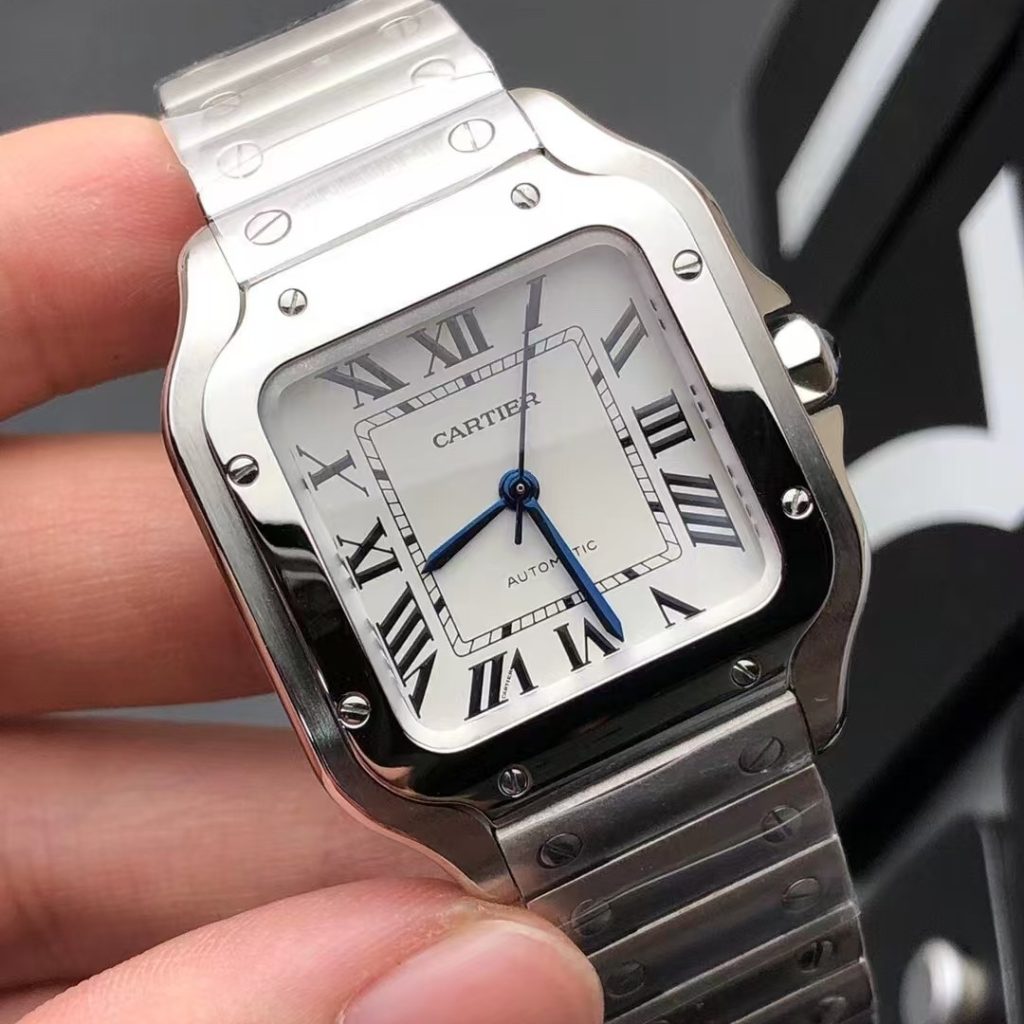
“Today’s VS watches use tungsten steel cases that feel solid but remain skin-safe—a big leap from the nickel-heavy ‘weighted’ models that once caused irritation.”
This combination of material knowledge and meticulous execution is part of what separates VS Factory from the rest of the super clone market: they don’t just copy—they engineer experiences that feel and last like the originals.
The Hidden Supply Chain Behind the Watch
Behind every VS Factory Seamaster or Submariner clone lies a complex, tightly controlled supply chain. Few outsiders see it, but anyone who’s walked the halls of Zhanxi Market in Guangzhou quickly realizes it’s less a market and more a well-orchestrated logistics network.
How Orders Flow from Factory to Market
The flow starts with 放货 — factories allocating batches of watches to distributors. From there, couriers, often via 顺丰 (SF Express), move boxes daily to warehouses or directly to sellers. Once received, the boxes are handed off according to “图拿货” (pickup-by-picture) or the 取件码 system, ensuring that only the right recipient can access the goods.
Every morning, couriers line up outside the Zhanxi warehouses. Boxes labeled only with pickup codes change hands—no names, no questions. Prices are strictly regulated within family-style networks; deviation is frowned upon. This network of trust is critical: it keeps supply tight, preserves reputations, and prevents market chaos. Break the unspoken rules, and you’re quickly sidelined.
Even with modern logistics technology, the system remains human at its core: longstanding relationships, reputations, and word-of-mouth trust guide every transaction more than contracts or invoices ever could.
The Role of Overseas Dealers
The supply chain extends far beyond China. In Southeast Asia — Singapore, Vietnam, Malaysia — Chinese dealers operate mostly within local Chinese-speaking communities. Orders are coordinated over WeChat, and relationships are cemented by reliable after-sales service. If a movement fails, a crystal cracks, or a bracelet link comes loose, having a trusted repair point locally is essential.
Overseas dealers bridge the gap between the factory and the collector. They know the quirks of the movements, how the calendar sets on a VS Seamaster 300, and which pieces are true coaxial clones versus lower-tier Mingzhu or Hangzhou variants. Language barriers, cultural expectations, and trust are constant considerations: in many ways, running a Chinese replica watch business abroad is as much about relationship management as it is about logistics.
In short, the Zhanxi network doesn’t stop at Guangzhou’s borders. Its influence stretches internationally, with trusted dealers, repair points, and distribution channels ensuring that VS Factory’s reputation for quality reaches collectors worldwide, intact and reliable.
The Future of China’s Clone Watch Industry
The clone watch market in China has long thrived on secrecy, trust, and craftsmanship that often rivals the original in appearance. Yet, as collectors grow more sophisticated and regulatory pressure increases, the industry is quietly evolving. VS Factory and other leading players have begun eyeing the next stage: from imitation to innovation and customization.
Transition from Clone to Customization
For many veterans, the endgame isn’t in selling fakes—it’s in assembling watches from certified genuine parts, offering collectors a near-authentic experience without crossing legal lines. Factories and workshops are increasingly leveraging platforms like Yunyu (云鱼), Xubu Tian (徐步天), and Xinghua (兴华) for authentication, ensuring buyers know exactly what they’re getting.
Opening a second-hand luxury store is another natural progression. Here, the margins are higher, the clientele more discerning, and trust is everything. Some makers even pursue gold and gemstone authentication certificates, combining horological expertise with precious metal verification. In this environment, knowledge and reputation—not mass production—become the real drivers of profit.
The Ethical and Market Shift
Consumer awareness is changing the game. Buyers are no longer satisfied with surface-level copies; they want transparency, durability, and a story behind the watch. The market is responding: high-quality clone makers are professionalizing, introducing post-sale warranties, precise movement replication, and ethical sourcing.
Overseas, the shift is even more pronounced. Southeast Asia and other regions are tightening regulations around imitation products, creating a dual opportunity: compliant luxury customization and after-market services. As one insider puts it:
“Rules keep this market alive. Without them, nobody eats. But the next generation of makers will survive not by imitation—but by transparency.”
The trajectory is clear. Those who adapt, invest in authenticity, and prioritize customer trust will not only survive but redefine what it means to operate in China’s super clone watch industry. VS Factory’s continued evolution—from coaxial movement mastery to ethical material innovation—illustrates this path perfectly: excellence, reputation, and foresight are the new currency.
Conclusion — Why VS Factory Still Matters
Looking back over the evolution of China’s super clone watch industry, VS Factory stands out as a benchmark. From mastering coaxial movements in the Seamaster 300 to refining case materials and pioneering weight-balanced designs, it consistently demonstrates technical sophistication few others match. Beyond machinery and metals, VS Factory also embodies the unspoken rules and trust networks that make the Zhanxi market function.
It’s more than just replication. VS Factory represents the golden era of Chinese replica watchmaking, where craft, reliability, and ethical awareness converge. Every movement, every polished edge, and every carefully weighted case tells a story of discipline, skill, and foresight. For collectors, dealers, and watch enthusiasts, a VS piece isn’t merely a clone—it’s a testament to what the industry can achieve when talent and integrity align.

“In a world obsessed with luxury, VS Factory didn’t just copy—it taught the world how precision, passion, and discipline could build a legend of their own.”