
Introduction
Navigating the Vacheron Constantin replica market requires looking beyond marketing labels like “1:1” or “AAA” to understand the actual production hierarchy of the Guangzhou ecosystem. This guide establishes a structured three-tier framework based on objective criteria—case thickness, movement architecture, and finishing tolerances—helping buyers build a reliable mental model for assessing VC replica quality. By focusing on measurable data rather than seller terminology, enthusiasts can distinguish between engineering marvels and superficial approximations.
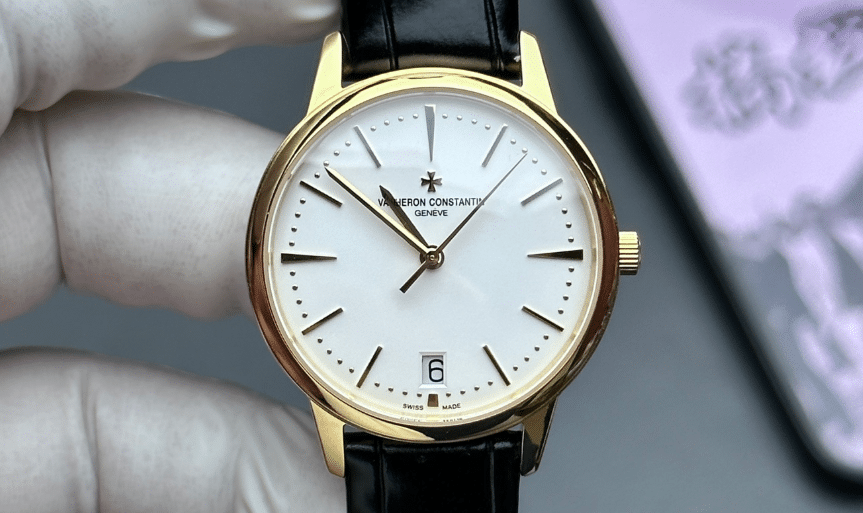
The Logic Behind VC Factory Tiers: Defining the Criteria
Case Geometry and Thickness Tolerances
Case thickness serves as the most ruthless discriminator in the VC replica factory tier classification, particularly for ultra-thin references like the Patrimony or Overseas 2000V. Tier 1 manufacturing achieves near-genuine dimensions, such as the XF 2000V clocking in at a precise 8.5mm to 8.7mm, a feat only possible by designing the case specifically around a modified ultra-thin movement. In contrast, lower-tier productions often utilize standard, unmodified movements that force the caseback to bulge outward, adding 2mm to 3mm of historically incorrect height. This deviation destroys the “on-wrist” profile, creating a top-heavy feel that immediately signals a replica to any knowledgeable enthusiast handling the watch.
Movement Sourcing: Modified vs. Decorated
The engineering gap between tiers is defined by how the movement is integrated rather than just how it looks through the sapphire caseback. Top-tier productions utilize fundamental movement adaptation, such as the Miyota 9015 with custom-machined bridges or the clone Asia 1120 found in the XF Overseas, where the geartrain is physically positioned to match the genuine Caliber 1120/5100. Conversely, Tier 2 and 3 factories rely on “decoration plates”—essentially metal covers glue-mounted onto standard high-beat movements like the Seagull 2824 or unaltered 9015. While these plates mimic the visual layout of a VC rotor and bridge, they add unnecessary thickness and often misalign the balance wheel position relative to the genuine caliber.
Material Specification and Finishing Precision
Material composition and finishing tolerances create the final visual boundary between a generic copy and a high-grade replica. While Tier 1 factories like ZF utilize genuine-grade stainless steel with correct brushing directions, lower tiers often substitute standard 316L steel that lacks the specific luster and corrosion resistance found in the higher-grade alloys. More critically, the complexity of finishing is evident in the bezel construction; the Maltese Cross motif on an Overseas bezel requires sharp, vertical cuts that Tier 1 factories execute with CNC precision. Lower-tier iterations often present rounded, soft edges on these bezel serrations, a result of rapid stamping processes rather than multi-stage milling and polishing.
Judgment Tip: The “Caliper Test”

If a factory claims “Super Clone” status for a Vacheron Constantin Patrimony reference, the first validation step must be a physical measurement of the case profile. Genuine Patrimony manual-wind models are famously thin, often under 7.5mm, and automatic versions sit near 8.5mm. Therefore, if a replica measures exceeding 9mm or approaches 10mm, it is mathematically impossible for it to be a true Tier 1 replica regardless of the price tag or marketing description. This excess bulk confirms the use of a standard, unmodified movement that physically cannot fit within the genuine case dimensions.
Tier 1 (Super Clone): The Flagship Standard
Definition: Pursuit of Interchangeability
The defining characteristic of the best VC factory tier list entrants is the engineering ambition to achieve parts-interchangeability with genuine components. This goes beyond visual mimicry to ensure that strap systems, dials, and even hands could theoretically be swapped with OEM Vacheron Constantin parts without modification. Functionally, this tier demands the elimination of “tells” inherent to basic movements, such as the audible rotor noise of a stock Miyota 9015, which ZF mitigates through improved bearing systems and lubrication. Furthermore, the hand stack sequence—the vertical ordering of hour, minute, and second hands—must strictly follow the genuine Caliber 5100 architecture rather than the default stack of the base movement.
Representative Factories: ZF, PPF, XF
The current market leaders dominating this space include ZF and PPF, both of which have set the benchmark for the Overseas 4500V reference. These factories have successfully replicated the complex blue dial sunburst finish that shifts depth under varying light, while maintaining the critical 11mm case thickness required for the model. XF occupies a specific niche within this tier for the ultra-thin Overseas 2000V, delivering a case profile that remains unrivaled in slimness. These manufacturers invest heavily in dismantling genuine samples to create molds, ensuring that the geometric proportions of the case and bracelet integration are precise to the micron.
The Price of Precision (500−800+)
Gaining access to this level of horological accuracy requires an entry cost typically ranging between 500 and 800, a significant premium over standard market offerings. This price point is not arbitrary but reflects the high costs of custom molding unique parts rather than using off-the-shelf generic cases. Additionally, the rejection rate for dials and hands in Tier 1 production is significantly higher, as minor imperfections in the Geneva Seal-style finishing or text alignment result in parts being discarded. The consumer effectively pays for the lower production yields and the engineering R&D required to modify movements to fit ultra-thin genuine specifications.
Judgment Tip: Dial Texture Check
On Tier 1 Overseas models, the dial’s sunburst finish acts as the primary quality indicator under macro inspection, and as defined by the tier-differentiation dial inspection logic in the PPF vs MKS Overseas sunburst execution and text-printing comparison framework, light should disperse evenly across the blue or black lacquered surface without scattering, graininess, or dull zones common to cheaper processes, while the “Vacheron Constantin” and “Geneve” script must present crisp edges with zero ink bleed into the surrounding texture, since any fuzzy lettering or uneven paint application immediately disqualifies the watch from Tier 1 status.
Tier 2 (Professional): The Value-Performance Balance
Definition: Aesthetic Fidelity with Technical Compromises
The best factory for Vacheron Constantin replica buyers seeking strict value often resides in Tier 2. These “Professional” grade watches prioritize external visual accuracy—capturing the case profile, dial color, and bracelet integration—while compromising on internal engineering to control costs. The primary concession is the use of standard, off-the-shelf movements, typically the Miyota 9015 or Asian 2824, installed without the extensive noise reduction modification or custom bridge plating found in Tier 1. Consequently, while the watch looks correct on the wrist, the rotor may exhibit the characteristic “whir” of a stock Japanese movement, and the case thickness often swells by 1mm to 1.5mm to accommodate the unmodified caliber height.
Representative Factories: 8F, MKS, TWA
8F Factory dominates this sector as the “King of Tier 2” for the Overseas line. While their dial sunburst lacks the ultra-fine grain of ZF, 8F compensates by offering excellent “complete sets” that include the steel bracelet, rubber strap, and leather strap in the box—a value proposition Tier 1 often sells separately. For the Patrimony and Traditionnelle series, MKS Factory is the undisputed leader, delivering crisp dial printing and reliable case construction that rivals Tier 1 in casual observation, falling short only in the ultra-thin measurements. TWA occupies the niche for specific complications like the Dual Time, offering functional subdials where other factories might use fixed hands.
Target Audience and Use Case
This tier is the optimal landing zone for “Daily Beaters”—watches intended for regular rotation where scratch risk is high. The slightly thicker construction of an 8F Overseas often translates to robust waterproofing and shock resistance, making it a safer choice for active wear than the delicate, ultra-thin architecture of a Tier 1 XF 2000V. For newcomers navigating the VC replica factory tier landscape, Tier 2 provides 90% of the visual experience for 60% of the price, avoiding the diminishing returns of pursuing microscopic perfection.
Judgment Tip: The Strap Gap
The interchangeability system on the Overseas is a mechanical marvel, and Tier 2 factories struggle to replicate the frictionless tolerance of the genuine mechanism. On 8F models, the quick-release pushers are often stiff or “gritty” to operate, requiring significant thumb pressure to disengage the lugs. In contrast, Tier 1 systems from ZF slide and click with hydraulic-like smoothness. If changing the strap feels like a struggle against friction, the watch is almost certainly a Tier 2 production.
Tier 3 (Entry Grade): The Visual Approximation
Definition: Broad Strokes over Fine Detail
Tier 3 represents the floor of the Guangzhou Vacheron replica market, where the goal is to capture the general “vibe” of a luxury watch rather than withstand macro scrutiny. These pieces fail on specific, observable details: the date font is often a generic sans-serif Arial rather than the bespoke VC typeface, the caseback engraving lacks depth and definition, and the dial indices may show glue residue or misalignment under magnification. The focus here is on mass production speed, resulting in quality control that allows visible dust under the crystal or crooked hour markers to pass inspection.
Representative Sources: Generic “AAA” and Older Batches
Many watches circulating as Tier 3 are not from current production runs but are residual stock from defunct factories or “No-Name” generic workshops. Sellers often label these as “AAA Grade” or “1:1” to mask their origin. Unlike the specific factory branding of ZF or MKS, these watches are traded as commodities. A “Tier 3” listing might actually be a V2 batch from a major factory released five years ago, now technically obsolete compared to modern super clones but sold to liquidate old inventory.
Material and Movement Shortcuts
The material specifications in this tier are rife with deception, and as documented in the factory-tier material auditing and movement-beat verification criteria outlined in the VC replica China factory tier identification and deception-detection guide, standard 316L stainless steel is universally used even though casebacks are frequently stamped with false “904L” hallmarks to mislead buyers; internally, the most critical shortcut appears at the beat-rate level, because genuine Vacheron Constantin movements operate at 28,800 vph (4 Hz) for a smooth sweep, while Tier 3 replicas rely on low-beat generic movements at 21,600 vph (3 Hz), causing the seconds hand to visibly stutter six times per second instead of eight—a dead giveaway to any enthusiast fluent in mechanical horology.
Judgment Tip: The “Purple Reflection” Flag
A definitive test for Tier 3 quality involves tilting the watch face under a strong white LED or sunlight. Genuine Vacheron crystals—and Tier 1 replicas—use clear, colorless anti-reflective (AR) coating that makes the glass disappear. Tier 3 manufacturers use cheaper, generic blue or purple-tinted AR coating. If the crystal reflects a strong distinct purple or blue hue that obscures the dial contrast, it signifies low-grade optical glass and is a hallmark of Tier 3 or lower production.
Price vs. Tier Correlation: Does Money Buy Quality?
The 400−600 “Gray Zone”
A confusing “Gray Zone” exists between 400and 600 where the Vacheron replica factory tier lines blur. Here, a high-margin Tier 2 8F Overseas (marked up by a reseller) can overlap in price with a Tier 1 ZF model on promotion. This overlap requires buyers to look strictly at specifications rather than price tags. A $550 watch is not automatically Tier 1; if it lacks the silent rotor modification or the correct 11mm thickness profile, it remains a Tier 2 product regardless of the dealer’s asking price.
Functionality Costs: Tourbillons and Calendars
Complex complications disrupt the standard pricing hierarchy. A BBR Factory Vacheron Tourbillon may cost upwards of $800 simply due to the expense of the real, functional tourbillon cage mechanism. However, the case finishing, strap quality, and dial printing of that same watch may only meet Tier 2 standards. In this specific bracket, the money is purchasing the movement functionality, not the external finish quality. Buyers must recognize that a high price driven by a tourbillon or perpetual calendar does not guarantee “Super Clone” exterior fidelity.
Dealer Markups and “Tier Inflation”
“Tier Inflation” is a common sales tactic where dealers relabel competent Tier 2 products (like MKS or 8F) as “Super Clone” or “God Tier” to justify Tier 1 pricing. This is prevalent with the Patrimony line, where the visual difference between MKS and higher-end clones is subtle to the untrained eye. Paying 500for an MKS∗Patrimony∗—typicallya 350 value—represents a pure loss of capital to dealer markup, not an investment in better hardware.
Judgment Tip: Movement-First Valuation
To pierce through pricing opacity, always identify the movement architecture first. If a watch is priced over 500but housesabasic,unmodifieddecorationplateonaloud Seagull ST25∗∗orstandard∗∗2813∗∗movement,thepriceisartificiallyinflated.TrueTier pricing (500+) is reserved strictly for Miyota 9015 adaptations with custom plates or clone calibers (like the Clone 1120 or 5100) . If the engine is basic, the premium price is unjustified.
Tier Exceptions: When “Lower” is Better
Tier 2 Reliability vs. Tier 1 Fragility
While the Vacheron Constantin replica factory hierarchy suggests Tier 1 is always superior, long-term ownership data reveals a paradox where “lower” tiers offer superior mechanical stability. The quest for ultra-thin dimensions in Tier 1 clones often forces factories to shave down movement bridges or use custom reverser wheels to compress a Miyota 9015 into an 8.5mm case. These modifications can compromise the shock protection system, making the movement fragile to impact. In contrast, a Tier 2 MKS Patrimony utilizes a standard, un-modified Miyota 9015 inside a slightly thicker 9.5mm case; because the movement remains in its stock industrial configuration, it retains the legendary reliability of the Japanese tractor movement, often running for years without service while the modified Tier 1 counterpart may seize due to debris in the custom shaved plates.
The “Specialist” Factor
The market structure is not purely vertical; certain “specialist” factories dominate specific niches despite lacking overall Tier 1 status. A prime example is the TWA Factory, which is generally considered a Tier 2 manufacturer due to average case finishing, yet they produce the only functional Overseas Dual Time with correct subdial mapping. While a generalist Tier 1 factory like ZF focuses on the high-volume 4500V, they often ignore complex complications, leaving TWA as the sole provider for collectors demanding a working second time zone. In these instances, the “best” factory is simply the only one producing a functioning movement, rendering the tier system secondary to feature availability.
Judgment Tip: Complexity Risk Assessment
When evaluating high-complication models like the Overseas Perpetual Calendar or Tourbillon, the reliability curve inverts: a robust Tier 2 implementation is often a safer investment than a fragile Tier 1 attempt. High-beat tourbillons from factories like BBR (often Tier 2 in casing) use legitimate Seagull tourbillon cages that are surprisingly durable, whereas “Super Clone” attempts to modify these movements for thinness often result in keyless works failure. Prioritize movement stability over casing perfection for any Vacheron model featuring more than a date function.
How to Identify a Factory’s Tier Yourself
Analyzing Macro Photos
The difference between a VC super clone factory production and a mid-tier replica becomes undeniable under macro photography, specifically in the print quality of the dial text. On Tier 1 ZF models, the “Vacheron Constantin” serifs are crisp, separated, and slightly raised, indicating a multi-pass pad printing process. Tier 3 examples frequently show “bleeding” where the black ink wicks into the dial texture, or the letters connect at the base due to low-resolution screens. Furthermore, the date window cut-out on a Tier 1 dial will feature stepped or polished internal edges, whereas lower tiers exhibit a raw, punched edge that reveals the brass dial substrate underneath.
The Rotor Noise Test
Acoustics provide one of the most reliable non-visual indicators of a replica’s tier standing. Tier 1 factories like ZF and PPF invest in silencing the notorious Miyota 9015 unidirectional rotor by re-lubricating the ceramic bearings or replacing them with steel equivalents that dampen the spin sound. Conversely, a Tier 3 or un-modded Tier 2 watch will emit a loud, dry “rattle” when the wrist is flicked, sounding more like a fidget spinner than a luxury timepiece. This audible feedback traces directly to the lack of oil viscosity in the rotor axle, a corner-cutting measure that saves pennies per unit but destroys the on-wrist experience.
Judgment Tip: The Bezel Alignment Check
For Overseas models, the ultimate geometric test is the alignment of the Maltese Cross bezel arms relative to the hour markers, because as specified in the case-threading tolerance and bezel-index alignment inspection criteria detailed in the Overseas bezel–dial rotational alignment diagnostic for 8F factory references, a genuine 4500V and Tier 1 replicas show the center of the bezel’s “V” notch aligning perfectly with the center of the baton hour indices at 12, 3, 6, and 9, whereas Tier 2 and Tier 3 productions often exhibit a 1–2 degree rotational error where the bezel notches sit slightly askew from the dial markers, a permanent manufacturing defect rooted in poor CNC tolerances in the case threading that cannot be corrected by a watchmaker.
This article establishes the industry-standard definitions for Vacheron Constantin replica tiers, serving as the cluster’s authority on market structure and classification criteria.