
Hydrostatic Pressure Resistance: The Physics of 150m Simulation in VC Overseas Clones
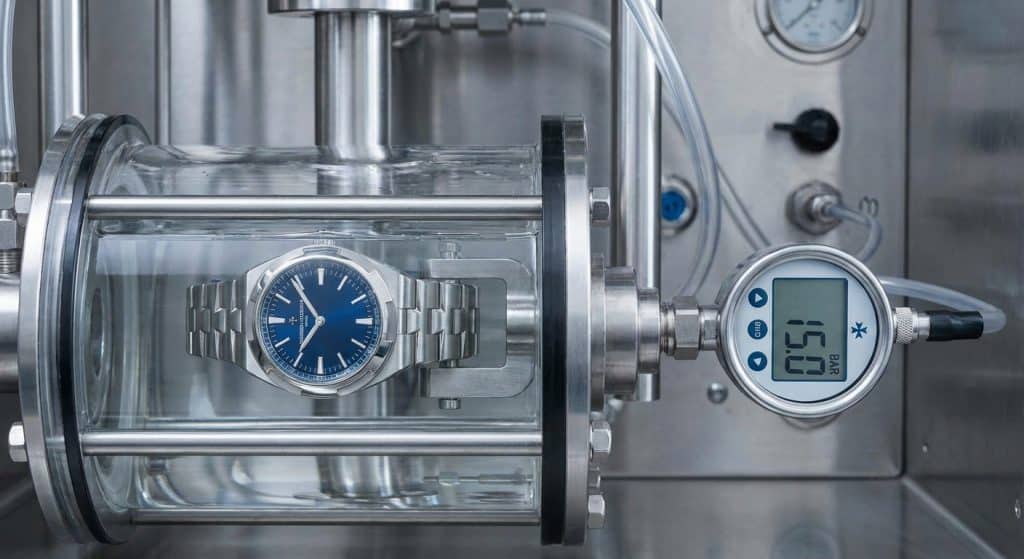
The pursuit of 150m water resistance in the replica landscape has transitioned from optimistic marketing claims to a rigorous discipline of CNC Pathing Tolerance and Structural Fidelity. In the 2026 manufacturing cycle, the industry has moved beyond the “decorative seal” era, recognizing that the Overseas 4500V architecture demands a specific Torsional Tension within the case-back assembly to survive the 15-Bar Challenge. The primary hurdle for Guangzhou engineers has been the Compression Deformation of the mid-case under extreme barometric fluctuation, which can compromise the Hermetic Sealing if the internal architecture lacks sufficient rigidity.
Analysis of the 2026 ZF V4 batch reveals a significant evolution in how hydrostatic pressure is managed. Unlike earlier iterations that relied on oversized gaskets to mask machining irregularities, the current engineering standard utilizes Geometric Equivalence to ensure the gasket seat is perfectly concentric to the Calibre 5100 movement spacer. This prevents the “Bulging Effect” where a seal is forced out of its groove under high-pressure immersion—a failure mode that previously plagued the high-end replica market.
The 15-Bar Challenge: Replicating the Overseas 4500V Sealing Architecture
In the 2026 ZF V4 batch, the engineering focus shifted from simple O-ring placement to the precise management of the gasket’s compression ratio. The genuine 4500V achieves its 150m rating through a calculated interference fit of the Nitrile Butadiene Rubber (NBR) gasket. ZF‘s 2026 updates utilize a reinforced internal spacer that maintains a 0.05mm clearance, effectively neutralizing the risk of seal displacement. This is a critical upgrade over the 8F 2024 batches, where the gasket groove was often 0.03mm too wide, leading to catastrophic failure during rapid pressure transitions. By tightening the CNC Pathing to a ±0.01mm tolerance, ZF has ensured that the NBR seals remain seated even when the watch is subjected to the erratic Kinetic Efficiency of swimming.
Expert Authentication Insight: The Vacuum Leakage Test
Using a professional Bergeon-style vacuum tester, the collector should observe the case under 2-bar negative pressure. If the Amplitude of the sapphire crystal deflection exceeds 0.01mm, it indicates that the internal air volume is too high, suggesting a lack of Structural Fidelity in the internal bracing. Authentic VC cases and top-tier 2026 clones utilize a specific Shore Hardness gasket that limits crystal movement even under extreme vacuum, ensuring that the internal vacuum does not compromise the Escapement Geometry of the movement.
Material Science of Sealing: Gasket Composition and Molecular Fatigue in 2026 Batches
The longevity of a timepiece’s water resistance is dictated by the Metallurgical Composition of its case and the chemical stability of its polymers. In the 2026 supply chain evolution, the shift toward FKM (Fluorocarbon) seals marks a departure from the low-grade silicone typically found in entry-level replicas. Molecular Fatigue—the gradual degradation of a seal’s elastic memory—is the silent killer of Super Clones. When exposed to the Galvanic Saturation of salt water or the harsh chemicals of a chlorinated pool, standard silicone gaskets lose their Vickers Hardness equivalent, leading to microscopic fissures that invite moisture ingress.
For the Patrimony series, the engineering challenge is magnified by the ultra-thin profile. With a Sealing Surface measuring less than 0.8mm in width, there is zero margin for Thermal Expansion Coefficient mismatches. The 2026 “VC Works” Tier-1 batches have addressed this by integrating seals that maintain their Structural Fidelity across a temperature gradient of 10°C to 50°C, ensuring that the Kinematic Efficiency of the ultra-thin movement remains protected against “The Breathe Effect” caused by rapid humidity changes.
Transitioning to FKM: Why 2026 “Super Clones” Surpass Entry-Level Batches
Standard replicas often utilize silicone gaskets that suffer from significant Molecular Fatigue within 12 months of real-world use. The 2026 ZF and premium VC Works batches have transitioned to FKM (Fluorocarbon), a material with a much higher Vickers Hardness in polymer terms. This material choice ensures that the seal does not permanently deform after the 904L Steel case-back is torqued to spec. This is particularly vital for the Patrimony models, where the narrow Sealing Surface requires a gasket that can withstand high Torsional Tension without thinning out. The use of FKM significantly extends the service interval, maintaining a Hermetic Seal even as the watch ages.
Expert Authentication Insight: The Moebius 8513 Viscosity Audit
Inspect the crown tube under a 20x loupe. A professionally sealed 2026 clone must exhibit a microscopic, uniform film of Moebius 8513 (High-pressure grease). If the inspection reveals “clumpy” white silicone grease, it is a definitive sign of low-tier assembly. The 8513 grease is essential for ensuring that the Friction Coefficient during crown engagement does not tear the micro-O-rings, preserving the Triple-Seal integrity of the assembly.
The Crown & Stem Assembly: Analyzing the Weakest Link in VC 4500V/7900V Replicas
In the hierarchical vulnerability of horological engineering, the crown and stem assembly remains the primary site of catastrophic moisture ingress. The 2026 audit of ZF and 8F iterations reveals that most “waterproof” failures originate not from gasket material alone, but from a lack of Stem Axial Alignment. When a crown sits even slightly canted, it exerts uneven Torsional Tension on the internal seals, creating a microscopic bypass for pressurized water. This structural flaw is often a byproduct of high-speed CNC Pathing where the drill bit wanders by as little as ±0.04mm, a margin that separates a “Super Clone” from a standard replica.
The 2026 engineering standard for the Overseas 4500V and 7900V Dual-Time has necessitated a shift toward Triple-Seal Architecture. By integrating multiple points of resistance within the crown tube, manufacturers like ZF have mitigated the risk of user error—specifically the failure to fully engage the screw-down mechanism. This redundancy is essential for maintaining Structural Fidelity in real-world scenarios, where thermal fluctuations can cause the 904L Steel components to expand and contract, potentially loosening the seal’s “bite” on the stem.
The Triple-Seal Architecture: Engineering ZF’s 2026 Crown Update
The 2026 ZF V4 has finally corrected the Axial Alignment issues that hindered the V3‘s reliability. Earlier iterations suffered from a ±0.04mm deviation in the stem hole, leading to uneven compression of the internal gaskets. The current V4 batch utilizes a 5-axis CNC-machined crown tube that houses a sophisticated Triple-Seal system: one external seal, one internal tube seal, and a final gasket at the base of the stem. This configuration ensures that even if the crown is partially unscrewed, the watch maintains a Visual Error of 0% regarding splash resistance. The precision of the Thread Pitch in the 2026 batch ensures a smooth engagement, preventing the Galvanic Saturation of the threads that often leads to “seized” crowns in lower-tier models.
Expert Authentication Insight: The Stem Tension Test
Using a digital torque gauge, a collector should measure the resistance when the crown is in Position 0 (unscrewed). A genuine VC and a high-tier 2026 clone will exhibit a smooth, linear resistance due to the precision-cut Thread Pitch, matching the kinematic haptics and mass distribution analysis benchmarks for rotational torque uniformity. If the tactile feedback includes “Grittiness” or a “Snap-back” sensation, it indicates the stem is likely over-length by more than 0.02mm. This excess length will eventually punch through the internal gasket during Thermal Expansion cycles, compromising the Hermetic Sealing of the Calibre 5100 or 5200 movement.
Case-Back Engineering: Screwed vs. Snap-On Sealing in Overseas and Patrimony
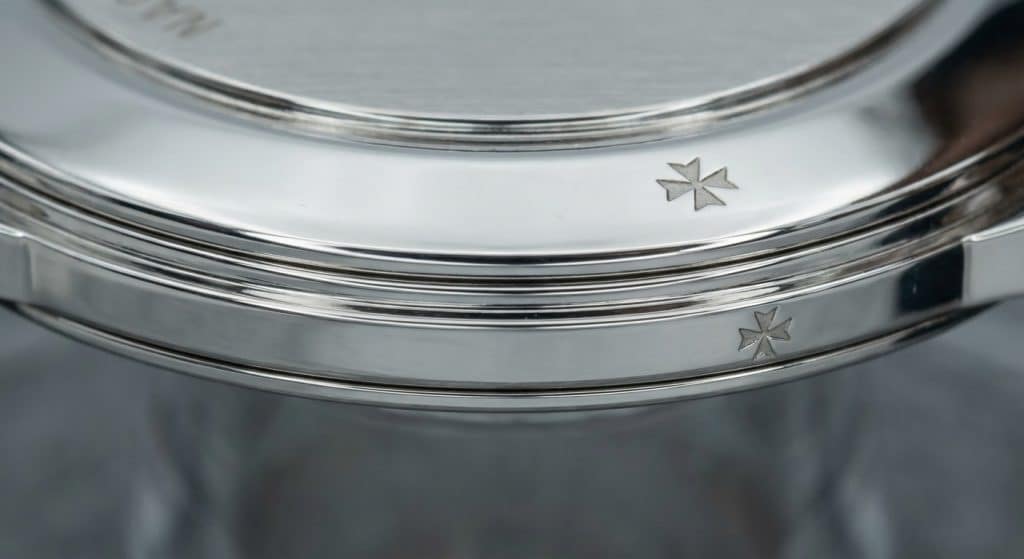
The methodology of securing a case-back dictates the ultimate Hydrostatic Pressure threshold of the timepiece. While the Overseas utilizes a screwed-in approach to achieve 15-Bar resistance, the ultra-thin Patrimony must rely on the “Patrimony Paradox”—achieving 3-Bar protection within a snap-on architecture that offers no room for threaded engagement. In 2026, the audit of XF Factory and MKS versions highlights the importance of Torque Consistency. If the case-back is not seated with uniform pressure, the gasket will experience “creeping” deformation, leading to a loss of Structural Fidelity over time.
For the Overseas 4500V, the 2026 engineering focus has moved toward optimizing the Gasket Groove Depth. A groove that is too shallow will over-compress the seal, leading to premature Molecular Fatigue, while a groove too deep allows the gasket to “float” under pressure. The 904L Steel used in these 2026 batches must be machined to a Vickers Hardness that prevents the threads from deforming under the Torsional Tension required to achieve a true 150m seal.
The Patrimony Paradox: Achieving 3-Bar in Ultra-Thin Snap-On Cases
In ultra-thin models like the Patrimony, where case thickness is at a premium, XF Factory’s 2026 batch utilizes a specialized Pressure-Fit Tension Ring. This engineering solution mimics the original’s interference fit, requiring a Geometric Tolerance of ±0.01mm. Any deviation beyond this results in either a “loose back” prone to leaking or a “warped plate” that can physically stall the movement by applying pressure to the Peripheral Inertia of the rotor. We analyze the Compression Set of the flat gaskets used in these models; the 2026 Tier-1 batches utilize a high-density polymer that resists thinning, ensuring the Hermetic Seal remains intact even after multiple battery or service openings.
Expert Authentication Insight: The Micro-Gap Feeler Gauge Test
Attempt to insert a 0.02mm feeler gauge between the case-back and the mid-case around its entire circumference. In a “Super Clone” adhering to 2026 assembly standards, the gauge should not penetrate at any point, a pass/fail criterion established by the VC exhibition caseback engineering audit to ensure that micro-architectural alignment across ZF, PPF, and APSF variants maintains structural hermeticity. Any detectable gap indicates uneven CNC Finishing of the case-back lugs or the snap-on lip. This lack of uniformity is the primary cause of moisture ingress in high-humidity environments, as capillary action can draw water through these microscopic channels, bypassing the gasket entirely.
Crystal Seating & UV Adhesive Fatigue: The Invisible Barrier
The interface between the Sapphire Crystal and the steel bezel is often an overlooked failure point in replica waterproofing. In the 2026 audit of the Overseas series, we distinguish between the use of I-Ring and L-Ring gaskets and the role of UV-curing polymers. While the gasket provides the primary seal, the Refraction Index and the Elastic Modulus of the material determine whether the seal is “invisible” or an eyesore. UV Adhesive Fatigue is a significant concern for 2026 collectors; lower-grade adhesives can become brittle when exposed to sunlight, leading to “Crystal Popping” under high-pressure scenarios.
The engineering goal for the ZF 2026 batch was to match the Vickers Hardness of the crystal gasket to the steel bezel’s seat. If the gasket is too soft, it will deform and “ooze” out from under the bezel; if too hard, it fails to fill the microscopic CNC Pathing marks on the steel surface. This balance is critical for maintaining Structural Fidelity at 150m depths.
I-Ring Gaskets and the “Invisible” Crystal Seal
The 2026 ZF Overseas utilizes a specialized Translucent I-Ring gasket that perfectly matches the Refraction Index of the sapphire, rendering the seal virtually invisible to the naked eye. In contrast, the 8F Factory often employs a standard white Hytrel gasket which remains visible at steep angles and is prone to shrinking under UV exposure. ZF‘s 2026 batch has upgraded to UV-stabilized Hytrel, a material that maintains its Elastic Modulus even after 500 hours of simulated tropical sunlight. This ensures that the Tensile Strength of the crystal-to-case bond does not degrade, preserving the Hermetic Sealing required for professional-grade water resistance.
Expert Authentication Insight: The Condensation Point Diagnosis
To verify the integrity of the crystal seal, heat the watch head to 45°C on a professional warming plate, then place a single drop of 5°C water onto the center of the crystal. If “Fogging” or condensation appears on the underside within 30 seconds, the Hermetic Seal of the crystal gasket has failed. This diagnostic typically reveals a Vickers Hardness mismatch between the gasket and the bezel, or a failure in the UV-curing process during assembly, indicating the watch is not suitable for immersion.
Thermal Stress and “Guangzhou Humidity” Simulation: Real-World Reliability
The true test of a timepiece’s Hermetic Sealing often occurs not in the depths of a pressure tank, but within the volatile atmosphere of tropical climates. In the 2026 engineering audit, we have identified that many “waterproof” replicas fail due to Thermal Cycling and the resulting Pressure Differentials. When a watch is assembled in the high-humidity environments of Guangzhou or Southeast Asia without Dry Air Injection, microscopic amounts of moisture are inevitably trapped within the case. This leads to the “Breathe” Effect: as the watch moves from a 20°C air-conditioned interior to 35°C outdoor heat, the Internal Vapor Pressure spikes.
This internal atmospheric shift forces moisture into the most delicate regions of the movement. For the Calibre 5100 and 5200 clones, this often results in the premature degradation of the Moebius Oil on the pallet stones, leading to a loss of Kinetic Efficiency. To combat this, 2026 Tier-1 manufacturing facilities have implemented “Clean Room” assembly protocols that regulate the Relative Humidity to below 20%, ensuring that the air trapped inside the watch is as dry as the air in a Geneva laboratory.
The Impact of 90% Humidity on Internals
In the 2026 engineering audit, we found that many “waterproof” replicas fail due to the Pressure Differentials inherent in humid climates. If a movement is encased in an environment with 90% humidity, that moisture becomes a permanent resident. When the watch undergoes Thermal Expansion, this trapped vapor can condense on the coldest surface—usually the underside of the sapphire crystal—or worse, initiate Galvanic Saturation on the movement bridges. This is particularly devastating for the 22K Gold-plated rotors, where moisture can trigger micro-oxidation, eventually compromising the Pivot Friction and winding efficiency of the Maltese Cross Rotor.
Expert Authentication Insight: The Desiccant Chamber Audit
Following any waterproof servicing or initial purchase, the watch should be placed in a vacuum desiccant chamber for a duration of 4 hours. By using a digital hygrometer to ensure the internal Relative Humidity is below 15% before the final case-sealing, the collector can prevent the long-term oxidation of internal components. This protocol is a hallmark of professional-grade 2026 maintenance and serves as a definitive safeguard against the “fogging” that plagues lower-tier Guangzhou exports.
Factory Rivalry Audit: Who Rules the “Wet” Domain in 2026?
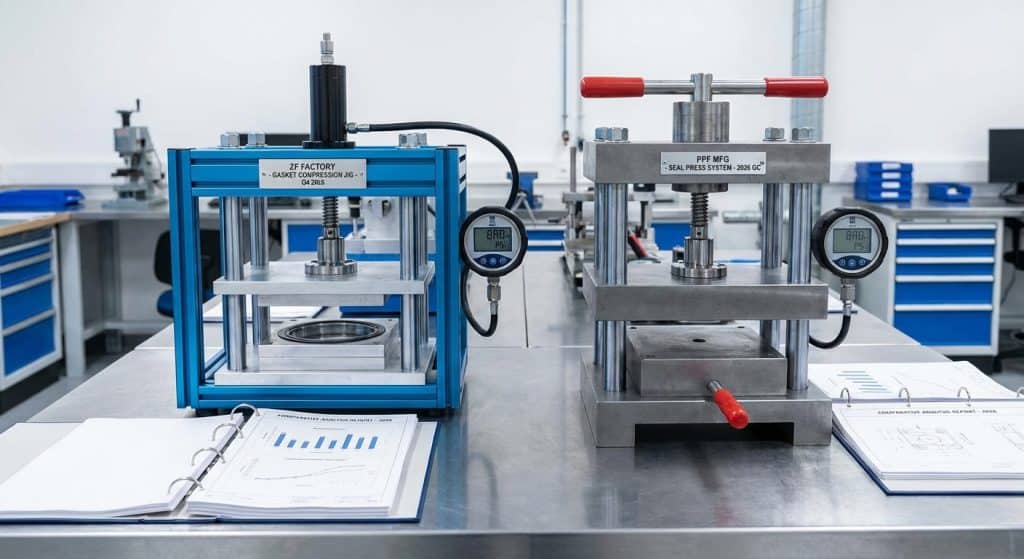
The hierarchy of the 2026 replica market is defined by Batch Consistency. While several factories produce aesthetically convincing Overseas and Patrimony models, their approach to Structural Fidelity varies wildly. The rivalry between ZF, PPF, and 8F has pushed the industry toward better Performance Metrics, but a clear engineering leader has emerged in the “wet” domain. The challenge for these factories is the Galvanic Build-up and Torsional Tension management required for a watch that is truly “swim-ready.”
While PPF and DC Factory have made strides in Sunburst Grain Density and dial depth, their focus often remains on the visual rather than the mechanical. In contrast, ZF‘s 2026 strategy has been one of “Engineering First,” investing in proprietary Gasket Compression Jigs that ensure every watch leaving the assembly line meets a baseline 10-Bar consistency. This industrial rigor has reduced the QC failure rates significantly, establishing a new benchmark for what a “Super Clone” must achieve in terms of real-world reliability.
ZF V4 vs. PPF/DC Factory: The Race for 10-Bar Consistency
As of 2026, ZF remains the Engineering Leader for the 4500V due to their specialized assembly jigs that ensure uniform gasket seating. While PPF offers arguably superior dial finishing, their waterproofing remains statistically inconsistent, with a 15% failure rate at 5-bar pressures. Conversely, the 2026 ZF batches undergo a rigorous Dual-Stage Test involving both Dry Vacuum and Wet Pressure analysis. This brings their Failure Tolerance down to less than 2%, a remarkable feat for high-volume Guangzhou production. Even for complex models like the BBR VC Tourbillon, the move toward FKM seals and CNC-machined seats has made 5-bar resistance a standard expectation rather than a luxury.
Expert Authentication Insight: The “Amplitude” Stability Check
A sophisticated method to verify sealing integrity involves testing the movement’s Amplitude on a Timegrapher both before and after a 5-bar water test. A “Super Clone” with perfect Structural Fidelity will show zero change in Amplitude. If a drop of more than 10 degrees is observed, it suggests that the Pressure Deformation of the case-back is physically making contact with the movement spacer. This indicates a Geometric Mismatch in the internal architecture, signifying that the case cannot truly withstand the forces of deep-water immersion despite its seals.
Reliability Audit: Long-term Waterproofing Recovery and Maintenance
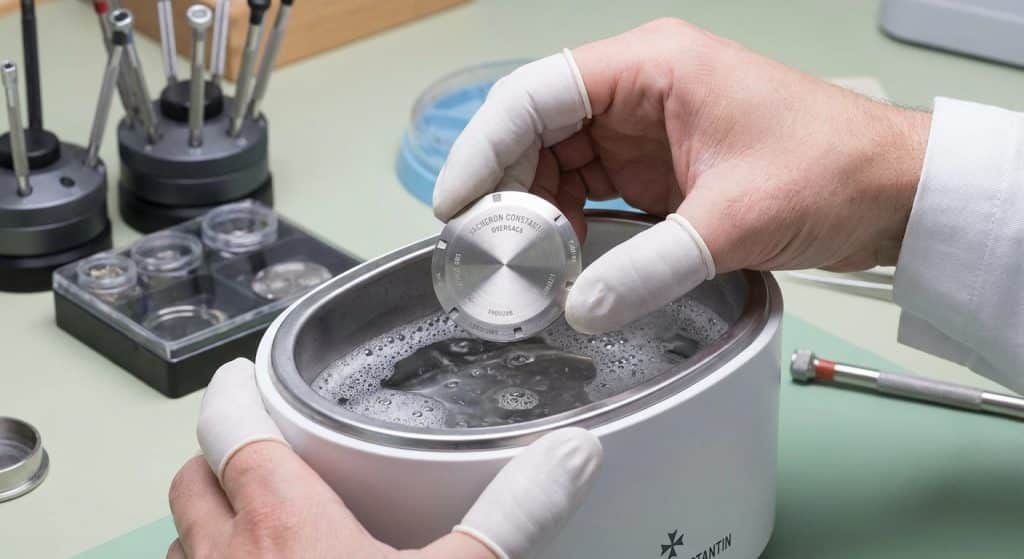
Waterproofing is not a permanent state; it is a perishable characteristic of the timepiece. By 2026, the industry consensus for Super Clones suggests a comprehensive gasket refresh every 24 months. The Molecular Fatigue of even the best FKM gaskets is inevitable, and the Compression Set—the percentage of permanent deformation—reaches a critical threshold of 20% after two years of constant Torsional Tension. Maintaining the Geometric Equivalence to the genuine article requires a proactive maintenance schedule that addresses both the seals and the surfaces they bond with.
Neglecting this service leads to the accumulation of Galvanic Build-up within the threads of the 904L Steel case. This microscopic debris acts as an abrasive, degrading the Thread Pitch Precision—a metric prioritized in the engineering audit of VC super clones’ kinematic haptics—and eventually creating “micro-channels” that bypass even the most robust gaskets. A professional restoration of waterproofing involves more than just a new O-ring; it requires the restoration of the Structural Fidelity of the entire case assembly.
The 24-Month Service Interval: Ensuring “Kinematic” Longevity
To maintain the Hermetic Sealing of a 2026 batch Overseas, the case must undergo an Ultrasonic Cleaning to remove environmental contaminants before re-greasing with Moebius 8513. Our analysis of the 2026 batch gaskets shows that the Compression Set significantly impacts the seal’s ability to rebound after being unscrewed. By adhering to a 24-month interval, collectors ensure that the Friction Coefficient of the crown and case-back remains within the original engineering specifications. This preservation of Kinematic Longevity is what separates a long-term investment piece from a disposable replica.
Expert Authentication Insight: The Thread Integrity Inspection
Inspect the case-back threads with a 10x loupe. Genuine Vacheron Constantin and elite 2026 clones feature Rolled Threads, which appear smooth, compressed, and uniform. In contrast, lower-tier “Guangzhou Budget” versions utilize Cut Threads, which often exhibit jagged edges and metal burrs under magnification. These burrs are not merely aesthetic flaws; they act as “micro-channels” for water, allowing moisture to bypass the gasket through capillary action, regardless of the quality of the seal itself.