
(A Manufacturing, Supply Chain, and Market Reality Explained)
Replica watches are manufactured in China because modern watch replication requires an industrial environment where cost efficiency, component availability, precision machining, and repeatable assembly coexist at scale. This is not a cultural outcome or a short-term arbitrage, but the result of how global manufacturing capacity has consolidated over the past three decades. China did not become the center of replica watch manufacturing by intent; it became the only place where the entire process could function without structural friction. Once production crossed a certain level of complexity, no other country retained the conditions needed to sustain it.
The phrase “replica watches made in China” describes an industrial fact rather than a value position. It reflects where tooling, labor organization, component ecosystems, and production feedback loops can operate continuously. Other countries participate heavily in selling, distributing, or reselling replicas, but manufacturing itself demands a deeper infrastructure. That infrastructure exists in China, and almost nowhere else.
A Global Phenomenon, Not a Local Coincidence
Replica Watches Exist in Every Major Market — But Manufacturing Does Not
Replica watches are sold in virtually every major consumer market. They appear in North America, Europe, the Middle East, Southeast Asia, and parts of Africa. Their presence is global, but their origin is not. Manufacturing is geographically concentrated, and that concentration is unusually tight. Once the surface noise is removed, nearly all meaningful replica watch production traces back to a small number of regions in southern China.
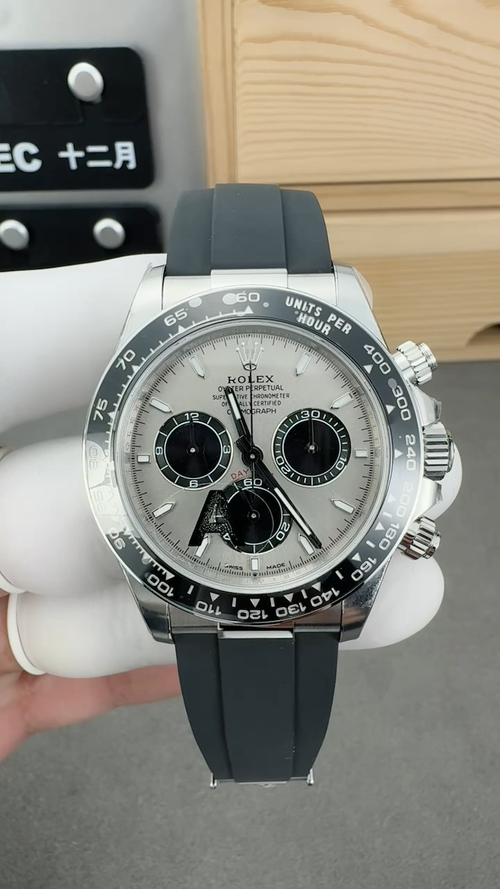
This concentration is not accidental. Manufacturing favors environments where suppliers, machinery, labor, and iteration cycles are physically close. Replica watches, especially higher-grade ones, are not assembled from generic parts ordered online. They require cases machined to specific tolerances, dials printed and indexed with consistency, crystals cut and coated to defined thicknesses, bracelets with repeatable articulation, and movements that can be regulated in volume. When any one of these elements is distant, unreliable, or slow to adjust, production breaks down.
Global demand alone does not create manufacturing centers. What matters is whether demand can be translated into repeatable output. In the replica watch market, only one region has demonstrated the ability to absorb continuous demand fluctuations while maintaining acceptable consistency. That region happens to be in China.
Distribution vs Manufacturing: Two Completely Different Roles
Manufacturing, distribution, and retail are often conflated, but they operate under entirely different constraints. Manufacturing is capital-intensive, process-driven, and intolerant of instability. Distribution is opportunistic, margin-focused, and mobile. Retail is customer-facing and replaceable. Most countries involved in replica watches participate only at the distribution or retail level because those roles do not require permanent industrial commitments.
A distributor can change suppliers, routes, or markets with minimal sunk cost. A manufacturer cannot. Once tooling is installed, supply contracts are aligned, and labor is trained, the operation becomes location-bound. This is why manufacturing consolidates while distribution fragments. Countries like the United States or Turkey appear prominently in replica watch conversations not because they produce watches, but because they sit at advantageous points in consumption or transit networks.
This distinction explains why replica manufacturing did not decentralize as the market expanded. As volumes increased and product expectations rose, production favored environments where iteration speed, supplier proximity, and workforce specialization already existed. Distribution could spread globally. Manufacturing could not.
Manufacturing Cost Is the Foundation — But Not the Whole Story
Labor Cost Is Only the Entry Ticket
Manufacturing cost matters, but it explains far less than most people assume. Lower labor cost enables scale, not quality. It reduces the penalty for iteration, rework, and parallel production, which is critical in a category where models evolve quickly and tolerances tighten over time. What it does not do is magically produce accurate cases, stable dials, or reliable replica movements. Those outcomes depend on process control, not wages.
In practice, labor efficiency matters more than labor price. Southern China developed a workforce accustomed to small-batch precision assembly long before replica watches reached their current level. Workers are trained to repeat narrow tasks with consistency rather than craft entire products end to end. This specialization allows factories to scale output without losing alignment across batches. Low labor cost simply makes this structure economically viable at volume.
If cost alone were decisive, replica watch manufacturing would have migrated repeatedly over the last twenty years to even cheaper regions. That did not happen. Production stayed where systems already worked.
Why Cost Alone Cannot Explain High-End Replicas
High-end replica watches are not cheap products in an industrial sense. They are optimized products. The difference matters. A top-tier replica is built around dimensional accuracy, component compatibility, and repeatable finishing, not around minimizing absolute cost. These watches absorb significant investment in tooling, CNC programming, fixture design, and quality control feedback.
The reason cost fails as a full explanation becomes obvious when examining failure rates. Low-cost environments without industrial depth produce inconsistent batches, misaligned cases, unstable dials, and movements that cannot be regulated reliably. High-end replicas survive because their production systems are designed to reduce variance, not just expense.
This level of optimization only works where manufacturing decisions can be tested, corrected, and redeployed quickly. Cost enables the process, but process maturity defines the outcome.
China’s Complete Watch Manufacturing Ecosystem
A Fully Localized Supply Chain (From Screws to Movements)
Replica watch manufacturing depends on a complete ecosystem, not isolated factories. Cases, dials, hands, crystals, bracelets, gaskets, clasps, and movements must all be available within a short logistical radius. This density allows components to be revised without halting production and lets factories adjust tolerances in response to real assembly feedback.
China’s watch manufacturing ecosystem is fully localized. A case supplier can revise lug geometry within days. A dial printer can adjust color temperature or font weight without renegotiating international contracts. Bracelet factories can rework articulation or taper based on wear feedback rather than theoretical drawings. Movements can be sourced, tested, regulated, and replaced without breaking supply continuity.
This level of vertical integration is not easily replicated. It is the result of decades of supplier layering, subcontract specialization, and informal coordination. Once established, it becomes self-reinforcing. New entrants plug into an existing system rather than attempting to recreate it elsewhere.

Domestic Movements and Industrial Compatibility
Why Replica Watches Do Not Use Genuine Swiss Movements
Replica watches do not rely on genuine Swiss movements for practical reasons unrelated to legality. Supply consistency is the first constraint. Genuine movements are produced in controlled volumes for contracted clients. They are not designed for flexible, high-variance allocation across changing models. Replica manufacturing requires movements that can be sourced predictably, adjusted freely, and replaced without disrupting downstream assembly.
Cost structure is the second constraint. A movement in this context must support regulation, servicing, and replacement at scale. Genuine Swiss movements are optimized for brand-controlled distribution and long service intervals, not for modular assembly across dozens of case and dial configurations. Using them would introduce bottlenecks rather than quality gains.
Servicing compatibility completes the picture. Replica watches must remain maintainable within the same ecosystem that produces them. Movements designed for local tooling, familiar tolerances, and interchangeable components support that requirement far better than externally constrained alternatives.
The Role of Chinese Movement Factories in Replicas
Chinese movement factories provide the industrial backbone that makes replica manufacturing viable. Facilities associated with the Dandong region and the broader Sea-Gull ecosystem produce mechanical movements designed for volume regulation, dimensional stability, and compatibility with modern case designs. These movements are not artisanal substitutes; they are industrial products built to integrate smoothly into localized production systems.
What matters here is industrial maturity. These factories understand yield management, parts standardization, and long-run consistency. Movements can be modified, reinforced, or rebalanced based on assembly feedback without renegotiating external supply chains. That flexibility allows replica manufacturers to refine models over time rather than locking into static designs.
This movement ecosystem does not exist in isolation. It interacts continuously with case machining, dial printing, and final assembly. The result is not perfection, but stability. And in manufacturing, stability matters more than theoretical pedigree.
Regional Industrial Clusters: Why Guangdong Matters
Pearl River Delta as a Watch Manufacturing Cluster
Guangdong matters because it functions as a manufacturing cluster, not because of any single factory or company. The Pearl River Delta operates for consumer manufacturing in the same way Silicon Valley operates for software: density creates capability. Skills, tooling, suppliers, and problem-solving knowledge circulate locally, reducing friction at every stage of production.
In the context of watch manufacturing, density is decisive. Guangdong concentrates CNC workshops, case polishers, dial printers, bracelet manufacturers, crystal processors, movement assemblers, and final assembly lines within a narrow geographic radius. When a dimensional issue appears at assembly, the correction does not require months of communication or cross-border shipping. It requires a phone call and a short drive.
This environment supports continuous refinement. Factories can test revisions in real production conditions rather than in isolated prototypes. That feedback loop is why manufacturing remains anchored in this region. Once a cluster reaches this level of maturity, relocating production elsewhere becomes economically irrational, even if labor costs are marginally lower.
Specialized Division of Labor Inside the Cluster
No single factory builds a complete watch. This is not a weakness of the system; it is its strength. The watch manufacturing process in Guangdong is modular by design. Each factory specializes in a narrow function and performs it at scale. One workshop machines cases, another applies brushing and polishing, another prints and applies dials, another assembles bracelets, and another regulates movements.
This division of labor reduces risk. If one supplier encounters delays or quality issues, components can be rerouted without collapsing the entire production line. It also increases efficiency. Specialized factories invest deeply in specific tooling and processes rather than spreading resources thinly across unrelated tasks.
The result is a production network that behaves more like an organism than a hierarchy. Replica watch factories assemble products, but the real manufacturing capability lives in the cluster itself. This structure cannot be replicated by exporting a single factory or copying a floor plan. It depends on manufacturing density, shared experience, and long-term specialization.
Logistics, Cross-Border Shipping, and Modern Commerce
Small Parcel Logistics as an Industry Enabler
Modern replica watch manufacturing would not function without small parcel logistics. This is not about evasion or loopholes, but about fragmentation and scalability. When production is modular and demand is globally dispersed, shipping must mirror that structure. Small parcels allow output to be distributed incrementally rather than in concentrated blocks, which aligns naturally with how replica watches are produced and sold.
Fragmentation reduces dependency on single channels. A manufacturer can ship continuously without waiting for large consolidated orders, and buyers can receive products without coordinating bulk logistics. This system scales horizontally. As demand grows, volume increases through frequency, not size. The result is global reach without centralized warehousing or regional manufacturing outposts.
This logistics model reinforces manufacturing concentration. Once shipping becomes flexible and predictable, there is little incentive to duplicate production elsewhere. Distance stops being a constraint, and manufacturing remains where industrial efficiency is highest.
Direct-to-Consumer Channels and Digital Sales
Direct buyer–factory communication has reshaped how replica watches move through the market. Instead of passing through layered wholesale and retail structures, transactions increasingly connect buyers with manufacturing sources or near-source intermediaries. This shortens feedback loops and changes how production decisions are made.

In this context, the term china replica watch is less a reference to geography and more a shorthand for how this direct-to-consumer structure actually functions. It reflects a production environment where buyers are close enough to manufacturing decisions that feedback can influence real output, not just marketing claims. What the market recognizes under that label is a system defined by responsiveness, component availability, and the ability to deliver the same result repeatedly rather than a one-off transaction.
When buyers communicate directly with factories or factory-adjacent sellers, preferences around sizing, finishing, and model updates reach production faster. Factories respond not to abstract market reports, but to immediate demand signals. This favors manufacturers capable of rapid adjustment, consistent output, and ongoing support.
Digital direct-to-consumer models reward stability over novelty. Factories that can reproduce the same result repeatedly gain trust, while those relying on one-off production lose relevance. This dynamic further anchors manufacturing in environments built for repeatability rather than experimentation.
Reputation, Consistency, and Market Trust
Why Buyers Associate High-End Replicas With China
Buyers associate high-end replicas with China because consistency emerges from experience, not messaging. Over time, repeated transactions reveal patterns. Certain sources deliver stable results across batches. Others do not. The association forms through accumulation, not persuasion.
High-end replica buyers prioritize predictable outcomes. They expect case dimensions to remain stable across runs, dial printing to match previous batches, and movements to perform within known parameters. Chinese manufacturing clusters have demonstrated the ability to maintain this continuity over years, not weeks.
After-sales logic reinforces this trust. When components are standardized and supply chains remain intact, servicing and replacement become feasible. Buyers learn which production environments support long-term ownership rather than single transactions. Reputation follows behavior.
Manufacturing Consistency vs One-Off Production
Manufacturing consistency is the dividing line between industrial production and workshop output. One-off production can produce impressive results occasionally, but it cannot sustain them. Replica watch quality depends less on peak execution and more on repeatability.
Factories designed for consistency invest in process control, fixture stability, and quality checkpoints. They expect variation and design systems to contain it. Workshops focus on individual units and rely on manual correction. That approach does not scale and breaks under volume.
Repeatability shapes trust. When buyers know that a replacement will match the original, or that a second purchase will align with the first, confidence builds. This is why replica watch manufacturing concentrates where quality control systems exist, not where isolated craftsmanship appears.
Conclusion: An Industrial Reality, Not a Moral Debate
Replica watch manufacturing exists where industrial structure allows it to function at scale, and China occupies that position not by chance or ideology, but because its manufacturing ecosystem, supply density, and production repeatability align in ways no other region currently matches.