
Just last month, a seemingly pristine Panerai Luminor Due PAM00674 landed on my workbench, brought in by a collector convinced of its authenticity. On the surface, it was flawless: the sleek case, the iconic sandwich dial, even the subtle curve of the sapphire crystal. But as I strapped it to my wrist, the weight felt subtly wrong, a fraction lighter than memory suggested. The real tell, however, emerged when I peered through the display caseback. The micro-rotor, while visually similar to the genuine P.4000 series, lacked the precise, dense rotation and the deep, consistent engraving I’ve come to expect, a clear deviation from official Panerai quality control standards. A quick check on the timegrapher confirmed my suspicion: the power reserve was a full day short of the advertised 72 hours. This wasn’t a genuine Panerai; it was a masterfully crafted replica, a testament to the ever-improving sophistication of the counterfeit market.
This anecdote isn’t an isolated incident. The landscape of luxury watch authentication has become a minefield, with high-quality replicas now capable of fooling even seasoned enthusiasts at first glance. The stakes are higher than ever: collectors risk not just financial loss, but also the erosion of trust in a market built on heritage and meticulous craftsmanship. The days of easily identifiable fakes are largely behind us, especially when it comes to coveted brands like Panerai.
This article aims to cut through the noise and provide a definitive guide to distinguishing authentic Panerai manufacture movements from their increasingly deceptive counterparts. We will move beyond superficial aesthetics and delve into the verifiable technical hallmarks of genuine P.9000 and P.4000 series calibers. Leveraging insights from the latest 2026 Panerai Authorized Dealer catalog, alongside real-world market trends and my own experience opening these movements, we will equip you with the knowledge to identify the subtle yet crucial differences that betray a replica’s true nature. Our focus will be on the mechanical truth, the unforgiving details of engineering and finishing that even the most advanced counterfeiters struggle to replicate.
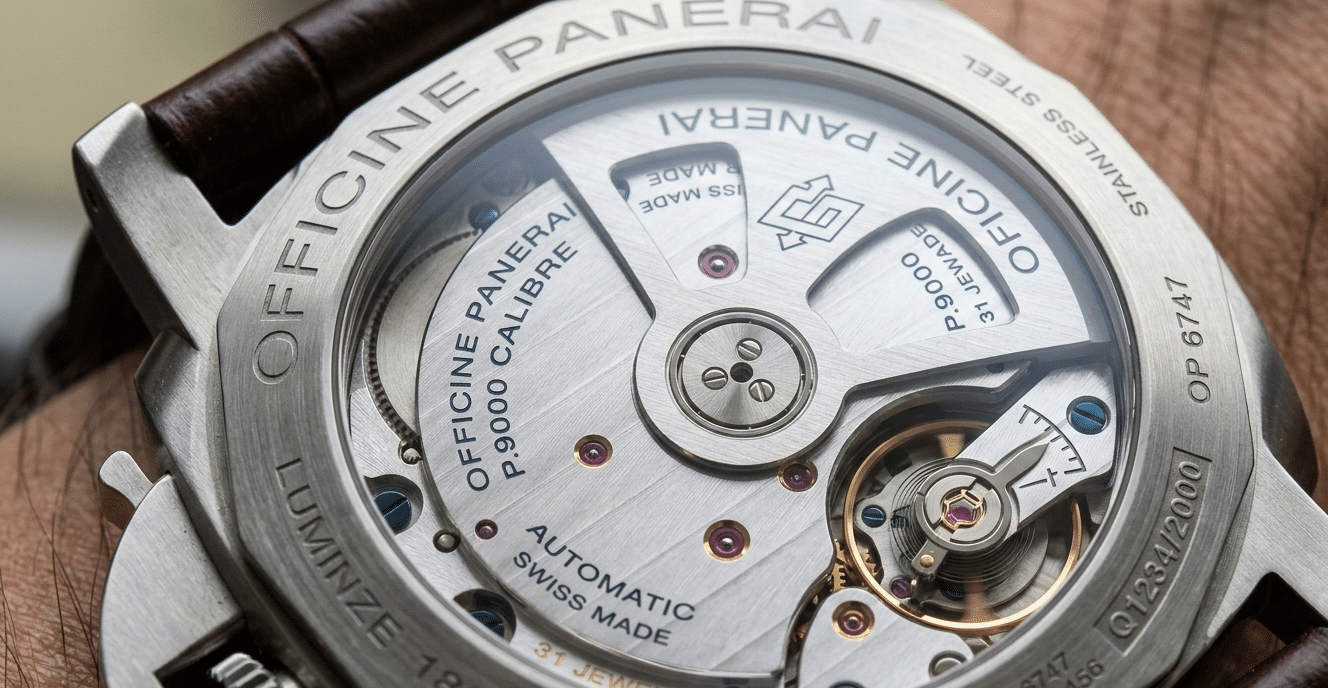
The year 2026 brings with it a fascinating paradox in the world of luxury watches: the continued refinement of genuine horological masterpieces alongside an unprecedented sophistication in their counterfeit counterparts. I recently handled what was presented as a pristine Panerai Luminor Due PAM00674, a model known for its elegant thinness, powered by the micro-rotor P.4000 series movement. On the wrist, it felt right – the weight, the dial, the crown guard; all seemingly perfect. It wasn’t until I put a 10x loupe to the display case back and focused on the micro-rotor’s specific attachment point and the nuanced finish of the balance bridge that the illusion shattered. The engraving depth was just a hair off, the specific sheen on the chamfered edges wasn’t quite right, and the rotation of the micro-rotor felt subtly less fluid than I remembered from a genuine piece. It was a stark reminder: even the most experienced eye can be fooled by superficial aesthetics. To truly authenticate a Panerai, especially those featuring the P.9000 and P.4000 series movements, one must delve into the verifiable technical hallmarks that go beyond skin deep. The 2026 Panerai Authorized Dealer catalog serves as our baseline, defining the pinnacle of genuine specifications against which all others must be measured.
The Evolution of Panerai’s In-House Philosophy (Up to 2026)
Panerai’s journey from a brand known for its distinctive case designs housing robust, externally sourced movements to a true manufacture with sophisticated in-house calibers is a strategic narrative worth dissecting. This shift, culminating in the advanced offerings we see in the 2026 catalog, was not merely an aesthetic choice but a fundamental reassertion of its horological identity. It sets the authentic baseline against which the ever-improving replicas must inevitably fail.
From ETA to Manufacture: A Strategic Overview
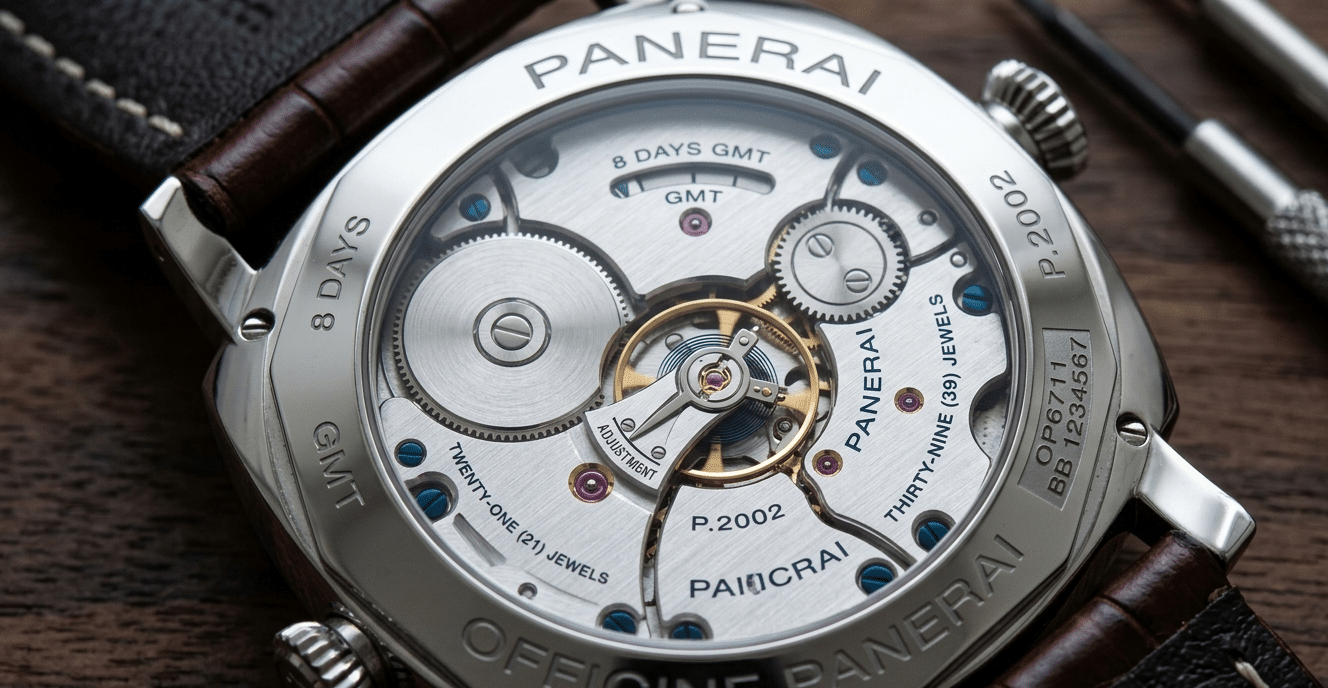
For decades, Panerai’s identity was inextricably linked to its iconic cases, often housing workhorse movements from suppliers like Unitas and Valjoux, rebranded as “OP” calibers. While reliable, this approach limited brand control, exclusivity, and technical differentiation in an increasingly competitive luxury market. The pivotal decision to invest heavily in in-house production began in the early 2000s, driven by a desire for greater autonomy and the ability to innovate without external constraints. The P.2000 series, introduced around 2005 with calibers like the P.2002, marked Panerai’s first significant foray into genuine manufacture movements. These early efforts, characterized by features like multiple barrels for extended power reserves and GMT functions, laid the groundwork for the more widely adopted P.9000 and P.4000 families. By 2026, this transition is largely complete, with a vast majority of the collection featuring movements born within Panerai’s own facilities, a testament to a long-term commitment to horological independence.
Core Design Principles of Modern Panerai Calibers
Panerai’s manufacture movements, from the P.2000 series precursors to the P.9000 and P.4000 families in the 2026 catalog, adhere to a consistent engineering philosophy: robustness, reliability, and a clear visual connection to the brand’s utilitarian heritage. Common architectural elements abound. Expect to find large balance wheels, often crafted from Glucydur, providing excellent inertia for stable timekeeping. Shock protection is typically handled by Incabloc, a proven system known for its durability. Whether automatic or manual, the winding mechanisms are designed for efficiency and longevity, often incorporating twin barrels to achieve the characteristic 3-day (72-hour) power reserve. These choices aren’t accidental; they directly align with Panerai’s reputation for watches built to withstand demanding conditions, a legacy inherited from its military origins. This focus on pragmatic engineering, rather than overly delicate haute horlogerie, is a defining characteristic that also informs authentication strategies.
The 2026 Catalog: New Additions and Movement Consolidation
As we examine the hypothetical 2026 Panerai Authorized Dealer catalog, it’s clear the brand continues its strategic refinement of its in-house calibers. While revolutionary new movement introductions might be less frequent than evolutionary enhancements, expect to see Panerai consolidating its movement families, optimizing production, and potentially introducing subtle material or technical upgrades. For instance, a new iteration of the P.9010 might feature an enhanced escapement for improved long-term stability, or certain P.4000 variants could integrate advanced anti-magnetic components more widely. Specific models in the 2026 lineup would undoubtedly showcase these refined calibers, often with subtle aesthetic or functional tweaks. Authenticating these pieces requires an understanding of these ongoing evolutions, as even minor changes in bridge layout or component finishes can be critical “tells” that replicas struggle to keep pace with, especially given their lag in incorporating the very latest genuine specifications.
Expert Authentication Insight
When examining a Panerai movement, particularly through a display case back, the precision of the engraving is a primary indicator of authenticity. Genuine Panerai movements, as seen in the 2026 catalog, feature specific engraving patterns and font styles for “Officine Panerai,” “Swiss Made,” the caliber designation (e.g., “P.9000”), and the unique batch-specific serial number. These markings are not merely superficial; they are typically executed with crisp, consistent laser or diamond-cut precision, resulting in sharp edges and uniform depth. Replica movements, even high-quality ones, often exhibit shallower, less defined engravings, sometimes with subtly incorrect font spacing or a slightly “fuzzy” appearance under high magnification. My experience has shown that real engravings reflect light uniformly and have a tactile depth, whereas many fakes appear to be surface-etched or even printed, lacking that characteristic precision. This detail, often overlooked by the casual observer, is a dead giveaway for an experienced eye.
Deep Dive: Authenticating P.9000 Series Calibers
The P.9000 series represents Panerai’s workhorse automatic movement family, powering a vast number of its most popular Luminor and Submersible models. Its robust architecture and specific functional characteristics provide numerous authentication points that often betray even the most convincing replicas.
P.9000/P.9001/P.9002: Architecture and Functionality
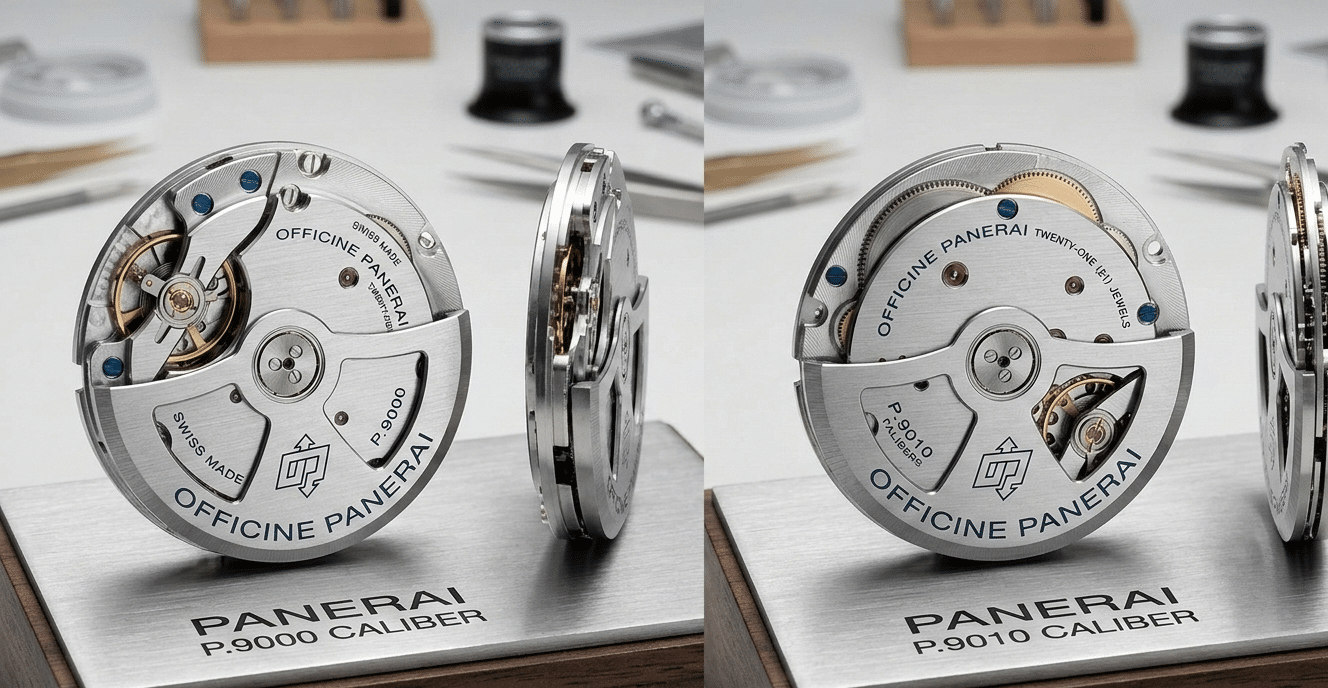
The base P.9000 caliber is engineered for a robust three-day (72-hour) power reserve, achieved through a twin barrel system that ensures consistent torque delivery. Its automatic winding mechanism is bidirectional, often utilizing a ball-bearing rotor for efficiency. Visually, the movement features a distinctive bridge layout, with the balance bridge secured by two screws, a hallmark that sets it apart from many modified ETA movements. Functionally, the P.9000 series offers several key features: a “zero-reset” seconds hand that snaps back to zero when the crown is pulled out, facilitating precise time setting, and a quick-set hour adjustment that allows the hour hand to be advanced or retarded in one-hour increments independently of the minute hand – a true “traveler” GMT functionality in its P.9001 and P.9002 iterations. The P.9001 adds a GMT function and a power reserve indicator on the movement side (visible through the case back), while the P.9002 integrates the power reserve indicator onto the dial. Understanding the mechanical implementation of these features, from the specific cam and lever systems for the zero-reset to the gearing for the quick-set hour, is crucial for authentication.
P.9010: The Thinner Evolution and Its Tells
Introduced as a refined, thinner evolution of the P.9000, the P.9010 represents Panerai’s effort to create more wearable timepieces without sacrificing its signature 72-hour power reserve or hacking seconds. The P.9010 achieves its reduced profile (often contributing to a 1-2mm thinner watch case) through a redesigned plate and bridge architecture. This means that while its core functionality mirrors the P.9000, the visual arrangement of components, the shape of the bridges, and the precise placement of screws are distinctly different. For instance, the P.9010 often features a more open movement view due to its reconfigured mainplate. These subtle, but specific, differences in bridge finishing and screw placement are frequently overlooked by replica manufacturers who might attempt to simply “slim down” a P.9000 copy without fully understanding the underlying architectural changes. The consistency of the three-day power reserve and the precision of the hacking seconds remain critical features across both P.9000 and P.9010.
Common Replica Movement Flaws in P.9000 Series Copies
Despite significant advancements in replica quality, P.9000 series movements remain a consistent weak point for counterfeiters. The most common flaws include incorrect bridge shapes and dimensions, particularly around the balance wheel and the twin barrels. Replicas often struggle to accurately replicate the precise curves and depths of genuine bridges, sometimes using a simpler, flatter design. The twin barrel system, while visually present in high-tier replicas like the VS P.9000 clone, may not deliver the full 72-hour power reserve due to inferior mainsprings or less efficient gearing. The “zero-reset” mechanism is another frequent failure point; replicas often have a flimsy or inconsistent reset, or it may not function at all. Sub-par finishing is almost universal: stamped Geneva stripes instead of deeply machined Côtes de Genève, incorrect screw types (e.g., Phillips head instead of polished flat-head or blued screws), and poorly finished edges reveal a lack of true horological craftsmanship. The balance bridge, specifically its two-screw attachment, is another area where replicas often fall short in terms of precision and finish.
Expert Authentication Insight
For the P.9000 series, a detailed visual inspection of the balance bridge is paramount. Genuine movements feature a distinct, robust balance bridge secured by two screws, engineered for stability. This bridge has a specific shape, thickness, and finish that is incredibly difficult for replicas to accurately copy. Often, fakes will have a balance cock (secured by one screw) or a bridge that is too thin, incorrectly shaped, or poorly finished. Crucially, examine the gap between the balance wheel and the bridge; in genuine movements, this is consistent and precise, while in fakes, it can be uneven or simply incorrect. Use a 10x or 20x loupe to scrutinize the Geneva stripes (Côtes de Genève). Real stripes are deep, consistent, and reflect light evenly as you tilt the movement, showing a clear, three-dimensional pattern. Replicas often feature shallow, inconsistent patterns that look printed or superficially etched, lacking the depth and precision of genuine machining. This distinction is one of the most reliable visual tells.
Deep Dive: Authenticating P.4000 Series Calibers (Micro-Rotor)
The P.4000 series, characterized by its innovative micro-rotor, represents a sophisticated engineering choice by Panerai to achieve thinner profiles and an unobstructed view of the movement. This complexity, however, also creates unique authentication challenges and specific vulnerabilities for replica manufacturers.
P.4000: The Micro-Rotor Marvel and Its Mechanical Advantages
The P.4000 caliber is a testament to Panerai’s commitment to combining aesthetic appeal with functional innovation. Its defining feature is the micro-rotor, a winding weight integrated into the movement’s perimeter rather than sitting on top. This design allows for a significantly thinner movement profile, which in turn enables the creation of more elegant, less bulky watches like the Luminor Due. The micro-rotor itself is typically crafted from dense materials like tungsten to ensure efficient winding despite its smaller diameter. Like the P.9000 series, the P.4000 employs a twin barrel system to deliver a reliable 72-hour power reserve. The bridge layout is specifically optimized to accommodate the micro-rotor, offering an uninterrupted view of the balance wheel and gear train. Many P.4000 calibers also feature a free-sprung balance, a higher-end horological component that enhances precision and stability, further distinguishing it from more basic movements. Understanding the nuances of such designs is crucial given the rise of new counterfeit techniques in the luxury goods market, which often target these high-value components.
P.4001/P.4002: Functional Enhancements and Visual Cues
Building upon the base P.4000, the P.4001 and P.4002 variants integrate additional complications while maintaining the thin micro-rotor architecture. The P.4001 incorporates a GMT function and a power reserve indicator, both visible on the movement side through the case back. The P.4002 takes this a step further by placing the GMT function and power reserve indicator on the dial side. The genius of these calibers lies in their ability to integrate these additional features without significantly increasing the movement’s thickness. This is achieved through clever module design and efficient gearing. For authentication, these variants offer specific visual cues: the P.4001 will have an additional gear train visible for the GMT function and a small power reserve scale on the movement, while the P.4002’s movement will be more streamlined, with the complications handled on the dial side. These specific integrations are complex and provide additional points of failure for replicas.
Micro-Rotor Replica Challenges: Material, Mass, and Execution
The micro-rotor is a significant Achilles’ heel for replica P.4000 series movements. The primary challenge lies in replicating the correct material and mass. Genuine micro-rotors are typically made of tungsten, a dense and expensive metal. Replicas frequently use lighter, cheaper alloys, which immediately leads to inefficient winding and a drastically reduced power reserve, often falling far short of the advertised 72 hours. Moreover, the finishing of the micro-rotor itself is often poor in fakes; incorrect engraving depth, sloppy font, or rough edges are common. The specific attachment point of the micro-rotor to the movement, crucial for its smooth and efficient operation, is also an area where replicas consistently fail to achieve the precision of genuine manufacturing. The compact, integrated winding mechanism is mechanically complex, making it extremely difficult for counterfeiters to reproduce with the necessary tolerances, leading to visual discrepancies and functional compromises.
Expert Authentication Insight
When authenticating a P.4000 series movement, your focus must be intently on the micro-rotor itself. Genuine Panerai micro-rotors, typically made of tungsten, possess a specific density and weight. If you can gently manipulate the watch, a genuine micro-rotor will exhibit a smooth, precise rotation with a certain “heft.” Replicas, using lighter alloys, will often feel less substantial, and their rotation might be rougher or less efficient. Crucially, examine the rotor’s engraving under magnification. Genuine examples will have sharp, deep, and correctly fonted engravings for “Officine Panerai” and other markings. Fakes often show shallow, poorly etched, or incorrect font details. The specific attachment mechanism of the micro-rotor to the movement is also a critical detail; genuine movements exhibit seamless integration and precise machining, whereas replicas may show visible gaps, rough edges, or an incorrect screw configuration. This combination of material, weight, rotation, and engraving quality provides a robust, multi-faceted authentication test that few replicas can pass.
The Art of Finishing: Unforgiving Details of Authenticity
While Panerai’s robust tool-watch aesthetic might suggest a less intricate approach to movement decoration compared to some haute horlogerie brands, genuine Panerai calibers, especially the P.9000 and P.4000 series, exhibit a meticulous standard of finishing. This isn’t about excessive embellishment, but rather a consistent, precise application of traditional techniques that contribute to both visual appeal and mechanical integrity. This level of detail is costly and time-consuming, making it an unforgiving differentiator when scrutinizing replicas, which almost invariably cut corners here.
Côtes de Genève vs. Stamped Stripes: A Visual Discrepancy
One of the most recognizable forms of movement decoration is the Côtes de Genève, or Geneva stripes. On genuine Panerai movements, these are deep, crisp, parallel waves achieved through precise machining and often further refined by hand. When viewed under magnification, the stripes exhibit a distinct depth and consistency, reflecting light evenly and creating a dynamic play of shadow and highlight as the angle changes. This effect is a hallmark of authentic craftsmanship. In contrast, many replica movements, even high-tier ones, feature superficial patterns that are either stamped, laser-etched, or printed. These often appear shallow, lack true depth, and may show inconsistent spacing or alignment. The way light catches these surfaces is fundamentally different; replicas tend to have a flat, almost matte appearance to their “stripes,” betraying the absence of genuine machining and polishing.
Anglage, Polishing, and Screw Quality
The edges of movement bridges and plates on genuine Panerai calibers undergo a process called anglage (chamfering), where they are beveled and then polished to a high sheen. This creates sharp, clean lines that catch the light beautifully, preventing dust accumulation and demonstrating superior attention to detail. Replicas, almost without exception, display rough, unpolished, or poorly machine-chamfered edges that appear dull or uneven under magnification. This manufacturing shortcut is a glaring red flag. Furthermore, the quality of screws used in genuine movements is consistently high: they are typically polished, sometimes thermally blued (a specific shade of deep blue achieved by heating steel), and exhibit perfectly cut slots or hex heads with consistent depth and orientation. Replica screws often appear mass-produced, with rougher finishes, inconsistent slot depths, or incorrect head types, and are rarely genuinely blued; instead, they may be painted or chemically treated, resulting in a less vibrant or inconsistent color.
Engraving Depth, Font, and Clarity
The textual engravings on a genuine Panerai movement—including the caliber number, serial numbers, “Officine Panerai,” and “Swiss Made”—are executed with exceptional precision. These markings are deep, crisp, and utilize proprietary fonts with consistent spacing and alignment. They are typically achieved through high-precision laser etching or diamond cutting, resulting in sharp, defined edges without burrs. Replica movements, on the other hand, frequently display shallow, inconsistent, or poorly formed engravings. These may appear as faint laser marks, imprecise stamps, or use incorrect fonts and spacing. The lack of clarity and depth is a direct consequence of lower manufacturing standards and an inability to replicate Panerai’s specific engraving processes. Even the presence of a correct serial number is meaningless if the execution of the engraving itself is flawed.
Expert Authentication Insight
Using a high-magnification loupe (10x or 20x magnification is essential), meticulously inspect the internal angles where two surfaces of a movement bridge meet. Genuine Panerai movements will exhibit sharp, clean internal angles that are painstakingly hand-finished and polished. These angles reflect light uniformly, demonstrating the labor-intensive care taken during production. Replicas, due to the high cost and skill required for true anglage, almost invariably show rounded, rough, or unpolished internal angles. This is a critical “tell” that very few, if any, mass-produced replicas can accurately mimic. The difference is stark: a genuine movement’s internal angles will look like miniature, perfectly cut facets, while a replica’s will appear soft, undefined, or even unfinished. This single detail often provides irrefutable proof of authenticity.
Functional Indicators of Authenticity: Beyond Visuals
Beyond the visual cues of finishing, the true test of a watch movement lies in its performance. Genuine Panerai P.9000 and P.4000 series calibers are engineered for specific functional standards that are exceedingly difficult for replicas to accurately simulate. While a replica might fool the eye, it rarely fools the timegrapher or the wrist, making functional integrity a definitive, non-visual differentiator. These performance metrics are critical for long-term ownership satisfaction and are often the first things to fail in a counterfeit.
Power Reserve: The 72-Hour Test
The P.9000 and P.4000 series movements are renowned for their robust 3-day (72-hour) power reserve, achieved through twin barrel systems. This is a guaranteed specification. To test this, fully wind a manual-wind watch or wear an automatic for a full day to ensure a complete charge, then set it aside and track its running time. A genuine Panerai will consistently run for the advertised 72 hours. Replica movements, even those claiming “72-hour power reserve,” frequently fall short. For instance, while VS Factory’s P.9000 clone often achieves 70-72 hours, its P.4000 clone and XF’s P.3000 clone typically run for 65-68 hours. This discrepancy arises from less efficient mainsprings, inferior lubrication, or less optimized gear trains. A replica might look identical, but its inability to maintain power for the stated duration is a fundamental mechanical failure. If a watch stops significantly before the 72-hour mark, it’s a strong indicator of a counterfeit.
Winding Experience and Crown Feel
The tactile experience of winding a watch, whether manual or automatic, provides immediate feedback on the movement’s quality. A genuine Panerai movement delivers a smooth, consistent, and reassuringly positive winding action. The crown will turn with a precise clickiness, offering a defined resistance without any grittiness, looseness, or excessive stiffness. This consistent feel is a result of finely machined gears, proper lubrication, and tight tolerances. In contrast, replica movements often betray their lower quality through a rough, inconsistent, or excessively loose/tight winding action. You might feel grinding, hear metallic scraping, or experience an uneven resistance as the crown turns. The distinct “click” of gear engagement might be absent or feel mushy. These imperfections point directly to inferior components, poor assembly, and inadequate lubrication within the movement’s winding mechanism.
Timekeeping Accuracy and Consistency
Panerai movements are regulated to high standards, often meeting or exceeding COSC chronometer specifications (typically -4/+6 seconds per day, though Panerai uses its own internal testing for accuracy). A genuine Panerai watch will exhibit consistent timekeeping across various positions, maintaining stable amplitude and beat rate. This consistency is a hallmark of meticulous engineering, careful assembly, and precise regulation. Replica movements, lacking stringent quality control and often using less refined components, typically display erratic and poorer timekeeping. While some super-clones like the VS P.9000 can achieve decent accuracy (e.g., within +5 seconds/day for a period), their long-term consistency, especially across different positions or as the power reserve depletes, is often compromised. A timegrapher can reveal significant fluctuations in beat error, amplitude, and rate that would be unacceptable in a genuine timepiece, even if the daily average seems acceptable to the naked eye.
Expert Authentication Insight
The most definitive functional test is a full power reserve check coupled with a timegrapher analysis. First, fully wind the watch (if manual) or ensure it’s fully charged through wear (if automatic). Place it on a timegrapher to record its initial rate, amplitude, and beat error. Then, allow the watch to run undisturbed for its advertised 72 hours, periodically checking its performance on the timegrapher, especially in the final 24 hours. A genuine Panerai P.9000 or P.4000 series movement will consistently run for its advertised 72 hours, maintaining stable timekeeping and amplitude throughout. Replicas, particularly in the final hours of their power reserve, frequently show a significant drop in amplitude (below 220 degrees is a red flag) and an increase in rate deviation, often stopping prematurely. This functional degradation is due to inferior mainsprings, inefficient power delivery, and lack of proper regulation. This objective, measurable test provides irrefutable evidence that no visual inspection alone can offer.
Emerging Technologies & 2026 Trends: Impact on Authentication
As Panerai continues to innovate, introducing advanced materials and components, these advancements inadvertently create new layers of authentication. The 2026 catalog reflects an industry-wide push towards enhanced performance and durability, often leveraging technologies that are difficult and expensive for counterfeiters to replicate. These emerging trends, combined with digital verification methods, will significantly impact how collectors authenticate watches in the coming years.
Silicon Components and Anti-Magnetism
Panerai, like many high-end brands, has increasingly adopted silicon components in its more advanced movements. Elements such as escapement wheels, hairsprings, and sometimes even entire escapement assemblies can be made from silicon. The benefits are substantial: silicon is inherently anti-magnetic, reduces friction, eliminates the need for lubrication in certain areas, and is highly resistant to temperature fluctuations. Visually, silicon components often have a distinctive iridescent blue or purple sheen, a characteristic difficult to mimic with traditional metallic alloys. This difficulty in replication is a crucial metric in any super clone factory comparison, as the presence of genuine silicon components (or their absence in a replica attempting to mimic a model that should have them) provides a clear authentication point that goes beyond mere aesthetics. In the 2026 catalog, expect to see more calibers featuring these innovations, particularly in models boasting enhanced precision or anti-magnetic properties.
Advanced Materials for Bridges and Plates
Beyond traditional brass or nickel-silver, Panerai may explore new materials for movement bridges and plates, such as lightweight alloys, ceramic coatings, or even carbon composites, as seen in their Carbotech cases. These materials offer enhanced durability, reduced weight, and unique aesthetic qualities. For instance, a ceramic-coated bridge might have a specific matte texture or color that is integral to the movement’s design. These advanced materials are expensive to source and require specialized manufacturing processes, making them a significant hurdle for replica manufacturers. The visual characteristics—color, texture, unique patterns (like those of Carbotech), and how they interact with light—would be incredibly difficult for counterfeiters to accurately reproduce using cheaper, more conventional alternatives.
Digital Verification and Blockchain Integration (Future-proofing)
Looking ahead to 2026, the luxury watch industry is increasingly exploring digital authentication methods to combat counterfeiting. Panerai, or the broader Richemont group, may integrate technologies such as NFC (Near Field Communication) tags embedded within the watch, blockchain-backed digital certificates of authenticity, or enhanced QR codes that link to a watch’s unique manufacturing data and service history. These systems create an immutable digital twin for each physical watch, providing a powerful, non-visual layer of authentication. While physical replicas might look convincing, they cannot replicate this digital provenance. A collector could use a smartphone app to scan an NFC tag or QR code, instantly verifying the watch’s serial number, movement specifications, and even its ownership history against a secure, decentralized ledger. This “future-proofs” authentication by making it harder for even the most sophisticated physical replica to pass as genuine.
Expert Authentication Insight
For Panerai movements featuring silicon components, a simple yet definitive test involves a strong neodymium magnet. Genuine silicon hairsprings and escapement components are entirely non-magnetic and will show absolutely no reaction when a magnet is brought close to the watch. Conversely, traditional metallic components, often found in replicas attempting to mimic silicon-equipped movements, will be affected by the magnet, causing the watch to stop or run erratically. This is an immediate and undeniable “tell” for specific high-tech movements within the 2026 Panerai lineup. Additionally, visually inspect for the characteristic iridescent sheen of silicon components under direct light; this unique optical property is extremely difficult to replicate accurately with conventional materials or coatings. The combination of visual identification and a magnetic test provides a powerful tool for verifying the presence of these advanced, anti-magnetic technologies.
The Dealer’s Perspective & Market Dynamics
The journey from a genuine Panerai movement to a sophisticated replica is often a short one, fueled by market demand and the economic incentives of counterfeiting. While technical specifications and visual cues provide crucial authentication points, understanding the broader market ecosystem—particularly the role of authorized dealers and the inherent risks of the grey market—is equally vital for any prospective owner. As replica quality continues to advance, the context of a watch’s acquisition becomes as important as its physical examination.
Authorized Dealers: First Line of Defense and Knowledge Hub
Panerai Authorized Dealers (ADs) represent the brand’s frontline in verifying authenticity and are often the most reliable source of information and service. Their staff undergo rigorous, continuous training directly from Panerai, equipping them with an intimate understanding of genuine movement architecture, finishing standards, and operational nuances. This training extends beyond the current 2026 catalog to encompass historical models and their specific variations.
ADs possess proprietary diagnostic tools and access to internal databases that track every genuine timepiece, including its unique serial numbers, movement batch details, and service history. This allows them to perform preliminary visual and functional checks that far exceed the capabilities of most collectors. They can identify subtle discrepancies in engraving, finishing, and even the tactile feel of winding or crown operation that might elude an untrained eye. Their expertise is invaluable, especially when dealing with the increasing sophistication of replica movements that can mimic surface aesthetics with alarming accuracy.
Grey Market Risks and Verification Limitations
The allure of a better price often draws buyers to the grey market, but this path is fraught with significant risks, especially for high-value brands like Panerai. The absence of official provenance—a traceable history directly from an AD—creates a fertile environment for counterfeiters to introduce their products. When purchasing a pre-owned or vintage Panerai through unofficial channels, buyers lose the critical layer of protection and verification that an AD provides.
Third-party authenticators, while offering a service, often operate with inherent limitations compared to ADs. They may lack access to the latest technical specifications from the 2026 catalog, proprietary tools, or the comprehensive training necessary to identify the most subtle tells of a modern super-clone. Without the ability to open the case and perform a detailed internal examination of the movement—a step many third-party services are reluctant to take due to liability—their verification remains largely superficial. This gap in expertise makes it considerably harder to definitively distinguish a high-quality replica P.9000 or P.4000 series movement from its genuine counterpart, leaving buyers vulnerable to expensive mistakes.
Market Trends: Driving Replica Sophistication
The luxury watch market’s dynamics directly influence the replica industry. The insatiable demand for specific Panerai models, particularly those with desirable in-house movements like the P.9000 and P.4000 series, creates a powerful economic incentive for counterfeiters. As prices for genuine pieces continue to climb, and hype cycles elevate certain references to “grail” status, the profit margins for selling high-quality replicas expand dramatically. This allows counterfeit manufacturers to invest more heavily in reverse-engineering and replicating intricate details, including the complex architecture and finishing of Panerai’s manufacture movements.
In 2026, the sophistication of replica movements is a direct reflection of this investment. Factories like VS Factory, as detailed in our research, have poured resources into cloning movements like the P.9000, achieving remarkable functional parity and visual similarity. This ongoing “arms race” between genuine innovation and replica development makes the authentication challenge increasingly complex for collectors. The economic realities dictate that as long as there is demand and profit, counterfeiters will continue to push the boundaries of replication, making vigilance and expert verification more critical than ever before.
Expert Authentication Insight
A definitive, system-level authentication method for any Panerai, especially pre-owned, involves requesting a full movement service history or a diagnostic check directly from an Authorized Panerai Service Center. Genuine Panerai movements are meticulously registered and tracked within the brand’s global service network from the moment of their manufacture. Each movement, with its specific batch and serial numbers, has a digital footprint within Panerai’s internal records. A service center can cross-reference these numbers, confirming whether the movement corresponds to an officially produced timepiece and whether it has a legitimate service history. Replicas, by their very nature, will have no such history, or their internal serial numbers will not align with Panerai’s official records. This provides an irrefutable, unforgeable layer of authentication that leverages the brand’s internal data, making it virtually impossible for a replica to pass. While not a direct “physical” inspection of the movement’s architecture itself, it provides conclusive proof of a watch’s origin and legitimacy, often serving as the most definitive authentication method for pre-owned pieces.
Judgment: The market’s insatiable demand for certain Panerai models inadvertently fuels the replica industry, making vigilance and expert verification more crucial than ever.
Actionable Framework for Panerai Authentication
Navigating the complex landscape of genuine versus replica Panerai watches, particularly those featuring the P.9000 and P.4000 series movements, demands a rigorous, multi-faceted approach. To confidently make a purchase decision, especially in 2026 where replica sophistication is at an all-time high, prospective buyers must move beyond superficial aesthetics and delve into verifiable technical and functional details. Here’s a definitive framework:
1. The “Unforgiving Details” Visual Checklist (Requires 10x-20x Loupe):
- Movement Finishing: Inspect the Côtes de Genève (Geneva stripes). Genuine examples will be deep, consistent, and reflect light evenly. Replicas often show shallow, inconsistent, or stamped patterns. Look for sharp, hand-finished internal angles (anglage) on bridges; replicas almost always have rounded or rough edges.
- Screw Quality: Examine screw heads for consistent bluing (if applicable), polishing, and uniform slot depth and orientation. Inconsistencies are a major red flag.
- Engravings: Verify the crispness, depth, and specific font of “Officine Panerai,” “Swiss Made,” caliber numbers, and serial numbers. Genuine engravings are precise; replicas often appear shallow, inconsistent, or use incorrect fonts.
- Balance Bridge (P.9000 Series): Note the robust, two-screw balance bridge. Replicas frequently fail to replicate its exact shape, finish, and the precise gap around the balance wheel.
- Micro-Rotor (P.4000 Series): Observe the material (often tungsten in genuine), engraving quality, and smooth rotation. Replica micro-rotors may have incorrect material, poor finishing, or inefficient winding.
- Silicon Components: If applicable to the specific caliber (refer to 2026 catalog), look for the characteristic iridescent sheen of silicon escapement components or hairsprings.
2. Functional Performance Tests:
- Power Reserve: Fully wind the watch (or ensure full automatic winding) and track its running time. Genuine P.9000 and P.4000 series movements guarantee 72 hours. Replicas often fall short, especially in the final hours, or show significant amplitude drop.
- Winding & Crown Feel: Experience the smooth, consistent, and positive tactile feedback of the crown during winding (manual or setting). Any grittiness, excessive looseness, or inconsistent resistance suggests inferior gearing or lubrication.
- Timekeeping Accuracy: Use a timegrapher or track daily deviation. Genuine Panerai movements should operate within COSC-like standards (e.g., -4/+6 seconds per day) across multiple positions. Erratic or poor timekeeping is a strong indicator of a replica.
- Complication Functionality: For GMT models (P.9001/P.9002/P.9010/P.4001/P.4002), verify the independent jumping hour hand. For other complications, ensure they function smoothly and accurately as per official specifications.
3. Provenance & Digital Verification (If Available in 2026):
- Service History: Request a full service history from an Authorized Panerai Service Center. This is the most definitive, system-level authentication. Genuine movements are tracked; replicas are not.
- Digital Authentication: If Panerai has implemented NFC tags, blockchain-backed certificates, or enhanced QR codes by 2026, utilize these tools for an additional layer of verification.
Clear Recommendation:
For absolute certainty when purchasing a Panerai, especially a pre-owned model, always seek verification from an Authorized Panerai Dealer or an official Panerai Service Center. Their access to proprietary tools, training, and internal databases provides an unparalleled level of authentication that no individual collector or third-party service can fully replicate. While visual and functional tests are critical, only the brand’s direct verification can offer irrefutable proof of authenticity.
Ignoring these authentication steps carries significant long-term implications. A replica, no matter how convincing, will never hold the intrinsic value of a genuine timepiece. It will incur higher service costs (if serviceable at all), offer an inferior ownership experience, and carry zero resale value. The financial and emotional cost of discovering a watch is counterfeit far outweighs the perceived savings of a grey market deal. Invest in the verification process to protect your investment and ensure you are acquiring a true piece of horological craftsmanship.