
The IWC Big Pilot replica has never failed because it was too ambitious; it failed because the watch itself punishes shortcuts more brutally than almost any other design. At 46 mm, the Big Pilot is not simply an enlarged pilot watch. It is a structure where size magnifies every mechanical weakness, every proportion error, and every compromise in movement architecture. Smaller pilot models can hide sins. The Big Pilot cannot.
The Big Pilot Is Not “Just Bigger” — It’s Structurally Different
Most failed oversized pilot watch replicas began with the same flawed assumption: take a standard 40–42 mm pilot case, scale it up, drop in a modified movement, and stretch the dial artwork. That logic works tolerably on paper. On the wrist, it collapses immediately.
At 46 mm, leverage becomes the silent enemy. The longer hands require more torque to move consistently, especially when paired with a power reserve display that draws energy from the same gear train. If torque delivery is uneven, the failure shows first at the dial level: sluggish seconds, jitter at the power reserve needle, or inconsistent amplitude as the mainspring winds down. These are not microscopic flaws. They are visible behaviors.
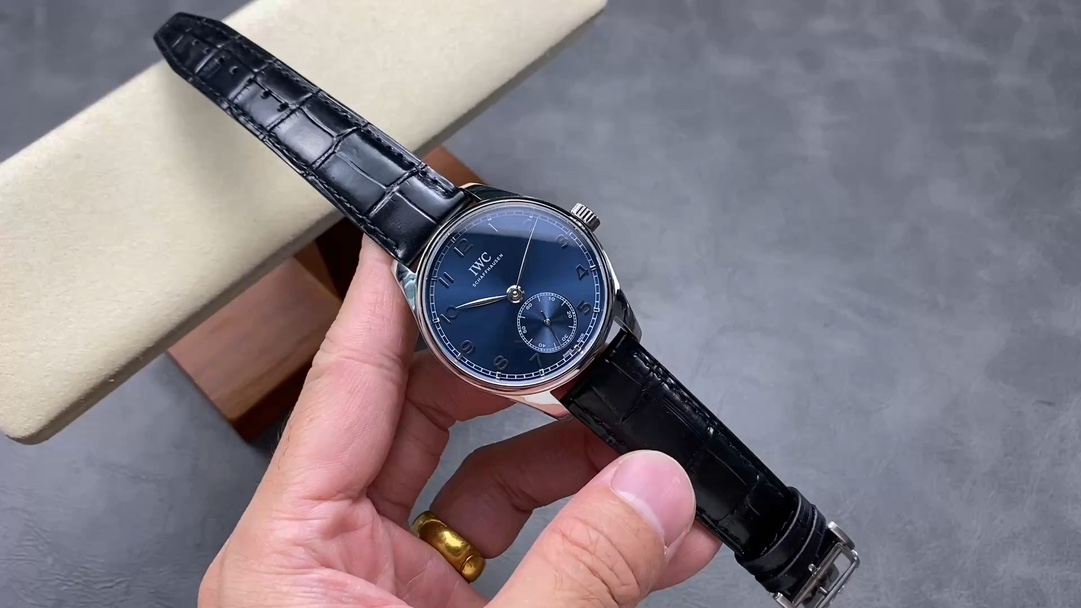
Dial spacing is another trap. On the genuine Big Pilot, the distance between the dial surface, hand stack, and crystal is carefully balanced to avoid visual flatness. Replicas that simply enlarge a smaller dial end up with wide negative space, shallow layering, and hands that float too close to the crystal or sink unnaturally into the dial. On a 46 mm canvas, even a 0.5 mm miscalculation becomes obvious. Large case tolerance issues don’t hide; they announce themselves.
This is why the IWC Big Pilot replica exposes flaws faster than Mark series or even Pilot Chronograph replicas. The watch has too much visual real estate and too much mechanical demand to forgive lazy scaling. To understand the key differences between the Mark XVII and Mark XVIII replicas and why they hold up better under scrutiny, take a look at this comparison guide.
Why Big Pilot Replicas Historically Failed
Early Big Pilot super clone attempts didn’t fail quietly; they failed structurally. The most common shortcut was the fake power reserve indicator. Many early replicas used static needles glued in place, or semi-linked indicators that moved only during manual winding and froze afterward. To inexperienced buyers, the dial “looked right.” To anyone who wore the watch for a week, the illusion collapsed.
Proportions were another recurring failure. Mid-cases were too thick because builders relied on stacked spacer rings instead of integrated movement architecture. The result was a barrel-shaped profile that destroyed the Big Pilot’s signature slab-sided presence. Combined with flat dials lacking depth or recess around the power reserve subdial, the watch lost the visual authority that defines the original.
The deeper issue was philosophical. These early builds treated the Big Pilot as a decorative object rather than a functional system. Decorative engineering can survive on smaller watches where tolerances are forgiving and complications are cosmetic. On the Big Pilot, decoration without function becomes exposure. A non-functional long power reserve is not a minor flaw; it contradicts the identity of the watch itself.
That is why most early Big Pilot replicas aged poorly in collector circles. They weren’t rejected because standards became stricter. They were rejected because time revealed what static inspection could not.
Core Technical Challenges in Replicating the Big Pilot
The Big Pilot does not fail replicas through detail alone; it fails them through physics. Its dimensions amplify mechanical consequences, and every shortcut compounds rather than cancels out. For collectors who care about how a watch behaves after months of use rather than how it photographs on day one, the Big Pilot remains a stress test that very few replicas truly pass. To better understand the factors that contribute to the price differences in IWC replicas, including how quality impacts long-term performance, check out this detailed price breakdown guide.
Thickness Control in a 46mm Case
Why Thickness Matters More Than Diameter
On paper, diameter defines presence. On the wrist, thickness defines credibility. This distinction becomes unavoidable with a 46 mm case. An extra millimeter on a 40 mm watch can pass unnoticed. On a Big Pilot, an additional 0.8–1.2 mm immediately alters the side profile, turning what should be a commanding slab into a bloated cylinder.
The genuine Big Pilot sits around the mid-15 mm range depending on reference and crystal profile, but more important than the number is how that thickness distributes itself. The authentic case spreads height across a broad mid-case with minimal dome, allowing the watch to sit flat and balanced despite its size. Replicas that miss this balance usually stack height vertically, producing a top-heavy feel that exaggerates wrist presence in the wrong way.
Collectors notice this instantly during side profile comparison. The visual bulk becomes disproportionate, the lugs lose their functional sweep, and the watch no longer feels anchored. Big Pilot thickness accuracy is not about chasing a spec sheet; it is about preserving the relationship between diameter, wall height, and lug geometry. Miss that relationship, and no dial detail can save the build.
Power Reserve Display — Fake vs Functional
Decorative Power Reserve (Old Generation)
Early Big Pilot replicas treated the power reserve as a visual checkbox rather than a mechanical responsibility. Static needles were glued in place or loosely linked to the winding stem, moving briefly during manual winding before freezing indefinitely. Some variants attempted a semi-linked solution, where the indicator advanced during winding but never tracked actual tension decay.
These fake power reserve replica systems fooled beginners because they satisfied momentary interaction. The needle moved, the dial looked alive, and the watch felt interactive for a few minutes. Over time, the illusion collapsed. The indicator failed to respond to wear patterns, remained static across days, and contradicted the watch’s supposed seven-day identity. For collectors, this was not a minor flaw; it was disqualifying.
The non-functional indicator exposed a deeper truth: the movement architecture had never been designed to support long-term energy tracking. The display was cosmetic, not systemic.
Fully Functional Long Power Reserve Systems
A true Big Pilot power reserve replica requires structural commitment. Long power reserve architecture demands an extended mainspring, reinforced barrel design, and a gear train capable of maintaining torque stability across a prolonged discharge cycle. This is not achieved by adding a display module; it requires reengineering how energy is stored and released.
Even today, fully functional long power reserve replica movement solutions remain rare. The trade-offs are real. As mainspring tension drops, amplitude consistency becomes harder to maintain. Increased torque load accelerates wear if materials and tolerances are insufficient. Builders must balance theoretical accuracy against long-term reliability, often accepting slight deviations in reserve length to preserve movement health.
Collectors who live with these watches notice the difference not on day one, but in how the power reserve needle decays naturally, how winding resistance changes as the spring tightens, and how timekeeping stability holds—or fails—across the reserve cycle. Functional systems earn trust slowly. Decorative ones lose it quickly.
Onion Crown Construction & Winding Feel
Crown Size Is Easy — Crown Engineering Is Not
The oversized onion crown is one of the most recognizable Big Pilot traits, yet it is also one of the easiest to misunderstand. Making a large crown is trivial. Making it feel right is not.
On a 46 mm case, crown stem stress becomes a real engineering concern. The leverage created by the crown’s diameter increases torsional load on the stem and keyless works. Poorly engineered replicas feel gritty, uneven, or overly loose because internal tolerances cannot handle the amplified forces.
Winding resistance versus smoothness is where authenticity reveals itself. A correct onion crown replica offers progressive resistance: firm but fluid, with no grinding, no sudden jumps, and no dead zones. Cheap constructions feel either hollow or harsh, often accompanied by audible mechanical strain. Over time, these flaws worsen as wear accumulates.
For experienced collectors, winding feel comparison is one of the fastest ways to judge a Big Pilot. It cannot be faked through finishing or decoration. The moment fingers meet crown, the watch confesses its build quality.
The “Le Petit Prince” Big Pilot — Why This Edition Exposes Fakes Faster
Among all Big Pilot variants, the Le Petit Prince editions act as a stress test that few replicas survive intact. The reason is not rarity or branding. It is sensitivity. Color, texture, and emotional expectation converge in this reference, and when any one of those elements is even slightly wrong, the entire watch feels off. Collectors notice faster, and tolerance drops sharply.
Blue Dial Complexity — Not All Blues Are Equal
The blue dial used on the IWC Big Pilot Le Petit Prince replica is deceptively unforgiving. At a glance, many replicas appear acceptable. Under movement and light, most collapse. The genuine dial is not simply blue; it is a controlled sunburst with depth that changes character depending on angle, distance, and ambient light. It can appear inky in low light, metallic under direct sun, and softly muted indoors.
Low-tier blue dial pilot watch replicas usually fail in one of two ways. Some use a flat lacquer blue that remains uniform regardless of angle, killing the dynamic behavior entirely. Others overshoot saturation, producing a vivid or electric blue that looks impressive in photos but feels wrong on the wrist. Both mistakes are instantly recognizable to experienced eyes.
What makes this worse for replicas is scale. On a 46 mm dial, color uniformity becomes a liability. Any inconsistency in brushing, grain size, or coating thickness becomes visible across the wide surface. Smaller watches can hide these sins. The Big Pilot magnifies them. To learn more about the challenges of replicating IWC models and how the best replicas perform, check out this comprehensive guide on IWC replica watches.
Caseback Engravings & Emotional Authenticity
The Le Petit Prince caseback is not decoration; it is narrative. The engraved image carries emotional weight for collectors, and that changes how flaws are perceived. Casual buyers glance once. Collectors linger.
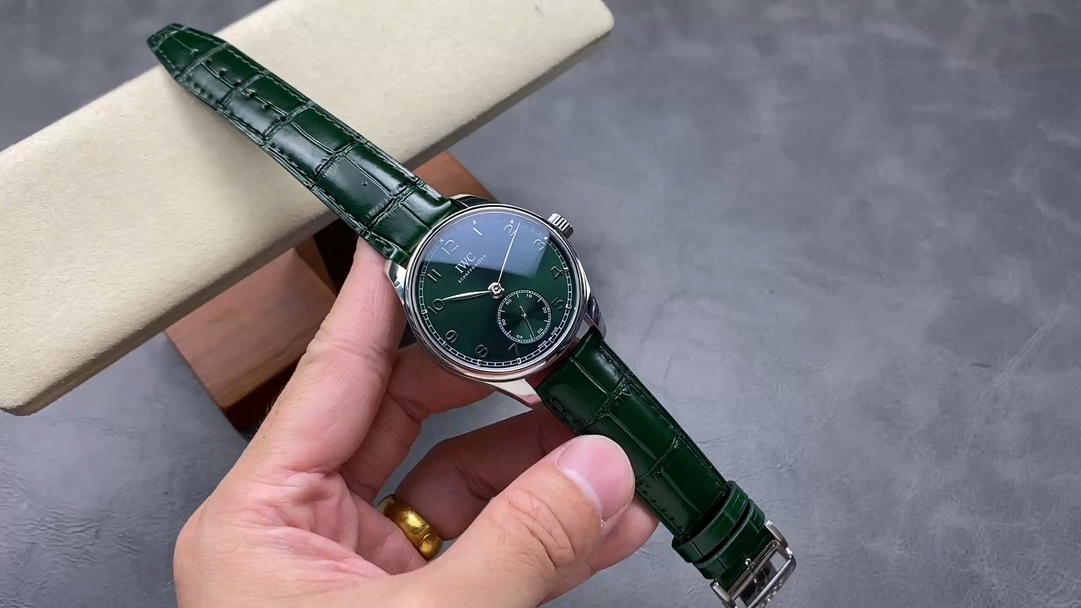
Most failures occur in engraving depth and line softness. Laser-etched casebacks often look sharp and high-contrast at first, but lack dimensionality. Lines appear brittle, transitions abrupt, and the illustration feels printed rather than carved. Over time, these engravings also tend to lose definition as coatings wear.
CNC engraving, when executed well, produces smoother contours, rounded line transitions, and subtle depth variation that mimics hand-finished metal. A proper Le Petit Prince caseback engraving replica should feel sculpted, not stamped. Collectors care because this is the part of the watch that carries meaning rather than function. When it feels cheap, the emotional contract breaks, regardless of how good the dial looks.
Factory Comparison — Who Actually Got the Big Pilot Right
Big Pilot replicas do not reward hype. They reward engineering decisions that hold up after months of wear. Many factories attempted the watch. Very few produced something that collectors continue to respect.
ZF Big Pilot — The Modern Benchmark
Movement Architecture & Power Reserve Execution
The ZF Big Pilot replica earns its position not by perfection, but by restraint. ZF committed to a functional power reserve system rather than a cosmetic shortcut, using a long power reserve architecture that tracks real tension decay instead of simulating it. The reserve length does not always match the theoretical seven days exactly, but the behavior feels honest.
For collectors, this trade-off matters. Stability beats marketing numbers. ZF’s functional power reserve clone maintains usable amplitude across most of the reserve cycle and avoids the erratic drop-offs seen in overextended designs. It is not a perfect mirror of the genuine caliber, but it behaves like a real long-reserve watch rather than a theatrical prop. That is why it is considered “good enough” rather than “perfect,” and why it continues to be worn rather than flipped.
Case Proportions, Dial Depth & Crown Feel
ZF’s case work respects the Big Pilot’s proportions more than any predecessor. The mid-case height, lug sweep, and side profile align closely enough that the watch sits correctly despite its size. Dial layering shows intentional spacing between the main dial plane and the power reserve subdial, avoiding the flat, printed look of older builds.
Crown torque realism is another strength. Winding resistance increases progressively, with no grinding or hollow sensation. The onion crown does not merely look right; it feels mechanically credible. This is where ZF still falls short versus gen: the last portion of the winding cycle lacks the refined resistance curve of the original, and the decay behavior near reserve exhaustion can feel slightly abrupt. These are nuances, not deal-breakers, but experienced owners will notice them.
Historical Factories (Old N-Factory & Others)
What They Did Right — and Why They Still Failed
Early players like the old N factory Big Pilot replica deserve credit for ambition. They recognized early that the Big Pilot required more than cosmetic scaling, and they attempted integrated solutions when others were content with decoration. Case finishing and dial printing were often respectable for their time.
Their failure was mechanical reality. Limited movement solutions forced compromises that could not survive extended use. Fake or semi-functional power reserves, excessive thickness, and unstable winding systems eroded confidence quickly. As collector standards rose and wear-time scrutiny replaced unboxing impressions, these legacy Big Pilot versions became obsolete.
The lesson they left behind is valuable. Big Pilot replicas cannot rely on first impressions. They must function credibly over time. Modern factories like ZF did not succeed because they were more daring, but because they were more disciplined.
Reputation of the Big Pilot in the Replica Community
The Big Pilot occupies a different social space from most replicas. It is not a volume-driven piece, and it never benefited from hype cycles. Its reputation was built slowly, through failure first and credibility later, which is why it carries weight among experienced collectors.
Why Big Pilot Replicas Are Respected, Not Hyped
The Big Pilot replica collector reputation comes from resistance, not popularity. The watch demands commitment in size, mechanics, and understanding. That naturally filters the audience. Fewer people buy Big Pilot replicas, but those who do tend to keep them longer, wear them harder, and judge them more critically.
This stands in sharp contrast to Rolex sports replicas, where volume, familiarity, and social signaling dominate. A Submariner replica can be appreciated in minutes. A Big Pilot requires time. It is less about recognition and more about internal consistency—how the watch behaves over weeks rather than how it looks in a mirror shot.
Because the Big Pilot punishes shortcuts, collectors learned early to distrust marketing claims and focus on behavior. That culture persists. When a Big Pilot replica earns respect, it does so quietly. There is no hype loop because hype does not survive prolonged ownership.
Wearability Reality — Wrist Size, Weight & Commitment
A 46 mm case is not a suggestion; it is a requirement. Big Pilot wearability depends on wrist structure more than wrist circumference. Flat wrists with good bone width can support it. Rounded or narrow wrists cannot, regardless of numbers on a tape.
Weight and leverage compound the issue. Even well-executed oversized watch replica comfort remains relative. The Big Pilot sits broad, not tall, but it still occupies space and demands posture. It catches cuffs, shifts under rapid movement, and reminds the wearer of its presence throughout the day.
This is why the Big Pilot is rarely a daily beater. Owners rotate it intentionally. Emotional ownership outweighs practical convenience. When worn, it feels deliberate. When not, it rests without guilt. Collectors who expect versatility tend to sell it quickly. Those who accept commitment tend to keep it.
How to Judge a True High-End Big Pilot Replica
Judging a Big Pilot replica is less about checklists and more about observation over time. The best indicators are not isolated details, but patterns of behavior that emerge through use.
Visual Tells That Still Separate Replicas from Gen
Dial depth remains the first silent tell. On the genuine watch, the dial feels layered rather than printed. The power reserve subdial sits with intentional recess, not as an afterthought. Replicas that flatten this relationship appear lifeless despite accurate printing.
Hand length and balance matter more than finishing. Incorrect minute hand reach or slightly oversized power reserve needles disrupt visual harmony across the large dial. These imbalances are subtle but persistent. Once noticed, they cannot be unseen.
Power reserve needle behavior reveals more than static inspection ever could. On serious builds, the needle moves gradually and predictably as tension decays. On weaker ones, it hesitates, jumps, or stalls near the end of the reserve. These Big Pilot replica tells only appear after days, which is why rushed reviews miss them.
Mechanical Signs of a Serious Build
Winding resistance consistency is the quickest mechanical check. A high-end build offers smooth resistance that increases progressively without chatter or dead zones. Abrupt stiffness or hollow spinning indicates compromised crown or keyless works design.
Power reserve decay behavior separates ambition from execution. Long power reserve stability means the watch maintains usable amplitude across most of the reserve, not just at full wind. When accuracy collapses halfway through the cycle, the architecture has failed its purpose.
Long-term reliability expectations should remain realistic. These movements carry stress by design. A serious replica prioritizes controlled wear over exaggerated specifications. Collectors who understand this accept maintenance as part of ownership rather than a defect.
Final Thoughts — Is the Big Pilot Replica Worth It in 2026?
The IWC Big Pilot replica is worth owning in 2026 if approached as an object of appreciation rather than imitation, and if its remaining limitations are accepted as the cost of experiencing one of the most mechanically demanding designs in replica form.
Related IWC Articles: If you found this helpful, you might also enjoy IWC Super Clone Terminology Explained: Factories, Versions & Movement Codes, which explains IWC super clone jargon (factory versions, movement codes, etc.), and IWC Replica Watches Guide: Best Factories, Movements & Models Explained. Another related article is What “7-Day Power Reserve” Means on a Real IWC.