
0) Price Is Not Random — It Follows a Logic
If you have spent any time looking at IWC replica watch price listings, the spread feels irrational at first. The same Portuguese Seven Days, the same Pilot Chronograph, even the same Mark XVIII reference can be offered anywhere from around $300 to well over $1,000. On the surface, they look similar enough to confuse newcomers and frustrate experienced buyers alike.
The reality is that IWC replica pricing is not chaotic. It is layered. Every price point reflects accumulated decisions about movement architecture, factory capability, case construction, finishing tolerance, and how much risk the seller is willing to absorb after the sale. What appears as “price difference” is usually the visible result of invisible compromises.
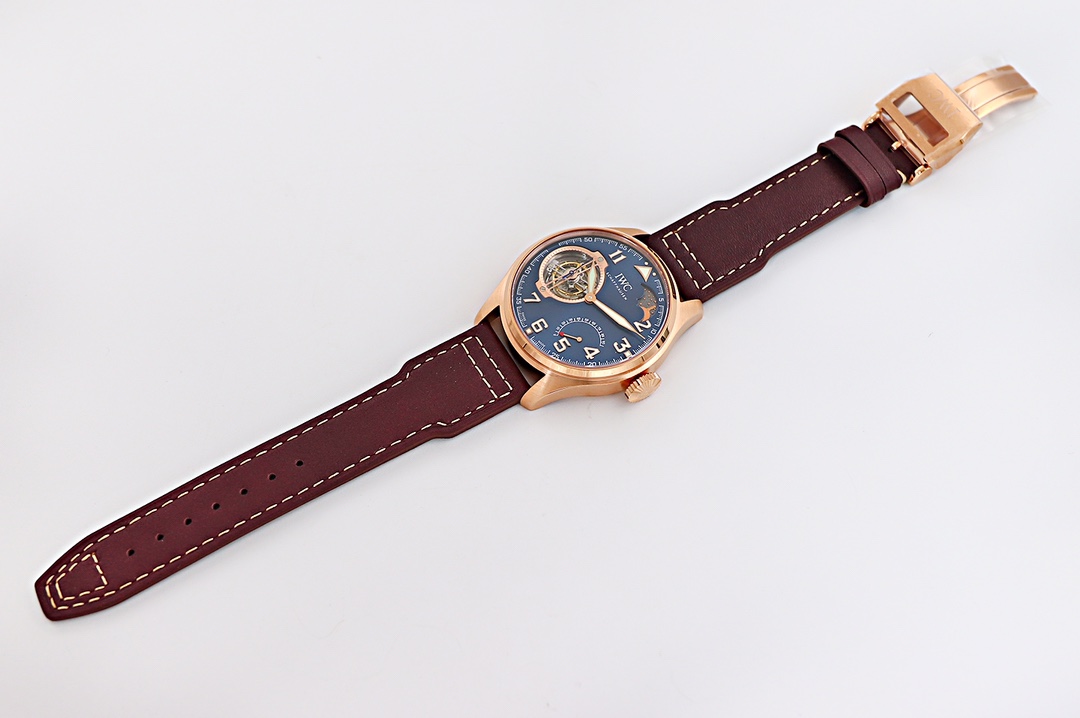
This guide is written to help you read those compromises clearly. Not to tell you what to buy, but to help you decide when a price makes sense for how you actually intend to wear and live with the watch.
1) The Real Price Structure of the IWC Replica Market
1.1 Entry-Level, Mid-Tier, and High-End Replicas Explained
IWC replicas generally fall into three functional tiers. These tiers are not marketing labels; they emerge naturally from how the watches are built and how they behave over time.
Entry-level replicas typically sit in the $200–$400 range. These watches focus on surface resemblance. They often use generic automatic movements with minimal decoration, simplified case machining, and printed dial elements that look acceptable at arm’s length. They can tell time, but longevity and accuracy are inconsistent. They are built to be sold quickly, not lived with for years.
Mid-tier replicas usually fall between $500 and $800. This is where most serious buyers end up. Materials improve noticeably, case dimensions are closer to genuine specifications, and movements are chosen for stability rather than just cost. Dial printing sharpens, lume becomes more even, and tolerances tighten. These watches are designed to be worn regularly without constant anxiety.
High-end replicas start around $800 and can exceed $1,000. These are produced by factories that invest heavily in proprietary movement modification, correct case geometry, and visual accuracy down to small structural details. The difference is not just cosmetic. These watches tend to age better, hold regulation longer, and feel more coherent on the wrist after months or years of use.
The tiers exist because different buyers value different things. Problems arise only when a watch is priced in one tier but built like another.
1.2 Why Some IWC Replicas Cost Only $300
A $300 IWC replica is cheap for a reason, and that reason usually reveals itself with time rather than immediately.
At this price level, movements are selected for availability, not durability. You will often find unregulated low-grade automatics with loose tolerances and inconsistent power delivery. They may run acceptably out of the box but drift quickly, especially after a few weeks of daily wear. Servicing them often costs more than replacing them.
Externally, compromises accumulate. Case steel may be softer or plated rather than solid, leading to faster wear on edges and lugs. Dial fonts are frequently off in thickness or spacing, something that becomes obvious once you have handled better versions. Date windows tend to sit too deep or too shallow, and lume application is uneven, aging poorly after minimal exposure.
The most important issue is not that these watches are “obviously fake” at first glance. It is that they become unreliable companions. Crowns loosen, rotors grow noisy, and small issues compound. Many owners replace them within a year, effectively paying more in the long run.
A $300 IWC replica can make sense as a disposable experiment or a short-term aesthetic choice. It rarely makes sense as a watch you expect to trust or keep.
2) The Core Factors That Actually Shape IWC Replica Pricing
Price only makes sense once you stop treating a replica watch as a single object and start seeing IWC replica watch price as the outcome of a layered system. What you pay is not for the logo or the model name, but for how many decisions were made correctly before the watch reached your wrist—and how many problems were absorbed before you ever see them.
2.1 Factory Level and Manufacturing Cost
The most consistent price divider in the IWC replica market is factory capability. Names like ZF, MKS, or V7 are not just branding shorthand; they represent different levels of tooling investment, trial-and-error cost, and internal quality control tolerance across major IWC replica factories.
Large, established factories build fewer models but refine them repeatedly. They scrap parts that miss tolerances, remake molds when geometry is off, and redesign movements when long-term issues appear. That development cost has to be recovered somewhere, and it shows up in pricing. Smaller factories often copy the final appearance without absorbing those costs, producing something that looks similar on day one but diverges quickly with wear.
The gap between a large factory and a small one is rarely obvious in photos. It becomes obvious after months of winding, setting, and wearing, when crown feel, case alignment, and dial stability begin to matter.
2.2 Movement Choice Is the Real Price Divider
Movement configuration is where replica pricing becomes non-negotiable. Simple three-hand movements with basic date functions are cheap to source and easy to assemble. Complex configurations—such as seven-day power reserve systems or fully functional chronographs—are not.
A Portuguese Seven Days replica built around a true long power reserve architecture costs more because the movement itself is structurally different, especially when compared to other IWC replica movements. It requires modified gear trains, larger barrels, and tighter regulation to maintain amplitude across multiple days. A cheap version may imitate the display while delivering only two or three days of usable power, often with unstable accuracy toward the end.
Chronographs show this divide even more clearly. A low-cost chronograph often relies on basic, minimally modified calibers with rough engagement and higher wear. Higher-priced versions invest in better finishing, smoother actuation, and functional reliability that survives regular use. The price difference reflects not decoration, but survivability.
2.3 Materials and Finishing Are Not Cosmetic Details
Steel quality, case machining, and dial execution account for a surprising amount of long-term value. Genuine stainless steel cases retain edge definition and resist micro-deformation. Cheaper alloy or plated cases lose sharpness quickly and reveal wear patterns that no amount of cleaning can hide.
Dial work is another silent cost driver. Crisp printing, correct font weight, even lume application, and clean polishing of hands require slower production and higher rejection rates. These details rarely impress on first glance, but they define whether a watch continues to look convincing after years rather than weeks.
The difference is not luxury; it is structural honesty. Better finishing simply ages more gracefully.
2.4 Distribution Layers and Markup Reality
Price differences are also shaped by how many hands the watch passes through before reaching you. Factory price is only the starting point. Each intermediary—agent, distributor, platform seller—adds margin, sometimes justifiably for service and risk, sometimes purely opportunistically.
It is common to see the same factory watch priced 30 percent higher on one platform than another. The difference is rarely quality. It is positioning, buyer targeting, and how much post-sale responsibility the seller is willing to assume. A higher price can sometimes reflect accountability rather than greed, but not always.
Understanding this prevents you from confusing price with intrinsic build quality.
2.5 After-Sales Support Is an Invisible Cost
Warranty, regulation checks, safe shipping, and the ability to resolve issues quietly after delivery all add cost. Sellers who absorb these risks price accordingly. Those who do not can afford to undercut the market.
This matters more than most buyers realize. A replica watch does not need constant service, but when something does go wrong, support determines whether the watch remains usable or becomes sunk cost. The cheapest option often becomes the most expensive once problems appear.
3) What $300 vs $1,000 Actually Buys You in an IWC Replica
Comparing IWC replica watch price points only becomes meaningful when you anchor them to real models.
3.1 External Appearance and Case Construction
At $300, an IWC Mark XVIII replica may look acceptable from a distance. At $1,000, it tends to feel correct up close. Case proportions align better, brushing transitions are cleaner, and the watch sits more naturally on the wrist.
The difference is not dramatic in photos. It is tactile. Edges feel intentional instead of soft. Dial depth appears balanced rather than flat. These are things your eye adapts to quickly, but your hand never ignores.
3.2 Movement Performance and Functional Reliability
A low-priced Portuguese Seven Days replica may advertise the same layout, but power reserve behavior exposes the truth. The expensive version delivers consistent amplitude across days, while the cheaper one degrades rapidly or requires frequent winding. These issues are more pronounced when considering the challenges of replicating a design as complex as the IWC Big Pilot, which emphasizes the importance of quality execution. Chronographs tell a similar story. In daily use, higher-priced replicas reset cleanly, engage smoothly, and maintain accuracy under normal wear. Cheaper versions often hesitate, misalign, or degrade over time. These differences are not theoretical; they are cumulative, as seen in the struggles of replicating such a technically demanding piece. For a deeper look at why some replicas face more difficulties than others, explore this in-depth analysis of the IWC Big Pilot.
3.3 Daily Use and Ownership Experience
Cheap replicas often feel acceptable at first and frustrating later. Expensive ones tend to feel unremarkable initially and reassuring over time. Crown resistance remains consistent. Setting feels predictable. Noise stays controlled.
The value gap emerges not at purchase, but during ownership. That is where price becomes experience.
4) Price vs Value: How to Decide If an IWC Replica Is Worth It
4.1 Higher Price Is Not Automatically Better
The goal is not to chase the highest IWC replica watch price, but to understand what that price actually buys you. It is to buy the version that aligns with how you will actually use the watch. A daily wearer benefits more from stability and comfort than from theoretical perfection.
Overpaying for unused complexity is as wasteful as underpaying for reliability you depend on.
4.2 Four Practical Criteria That Matter
A replica is worth its price when the appearance holds up under real lighting, not studio shots. When the movement runs predictably without constant correction. When finishing remains intact after regular wear. And when support exists if something goes wrong.
If those four conditions are met, the number on the price tag becomes secondary. If they are not, no discount makes the watch a good decision.
5) Common Misconceptions That Trap New Buyers
Most costly mistakes in the IWC replica world are not caused by bad luck, but by beliefs that sound reasonable until ownership proves otherwise. These misconceptions persist because they simplify a market that is structurally complex.
5.1 “Higher Price Means Swiss Movement”
This is one of the most persistent and damaging assumptions. Price alone does not guarantee a Swiss movement, and in the IWC replica space, it rarely does.
Most modern IWC replicas, including high-end versions, rely on modified Asian movements, not because Swiss calibers are unavailable, but because genuine Swiss movements are structurally incompatible with many replica layouts. Long power reserve systems, custom chronograph layouts, and correct hand stack heights often require movements that are rebuilt from the ground up. A stamped “Swiss” label does not solve that problem.
In practice, a well-regulated Asian long-power or 2892-based movement will outperform a poorly integrated Swiss unit over time. Paying more only makes sense when the movement architecture matches the watch’s functional demands, not when a label sounds reassuring.
5.2 The “1:1” Claim Is Not a Meaningful Standard
“One-to-one” is a phrase used to end conversations, not to describe reality. No replica is identical to its genuine counterpart, and no serious factory claims that internally.
What matters is not absolute sameness, but where differences appear. A watch that matches case geometry, dial spacing, and movement behavior will feel convincing even if microscopic details differ. Another may copy surface dimensions perfectly while hiding major compromises underneath.
When sellers insist on “1:1,” they are usually avoiding discussion of specific trade-offs. Experienced buyers stop listening at that point and start asking how the watch behaves after six months of use.
5.3 Judging Only by Appearance Is a Long-Term Mistake
Appearance sells replicas. Movement quality and after-sales support keep them wearable.
Many buyers focus entirely on dial color, font sharpness, and case shape, ignoring how the watch will be maintained. A visually impressive watch with a fragile movement or no support infrastructure becomes stressful to own. Regulation issues, crown failures, or rotor noise turn excitement into annoyance quickly. To understand how these factors will evolve and how future super clones might improve in terms of accuracy, materials, and complications, take a look at this analysis of the next level in IWC super clones.
The watches that age best are not always the most photogenic at first glance. They are the ones built with functional margins and backed by sellers willing to resolve issues quietly and efficiently.
6) IWC Replica Price Comparison Table
| Price Range | Typical Characteristics | Movement Type | Recommended Level |
|---|---|---|---|
| $300–$500 | Acceptable appearance, loose tolerances, simplified finishing | Basic A / AAA automatics | Entry-level |
| $500–$800 | Improved case work, better dial execution, stable daily wear | Mid-grade Asian movements | Mid-tier |
| $800–$1200 | Correct geometry, refined finishing, long-term reliability | Long power reserve / 2892-based | High-end |
This table does not rank watches by desirability. It reflects how consistently they perform relative to their cost over time.
7) Practical Buying Guidance That Actually Holds Up
7.1 Budget Planning for First-Time Buyers
For most newcomers, the mistake is not spending too little or too much, but spending blindly. A realistic starting budget should reflect how often the watch will be worn and how long it is expected to last.
If the goal is casual, occasional wear, a mid-tier option is usually sufficient. If the watch is intended as a daily companion, cutting corners early almost always leads to replacement later.
7.2 Price Ranges That Make Sense for Long-Term Ownership
The $500–$800 range offers the best balance for most buyers. Watches here tend to be stable, visually convincing, and serviceable. High-end options above that range make sense when the model demands complex movement architecture or when finishing accuracy is a priority.
Very low-priced replicas rarely deliver long-term value, regardless of how attractive they look initially.
7.3 Choosing Sellers and Channels Wisely
A reliable seller does not promise perfection. They explain limitations clearly, stand behind their products, and resolve issues without drama. Transparency, consistency, and communication matter more than aggressive pricing.
The cheapest offer is rarely the safest. The most expensive is not always the best. The right seller is the one whose incentives align with your long-term satisfaction rather than a single transaction. To ensure you’re making an informed choice when purchasing IWC replicas, consider checking out this comprehensive guide on IWC replica watches, which covers everything from quality factors to the best sellers.
8) Conclusion
Price only becomes meaningful when you understand what it is buying you, and the final decision should always reflect how you value reliability, realism, and ownership experience over simple numbers.
Related IWC Articles: If you found this helpful, you might also enjoy IWC Replica Watches by Series (Portuguese, Pilot, Ingenieur & Portofino), and Seagull/Dandong vs Swiss ETA in IWC Replicas: What You Really Get (And What You Don’t). Another related article is Why the IWC Big Pilot Is One of the Hardest Watches to Replica.