
Context: Why IWC Replicas Are a Movement Story First
The IWC replica market is factory-driven, but movement choice decides the outcome
At first glance, the IWC replica landscape looks like a factory competition. Names repeat across discussions—ZF, APS, VS, TW, V7, MKS—each associated with certain models and reputations. That framing is not wrong, but it is incomplete. Factories determine execution quality, but movement architecture determines the ceiling. Thickness, long-term reliability, winding feel, serviceability, and even how convincing the watch feels after six months of wear are all constrained by what sits under the dial.
This is why two replicas from different factories can look similar on day one yet age very differently. One develops rotor noise and inconsistent amplitude within weeks. The other settles into a predictable rhythm and stays there. The difference is rarely cosmetic. It is structural.
The uncomfortable reality is that “Swiss” is not automatically better, and “domestic” is not automatically bad. In this segment, both labels are routinely abused. Movement origin has become a marketing shortcut, not a technical explanation. Buyers who anchor on the word “Swiss” without understanding the underlying architecture often pay more for no meaningful improvement, while dismissing domestic movements that, in the right context, perform more honestly and predictably.
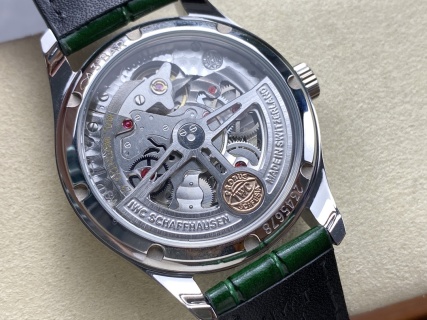
The core thesis is simple: factories execute, but movements decide outcomes. If you misunderstand the movement, you misunderstand the watch.
Define the three “movement tiers” buyers confuse
Most confusion starts because buyers collapse three very different categories into one mental bucket. They are not interchangeable, and treating them as such leads to bad decisions.
Domestic Chinese movements include Seagull (Tianjin), Dandong-based supply chains, and Shanghai variants. These movements may appear as untouched base calibers or as heavily modified platforms with custom bridges, calendar work, or power reserve modules. Their defining traits are availability, replaceability, and variance. The best examples are genuinely good. The worst are frustrating. Consistency depends on batch quality and assembly discipline, not on the name alone.
Swiss-labeled movements include genuine ETA, Sellita SW200 and SW300, and occasional hybrids described as “Swiss parts.” In this market, true factory-sealed ETA is uncommon. Sellita is far more common and often casually called “ETA” because it is layout-compatible. These movements usually bring better regulation stability and smoother winding feel, but only if the surrounding build is competent.
Swiss-pattern clones are 2824- or 2892-style movements produced outside Switzerland. They are often sold under vague language such as “ETA style,” “Swiss grade,” or “Swiss spec.” Some are perfectly usable. Others are cost-optimized shortcuts. Without performance evidence, the label alone tells you very little.
Understanding which tier you are actually buying from is more important than the label printed in a listing.
Movement Family Map: What You’ll Actually See Inside IWC Replicas
The three main families you must separate
Once you move past origin labels, IWC replicas fall into three mechanical families. These families dictate what is possible and what is not.
The 2892 / SW300 family underpins thin three-hand watches with date. This architecture appears in Mark-style pilots and Portofino-style dress watches. Its strengths are slimness, relatively low rotor inertia, and stable regulation when properly assembled. Its weaknesses show up quickly if tolerances are sloppy, especially in rotor noise and crown feel.
The 7750 family underpins most chronographs. It dominates Pilot Chronographs and Portuguese Chronographs. It is robust but tall. Any attempt to disguise that height introduces compromises elsewhere—dial spacing, crystal profile, or caseback geometry. It can be reliable, but it is sensitive to lubrication quality and chronograph usage habits.
The long power reserve platforms, inspired by 52010 and 52011 layouts, are used in Portuguese 7-day and Big Pilot 7-day themed replicas. These are not simply “bigger barrels.” They involve torque management, power reserve indication calibration, and gear train stability over multiple days. This is where marketing language diverges most sharply from mechanical reality.
Model-to-movement mapping
Understanding which movement family belongs to which model simplifies decision-making immediately.
Portuguese Chronograph (3714/3716-type) replicas almost always rely on 7750-based solutions. Some executions reduce thickness through aggressive re-engineering, others accept bulk and hide it with crystal curvature. Dial layout realism and case thickness are entirely dependent on how that 7750 architecture is handled. Claims of thinness without side-profile evidence should be treated skeptically.
Pilot Chronographs (3777/3881‑type) also sit on the 7750 foundation. New‑generation aesthetics—ceramic cases, new dial colors, updated text—often ride on old mechanical compromises. The watch may look current, but the movement geometry underneath rarely changes, and that’s why understanding common faults, root causes, and sensible maintenance practices matters; resources like the IWC replica watch movement problems, repair advice, and maintenance beginner guide walk through how and why these faults emerge and what can be done to mitigate them over long‑term use.
Mark series (Mark XVIII/XX-type) watches typically use 2892, SW300, or close-pattern clones. These models expose movement quality more quickly than chronographs. Thin cases magnify rotor feel, regulation stability, and crown feedback. You can feel a bad movement here within days.
Portuguese and Big Pilot 7-day replicas live or die by their long-reserve architecture. Many will run for multiple days. Far fewer deliver consistent amplitude and usable torque across that span. This is where the distinction between a multi-day runner and a multi-day performer matters. A power reserve hand can look correct even when the barrel is not.
These mappings are not trivia. They are the difference between buying a watch that behaves as expected and one that slowly reveals its compromises after the novelty wears off.
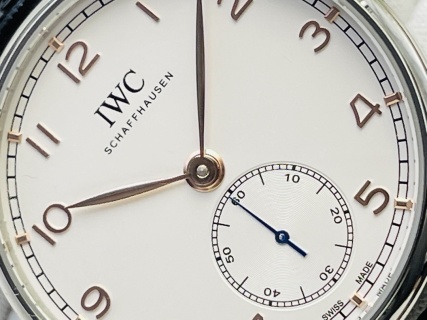
Seagull / Dandong Movements: Where They Win (And Where They Collapse)
The real advantage: cost-efficient architecture + parts availability
Domestic movements built on Seagull and Dandong supply chains win for one reason that rarely gets stated clearly: they are survivable. Not prestigious, not elegant—survivable. When something goes wrong, parts exist, replacements exist, and technicians know what they are touching. In a replica context, that matters more than lineage.
For many owners, what actually holds value over time is not origin, but continuity. A movement that can be serviced, regulated, or replaced without drama often delivers a more stable ownership experience than a loosely claimed “Swiss” movement that no one can verify, source parts for, or confidently work on. Domestic platforms lower the cost of failure. That alone makes them rational choices in certain builds.
This is why Seagull- or Dandong-based movements continue to dominate daily-wear replicas. They tolerate imperfect environments, accept rougher handling, and remain economically sensible when something eventually needs attention. That does not make them superior. It makes them honest about what they are.
The common failure modes you should call out
Domestic movements do not fail randomly. They fail predictably, and those patterns are visible if you know where to look.
Lubrication variance is the most common issue. Amplitude often looks healthy out of the box, then drops faster than expected because oiling quality is inconsistent across batches. This is not a design flaw. It is an assembly discipline problem, and it shows itself within weeks.
Rotor noise and bearing feel are next. In thinner cases, especially those based on 2892-style layouts, domestic rotors tend to sound rougher and feel less refined when winding. The watch still works, but the tactile feedback reminds you where cost was saved.
Chronograph load sensitivity is a known weakness in 7750-style domestic builds. Pushers can feel uneven, engagement points vary, and leaving the chronograph running continuously accelerates wear. These movements were never designed for that usage pattern, and replicas do not improve the situation.
Calendar alignment issues appear more frequently as well. Date wheels may sit slightly off-center, and jump timing can drift into a wider window. It is rarely catastrophic, but it is noticeable to anyone who pays attention.
None of these are hypothetical risks. They are repeat observations across ownership cycles.
The best use cases for domestic movements in IWC replicas
Domestic movements make sense when expectations align with reality.
They are well suited for daily‑wear beaters, where reliability, replaceability, and cost control matter more than refinement. They perform adequately in simple three‑hand watches, where fewer complications reduce tolerance stacking. They also work for buyers who prioritize easier maintenance and lower long‑term risk over mechanical prestige. For a deeper understanding of how these movements compare to IWC’s in‑house calibers, check out the IWC super clone movement upgrades explained article.
They should be avoided when tolerances tighten. Very thin cases amplify every imperfection. Chronographs intended for frequent use expose load and lubrication weaknesses quickly. And any watch sold as delivering “true 7-day performance” without documented testing should be treated with caution. Many of these movements will run for days. Far fewer will perform consistently across that span.
Swiss ETA (and “Swiss”) in IWC Replicas: What’s Real vs What’s Marketing
The uncomfortable truth: “Genuine ETA” is uncommon; labels are flexible
In this segment, “ETA” is often a category label, not a verified origin. It describes compatibility, not provenance. Sellita SW200 and SW300 movements are ETA-layout equivalents and are frequently called “ETA” in casual conversation because the architecture matches. That does not make the claim false, but it does make it incomplete.
True factory-sealed ETA movements exist, but they are not common. When they do appear, they are usually limited to specific batches and models. Without evidence, assuming genuineness is a mistake. The label alone carries very little informational value.
What genuine Swiss movements actually change
When Swiss or Sellita movements are real and properly assembled, the improvements are tangible but bounded.
Regulation stability tends to be better. After a few days of wear, timing variance settles more predictably. Winding feel is usually smoother, and rotor noise is often lower, though not universally. Service intervals can be longer if lubrication and assembly were done correctly.
What they do not fix is equally important. They do not solve case thickness compromises. They do not correct incorrect subdial spacing dictated by base architecture. They do not improve dial printing, lume application, or hand alignment. A Swiss movement inside a poorly engineered case is still a compromised watch.
Movement origin influences reliability. Geometry determines realism.

How to identify credible “Swiss movement” claims without opening the case
Evidence matters more than language.
Request timegrapher readings showing amplitude and beat error in multiple positions. Ask for a movement video that shows rotor behavior, balance action, and date change timing. Look for consistency across multiple examples from the same batch, not a single curated clip.
Documentation should align. Factory batch information, repeatable performance data, and consistent QC behavior across watches carry far more weight than any printed description.
If the seller will not provide objective performance evidence, the “Swiss” label is not a feature—it is a story.
The IWC Replica Reality Check: The Movement Alone Cannot Save a Bad Build
Where replicas actually fail: case engineering + dial-side truth
Most replica failures are not movement failures. They are geometry failures. A Swiss movement inside a watch with incorrect caseback depth, distorted mid-case proportions, or compromised crystal height is still a compromised watch. Reliability may improve, but realism does not.
This is where many buyers misallocate attention. They debate movement origin while ignoring the structural decisions that shape how the watch sits on the wrist and reads at a glance. Dial spacing that feels slightly compressed, a crystal that rises too high, or a caseback that bulges unnaturally will undermine the illusion faster than any unseen balance wheel ever could.
Movement origin affects reliability. But geometry decides realism.
Thickness: the easiest place to catch movement compromise
Thickness exposes everything.
The 7750 chronograph architecture stacks vertically by design. Add dial-side modifications, calendar work, or cosmetic power-reserve modules, and height increases further. Factories then compensate with taller crystals or deeper casebacks. The watch may function, but proportions drift.
Fake power-reserve indicators are another culprit. Decorative modules layered on top of a base movement add stack height without adding performance. The result is a watch that looks acceptable head-on but feels wrong from the side.
Display casebacks amplify the problem. They exaggerate depth and often reveal shortcuts in bridge layout, spacer rings, or unfinished edges that would remain hidden behind a solid back. A thin watch with a display back is mechanically harder to execute. When it is done cheaply, it shows.
Subdial spacing and “layout theater”
Chronograph replicas often rely on layout theater. Subdials are printed where buyers expect them, even when the underlying movement geometry cannot support perfect spacing. To an untrained eye, it is “close enough.” To an experienced one, it never quite settles.
Subdial spacing is dictated by the base movement, not the dial design. No amount of printing finesse can change that. When spacing is off, hands crowd each other, registers feel slightly compressed, and the watch loses the visual calm that defines the genuine article. This is not a minor detail. It is one of the fastest ways a replica gives itself away.
Model-Specific Buying Guidance
Portuguese Chronograph: choose architecture before brand words
Portuguese Chronographs live and die by their mechanical architecture.
If the build is 7750-based, expect thickness and higher variance. That does not make it unusable, but it raises the bar for factory execution. Choose only versions with a proven track record across multiple batches.
If thinness is claimed, require evidence. Side-profile photographs, caliper measurements, and real wrist shots matter more than any description. Without those, “thin” is just a promise.
Mark / Portofino three-hand: where Swiss/Sellita can actually matter
Three-hand IWC replicas are less forgiving than they look. Thin cases magnify rotor feel, winding smoothness, and regulation stability. Here, Swiss or Sellita movements can deliver a noticeably calmer ownership experience.
That said, domestic 2892-style clones can still be good enough when quality control is strict. In these models, execution often matters more than origin. A well-regulated domestic movement in a properly engineered case can outperform a poorly assembled Swiss one. For a more detailed look at 2892-style movements and how they compare to other replica calibers, check out the IWC replica movements explained article.
“7-Day” IWC replicas: the most abused claim in the category
This is where marketing language and mechanical reality diverge the most.
Many watches will run for several days. Far fewer maintain usable amplitude and stable timing across that span. Multi-day running is not the same as multi-day performance.
Require a documented power-reserve test showing hours until stop. Check whether the power-reserve indicator is calibrated to actual barrel state or merely to dial aesthetics. A full indicator that corresponds to sixty hours is not a seven-day watch.
A PR hand can be correct even when the barrel isn’t.
Price Bands and What They Usually Mean
Typical pricing logic
Pricing in IWC replicas follows risk, not prestige.
Domestic movement builds sit at the lowest price band because they minimize replacement cost and accept higher variance. Factories know some units will be excellent and others merely acceptable, and pricing reflects that spread. You are paying for access, not certainty.
“Swiss” or Sellita-labeled builds occupy a higher band, but the premium is inconsistent. Sometimes it reflects genuine improvements in regulation stability and finishing discipline. Other times it is pure markup attached to a familiar word. Without performance evidence, price alone does not tell you which is which.
Long power reserve and complex-function replicas cost more for a different reason. Assembly time is longer, failure rates are higher, and returns are more expensive. The price increase is not about luxury. It is about risk management on the factory side.
Value judgment: what is worth paying extra for
Some premiums make sense. Others do not.
Pay more for proven chronograph reliability, especially in 7750-based builds where execution quality determines whether the watch ages gracefully or becomes a liability. Pay more for verified thin-case execution, because thickness errors cannot be fixed later. Pay more when timegrapher data shows stable amplitude and low beat error across positions, not just a single snapshot.
Do not pay more for vague “ETA grade” wording. Do not pay more for “Swiss” without documented performance. Do not confuse decorative movement finishing with engineering quality. Polished bridges do not compensate for poor lubrication or unstable geometry.
QC Protocol: How to Evaluate Movement Quality Like a Technician
Minimum QC package you should require
A serious evaluation is procedural, not impression-based.
Start with a timegrapher. You want amplitude and beat error readings in at least two positions, ideally more. Numbers do not need to be perfect, but they must be coherent.
Observe the date change. It should snap cleanly within a reasonable window, not creep slowly or land misaligned.
Assess winding feel. Crown torque should be consistent, with no grinding or hesitation. Roughness here predicts future problems.
Test the rotor. Listen for noise, check for wobble, and observe reverser behavior during winding. Excessive sound or instability is not cosmetic.
If the watch is a chronograph, test it as one. Start, stop, and reset repeatedly. Pushers should feel consistent, and all hands must return precisely to zero.
Red flags that predict returns
Some signs are not negotiable.
If the power-reserve indicator does not correlate with actual run time, the watch will disappoint later. If a chronograph seconds hand shudders at engagement, internal friction is already high. If the date changes slowly over an extended window and lands inconsistently, tolerances are loose. If the rotor is loud enough to hear across a quiet room, refinement is absent.
These issues rarely resolve themselves. They forecast ownership friction, not character.
Each of these checks costs minutes. Ignoring them costs months.
Maintenance and Longevity: What Owners Don’t Want to Hear (But Need)
“Swiss lasts longer” is only true if assembly and lubrication are correct
Movement origin does not protect a watch from poor assembly. Bad lubrication kills any movement—Swiss, Sellita, or domestic—quietly and predictably. Dry pivots lose amplitude. Over-oiled escapements drift. Contaminated oils shorten service intervals dramatically. None of this is visible on day one.
Longevity is not a nationality trait. It is an outcome of tolerances, oiling discipline, and how the watch is used. A well-assembled domestic movement that is periodically regulated can outlast a neglected Swiss one. Owners who focus on service intervals rather than origin labels tend to experience fewer surprises and lower long-term frustration.
Practical ownership guidance
Chronographs based on the 7750 architecture should not be left running continuously. Doing so increases load on components that were never designed for permanent engagement and accelerates wear.
Water resistance claims should be treated conservatively. Gaskets vary, assembly varies, and pressure testing is inconsistent. A watch that survives rain does not automatically tolerate swimming.
If a watch is worn daily, periodic regulation and inspection are not optional. Small adjustments early prevent larger problems later. This applies regardless of movement origin.
FAQ
Is a Seagull/Dandong movement “bad”?
No. Variance is higher, not quality in absolute terms. The best batches are excellent and deliver stable performance for years. The worst batches are frustrating and reveal their weaknesses quickly. Understanding that spread is more important than dismissing the category.
Is “Swiss ETA” always genuine?
Often it is not. Many watches use Sellita or ETA-pattern language because the layout is compatible. That does not make the claim dishonest, but it does make it incomplete. Evidence matters more than wording.
Which is better for IWC replicas: 7750 or 2892?
The 2892 family is simpler and often more consistent, especially in thin three-hand watches. The 7750 enables functional chronographs but carries higher risk and greater thickness. Neither is inherently superior. Suitability depends on the model and how it will be used.
What matters more: factory or movement?
Both matter, but they matter differently. The movement sets the reliability ceiling. The factory sets the execution floor. You need both working in your favor.
Conclusion
For daily wear, consistency and serviceability matter more than origin claims. For chronographs, mechanical architecture and documented QC outweigh any label on the movement. For “7-day” watches, measured performance is more meaningful than power-reserve aesthetics. Swiss components can improve outcomes, but they cannot rescue poor geometry or careless assembly. Domestic movements can disappoint, but they can also deliver honest value when expectations are aligned. We can explain how it’s built and how it tends to behave. But how you balance cost, realism, and risk is a decision only you can make.
Related IWC Articles: If you found this helpful, you might also enjoy IWC Replica Power Reserve & Stability Rankings (2026): Which Movement Is Best for Daily Wear?, and IWC Replica vs Genuine: How to Spot the Differences (Big Pilot & Portuguese 7 Days), which shows how to spot differences between IWC replica and genuine Big Pilot & Portuguese models. Another related article is IWC Replica Watch Price Breakdown: Why the Same Model Can Cost $300 or $1,000 — A Practical Buyer’s Guide, which breaks down why the same IWC replica model can cost $300 or $1000 (a practical buyer’s guide).