
Why Factory Identification Is Harder Than Most People Think
The myth of “one tell”
Most people start by hunting for a single giveaway. They zoom in on rotor text, stare at caseback fonts, or argue about sticker colors. That approach almost always fails.
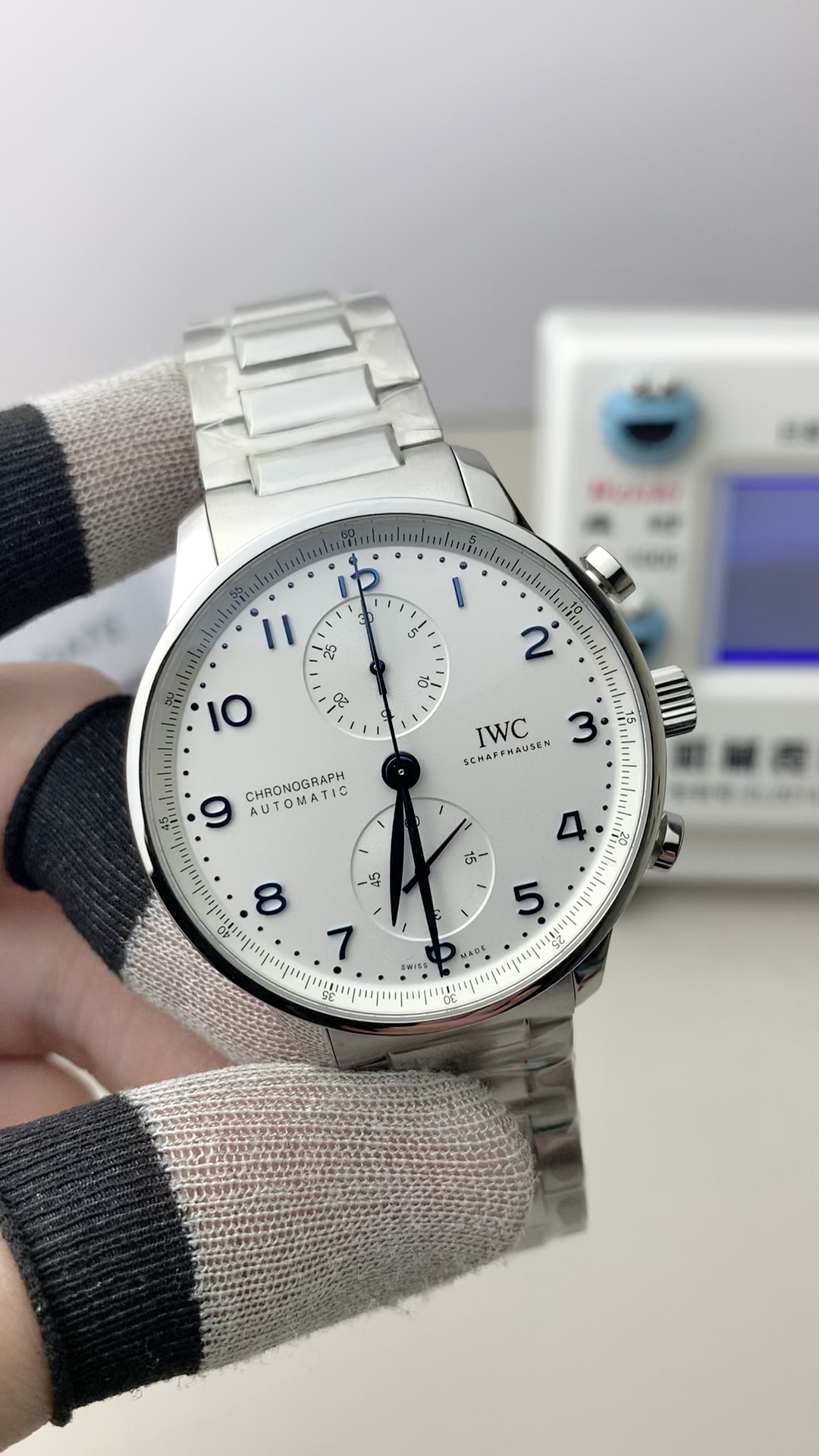
Modern IWC replicas are not built inside sealed, vertically integrated bubbles. The same crystal suppliers feed multiple factories. Dial blanks move between workshops. Bracelet components circulate. Tooling gets revised quietly from batch to batch. Even within a single production run, parts can shift depending on availability. What looks like a decisive clue on Monday may disappear entirely by Friday.
That is why factory identification is never binary. You are not proving authorship in a courtroom. You are stacking likelihoods across physical systems. The goal is not certainty. The goal is probability.
If you accept that from the beginning, the entire inspection process becomes calmer and more accurate.
Think in systems, not in signatures
A single feature can lie to you. A pattern rarely does.
Every serious inspection should move through the same hierarchy: case architecture first, then dial discipline, then movement execution, followed by strap and hardware, and finally wear behavior. Each layer adds weight to the conclusion. None of them works in isolation.
This framework mirrors how watches are actually experienced over time. You don’t live with a rotor engraving. You live with how the case sits, how the dial reads in changing light, how the crown feels after six months, and whether the watch starts to rotate on your wrist by mid-afternoon.
Once you train yourself to think this way, factory identification stops being a scavenger hunt and starts looking more like forensic pattern recognition.
Step One: Start With the Architecture (Before You Look at Logos)
Case profile and proportions (the hardest thing to fake consistently)
Begin with the shape, not the surface.
Look at the relationship between midcase thickness and bezel height. Study lug length relative to overall diameter. Pay attention to how the watch settles on your wrist: does it lie flat, or does it rock slightly when you move your hand?
These proportions are controlled by deep tooling decisions. They are expensive to change, and they tend to persist across models within the same factory.
You will notice that ZF Factory usually prioritizes mature case proportions on established families like Portugieser and Big Pilot. Their midcases tend to feel balanced, with bezel height kept in check so the watch does not appear top-heavy, even when the movement underneath is substantial.

V7 Factory approaches cases from a different angle. Their strength lies in modern silhouettes, especially integrated steel designs inspired by newer releases. On Ingenieur-type architecture, V7 often nails the macro geometry early, even if smaller finishing details evolve over subsequent batches.
MKS Factory stays conservative. Their dress references, particularly Portofino-style pieces, favor thinner profiles and restrained dimensions. You rarely see exaggerated lug length or inflated midcases from MKS. The watches tend to sit quietly and predictably under a cuff.
These tendencies show up long before you ever read a logo.
Edge transitions and finishing continuity
Once the proportions make sense, trace the finishing.
Follow a brushed surface from the lug, across the shoulder, and into the midcase. Watch how the grain behaves as planes change. On better builds, the brushing flows naturally, and polished break lines remain consistent from angle to angle.
When you see abrupt changes in grain direction or soft, indecisive transitions, you are often looking at older tooling or lower-tier execution, commonly associated with legacy YL Factory production.
ZF typically maintains cleaner transitions on its core lines, especially where brushed and polished surfaces meet, and as noted in the comparative IWC replica factory surface-finishing and geometry trade-off evaluation, V7, when rushing to bring a new geometry to market, sometimes accepts rougher micro-finishing in exchange for getting the overall shape right first, while MKS prioritizes smoothness over ambition, which is why their cases often feel understated but coherent.
These are not absolutes. They are recurring patterns that emerge when you handle enough pieces side by side.
Step Two: Dial Discipline (Where Most Factories Reveal Themselves)
Print behavior under magnification
Your phone camera is enough. You don’t need laboratory tools.
Zoom in on numeral edges. Study the serifs on “2,” “4,” and “7.” Compare the thickness of the minute track as it travels around the dial. You are not looking for perfection. You are looking for consistency.
ZF batches on classic references usually show tight control here. Print edges stay crisp, and stroke weight remains stable across the dial. V7’s newer releases often improve over time, but early batches can show slight variation between indices, especially on experimental colorways. MKS keeps things calm and minimal. Their dials rarely attempt complex textures, but what they do print tends to be even and restrained.
Dial printing tells you how disciplined a factory is when it comes to repetition.
Index alignment and applied marker seating
Next, look at the hardware that lives on top of the dial.
Applied markers should sit level, with uniform height and clean attachment points. Tilted indices, uneven glue shadows, or inconsistent seating depths usually indicate rushed assembly rather than bad design.
MKS dress models often excel in this area because their layouts are simple and their tolerances conservative. YL pieces frequently look fine at arm’s length but reveal minor seating variance once you start checking each marker individually.
This step matters because misaligned indices are not cosmetic accidents. They reflect how much time was spent on final assembly.
Date window geometry (the fastest honesty test)
If the watch has a date, this is your quickest reality check.
Start with bevel sharpness around the window, then study the font itself, and finally, as described in the Guangzhou IWC replica market inspection and date-display alignment criteria, cycle through several dates and observe centering — not just on one number but across the range.
ZF usually executes cleaner window bevels on Portugieser and Pilot lines, with numerals that sit confidently in the aperture. V7 has been improving quickly, but early production runs sometimes show lateral drift that only becomes obvious when you scroll through multiple dates. YL date windows often look acceptable at first glance yet fail under repeat-date testing, where off-center digits or inconsistent spacing start to appear.
This three-part check exposes shortcuts faster than almost any other dial feature.
At this stage, you should already have a working hypothesis about where the watch came from. Everything that follows will either reinforce that direction or quietly contradict it.
And that, ultimately, is how factory identification works: not through a single dramatic discovery, but through the accumulation of small, physical truths observed in the same way real owners encounter their watches over time.
The rest of the process simply deepens that picture against the reference standard set by IWC Schaffhausen, and against the different philosophies each replica factory brings to reproducing it.
Step Three: Movement Clues (What Matters More Than Rotor Text)
Ignore decorative engraving first
Rotor text and bridge engraving feel authoritative, but they are among the least reliable signals you can use.
Decorative plates circulate freely. Entire rotor assemblies get swapped between factories. Even bridge engravings migrate once a design proves popular. It is common to see identical typography appear across watches that were clearly built in different workshops. Treat cosmetic movement markings as background noise until proven otherwise.
If you start your inspection there, you are anchoring on the most easily shared component in the entire system.
The movement tells its story through behavior, not lettering.
Look at functional behavior instead
Begin with the winding curve. Slowly turn the crown from zero tension through a full wind and pay attention to how resistance builds. A smooth, progressive increase usually indicates a better-integrated power delivery path. Abrupt changes in torque or grainy feedback often point to older base movements or rushed assembly.
Next, observe crown engagement. Does the stem snap positively into each position, or does it feel vague between settings? Clean detents suggest tighter tolerances in the keyless works. Soft or ambiguous engagement usually means compromises somewhere upstream.
Then study hand stack clearance. Set the time forward and backward while watching the minute hand pass over applied indices and subdial rings. If you see hesitation, flex, or micro-contact, the movement was never properly spaced for the dial architecture.
On chronographs, reset consistency matters more than start-stop drama. Run the chronograph for a few minutes, reset it, and repeat several times. A strong build snaps back to zero the same way every time. Weaker assemblies begin to drift after a handful of cycles.
Patterns emerge quickly when you handle enough examples.
Long-reserve models from ZF Factory tend to show smoother power-reserve hand travel. The linkage usually advances in a continuous arc rather than in visible steps, which reflects a more integrated approach to the PR train.
Basic automatics from V7 Factory often feel crisp and modern during winding, but their chronograph modules still lag behind that refinement. You can feel it in the pushers and see it in less consistent resets.
Complicated builds from APS Factory prioritize layout correctness first. The calendars advance as they should, the displays are where they belong, but tactile feedback is not their primary obsession. Setting often feels more mechanical than elegant.
Movements from YL Factory usually betray their age during winding. Resistance comes on unevenly, and the crown often feels disconnected from the train. Visually acceptable, functionally dated.
These are not isolated impressions. They are tendencies that repeat across ownership cycles.
Architecture giveaways in complicated models
Complications amplify factory personality.
APS perpetual calendars almost always reveal themselves through behavior. You see multi-register layouts that mirror genuine references, paired with active calendar logic that actually distinguishes month lengths. Setting feels deliberate, sometimes heavy, because the system is doing real work.
The ZF seven-day family has its own signature. The power-reserve linkage advances in a characteristic, continuous motion, and the hand rarely jitters once tension builds. That smoothness is difficult to fake without rethinking the entire energy path.
Moonphases and annual calendars tell another story. If you notice half-step advances, staggered transitions, or delayed jumps when cycling dates, you are likely dealing with APS-style modular architecture layered on top of a base movement. It works, but it behaves differently from integrated systems.
This is where movement inspection stops being academic. These behaviors shape daily interaction.
Step Four: Strap, Buckle, and Hardware (The Overlooked Layer)
Strap construction and edge treatment
Straps age faster than cases, which makes them surprisingly useful diagnostic tools.
Leather from MKS Factory usually arrives soft, with clean stitching and restrained padding. The edges are sealed neatly, and the strap tends to break in evenly rather than crease sharply.
Straps paired with ZF builds often feel stiffer out of the box, but their width and taper typically match the case more accurately. Once worn in, they sit better between the lugs, even if they never achieve the same initial comfort.
YL straps tell on themselves over time. Edge paint cracks earlier, stitching loosens sooner, and the leather develops uneven gloss after a few months of regular wear. None of this shows up in product photos. It shows up on wrists.
Hardware is part of this layer too. Spring bars that flex, quick-release systems that lose tension, and lug holes that deform all reflect how much attention was paid to parts no one advertises.
Buckle geometry and engraving depth
Flip the watch over and study the buckle.
Engraving depth matters. Clean, symmetrical cuts with sharp inner corners usually indicate dedicated tooling. Shallow or fuzzy markings suggest generic components pressed into service.
ZF buckles typically show deeper, more confident engraving, with consistent spacing across letters. V7 places more emphasis on how clasps feel on modern steel models: smoother articulation, stronger detents, better micro-adjustment, even if the engraving itself is less dramatic.
This difference mirrors their broader priorities. One chases finish fidelity. The other chases mechanical experience.
Step Five: Wear Behavior (What Only Shows After Real Use)
Under-cuff performance on dress IWCs
Dress watches reveal their origins once they leave the display tray.
Portofino-style pieces from MKS tend to sit flatter and rotate less under a shirt cuff. Their thinner cases and conservative lug geometry keep the watch centered through normal movement.
Thicker Portugieser variants from ZF can feel top-heavy over long days, especially on softer straps. The weight is not excessive, but the center of mass sits higher, and you feel it when typing or driving.
These are small things. They accumulate.
Bracelet dynamics on modern steel models
Integrated bracelets expose engineering shortcuts immediately.
V7 steel models usually show better articulation, especially at the first link. The bracelet drops naturally from the case, distributing weight across the wrist instead of concentrating it at the lugs.
Earlier YL or generic builds often feel rigid by comparison. Links resist movement, pressure points develop near the clasp, and hotspots appear after an hour or two. You do not need calipers to notice this. Your wrist tells you.
Long-term interaction tells
Some clues only emerge with time.
Gritty crown threads almost always predict future service. Chronograph pushers that lose resistance after repeated use point to weaker internal assemblies. Hands that begin to creep off zero after months of resets reveal marginal tolerances.
Wear behavior often confirms what visual inspection merely suggests. It is the slow audit that no marketing claim survives.
By the time you reach this stage, factory identification is no longer about labels. It is about how the watch has lived with you, and what that experience quietly reveals.
You are not just learning where a watch came from. You are learning how it was built to be used.
Factory Pattern Summary (Not a Cheat Sheet, a Probability Map)
ZF pattern cluster
ZF shows its hand through restraint.
Their strongest work appears on mature architectures where case geometry has already settled and tolerances are well understood. Dial printing tends to be disciplined rather than flashy, with consistent stroke weight and fewer experiments in texture. Case proportions usually feel considered, especially on Portugieser and Big Pilot families, where midcase height and bezel balance rarely drift far from what the design intends.
Innovation at ZF moves slowly — they prefer incremental refinement over aggressive reinvention — and as articulated in the 2026 IWC replica factory ranking and philosophy overview, that conservatism is exactly why their long-running references age well; when a ZF piece feels boring on day one, it often feels reassuring on day three hundred.
V7 pattern cluster
V7 operates with forward momentum.
They excel at modern case geometry, particularly on integrated steel designs where bracelet articulation and first-link behavior matter as much as dial aesthetics. New models appear quickly, sometimes faster than the finishing ecosystem around them can stabilize. Early batches often carry small inconsistencies that disappear later, once tooling and assembly settle.
If you handle enough V7 releases, you start to recognize the rhythm: bold geometry first, refinement later. Their watches reward patience. The second or third production run is usually where everything clicks.
MKS pattern cluster
MKS lives in the quiet end of the catalog.
Their philosophy is dress-first. Thin profiles, conservative dimensions, and calm dials define most of their output. They avoid visual risk and rarely chase novelty. Instead, they focus on predictable wear behavior and simple layouts that assemble cleanly.
Scope is limited by design. You will not find adventurous complications here. What you do find are Portofino-style watches that sit flat, rotate less, and disappear under a cuff. MKS is not trying to impress. It is trying to behave.
APS pattern cluster
APS builds around complications.
Their projects start with layout correctness: calendar windows in the right places, registers that mirror genuine references, functions that actually advance when they should. That priority shows up in perpetual calendars, annual calendars, and complex chronographs. The trade-off is sensitivity. Setting often feels more mechanical, and tolerance for rough handling is lower.
APS ownership tends to be niche. These watches attract people who care more about functional architecture than tactile elegance. If you enjoy interacting with mechanisms and accept that refinement comes second, APS makes sense. If you want effortless daily wear, it usually doesn’t.
YL pattern cluster
YL represents legacy availability.
You encounter YL most often in discontinued references or older designs that newer factories no longer bother to reproduce. Visual presentation is generally acceptable at arm’s length, but refinement falls away under closer inspection. Movements feel dated during winding, edge finishing is softer, and long-term wear exposes shortcuts faster.
YL pieces fill gaps in the market. They are rarely destinations in themselves.
Common Misidentification Traps
Trusting stickers or seller labels
Stickers mean nothing.
They move freely between workshops, get reapplied during resale, and persist long after factories change internal specifications. A label tells you what someone wants you to believe. It tells you nothing about how the watch was built.
If your identification process starts with packaging, it will end in fiction.
Judging from a single photo
One angle cannot capture architecture, and one still image cannot reveal behavior.
Case thickness, dial alignment, hand clearance, crown engagement, and bracelet articulation all require movement and interaction. Even a dozen photos fail to replace five minutes of handling. Multi-angle inspection and basic functional testing matter more than any hero shot.
A watch reveals itself in sequence, not in snapshots.
Assuming factory name equals quality
Factory names are umbrellas, not guarantees.
Every operation ships strong batches and weak ones. Tooling evolves. Assemblers change. Supply chains shift. A great reference from last year does not promise greatness this year, even under the same banner.
Batch quality matters more than branding. Always.
A Practical Identification Workflow (For Owners)
Visual pass
Start wide, then narrow.
Take in the case first. Study proportions. Move to the dial. Check printing, index seating, and date window geometry. Finish with hardware: strap edges, buckle engraving, bracelet articulation.
Do not linger on any single feature. You are building a composite impression.
Functional pass
Now interact with the watch.
Feel the crown as it moves through positions. Observe hand alignment while setting time. Watch how the power reserve behaves, if present. Run the chronograph and reset it several times. Notice what feels smooth and what feels hesitant.
Function exposes priorities that cosmetics conceal.
Pattern matching
Only after both passes do you compare what you’ve observed against the factory clusters above.
You are not matching logos. You are matching behaviors, proportions, and assembly philosophy. Set aside marketing claims and seller narratives. Let the physical evidence speak.
By this point, identification usually feels less like a guess and more like a weighted conclusion. It may never be perfect, but it becomes grounded in how the watch is actually constructed and how it lives on your wrist.
FAQ
Can I identify the factory from the rotor engraving alone?
No, and relying on it usually sends people in the wrong direction.
Rotor text is one of the most portable parts in the entire build chain. Decorative plates get shared, copied, and swapped between batches. Even within the same factory, engravings can change without notice when suppliers rotate. You might see identical rotor typography on watches that behave completely differently once you start winding them, setting them, or wearing them.
If engraving were decisive, identification would be easy. In practice, it is background noise until functional behavior confirms it.
Why do two “ZF” watches sometimes look different?
Because factories do not stand still.
Tooling gets revised. Assembly teams change. Component suppliers come and go. Early batches often prioritize geometry, while later runs tighten finishing. Sometimes the reverse happens when cost pressure creeps in. The name on the watch stays the same, but the internal reality shifts.
This is why batch context matters more than brand reputation. A strong ZF release from last year does not automatically validate a piece from this month. You have to inspect what is in front of you, not what you remember.
Are APS complications reliable for daily wear?
They can be, but they demand a different ownership mindset.
APS builds around functional layout first. Their calendars advance correctly, their registers sit where they should, and their complication logic usually works as intended. The trade-off is sensitivity. Setting often feels heavier, tolerances are tighter, and small mistakes during adjustment carry higher consequences.
If your routine involves frequent date changes, rushed crown operation, or casual handling, APS complications will feel unforgiving. If you move slowly, respect the mechanics, and accept that service may arrive sooner than with simpler watches, they can be deeply satisfying. These are interaction-driven pieces, not grab-and-go tools.
Is YL still producing new IWC models?
Mostly no, at least not in the way people expect.
YL now appears primarily in older or discontinued references. You encounter their work when a design has fallen out of favor with newer factories or when legacy stock resurfaces. That does not automatically make those watches unusable, but it explains why they often feel dated during winding and less refined in finishing.
If you see YL attached to something that claims to be a current-generation release, skepticism is warranted.
What’s the fastest way to rule out a claimed factory?
Ignore the story and test the systems.
Check case proportions first. Then move to dial discipline, especially the date window across multiple positions. Feel the crown through its settings. Observe hand clearance while setting time. If it’s a chronograph, reset it several times in a row. Finally, pay attention to how the watch sits on your wrist.
When these layers contradict the claimed factory profile, believe the watch, not the label.
Final Perspective: Identification Is About Likelihood, Not Certainty
Think like an inspector, not a collector
Factory identification works best when you stop trying to be right and start trying to be accurate.
Stack evidence across systems rather than chasing single tells. Accept uncertainty as part of the process instead of something to eliminate. Most importantly, focus on how the watch behaves in real use, not on what someone says it is.
This approach does more than assign a factory name. It teaches you how different builds express different philosophies through proportion, mechanics, and wear, which is ultimately far more useful than memorizing labels.
Factory identification should help you understand how a watch was built and how it will live with you, not pretend that a name alone determines its worth.
Related IWC Articles: If you found this helpful, you might also enjoy Beyond the Big Three: APS, YL, and Other Niche IWC Replica Factories Explained, and Mark XVIII vs Big Pilot: Which IWC Pilot Replica Is Actually Worth Buying?. Another related article is Why the IWC Big Pilot Is One of the Hardest Watches to Replica.