
2026 IWC Replica Factory Ranking: ZF, V7, and MKS — A System-Based Evaluation, Not a Popularity Contest
Why Ranking IWC Replica Factories Requires a Different Framework
The mistake most buyers make: treating factories as global winners
Most people approach replica factories the same way they approach brand comparisons in the genuine market: they assume there must be a single “best” producer, the way conversations around Rolex or Audemars Piguet often collapse into one dominant name. That logic does not translate to IWC.
With IWC Schaffhausen, the product families are mechanically and structurally fragmented in ways that fundamentally change how replicas succeed or fail.
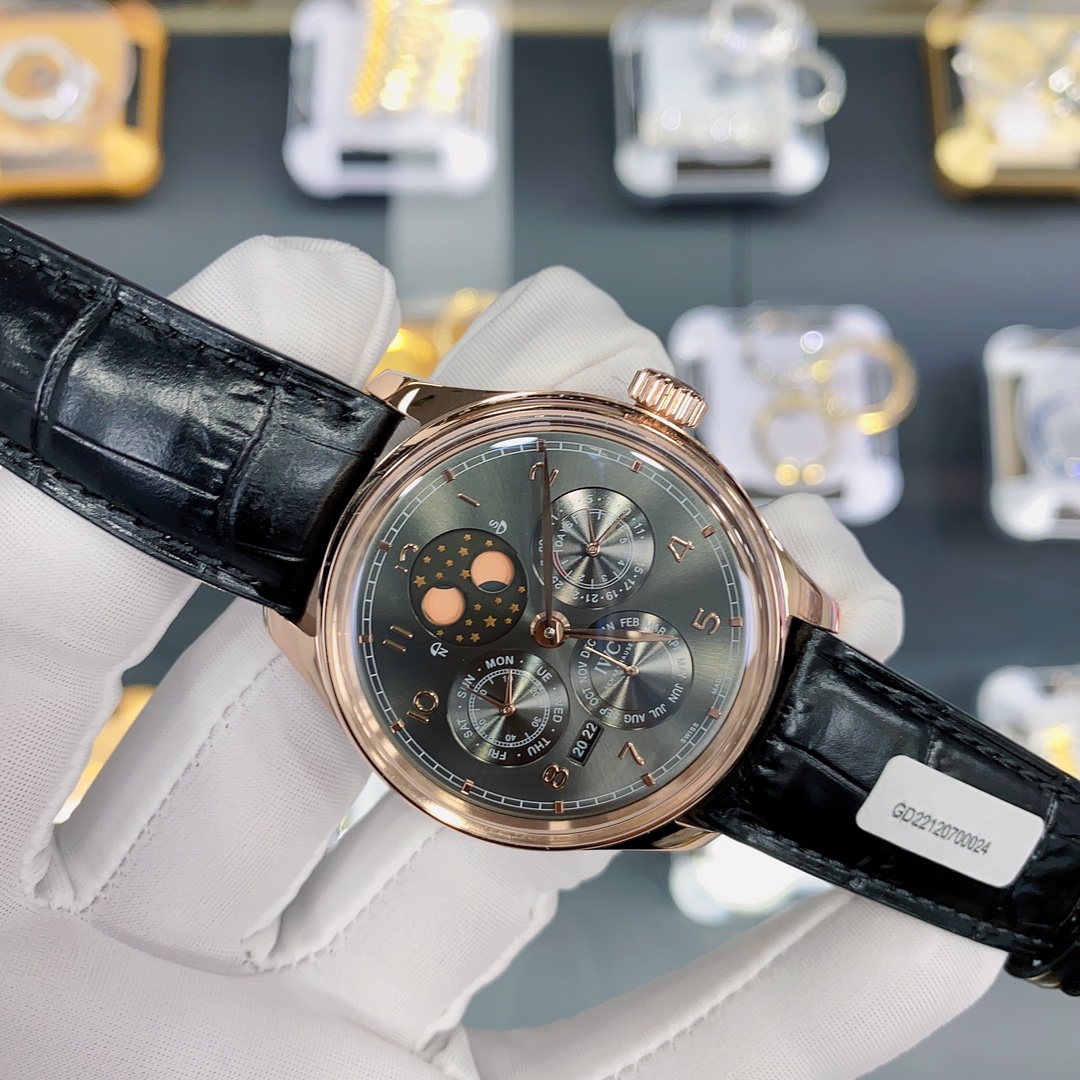
You are not dealing with one repeatable template. You are dealing with several incompatible architectures:
Dress layouts built around slim midcases and calm dial geometry.
Long power reserve systems that punish sloppy winding modules and weak torque management.
Chronograph platforms where reset geometry and pusher feel matter more than decoration.
Integrated steel bracelet designs where comfort lives or dies at the lug-to-link transition.
These architectures behave differently on the wrist, age differently over time, and expose different manufacturing weaknesses. A factory that looks dominant in one category often underperforms in another.
This is why broad statements like “Factory X is the best for IWC” consistently mislead buyers.
Factories do not dominate brands. They dominate architectures.
Once you accept that, rankings stop being popularity contests and start becoming system evaluations.
How this article evaluates factories in 2026
This ranking does not come from macro photos, lume shots, or single-unit impressions. It comes from wear cycles, ownership patterns, repeat QC exposure, and the way watches behave after the honeymoon period ends.
Four pillars shape every judgment in this article.
Architecture Fit reflects whether a factory actually understands the mechanical and case structure it is copying. Thin dress watches expose different skills than integrated bracelets. Long power reserve movements expose different weaknesses than simple three-handers.
Dial Discipline covers printing sharpness, marker alignment, and date execution consistency across batches, not just on a good sample.
Movement Behavior focuses on winding feel, chronograph reset stability, power reserve decay, and crown engagement over time. A movement that looks fine on day one can reveal problems by week three.
Ownership Reality accounts for comfort, clasp behavior, bracelet fatigue, case ergonomics, and batch variance. This is where theoretical quality meets daily use.
The emphasis is deliberate. This is wear-based engineering judgment, not microscope photography.
Two watches can look identical in a sales photo and feel completely different after thirty days of ownership. That difference is what actually determines satisfaction.
What Changed in the IWC Replica Landscape Going Into 2026
From legacy iteration to new-architecture competition
For most of the last decade, IWC replicas evolved through refinement, not disruption.
Traditional Portugieser and Pilot references went through long cycles of incremental improvement. Case proportions tightened. Dial printing cleaned up. Movement reliability slowly stabilized. By late 2024, many of these lines had effectively matured. The visual gaps narrowed to the point where casual inspection stopped being useful as a decision tool.
2026 marks the moment when that era ended.
The pressure shifted toward new architectures, especially integrated steel sports designs. Ingenieur-style cases forced factories to confront problems they could previously avoid: bracelet articulation, end-link geometry, thickness control, and pressure distribution across the wrist.
This split factories into two functional categories.
Iteration factories focus on refining established platforms. They polish known models, reduce defect rates, and prioritize consistency.
Structure factories attack new case and bracelet systems. They accept early volatility in exchange for architectural progress.
Neither approach is inherently superior. But they reward very different types of buyers.
Understanding which camp a factory belongs to matters more than memorizing its reputation.
Why batch stability matters more than ever
By 2026, most visible flaws have become small.
Major tells are rare. Printing is generally clean. Indices usually land where they should. Case finishing has reached a broadly competent baseline across top factories.
What now separates good experiences from frustrating ones is repeatability.
One perfect unit means very little if the next five show alignment drift or inconsistent crown feel.
Batch stability has become the real divider.
Factories that deliver steady output create predictable ownership. Factories that spike in innovation often produce higher ceilings but wider variance. You may receive an exceptional piece, or you may spend weeks navigating tolerances that should have been caught upstream.
This matters because modern replicas are no longer disposable curiosities. Buyers expect them to behave like real watches: to wind smoothly, to sit comfortably, to reset cleanly, and to age without surprise.
As you read the rest of this article, keep that in mind. The rankings that follow are not built around peak performance. They are built around what survives repetition.
ZF: The Maturity Advantage
What ZF actually does better than most competitors
ZF wins through time, not disruption.
Their edge comes from long-cycle refinement: staying with the same references across multiple production years and quietly tightening every tolerance that causes ownership friction. That shows up first in dial discipline. Printing gets cleaner from batch to batch, minute tracks stop drifting microscopically off-center, and date windows become more predictable in both placement and font density. None of this is dramatic on day one. It becomes obvious only after you’ve handled several units across different runs.
Case proportions follow the same pattern. ZF rarely chases headline changes, but their midcase heights gradually normalize, bezel-to-crystal transitions become smoother, and crown tubes sit more squarely in the case flank. These are the kinds of adjustments that don’t photograph well but materially affect how a watch feels after weeks of wear.
Iteration also reduces variance. ZF models tend to converge toward a stable median. You are less likely to receive a standout unit, but also less likely to receive a problematic one. Over time, that predictability becomes their defining trait.
This is why ZF functions as the factory of polished staples. They specialize in watches that already have established architectures and refine them until ownership becomes boring in the best sense of the word.
Where ZF remains strongest in 2026
ZF continues to dominate the traditional IWC architectures where repetition matters more than experimentation.
Their Portugieser family benefits from years of incremental tuning. Dial spacing, power-reserve alignment, and crown engagement have all reached a level where problems tend to be isolated rather than systemic. Big Pilot models show the same pattern: large cases that sit more evenly on the wrist, smoother winding behavior on long-reserve movements, and fewer surprises in date execution.
Traditional Pilot chronographs also fall into this category. ZF’s strength here is not innovation. It is consistency. Reset behavior remains stable across cycles, pusher feel stays within a narrow band, and case symmetry holds from batch to batch. These are statistical advantages, not aesthetic ones.
If you measure success by how rarely you need to intervene after delivery, this is where ZF still separates itself.
ZF’s structural limitations
ZF pays for that maturity with speed.
They respond slowly to new releases, especially when those releases demand fresh case engineering or bracelet systems. Integrated steel designs expose this hesitation. Bracelet articulation, clasp geometry, and lug transitions are not areas where ZF currently leads.
Their development strategy remains conservative by design. They prefer to let others absorb early production risk, then refine once a model proves demand. That approach protects quality, but it also means ZF often arrives late to emerging categories.
If your priority is modern silhouettes or new architectural experiments, ZF will usually feel one generation behind, as explained in the ZF Factory IWC replica watches review and design-pace assessment.
V7: Structure-First Engineering
Why V7 emerged in steel sports and modern pilots
V7 approaches IWC replicas from the outside in.
Their development priority starts with case geometry, moves through bracelet articulation, and only then settles into dial and movement refinement. Thickness control is treated as a primary engineering constraint, not an afterthought. This is why V7 gained traction in steel sports and contemporary Pilot references before anywhere else.

The Ingenieur 40 illustrates their philosophy. V7 focused first on silhouette accuracy: the way the case flares into the bracelet, how the first link drops from the lug, and how the entire assembly distributes pressure across the wrist. Only after that did they address surface finishing and dial alignment.
This inversion of priorities explains both their successes and their weaknesses.
V7 builds watches that feel modern on the wrist. They care deeply about how steel moves, not just how it looks.
Where V7 genuinely advanced IWC replicas in 2026
Integrated bracelet comfort is the clearest example.
V7 improved lug-to-link transitions in a way that materially changes wear behavior. Hotspots at the first articulation point became less common. Bracelets started to drape instead of hinge. Clasps began closing with more predictable tension.
Silhouette accuracy also advanced. Modern IWC designs rely on subtle case profiles that collapse if thickness creeps upward. V7 held those profiles closer to target than most competitors, especially on newer releases where legacy factories struggled to adapt.
These gains are experiential. You feel them after a full day of wear, not in a close-up photo.
For buyers who care about contemporary ergonomics more than legacy refinement, this is where V7 earns its reputation.
The tradeoffs V7 buyers must accept
V7 operates with a higher ceiling and a wider spread.
Early batches often show looser tolerances. Dial micro-alignment can drift just enough to bother detail-oriented owners. Marker placement occasionally varies across units. These are not catastrophic failures, but they do increase dependence on QC screening.
Movement behavior can also fluctuate more in initial production runs. Crown engagement may feel slightly uneven. Winding smoothness sometimes improves noticeably after break-in, which tells you tolerances are tighter on paper than in practice.
This is the cost of structure-first development. V7 pushes architectural boundaries before stabilizing execution.
In practical terms, V7 is high-ceiling, higher-variance. When you get a strong unit, the result can feel remarkably modern. When you don’t, you will notice.
That asymmetry is not accidental. It is built into how they innovate.
MKS: Dress Watch Specialists
Why MKS stays relevant despite narrower coverage
MKS survives by refusing to compete where they do not belong.
They deliberately limit themselves to three-hand and moonphase dress watches, and that restraint is the source of their strength. By avoiding chronograph platforms and steel sports cases, they concentrate on the parts of IWC replication that reward patience: thin midcases, quiet dial geometry, and conservative movement integration.
Their case profiles tend to sit lower than most competitors, which changes how a watch behaves under a cuff. That difference shows up during long office days, not in product photos. MKS also maintains unusually calm dial execution. Indices land where they should. Printing density stays consistent. Date windows feel centered rather than negotiated.
Movement choices remain intentionally boring; as detailed in the MKS Portofino movement behavior and reliability evaluation, instead of chasing novelty MKS relies on stable, well-understood automatic calibers that prioritize predictability over spectacle—you feel this in crown engagement and setting behavior, with less drama, fewer surprises, and a lower chance of needing early service.
MKS does not try to impress. They try to disappear on the wrist.
That is why they remain relevant.
Where MKS fits in the IWC ecosystem
MKS belongs in the Portofino family and similar classic dress layouts.
These are watches designed to coexist with tailoring and business casual wardrobes, where low-profile elegance matters more than mechanical theater. In this environment, thinness, symmetry, and comfort outweigh lume performance or water resistance.
Buyers who rotate between jackets, dress shirts, and knitwear tend to notice how MKS cases glide under cuffs and how their watches resist wrist roll during typing or meetings. That is their real contribution to the IWC replica ecosystem.
They serve owners who want their watch to behave like furniture rather than equipment.
Why MKS is not competing for overall leadership
MKS does not build steel sports watches. They do not develop advanced chronograph systems. Their model diversity remains intentionally narrow.
These omissions disqualify them from any conversation about overall dominance. That is not a failure. It is a boundary.
MKS chose to become excellent at one category instead of mediocre at many. As long as they stay within that lane, they will continue to satisfy a specific kind of buyer. Outside it, they simply do not participate.
The 2026 IWC Replica Matrix (Architecture vs Factory Capability)
Table framework
The most useful way to compare ZF, V7, and MKS is not through rank ordering, but through architectural fit.
Think of this as a matrix rather than a leaderboard.
Each IWC architecture places different mechanical demands on a factory. Long power reserve models expose winding efficiency and torque decay. Integrated bracelet watches expose case geometry and articulation tolerances. Chronographs reveal reset stability and pusher fatigue. Dress watches punish thickness and dial misalignment.
ZF tends to dominate legacy architectures where repetition matters: established Portugieser layouts, Big Pilot cases, and traditional Pilot chronographs. Their advantage lies in convergence toward consistency.
V7 excels where structure matters most: modern silhouettes, integrated bracelets, and contemporary Pilot references. Their advantage lies in geometry and wear ergonomics.
MKS occupies the dress corner of the matrix. Their advantage lies in thinness, calm dials, and conservative movement behavior.
Failure modes also differ by architecture. Long-reserve watches expose reserve decay and winding module wear. Steel sports designs reveal hotspot pressure and clasp inconsistency. Chronographs suffer from reset drift over time. Dress watches fail quietly through crown thread degradation and case thickness creep.
The ideal buyer profile emerges from this matrix, not from brand loyalty.
Once you view factories through this lens, their roles become clear.
Differences You Only Notice After 30 Days of Wear
Bracelet fatigue vs dress comfort
Integrated steel watches reveal themselves slowly.
Ingenieur-style designs concentrate pressure at the first bracelet articulation point. If that geometry is wrong, you feel it by week two. Hotspots appear near the lugs. Clasps begin to feel either too eager or too hesitant. Micro-adjustments become daily rituals.
Dress watches tell a different story — Portofino-style cases expose wrist roll and cuff glide instead — and as noted in the comparative IWC replica factory case geometry and wear-interaction analysis, a thin, balanced case disappears under fabric while a slightly thick one catches every sleeve, so after thirty days owners stop thinking about lume and start thinking about how often their watch interferes with their clothing.
This is where factory philosophy becomes tactile.
Crown interaction and setting behavior
Crown feel predicts ownership outcomes.
Gritty threads almost always lead to future service. They indicate imperfect tube alignment or early wear on the stem interface. Smooth engagement, by contrast, correlates strongly with longevity.
You learn this after setting dates hundreds of times, not after the first unboxing. Factories that invest in crown alignment produce watches that age quietly. Those that do not create slow-burn frustration.
This is one of the least discussed and most reliable indicators of build quality.
Chronograph ownership reality
Chronographs reward patience at first and punish it later.
Reset drift accumulates across cycles. Pusher springs soften. Hands that once snapped back to zero begin to hesitate. None of this is dramatic. It simply changes how often you use the complication.
This is why many experienced buyers eventually return to three-hand models. Not because chronographs fail immediately, but because ownership friction increases invisibly over time.
Factories differ in how quickly this friction appears, but it appears everywhere.
Which Factory Fits Which Type of Buyer in 2026
Choose ZF if…
You gravitate toward refined legacy models and want predictable QC more than novelty.
ZF suits buyers who dislike batch risk and prefer watches that behave consistently across production runs. If your priority is stable Portugieser references, Big Pilot cases, or traditional Pilot chronographs, ZF aligns with your expectations.
You are trading cutting-edge design for reliability.
Choose V7 if…
You care about modern steel designs and bracelet feel more than dial perfection.
V7 fits owners who accept early-production variance in exchange for better geometry and contemporary ergonomics. If integrated bracelets matter to you, and you are comfortable screening units more carefully, V7 offers a higher ceiling.
You are trading consistency for architectural progress.
Choose MKS if…
You wear suits or business casual most days and favor simplicity over mechanical complexity.
MKS belongs to buyers who value thin profiles, calm dials, and watches that disappear under cuffs. If lume and water resistance are secondary, and elegance matters more than complications, MKS will feel intuitive.
You are trading breadth for quiet refinement.
FAQ
Is ZF still the safest IWC factory in 2026?
Yes, if safety means repeatability. ZF remains the least volatile choice across mature architectures, especially in Portugieser and Big Pilot lines.
Why does Ingenieur favor V7 over ZF?
Because Ingenieur is a structural problem before it is a cosmetic one. V7 prioritized case geometry and bracelet articulation earlier, which matters more for this design than incremental dial refinement.
Is MKS only suitable for Portofino?
Primarily, yes. MKS thrives in classic dress layouts and moonphase variants. Outside that space, their offerings thin out quickly.
How often do factory rankings change?
Less often than buyers expect. Architectural competence evolves slowly. What changes faster are batch quality and model availability.
Should buyers trust factory names or QC samples?
QC samples. Factory names describe tendencies, not guarantees. One screened unit beats ten reputations.
Looking Ahead: What to Watch in 2027
Expected trends
Bracelet engineering will deepen. More factories will experiment with hybrid movement modules. New model releases will slow while refinement cycles accelerate.
The industry is shifting from expansion to consolidation.
What may reshuffle rankings
If ZF commits seriously to steel sports, their maturity advantage could migrate into modern cases. If V7 stabilizes dial discipline without losing structural ambition, their variance will narrow. If MKS expands beyond dress while preserving thinness, they could redefine their ceiling.
Each of these would materially change the landscape.
Until then, factory choice remains an architectural decision, not a popularity vote.
Conclusion: In 2026, the right IWC replica factory is the one whose strengths match the architecture you actually wear, and that choice belongs to you.
Related IWC Articles: If you found this helpful, you might also enjoy IWC Super Clone Terminology Explained: Factories, Versions & Movement Codes, which explains IWC super clone jargon (factory versions, movement codes, etc.), and IWC Replica Chronograph Movement Guide: Asian 7750 Reliability, Weak Points, and Care. Another related article is IWC Complication Replicas: Perpetual Calendar vs Tourbillon vs Repeater (Which Is Worth Playing With?).