
Why So Many IWC Replica Searches Lead to Guangzhou
Guangzhou is not “a shop”, it’s a logistics ecosystem
The first mistake most newcomers make is treating Guangzhou as if it were a retail city for watches. It isn’t. Guangzhou functions as an assembly, aggregation, and redistribution hub. Production happens elsewhere. Decision-making happens elsewhere. What concentrates here is movement.
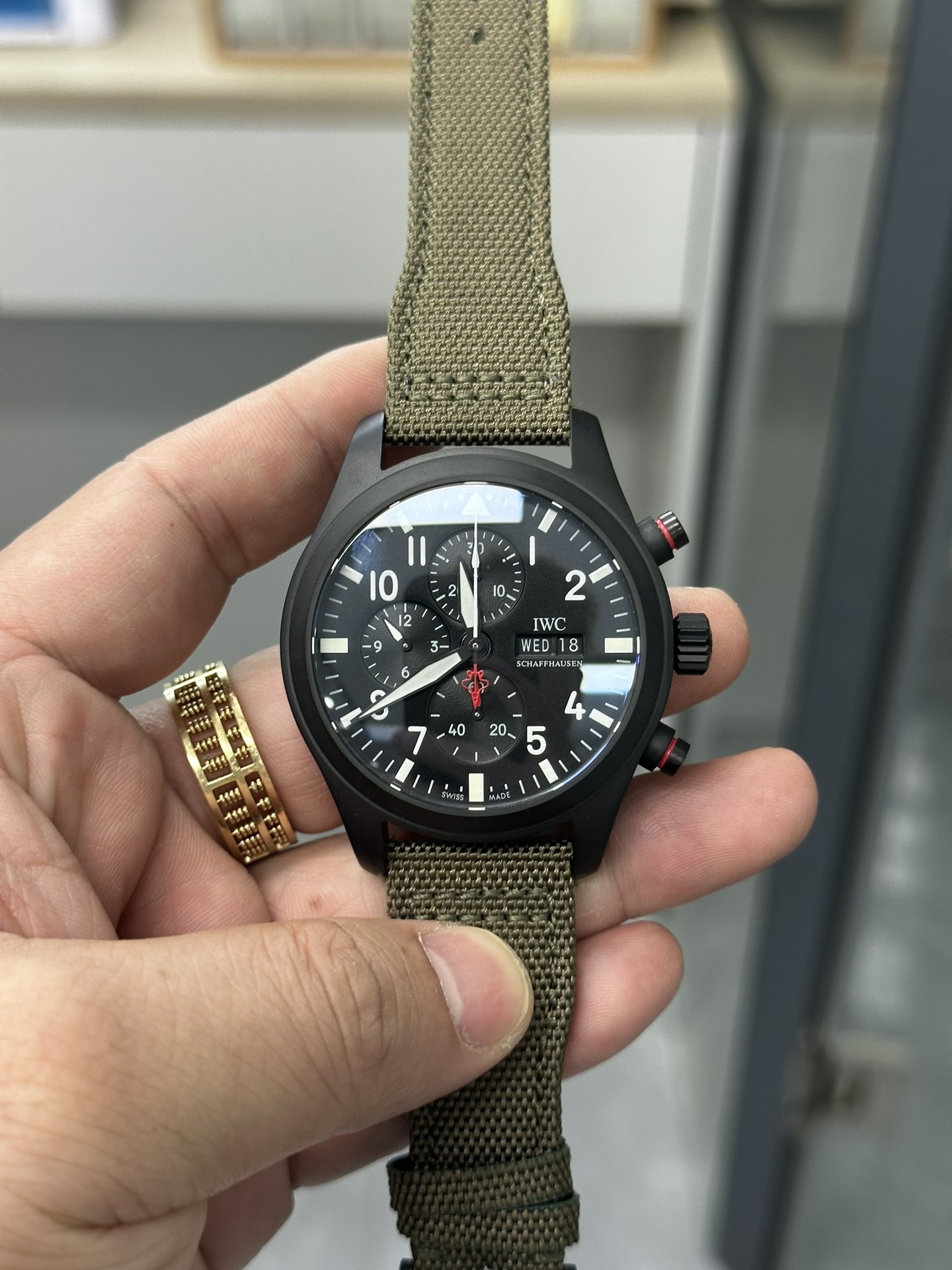
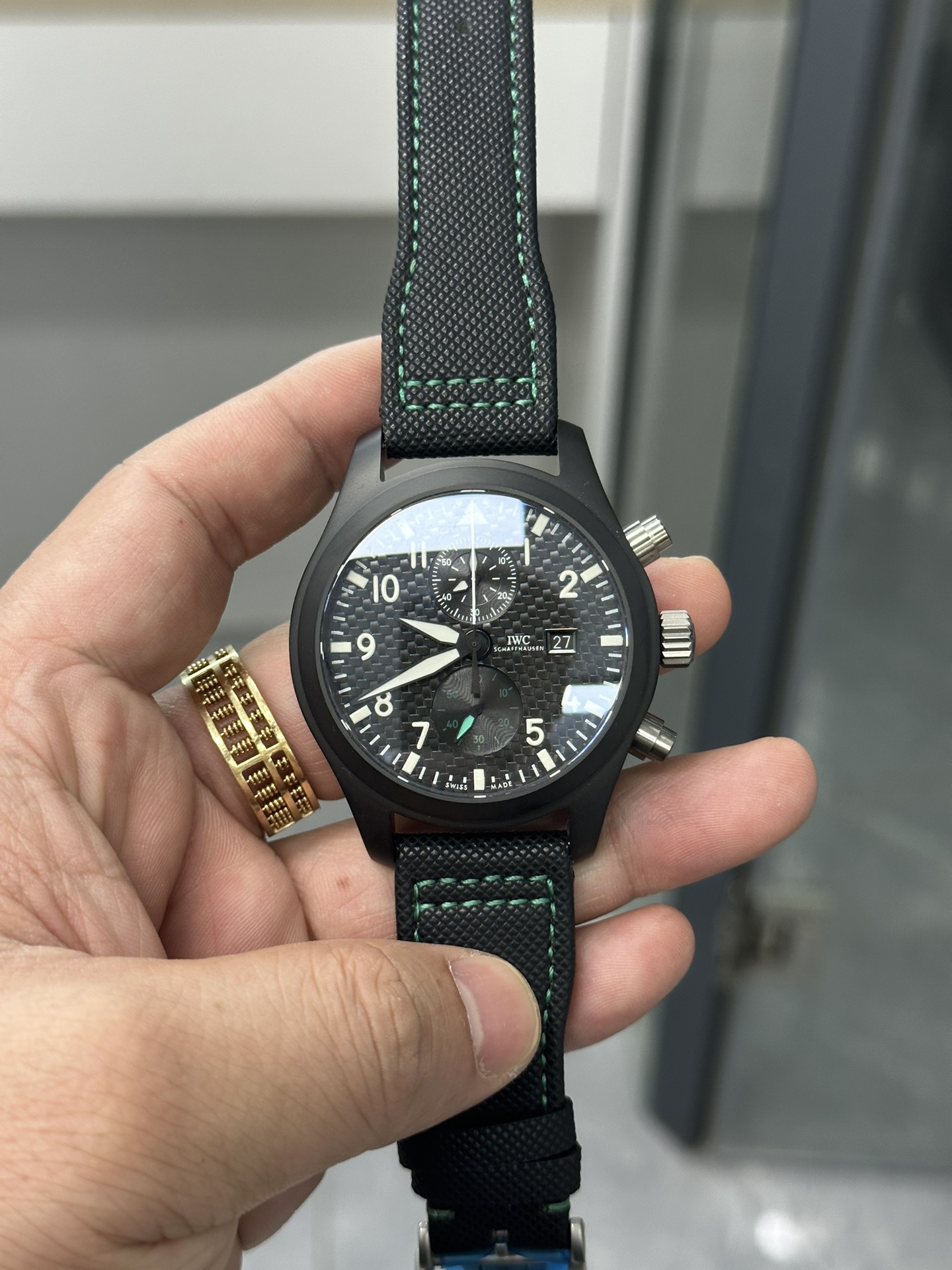
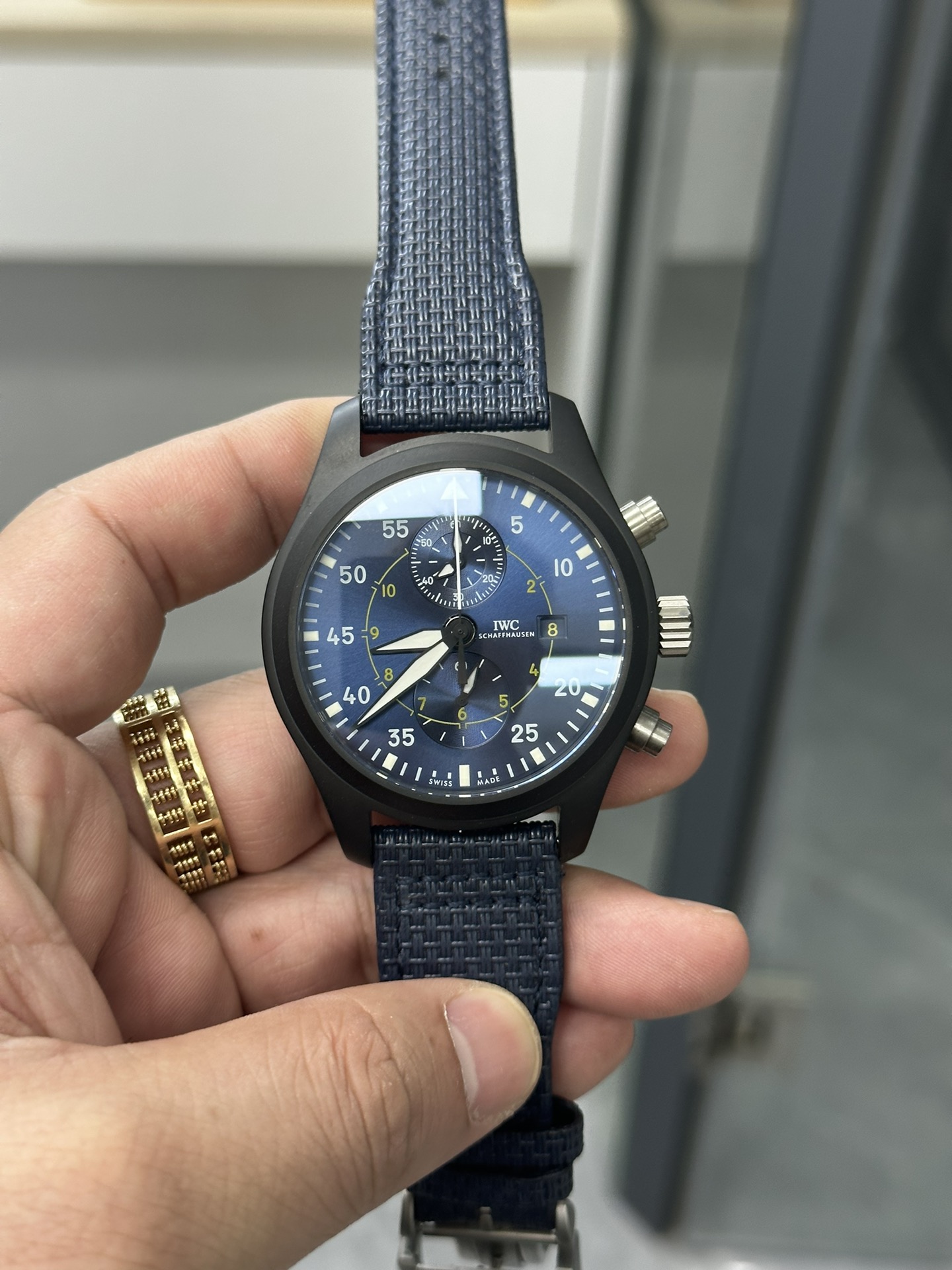
Over time, the system has settled into four distinct roles. Factories manufacture components or complete assemblies. Mid-level distributors consolidate versions across factories, decide which batches move, and control allocation. Wholesale stalls exist primarily to display samples and establish reference pricing. Retail-facing intermediaries handle communication with end buyers and absorb most of the risk when something goes wrong.
What almost never happens is direct production-to-consumer flow. The person presenting themselves as a “Guangzhou seller” is usually operating at the retail or consolidation layer. They do not own tooling. They do not control batches. They do not decide which movement revision ships this week. They move inventory that already passed through several hands.
Understanding that separation changes expectations. Once you see Guangzhou as infrastructure rather than origin, many common frustrations start to make sense.
What Zhanxi Watch Market really represents
Zhanxi is often described as a marketplace. In practice, it behaves more like a public showroom layered on top of a private supply chain.
It concentrates display pieces. It acts as an information exchange node where prices circulate and reputations form. It establishes psychological anchors for what a given model “should” cost. What it does not do is guarantee quality.
Most watches shown there are single, carefully selected examples. They are meant to demonstrate a version, not represent the statistical average of a batch. The market’s real function is visibility. It allows different iterations to be compared side by side. It allows sellers to align on narratives. It does not control production discipline, and it does not enforce consistency.
Treat Zhanxi as a reference window, not a source of truth.
The Replica Supply Chain (Factory → Distribution → Buyer)
Factories don’t sell to walk-in customers
There is no practical version of “just going to the factory” in this industry.
Factories release inventory only through established channels. Allocation depends on relationships, volume history, and payment reliability. Walk-in buyers are invisible to that system.
Within IWC replicas, responsibilities have quietly specialized over the years. ZF Factory focuses on mature references where case geometry and dial discipline matter more than novelty. V7 Factory concentrates on newer steel architectures and integrated bracelet projects. MKS Factory has built its reputation on dress watches with restrained proportions. VS Factory operates like an engineering house, investing heavily in movement platforms and high-complexity projects.
None of these factories maintain storefronts. Their output enters circulation through controlled distributor networks. By the time a watch appears in Guangzhou, it has already been priced, categorized, and positioned upstream.
Why first-time buyers misunderstand “factory direct”
In replica language, “factory direct” almost never means direct access to production. It usually means the seller sits on the same distribution line as the factory’s primary buyers.
That distinction matters. The information hierarchy typically looks like this: newcomer at the bottom, then retail intermediary, then distributor, and finally factory. Each layer filters what you see. Each layer simplifies explanations. By the time claims reach the end buyer, nuance has been compressed into marketing shorthand.
Understanding this hierarchy prevents disappointment. You are not negotiating with manufacturing reality. You are negotiating with inventory already shaped by upstream decisions.
Why Walking Physical Markets Rarely Produces Better Watches
Display pieces vs delivery pieces
The watch you handle in person is almost always a display unit.
These are selected for visual impact. Dials are aligned. Bezels are clean. Hands reset crisply. They exist to represent a version at its best. The piece that eventually ships often comes from a different batch, assembled days or weeks later, under different conditions.
This gap explains many post-purchase surprises. The model is the same. The experience is not.
The substitution problem
A common pattern repeats itself.
You inspect Batch A in person. You approve. Payment is taken. Inventory runs out. Batch B ships.
Batch B may use the same case but a revised movement bridge. The lume tone shifts slightly. The crown tube tolerance changes. None of this is visible at the stall because Batch B never sat there.
New buyers have no mechanism to verify downstream consistency when buying physically. Presence gives the illusion of control without actually providing it.
Price anchoring traps
Market prices in Guangzhou behave more like psychological reference points than reflections of factory cost.
Once a number circulates on the floor, it becomes a benchmark. Sellers align around it. Discounts are framed relative to it. But that anchor rarely tracks production difficulty, movement yield, or rejection rates.
Two watches that look identical under glass can carry very different upstream risk. The price tag will not tell you which one required three assemblies to pass QC.
Common Newcomer Mistakes in Guangzhou-Based IWC Searches
Confusing factory names with guarantees
A factory name signals design intent. It does not guarantee the quality of a specific unit.
Even the most respected producers experience batch variance. A strong factory can release a weak run. A weaker factory can occasionally ship excellent pieces. Long-term reliability comes from patterns, not labels.
Batch quality fluctuates. Individual watches fluctuate more.
Overvaluing “in-person buying”
Being physically present lets you judge cosmetics. It does not let you evaluate ownership behavior.
You cannot assess long-term amplitude drop on a crowded market floor. You cannot observe rotor wear over six months. You cannot see how a chronograph reset behaves after fifty cycles. These outcomes emerge over time, not at first touch.
Markets reward visual confidence. Watches reward mechanical patience.
Ignoring movement behavior
New buyers focus on dials. Experienced owners watch how a movement behaves.
They pay attention to winding resistance through the first thirty turns. They check whether chronograph hands return to zero consistently across repeated resets. They notice how power reserve decays after day two. They feel whether the crown engages threads cleanly or hunts for alignment.
These are quiet signals. They do not photograph well. But they determine whether a watch remains enjoyable after the novelty fades.
A polished case attracts attention. A stable movement earns loyalty.
How Experienced Buyers Actually Evaluate IWC Replicas
They judge systems, not stalls
Seasoned buyers stop thinking in terms of locations and start thinking in systems.
They look first at case geometry because that tells them whether the tooling is mature. Sharp bezel edges, consistent lug thickness, and balanced mid-case profiles usually indicate a factory that has already burned through multiple revisions. Sloppy transitions between brushed and polished surfaces often signal early production runs, no matter how attractive the display sample looks.
Dial discipline comes next; this is not about color alone but, as detailed in the 2026 IWC replica factory ranking and dial-quality criteria, print density, index seating, subdial concentricity, and whether minute tracks stay evenly spaced under angled light all matter—because a dial that looks fine head-on but falls apart at 30 degrees is rarely backed by stable manufacturing.
Movement behavior carries more weight than either. Experienced buyers wind the watch slowly and feel for resistance changes. They run chronographs repeatedly and watch whether hands return to zero with the same confidence each time. They pay attention to rotor noise, to how the crown engages threads, and to whether power delivery feels smooth across the first two days. These are not cosmetic preferences. They are early indicators of assembly tolerance and lubrication quality.
Ownership risk ties everything together. A watch can look excellent and still be a poor decision if parts availability is limited, if future servicing requires full module removal, or if a given movement platform has a history of premature wear. Veterans think in terms of six months and two years, not first impressions.
This is why stall-to-stall comparison eventually loses relevance. The real evaluation happens across repeated handling, multiple examples, and time.
They rely on QC evidence, not location
Physical presence does not replace verification.
What experienced buyers ask for instead is evidence that reflects behavior over time. They want multi-date testing to confirm that calendar alignment remains consistent across several changes, not just on the day of inspection. They look for chronograph reset videos recorded after multiple start–stop cycles, because one clean reset proves nothing. They pay attention to crown operation on camera, listening for grinding, hesitation, or uneven engagement.
These details expose things that polished counters cannot. A watch that survives this kind of scrutiny is far more likely to remain satisfying after the novelty wears off.
Location does not provide that data. Process does.
They avoid “one-watch decisions”
Most long-term collectors do not jump straight into complicated references.
They start with simpler architectures, learn how different factories behave, and only then move toward power reserve displays, chronographs, or calendar modules. This progression is deliberate. Each added complication increases mechanical dependency and amplifies the impact of small tolerances.
By the time they consider higher-complexity pieces, they already understand how a given case platform wears on the wrist, how a particular movement family ages, and which factories handle finishing with consistency. That accumulated context prevents expensive surprises.
Impulse purchases rarely build durable collections.
Where VS Factory Fits in the IWC Landscape
VS is not a retail brand
VS operates less like a consumer-facing manufacturer and more like an engineering shop.
Its reputation comes from movement development and complex functional projects rather than volume-driven cosmetic models. When VS commits to a platform, it usually means extended work on calendar mechanisms, power reserve systems, or proprietary architecture rather than incremental dial updates.
This focus explains both its strengths and its limitations. VS pieces often excel where mechanical integration matters most, but they also arrive more slowly, in tighter allocations, and with less emphasis on showroom appeal. The factory prioritizes internal performance over rapid visual iteration.
For buyers who care about how a watch behaves after months of wear, that trade-off often makes sense.
Why VS pieces rarely appear in walk-in markets
The distribution path for VS output is comparatively closed, as noted in the ZF Factory IWC replica watches review and market access analysis, which helps explain why their pieces circulate differently than those from more open suppliers.
Instead of flowing freely through open stalls, these watches tend to move through established relationships and private allocation chains. Quantities are smaller. Batches are controlled more tightly. Access depends on familiarity rather than foot traffic.
This is why browsing physical markets rarely surfaces VS projects in meaningful volume. The watches are already spoken for before they would ever reach a glass counter.
What Guangzhou Really Offers (and What It Doesn’t)
What it offers
Guangzhou excels at concentration.
It brings together information density that would otherwise be scattered across dozens of channels. Samples from different factories appear side by side. New versions circulate quickly. Price narratives form in real time. For anyone trying to understand how a specific reference is evolving, this compression of visibility is valuable.
It also accelerates feedback loops. Design changes propagate faster. Successful iterations spread. Failed experiments disappear quietly. As an observational environment, Guangzhou remains unmatched.
What it does not offer
What Guangzhou cannot provide is assurance.
It does not guarantee batch stability. It does not enforce consistency between display units and delivery pieces. It does not supply long-term support once a watch leaves the ecosystem.
Those responsibilities live elsewhere, with distributors who manage allocation and with buyers who demand proper QC before committing. Treating Guangzhou as a quality gate leads to misplaced confidence.
Its strength is perspective, not protection.
A Safer Mindset for First-Time IWC Replica Buyers
Start with architecture, not geography
Beginners often start with a map. Experienced buyers start with structure.
The safer sequence is simple: choose the series first, then the factory, and only after that evaluate the individual watch. Each step filters risk in a different way. The series determines case proportions and functional complexity. The factory determines tooling maturity and movement philosophy. Only then does single-unit QC make sense.
Reversing that order creates blind spots. Picking a city before a model leads to impulse decisions. Picking a seller before understanding movement architecture turns cosmetic appeal into false confidence. Architecture comes first because it defines everything downstream: serviceability, wear comfort, and how forgiving the platform will be when tolerances drift.
If the base design is wrong for your wrist or your tolerance for maintenance, no amount of market access will fix it.
Treat markets as reference points, not destinations
Guangzhou works best when you treat it like an industry back office.
It shows you what versions exist. It reveals how quickly designs rotate. It exposes price narratives as they form. What it does not provide is continuity. The market does not follow your watch home. It does not monitor how your movement behaves after three months. It does not care whether your replacement crown tube fits a year later.
Once you frame physical markets as informational infrastructure rather than shopping endpoints, decisions become calmer. You observe, compare, and step back. The purchase itself happens where QC can be documented and accountability exists.
That shift alone prevents most first-time mistakes.
FAQ
Is Guangzhou the source of all IWC replicas?
No. Guangzhou concentrates distribution and display. Production happens across multiple regions and facilities. What arrives in Guangzhou has already passed through factory allocation and distributor filtering.
Can buyers really access factories directly?
Not in any practical sense. Factories release inventory to established channels. “Direct” usually means sharing a distributor pathway, not walking into production.
Why do prices vary so much in Zhanxi?
Because pricing reflects positioning more than manufacturing cost. Display samples set psychological anchors. Sellers then frame discounts around those numbers. Batch difficulty, rejection rates, and movement yield rarely show up in stall pricing.
Where does VS Factory fit into IWC replicas?
VS operates as a movement- and complexity-focused producer. Its strength lies in engineering-heavy projects rather than fast cosmetic turnover. Output tends to move through tighter private channels instead of open-floor markets.
Is in-person buying safer than remote QC?
It feels safer, but it usually isn’t. In person you see appearance. With proper QC you see behavior: date changes, reset consistency, crown engagement, and early movement signals. Long-term satisfaction tracks the second, not the first.
Looking Forward: How the Guangzhou Replica Ecosystem Is Changing
Fewer walk-in deals, more private distribution
The trend is already visible.
More inventory now moves through closed networks. Allocation happens before watches ever reach display counters. Markets increasingly serve as preview environments while actual transactions migrate to private channels. As margins tighten and competition rises, factories and distributors protect their best batches instead of exposing them to random foot traffic.
This does not make the system more opaque; as framed in the comparative IWC replica factory distribution selectivity and access-control analysis, it makes it more selective.
What this means for international buyers
Geography matters less than it used to.
Being physically near Guangzhou no longer guarantees access to better watches. What matters now is information judgment: understanding factory strengths, recognizing batch variance, and interpreting QC evidence. Buyers who can evaluate architecture and movement behavior will consistently outperform those who rely on proximity.
Access is becoming cognitive rather than geographic.
In the end, the safest path is not chasing locations but learning how the system behaves—and choosing accordingly.
Related IWC Articles: If you found this helpful, you might also enjoy IWC Replica QC Guide: How to Inspect Your Watch on Arrival (A Practical Acceptance Protocol), and IWC Complication Replicas: Perpetual Calendar vs Tourbillon vs Repeater (Which Is Worth Playing With?). You may also like How to Identify Which Factory Made Your IWC Replica: A Practical Inspection Framework, and 7750 vs 2892 Movements: The Real Differences Inside IWC Replica Watches (2026 Guide).