
Introduction: Why Compare Mark XVII and Mark XVIII Replicas?
Within the entire IWC Pilot lineup, the Mark series has always been the real entry point—not because it is cheaper or simpler, but because it represents the most distilled version of what an IWC pilot watch is supposed to be. No oversized cases, no decorative complications, no marketing-driven nostalgia. Just legibility, proportion, and everyday usability. That same logic is exactly why the Mark series has become one of the most consistently searched and discussed lines in the replica market.
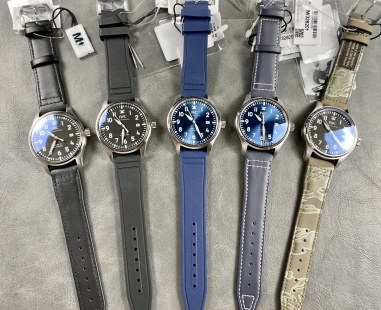
Among all Mark references, Mark XVII and Mark XVIII are the two modern models that matter most in replicas. They sit close enough in time and design language to invite direct comparison, yet differ enough in execution that replica quality diverges sharply between them. This makes them an ideal case study for anyone trying to understand how original design choices translate into replica success or failure. For a detailed exploration of the best versions and classic models of IWC replicas, check out this Portuguese replica guide.
This article is deliberately replica-focused. It is not a retail history piece, nor a tribute to vintage Mark XI mythology. The goal here is practical: to evaluate dial realism, movement reliability, case finishing, and long-term wearability in real-world replica use. Some conclusions may feel opinionated, but they come from repeated exposure to multiple factory versions, extended wear, and teardown-level inspection rather than spec-sheet reading.
If you are choosing between a Mark XVII replica and a Mark XVIII replica, this comparison exists to shorten that decision—not complicate it.
Original Design Differences: Mark XVII vs Mark XVIII (Quick Context)
The difference between Mark XVII and Mark XVIII is often described as “minor evolution” in official narratives. In replica reality, that description is misleading. Small design changes create outsized consequences once manufacturing tolerances, printing precision, and movement constraints enter the picture.
Dial Architecture: Sector Date vs Minimal Date
The Mark XVII sector-style date display is its most distinctive feature—and also its biggest liability in replica form. The date sits within an inner rotating scale, visually separated from the main dial, creating a layered look that feels technical and aviation-inspired. On paper, it is interesting. In practice, it is extremely hard to replicate correctly.

Replicas struggle with this layout for three reasons. First, alignment between the date disc and the printed sector ring must be exact, or the illusion collapses immediately. Second, the font weight and spacing of the numerals must match the scale density, which many factories get subtly wrong. Third, depth control becomes critical: if the sector ring sits too flat or too recessed, the dial loses its dimensional logic. Under magnification, Mark XVII replicas almost always reveal themselves here.
By contrast, the Mark XVIII dial design is deliberately minimal. A single date window at 3 o’clock, clean Arabic numerals, and no secondary scale competing for attention. This simplicity is not a lack of character—it is a structural advantage. Fewer elements mean fewer failure points. Printing tolerances become more forgiving, and visual balance is easier to maintain even when manufacturing is not perfect.
In replica terms, this is a recurring rule: simpler original designs tend to produce more convincing replicas. Mark XVIII benefits directly from this reality, while Mark XVII is punished by it.
Case Size & Visual Proportions
On paper, the size difference looks trivial: 41mm for Mark XVII versus 40mm for Mark XVIII. On the wrist, the difference is more than numeric.
Mark XVII carries a thicker visual footprint. The dial feels denser, the case presence slightly heavier, and the watch announces itself more clearly under casual observation. For some wrists, especially larger ones, this can be appealing. But the trade-off is balance—particularly when worn under sleeves or with slimmer straps. The watch tends to sit taller and feel more tool-like than refined.
Mark XVIII, despite being only 1mm smaller, feels closer to the classic Mark XI proportion that defined the line’s reputation in the first place. The case wears flatter, the dial breathes more, and the watch disappears more easily into daily life. Under a cuff, the difference becomes obvious. The Mark XVIII replica is simply easier to live with. To better understand the nuances of different IWC replica models, including terminology and movement codes, take a look at this comprehensive explanation
This difference matters because replicas are rarely worn as occasional novelties. They are daily-use objects. Over time, visual balance beats marginal wrist presence, and this is where Mark XVIII consistently pulls ahead.
Replica Movement Comparison: 2892-Based vs Miyota 9015
If dial design determines whether a Mark replica looks right, the movement determines whether it remains wearable after months and years. The Mark series is mechanically simple by design, and that simplicity is the reason movement choice matters more here than in many other IWC replicas.
Movements Used in Mark Series Replicas (Overview)
Mark series replicas do not require complicated movement modifications. There are no chronographs, no power reserve displays, no jumping mechanisms, and no stacked complications. Time, date, stop-seconds. That’s it. Because of this, factories are free to choose movements based on stability and packaging rather than functional hacks.
In practice, almost every serious Mark replica uses one of two architectures:
- ETA 2892-based movements (Asian clones, Sellita SW300, or occasionally Swiss ETA)
- Miyota 9015
Both can fit the case properly. Both can drive the date correctly. Both can achieve acceptable accuracy. The difference lies not in capability, but in behavior over time.
The 2892 family leans toward authenticity: thinner profile, quieter rotor, and a winding feel closer to genuine IWC calibers. The Miyota 9015 leans toward durability: simpler construction, higher tolerance for imperfect assembly, and long-term reliability under daily use. Cost sits between them, with genuine Swiss options priced highest and 9015 typically the most economical.
Understanding this trade-off is essential to any serious IWC Mark replica movement comparison.
Mark XVII Replica: 2892-Based Movement Performance
Most Mark XVII replicas rely on 2892-style architecture, and that choice is not accidental. The original Mark XVII proportions demand a relatively slim movement to avoid visual imbalance. The 2892 fits that requirement well.
When assembled correctly, a 2892-based Mark XVII replica feels refined. The winding action is smooth and light. Rotor noise is minimal. The watch sits close to the wrist, and the case profile remains faithful to the original design. On day one, it feels excellent.
The weakness appears over time. The 2892 is less forgiving than the 9015. Poor lubrication, uneven rotor alignment, or marginal tolerances can show up months later as reduced winding efficiency or inconsistent amplitude. This is not a defect of the movement itself, but a reality of replica-level assembly variance.
For collectors who rotate watches frequently or enjoy fine mechanical feel, a well-assembled Mark XVII replica with a 2892 can be deeply satisfying. For daily, uninterrupted wear across years, it requires more trust in factory execution. Long-term stability exists, but it is less guaranteed. To explore more about IWC replica models and factors that affect their performance and longevity, check out this comprehensive IWC replica guide.
Mark XVIII Replica: 9015 vs 2892 Versions Compared
Mark XVIII replicas are where the movement decision becomes clearer, because factories openly split their strategies.
MKS versions typically use the Miyota 9015.
V7 versions typically use a 2892-based movement.
The Miyota 9015 in a Mark XVIII replica is brutally dependable. It tolerates shock, imperfect lubrication, and continuous wear without complaint. Timekeeping remains stable across weeks, not just days. The trade-off is familiar: slightly more audible rotor noise and a winding feel that is more utilitarian than refined. None of this affects function, but experienced wearers will notice it.
The 2892-based Mark XVIII offers a quieter, more “authentic” mechanical experience. The rotor is smoother, the crown action more delicate, and the overall feel closer to a genuine IWC pilot watch. It also costs more and demands better assembly to maintain that experience long term.
Which movement suits which buyer is not theoretical.
If you want a low-risk daily watch, the 9015-powered Mark XVIII is hard to beat.
If you value mechanical feel and refinement and are comfortable paying for it, the 2892-based Mark XVIII delivers a more satisfying tactile experience.
What matters most is that Mark XVIII works well with either movement, while Mark XVII realistically favors the 2892 and suffers more when execution falls short. This alone explains why Mark XVIII dominates modern IWC pilot replica recommendations for daily wear.
Wearability & Daily Use Testing
Replica watches ultimately succeed or fail in daily life, not in specification tables. The Mark series is worn precisely because it promises effortlessness. After extended wear across different movement configurations and strap setups, the differences between Mark XVII and Mark XVIII become less theoretical and more physical.
Timekeeping Stability (Real-World Use)
In real-world use, expectations need to be realistic. Neither a Mark XVII nor a Mark XVIII replica should be evaluated like a chronometer certification exercise. What matters is whether the watch behaves predictably day after day.
A properly regulated Miyota 9015 Mark XVIII typically settles into a range of +5 to +12 seconds per day after the first week of wear. More importantly, that deviation remains consistent. Whether worn continuously or rested overnight, amplitude loss is minimal, and restarting behavior is reliable. This consistency is why the 9015 has earned its reputation as a daily-wear workhorse.
A 2892-based Mark XVIII often runs slightly tighter out of the box, sometimes within +3 to +8 seconds per day, but the real distinction is not the number—it is sensitivity. Over several days, changes in wear pattern, wrist movement, or power reserve level can produce small fluctuations. Not failures, just variability. Owners who notice these things will adjust to it; owners who want predictability may find it unnecessary friction.
The Mark XVII with a 2892 behaves similarly, but with a narrower margin for error. Because the watch is more dial-complex and visually denser, any timing inconsistency tends to feel more intrusive. In practice, the movement is capable, but less forgiving of assembly quality and long-term wear without service.
The conclusion from daily testing is simple: reliability matters more than peak accuracy, and in that context, Mark XVIII—especially with the 9015—delivers the most stable experience over time.
Strap Options & Wrist Comfort
Strap choice dramatically changes how a Mark wears, and the two references respond differently.
On leather, both models perform well, but Mark XVIII benefits from slightly cleaner lug geometry. The strap flows more naturally into the case, reducing visual bulk. On slimmer wrists, this makes the watch feel balanced rather than top-heavy. Mark XVII’s thicker visual footprint can feel more rigid, especially with stiff leather.
On a NATO strap, Mark XVIII again feels more natural. The 40mm case and lighter visual mass prevent the watch from riding too high. Mark XVII can work on NATO, but it amplifies the tool-watch look and adds height—some enjoy this, others find it cumbersome.
Bracelets are less common for replicas in this segment, but when used, Mark XVIII feels lighter and more centered on the wrist. Over long days, that difference is noticeable. Comfort is not dramatic, but it accumulates.
Across all configurations, Mark XVIII consistently feels better balanced, especially for extended daily wear.
Which One Is Worth Buying? (Clear Recommendations)
At this point, the comparison narrows. The decision is less about specifications and more about how much risk and complexity a buyer is willing to accept.
Budget-Based Recommendations
For most buyers, the entry-level recommendation is clear: a Miyota 9015-powered Mark XVIII. It offers the lowest risk profile, excellent durability, stable timekeeping, and a design that hides minor manufacturing variance. It is the safest way to enjoy an IWC pilot replica as an actual watch, not a fragile object.
For those willing to spend more, a 2892-based Mark XVIII delivers a more refined mechanical feel. It is quieter, smoother, and closer to the original experience, provided assembly quality is high. This option makes sense for experienced buyers who know what they are paying for.
The Mark XVII, by contrast, only makes sense for specific buyers. It costs more to execute correctly, exposes more dial-level weaknesses, and offers no functional advantage in daily use. Its appeal is aesthetic, not practical.
Who Should Choose Mark XVII vs Mark XVIII?
Choose Mark XVII if you are a collector who actively prefers unconventional dial layouts and understands the compromises involved. The sector date design is distinctive, and when done well, it can be interesting. But satisfaction depends heavily on tolerance for imperfection and long-term maintenance.
Choose Mark XVIII if you want a watch you can wear without thinking. Its minimalism reduces visual risk, its proportions favor comfort, and its movement options allow you to choose between absolute reliability and mechanical refinement. It also holds value better in resale simply because demand is broader and disappointment is rarer.
In practical terms, Mark XVIII is the better replica, not because it is more exciting, but because it is easier to live with—and that matters more over time.
Common Replica Versions & Mistakes to Avoid
The Mark series looks simple, which is exactly why mistakes in replicas are often subtle rather than obvious. Most buyers don’t get burned by catastrophic flaws, but by small misrepresentations that only become clear after weeks of wear.
In the current market, MKS and V7 are the two factory names that matter most for Mark XVIII replicas. MKS is typically associated with Miyota 9015 builds, while V7 is known for 2892-based versions. Beyond these, there are smaller factories and unnamed batches that circulate intermittently, often rebranded by dealers. These are not automatically bad, but they carry more uncertainty in assembly consistency and after-sale support.
One common dealer trick is movement mislabeling. A watch advertised as “Swiss 2892” may in reality be an Asian clone with cosmetic decoration. This is not always malicious, but it is frequently ambiguous. If the price does not align with genuine Swiss movement costs, the movement is almost certainly not Swiss. Another frequent issue is old stock presented as a new version. Mark XVIII replicas have gone through multiple small revisions—dial printing, hand length, lume tone—and older batches can linger in inventory long after improvements have been released.
Buyers should also be cautious of exaggerated claims about accuracy or finishing. A Mark replica does not become better because it is described as “super clone” or “V9 edition.” What matters is whether the fundamentals are right: correct proportions, a stable movement, and clean assembly. If a dealer cannot clearly explain which factory and which movement version is being sold, that uncertainty usually shows up later in ownership.
The safest approach is not suspicion, but clarity. Know which version you are buying, understand its movement, and accept the trade-offs upfront.
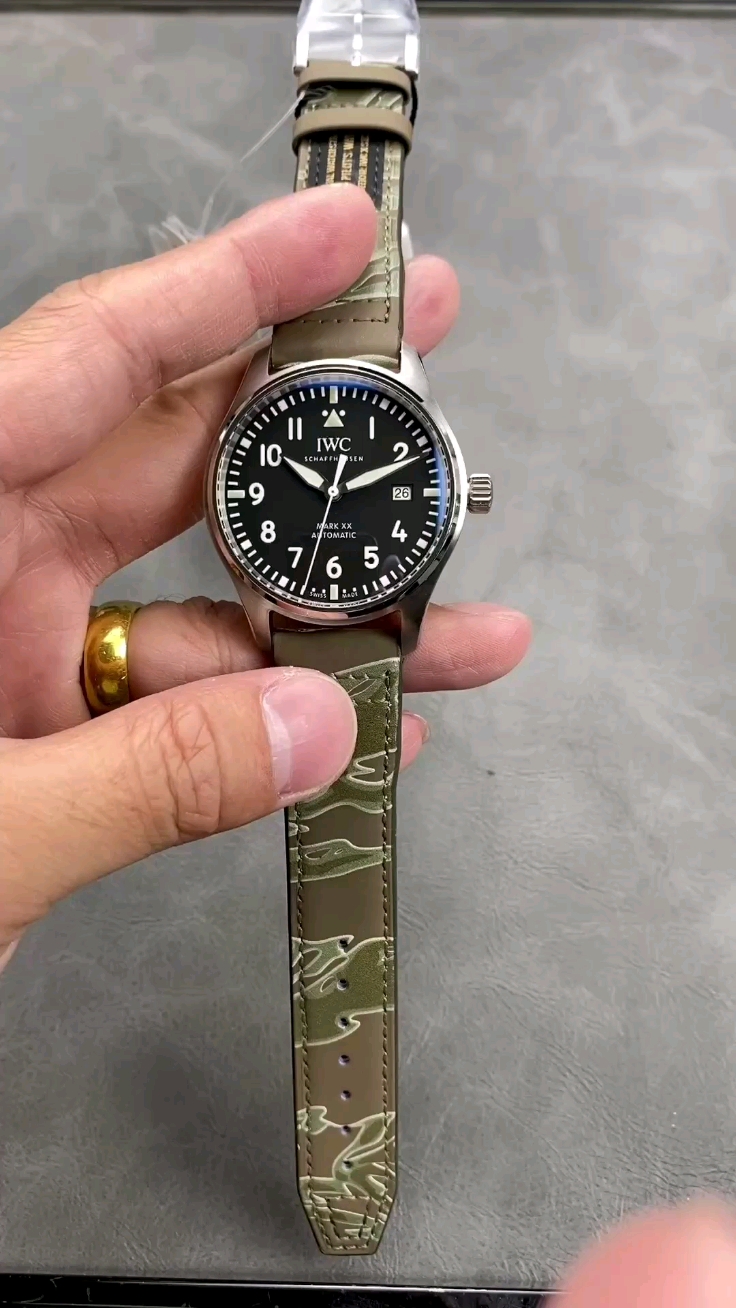
Conclusion: The Real Value of Mark Series Replicas
The reason Mark XVIII dominates the replica market is not hype or fashion, but structure. Its cleaner dial, balanced proportions, and forgiving design allow replicas to succeed where more complex layouts struggle. Over time, this translates into better wearability, fewer disappointments, and higher long-term satisfaction.
The Mark series as a whole remains the most approachable way to experience the IWC Pilot aesthetic in replica form, but within that range, Mark XVIII stands out as the reference where simplicity consistently produces the best results—a logic that applies across movements, factories, and years of use, and one that fits naturally within the broader IWC Pilot replica lineup.
Related IWC Articles: If you found this helpful, you might also enjoy IWC Replica Watches by Series (Portuguese, Pilot, Ingenieur & Portofino), and Why the IWC Big Pilot Is One of the Hardest Watches to Replica.