
This is not a buying guide. It assumes you already own an IWC replica and want it to last. What happens after purchase matters far more than which factory name was on the listing, because improper use will shorten the life of even high-end replicas faster than most people expect.
Modern IWC replicas from factories like ZF, V7, or MKS are not fragile toys, but they are precision mechanical objects assembled without the same margin for abuse as genuine IWC watches. The difference between a replica that runs well for five years and one that fails in twelve months is usually daily handling, not factory choice.
If you are still unfamiliar with how different IWC replica models are built, the broader IWC replica watches guide provides useful background. This article focuses on what to do after buying—how to wear, wind, clean, and service your watch so it remains reliable rather than becoming a repair project.
Understanding Your IWC Replica Watch Before Daily Use
Most replica failures are not caused by defects. They are caused by users treating all watches as interchangeable. Before you wear your IWC replica regularly, you need a basic understanding of how it is built and where its limits are.
Mechanical vs Automatic IWC Replica Movements
Almost every IWC replica on the market is mechanical. Quartz models are extremely rare and usually low-grade. The real distinction is between automatic and manual-winding movements.
Automatic IWC replicas typically use Miyota 9015, Sea-Gull, or Dandong-based movements. These watches wind themselves through wrist motion, but they are still mechanical and still rely on lubricated components that degrade over time. They are not “maintenance-free,” and they are not designed to stay fully wound just because you wear them every day.
Manual-winding IWC replicas are most commonly found in Big Pilot–style models. These watches depend entirely on the crown for energy. They deliver strong torque and long power reserve, but only when wound correctly. Forgetting to wind them regularly or forcing the crown past resistance causes far more damage than people expect.
The key difference in use is simple: automatic replicas tolerate irregular wear better, while manual-wind replicas demand routine and restraint. Neither type benefits from aggressive handling, rapid crown spins, or constant adjustment.
Common IWC Replica Case Types and What They Mean for Care
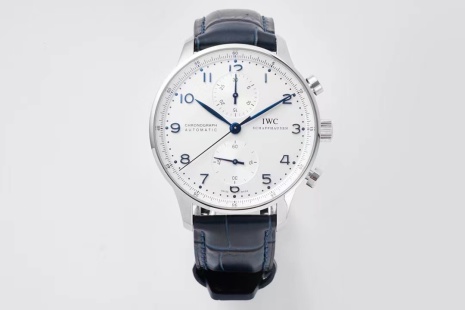
Case construction directly affects how cautious you need to be.
Pilot-style cases often use screw-down crowns, which provide slightly better protection against moisture and dust when properly tightened. They are more forgiving in daily wear, but not immune to water damage.
Portugieser and Portofino replicas usually use standard push-pull crowns. These cases are thinner, more elegant, and significantly less tolerant of moisture, temperature changes, and careless handling. They reward careful use but punish neglect.
Understanding which case type you own explains why water resistance claims should be treated skeptically, why crown discipline matters, and why some models fail sooner under identical use.
Water Resistance in IWC Replica Watches – What You Must Know
Water damage is the most common irreversible failure point in IWC replicas. It is also the most misunderstood. Many owners assume that because a replica is labeled “30m” or “50m,” it offers the same protection as a genuine IWC. In practice, this assumption shortens the life of the watch more reliably than any other mistake. For a detailed comparison of IWC Pilot series replicas and how water resistance varies across models, check out this guide on Mark, Big Pilot, and Chronograph replicas.
Why Water Resistance Ratings on Replicas Are Often Misunderstood
A “30m” or “50m” marking does not mean you can safely swim or shower with the watch. It never meant that, even on genuine watches, but the gap is wider with replicas.
Replica watches are not tested under the same pressure protocols used by IWC. Gaskets may be present, but their quality, compression tolerance, and installation consistency vary from piece to piece. Crowns are often hand-fitted, casebacks are not always torqued to specification, and seals may dry out faster due to lower-grade rubber compounds.
In real use, a 30m-rated IWC replica should be treated as splash-resistant only. A 50m marking suggests slightly better sealing, not swimming safety. The rating reflects theoretical resistance under static conditions, not exposure to heat, soap, steam, or sudden pressure changes, which are far more destructive than depth alone. For more on how to properly care for and maintain your IWC replica, including guidelines on water resistance, winding, and servicing, check out this comprehensive maintenance guide.
Which IWC Replica Models Are More Water-Resistant
Not all IWC replica designs behave the same around moisture. Case construction matters more than brand or factory claims.
Pilot Chronograph models generally perform slightly better. The screw-down crown design reduces the chance of accidental water entry when the crown is fully secured. This does not make them suitable for swimming, but they are more forgiving of rain or brief exposure.
Big Pilot replicas fall into a middle category. Despite their size and tool-watch appearance, they often use large crowns and complex case geometry. Sealing is adequate for daily wear, but the crown system is not optimized for repeated water exposure.
Portofino and Portugieser replicas are the most vulnerable. Their thin cases, push-pull crowns, and dress-watch proportions prioritize aesthetics over sealing. These watches should be kept well away from moisture. Even humidity can become an issue over time.
None of these categories should be interpreted as safe for water use. The difference is margin, not permission.
Activities You Should Avoid with an IWC Replica Watch
- Showering or bathing, especially with hot water
- Swimming in pools, lakes, or the sea
- Saunas, steam rooms, or hot tubs
- Washing hands under running water while wearing the watch
Heat causes gaskets to expand and contract, soaps reduce surface tension, and pressure changes force moisture past seals that appear secure under dry conditions. Once moisture enters the case, corrosion begins quietly and rarely announces itself until the damage is already done.
Treating your IWC replica as a dry-wear instrument rather than a waterproof tool is not conservative—it is realistic.
How to Properly Wind and Set an IWC Replica Watch
Most mechanical damage in IWC replicas does not come from wear. It comes from the crown. Winding and setting look harmless, but they are the moments when users apply direct force to the movement. Doing it correctly extends the watch’s life. Doing it casually shortens it.
Manual Winding – Correct Technique and Frequency
Manual-winding IWC replicas, most commonly Big Pilot–style models, rely entirely on crown input. These movements are robust, but they are not tolerant of excess force.
Always wind the crown clockwise, with the watch off your wrist. Use slow, controlled turns rather than fast spinning. A typical full wind requires 20 to 30 turns. You will feel resistance increase as the mainspring reaches optimal tension. Stop at that point.
Do not attempt to “top off” beyond resistance. Over-winding does not increase power reserve; it compresses components and stresses the mainspring. Repeated over-winding leads to slipping bridle wear, broken springs, or premature lubrication breakdown.
For most manual-wind IWC replicas, winding once per day is sufficient if worn regularly. If the watch has a long power reserve, every other day may be adequate, but consistency matters more than frequency. Skipping multiple days and then aggressively winding is far worse than gentle daily turns.
Automatic Watches – Wearing vs Hand-Winding
Automatic does not mean self-sufficient. This is one of the most common misconceptions.
Automatic IWC replicas wind through wrist motion, but normal daily wear does not guarantee a full power reserve. Desk work, short wear periods, and minimal arm movement leave the mainspring partially charged. Running continuously in a low-torque state accelerates wear and reduces timekeeping stability.
Occasional manual winding is not only safe, it is recommended. Giving the crown 10 to 15 gentle turns after putting the watch on helps bring the movement into its optimal operating range. This reduces amplitude drop and improves consistency.
The idea that automatic watches should “never be hand-wound” is outdated and incorrect for modern replica movements. What damages automatics is not winding—it is aggressive, careless winding and unnecessary crown manipulation.
Time and Date Setting – Dangerous Time Zones to Avoid
There is one rule that should never be ignored: do not adjust the date between 9 PM and 3 AM.
During this window, the date-change mechanism is partially engaged. Forcing the date wheel during this period risks bending teeth, misaligning the calendar, or stripping components. The damage may not appear immediately, but it accumulates.
When setting the time, first move the hands forward past 6 AM to ensure the calendar is disengaged. Only then adjust the date. Afterward, set the correct time, preferably by moving the hands forward rather than backward.
This single habit prevents a disproportionate number of calendar failures in IWC replicas.
Caring for Leather Straps and Bracelets on IWC Replicas
Straps fail long before movements do. Most owners replace a strap not because of age, but because daily habits quietly destroy it. Treating straps as consumables rather than accessories leads to better decisions and fewer surprises.
Leather Strap Care – Daily Habits That Extend Lifespan
Sweat is the primary enemy of leather. Not sunlight, not bending, not wear marks—sweat. Salt and moisture soak into the leather from the underside, breaking down fibers and causing stiffness, odor, and cracking that cannot be reversed.
If you live in a warm or humid climate, wearing a leather strap daily through summer is a mistake. Rotating watches or switching to a metal bracelet during hot months extends strap life dramatically. This is not about preservation for display; it is about avoiding accelerated decay.
After wearing the watch, wipe the underside of the strap with a dry cloth. Let the watch rest in open air before placing it in a drawer. Never store a damp strap in a closed box. Avoid leather conditioners unless the strap is already dry and stiff—over-conditioning often makes the problem worse.
Expect a leather strap on an IWC replica to last one to two years under normal use. Planning for replacement is more realistic than trying to preserve it indefinitely.
Metal Bracelets – Cleaning and Adjustment Tips
Metal bracelets are far more durable, but they still accumulate sweat, skin oil, and dust. Neglect turns this buildup into abrasive paste inside the links.
Basic cleaning works best. Use a soft toothbrush and a lightly damp cloth. A drop of mild soap is enough. Rinse sparingly and dry thoroughly. This should be done occasionally, not obsessively.
Ultrasonic cleaners are not recommended for replica bracelets. They can loosen pins, damage clasp springs, and accelerate wear on tolerances that are already tighter than luxury-grade bracelets. What works for genuine watches does not always translate safely to replicas.
If the bracelet feels stiff or gritty, clean it. If it rattles excessively after cleaning, it was already worn. Adjustment should be done carefully; forcing link pins or screws often causes more damage than poor fit ever would.
Storage Tips When You Are Not Wearing Your IWC Replica
How you store a mechanical watch matters almost as much as how you wear it. Poor storage habits create problems that only appear months later.
Short-Term vs Long-Term Storage
For short breaks—one to three days—there is no need to stop the watch intentionally. Let it run down naturally. Place it dial-up or on its side in a dry, stable environment away from sunlight and electronics.
For longer storage—weeks or months—allow the watch to stop. Storing a fully wound watch that is not worn serves no purpose and keeps components under unnecessary tension. Before storage, ensure the crown is fully pushed in or screwed down, and the watch is clean and dry.
Avoid airtight containers unless humidity control is present. A simple box with airflow is safer than a sealed case that traps moisture.
Watch Winders – Are They Necessary for IWC Replicas?
Watch winders are optional, not essential. For IWC replicas, they are often more risk than benefit.
A good winder must rotate slowly, intermittently, and in the correct direction. Many inexpensive winders run continuously or spin too aggressively, keeping the movement under constant load. This accelerates wear rather than preventing it.
If you rotate multiple watches and dislike resetting the time, a quality winder can be useful. If you own one or two watches, letting them stop is healthier. Mechanical watches are designed to be wound and restarted. That cycle does not harm them.
A stopped watch is not a problem. A constantly stressed one eventually is.
Servicing, Repairs, and Common Mistakes to Avoid
Servicing is where most IWC replica owners either preserve value or quietly destroy it. Mechanical watches do not fail suddenly; they wear out gradually when lubrication degrades and friction increases. Ignoring this reality turns minor maintenance into major repair.
How Often Should an IWC Replica Be Serviced?
A realistic service interval for an IWC replica is every 2 to 3 years. This is not conservative. It reflects how long lubricants remain effective under normal use.
Replica movements use oils that are applied manually and in smaller quantities than factory-lubricated genuine movements. Over time, these oils thicken, migrate, or dry out. When that happens, metal parts continue moving without protection. Wear accelerates silently until accuracy drops, power reserve shortens, or parts begin to score.
Waiting until the watch “acts wrong” is already too late. Servicing before symptoms appear keeps tolerances intact and avoids replacing worn components that were never designed to be replaced frequently.
What to Tell a Watchmaker (and What Not to Say)
Most independent watchmakers can service an IWC replica without issue. The problem is not technical—it is conversational.
Do not introduce the watch as a replica. That creates hesitation, refusal, or unnecessary complications. Instead, describe it as using an ETA-style automatic movement or a manual-wind mechanical movement, depending on the model. This is accurate, functional language that frames the task correctly.
What matters to the watchmaker is movement architecture, not branding. They need to know how the watch opens, how the calendar works, and whether parts follow standard layouts. Oversharing creates friction; clear, neutral description builds cooperation.
If a watchmaker declines service after inspection, respect that decision and move on. Many will accept the job once they see the movement and understand its construction.
Common User Mistakes That Shorten Replica Watch Life
- Exposing the watch to hot water, steam, or sudden temperature changes
- Adjusting the date during nighttime calendar engagement hours
- Repeated impacts, drops, or desk knocks
- Leaving the watch running for months with degraded lubrication
Each of these causes damage slowly, then all at once. Most failures attributed to “bad replicas” are traceable to one of these habits.
Final Advice for Long-Term IWC Replica Owners
A high-quality IWC replica is both a tool and a precision machine, and when treated with restraint and understanding, it can deliver years of reliable use—if you need broader context, the complete IWC replica watches guide provides a solid reference point, but how long your watch lasts ultimately depends on how you choose to use it.
Related IWC Articles: If you found this helpful, you might also enjoy Best IWC Replica Factories Compared (ZF vs V7 vs MKS & Others), and 2023 IWC Ingenieur 40mm Replica Review (V7 Factory). Another related article is IWC Super Clone Movement “Upgrades” Explained: Can Anyone Truly Replicate IWC In-House Calibers?.