
Context: Why “In-House IWC Movement Replica” Became a Hot Claim
The current landscape: multiple top factories, different philosophies
The first reality to accept is simple: ZF, APS, VS, and a small number of other high-end workshops are not competing on who can recreate IWC’s engineering from a blank sheet of metal. They compete on finish, layout fidelity, and day-to-day stability.
That distinction matters.
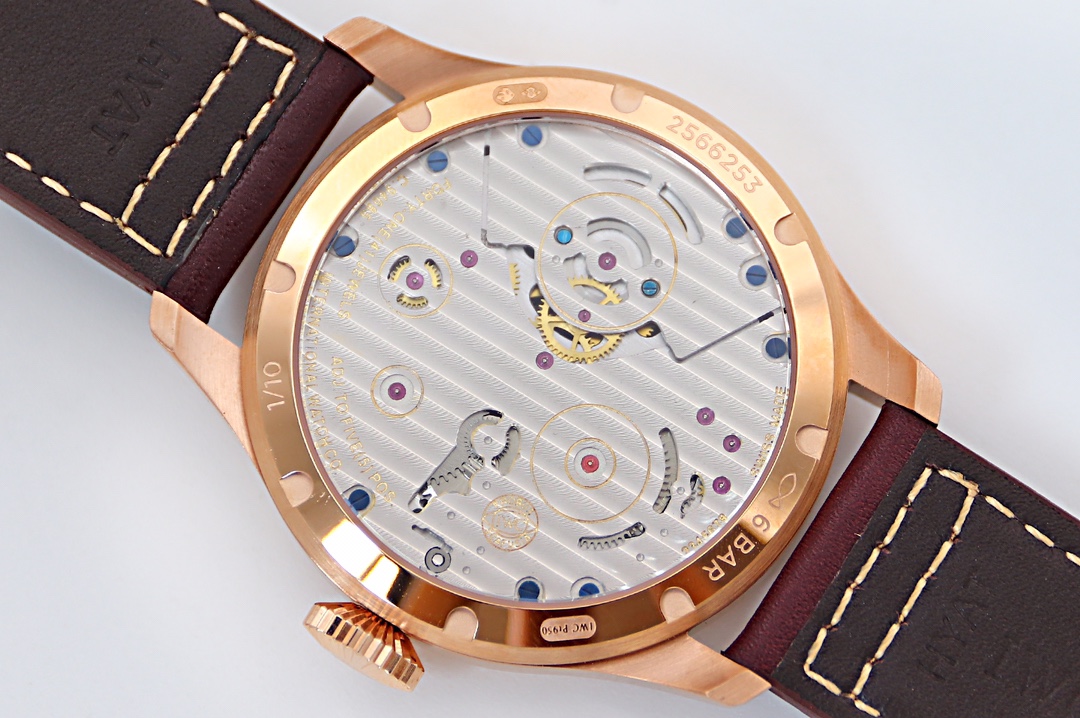
Across Portuguese, Pilot, Mark, and newer Ingenieur lines, these workshops operate under the same constraints: limited tooling depth, variable component sourcing, and production volumes that reward visual accuracy far more than invisible kinematic purity. What emerges is not a race toward true in-house duplication, but a race toward watches that feel right on the wrist, look convincing through a caseback, and behave predictably over months of wear.
Seen this way, the current landscape is less about copying IWC, and more about optimizing trade-offs. One factory leans into thinner cases and cleaner dial geometry. Another prioritizes long power reserve or more elaborate bridge engraving. A third focuses on chronograph feel and reset alignment. None of these approaches represents a full engineering clone. Each reflects a different interpretation of what most wearers actually notice.
This is why movement discussions around modern IWC super clone builds need to be treated as horology education, not branding debates. The interesting questions live in engineering constraints and behavioral outcomes, not in who claims the loudest “in-house” label.
Define terms precisely (to stop sloppy marketing language)
Before going further, it helps to sort movement claims into four practical categories.
A. Stock workhorse base.
These are unmodified families such as 7750, 2892, or 9015. The movement is used largely as-is, with only cosmetic finishing or basic indication changes. Reliability is predictable. Architecture remains generic.
B. Modified base.
This is where most serious IWC replicas live. A known base is re-geared, re-layered, or re-routed to relocate subdials, add power-reserve displays, or reduce case thickness. The core movement remains recognizable, but behavior is tuned to resemble the reference.
C. Decorated architecture.
Here, bridges, plates, and rotor shapes are added or reshaped to visually echo IWC calibers. Through a display back, the movement appears “correct.” Internally, the power flow often remains unchanged. This is sometimes called bridge theater, and it exists because buyers look through sapphire.
D. True ground-up clone.
Near 1:1 geometry, materials, kinematics, and tolerances from the original design. Not just appearance, but winding logic, load paths, and wear surfaces recreated at scale. In practice, this is rare to nonexistent for modern IWC calibers.
Most “in-house IWC movement replica” claims fall squarely into Category B plus Category C—modified bases wearing cosmetic architecture, not Category D. If you want to see how this plays out specifically in chronograph builds—where re-routing power and relocating registers creates the biggest mechanical compromises—the distinction is mapped clearly in this practical guide to IWC replica chronograph movements, which shows why visual similarity so often outruns structural equivalence.
Understanding that early prevents a lot of disappointment later.
What “IWC In-House” Actually Means (Engineering, Not Branding)
The caliber families that matter for replicas
IWC’s modern identity is built around a few core movement families, and these are the reference points every replica inevitably circles.
The Pellaton automatic families, represented by calibers like 52010 and 52011, define Portuguese 7-day models and large Pilot automatics. Their signatures are long power reserve, pawl-based winding, and a distinct rotor feel.
Modern chronograph families such as the 69370 and 69380 underpin Pilot Chronographs and newer Portuguese Chronographs. These are integrated designs, not modular stacks, with compact layouts and tightly controlled reset behavior.
Three-hand automatics like the 32111 generation power Mark XX and Ingenieur 40. These emphasize thinness, efficiency, and everyday stability.
Historically, IWC also used ETA and Sellita-derived bases, such as cal. 35111, finished and regulated to IWC standards. These remind us that “in-house” has never meant isolation from external suppliers. What matters is design ownership, tolerance control, and quality discipline at assembly.
That last point is critical. Even genuine in-house calibers rely on outsourced components and industrial finishing. The difference is not purity. It is consistency. Design intent plus tight tolerances plus rigorous QC.
The two features replicas struggle to truly copy
Across all these families, two engineering areas consistently resist faithful replication.
The first is winding architecture, especially Pellaton-style pawl systems. The way energy is captured, transferred, and buffered in these movements creates a specific tactile signature that is difficult to reproduce with modified conventional systems.
The second is chronograph architecture. Integrated chronographs manage thickness, load distribution, and reset precision in ways modular or layered builds cannot easily match. This shows up in case height, pusher feel, and long-term service stability.
These are not cosmetic problems. They are structural.
The Pellaton System: Why It’s Hard to Clone “As-Is”
What Pellaton is, in functional terms
From a wearer’s perspective, Pellaton winding announces itself through behavior.
The crown has a certain resistance profile when hand-winding, with a subtle sense of engagement rather than free spin. The rotor feels efficient, with less idle flutter and more deliberate mass transfer. Power reserve builds quickly and depletes gradually, with a relatively flat performance curve before amplitude begins to fall.
You also notice noise. Genuine Pellaton systems tend to sound muted and controlled. Rotor feedback feels damped rather than metallic. These are not abstract engineering points. They are tactile cues that accumulate over daily use.
Why a 1:1 Pellaton clone is not simply “copy the shape”
Replicating that experience is not about drawing the same bridges.
It requires tight tolerances on wear surfaces, consistent heat treatment on pawls and contact points, and material choices that resist abrasion under repeated micro-loads. Some Pellaton generations use ceramic components to manage long-term wear. That is not trivial to duplicate reliably.
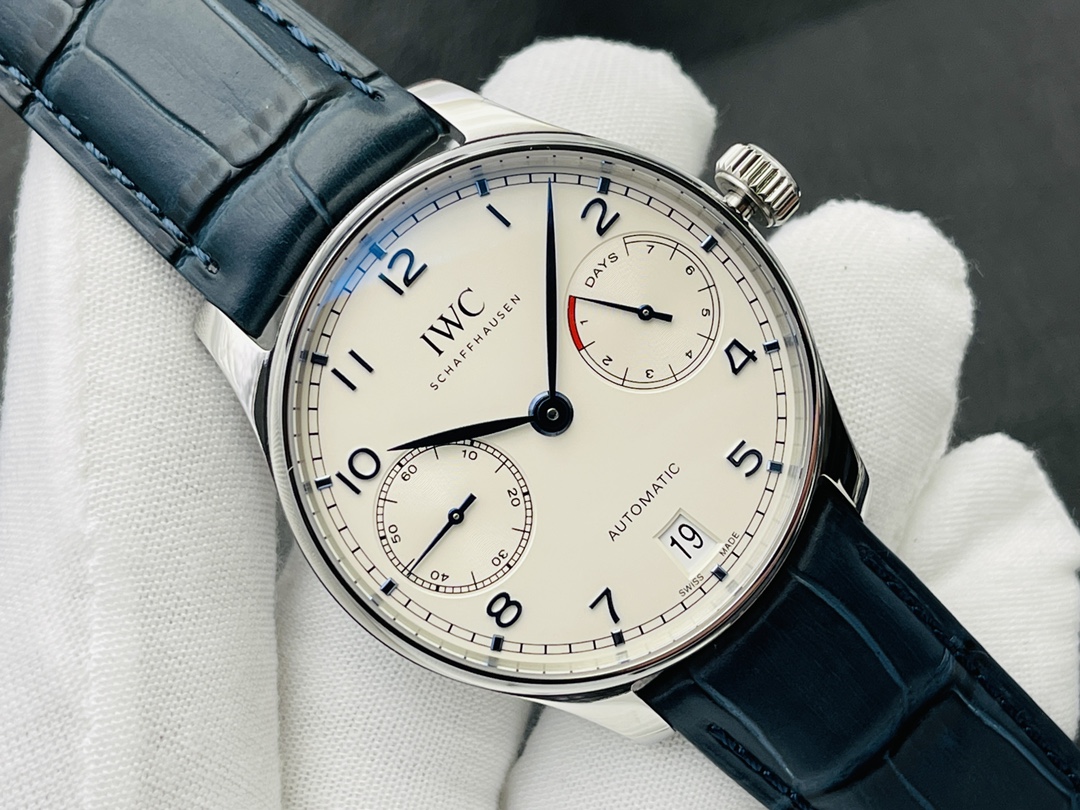
Then there is lubrication. The pawl system operates within narrow lubrication windows. Too dry and wear accelerates. Too wet and efficiency drops. Maintaining that balance across production batches demands process discipline, not just clever machining.
Most importantly, Pellaton is a system. Pawls, reversers, rotor mass, bearing friction, and barrel behavior interact over months and years. One weak link shifts the entire experience. This is why the challenge is never a single part. It is long-term system reliability.
What replicas typically do instead
In practice, replicas take a different route.
They build a conventional winding system, usually derived from 2892 or similar architectures, then overlay bridges and rotor shapes that resemble IWC’s layout. From the back, the movement looks convincing. Under operation, it behaves like its base family.
This hybrid outcome is common: cosmetic architecture layered on top of standard kinematics. The key thesis here is simple and unavoidable once you look past sapphire and bridges—visual similarity is easier than mechanical equivalence. You can engrave a bridge in a day; you cannot recreate years of wear behavior without matching materials, tolerances, and assembly discipline, which is why so many tourbillon replicas lean on visual cues that excite but do little for performance, a dynamic explored in the analysis of IWC tourbillon replica movements: gimmick, decoration, or real engineering.
Chronograph Reality Check: Integrated vs “Modified Workhorse”
The core problem: thickness, stack height, and dial-side compromises
Chronographs expose these compromises immediately.
Most replica chronographs start with a base movement such as 7750. That base already has a certain height. When additional layers are added to relocate subdials or mimic IWC layouts, stack height grows. Dial spacing changes. Hands sit higher. Cases become thicker.
This is why many Portuguese Chronographs and Pilot Chronographs feel taller than expected, even when external dimensions look correct on paper.
You are not just wearing a case. You are wearing accumulated layers.
What top factories can realistically improve, and what they can’t
Leading workshops have learned to mitigate some of this.
They refine dial spacing to reduce visual depth. They tune hand clearance to improve alignment. They invest more time in reset adjustment so chronograph hands return cleanly to zero. These are assembly and QC wins, not architectural miracles.
What they usually cannot match is true integrated design. Power flow remains different. Load paths stay altered. Service intervals and wear curves diverge from genuine calibers.
No amount of cosmetic work changes that.
Case example framing
You will occasionally see a chronograph marketed as an “in-house clone.”
The observable tells remain the same. The case wears thicker than expected. Subdial geometry feels slightly off. Rotor behavior reflects its base family, not IWC’s integrated chronograph DNA.
This is not deception in the theatrical sense. It is a boundary imposed by starting architecture.
The educational takeaway is to watch behavior, not engraving.
Thickness, pusher feel, reset alignment, and rotor response tell you more than any plate decoration ever will.
How “Super Clone” Movement Claims Are Constructed
The three layers of the claim: function, architecture, cosmetics
Most “IWC super clone movement” claims quietly combine three different ideas, even when they are presented as one.
Function comes first. Does the watch keep time within a reasonable window? Do complications engage reliably? Does the chronograph start, stop, and reset without hesitation? Does the power reserve build and deplete in a predictable way? This is the baseline. A movement that fails here does not survive long in real ownership cycles, no matter how impressive it looks through sapphire.
Architecture comes next. This is where marketing language usually begins to drift. Architecture means power flow, gear geometry, winding logic, and how components interact under load. It asks whether the movement shares the same structural logic as the genuine caliber, not whether the bridges are shaped similarly. In most IWC replica builds, architecture remains inherited from the base family. A modified 7750 still behaves like a 7750. A reworked 2892 still carries 2892 DNA. Subdials may move. Thickness may shrink. But the internal conversation between wheels, levers, and springs rarely changes.
Cosmetics sit on top of both. Bridges are engraved. Rotors are skeletonized or reshaped. Plates are rearranged to resemble Pellaton layouts or familiar IWC chronograph silhouettes. Through a display back, the watch appears convincing, and from a distance even experienced eyes may pause. This is where confusion enters. Function can be solid. Cosmetics can be excellent. Architecture, however, usually remains borrowed. Once you understand how 7750, 2892/SW300, and long-reserve conversions are actually repurposed and staged in modern builds—as outlined in this breakdown of IWC replica movements, from 7750 and 2892 to so-called seven-day power reserve systems—most myths around “in-house IWC movement replica” claims dissolve on their own. The majority of serious executions live in a hybrid zone: modified base movements carrying carefully constructed visual architecture. That distinction matters in ownership. You evaluate stability, serviceability, and thickness on the base movement, while judging finishing and layout separately. When those two layers are confused, expectations drift. When they are kept apart, decisions become much clearer.
“Bridge theater” and why it exists
Bridge theater exists because buyers look through casebacks.
That is the entire economic logic.
Modern IWC designs invite inspection. Portuguese models showcase wide plates and long power reserve bridges. Pilot chronographs expose rotor mass and balance placement. Ingenieur and Mark XX emphasize clean movement silhouettes. When a watch invites visual judgment, cosmetic similarity becomes commercially powerful.
Workshops respond accordingly. Decorative bridges are added. Engravings are deepened. Rotor cutouts are reshaped. Balance areas are framed to resemble genuine layouts. The goal is not to recreate kinematics. The goal is to recreate visual physics.
There is a trade-off.
Every additional decorative layer introduces complexity. Servicing becomes less straightforward. Access paths change. Tolerances stack. Variance increases. Two watches from the same batch can begin to behave differently over time, simply because more parts now sit between the base movement and the outside world.
This does not make bridge theater illegitimate. It explains its cost.
The more a movement tries to look like IWC, the more it risks drifting from the predictable service behavior of its original base.
The honest conclusion to repeat through the piece
The best work narrows the gap in appearance and feel, not the full engineering DNA.
That is the reality most top-tier factories quietly operate within, even when public language suggests otherwise.
Why No One Is Doing True 1:1 IWC In-House Clones at Scale (Yet)
Technical barriers
True ground-up cloning of modern IWC calibers runs into barriers long before marketing enters the picture.
Precision tooling is expensive. Not just CNC machines, but metrology systems capable of measuring wear surfaces, pivot tolerances, and gear profiles at scale. Without that feedback loop, consistency collapses.
Materials present another wall. Modern IWC movements rely on tightly specified alloys, controlled heat treatment, and in some generations ceramic wear components. Reproducing these reliably requires upstream suppliers who can hold narrow tolerances batch after batch. That ecosystem does not appear overnight.
Process discipline is the quiet killer. Assembly cleanliness, lubrication standards, regulation protocols, and post-assembly testing all determine whether a movement behaves the same after six months as it did on day one. These are not heroic engineering feats. They are industrial habits, built slowly.
Then comes yield.
Producing one impressive prototype is easy compared to producing hundreds of movements that all behave the same. Scrap rates rise quickly when tolerances tighten. Every rejected plate or misaligned jewel eats margin. Scaling turns engineering ambition into arithmetic.
Business barriers (the part people ignore)
Even if the technical hurdles were solved, the business case remains hostile.
True in-house clones would demand prices that reflect real R&D, tooling amortization, and high scrap rates. Most of the market resists that number. Buyers say they want engineering purity. They still compare prices.
Support burden follows. A genuinely new movement architecture would require after-sales capability: parts supply, trained technicians, diagnostic workflows. Most workshops are optimized for assembly and cosmetic finishing, not long-term movement stewardship.
In short, the economics do not reward full duplication.
They reward convincing approximation.
What Top-Tier Factories Actually Do: “Bending Reality” Without Breaking It
Strategy 1: start from a known reliable base, then optimize behavior
Every serious IWC super clone movement begins with a familiar family.
2892-derived builds are chosen for thinness and predictability. They wind smoothly, regulate easily, and wear well under daily use. Their limitation is expressive range. They struggle to convincingly support large complications or long power reserves without significant modification.
7750-family movements offer functionality. Chronographs work. Subdials exist where expected. The trade-off is variance. Thickness increases. Long-term wear curves spread wider. Assembly quality becomes a dominant factor.
9015-based builds emphasize reliability and cost efficiency. They are robust and forgiving, but finishing potential is limited, and tactile refinement lags behind higher-grade architectures.
What separates top-tier factories is not which base they choose. It is how rigorously they control assembly, alignment, and regulation afterward. Quality control multiplies whatever base you start with. Marketing does not.
Strategy 2: prioritize the wearer’s tells (feel, thickness, alignment)
Experienced workshops design around what the wrist reports.
Crown feel matters. A gritty wind or hollow resistance breaks immersion immediately.
Rotor noise matters. Excess chatter or metallic spin reminds you of the base movement every time you move your arm. These subtle yet crucial details are highlighted in this explanation of IWC replica movements, from 7750 to 2892 and seven-day power reserves, where we explore how various modifications and base movement choices can affect the overall experience. The wrist’s feedback shapes every aspect of the design, from winding resistance to the harmony of rotor noise. Understanding the inner workings ensures that immersion is never broken.
Winding smoothness matters. So does how hands align during reset. Chronograph seconds that land slightly off zero erode confidence faster than any engraving flaw. Date change behavior reveals discipline. A consistent change window signals careful assembly. Random timing suggests shortcuts. Power reserve behavior tells a deeper story. Not just how long the watch runs, but how it performs near depletion. Movements that collapse suddenly at the end expose poorly managed amplitude curves.
These are the signals top factories chase. They do not appear on spec sheets. They emerge through repeated assembly cycles and field feedback.
Strategy 3: cosmetic architecture tuned to match the reference’s visual physics
Once behavior reaches an acceptable baseline, appearance is layered on.
Engraving depth is adjusted to mirror genuine bridge shadows. Geometry proportions are tuned so balance areas occupy the same visual space. Rotor cutouts are reshaped to approximate mass distribution, not just outline.
This is where replicas become persuasive.
Not because they share IWC’s engineering, but because they recreate how light moves across plates, how negative space frames components, and how the movement presents itself as an object.
It is visual physics, not mechanical equivalence.
And when done well, it convinces far more observers than any internal redesign ever could.
We can explain how it’s built and how it tends to behave. But how you balance appearance, function, and long-term risk is a decision only you can make.
Model-by-Model “Claim Map”: Where In-House Copy Claims Are Most Common
Portuguese 7-Day style models (Pellaton narrative magnet)
If there is one IWC line that attracts “true in-house clone” language more than any other, it is the Portuguese 7-Day family.
The reasons are obvious. These watches almost always use exhibition casebacks, they showcase large bridge surfaces, and they are inseparable from IWC’s Pellaton winding story. Visually, they invite inspection. Conceptually, they invite mythology.
This combination makes them perfect candidates for movement claims.
You will see plates engraved to resemble 52010 or 52011 layouts. Rotors are reshaped. Bridge geometry mirrors the genuine silhouette. From the outside, the resemblance can be striking.
The reality lens is simple: ignore the engraving and observe the system.
Pay attention to winding feel. Genuine Pellaton systems have a distinct efficiency and resistance profile that cosmetic architectures rarely reproduce. Listen to rotor feedback. Watch how power reserve builds and how it declines near the end. These behaviors reveal far more than bridge text ever will.
Portuguese 7-Day replicas can be excellent watches. Some are genuinely refined. But the difference between appearance and engineering is widest here, precisely because visual similarity is easiest to achieve on large, open movements.
Pilot chronographs (function-first category)
Pilot chronographs sit in a different psychological space.
Buyers approach them primarily as tools. Legibility, case presence, and chronograph usability matter more than movement purity. As long as the dial layout feels right and the watch wears correctly, many accept underlying compromises.
That is why “in-house clone” claims tend to be softer in this category.
The practical tells are straightforward.
Thickness is the first. Integrated chronographs wear flatter. Modified workhorse builds almost always sit taller, even when external dimensions look similar.
Pushers come next. Start-stop resistance, tactile feedback, and reset crispness reveal how much tuning went into assembly.
Then alignment. Chronograph seconds that land cleanly on zero and minute counters that track consistently speak to careful regulation. Sloppy resets point back to rushed assembly, regardless of how impressive the movement looks through sapphire.
In Pilot chronographs, function exposes truth quickly.
Mark series (thin three-hand: easiest to make “feel right”)
The Mark series represents the easiest terrain for convincing replicas.
Three-hand automatics impose fewer mechanical demands. There is no chronograph stack. No long power reserve module. No complex load redistribution. The power path is simple. Failure points are limited.
This is where “best value engineering” appears.
A well-regulated base movement can feel remarkably close to genuine in daily wear. Case thickness can be matched. Crown action can be refined. Date behavior can be stabilized. For many owners, the experience becomes functionally indistinguishable.
It is also where “in-house caliber” language becomes most cosmetic.
Behind the scenes, most Mark-style builds rely on familiar automatic families with decorative adjustments. That does not make them poor watches. It simply reframes expectations. What you are buying is execution quality, not proprietary movement architecture.
Buyer-Objection FAQ
“If it looks identical through a display back, isn’t that a clone?”
No.
Visual similarity does not equal kinematic equivalence.
Two concrete tells cut through the illusion. First is winding feel. How energy enters the system exposes the underlying architecture immediately. Second is long-term wear consistency. Movements built on different foundations age differently, even when they start life looking identical.
Appearance answers the question of resemblance. Behavior answers the question of design.
“Can anyone replicate Pellaton 1:1?”
Not in a fully equivalent, mass-stable way.
Most current implementations are look-alike solutions: conventional winding systems operating beneath cosmetic bridge layouts. They can feel good. Some feel very good. But they do not reproduce Pellaton’s full mechanical logic across large production runs.
The limitation is not creativity. It is system reliability at scale.
“Does ‘Swiss’ labeling guarantee anything?”
Origin claims require evidence.
Performance comes from regulation, assembly discipline, and quality control far more than from geography alone. A well-assembled base movement can outperform a poorly regulated premium one. Labels do not wind rotors or align hands. People do.
“Which matters more: movement family or factory QC?”
Quality control is the multiplier.
A good base can be ruined by careless assembly. A modest base can perform impressively under disciplined regulation and alignment. Movement families set the ceiling. QC determines where you actually land.
If forced to choose, always prioritize the workshop’s consistency over the theoretical pedigree of the caliber.
“What’s the most honest way to describe these movements?”
Four terms cover nearly everything:
Base movement.
Modified base.
Cosmetic architecture.
Functional equivalence.
Most IWC super clone builds sit between modified base and cosmetic architecture, with varying degrees of functional equivalence. That framework is reusable, portable, and far more accurate than any “in-house clone” slogan.
We can explain how it’s built and how it tends to behave. But how you balance appearance, function, and long-term risk is a decision only you can make.
Conclusion: The Most Accurate Summary in One Paragraph
Your signature close
No matter how advanced today’s IWC super clone movement builds become, they remain exercises in managed compromise—modified base calibers refined through QC discipline and wrapped in convincing cosmetic architecture rather than true ground-up in-house engineering—and while you can learn to read winding feel, thickness, reset alignment, and long-term behavior to understand what you are actually wearing, the final judgment still comes down to how much variance you are willing to live with, because we can explain how it’s built and how it tends to behave, but how you balance appearance, function, and long-term risk is a decision only you can make.
Related IWC Articles: If you found this helpful, you might also enjoy 7750 vs 2892 Movements: The Real Differences Inside IWC Replica Watches (2026 Guide), and Top 5 Best IWC Replica Watches: Super Clone Models Ranked & Explained, which ranks the top 5 best IWC replica watches available.