
Two IWC replica watches can look nearly identical in photos, share the same dial color, case size, and factory name, yet feel completely different once they’re on the wrist. One sits taller, feels top-heavy, and catches on a shirt cuff. The other disappears under a sleeve and feels calmer in daily wear. In most cases, that difference has nothing to do with finishing or branding. It comes down to movement architecture.
In the current IWC replica landscape, top-tier production is dominated by a small group of factories—ZF, APS, VS, and V7. Their watches often share similar external parts, but the internal movement choice explains why one version feels “right” while another feels subtly wrong over time. Buyers frequently focus on dial accuracy or factory reputation, yet the movement family underneath determines thickness, balance, service risk, and long-term ownership experience.
This guide focuses on the two movement families that matter most in IWC replicas: 7750-based chronographs and 2892-based (or 2892-style) automatics. Rather than treating them as abstract calibers, the goal here is to explain how they behave in real use—how they affect wrist comfort, timekeeping consistency, mechanical stress, and suitability for different IWC lines such as the Portuguese Chronograph, Pilot’s Chronograph, Mark series, Portofino, and Ingenieur.
Factories often modify these base movements heavily. Some versions are close to stock; others involve relocated subdials, deleted functions, or decorative plates designed to mimic IWC finishing. Those modifications change risk profiles in ways that aren’t obvious from a listing title. By the end of this article, you should be able to look past caliber names and understand which movement family actually fits the IWC watch you want to wear.
Quick Answer: 7750 vs 2892 in One Table
Decision Table (The Fastest Way to Choose)
| Movement family | Typical use in IWC replicas | Thickness impact on wrist | Stability risk profile | Accuracy potential | Best for which buyer |
|---|---|---|---|---|---|
| 7750-based chronograph | Portuguese Chronograph, Pilot’s Chronograph, Portofino Chronograph | Taller case stack, more top-heavy feel | Higher variance due to complexity and modifications | Stable when lightly used; drift increases under chronograph load | Buyers who want functional chronographs and accept thickness tradeoffs |
| 2892-based automatic | Mark series, Portofino Automatic, Ingenieur three-hand | Thinner, flatter, better balanced | Lower mechanical stress, fewer failure points | Easier to keep consistent over time | Daily wear users prioritizing comfort and reliability |
Two-Sentence Rule
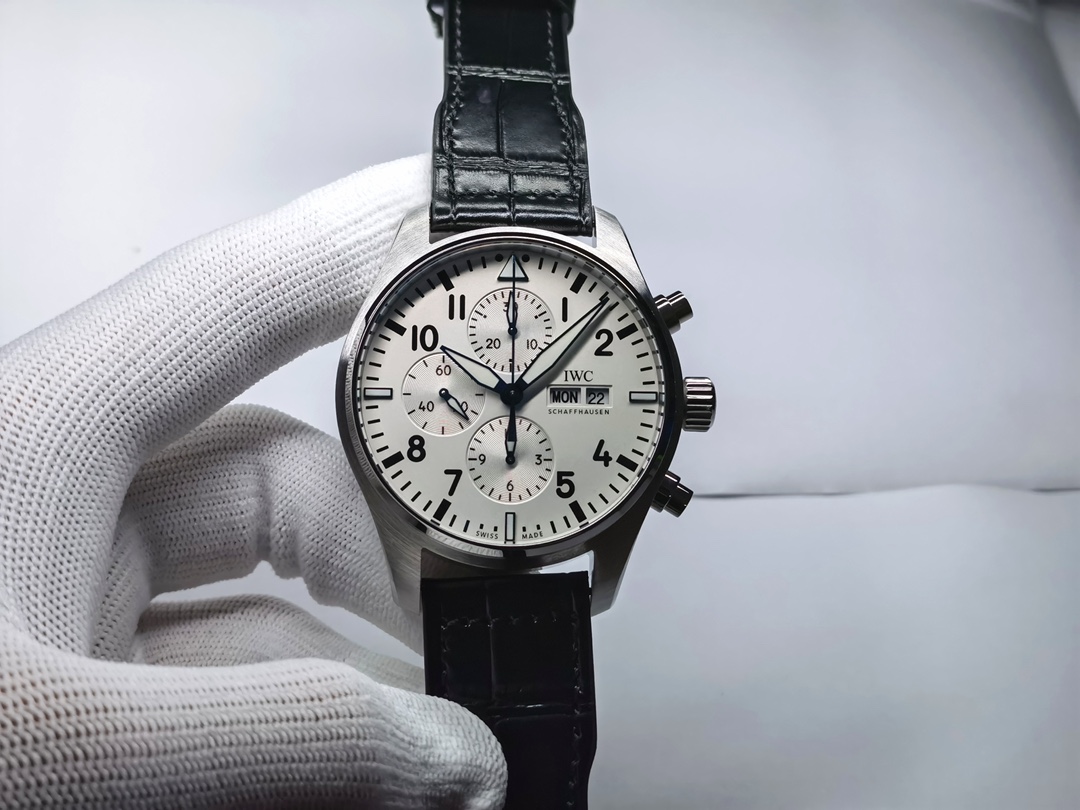
If you want an IWC chronograph replica, you are almost always choosing a 7750-based solution, with all the thickness and complexity that implies. If you want a clean three-hand IWC replica for daily wear, a 2892-based or 2892-style movement is usually thinner, calmer on the wrist, and easier to live with long term.
What changes on the wrist is not theoretical: cuff fit, center of gravity, rotor noise, and how forgiving the watch feels during daily movement all trace back to this single decision.
Movement Architecture: Why 7750 and 2892 Behave So Differently
7750 Architecture (Chronograph-First)
What the 7750 Is Designed to Do
The 7750 was designed from the start as an integrated chronograph, not a simple automatic movement with a stopwatch added later. That decision defines everything about how it behaves. Inside, the movement carries a full chronograph control system: cams, levers, clutch components, additional wheels, and return springs that exist solely to start, stop, and reset timing functions. All of that hardware occupies vertical space and consumes energy every time the chronograph engages.
This architecture inevitably increases stack height. Even before a dial, hands, or sapphire are added, a 7750-based movement sits taller than a three-hand automatic. It also places greater demand on the mainspring and gear train, because the chronograph system introduces extra friction and load. None of this makes the 7750 inherently bad, but it explains why chronograph replicas feel mechanically busier and physically heavier, even when the case diameter looks restrained.
“Modified 7750” in IWC Replicas: What That Usually Means
In IWC replica chronographs, a “modified 7750” almost never remains truly stock. Factories commonly relocate subdials to match specific IWC layouts, especially in Portuguese and Pilot chronographs where register positions differ from the standard 6-9-12 configuration. That relocation requires additional gearing or re-routing of power, which increases complexity and tolerance sensitivity.
In many builds, unused functions are visually or mechanically deleted. A 12‑hour counter may be removed entirely, left dormant under the dial, or retained mechanically but hidden. Decorative bridges or plates are often added on the movement side to resemble IWC’s finishing style, even though the underlying structure remains 7750‑based, as detailed in the discussion of movement upgrades in the IWC super clone movement upgrades explained article. Each of these changes introduces variability. The more the dial layout diverges from the native 7750 geometry, the more modification is required, and the higher the long‑term risk profile tends to become. This is not universal, but it is a commonly observed pattern across replica builds.
2892 Architecture (Thin Automatic Base)
What 2892-Type Movements Are Designed to Do
The 2892 family was engineered as a thin, efficient automatic foundation for three‑hand and date watches. It prioritizes low height, smooth winding efficiency, and stable torque delivery over added functions, a distinction that becomes clear when you consider how base movements like the ETA‑2824 and ETA‑2892 are applied in replica Portofino and Mark models, as discussed in the ETA‑2824 and ETA‑2892 in IWC replica entry models practical guide. Without chronograph components competing for space and power, the movement sits flatter in the case and maintains a more balanced center of gravity.
On the wrist, this translates into calmer behavior. The watch feels less top-heavy, the rotor mass is lighter relative to the case, and the crown interaction during setting is usually smoother. These characteristics align naturally with dress-oriented and daily-wear IWC designs, where comfort and restraint matter more than mechanical spectacle.
2892 vs “2892-Style” in Replicas
Not every replica labeled “2892” contains a true clone of the Swiss architecture. Some use movements from different origins that follow a 2892-like layout, aiming for similar thickness and hand placement rather than identical construction. From a wearer’s perspective, the distinction matters less than the outcome. Factories favor this family for Mark, Portofino, and Ingenieur-style builds because the movement allows them to hit realistic case thickness targets without excessive compromise.
Height, torque efficiency, and simplicity drive that preference. A thinner movement makes it easier to preserve correct dial spacing, hand clearance, and sapphire profile, which in turn improves the overall proportions of the watch.
Thickness and Case Fit: The #1 Giveaway in Many Builds
Why Chronographs Trend Thicker (Even When the Dial Looks Slim)
Case Stack Explained
Case thickness is not determined by the movement alone. It is the sum of sapphire thickness, dial height, hand clearance, movement stack, and caseback depth. Chronograph mechanisms increase stack height because their components sit above and below the base gear train. Additional clearance is required for chronograph hands, reset mechanisms, and reinforced bridges.
When this stack grows, the case must grow with it. Even if the dial design is minimalist, the physical reality underneath forces the watch upward. That extra height is often what creates the visual and tactile disconnect between how a chronograph looks and how it feels.
Real IWC References Where Thickness Matters
Portuguese Chronograph-style builds illustrate this clearly. Historically, many replicas of this line ran noticeably thicker than the genuine watch because basic 7750 solutions could not match the original proportions. The result was a watch that appeared elegant head-on but sat tall and awkward on the wrist.
Some upgraded builds attempt to address this by using re-engineered layouts, thinner plates, or corrected hand stacks to reduce overall height. These versions aim to match original thickness more closely, but they require greater investment and tighter tolerances. Not every factory pursues this path, which is why thickness remains one of the most reliable tells in chronograph replicas.
Wearer feedback tends to be consistent: thicker chronographs snag cuffs more easily, feel top-heavy during movement, and sometimes transmit more rotor noise due to mass and leverage. These sensations are subtle, but over weeks of wear they become hard to ignore.
Why 2892 Builds Often Win for Daily Wear
Cuff Fit and Center of Gravity
Watches built around 2892-family movements usually sit flatter and distribute weight more evenly across the wrist. The reduced stack height lowers the center of gravity, which improves stability during arm movement and makes the watch feel less present under a sleeve. For office wear or frequent travel, this difference matters more than millimeters on a spec sheet.
That said, thinner is not automatically better. Extremely slim builds can compromise rigidity or water resistance if the case construction is pushed too far. Well-executed 2892-based IWC replicas strike a balance: thin enough to wear comfortably, solid enough to feel reassuring. When done correctly, they disappear into daily routine rather than constantly reminding the wearer of their presence.
Stability and Failure Modes: What Actually Breaks (and Why)
7750-Based Chronographs: Where the Risk Concentrates
Power Demand and Chronograph Usage
A 7750-based chronograph carries a constant mechanical tax that three-hand watches simply do not. When the chronograph is running, additional wheels, cams, and clutches remain engaged, drawing power from the same mainspring that governs timekeeping. In replica builds—especially those with relocated subdials or decorative overlays—this added load can magnify timing drift over time. The watch may remain accurate when the chronograph is idle, then gradually lose consistency when it is used frequently or left running for long stretches.
This behavior is not a defect so much as a consequence of design. Chronograph-first architecture trades simplicity for function, and replicas amplify that trade-off when tolerances or lubrication vary by batch.
Common Pain Points in Replica Usage
Across many 7750-based IWC replicas, several issues surface repeatedly. Chronograph reset alignment is the most visible: hands may fail to snap cleanly back to zero, stopping slightly off-center after repeated use. Pusher feel is another tell. Some builds deliver crisp, confident clicks; others feel spongy or uneven, reflecting variability in spring tension and cam finishing.
Subdial relocation introduces its own risks. When power must be redirected to match a specific IWC dial layout, extra friction points are added. These do not always fail immediately, but they increase sensitivity to wear and inconsistent lubrication, especially in watches used daily rather than occasionally.
Best Practice for Owners
From a risk-management perspective, the safest approach is to treat the chronograph as an occasional function rather than a permanently running feature. Monitoring reset behavior and overall timing consistency over weeks of wear matters more than any initial impression. When issues appear, timely servicing preserves long-term usability.
Even well-executed builds can vary by batch. Two watches labeled identically may age differently depending on assembly quality and internal finishing.
2892-Based Automatics: Where Issues Show Up
Date-Change Behavior
In 2892-family builds, problems tend to be quieter and subtler. Date-change timing is a common point of divergence from original behavior. Some replicas switch dates closer to midnight; others transition earlier or later. While this rarely affects function, it becomes noticeable to attentive owners.

Crown interaction provides another quality signal. Smooth, even resistance during hand-setting and date adjustment usually indicates good assembly and proper lubrication. Gritty or uneven feel suggests tolerance or finishing issues rather than inherent movement weakness.
Rotor Sound and Winding Efficiency
Rotor noise is one of the most discussed traits in 2892-style replicas. Some are nearly silent, with efficient winding and minimal vibration. Others produce audible spinning or chatter, often tied to rotor bearing quality rather than movement design. Over time, efficient winding tends to correlate with steadier timekeeping simply because the movement remains better powered during daily wear, as explained in the IWC replica movements explained 7750‑2892‑7‑day power reserve article.
These observations emerge gradually, through routine use, rather than in short-term testing.
Accuracy and Regulation: What You Can Realistically Expect
Accuracy Is Not Just the Movement Family
Movement labels explain architecture, not outcomes. What ultimately governs accuracy is a combination of assembly quality, lubrication discipline, balance and escapement condition, factory regulation, and how the case shields the movement from magnetism and shocks. Two watches with the same stated movement can perform very differently once worn daily.
This variance is normal. Replica production prioritizes volume alongside precision, and small differences in setup compound over time.
Typical Accuracy Potential
7750-Based Builds
When lightly stressed and well assembled, 7750-based chronographs often hold stable time. Accuracy can drift when the chronograph is used frequently or when internal friction rises from modification complexity. Many owners report consistent performance as long as usage remains moderate.
2892-Based Builds
2892-family automatics generally prove easier to keep consistent. Their simpler load path and thinner architecture place less strain on the gear train, which supports steadier regulation over long periods. That does not guarantee superior accuracy, but it lowers the number of variables working against it.
No movement family guarantees precision. What experience shows is that simplicity makes consistency easier to achieve and easier to maintain.
Factory and Version Logic: ZF, APS, VS, and V7 Without Hype
What “Top-Tier” Factories Usually Optimize First
Case Thickness and Dial Layout Correctness
Among higher-end factories, the first real investment usually goes into proportions rather than decoration. Reducing unnecessary thickness, correcting subdial spacing, and aligning hand height with the dial plane tend to matter more than adding visual flourishes. These changes require re-engineering rather than cosmetic adjustment, which is why they appear primarily in upper-tier versions.
In chronograph models, this often means altering plate structures or reworking hand stacks to bring the case closer to original dimensions. In three-hand watches, it usually shows up as cleaner dial spacing, more accurate date window placement, and fewer compromises in sapphire curvature. These choices directly affect how the watch sits and wears, not just how it looks under magnification.
Batch Consistency and Quality Control
Another distinguishing factor is batch consistency. Some factories produce fewer surprises over time because their processes are more controlled. Tighter tolerances, repeatable assembly steps, and stricter rejection thresholds reduce the chance of random issues such as misaligned hands or uneven crown feel.
This does not mean every unit is perfect, but it explains why certain factories develop reputations for predictability. For long-term ownership, consistency often matters more than a single standout feature.
Typical Factory Tendencies
ZF
ZF is often associated with strong development work on IWC Portuguese and Pilot lines. Their approach tends to emphasize dial proportions, correct subdial geometry, and convincing movement presentation on the caseback. In chronographs, ZF commonly invests in layout correction to address thickness and spacing, rather than relying solely on stock solutions. The result is usually a watch that looks and feels coherent as a whole, even if it commands a higher premium.
APS
APS frequently pushes into complicated territory. Calendar modules, unconventional chronograph layouts, and less common references appear in their catalog more often than with most factories. This ambition sometimes comes with higher cost and added mechanical complexity, but it also explains why APS versions are often the only options for certain IWC designs. Their work appeals to buyers who value functional completeness and are willing to accept a more involved ownership profile.
VS
VS is known in some circles for movement-focused projects. Their tendency is to prioritize functional depth, aiming to replicate complications in a way that actually operates rather than merely appearing correct. This emphasis can result in impressive mechanical behavior, especially in higher-complexity models, but it also means the internal architecture may be more demanding in terms of service and long-term care.
V7
V7 often moves quickly on newer-generation, simpler automatics. Mark-series and modern three-hand designs are where their strengths usually show. The focus tends to be on case dimensions, comfort, and clean execution rather than mechanical ambition. For daily-wear IWC replicas that rely on thin automatic movements, V7 versions commonly feel well balanced and immediately wearable.
These tendencies are not rigid rules. They are patterns observed across multiple releases and batches, useful for setting expectations rather than guaranteeing outcomes.
Buying Decision Framework: Choose the Movement First, Then the Watch
If Your Priority Is Daily Reliability and Thin Wear
Choose the 2892 Family and a Three-Hand IWC Line
If the watch is meant to be worn most days, under sleeves, through travel and routine movement, the 2892 family is usually the safer starting point. Its thinner architecture and lower mechanical load translate into better balance, less wrist fatigue, and fewer long-term surprises. In real use, these watches tend to disappear rather than demand attention.
This logic fits naturally with Mark-series pilots, Portofino automatics, and Ingenieur-style three-hand models. These designs were never meant to showcase mechanical drama. They rely on proportion, comfort, and restraint. A well-executed 2892-based build supports that intent by keeping the case slim, the crown interaction smooth, and the watch stable during daily wear.
If Your Priority Is Chronograph Function and the Look
Choose the 7750 Family, but Accept the Tradeoffs
If the appeal is the chronograph itself—the visual symmetry of subdials, the pushers, the sense of mechanical capability—then the 7750 family is unavoidable. It delivers functional timing and the correct visual language for Portuguese, Pilot, and Portofino chronographs.
The cost of that choice is physical and mechanical. Expect more thickness, a higher center of gravity, and greater sensitivity to usage patterns. Service risk and reset alignment variance are part of the ownership profile, not anomalies. For many owners, the look and function justify those compromises. The key is entering with clear expectations rather than hoping the tradeoffs will disappear.
If Your Priority Is the Closest Wrist Feel to OEM
Focus on Corrected Thickness and Accurate Subdial Geometry
For buyers who care most about how closely a replica wears compared to the original, movement family alone is not enough. This is where top-tier versions earn their premium. Factories that invest in corrected thickness, proper hand stack height, and accurate subdial spacing produce watches that feel composed rather than improvised.
These builds do not eliminate the inherent differences between chronographs and automatics, but they narrow the gap. The watch sits lower, balances better, and behaves more like the design intends. That improvement is rarely visible in photos, yet immediately noticeable after weeks on the wrist.
The mechanics can be explained and the tradeoffs mapped, but the final choice rests on personal tolerance—for thickness, for complexity, and for risk.
FAQ
Is 7750 “Worse” Than 2892?
No. The 7750 is not worse; it is more complex. It was designed to do more, and that extra function brings additional load, height, and sensitivity. In daily use, whether it feels like a drawback depends on how often the chronograph is used and how tolerant the wearer is of thickness and mechanical variation. For someone who values timing capability and the visual language of a chronograph, the tradeoff is often acceptable.
Why Do Some IWC Replica Chronographs Feel Too Thick?
Thickness is usually the result of stack height rather than poor finishing. A chronograph movement already sits taller than a three-hand automatic, and replica builds often add further height through subdial relocation, hand clearance, and reinforced casebacks. When these factors combine, the watch may look slim from the front but feel tall and top-heavy once worn.
Does 2892 Always Mean “Better Accuracy”?
Not always. Accuracy comes from assembly quality, lubrication, regulation, and shock resistance more than from the movement label itself. The reason 2892-based watches often feel more consistent is that they operate under simpler load conditions, with fewer variables competing for power. That makes stable performance easier to achieve, not guaranteed.
Can a 7750 Be Reliable Long-Term?
Yes, under the right conditions. Well-built 7750-based replicas can run reliably for years, especially when the chronograph is used occasionally rather than continuously. Long-term reliability depends heavily on how aggressively the movement has been modified and how it is used day to day. Complexity increases risk, but it does not automatically lead to failure.
Which Movement Is Best for an IWC Mark XX Replica?
The Mark XX format strongly favors the 2892 family. Its thin profile supports the intended case dimensions, keeps the watch balanced, and suits daily wear. In this line, a chronograph movement would add complexity without delivering functional or ergonomic benefits.
Conclusion
The difference between 7750 and 2892 is not about quality in isolation, but about intent and consequence. The 7750 delivers chronograph capability and the correct visual language for timing watches, at the cost of added thickness and higher variance risk. The 2892 supports thinner cases, calmer wear, and simpler mechanical behavior, which usually translates into greater consistency over time. Neither choice is universally better, but each carries predictable outcomes once worn regularly. Understanding those outcomes matters more than the movement name itself. We can explain how it’s built and how it tends to behave. But how you balance thickness, function, and risk is a decision only you can make.
Related IWC Articles: If you found this helpful, you might also enjoy IWC Aquatimer Replica Guide: Is This Cold Series Actually Worth Buying?, and Seagull/Dandong vs Swiss ETA in IWC Replicas: What You Really Get (And What You Don’t). Another related article is How to Identify What Movement Your IWC Replica Uses.