
Three-hand IWC replicas are where the illusion works best. Strip away chronograph stacks, power-reserve theatrics, and decorative bridges, and you’re left with a simple architecture: hours, minutes, seconds, and a date. That simplicity matters. It reduces mechanical load, lowers assembly risk, and gives factories more room to get the fundamentals right—case thickness, hand clearance, dial alignment, and winding feel. In models like Portofino Automatic and the Mark series, replicas can feel genuinely “correct” on the wrist because the movement and dial layout are not fighting each other.
This guide is not about marketing labels. Multiple top factories compete across IWC lines—ZF, APS, VS, and others—but in entry three-hand models, the movement choice often matters more than the factory name. The goal here is practical: understand how 2824-type and 2892-type builds behave in real use, and choose based on wear experience rather than claims.
Why Entry-Level IWC Replicas Often Use 2824/2892 (Even When Sellers Claim “In-House”)
Simpler architecture = fewer failure points in day-to-day wear
A three-hand plus date layout has a short load path. Power leaves the barrel, passes through a basic gear train, and drives the hands. There are no stacked chronograph modules, no power-reserve differentials, no multi-level calendar plates. Fewer layers mean fewer places for friction to accumulate and fewer tolerances that can drift during assembly.
That is why 2824-type and 2892-type movements dominate Portofino and Mark replicas. Reliability here does not come from a Swiss-sounding name. It comes from assembly discipline, correct lubrication, and basic regulation. When those three are handled well, both families can run consistently for daily wear. When they are handled poorly, neither will save you.
Most beginners are not chasing movement theater. They want a watch that starts when they wind it, keeps roughly consistent time over the week, and does not develop odd noises or sudden resistance after a month. In that context, simple architectures win.
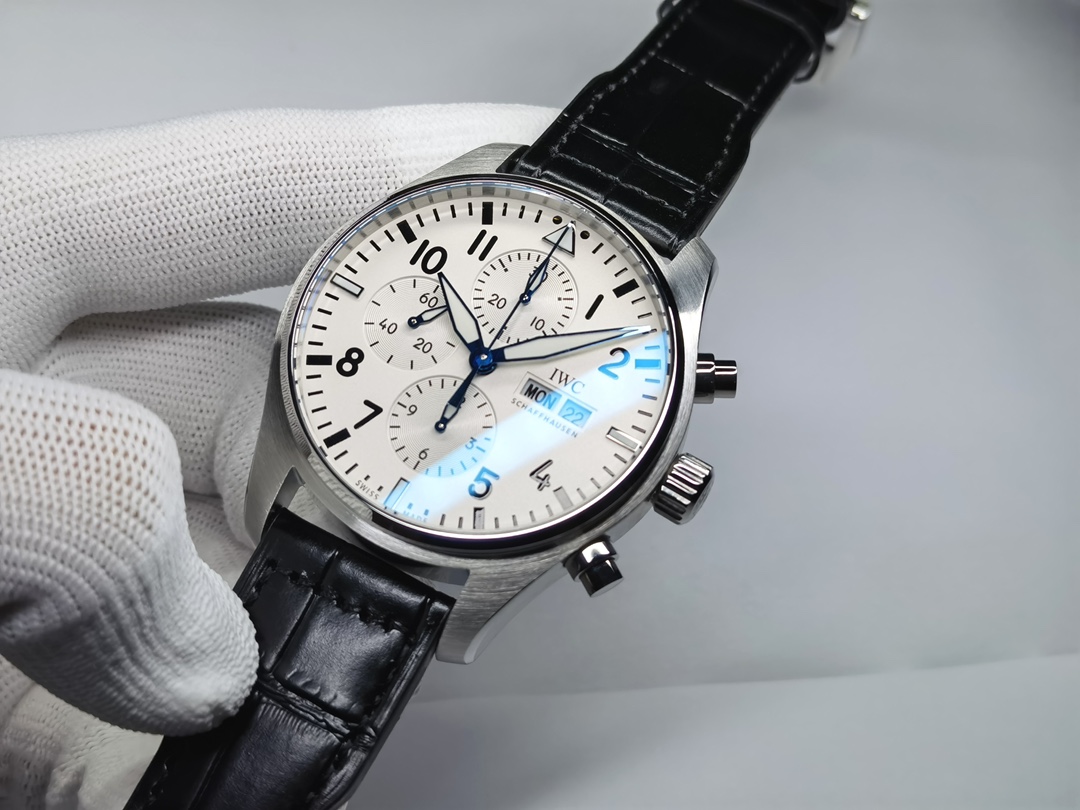
Thickness control is easier on three-hand builds
Entry IWC watches live or die by how they sit under a cuff. Portofino is judged as a dress watch. Mark models are judged as slim tool watches that still disappear under a jacket sleeve. Without chronograph stacks or power-reserve gearing, factories can manage case height more predictably.
This is where the first real divergence appears. 2892-type builds are often chosen when factories want a thinner case profile and a closer dress-watch presence. 2824-type builds tend to sit taller. The difference is not dramatic on paper, but on the wrist it changes how the watch rotates, how it clears cuffs, and how “expensive” it feels in daily motion.
You do not need exact millimeters to feel this. A slimmer watch settles flatter. A taller one rocks more and announces itself when your sleeve brushes the bezel.
Why “2892 replica IWC” became a common search phrase
The 2892 family earned its reputation in this niche because it supports thinner builds and often delivers a smoother winding feel when well assembled. Over time, buyers began associating “2892-based IWC replica” with higher-end entry models, especially in Portofino and Mark lines.
That reputation is not magic. It reflects market behavior. When factories aim for dress comfort and tighter proportions, they tend to reach for 2892-type bases. When they prioritize robustness, availability, or cost control, they often default to 2824-type. The phrase “2892-based IWC replica” simply became shorthand for that design intent.
2824 vs 2892: The Differences That Matter for Portofino and Mark-Style Watches
Architecture and wear behavior (not just a spec sheet)
In replica terms, 2824-type movements are known as robust, common, and service-friendly. Parts compatibility is widespread, and many technicians are familiar with their behavior. They tolerate average assembly better and tend to keep running even when lubrication is not perfect.
2892-type movements are slimmer by design and often feel smoother when properly built. They reward careful assembly but punish shortcuts. When tolerances drift or lubrication is uneven, they can become sensitive—showing early amplitude loss or inconsistent winding feel.
Neither is automatically better. Each fails differently when assembly is poor. A bad 2824 often feels coarse but keeps running. A bad 2892 may feel refined at first and then lose stability more abruptly.
Winding feel, crown feedback, and why beginners notice it first
Manual winding is the first physical conversation you have with a watch. It should feel smooth and progressive. Resistance should build gradually as the mainspring approaches full tension.
Common warning signs appear early. A gritty sensation usually points to contamination or dry gearing. Sudden resistance spikes suggest uneven lubrication or misaligned keyless works. Excessive rotor noise often means loose tolerances or poor balancing.
You do not need watchmaking vocabulary to detect this. If winding feels crunchy or inconsistent, something is wrong. In entry IWC replicas, 2892-type builds often feel silkier when done well. 2824-type builds often feel more mechanical and audible, even when healthy.
Date change behavior and the “danger window” concept
Every automatic date movement has a period late in the evening when the calendar mechanism begins to engage. Roughly speaking, this spans from late night into the early morning hours. During this window, forcing the date can stress the teeth and jumper springs.
You do not need to memorize times. The practical rule is simple: set the date during daytime hours, when the hands are nowhere near midnight. This applies equally to 2824-type and 2892-type movements. Treat the calendar gently and it will usually return the favor.
Regulation expectations: stability beats perfection
Chasing perfect seconds is less important than maintaining consistent daily behavior. A watch that gains a small, predictable amount each day is easier to live with than one that swings wildly between fast and slow.
Entry replicas often arrive regulated to an acceptable range, but stability over the first one or two weeks tells the real story. If amplitude drops quickly, accuracy will wander no matter what the initial reading showed. Both 2824-type and 2892-type movements can perform well here, but only if assembly and lubrication were handled with care.
We can explain how it’s built and how it tends to behave. But how you balance appearance, comfort, and long-term risk is a decision only you can make.
Where These Movements Show Up in IWC Replica Lines (Model-by-Model Map)
In entry IWC replicas, 2824-type and 2892-type movements tend to appear in the same places for practical reasons. Factories deploy them where dial layouts are simple, case proportions matter, and buyers care more about daily comfort than mechanical spectacle. That usually means Portofino and Mark-style three-hand pilots, with a few special-dial exceptions.
Portofino Automatic (three-hand dress)
Portofino is the most natural home for both 2824 and 2892. The design is restrained: slim bezel, clean stick indices, leaf or baton hands, and a single date window. There is nowhere to hide mistakes. Because complications are minimal, factories can focus on case thickness, dial spacing, and hand clearance instead of stacking modules.
This is also where the movement choice becomes most noticeable. A 2892-type Portofino usually sits flatter on the wrist, rotates less under a cuff, and feels closer to what people expect from a dress watch. A 2824-type Portofino often wears slightly taller. It can still look correct on the table, but on the wrist you feel the difference in how the case balances and how the bezel catches light.
On replicas, the details that matter most here are not the movement engraving. They are visual and tactile. Dial printing must stay crisp under direct light. Stick indices need to land squarely in their recesses, not lean or float. The date window must sit centered, with equal margins on all sides. Hand clearance matters more than people realize; when tolerances are off, seconds hands skim the dial or minute hands brush applied markers, and long-term reliability suffers.
Portofino lives or dies by “dress watch presence.” That presence comes from case thinness and bezel polish working together. When both are right, the watch feels quiet and composed. When either is wrong, it feels bulky, even if the movement itself is technically fine.
Mark Series (Mark XVIII / Mark XX style three-hand pilots)
Mark watches look simple, but they are unforgiving. Large Arabic numerals, a stark minute track, and a triangle at 12 leave no room for visual drift. Any misalignment shows immediately.
This is where you most often see the split between 2892-type and 2824-type builds. Better-thickness versions tend to use 2892-type bases, especially on Mark XX-style cases where factories chase a slimmer profile. More common builds rely on 2824-type movements, prioritizing availability and robustness over ultimate thinness.
Visually, the movement choice matters less than execution. Numeral font weight must feel balanced, not bloated. The triangle at 12 should sit cleanly between the hash marks, not crowd them. Minute track spacing needs to remain consistent all the way around the dial. Date font is another tell; too bold or too narrow, and the illusion breaks. These dial-level cues often reveal more than spec sheets, especially once you understand how different IWC replica movement architectures influence case height, dial spacing, and overall proportions, as explained in IWC replica movements explained: 7750, 2892, and 7-day power reserve.
On the wrist, a good Mark replica should feel tool-like but not clumsy. If the case rides high or rocks during motion, that usually traces back to movement thickness or dial stack height rather than to the brand of movement itself.
Spitfire / Special Dial Variants (still three-hand)
Spitfire and other special-dial three-hand variants raise the difficulty level in a different way. Here, dial color, texture, and printing accuracy matter more than whether the watch uses a 2824 or a 2892.
Matte military tones, sunburst finishes, and vintage-inspired lume are harder to replicate consistently than plain black or white dials. In these models, buyers should prioritize dial execution first. A beautifully assembled 2892 under a poorly matched green Spitfire dial still looks wrong. A well-executed dial on a 2824-type build often feels more authentic in daily wear.
Special dials expose factory limits. Movement marketing fades into the background once color balance and surface texture enter the picture.
When 2824/2892 is NOT the right answer (and why)
Chronographs sit outside this discussion. Their architecture usually demands the 7750 family or heavily modified derivatives, simply because of how the subdials and coupling systems are laid out.
The same applies to seven-day power reserve models and visible power reserve displays. Those require different base strategies or extensive modification that goes far beyond what 2824 or 2892 were designed to support.
Keeping these boundaries clear avoids confusion. 2824 and 2892 dominate three-hand entry models. They are not universal solutions.
Reliability Reality: Why “Simple Movements” Often Win in Replica Ownership
The three causes of “bad reliability” that are not the movement’s fault
Most reliability problems blamed on movement families actually come from three upstream issues.
First is lubrication discipline. Too much oil attracts debris. Too little accelerates wear. Contamination during assembly can undo even a well-designed movement.
Second is case and dial conversion. Tight hand clearance, dials that sit unevenly, or date wheels that rub introduce friction the movement was never meant to carry.
Third is regulation left unfinished. Beat error and poor initial adjustment do not always stop a watch immediately, but they shorten the window of stable performance.
None of these are inherent to 2824 or 2892. They are outcomes of how the watch was built.
Typical failure patterns: 2824-type vs 2892-type
When problems do appear, they often present differently.
Poorly assembled 2824-type builds tend to announce themselves loudly. You may hear rotor noise, feel rough winding, or notice that timekeeping drifts gradually over days. They often keep running, but they feel mechanical in a way that reminds you something is off.
Poorly assembled 2892-type builds can feel refined at first and then lose consistency more suddenly. Owners report watches that wind smoothly but develop irregular daily rates, or pieces that stop intermittently after short wear periods because amplitude drops faster than expected.
The key point is variance. The same movement label can behave very differently across batches. Family names do not guarantee behavior.
What “Swiss ETA” usually means in this niche
Language around movements in this space is loose. You will see “ETA-pattern,” “Swiss grade,” “Sellita,” “clone,” and “decorated” used interchangeably, even when they describe very different things.
Sometimes it means a genuine Swiss-made base. Sometimes it means a Sellita equivalent. Often it means an ETA-pattern architecture produced elsewhere with cosmetic finishing added on top. Decoration does not change load paths, gear geometry, or long-term stability.
The only reliable indicators are consistent behavior over time and credible documentation when it exists. Claims without evidence do not change how a watch wears on your wrist.
Buyer Checklist: How to Choose Between 2824 and 2892 in an Entry IWC Replica
Choose 2892-type if you prioritize thinness and dress comfort
If your use case leans toward office wear, formal settings, or anything involving jacket cuffs, 2892-type builds usually make more sense. These watches tend to sit flatter on the wrist, rotate less during the day, and disappear more easily under a sleeve. That physical behavior changes how the watch feels, even when the dial design is identical.
There is also a perception element that is hard to ignore. Thinner watches often feel more expensive. They move less when you gesture, they don’t catch fabric as often, and the caseback presses more evenly against the wrist. In Portofino-style dress pieces especially, that flatter profile contributes more to authenticity than any engraving on the rotor.
This does not mean every 2892-type build will feel refined. It means that when factories are chasing dress-watch presence, they usually start with a slimmer base.
Choose 2824-type if you prioritize commonality and predictable servicing options
2824-type movements dominate the entry replica ecosystem for a reason. They are familiar. Many technicians understand their behavior. Parts interchange is broader, and troubleshooting tends to be more straightforward.
Commonality has practical value. If something goes wrong, you are more likely to find someone comfortable working on a 2824-pattern architecture. That does not guarantee easy service—everything still depends on who is actually doing the work—but it does tilt the odds in your favor. In daily use, a well-assembled 2824-type can be extremely dependable. It may wear a touch taller, but it often tolerates average conditions better and continues running even when regulation or lubrication is not perfect, a reality reflected in many real-world repair cases documented in IWC replica watch movement problems and repair advice: common faults, causes, and maintenance.
The “best” choice depends on your tolerance for variance
Entry-level IWC replicas can be excellent daily wearers. But you are still buying into variance. Two watches with the same movement label can behave very differently depending on assembly, lubrication, and regulation.
If you value slimness and refined wear feel, accept that 2892-type builds reward good assembly and expose bad assembly more quickly. If you value predictability and ecosystem familiarity, 2824-type builds usually offer a wider margin for imperfection.
This is where behavior matters more than claims. How the watch winds, how it settles on your wrist, and how consistently it keeps time over weeks will tell you more than any movement description.
FAQ
Is an “ETA 2892 IWC replica” always better than 2824?
No. Build quality dominates. A poorly assembled 2892-type will underperform a well-assembled 2824-type every time. The reputation of the 2892 comes from what it enables—thinner cases and smoother feel when done correctly—not from automatic superiority.
Many buyers search for a 2892 replica IWC because they associate it with higher-end entry models. That association only holds when the surrounding build supports it.
Why do some Mark replicas feel thicker than expected?
Several factors stack together. Caseback height plays a role, especially when factories add space for movement clearance. Dial stack thickness matters; thicker dials or spacer rings push the hands upward. Hand clearance requirements can force additional vertical space. Some builds also include simulated anti-magnetic inner structures that add height without adding functional value.
The result is a watch that looks correct head-on but feels taller in motion.
What is the most beginner-friendly IWC replica movement for daily wear?
In practical terms, a well-assembled 2824- or 2892-type in a three-hand model is usually the easiest entry. These architectures are simple, widely understood, and less stressed than chronographs or power-reserve designs. The deciding factor is not the family name. It is how carefully that specific watch was put together, a distinction explored in detail in ETA 2824 vs ETA 2892 in IWC replica entry models (Portofino and Mark series): a practical guide, where assembly quality consistently outweighs movement branding in real daily wear.
How can I tell if a watch is using a decorated movement vs a true base?
Decoration changes appearance, not architecture. Plates, rotor engravings, and cosmetic bridges do not alter load paths or gear geometry.
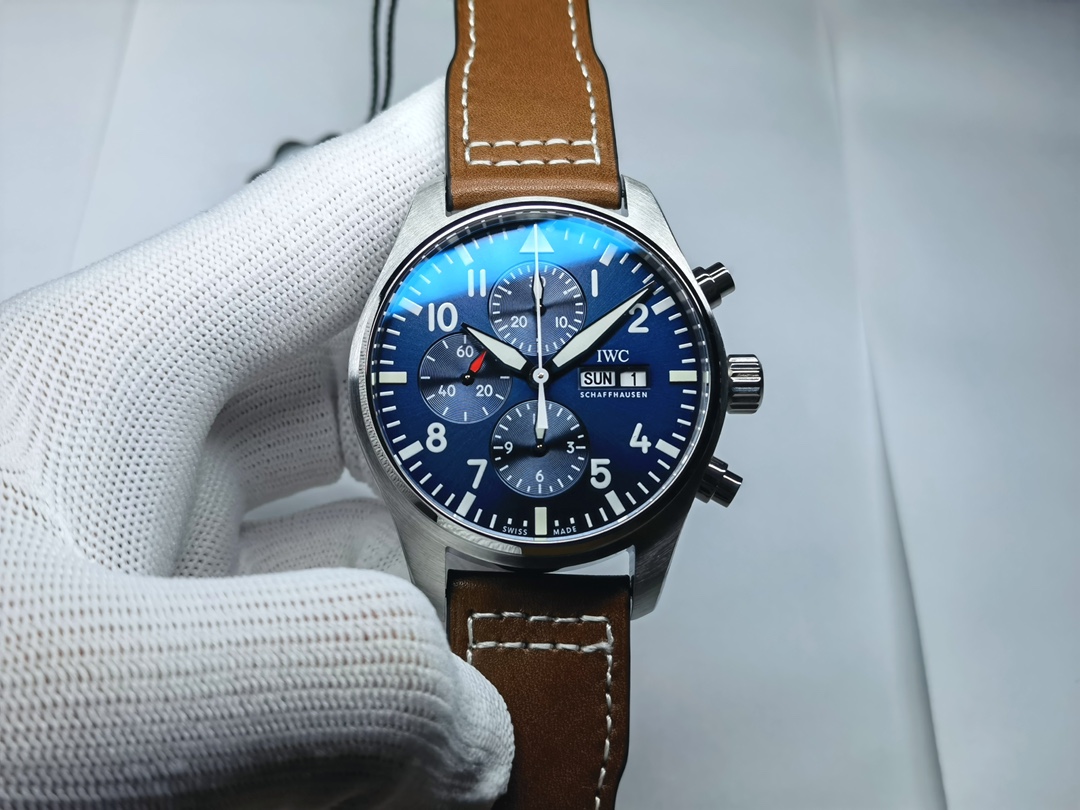
What matters is behavior. Pay attention to winding smoothness, rotor noise, and consistency over time. A decorated movement that feels gritty or unstable will not age well. A plain-looking base that winds smoothly and holds steady daily performance is usually the better long-term companion.
Conclusion
Entry IWC replicas work because three-hand designs reduce mechanical stress and give factories room to focus on proportions and feel. 2892-type builds are usually chosen when thinness and dress presence matter most, especially in Portofino-style pieces. 2824-type builds tend to appear when robustness and ecosystem familiarity matter more, particularly for everyday pilots like the Mark series. Neither movement family guarantees quality on its own, because batch variance and assembly discipline dominate real-world outcomes—a pattern that becomes hard to ignore once you compare long-term stability across different architectures, as shown in these 2026 power-reserve and stability rankings for IWC replica movements. Choose based on how the watch sits, winds, and behaves over time, not on how the movement is described. We can explain how it’s built and how it tends to behave. But how you balance appearance, comfort, and long-term risk is a decision only you can make.
Related IWC Articles: If you found this helpful, you might also enjoy Avoiding the “Swiss Version” Trap: Why High-End IWC Replicas Are Not Made in Switzerland, and ZF vs V7 IWC Replicas: Which Factory Actually Wins (By Model, Not Hype). Another related article is IWC Pilot’s Replica Watch Comparison: Mark vs Big Pilot vs Chronograph (Pilot Series Explained).