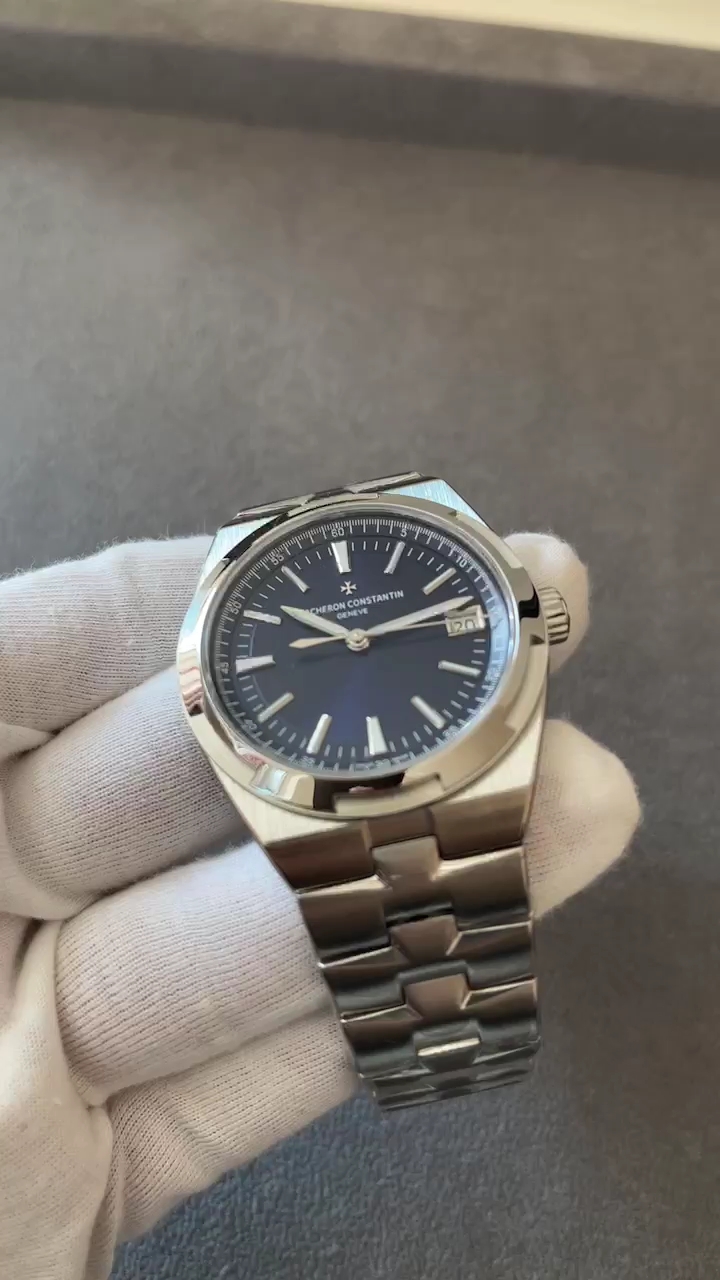
The first decision most buyers make without realizing it is not color, size, or dial texture. It is whether they are choosing a layout that exposes geometry directly or one that hides it inside layered mechanisms. In the world of vacheron constantin super clone builds coming out of Guangzhou, this choice determines how quickly manufacturing errors surface and how forgiving the watch will be over time.
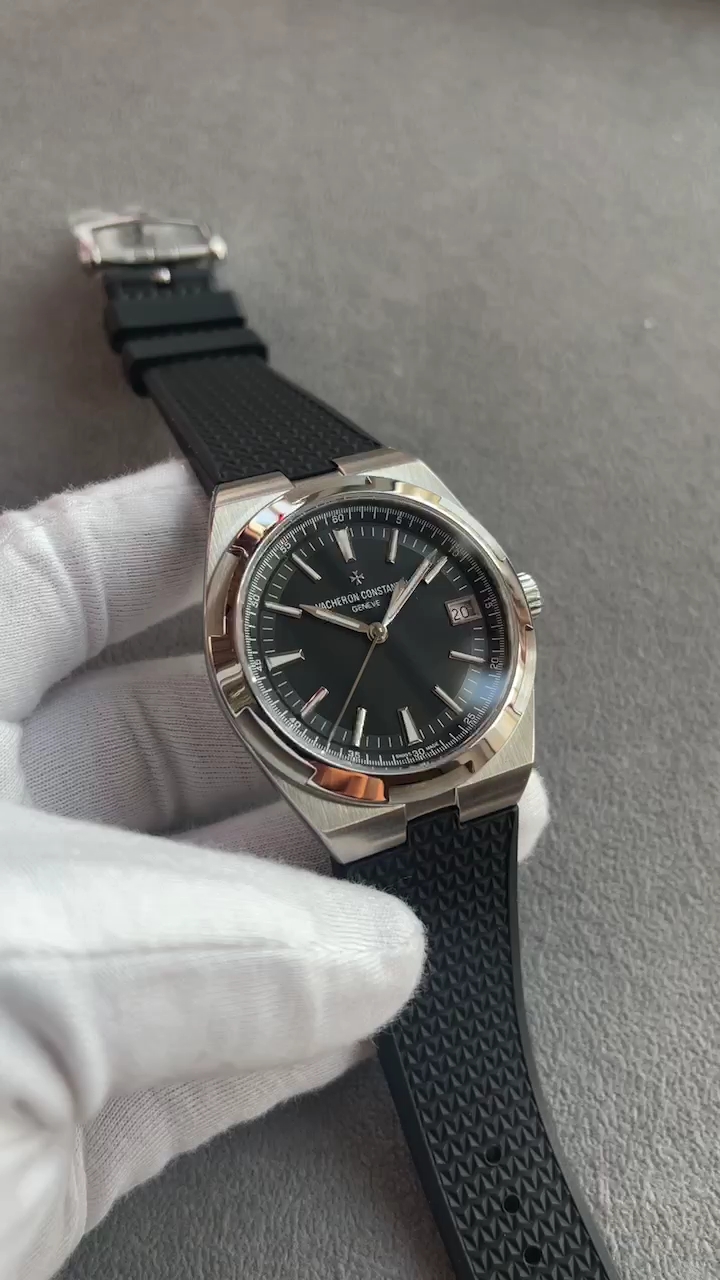
Three-hand and chronograph configurations do not fail in the same way. Three-hand layouts put every tolerance mistake on display the moment you look at the dial. Chronographs postpone judgment, allowing problems to remain invisible at rest and only reveal themselves through behavior after weeks or months of use. That delay is precisely what makes chronographs feel attractive at first and disappointing later.
If you frame this as a feature comparison, you miss the point. This is a structural risk comparison. One configuration aligns with Vacheron’s geometric discipline. The other multiplies the number of places where assembly drift can accumulate.
Why Three-Hand VC Layouts Fail Differently Than Chronographs
The core distinction is simple: three-hand designs concentrate all visual and mechanical truth around a single center axis, while chronographs distribute that truth across multiple planes, pivots, and return paths. In a three-hand layout, the minute track, hour markers, and hand stack all reference the same geometric center. Any deviation in that center immediately destabilizes the composition.
Chronographs work differently. Sub-dials introduce secondary axes. Pushers introduce lateral force paths. Reset mechanisms introduce asymmetry. Each added layer provides somewhere for error to hide. Instead of one exposed alignment problem, you get several partially masked ones that only converge during operation.
This is why three-hand models tend to look “wrong” quickly when something is off, while chronographs often look acceptable on arrival and only degrade through use. The three-hand watch fails visually. The chronograph fails behaviorally.
Understanding this difference changes how you evaluate a vacheron constantin super clone. You stop asking which configuration feels more impressive and start asking which one keeps geometry honest.
Three-Hand: Pure Geometry Under Direct Exposure
A three-hand VC layout acts like an optical amplifier. With only one center axis, there is nowhere for tolerance to disperse. The minute track must be concentric. The hour hand must sit at a precise vertical height. The second hand must clear both without wobble. All three references stack on top of each other.
When the dial shifts even slightly during assembly, the error does not remain subtle. Minute markers at twelve and six start to feel closer than those at three and nine. The hour hand begins to graze the applied indices under certain angles. Reflections across the dial lose symmetry. These are not cosmetic quirks. They are the direct outcome of center-axis displacement and uneven hand stack height.
Because nothing masks these deviations, three-hand replicas surface their problems immediately. This is uncomfortable for sellers and reassuring for owners. You either receive a geometrically coherent watch or you know, right away, that something upstream failed.

That direct exposure is not a weakness. It is why three-hand VC replicas are structurally safer.
Practical Judgment Tip: Minute Track Distance at 12 / 3 / 6 / 9
A fast way to assess three-hand symmetry is to compare radial spacing between the minute track and the dial edge at the four cardinal points. Do this under neutral lighting and rotate the watch slowly. You are not looking for perfection. You are looking for consistency.
If twelve feels tighter than six, or three feels wider than nine, the dial is no longer centered on the movement axis. That displacement did not happen during shipping. It happened during seating and casing. Once present, it tends to propagate into hand clearance issues and uneven visual weight across the dial.
This single check often reveals more about alignment behavior than extended visual admiration ever will.
Chronograph: Layered Systems That Hide Errors Until Use
Chronographs introduce complexity in a way that three-hand watches never do. Sub-dials sit on separate planes. Central chronograph seconds add another hand layer. Pushers inject off-axis force into the case. Reset hammers must strike symmetrically across multiple components.
At rest, most of this looks fine. Sub-dials appear level. Hands line up close enough. Pushers feel acceptable during a quick test. But none of this confirms long-term coherence. It only confirms that the surface presentation passed.
The real verdict arrives later. Central seconds begin to return slightly off zero. One pusher develops more resistance than the other. Sub-dials drift a fraction of a millimeter from their printed indices. These are not isolated defects. They are the visible outcome of stacked tolerances across layered systems.
Chronographs do not eliminate alignment problems. They defer them into functional behavior.
Practical Judgment Tip: Central Seconds Zero-Return Test
After engaging the chronograph for a full minute, reset it and observe where the central seconds hand lands. Do this several times. Do it at different positions of the main hands.
If the hand does not return cleanly to its printed zero, you are not seeing a single faulty component. You are seeing cumulative tolerance across reset hammers, heart cams, and hand seating depth. Each reset compounds microscopic misalignments that were invisible at delivery.
This is why zero-return behavior is a manufacturing signal, not a usability detail.
Risk Stacking: Why Chronographs Are Not an “Upgrade” in VC Replicas
Chronographs feel like progress because they add visible capability, but in china super clone Vacheron builds they function more like stress multipliers — every added pusher, sub-dial, and extended hand layer introduces another tolerance interface that must remain centered, parallel, and balanced over time, and none of these interfaces exists in isolation but interact mechanically, visually, and behaviorally, so small deviations compound instead of cancel, a compounded tolerance exposure dynamic that the analysis of why Overseas strap and bracelet systems act as geometry amplifiers characterizes in detail.
This is where many buyers misread complexity as quality. In practice, chronographs do not elevate execution reliability. They distribute risk across more surfaces. Three-hand layouts concentrate alignment into a single axis. Chronographs fracture it into multiple planes and force paths. The result is not richer engineering. It is a wider field for drift.
What makes this especially relevant in vacheron constantin super clone production is that these watches are assembled under volume constraints that prioritize completion over iterative calibration. Each additional subsystem raises the probability that something passes visual inspection while remaining mechanically asymmetric. Chronographs therefore arrive looking complete but internally unresolved.
Button Resistance, Reset Symmetry, and Sub-Dial Balance
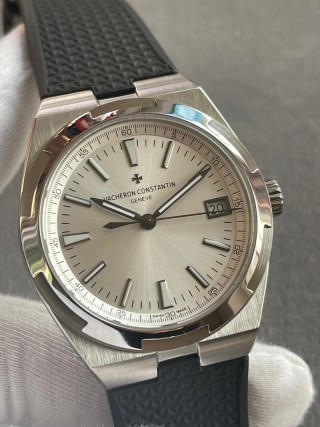
Three failure surfaces appear repeatedly in chronograph replicas: uneven button resistance, imperfect reset symmetry, and sub-dial imbalance. These are not random defects. They are direct reflections of how force, alignment, and indexing were handled upstream during assembly.
Pusher resistance exposes spring preload variance. When one button feels softer or requires more travel than the other, it signals uneven spring compression or lever geometry that was never normalized after installation. Reset symmetry reveals whether the reset cam was centered under load or simply accepted when it landed “close enough.” Sub-dial balance reflects axis parallelism. If one register appears visually heavier or slightly offset, the sub-dial post is no longer orthogonal to the main plate.
Taken together, these behaviors map cleanly back to fixture accuracy and sequencing discipline. They tell you whether components were aligned as a system or installed one by one until the watch functioned. When these three surfaces disagree, you are not dealing with wear. You are seeing the original assembly logic expressed through use.
Practical Judgment Tip: Compare Start vs Reset Force
Operate the chronograph start and reset in succession and pay attention to the force delta between them. Do this slowly, then repeat with slightly faster presses. The goal is not speed. It is consistency.
In a well-aligned system, start and reset require comparable effort and return with similar tactile character. When reset demands noticeably more force, or feels abrupt compared to start, levers are no longer sharing load evenly. Springs are carrying asymmetric tension. That imbalance will not self-correct. It will migrate into zero-return drift and long-term instability.
This tactile test often reveals system assembly discipline more reliably than visual inspection alone.
Guangzhou Production Reality: Why Chronographs Stratify Sharply by Execution
Chronographs amplify every weakness in guangzhou replica watch production because they depend on sequencing as much as precision. Fixture accuracy determines whether sub-dials sit square. Assembly order determines whether reset geometry settles under load or locks in misalignment. Cumulative tolerance propagation determines whether those early decisions remain stable once the watch enters daily use.
Most Guangzhou lines can achieve acceptable cosmetic alignment. Far fewer maintain the system discipline required to stabilize layered mechanisms. Chronographs therefore stratify sharply by execution quality, even when external finishing appears similar. Two watches may look identical on arrival. Only one will retain coherent behavior after repeated operation.
This divergence is not about access to parts. It is about process control. Chronographs demand iterative alignment, controlled preload, and coordinated hand installation. When any of these steps becomes optional, the watch still ships. The failure simply moves downstream into ownership.
Assembly Sequencing vs Visual Acceptance
Chronographs often pass visual acceptance while carrying unresolved mechanical asymmetry because appearance is checked before behavior has fully expressed itself. Hands are installed before reset geometry has settled. Sub-dials are indexed before force paths have equalized. Central seconds are aligned before repeated actuation exposes cam imbalance.
These shortcuts do not prevent the watch from functioning. They postpone judgment. The chronograph starts, stops, and resets during inspection, so it is approved. Weeks later, the owner notices creeping misalignment, inconsistent button feel, or imperfect zero return. None of this originated in use. It was embedded during sequencing.
This is the central difference between three-hand and chronograph replicas. Three-hand watches surface errors immediately through geometry. Chronographs defer them into system behavior. And once deferred, they are far harder to diagnose, accept, or resolve.
Configuration Judgment: Why Newcomers Should Default to Three-Hand VC Builds
For anyone entering vacheron constantin replica watches for the first time, the safest decision is not aesthetic. It is structural. Three-hand layouts consistently deliver the highest probability of geometric coherence under China production constraints because they compress all alignment risk into one exposed system instead of distributing it across multiple interacting subsystems.
Failure probability rises sharply with layout complexity — each added layer introduces another tolerance envelope that must remain centered, parallel, and stable after casing, and three-hand builds avoid this multiplication because they rely on a single center axis, one hand stack, and one visual reference plane, so if something is wrong it presents immediately through dial symmetry or hand clearance and that immediacy is not harsh but protective, allowing rejection before ownership begins, the very configuration strength logic outlined in the classic Overseas replica configurations and their tolerance stability profiles.
Chronographs behave differently. They allow marginal assemblies to pass initial acceptance because misalignment can hide inside reset geometry, sub-dial indexing, and pusher load paths. The watch arrives looking complete, but its internal balance remains provisional. For newcomers, this creates a false sense of success. What feels like a richer configuration often becomes a delayed problem.
Three-hand VC replicas, by contrast, force manufacturing truth to the surface. They do not permit partial alignment to masquerade as completion. This is why they consistently outperform chronographs in real ownership cycles, even when both appear similar on arrival.
When Chronographs Make Sense (Experienced Owners Only)
Chronographs become reasonable only when the owner brings inspection literacy and tolerance awareness to the table. This means understanding acceptable deviation ranges, recognizing early behavioral drift, and performing repeatable tests rather than relying on first impressions. It also means accepting that even a visually clean chronograph may carry unresolved asymmetry that will surface later.
Experienced owners approach chronographs as diagnostic systems, not finished objects. They evaluate start and reset force, observe zero-return consistency over repeated cycles, and monitor sub-dial balance across different hand positions. They know that inconsistent behavior is rarely isolated. It reflects cumulative tolerance stack and sequencing choices made during assembly.
Without this competence, chronographs become a liability. They demand stricter acceptance standards and ongoing behavioral observation. For those unwilling or unable to apply that level of judgment, three-hand configurations remain the rational default.
Closing Judgment: In VC Super Clones, Simplicity Preserves Geometry
In Vacheron Constantin super clone builds, layout simplicity protects alignment while chronograph complexity amplifies Guangzhou system weaknesses, so defaulting to three-hand designs is the most reliable way to preserve geometric integrity, even though the final choice always belongs to the wearer — a configuration-centric reliability insight drawn from the geometric and dimensional evaluation methods in the Vacheron Constantin Overseas replica guide with geometry-based inspection methods.