
Strap & Bracelet Systems Compared: Why Overseas Attachments Act as Geometry Amplifiers
On the Overseas platform from Vacheron Constantin, strap choice is not cosmetic. It is a structural probe that injects load back into the case through different paths, revealing where tolerances actually live. Steel transfers force laterally through end-links and lug shoulders, rubber compresses and rebounds along the lug exit angle, and leather bends around the spring-bar axis while translating any center drift into visible dial tilt. Each interface excites a different failure mode, which is why alignment behavior often looks “acceptable” on one attachment and unstable on another. Rotating straps is not a styling exercise; it is a diagnostic sequence that exposes system assembly discipline in ways static inspection never does.
In china super clone vacheron builds coming out of Guangzhou replica watch production, this amplification effect becomes especially pronounced because the attachment stack sits downstream of multiple fixtures: lug machining, socket drilling, spring-bar axis placement, and release-pin symmetry. A bracelet that shows uneven horizontal gaps at the end-links is not reporting on bracelet quality; it is reporting on lug geometry that drifted upstream. Rubber that flares asymmetrically under wrist load is not a comfort issue; it is angular propagation from a compromised lug exit. Leather that “leans” at neutral posture is not soft material behavior; it is center-axis displacement translating through flex. Different attachments surface different errors, and when those errors move with the strap, the fault is systemic. When they remain fixed relative to the dial, the fault is localized.
This is why Overseas attachments act as geometry amplifiers rather than accessories. The quick-release system makes swapping trivial, which invites repeated reseating, and repeated reseating converts microscopic inconsistencies into macroscopic cues. Over time, owners notice that one configuration masks a problem while another exposes it. That pattern is not random. It is the mechanical fingerprint of how load transfers through the case and back into dial geometry, hand stack tolerance, and crown feel consistency. Treating attachments as interchangeable aesthetics misses the point. They are measurement tools built into the design.
Original Quick-Release Architecture: Why Overseas Makes Strap Changes Structural
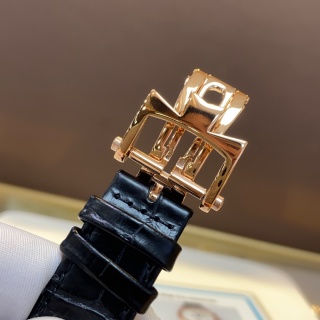
The Overseas quick-release is a preloaded system. Each strap or bracelet seats against a socket defined by release-pin symmetry and socket depth tolerance, while spring tabs provide preload that must be equal on both sides for repeatable alignment. When preload is balanced, reseating produces the same geometry every time. When preload drifts, each attachment lands differently, and every swap redraws the watch’s horizon. That behavior is not a strap defect. It is evidence that the interface cannot hold symmetry under load.
Replicas struggle here because the release mechanism compresses multiple tolerances into a shallow stack. The pin must sit square to the case, the socket must be drilled to consistent depth, and the tabs must return with matched resistance. Miss any one of these and the system loses repeatability. You feel it first in uneven release resistance, then in a soft or ambiguous re-seat, and finally in visual outcomes: a bracelet that steps at one shoulder, rubber that twists toward one lug, leather that translates axis drift into a persistent dial cant. These are not isolated quirks. They are coupled signals produced by a system that cannot maintain preload consistency.
This coupling explains why rotating attachments is such a powerful inspection method on vacheron constantin super clone builds. Steel exposes end-link curvature mismatches and shoulder steps that point back to case machining drift. Rubber magnifies lug angle errors through compression vectors that steel can partially conceal. Leather reveals axial issues because its flex symmetry faithfully maps internal offsets to external posture. When each attachment fails differently, the release architecture is broadcasting instability. When all three fail the same way, the case geometry itself is the root cause.
The practical implication is simple and uncomfortable: if the quick-release cannot return to the same seated state across attachments, the watch does not have a single alignment problem. It has a system assembly discipline problem. Visual acceptance on one strap does not cure structural misalignment on another. The Overseas design merely makes that truth harder to ignore by giving you three ways to excite it.
Conclusion: If strap changes alter alignment, treat the behavior as a structural diagnosis and decide accordingly.
Steel Bracelet: How End-Links Expose Case Lug Precision
The steel bracelet is the fastest way to surface lug geometry errors because it removes compliance from the interface. End-links arrive at the case with fixed curvature and a defined mating face, so any deviation in lug spacing or socket depth immediately appears as horizontal gap variance or a vertical step at the shoulder. When one side closes tightly while the other floats, the bracelet is not telling you about its own tolerances. It is reporting upstream case machining drift, usually introduced when lug bores wander off axis or when shoulder heights were finished in separate passes without a shared datum.
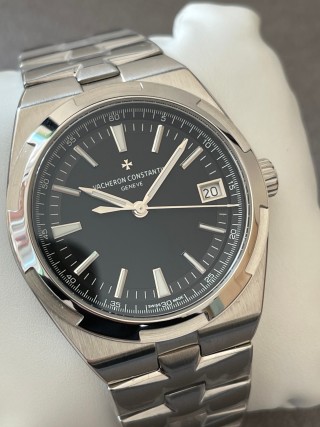
What matters most is mid-link plane continuity as the bracelet leaves the case. On a correctly machined case, the first mid-link continues the case plane without a hinge-like kink. When you see a break in that plane—especially one that alternates left to right across different strap installations—you are watching alignment behavior change under load transfer. The bracelet is pushing laterally into the lugs, and the case is responding asymmetrically. In Guangzhou replica watch production this often traces back to fixture wear or re-clamping during final case operations, which leaves micro-steps that polishing cannot erase because they are geometric, not cosmetic.
Experienced owners learn to ignore surface impressions and watch the shoulders — a stepped lug shoulder means the end-link is being forced to choose between two heights, which only happens when the case presents two competing reference planes, and that is why uneven bracelet gaps correlate so strongly with later issues in dial geometry and crown feel consistency, a geometry-driven interface behavior documented in the classic Overseas replica configurations and their tolerance stability profiles: the steel bracelet does not create these problems, it simply refuses to absorb them.
Rubber Strap: How Elastic Interfaces Magnify Lug Angle Errors
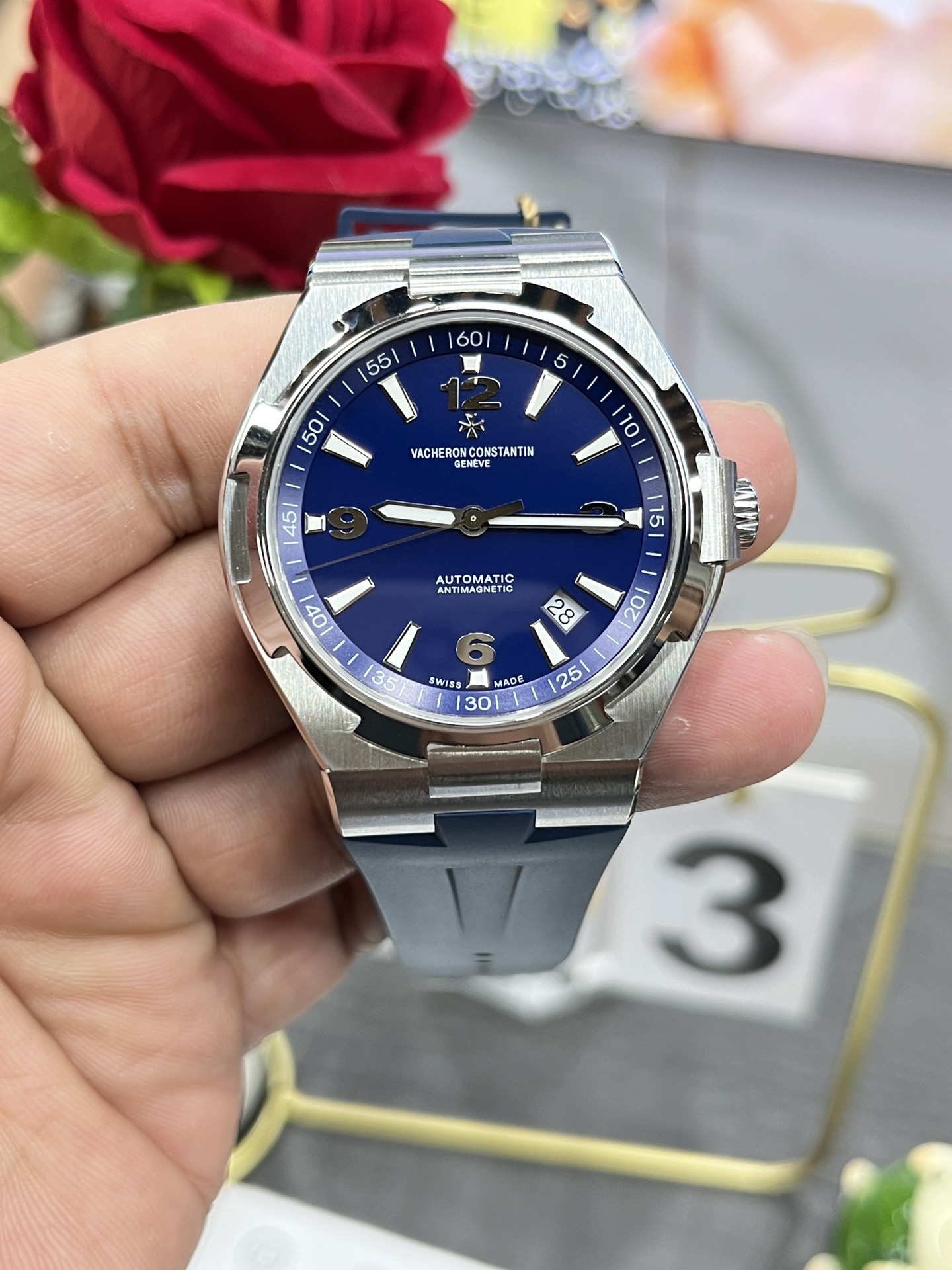
Rubber introduces compliance, but it does not neutralize geometry. It redirects it. Under wrist load, the strap compresses along vectors defined by the lug exit angle, then rebounds with memory. If both lugs share the same angle, compression remains symmetric and the strap returns to center. When one lug departs by even a fraction of a degree, the rubber amplifies that error by flaring on one side and twisting on the other, because elastic materials convert angular mismatch into visible deformation.
This is where steel can mislead. A rigid bracelet can bridge small angular inconsistencies by distributing force across multiple links, allowing a compromised lug to hide behind adjacent structure. Rubber cannot do that. Its single-piece interface concentrates stress at the exit point, so any miscut angle becomes immediately legible as asymmetric flare or a persistent rotational bias after release. If the strap consistently favors one side, you are not observing strap behavior. You are observing lug angle propagation through an elastic medium.
Over repeated wear cycles, rebound memory becomes a record of the case’s geometry. A properly aligned case lets rubber relax back to neutral after removal. A compromised one leaves the strap with a slight set, which then feeds back into alignment behavior on the next install. This is why rubber is such an effective angular diagnostic tool in china super clone vacheron builds. It turns small machining errors into stable, repeatable signals that no amount of reseating can erase.
Leather Strap: Why Soft Materials Reveal Center-Axis Drift
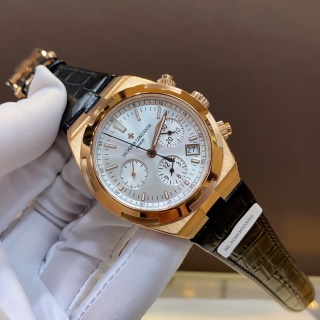
Leather behaves differently because its compliance is directional. It bends readily along its length but resists torsion, which means it translates internal offsets into external posture. When the spring-bar axis is not square to the case, or when the internal center axis has drifted during assembly, leather converts that misalignment into a visible lean under neutral wrist posture. The dial does not sit level because the strap cannot absorb axial error without twisting, and twisting is exactly what leather avoids.
Flex symmetry is the tell. On a centered assembly, both strap halves bend with equal radius and return to the same plane after removal. When one side carries more curvature, you are seeing center-axis displacement expressed through unequal load paths. This is also where crown feel consistency enters the picture. Assemblies that lean on leather often exhibit subtle resistance differences during setting, because the stem is no longer entering the movement on a true axis. The strap did not cause that. It exposed it.
Leather therefore becomes a structural translator — it takes invisible axial and seating inconsistencies and renders them legible at the dial edge, so owners who pay attention to this behavior stop blaming straps and start reading geometry, because a watch that leans on leather but looks “fine” on steel has not healed itself but has merely switched interfaces, a system behavior pattern tied to tolerance drift and assembly discipline documented in the market drift and structural risk patterns in Vacheron Constantin super-clones.
Practical Judgment Tip: Three-Strap Rotation Test
The fastest way to surface hidden tolerance problems is to force the case to express itself across three different load paths. Start with the steel bracelet and note end-link gaps, shoulder steps, and whether the first mid-link continues the case plane without interruption. Switch to rubber and watch for asymmetric flare at the lug exits or a residual twist after release. Finish on leather and observe dial horizon stability under neutral wrist posture. You are not looking for perfection on any single attachment. You are looking for pattern stability across attachments.
If alignment behavior shifts as you rotate—tight on steel, twisted on rubber, leaning on leather—the fault is systemic. That pattern means the interface stack cannot return to a consistent seated state, and each attachment is exciting a different weakness in the same assembly. When the visual outcome remains constant across all three, the problem is localized, usually tied to a specific lug or spring-bar axis. This distinction matters because localized defects can sometimes be corrected at the interface, while systemic ones trace back to system assembly discipline and will reappear regardless of strap choice.
Treat this as a field test, not a one-time check. Repeat the rotation after a few days of wear on each attachment. Elastic memory in rubber and flex symmetry in leather will amplify small angular errors over time, and steel will continue to report on end-link seating. When the story changes between day one and day five, you are seeing drift under load. That drift is the watch telling you how it will age.
Practical Judgment Tip: Quick-Release Feel Before Visual Inspection
Run your fingers over the release before you trust your eyes. Depress each tab separately and compare resistance side to side. A healthy interface returns with matched preload and produces a consistent, decisive click on reseat. When one side feels softer, slower, or ambiguous, you have already learned more than a loupe will show you: preload symmetry is compromised.
After locking the attachment, apply light torsion at the strap ends and feel for micro-play. Any perceptible movement at the socket predicts future seating drift because the interface cannot hold its reference under small, repeated loads. Visual alignment may still look acceptable in that moment, but inconsistent release feel almost always precedes visible misalignment once the watch sees daily wrist forces.
Use tactile feedback as your early warning system — visual cues tend to lag because materials can mask geometry temporarily, but the release mechanism cannot, so when resistance symmetry and re-seating clicks vary across installs you should expect alignment behavior to change with strap rotation, not as a strap problem but as a structural signal that deserves to be weighed before aesthetics, a multidimensional inspection insight outlined in the Vacheron Constantin Overseas replica guide with geometry-based inspection methods.