
What most buyers experience today is not progress, but dispersion. The surface of the market suggests momentum—new releases appear faster, listings multiply, and small cosmetic revisions arrive in short cycles—but the underlying system has moved in the opposite direction. Coordination has thinned, accountability has diffused, and the build process has fragmented into loosely coupled steps. The practical result is that two watches presented as the same model now behave like different products, because they no longer emerge from a single, disciplined production chain.
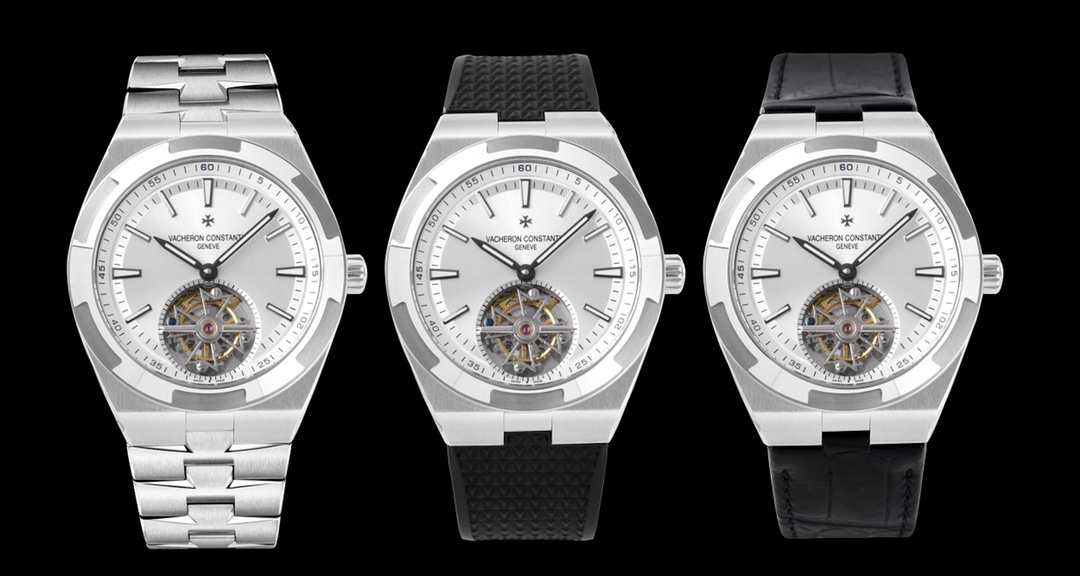
This shift matters more for Vacheron-style designs than for almost any other category. These watches do not tolerate drift quietly. They amplify it. Where other brands can bury small misalignments under texture, bezel mass, or visual noise, Vacheron layouts expose them through whitespace, thin typography, and a naked center axis. The market did not become worse because parts became scarce. It became unstable because process coherence collapsed.
Why the VC Replica Market Is Fragmenting Instead of Improving
The current fragmentation is not driven by innovation; it is driven by atomization. What used to resemble coordinated production now resembles distributed assembly, where each contributor optimizes for throughput in isolation. Dial printing, case machining, hand stacks, and final casing increasingly happen in separate micro-workshops, often with minimal feedback loops between them. When tolerance ownership disappears at the system level, variance does not merely increase—it compounds.
This is why apparent version upgrades fail to produce consistent quality. More listings do not mean better watches; they mean more pathways for error to enter. Each additional handoff introduces another opportunity for small deviations to stack, and once those deviations cross perceptual thresholds, no amount of downstream polishing can recover alignment. Buyers feel this as randomness: one unit feels composed, the next feels unsettled, despite sharing the same reference and visual presentation.
The key misunderstanding is assuming that availability of components equates to manufacturing capability. In reality, parts are static while processes are not. When centralized control dissolves, the watch stops being a product of engineering intent and becomes the byproduct of loosely synchronized labor.
From Centralized Production to Distributed Assembly
Earlier builds benefited from tighter orchestration. Cases, dials, hands, and final assembly were aligned under a single tolerance philosophy, even when sourced externally. Today, those elements often arrive from independent vendors with their own priorities, their own fixtures, and their own acceptable ranges. Final assembly becomes a reconciliation exercise rather than the execution of a design.
This explains why two visually identical pieces can feel fundamentally different on the wrist. One may present a continuous winding curve and stable hand clearance, while the other reveals subtle resistance changes and vertical inconsistencies under motion. These differences do not originate at the bench during casing; they are seeded upstream, when components are produced without shared reference geometry.
Coherence matters more than components because coherence governs interfaces — a perfectly printed dial cannot compensate for a case whose seating plane is off by fractions of a millimeter, and a clean hand set cannot rescue a center axis that arrived already biased; when assembly becomes distributed, those interfaces lose their common language, a systems-level failure dynamic that the VC replica ownership reality FAQ and buyer judgment framework for Vacheron Constantin super-clones frames as the core determinant of downstream behavior rather than individual parts quality.
Practical Judgment Tips: Detecting Fragmented Builds
Fragmentation leaves fingerprints that appear quickly once you know where to look. A slight dial rotation relative to the case is not a cosmetic nuisance; it signals that dial feet, case clamps, and seating planes were never reconciled under one fixture. Inconsistent hand height—where the seconds hand floats higher on one unit and presses closer on another—points to hand stacks being installed against variable reference depths.
Pay attention to crown resistance across the wind. A curve that changes mid-rotation usually reflects misaligned stem geometry or uneven torque transfer introduced during casing. These are not surface defects. They are behavioral evidence of upstream coordination failure, and they tend to correlate with long-term instability because the same lack of discipline that produced them also governs how the rest of the watch was assembled.
When you encounter these signals together, you are not evaluating an isolated flaw. You are reading a system that no longer knows how to hold itself square.
Why Labels Multiply While Geometry Degrades
The rapid spread of new labels has created the illusion of acceleration, but the physical watches tell a different story. Rebrands arrive in short cycles, yet case geometry, seating planes, and axis control remain unchanged, because the underlying fixtures rarely move. What looks like iteration is often just redistribution of the same tolerances across new packaging. This is why the market feels busier while outcomes grow less predictable: naming velocity increases, geometric discipline does not.
Once you accept this, the logic becomes uncomfortable but clear. Real improvement requires recalibrated CNC programs, re-cut alignment jigs, and retrained assembly sequences. Those steps interrupt output and cost money. Renaming does neither. So the system learns to communicate progress through labels while preserving the same manufacturing shortcuts, and buyers are left interpreting novelty as capability.
The Economics of Renaming Without Rebuilding
Renaming is cheap because it lives in language, not in steel. Rebuilding demands fixture downtime, test runs, scrap rates, and the risk of exposing upstream inconsistencies. In a throughput-driven environment, the incentive structure rewards surface change over structural correction, especially when most buyers only see photos and listings. The result is a steady cadence of “new editions” layered on top of the same mechanical foundations.
This dynamic explains why successive releases often feel familiar in the hand even when they look different on screen — if the case thickness remains inconsistent across units, if bezel symmetry still varies from side to side, and if center axes continue to drift under load, then no amount of renaming has altered the manufacturing reality, a repetition-in-behavior pattern rooted in sport geometry exposure and daily use durability that the Overseas super-clone maintenance and daily use: how sport geometry accelerates system exposure analysis makes explicit; novelty becomes a narrative device, not an engineering outcome, and readers who equate freshness with progress end up paying for repetition.
Practical Judgment Tips: Separating Renames from Real Iterations
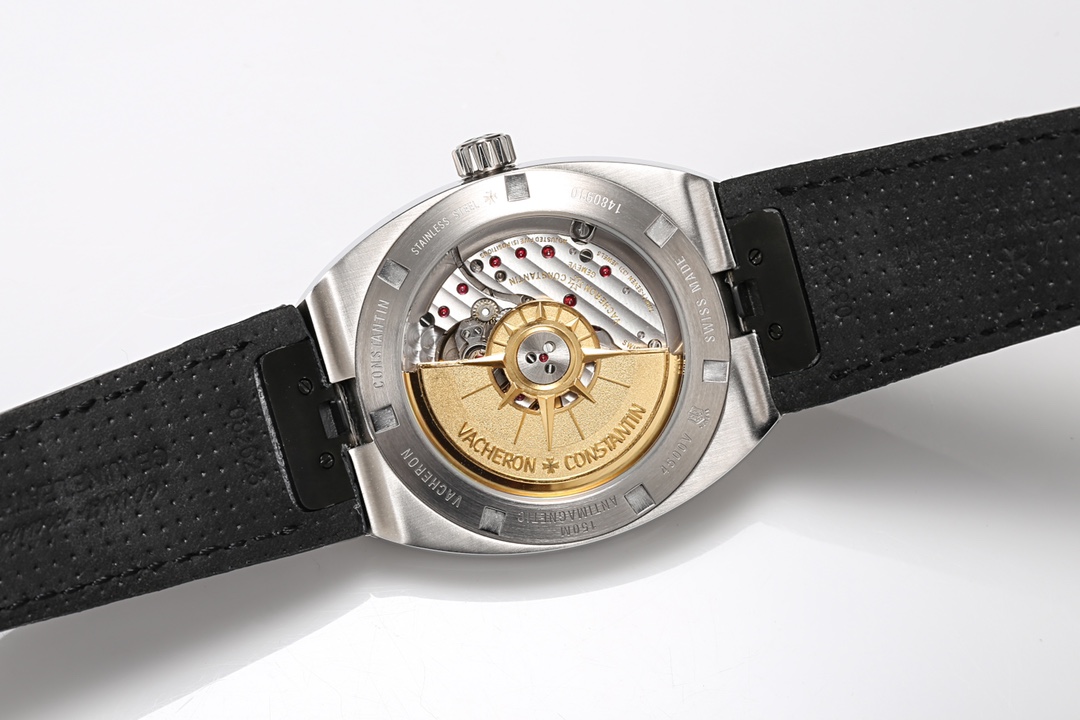
Start with thickness consistency across multiple samples, not the advertised dimension. True revisions stabilize that measurement because the seating stack has been redefined, while cosmetic refreshes leave it scattered. Move next to bezel symmetry by sighting along the case edge under diffuse light; asymmetry here almost always traces back to unchanged milling paths.
Finally, watch the center axis during a slow second-hand sweep. A stable axis holds its line without lateral wander, even when the watch is gently tilted. When these three signals improve together, you are likely seeing a genuine iteration. When packaging changes but geometry does not, you are watching a rename.
Why Vacheron Designs Fail Earlier Than Most in Replica Systems
These designs surface errors sooner because their layout offers no refuge. Whitespace dominates the dial, typography runs thin, and the center axis sits exposed without visual camouflage. In such an environment, tolerance stacking announces itself immediately. What other layouts absorb, these reveal, which is why small assembly deviations become obvious long before they would elsewhere.
This is not about aesthetics; it is about measurement — the architecture itself functions like a gauge, and as soon as alignment drifts the watch reports it through uneven spacing, baseline instability, and subtle asymmetries that the eye reads instinctively, exactly the sort of dimensional fidelity issues exposed in the Vacheron Constantin replica structural and alignment performance review, which is why these replicas feel unforgiving: the design translates micro-errors into visible outcomes.
Empty Space as a Measurement Tool
Large negative space increases perceptual sensitivity to drift. With fewer visual anchors, the brain uses the remaining references more aggressively, and any deviation stands out. This is why a piece that “looks fine in photos” often changes character on the wrist. Static images flatten depth and suppress parallax, while real-world viewing restores the spatial cues that expose misalignment.
Once you experience this, you stop trusting compressed representations. The dial becomes an instrument panel. Spacing between indices, the relationship between logo and center, and the framing of apertures all begin to read like indicators rather than decorations, each one reflecting how coherently the watch was assembled.
Practical Judgment Tips: Using Whitespace to Read Quality
Begin with minute-track concentricity by rotating the watch slowly under light and observing whether the track maintains a constant distance from the case edge. Check the logo baseline next; it should sit level relative to the dial horizon, not climb or fall across its length. Then evaluate the date window framing, paying attention to equal margins on all sides rather than the numeral itself.
When whitespace is clean, these elements align quietly. When it is compromised, micro-errors amplify into visible signals. Treat those signals as diagnostic, not cosmetic, because in this design language, empty space converts tiny process failures into clear behavioral evidence.
Why Guangzhou Output Stratifies by Discipline, Not Parts
The persistent myth is that quality follows components. In practice, outcomes in guangzhou replica watch production stratify almost entirely by system discipline. The same cases, dials, and hands circulate across multiple assembly lines, yet the finished watches diverge sharply because assembly order, torque control, and fixture calibration are not shared standards. Parts availability sets the ceiling, but process control determines where each piece actually lands.
Once you observe enough units side by side, the pattern becomes obvious. Watches built from overlapping inventories can feel composed or chaotic depending on whether their interfaces were established in a coherent sequence. When torque is applied before seating planes are stabilized, when hands are installed before axial references are confirmed, or when fixtures drift without recalibration, small errors cascade. This is why two examples that look interchangeable on paper can behave like they came from different worlds on the wrist.
Quality here is not a shopping problem. It is an execution problem. And execution lives in procedures, not in boxes of parts.
Parts Are Static. Processes Are Not.
Most assembly operations draw from the same upstream pool. That reality alone dismantles the idea of “special parts” as the primary differentiator. Divergence begins when those parts enter different procedural environments, where sequencing, torque curves, and reference surfaces are treated either as constraints or as suggestions.
In disciplined builds, components are introduced in a deliberate order, each step locking geometry before the next begins. In looser systems, steps blur together. Stems get tensioned before cases fully settle. Hand stacks go on before axial depth is verified. Calendars are adjusted after the fact rather than integrated into the build flow. The materials have not changed, but the logic has, and that change expresses itself as assembly variance you can feel.
This is why chasing narratives about unique components rarely leads anywhere useful. Manufacturing discipline does not announce itself through exotic inputs. It reveals itself through consistency across units, repeatable tactile behavior, and geometry that holds under use.
Practical Judgment Tips: Reading Assembly Order Through Behavior
Start with the crown engagement curve. A continuous, even resistance from the first turn to full wind usually means the stem, keyless works, and case seating were aligned before torque was finalized. When resistance rises and falls mid-rotation, you are often feeling a sequence error where alignment was forced after engagement had already been set.
Next, evaluate hand clearance under load by gently tilting the watch while the seconds hand sweeps. Stable builds maintain separation between layers regardless of orientation. If hands begin to flirt with each other or with the dial when gravity shifts, the stack was likely installed against inconsistent axial references.
Finally, observe calendar transition smoothness: clean, decisive changes point to calendars integrated during assembly, whereas hesitation, partial jumps, or uneven engagement suggest late-stage adjustments compensating for earlier misalignment — a behavior pattern analyzed in depth in the VC replica failure modes through mechanical behavior and assembly sequencing, because taken together these behaviors map directly back to build order and tell you whether geometry was established first and protected throughout or patched together at the end.
Market Risk Concentrates After QC, Not Before
Most buyers invest their attention upstream, debating models and versions, then mentally relax once QC images arrive. That instinct is backward. In practice, replica shipping risk concentrates after approval, when the watch leaves controlled handling and enters a chain defined by vibration, compression, temperature swing, and reorientation. Geometry that survived assembly can still be destabilized in transit, especially when packing prioritizes speed over restraint.
This is why watches that looked coherent in QC sometimes arrive with shifted dials, altered crown feel, or newly introduced hand interference. Post-QC handling introduces micro-shocks that act directly on the weakest interfaces: stem alignment, hand stack seating, and calendar indexing. These systems are already operating near tolerance limits. Transit does not need to be violent to matter. Repeated low-level impacts and pressure changes are enough to move marginal builds out of spec.
Selection determines what you start with. Acceptance determines what you end up owning. The failure rate between those two points is higher than most buyers are prepared to acknowledge.
Why Fast Approval Creates Slow Regret
Factories optimize for throughput. Once QC is issued, the operational priority shifts immediately to clearing inventory and moving packages. There is no incentive inside that system to pause for marginal geometry or borderline behavior unless the buyer insists. Approval is the only moment where external discipline intersects with internal velocity.
When approval happens quickly, it usually happens visually. Photos look aligned, hands appear straight, and the dial reads clean. But images cannot transmit crown engagement curves, axial stability under motion, or the subtle resistance changes that betray compromised seating. Those behaviors require video, repetition, and patience. Skipping that layer does not save time. It defers discovery until after arrival, when correction becomes difficult or impossible.
This is not about being cautious for its own sake. It is about recognizing that QC is not a formality. It is the last controllable gate in a system designed to keep moving.
Practical Judgment Tips: Three-Signal Acceptance Rule
Treat acceptance as a binary decision governed by three signals. First, geometry must align. The dial should sit square within the case, the minute track should hold concentricity, and the center axis should remain stable during a slow sweep. Any visible drift at this stage almost always worsens after transit.
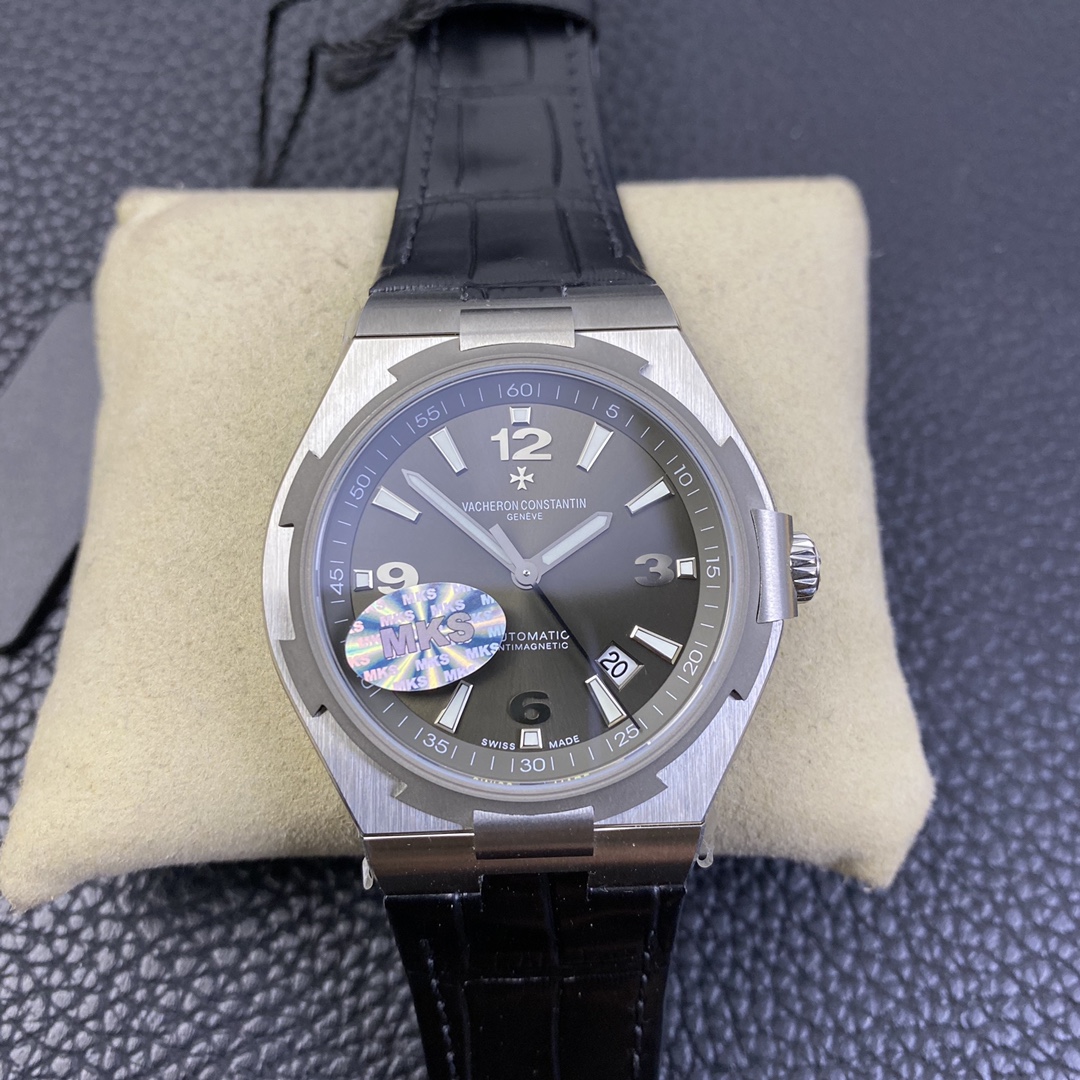
Second, crown feel must be continuous. Winding resistance should rise smoothly without soft spots or sudden changes. Discontinuity here usually indicates stem or keyless misalignment that will amplify with shock and use.
Third, hands must clear under motion. Ask for video that shows the watch tilted through multiple orientations while running. Layers should maintain separation regardless of gravity. If clearance tightens when the case angle changes, the hand stack was set against inconsistent axial references.
Proceed only when all three pass together. One failure is not a cosmetic inconvenience. It is evidence that the system never fully settled.
Closing Judgment: Replica VC Is a System Choice, Not a Brand Choice
What this ecosystem ultimately teaches is that labels are noise, geometry is signal, and discipline determines outcome. Across the guangzhou replica watch production environment, causes consistently outweigh symptoms. The same visual identity can emerge from radically different process integrity, and only one of those paths produces watches that remain coherent after real handling.
This is why thinking in terms of vacheron constantin replica watches or china super clone vacheron as categories misses the point. You are not selecting a brand expression. You are selecting a manufacturing system, complete with its sequencing habits, torque standards, fixture accuracy, and tolerance philosophy. Everything you experience on the wrist flows from that choice.
Why Visible Defects Are Upstream Manufacturing Signals
Every misalignment maps back to a process break: a rotated dial reflects unresolved seating planes, inconsistent hand height traces to axial references that were never locked before installation, and uneven crown resistance exposes stem geometry forced into place after engagement was already set — the very patterns of material choice and tolerance cascade failures documented in the analysis of how color and material choices accelerate failure on Vacheron Constantin replicas, because these are not isolated mistakes but fingerprints of systemic assembly discipline.
Once you learn to read alignment behavior this way, defects stop feeling random. They become diagnostic. Each visible error points upstream to a specific moment where order collapsed into improvisation. That understanding gives you autonomy, because it replaces guesswork with interpretation.
Replica Vacheron does not reward branding. It exposes manufacturing truth. In this market, you are not choosing a watch; you are choosing a system.