
The Logic of VC Factory Specialization
The Vacheron Constantin replica market does not follow a “one-size-fits-all” production model, as the architectural diversity across their catalog necessitates specialized engineering. This VC series factory guide highlights that factory dominance is dictated by the specific technical requirements of a reference rather than a general brand-wide superiority. A producer that excels in the complex, 5-axis CNC programming required for the Overseas collection may lack the specific horological environment required for the ultra-thin calibrations of the Patrimony series. Consequently, the Guangzhou ecosystem has fractured into specialized hubs where mold investment and movement modification dictate which factory produces the definitive version of any given model.
Tooling and Mold Investment
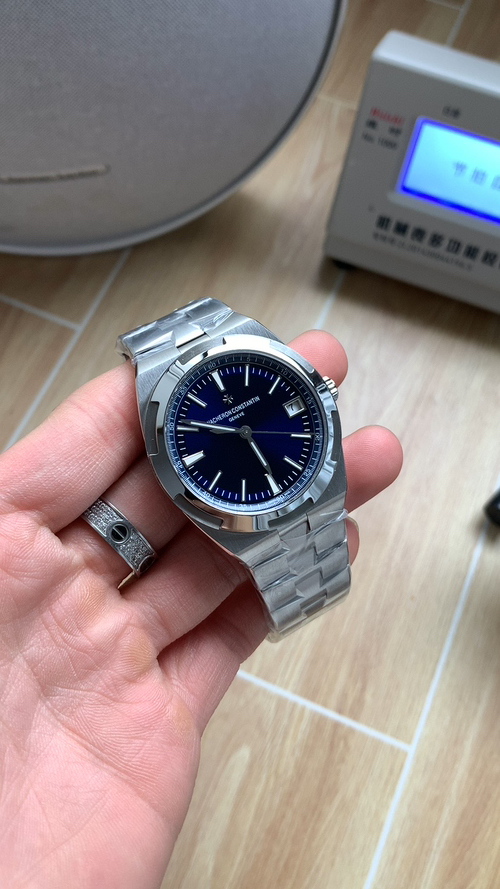
Significant capital investment in specific case geometries, such as the eight-notched Maltese cross bezel, forces factories to commit to a specific design language. The precision required for the Overseas integrated bracelet links requires dedicated polishing jigs and heavy-duty machinery that are functionally incompatible with the delicate, rounded silhouettes of the Historiques or Traditionnelle lines. Producers like ZF or 8F prioritize these sports-centric geometries because the cost of amortizing these molds is only viable through high-volume production of a single silhouette. Diversifying into niche shapes like the Historiques American 1921 would require an entirely different set of tooling, making such a transition economically inefficient for most high-tier producers.
Movement Architecture Compatibility
The mechanical constraints of the Vacheron Constantin catalog further drive specialization, particularly concerning movement “thinness” and complication layout. Achieving the signature 6.8mm profile of a Patrimony requires a heavily modified Miyota 9015 or a custom ultra-thin clone, which demands assembly lines with higher tolerances for part-clearance than a standard sports watch. Factories that have mastered the “slimming” of these calibers rarely maintain the infrastructure for the thicker, modular movements found in Chronograph or Dual-Time models. This specialization ensures that the movement’s perlage and bridge architecture remain consistent with the specific series, as the assembly technicians become experts in the nuances of a single movement family.
Categorizing Case-to-Lug Integration
Collectors must first identify if a model features an “integrated” bracelet or a “standard lug” configuration, as these require different industrial finishing processes. Integrated models like the Overseas demand vertical brushing that aligns perfectly from the bezel through the first link, whereas standard lug models like the Patrimony require high-mirror anglage on the lug curves. Most factories specialize in only one of these polishing disciplines; therefore, seeing a top-tier Overseas and a top-tier Patrimony from the same producer is a technical rarity.
Patrimony & Traditionnelle: The Dress Watch Rankings
In the realm of Vacheron Constantin’s classic dress watches, the ranking is determined almost exclusively by case thickness and the minimalism of the dial execution, and as formalized in the factory-tier grading logic for ultra-thin Patrimony replicas outlined in the Vacheron Constantin replica factory tier and case-profile grading framework, identifying the best factory for Patrimony requires auditing how effectively a producer controls the thin aesthetic that defines the series’ heritage; while many mid-tier factories can replicate the 40 mm diameter, the decisive technical tell remains the side profile and sapphire curvature, where top-tier producers invest heavily in movement modification to prevent the replica from sitting too high on the wrist—a common failure mode of lower-grade versions relying on unmodified Miyota movements.
KZ Factory’s Ultra-Thin Dominance
For the Patrimony 81180, KZ Factory maintains an undisputed position by achieving a case thickness of exactly 6.8mm. This is accomplished by utilizing a highly customized manual-wind movement where unnecessary date modules and auto-winding bridges have been removed to minimize the vertical stack height. Unlike budget-tier entries that often swell to 9mm or 10mm, the KZ version preserves the “invisible” feel of the genuine piece under a shirt cuff. The dial’s galvanized opaline finish and the sharp registration of the Maltese cross at 12 o’clock further distinguish KZ as the primary choice for purists seeking geometric accuracy.
MKS and ZF for the 85180 Self-Winding
The Patrimony 85180 self-winding model is currently a contested space between MKS and ZF, each offering distinct engineering advantages. MKS is the legacy leader, known for using a reliable Miyota 9015 with a total case thickness of 9mm, which remains within the acceptable threshold for a high-end dress replica. ZF has recently challenged this with a version that emphasizes dial-side finishing, specifically the sharpness of the hand-applied markers and the consistency of the pearl-track minute markers. While ZF often commands a higher price, their rotor decoration features more refined Côtes de Genève, though both factories successfully avoid the “rattle” often associated with poorly dampened Japanese movements.
Side-Profile Micrometer Verification
To authenticate the quality of a Patrimony replica, a micrometer or digital caliper measurement of the case thickness is the most effective diagnostic tool. A “Super Clone” grade dress watch must provide a side-profile measurement under 9.5mm; anything exceeding this dimension indicates the factory used an unmodified, thick movement spacer. This measurement is the primary indicator of whether the factory has invested in proper horological engineering or simply dropped a standard movement into a generic case.
Overseas Series: The Sports Watch Powerhouses
Navigating the competitive landscape for Vacheron Constantin’s premier sports line requires a focus on the structural integrity of the integrated bracelet and the depth of the dial’s finish. Determining the best factory for overseas production depends largely on whether the collector prioritizes the slim, three-hand profile of the 4500V or the mechanical complexity of the chronograph and perpetual calendar variants. While the market is flooded with mid-tier iterations, only a few select producers have mastered the Maltese cross bezel‘s high-polish finish and the proprietary “one-click” strap interchangeability system. Current production standards have pushed the accuracy of these sport-luxe models to approximately 9.6/10, with specific emphasis on correcting previous dial-text alignment errors.
[IMAGE: Macro comparison of ZF and PPF Overseas 4500V sunburst dials and bezel finishing]
The 4500V Battle: ZF vs. PPF
The competition for the 4500V three-hand model is a technical stalemate between ZF and PPF, with ZF currently holding a slight lead in dial execution. ZF has successfully replicated the “sunburst” dial texture, achieving a light-play effect that radiates from the center with consistent depth, avoiding the flat, matte appearance of budget clones. Their 11mm case thickness is achieved through a modified Miyota 9015, which includes a decorative plate mimicking the Calibre 5100‘s architectural layout and perlage. PPF, leveraging the same supply chain used for their industry-leading Nautilus clones, offers a bracelet with superior link flexibility and a more refined “hidden” micro-adjustment mechanism. The choice between them often comes down to whether the user prioritizes the visual “pop” of the dial or the ergonomic drape of the steel bracelet on the wrist.
8F Factory’s Complication Monopoly
For enthusiasts seeking the mechanical density of the 5500V (Chronograph) or the 4300V (Perpetual Calendar), 8F Factory serves as the primary technical source. 8F utilizes a customized 7750 movement to drive the chronograph functions, ensuring that the sub-dial spacing and pusher engagement feel are industrially sound. While their finishing on the anglage of the movement bridges is slightly less refined than ZF, their implementation of the “One-Click” strap change system is the most robust in the market, allowing for seamless transitions between the steel bracelet, rubber strap, and leather options. This functionality is a direct result of tighter tolerances in the spring-loaded locking mechanism, which prevents the “lug rattle” commonly found in lower-tier versions.
XF Factory and the 2000V Ultra-Thin
XF Factory occupies a specific engineering niche with the Overseas 2000V, a reference that demands extreme vertical compression, and as mapped in the XF vs MKS ultra-thin case engineering and movement selection comparison, XF achieves a remarkably slim 8.7 mm case thickness by utilizing the Asia 1120 movement, a critical tell for this ultra-thin model, whereas other factories default to thicker standard movements that push the side profile beyond 10 mm and destroy the intended silhouette; the mechanical implication of this thinness is a slightly reduced power reserve, but the trade-off delivers a level of wrist conformity that replicates the genuine 2000V’s “phantom” feel, further reinforced by the XF case’s brushed finish with graining that remains consistent across the transition from case body to integrated lugs.
Maltese Cross Bezel Alignment Test
A definitive diagnostic test for any Overseas replica involves checking the rotational alignment of the Maltese cross bezel points. In a high-end production, the six notches of the bezel should align perfectly with the hour markers, specifically the 12, 2, 4, 6, 8, and 10 o’clock positions. Lower-tier factories often suffer from a 1-2mm rotational offset due to poor CNC indexing during the case assembly phase. This misalignment is a permanent manufacturing defect that cannot be easily serviced, making it the most critical visual check during the quality control process.
Historiques & Fiftysix: Niche and Modern Classics
Matching a china VC replica factory to the heritage-focused Historiques or the entry-level Fiftysix requires a shift in focus toward geometric accuracy and material density. Unlike the Overseas, these series rely on traditional case shapes and vintage-inspired proportions that leave no room for error in polishing or lug curvature. Production in this category is less about mass-market volume and more about the specialized replication of rare references like the 222, which have seen a massive resurgence in collector interest. The technical challenge here lies in replicating the “heft” of vintage gold alloys using modern steel substrates and advanced coating technologies.
[IMAGE: Weight comparison of 8+ Factory 222 vs standard steel versions on a digital scale]
The 222 Revival: 8+ vs. V9
The Historiques 222 is currently a two-way battle between 8+ Factory and V9, with 8+ Factory being the preferred choice for those seeking tactile authenticity. The primary engineering advantage of the 8+ version is its “weighted” construction, which reaches a total weight of 133g. This is achieved through the use of high-density steel alloys and thicker link pins to mimic the substantial feel of the genuine 18k yellow gold model. V9 produces a visually accurate version, but it lacks the gravitational presence of the 8+ iteration, often feeling too lightweight for a watch of this historical stature. The 8+ version also features a more precise Maltese cross emblem at the 5 o’clock position on the case, which is soldered with higher thermal precision to prevent adhesive bleed.
ZF’s Limited Fiftysix Production
The Fiftysix series is a modern classic that ZF has dominated through a focus on movement reliability and dial legibility. By housing a decorated Miyota 9015 within the Fiftysix case, ZF ensures that the date-flip mechanism is instantaneous and the power reserve meets the 42-hour industry standard for “super clones.” The engineering constraint of this model is the box-style sapphire crystal, which ZF executes with a clear AR (anti-reflective) coating that avoids the blue tinting found on cheaper sapphire versions. The Sector-style dial, with its contrasting opaline and sunray finishes, is replicated with high fidelity, ensuring the transition between the two textures is sharp and devoid of “bleeding” at the track borders.
Historiques 222 Weight Threshold Check
When sourcing a “gold” Historiques 222 replica, the most effective physical test is a weight verification using a digital gram scale. A high-tier “Super Clone” like the 8+ version should register at approximately 133g, providing the necessary inertia on the wrist to pass as a precious metal piece. Budget-tier clones typically weigh between 100g and 115g, a discrepancy caused by hollowed-out bracelet links or thinner case back walls. This 20g difference is immediately perceptible to an experienced collector and serves as the primary indicator of the factory’s commitment to material realism.
Grand Complications: Tourbillons and Calendars
The mechanical integrity of a VC super clone factory is most visible in the execution of grand complications, where visual mimicry is insufficient for a passing grade. For the Overseas 6000V, BBR Factory represents the specialized recommendation due to their integration of a genuine rotating tourbillon cage. Unlike 8F Factory, which often utilizes an “open heart” balance wheel to simulate the aesthetic of a tourbillon, the BBR version features a 60-second flying tourbillon that completes a full rotation every minute. This deviation traces back to the use of specialized manual-wind movements that prioritize the escapement impulse’s visual clarity. Furthermore, BBR has addressed the “purple hue” dial error prevalent in earlier 8F batches, achieving a deep navy that matches the galvanized opaline finish of the genuine reference.
[IMAGE: Macro video still of BBR Factory 6000V flying tourbillon cage rotation and movement perlage]
The technical complexity of the Overseas Dual Time references, specifically the 47450 and 7900V, is dominated by TWA Factory. These models feature “cluttered” dials that require precise synchronization between the GMT hand, the power reserve indicator, and the day/night display. TWA focuses on the internal gearing required to ensure that the second time zone hand remains indexed to the day/night indicator, a mechanical hurdle that simpler factories often bypass with static or slaved hands. The engineering constraint here is the modular addition to the base movement, which TWA executes with sufficient perlage on the visible bridges to satisfy high-tier inspection. From an assembly standpoint, the hands on a TWA complication are set with higher tension to prevent hand-shiver during rapid date-setting or GMT adjustment.
Dynamic Complication Verification
To ensure the mechanical authenticity of a grand complication, request a high-definition video demonstrating the movement in a dynamic state. For a Tourbillon, use a stopwatch to verify that the cage completes exactly one rotation every 60 seconds; a slower or faster rotation indicates a generic “open heart” movement masquerading as a tourbillon. For Dual Time models, the diagnostic test involves adjusting the primary crown to ensure the second time zone hand can be indexed independently without disrupting the main hour hand. If the GMT hand cannot be set to a different hour while the seconds hand is hacking, the watch is a budget-tier entry utilizing a slaved movement.
Factory-Series Matching Matrix
Efficiency in the procurement process relies on a defined vacheron constantin replica factory matrix that matches the specific reference to the producer with the highest tooling capability. This matrix eliminates the trial-and-error approach by identifying the factory that has already amortized the cost of specialized molds for that specific series. As the market evolves, these “primary choices” represent the versions that currently hold the highest scores in rehaut alignment and case-back engraving depth. The mechanical implication of following this matrix is a significantly lower failure rate in complication synchronization and water-resistance seal integrity.
The Confidence Level Matrix
| Series | Model Ref | Primary Choice | Secondary Choice | Key Advantage |
|---|---|---|---|---|
| Overseas | 4500V | ZF | PPF | Dial Sunburst |
| Overseas | 5500V | 8F | – | Chrono Function |
| Patrimony | 81180 | KZ | MKS | 6.8mm Thinness |
| Patrimony | 85180 | MKS | ZF | Reliability |
| Historiques 222 | 4200H | 8+ | V9 | Weighted Feel |
| Tourbillon | 6000V | BBR | 8F | Real Tourbillon |
Single-Factory “Monopoly” Models
In certain instances, a single factory holds a technical monopoly over a specific reference, leaving no room for a secondary choice at a “super clone” grade. The Overseas 2000V by XF Factory is the most prominent example, as no other producer has successfully integrated the Asia 1120 movement into an 8.7mm case. Similarly, the 47450 Dual Time remains the exclusive domain of TWA Factory due to the specialized movement spacers and dial-feet positions required for the GMT module. In these scenarios, the “best” factory is simply the only industrial entity capable of maintaining 1:1 case proportions while housing the necessary mechanical complications. These monopoly models are often produced in smaller batches, leading to longer wait times compared to the mass-produced 4500V iterations.
Inventory Anachronism Check
Collectors must exercise extreme caution if a seller recommends a factory for a series not identified as a strength in the matching matrix, because as outlined in the factory–series compatibility and inventory-risk audit within the VC replica China factory matching and anachronism detection guide, a common red flag is the promotion of an “MKS Overseas” or a “ZF 222,” which often signals an attempt to move old stock or mislabel a low-tier batch; to perform a physical check, verify the bezel detent response and the sharpness of the Maltese cross logo, since a logo that appears soft or cast rather than CNC-cut on a model outside MKS’s specialization strongly indicates a budget-tier substitute, and this inventory anachronism screening helps prevent acquiring outdated production runs that lack the modern movement decoration standards of current top-tier batches.