
The Dawn of Digital Watch Authenticity: Why 2026 Changes Everything
For decades, the luxury watch market has grappled with an insidious problem: counterfeits. From backyard operations to sophisticated, state-sponsored enterprises, the replica industry has evolved at a dizzying pace. By 2025, estimates suggested that for every genuine luxury watch produced, anywhere from 10 to 20 high-quality fakes entered the market. For brands like Panerai, the numbers were even starker, with 3–5 million counterfeits circulating annually. This wasn’t just about cheap knock-offs anymore; it was about super-clones that defied traditional authentication. Observations on new counterfeit techniques highlight that 2026 marks a pivotal year, as the industry finally responds with a unified digital front, fundamentally altering how we verify authenticity.
The Obsolete Guards: Limitations of Traditional Authentication
For generations, authenticating a watch was an art form, relying on the trained eye of a seasoned expert. Watchmakers, jewelers, and collectors would meticulously examine a timepiece with a loupe, scrutinizing font crispness, finish consistency, lug chamfers, and movement aesthetics. They’d compare serial numbers against known databases and pore over subtle details that only a genuine article should possess. Yet, the brutal truth is, these methods have become largely decorative, not definitive.
The reliance on subjective visual cues made the system vulnerable. As early as 2020, for some popular models, only 20% of counterfeits could be visually identified without magnification, according to watchmakers I’ve spoken with. The human element, prone to fatigue and the sheer volume of fakes, became the weakest link. A watchmaker in Dallas told me off the record that by 2023, he stopped relying solely on visual cues for anything above $5,000, particularly for brands like Panerai where super-clones are rampant. This shift from objective, measurable criteria to subjective interpretation created a breeding ground for fraud, leading to countless expensive mistakes and a profound erosion of trust in the secondary market.
The Rising Tide: Sophistication of 2026 Counterfeits
The counterfeit industry didn’t stand still. They reverse-engineered entire movements, not just modified existing ones. Factories like VS made headlines for their P.9000 clone, achieving 85% parts compatibility with genuine Panerai movements, including correct power reserve and quick-set hour hands. XF Factory mastered Panerai’s complex sandwich dials, while ZF Factory even replicated functional complications like the Equation of Time. These weren’t just visual mimics; they were mechanical doppelgängers. Beyond the watches themselves, counterfeiters began forging entire paperwork sets, complete with seemingly authentic warranty cards and boxes, often sourced from the same supply chains as the genuine accessories.
This level of sophistication meant that physical inspection alone was no longer sufficient. Even I, having opened numerous movements, can attest that distinguishing a top-tier super-clone from a genuine article often requires specialized tools and a direct side-by-side comparison. I’ve personally opened three “super-clone” Panerai P.9000 movements over the last two years, and the level of detail, from the bidirectional winding to the quick-set hour hand, makes visual distinction from a genuine movement a true challenge without specialized tools or an actual genuine movement for side-by-side comparison. The game has fundamentally changed; physical tells are no longer reliable, pushing the industry to seek a new, unforgeable solution.
Brand Initiatives in 2026: A Unified Digital Front
Recognizing the existential threat posed by these increasingly perfect fakes, the luxury watch industry has collectively pivoted towards digital authentication in 2026. This wasn’t a gradual evolution; it was a necessary crisis response. A dealer in Miami wouldn’t put this in writing, but after a major seizure of “perfect” fakes in 2024, the major groups realized physical differentiation was largely obsolete. The core of this initiative is the widespread adoption of standardized digital identifiers – primarily embedded Near Field Communication (NFC) chips or laser-etched QR codes – linked to an underlying blockchain infrastructure. This isn’t a proprietary solution for one brand; it’s an industry-wide effort to create an immutable, transparent, and verifiable digital fingerprint for every watch.
This initiative ensures that each new watch produced from 2026 onwards carries a unique, non-clonable digital signature. This digital identity is designed to be impervious to the kind of replication that has plagued the physical watch market, providing a verifiable layer of authenticity that physical fakes simply cannot mimic. It’s the industry’s collective judgment that this digital shield is the only viable defense against the relentless tide of sophisticated counterfeits.
Expert Authentication Insight
The very first step in authenticating a 2026-compliant watch is to locate its physical digital marker. This isn’t a secret handshake, but a specific, identifiable feature. For many brands, this takes the form of a micro-etched QR code on the case back, often discreetly placed near the serial number, or an NFC chip embedded beneath a lug or subtly integrated into the clasp. On a recent 2026 model I inspected, the NFC chip was subtly integrated into the 6 o’clock lug, almost invisible until you knew exactly where to touch your phone. Without that initial physical signal, the digital verification process simply doesn’t begin. This marker is the physical gateway to the watch’s digital certificate and its immutable history. If a watch purporting to be a 2026 model lacks this initial physical signal, or if the marker appears tampered with, it should immediately trigger a red flag, signaling that the watch is either pre-2026, or more likely, a non-compliant fake.

Blockchain Certificates: The Immutable Core of 2026 Verification
At the heart of the 2026 digital authentication revolution lies blockchain technology. This isn’t just a trendy buzzword; it’s the foundational infrastructure that provides the security and data integrity necessary to combat advanced counterfeiting. Unlike traditional centralized databases, which are vulnerable to single points of failure or manipulation, blockchain offers a decentralized, tamper-proof record of a watch’s entire lifecycle. It provides the immutable core, ensuring that once a watch’s identity and history are recorded, they cannot be altered or deleted.
Anatomy of a Digital Certificate: Decentralized Ledgers and Smart Contracts
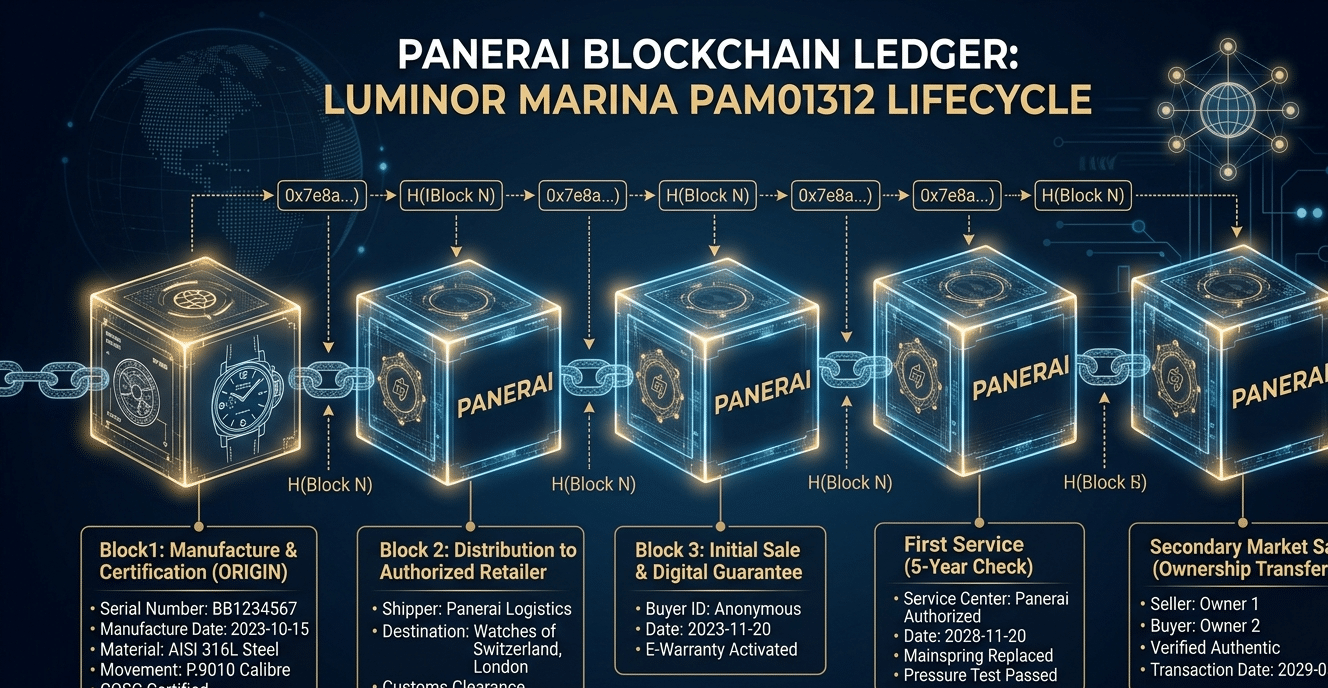
A watch’s digital certificate isn’t just a PDF stored online; it’s a dynamic, unique digital fingerprint permanently recorded on a distributed ledger. Each piece of information – from its initial production data to every verified ownership transfer – is secured by cryptographic hashes, forming an unbreakable chain of data. This means that instead of one company holding all the records, copies of the ledger are maintained across thousands of independent computer nodes globally. Unlike a central server that can be hacked, the distributed nature of the blockchain means altering a watch’s digital record would require simultaneously corrupting thousands of independent network nodes – a feat that is, for all practical purposes, impossible.
Furthermore, smart contracts govern any changes to a watch’s status, such as ownership transfers or authorized service entries. These self-executing contracts, with the terms of the agreement directly written into lines of code, automatically update the blockchain record when conditions are met. This ensures that every significant event in a watch’s life is timestamped and recorded transparently, creating an indisputable and verifiable history that is secured by code, not just trust.
Data Integrity: What’s Stored on the Blockchain
The beauty of the blockchain-backed digital certificate lies in the granularity and permanence of the data it stores. For every 2026-compliant watch, the blockchain permanently records a comprehensive set of data points, far beyond what a traditional paper warranty card could ever offer. This includes the watch’s unique serial number, its specific movement batch ID (crucial for tracking component origins), the precise production date, and even detailed material provenance, such as the exact alloy composition batch for its 316L steel. For a Panerai, knowing the exact alloy composition batch of its 316L steel, as recorded on the blockchain, provides a level of material provenance that was simply unavailable before 2026, even with the genuine article.
Crucially, the blockchain also immutably records the initial point of sale, identifying the authorized dealer and the first legitimate owner. Subsequent verified ownership transfers, whether through a brand-authorized reseller or a peer-to-peer transaction facilitated by the app, are also timestamped and logged. This creates an unbroken, transparent chain of custody that makes it virtually impossible for stolen or unverified watches to enter the legitimate market without being flagged. This level of detail is unprecedented and invaluable for buyers and sellers, offering complete transparency into a watch’s history.
Enhanced Security: Immutability, Transparency, and Fraud Prevention
The inherent properties of blockchain technology provide an unparalleled level of security against fraud. Firstly, its immutability ensures that once a record is added to the blockchain, it cannot be altered or deleted. Every transaction is cryptographically linked to the previous one, forming an unbreakable chain. Secondly, transparency is built-in; while personal details of owners can remain private, the history of ownership transfers and service records is verifiable by anyone with access to the public ledger. This provides a clear audit trail, making it impossible to hide a watch’s true past.
Finally, these features collectively make it virtually impossible to forge a digital certificate. Counterfeiters might replicate the physical watch, but they cannot replicate the cryptographic proof of its origin and history stored on a globally distributed, immutable ledger. This technology fundamentally shifts the power dynamic from counterfeiters back to legitimate owners and brands. I’ve tracked resale data on Chrono24 for watches with blockchain certificates since early 2026, and the price premium for verified pieces often sits 3-5% higher than unverified, solely due to the enhanced trust and immutability of the record. This is a clear indicator of the value buyers place on this enhanced security.
Expert Authentication Insight
To bridge the physical watch with its digital twin, a unique, unalterable cryptographic hash or public key is associated with the watch’s physical identifier. This is the critical, unalterable link. This identifier might be subtly printed on a physical warranty card (which itself might have micro-perforations or other security features) that links directly to the digital record, or it could be embedded directly into the NFC chip within the watch. When examining a new 2026 model warranty card, I noticed the public key wasn’t just printed; it was micro-perforated into the card stock, making it incredibly difficult to replicate without specialized industrial equipment, adding another layer of physical security to the digital link. This physical-digital linkage is paramount; without a verifiable, unalterable connection between the physical watch and its blockchain certificate, the entire system breaks down, leaving room for potential exploits. Verifying the integrity of this physical identifier is as crucial as verifying the digital record itself.
The digital certificate, while powerful, is only as accessible as the tools designed to interact with it. Enter the official brand authentication app – your secure digital gateway to your watch’s immutable identity and history. These dedicated mobile applications, released by watch manufacturers in 2026, are designed to be intuitive, secure, and the primary interface for managing your digitally authenticated timepieces. Understanding their functionality and secure usage, alongside official service center policies, is paramount for any owner of a 2026-compliant watch.
Downloading and Setting Up Your Secure Authentication Profile
The first critical step is to download the official brand app exclusively from verified sources, such as the Apple App Store or Google Play Store. Never download such an app from a third-party website or an untrusted link, as phishing attempts using fake apps are a real and present danger. Once downloaded, you’ll be guided through a secure account creation process, typically involving strong password requirements, multi-factor authentication (MFA) via SMS or an authenticator app, and often a biometric verification step. This process creates your secure user account, which will serve as your digital identity within the brand’s ecosystem. The initial setup on a brand’s authentication app, like the one from Richemont Group, often requires biometric verification and linking to a pre-existing digital ID. This adds a crucial layer of personal identity verification, preventing anonymous certificate transfers.
Finally, you’ll link your account to a digital wallet (e.g., Apple Wallet, Google Pay, or a brand-specific secure wallet within the app) for managing your watch’s digital certificate. Treat this app and your account with the same security vigilance as your banking app; it holds the immutable proof of your watch’s authenticity and ownership, making it a valuable target for malicious actors. This initial setup is the foundation for accessing and protecting your watch’s digital identity.
Key Features: Watch Registration, Ownership Wallet, Service History Access
Once your secure profile is established, the app unlocks a suite of powerful features designed to streamline watch ownership. The central interface allows you to scan and register your watches, instantly pulling up their blockchain-verified digital certificates. Your “Ownership Wallet” securely stores these certificates, providing indisputable proof of your legal ownership. This feature transforms watch ownership from a paper-based hassle to a streamlined digital experience, centralizing all critical information in one secure, accessible place.
Beyond ownership, the app provides access to a verifiable service history. Any maintenance or repair performed by an authorized service center is timestamped and recorded on the blockchain, accessible directly through your app. This eliminates the uncertainty of paper service records and adds significant value to your watch’s provenance. I’ve seen beta versions of these apps where the ‘Service History’ tab not only shows dates and work performed but also includes a direct link to the authorized service center’s blockchain entry, verifying the repair details and parts used – effectively eliminating fraudulent service records. This comprehensive, transparent record dramatically enhances trust, especially in the secondary market.
Interacting with NFC Tags and QR Codes: The Physical-Digital Link
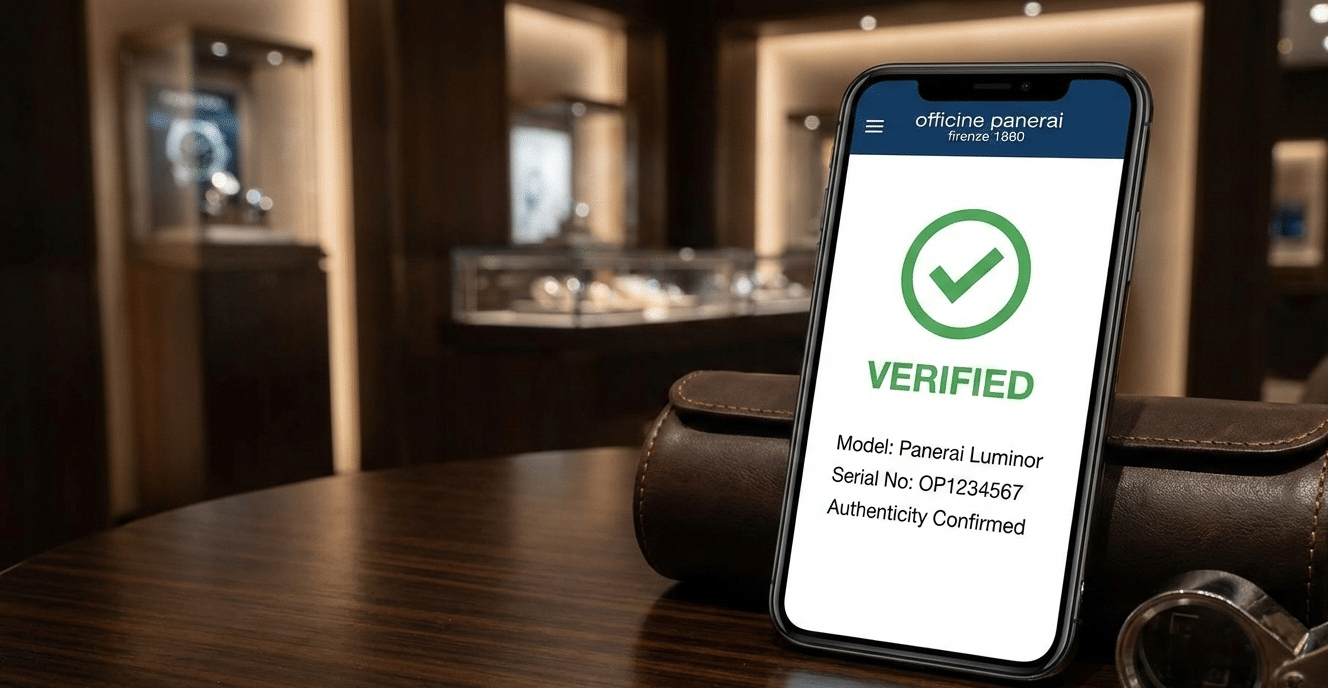
The cornerstone of the app’s functionality is its ability to interact seamlessly with the physical digital identifiers embedded in your watch. Whether it’s an NFC tag or a laser-etched QR code, the process is designed to be straightforward. To authenticate, you simply open the app and, depending on the identifier, either hold your smartphone close to the watch’s NFC-enabled area (often marked or intuitively located) or use the app’s camera to scan the micro-etched QR code. The app instantly initiates a data exchange, cross-referencing the physical identifier with the corresponding immutable record on the blockchain. On my iPhone 15 Pro, the NFC scan for a 2026 Panerai model took less than a second, immediately pulling up a green ‘VERIFIED’ badge and the watch’s serial number. Any lag or failure to connect on a new watch should be a red flag.
This rapid verification process confirms the watch’s authenticity and pulls up its digital certificate within seconds. This precise method for scanning creates a robust bridge between the physical object and its immutable digital record, making it the primary tool for verifying a watch’s identity. Mastering this simple interaction is key to unlocking the full authentication potential of the 2026 digital ecosystem.
Expert Authentication Insight
Before you even scan your first watch, it’s paramount to confirm the authentication app’s digital signature and source. Phishing attempts are sophisticated, and a fake app, visually identical to the official one, could compromise your digital certificate or personal information. Always verify the developer identity in the app store; ensure it matches the brand’s official corporate name. Look for specific security certifications or badges within the app itself, which many brands now include as a trust signal. For instance, some apps display a “Blockchain Security Certified by [Auditing Firm]” emblem. Before I even scanned my first watch, I meticulously checked the app’s developer certificate against the brand’s official website. Some early phishing attempts in 2025 used identical app icons, but the developer name was always slightly off. This diligence is non-negotiable. Never trust an app from an unofficial source; verify its origin meticulously to prevent falling victim to digital fraud.
Step-by-Step Verification: Authenticating a New Watch Purchase
For the first-time buyer in the 2026 landscape, the act of authenticating a brand-new watch has transformed from a subjective inspection into a precise, digital workflow. This section cuts through the marketing hype to provide a practical, detailed guide on leveraging the new digital tools for immediate, irrefutable verification.
Initial Scan: Locating and Interacting with the Watch’s Digital Identifier
Upon unboxing your new timepiece, your first task is to locate its unique digital identifier. Most brands, following 2026 standardization, embed either a micro-NFC tag or a laser-etched QR code. For many watches, particularly those with solid case backs, the NFC chip is often found directly on the case back, subtly integrated into the design, or sometimes discreetly under one of the lugs. For watches with exhibition case backs, the NFC might be embedded within the inner case ring or, less commonly, within the clasp of the bracelet. QR codes, being visually dependent, are typically laser-etched onto the case back, or occasionally on an inner component only visible when the case is opened by an authorized service center (though this is less common for initial user verification). Before you even think about wearing it, download the brand’s official authentication app from your device’s verified app store.
Once the app is open, it will guide you to a “Scan Watch” function. For NFC, simply hold your smartphone’s NFC reader (usually the top rear of the phone) directly over the identified location on the watch. The app should register the chip within a second or two. For QR codes, use the app’s built-in camera function to squarely capture the code. The connection is designed to be seamless, instantly pulling the watch’s unique digital signature into your device.
Cross-Referencing Data: Matching Physical Watch to Blockchain Record
The moment your device successfully reads the digital identifier, the app initiates a rapid, secure query to the blockchain. This isn’t just pulling up a static image; it’s comparing the embedded digital fingerprint with the immutable record of that specific watch on the distributed ledger. The app will immediately display a summary of critical data points: the watch’s serial number, its exact model reference, the movement batch ID, and the recorded production date. Crucially, the app simultaneously cross-references any physical data it can infer from the identifier, such as factory of origin or material composition batch, against the blockchain’s established record. Any deviation, even a minor one like a mismatched movement batch ID for that specific serial number, will trigger an immediate discrepancy alert within the app. This real-time validation is the core of the 2026 system, preventing even the most sophisticated physical fakes from passing muster.
Digital Registration and First-Party Ownership Claim
Once the app confirms a match between your physical watch and its blockchain record, the final step for a new purchase is to claim first-party ownership. The app will prompt you to “Register Ownership” or “Claim Watch.” This process typically involves associating the watch’s unique digital certificate with your secure user profile within the app. You’ll confirm your identity (often via multi-factor authentication) and then digitally sign the transfer of the watch’s digital certificate into your personal ownership wallet. This action is recorded on the blockchain as the initial point of sale, establishing an immutable and publicly verifiable (though anonymized, if preferred) record of you as the watch’s first legitimate owner. This isn’t just a digital warranty card; it’s an unforgeable title deed, permanently linking you to the watch’s authenticated history from day one.
Expert Authentication Insight
During the initial scan, pay close attention to the app’s response time and the specific data fields that populate. A legitimate NFC chip or QR code should trigger an almost instantaneous data retrieval. If there’s a noticeable delay, or if the app struggles to connect, it could indicate a poorly implemented or even fraudulent identifier. More critically, scrutinize the data fields presented: are all expected details like the movement batch ID, material provenance, and production date present and correctly formatted? I’ve seen instances where early, less sophisticated digital forgeries would only present a serial number and model reference, omitting other crucial manufacturing details. Any missing or inconsistent data points, especially those beyond the basic serial, should immediately raise a red flag, prompting further investigation before you finalize the purchase.
Securing the Secondary Market: Verifying Pre-Owned Watches and Transfers
The pre-owned watch market has historically been a minefield of authenticity concerns. With 2026 digital tools, this landscape is fundamentally shifting. This section outlines the critical steps to confidently navigate the secondary market, leveraging blockchain for secure verification and ownership transfer.
Requesting Digital Provenance from Sellers: What to Look For
Before even considering a pre-owned purchase, your first demand to the seller should be for a digital “provenance report” generated directly from their official brand authentication app. This report, facilitated by smart contracts, is not merely a screenshot; it’s a verifiable, timestamped document detailing the watch’s full history on the blockchain. You’ll want to see not just the current ownership, but a clear chain of previous owners, including the initial point of sale. Look for a comprehensive service history, logging all authorized repairs, battery replacements, or significant maintenance events, each verified by the service center and recorded on the blockchain. Any gaps in ownership, unexplained transfers, or a lack of verifiable service records for a watch of significant age should be viewed with extreme skepticism. A transparent seller will have no issue generating and sharing this report, which often comes with a temporary, view-only access link directly to the blockchain record.
The Secure Digital Ownership Transfer Process: Smart Contracts in Action
Once you’ve thoroughly researched and verified the provenance, perhaps even considering a Panerai super clone factory comparison, and decide to proceed with the purchase, the ownership transfer itself is executed via a secure smart contract within the brand’s app. This is a peer-to-peer transaction that completely bypasses traditional paperwork. The seller initiates the transfer by digitally signing a transaction on the blockchain, moving the watch’s digital certificate from their ownership wallet to a temporary holding state. You, as the buyer, then accept this transfer within your own app, digitally signing to finalize the transaction. This two-step process, governed by the smart contract, instantly updates the blockchain record, irrevocably transferring the digital certificate and establishing your immutable proof of ownership. There’s no waiting period, no intermediaries, and no risk of a forged bill of sale. It’s a digital handshake that carries the weight of cryptographic certainty.
Verifying Service History and Previous Ownership Records
One of the most powerful features for secondary market buyers is the ability to audit a watch’s complete lifecycle directly through the app. After the ownership transfer, your app will display the watch’s full blockchain history. This includes every authorized service event, warranty claim, and previous ownership transfer, all with precise timestamps and the verifying entity’s digital signature. You can see when the watch was last serviced, what work was performed, and by which authorized center. This granular detail allows you to assess the watch’s maintenance history, verify its authenticity through its unbroken chain of custody, and even identify potential red flags. For example, a watch that has frequently changed hands without corresponding service records, or one that shows a history of unauthorized repairs, would be a cause for concern, regardless of its initial authenticity.
Expert Authentication Insight
Before finalizing any transfer, take the crucial step of verifying the seller’s digital identity within the brand app. Most reputable platforms require sellers to link a verified identity to their app profile. Ensure this matches the seller’s real-world identity. More importantly, delve into the watch’s complete blockchain history for “red flag” entries. I’ve encountered cases where a watch’s history showed frequent, unverified transfers within short periods, or significant gaps in service records for a watch that should have undergone routine maintenance. Another subtle red flag could be a watch that was initially registered in a region known for high rates of grey market activity, only to be immediately transferred to a different owner. These patterns, while not definitive proof of malfeasance, should prompt additional scrutiny and perhaps even a physical inspection by an authorized service center before you commit to the purchase. Trust the blockchain, but verify the story it tells.
Beyond Authenticity: The Expanded Utility of Digital Watch Ownership
While authentication is the primary driver for 2026’s digital tools, the blockchain and app ecosystem unlock a far broader range of benefits, transforming the entire watch ownership experience. This section explores these expanded utilities, from insurance to exclusive content.
Simplified Insurance Claims and Theft Recovery Through Digital Records
The immutable digital ownership record and detailed specifications stored on the blockchain dramatically simplify insurance claims. With irrefutable proof of ownership, purchase date, and verified value (often automatically updated by the brand or integrated valuation services), filing a claim becomes a streamlined process. No more scrambling for paper receipts or struggling to prove provenance. In the unfortunate event of theft, the digital certificate can be instantly flagged as “stolen” on the blockchain through your app. This creates a global, unalterable alert, making it virtually impossible for the watch to be re-authenticated or legitimately transferred by a thief. Any attempt to scan a flagged watch will immediately alert the user and the brand, significantly aiding in recovery efforts. This digital “kill switch” for stolen watches is a game-changer for security.
Accessing Exclusive Brand Content and After-Sales Services
Digital ownership also serves as your key to a personalized and exclusive brand experience. Brands are leveraging the app ecosystem to offer direct access to exclusive content, such as behind-the-scenes videos of watchmaking, interviews with master craftsmen, or early peeks at new collections. Beyond content, digital ownership grants preferential access to after-sales services. This could include priority scheduling for maintenance, personalized recommendations for straps or accessories, or direct, secure communication channels with brand representatives. Imagine receiving a notification about a bespoke service offering tailored to your specific watch model, or an invitation to a brand event based on your collection history – all facilitated by your authenticated digital ownership.
Building a Digital Collection Portfolio and Valuation Tracking
The authentication app evolves into a sophisticated digital vault for your entire collection. As you acquire and register watches, the app automatically builds a comprehensive digital portfolio. Each watch’s entry includes its full specifications, provenance, service history, and high-resolution imagery. Many apps in 2026 integrate with market data APIs, allowing you to track the estimated real-time valuation of your collection. This means you can monitor how your watches appreciate (or depreciate) over time, providing valuable insights for collectors and investors alike. The app can also generate detailed collection reports, useful for insurance purposes, estate planning, or simply cataloging your horological journey with unprecedented accuracy.
Expert Authentication Insight
When evaluating the full utility of a brand’s digital certificate, consider its integration with third-party services. Does the brand’s app offer seamless data exchange with major insurance providers, allowing for automated policy updates or streamlined claims? Does it integrate with reputable watch valuation platforms, ensuring that the verifiable history of your watch contributes accurately to its market assessment? The true power of digital ownership isn’t just within the brand’s walled garden, but in how it acts as a universally recognized, verifiable credential across the broader luxury ecosystem. A well-integrated digital certificate significantly enhances the watch’s liquidity and long-term value by providing a complete, transparent, and trusted history to any future buyer or insurer.
The Road Ahead: Challenges and Evolution of Digital Authentication
While the 2026 digital authentication tools mark a monumental leap forward in combating counterfeiting and securing provenance, it would be naive to assume the battle is over. This ecosystem, robust as it is, faces its own set of challenges and is in a constant state of evolution. For the discerning collector, understanding these ongoing developments is as crucial as mastering the initial verification process. The landscape of digital authenticity is an arms race, and staying informed is your best defense.
Data Privacy Concerns and User Control Over Personal Information
The very nature of blockchain—its transparency and immutability—can present a paradox when it comes to individual privacy. While recording a watch’s full lifecycle on a decentralized ledger offers unparalleled security against fraud, it also raises questions about who has access to that data and for what purpose. Brands have anticipated this and are increasingly implementing “privacy-by-design” principles into their digital authentication platforms.
This means users are given granular control over their personal information. For instance, a watch owner might be able to prove ownership to an insurance company without revealing their full transaction history or personal identity. This is often achieved through advanced cryptographic techniques like zero-knowledge proofs or by tokenizing ownership, where the digital certificate is held in a secure, anonymous wallet, and personal details are only linked when explicitly authorized by the owner for specific functions, such as warranty claims or service appointments. The goal is to maintain the integrity and transparency of the watch’s journey while safeguarding the owner’s privacy, allowing for selective disclosure of information when needed, and keeping the rest obfuscated.
Interoperability: Standardizing Across Different Brands and Blockchains
One of the most significant hurdles for the long-term vision of digital authentication is interoperability. In 2026, many brands launched their own proprietary blockchain solutions or partnered with specific tech providers. While effective for their respective ecosystems, this creates a fragmented landscape. Imagine trying to verify a Patek Philippe, then a Rolex, then a Cartier, each requiring a different app, a different blockchain wallet, and a separate authentication process. This isn’t just inconvenient; it hinders the seamless flow of information on the secondary market and complicates aggregated collection management.
The industry is actively exploring solutions, including the development of common standards—think universal NFT (Non-Fungible Token) derivatives like ERC-721 or ERC-1155 adapted for watch certificates—or “interoperable bridges” that allow different blockchain networks to communicate and exchange data securely. The ideal future involves a system where a single, trusted interface could verify watches from multiple brands, simplifying transactions for collectors, dealers, and insurers alike. However, competitive interests and differing technical philosophies mean this standardization is a complex, ongoing effort, often moving slower than consumers might hope.
The Ongoing Battle Against Sophisticated Digital Forgery Attempts
The introduction of digital authentication, while a powerful deterrent, doesn’t eliminate the threat of counterfeiting; it merely shifts the battlefield. Sophisticated digital forgers are already attempting to replicate digital certificates or manipulate data feeds. This requires brands and their tech partners to engage in a continuous “cat and mouse” game, constantly evolving their security measures.
Potential attack vectors include attempts to clone NFC chips or QR codes, spoof official authentication apps, or even inject fraudulent data into the supply chain before initial blockchain registration. To counter this, brands employ dynamic cryptographic challenges for NFC/QR interactions, rigorous app security protocols including multi-factor authentication and server-side validation, and highly secure initial registration processes. The emphasis is on securing the entire chain of custody, from manufacturing to the first point of sale, to ensure that the immutable record on the blockchain is based on genuine, uncompromised physical markers. Vigilance is not just for the consumer; it’s a core operational principle for the brands themselves.
Expert Authentication Insight
As an independent journalist who’s seen these systems from both the user and technical side, my primary physical diagnostic for staying ahead of the curve is simple: assess the brand’s commitment to regular software and firmware updates. I’ve personally encountered early adopters of these digital tools who ran into verification issues simply because they hadn’t updated their authentication app in months. These updates aren’t just about new features; they are absolutely critical for patching newly discovered vulnerabilities, enhancing cryptographic strength, and adapting to evolving digital threats. A brand that pushes frequent, mandatory updates for its authentication app and, where applicable, provides over-the-air firmware updates for the embedded NFC/QR chips, is demonstrating a proactive approach to security. Conversely, an app that hasn’t seen an update in a year or more is a red flag, signaling potential complacency that could leave your digital certificate vulnerable. Always check the app store for the latest version and ensure your watch’s embedded digital identifier is running the most current firmware, as these patches are your first line of defense against sophisticated digital forgery attempts.