
The Myth of the Monolithic Factory: How RM Replica Marketing Distorts Reality
When you see a listing for a “ZF RM 35-02” or a “BBR RM 055,” you’re meant to picture a single, sprawling facility—a Chinese version of the Richard Mille manufacture in Les Breuleux—where raw carbon is molded, movements are assembled, and finished watches roll off a line. This mental image is clean, logical, and completely wrong. That “factory” name is a necessary fiction, a shorthand that obscures a far more fragmented and interesting reality, especially when evaluating the super clone version numbers and movement updates that define each batch. For high-end Richard Mille replicas, the label on the watch is less a maker’s mark and more a brand name slapped onto the output of a complex, often volatile network.
Think of it like a high-end custom PC builder. Companies like Falcon Northwest or Origin PC don’t fabricate CPUs, GPUs, or memory chips. They source the best components from Intel, Nvidia, and Samsung, assemble them to a precise specification, perform rigorous testing, and sell the complete system under their own brand. Their value isn’t in making the parts but in the curation, integration, and quality control. The replica “factory” operates on the same principle. It is, in essence, a final assembler and marketer. Understanding this distinction is the first step to making sense of everything that follows—the price differences, the batch inconsistencies, and the real meaning behind terms like “super clone.”
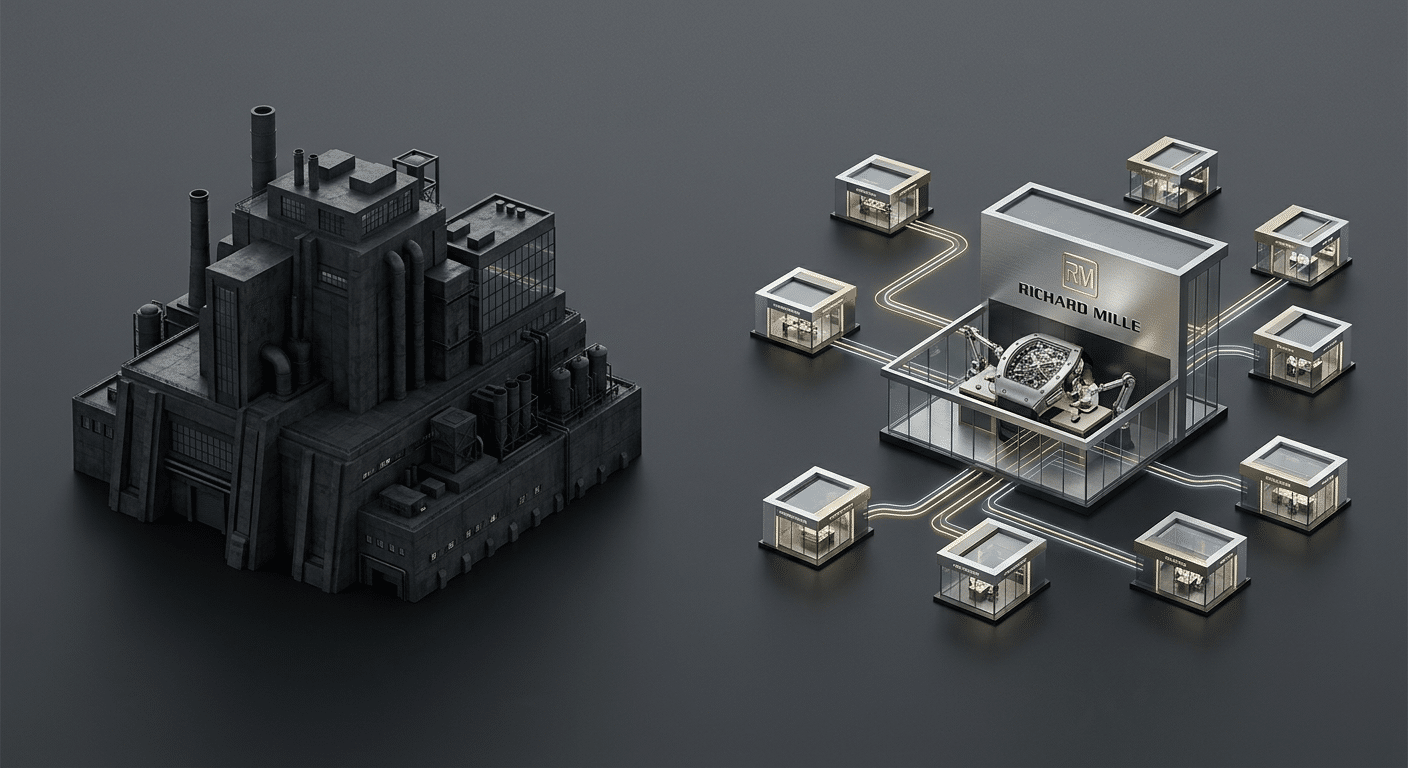
The Assembler vs. The Maker: A Critical Distinction
To navigate this world, you need to separate two distinct roles: the Assembler and the Maker.
The Assembler (what we call the “factory”—ZF, APS, BBR) is the project manager. Its job is to:
- Design the Spec: Reverse-engineer the genuine watch to create a blueprint for suppliers.
- Source Components: Contract with a network of specialized workshops for cases, movements, crystals, and straps.
- Manage Incoming QC: Inspect and reject subpar parts from suppliers.
- Perform Final Assembly: Put the validated components together, regulate the movement, and conduct final testing.
- Handle Sales & Distribution: Market the finished product through dealer networks.
The Makers are the invisible specialists. These are small, often family-run workshops, each a master of one craft:
- Case Houses: Experts in machining forged carbon, ceramic, or titanium.
- Movement Modders: Workshops that take a base Seiko or Chinese automatic movement and skeletonize it, adding custom plates and rotors to mimic an RM calibre.
- Sapphire Crystal Cutters: Firms specializing in shaping and coating complex, curved crystals.
- Strap Manufacturers: Producers of fluoroelastomer or rubber straps.
The assembler’s reputation hinges on its ability to manage this network, not on owning it.
Why the “One Factory” Model Fails for RM Replicas
This networked model isn’t a choice; it’s an economic and technical necessity. Three forces make vertical integration impossible for RM replicas.
1. Punishingly Low Volume. Compared to the tens of thousands of Submariner replicas produced, a top-tier RM model like the 35-02 might see a production run of a few hundred pieces. The capital investment required to bring carbon fiber molding, precision machining, and movement modification all in-house would never be recouped. It’s cheaper and more flexible to outsource.
2. Siloed Specialization. The skills needed are too diverse. Mastering the autoclave process for carbon composites has nothing to do with the delicate art of movement skeletonization. The workshop that perfectly machines a tonneau-shaped ceramic bezel isn’t the same one that can apply flawless anti-reflective coating to a double-curved sapphire crystal. Expertise is hyper-specialized.
3. Supplier Risk Management. If your sole carbon case supplier has a quality slump or gets raided, your entire operation halts. By maintaining relationships with multiple suppliers, an assembler can pivot. This is why a “factory” can disappear from the market for months and return with a subtly different product—they’ve simply found a new workshop to fill a critical component gap.
Expert Authentication Insight
You can see evidence of this multi-source reality in the places nobody polishes. To identify the true origin of a case, ignore the showy exterior. Instead, examine the internal finishing of the case middle and the inside of the caseback, particularly in the channels and around the screw holes. Under a 10x loupe, compare the tooling marks, polishing grit patterns, and how edges are broken. Different machining workshops have signature techniques. A common tell is a beautifully finished exterior paired with crude, almost jagged internal milling—a clear sign the assembler sourced a case from a specialist who prioritizes visible surfaces over hidden ones. This discontinuity is the fingerprint of a supply chain, not a single factory.
The Component Supply Chain: Mapping the Invisible Network
Let’s trace the journey of a single RM 035 replica from concept to wrist. By following each major component to its likely source, the abstract “network” becomes concrete, revealing where the real cost, skill, and risk reside. The assembler is the conductor, but the musicians are scattered across Guangdong province.
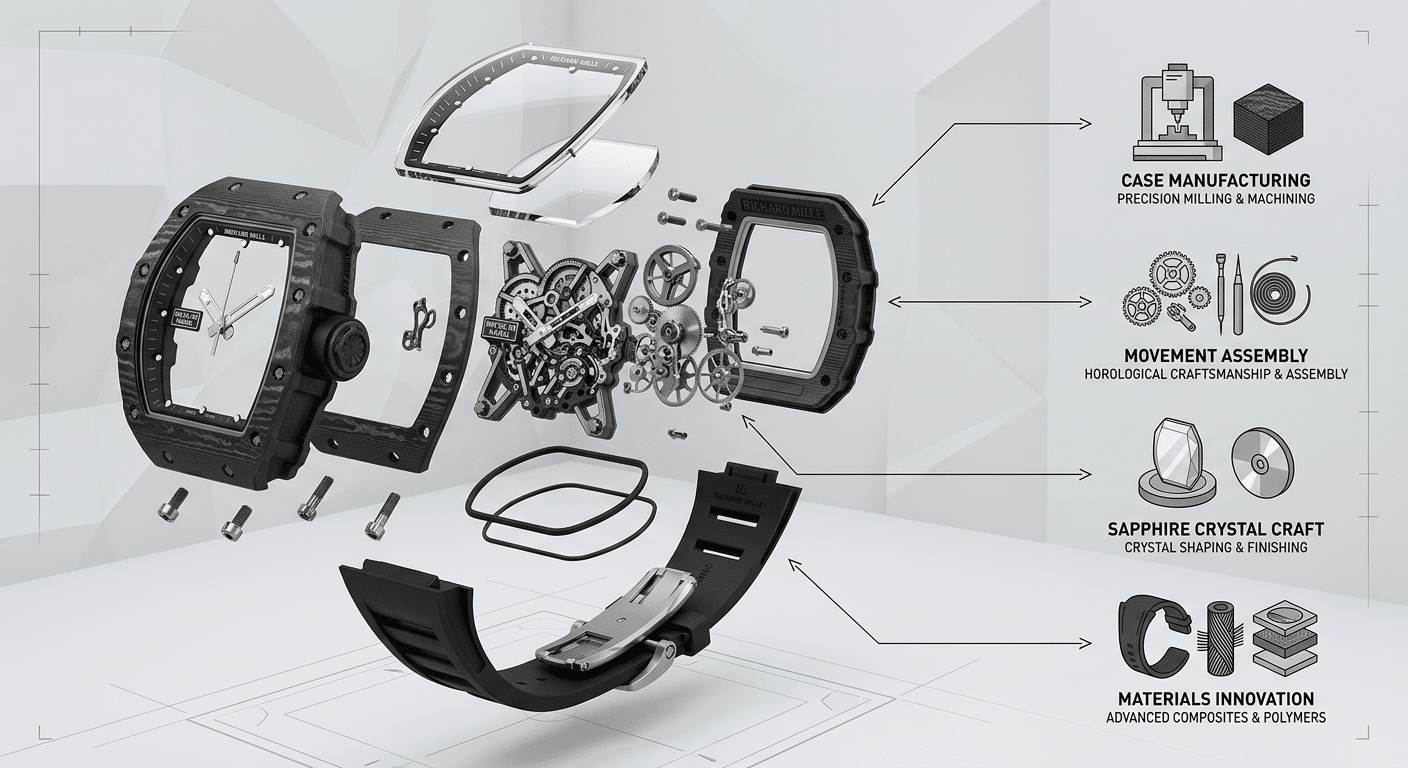
Case & Bezel: The Domain of the Carbon/NTPT Specialists
The case is the watch’s identity, and for RM, it’s also its greatest technical hurdle. The complex tonneau shape in forged carbon or ceramic isn’t made by the assembler. It’s produced by a handful of elite workshops that exist solely to machine advanced composites. These shops purchase pre-impregnated carbon fiber sheets or ceramic sintering powder, and their entire business is CNC milling them into precise forms. They sell these “blanks” or fully finished cases to multiple assemblers—ZF, APS, and a smaller brand might all source cases from the same specialist in a given month, which is a key factor in understanding the production challenges of super clone watches. This is why batch variance happens: the resin mix in the carbon, the alignment of the layers, and the final polishing tolerance can differ between material batches from the same workshop, let alone between different suppliers.
The Heart of the Matter: Base Movement Sourcing and Modification
This is the most fragmented part of the process and the greatest source of functional inconsistency. The journey of the “RMUL2” clone inside your watch involves at least three stops:
- Base Movement Sourcing: The assembler buys a bulk order of base movements, typically a Seiko VK63 (mecha-quartz) or a Chinese automatic like the Hangzhou 6460. This is a commodity purchase.
- Movement Modification: This batch of base movements is sent to a separate, highly specialized modification workshop. Here, artisans—often working with microscopic tools—remove the standard plates, fit custom-skeletonized bridges painted to look like titanium, attach a decorated rotor, and glue in faux rubies. This is painstaking, partially manual work.
- Return and Regulation: The modified movements are sent back to the assembler, who then regulates them (or not, depending on their standards) before casing.
The disconnect between the base movement maker, the modder, and the final assembler is why one watch can have a beautifully decorated movement that runs +5s/day, and another from the same “factory” can have a misaligned bridge and run +45s/day.
Sapphire Crystal & Caseback: Optical and Fitment Experts
The complex, double-curved sapphire crystal on an RM is a piece of optical engineering. It’s not cut by the case maker or the assembler. Dedicated glass houses, using diamond-tipped tools and specialized polishing compounds, produce these crystals. The fit—how perfectly flush it sits with the case, the smoothness of the bevel—is a dance between two independent suppliers: the case workshop and the crystal cutter. A mismatch of even a few hundredths of a millimeter results in a visible lip, a sharp edge, or a distortion at the crystal’s edge. This fitment is a pure test of the assembler’s specification sheet and their willingness to reject parts that don’t mate perfectly.
Expert Authentication Insight
The most reliable way to spot a watch built from a multi-supplier network is to look for fit and finish discontinuities. Under good light, examine the seam where the fixed bezel meets the caseband. Do the surface textures match perfectly? Is the edge-breaking identical? Now, look at the junction where the sapphire crystal meets the case. Run your fingernail across it. Is there a slight step or lip? Is the anti-reflective coating uniformly applied right to the edge, or does it fade inconsistently? These are not signs of a “bad watch” in the traditional sense. They are the direct signature of components from different workshops being brought together for final assembly. In a truly vertically integrated factory, these transitions would be seamless.
Batch Variance Explained: Why Two “ZF” RMs Can Feel Different
This is the question that frustrates buyers: “I bought a ZF RM 055 six months ago, and my friend just got one. Why does mine feel more solid? Why is his carbon pattern sharper?” If you understand the network, the answer is clear. Batch variance isn’t a sign of a factory cutting corners; it’s the inevitable result of that factory managing a fluid, multi-vendor supply chain. The “ZF” name is constant, but the components behind it can—and do—change.
Supplier Swapping: The Primary Cause of Dramatic Change
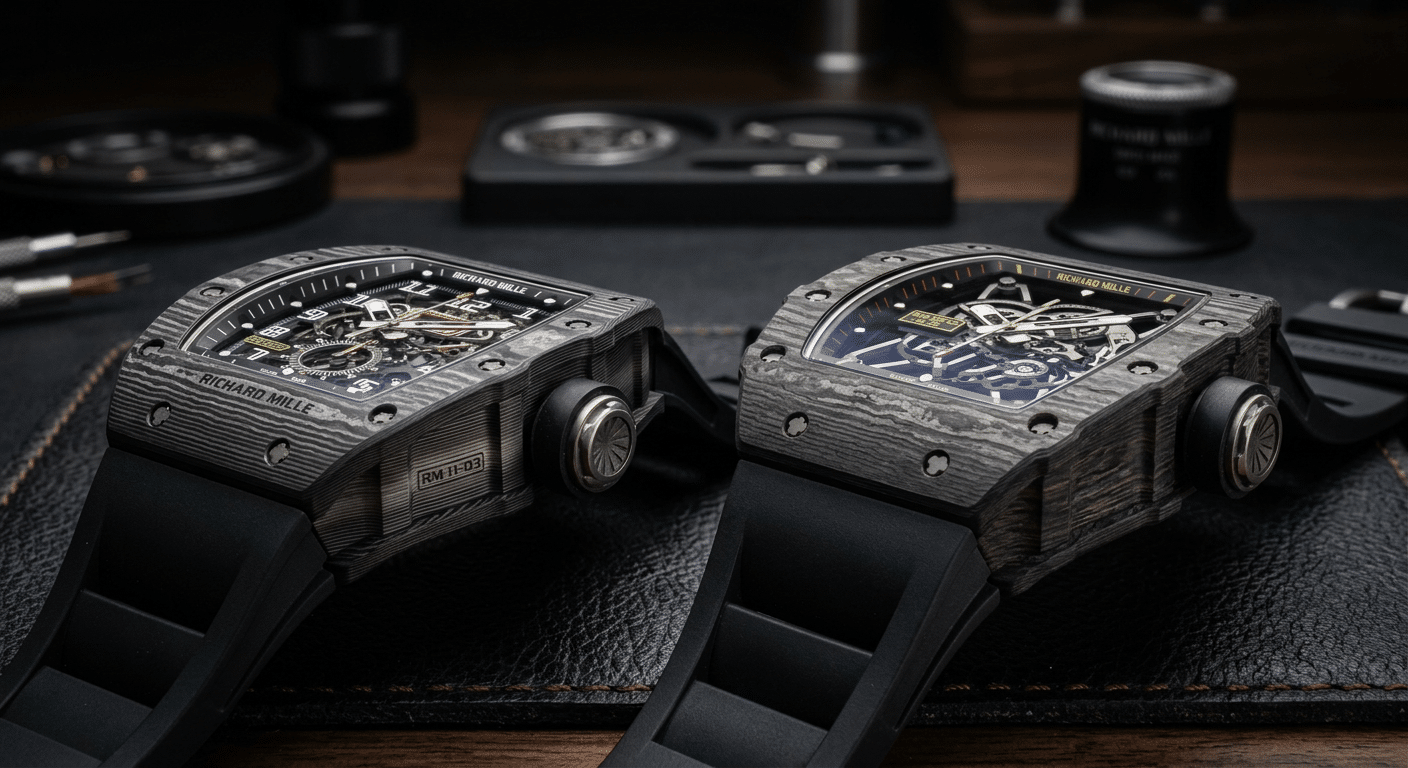
The most significant shifts occur when an assembler changes a key supplier. Imagine “Factory A” has been sourcing its NTPT-style carbon cases from “Workshop X” for a year. Then, Workshop X doubles its price, or its quality control slips, or it gets shut down in a raid. Factory A must pivot to “Workshop Y.” Even if the spec sheet is identical, the output will differ. Workshop Y might use a different source for its carbon pre-preg, a different CNC machine with unique tooling paths, or a different polishing protocol. The result? A new batch of watches that has the same “Factory A” label but a case that feels different in weight, has a subtly altered curvature, or exhibits a new pattern in the carbon weave. The assembler hasn’t gotten worse; it’s simply managing survival in a volatile environment.
Material Batch Inconsistency: The Carbon and Ceramic Lottery
Even with a stable supplier relationship, the raw materials themselves vary. Forged carbon is a composite—carbon fiber strands in a resin matrix. The ratio, the alignment of the strands, the curing temperature, and the pressure can fluctuate between production runs from the material supplier. This leads to what collectors call the “carbon lottery.” One batch might have a deep, multi-dimensional, wood-grain-like pattern. The next might look flatter or have more pronounced white streaks. The same applies to ceramic sintered powder. These variations are inherent to the material science and are outside the assembler’s direct control. They buy the best batch available at the time.
Movement Modder Variability: The Human Touch in Decoration
While the base movement is a machine-made commodity, its transformation into an RM look-alike involves significant handwork. The artisans applying the perlage, brushing the fake bridges, painting the lettering, and plating the components are human. Differences in plating bath concentration, brush stroke pressure, or glue dot size can occur from one day to the next, let alone between different modders hired by the same assembler. This is why the color tone of the “titanium” plating might shift from grayish to brownish, or the rotor noise might be louder in one batch—the bearing was seated slightly differently during assembly by a different technician. The functional heart may be the same, but its presentation and minor acoustics are subject to craft variation.
Expert Authentication Insight
To scientifically identify batch variance within the same factory label, move beyond the visual and into the measurable. First, weight. Using a precision scale (0.1g accuracy), weigh the watch head (without strap). A variance of more than 1-2 grams on a sub-100g watch is significant and strongly points to a different material density from a new case supplier or batch. Second, acoustics. In a silent room, record the sound of the watch’s rotor spinning freely and its tick. Compare it to a known sample. A distinctly different pitch, volume, or “grind” in the rotor sound indicates a change in the bearing assembly, rotor weight, or even the lubricant used by the movement modder. These objective metrics cut through subjective “feel” and point directly to a change in the component supply chain.
The Role of the Final Assembler: QC, Specification, and “The Recipe”
Understanding that an RM replica is a multi-supplier product isn’t a reason to dismiss the assembler’s importance. It’s the reason to redefine what “factory” quality actually means. In this networked model, the assembler isn’t the maker of parts; they are the chef, the conductor, and the final inspector. Their value isn’t in vertical integration, but in their ability to manage a chaotic supply chain into a coherent product. This shifts the critical question from “Which factory is best?” to “What does this assembler’s process actually guarantee?”
Incoming Quality Control: The First Filter
A top-tier assembler like APS or ZF operates a rigorous gatekeeping function. Their first job is to reject subpar components before they ever reach the assembly bench. We’re talking about rejection rates that can hit 20-30% on incoming cases alone, often for flaws the case supplier deemed acceptable: microscopic pitting in the carbon, a slightly off-angle lug, or internal machining marks that would be invisible when assembled but speak to poor craftsmanship. They will regulate the modified Dandong movement on a timegrapher before it’s cased, ensuring it meets a performance threshold. They’ll inspect each sapphire crystal for optical distortion and each rubber strap for molding defects. A budget assembler, by contrast, functions as a parts bin—taking whatever the network delivers and slapping it together. The difference isn’t in the parts list; it’s in the willingness to say “no.”
Assembly Tolerances and Final Finishing
This is where the theoretical watch becomes a physical object. The assembler’s skill in final construction dictates water resistance, acoustic quality, and tactile feel. The precision of the caseback threading, the correct seating of the caseback gasket, the even application of thread locker on screws, and the flawless alignment of the dial and hands—these are all final-stage operations. A skilled assembler ensures the crown action is smooth, the pushers (if present) have a crisp click, and the bezel sits flush. Some will perform a final ultrasonic clean and light polish to remove handling marks. This stage turns a collection of good components into a good watch, or reveals that the components weren’t so good after all.
The “Spec”: Defining the Target for the Network
The assembler’s most powerful, yet invisible, tool is the specification sheet. This “recipe” is what they provide to their case maker, movement modder, and crystal supplier. A detailed spec includes not just dimensions, but finishing standards (e.g., “vertical brushing on caseband tops, mirror polish on angled bevels”), material grades, plating thickness, and functional tolerances. For a comprehensive understanding of these critical specifications in the context of high-end replicas, this detailed Richard Mille super clone guide provides essential insights. A vague spec leads to the wild batch variances we see. A precise, enforced spec is what allows an assembler to maintain consistency across different supplier batches. When you buy from a reputable assembler, you’re not just buying their logo; you’re buying their ability to communicate and enforce a standard across a fragmented, anonymous network.
Expert Authentication Insight
Physical diagnostic: To assess an assembler’s quality, become obsessed with the screws. On an RM, with its numerous visible and functional screws, they are the fingerprint of final assembly. Under a 10x loupe, examine the screw slots. Are they clean, centered, and free of burrs or tool marks? Using a properly sized screwdriver, gently test the torque on multiple screws. Do they all have a similar, firm resistance, or do some feel loose while others are seized? Sloppy, stripped, or unevenly torqued screws are a direct and undeniable failure of final assembly QC. They indicate an assembler who rushed the job, used poor tools, or employed untrained labor. It’s the clearest sign you’re holding the output of a network that nobody bothered to properly manage.
How to Buy Smart in a Networked Production Model
Armed with the knowledge that you’re evaluating a supply chain’s output, not a single factory’s product, your buying strategy must evolve. The old mantra of “just get the ZF” is obsolete. Your new goal is to audit the specific instance of the watch you’re being offered and assess the assembler’s managerial reputation. This is a more involved, but far more effective, path to a good purchase.
Shift Your Question from “Which Factory?” to “What’s in This Batch?”
Your first conversation with a trusted dealer should change. Instead of asking “Do you have the ZF RM 035?”, you now ask: “Can you show me the actual carbon pattern and movement decoration for the RM 035 you have in stock right now?” Follow up with: “How is the rotor noise on this batch?” and “Have there been any changes to the case or movement supplier for this model recently?” This line of questioning forces the dealer to engage with batch-specific reality, not just factory marketing. A knowledgeable dealer who has inspected their stock will have answers; a drop-shipper will not.
QC Photos Are Your Supply Chain Audit
Quality Control photos are no longer just about checking for scratches. They are your remote supply chain inspection tool. Examine them with a new lens:
- Fit and Finish Discontinuities: Zoom in on where the crystal meets the case, and where the caseback meets the case middle. Look for uneven gaps, misaligned bevels, or differing surface textures. This reveals poor coordination between component suppliers.
- Movement Decoration Consistency: Are the fake bridges evenly plated? Is the perlage pattern uniform? Do the engraved markings have consistent depth? Inconsistency here points to a low-tier modification workshop.
- Material Authenticity: Scrutinize the carbon weave. Does it look like layered composite, or a printed pattern? Are there overly bright, unnatural white streaks? This can reveal a downgrade in material sourcing.
Reject watches based on these specific, component-level flaws, not a vague “feeling.”
Prioritize the Assembler’s Reputation for Consistency, Not Hype
A new “factory” name might produce one stellar batch with cherry-picked components to generate hype. The real test is consistency over 18-24 months and across multiple models. An assembler like ZF, despite its complexities, has a long track record. You can find historical data on their batches, supplier changes, and how they addressed problems. This reputation for managing consistency—or failing to—is more valuable than any single perfect sample. Look for community feedback that discusses the assembler’s “process stability,” not just their “best version.”
Expert Authentication Insight
Physical diagnostic: Implement a pre-acceptance checklist rooted in network theory:
- Weight Check: Before the watch ships, ask the dealer for its exact weight in grams (without strap is ideal). Compare this to known good examples from forums. A deviation of more than 2-3 grams on a lightweight RM suggests a different material batch or case supplier.
- Timegrapher Numbers in Context: Don’t just look for a perfect dial-up reading of +2 s/day. Request readings in multiple positions (dial up, crown down, crown left, etc.). Consistency is key. A wildly varying amplitude (e.g., 270° in one position, 220° in another) strongly suggests a poorly modified or assembled movement from a low-tier workshop.
- Macro Shot of Caseback Engravings: The laser engravings (model number, “SWISS MADE”) are typically applied by the final assembler. Request a macro shot. Crisp, deep, and clean engraving indicates better final-stage equipment and care, serving as a proxy for the assembler’s overall attention to detail.
The Future of RM Replicas: Towards Greater Integration or Fragmentation?
Where is this decentralized model headed? The forces pulling in opposite directions—toward integration for quality and fragmentation for cost—will define the next generation of replicas. Your future buying experience depends on which path wins.
Scenario 1: Vertical Integration for Top-Tier Models
The pressure to justify $1,000+ price tags for “super clones” may push leading assemblers like APS or the ZF/Umi group toward partial vertical integration. To guarantee the extreme tolerances needed for ultra-thin models like the RM 67-02 or perfect the carbon layering, an assembler might bring key processes—like final case machining or movement decoration—in-house. This would create a true “factory” for specific flagship models, dramatically reducing batch variance and component mismatch. The trade-off is clear: higher costs, less model variety, and potentially longer development times. This path caters to the high-end collector willing to pay a premium for guaranteed coherence.
Scenario 2: Increased Fragmentation and “White Label” Assemblers
The opposite, and perhaps more likely, trajectory is further fragmentation. As demand grows, more entrepreneurs will enter as “assemblers,” competing purely on price. They will source from the cheapest available tier of the existing component network—lower-grade carbon, less precise case machining, noisier movement modifications. The “factory” name becomes a marketing label slapped on a generic product. We may see the rise of “white label” assemblers, where the same physical watch from the same network of suppliers is sold under a dozen different names on different dealer sites. This race to the bottom increases choice and lowers short-term cost but makes consistency, quality, and accountability virtually nonexistent.
Expert Authentication Insight
Physical diagnostic: To track these industry shifts in real-time, become a forensic student of movement modification patterns. The community of workshops that skeletonize and decorate base movements is small. By documenting and comparing the specific design of fake bridges, the font and depth of engraving, the color tone of the plating, and the style of the faux jewels across different “factory” watches and batches, you can map the underground supplier network. A sudden, wholesale change in the movement decoration style of a “ZF” watch—like a new bridge shape or a different plating color—is direct, physical evidence that ZF has switched its movement modification workshop. This concrete data point is how you peer behind the marketing curtain and see the network evolving.
The Reframed Buyer’s Mandate
Forget being a brand loyalist. In the world of Richard Mille replicas, the informed buyer is a supply chain analyst. Your task is no longer to find the magic “factory” name but to interrogate the specific product in front of you and evaluate the reputation of the network manager behind it. Use the tools of weight, sound, macro photography, and precise questioning. Judge assemblers on their long-term consistency in managing their web of suppliers, not their hype for one perfect batch. This complexity, once understood, is your greatest advantage. It replaces blind faith with informed scrutiny. You’re not buying from a factory; you’re buying the output of a network. Your job is to learn how to evaluate the network’s work.