
Understanding the Customs Gauntlet: Why Replica Watches Are Targeted
You’ve just ordered a coveted VS/XF Panerai super clone, but as soon as you hit ‘confirm,’ the real anxiety begins: customs. Will it make it? What if it’s seized? This isn’t just about bad luck; it’s about navigating a complex system designed to intercept illicit goods. While no shipping method is 100% foolproof, understanding why replica watches attract scrutiny is the first step toward informed decisions. For comprehensive guidance on replica buying strategies, this section clarifies the core reasons these parcels become targets, separating actionable knowledge from common anxieties.
The Legal Landscape: IP Enforcement vs. Import Duties
When a replica watch parcel enters a country, it faces two primary legal hurdles: import duties and intellectual property (IP) enforcement. Most international trade agreements, like TRIPS (Trade-Related Aspects of Intellectual Property Rights), obligate member states to enforce IP rights at their borders. For countries like the U.S., Customs and Border Protection (CBP) regulations classify replica goods as counterfeit items, which are explicitly prohibited from entry. This is distinct from simply undeclared goods or items that owe import duties.
The distinction is critical. If customs identifies a package as merely undervalued to avoid duties, the typical outcome might be a hold for re-assessment, payment of the correct duties, and potentially a fine. It’s an economic issue. However, if a parcel is identified as containing counterfeit goods, it becomes an IP infringement issue. The item is subject to seizure and destruction, regardless of value, and there’s usually no option to pay a fee to release it. The penalties are far more severe for IP violations, reflecting the global effort to combat counterfeiting. For a buyer, this means your replica Panerai isn’t just a watch; it’s a potential legal liability at the border.
Profiling the “Risky” Parcel: What Customs Scanners Look For
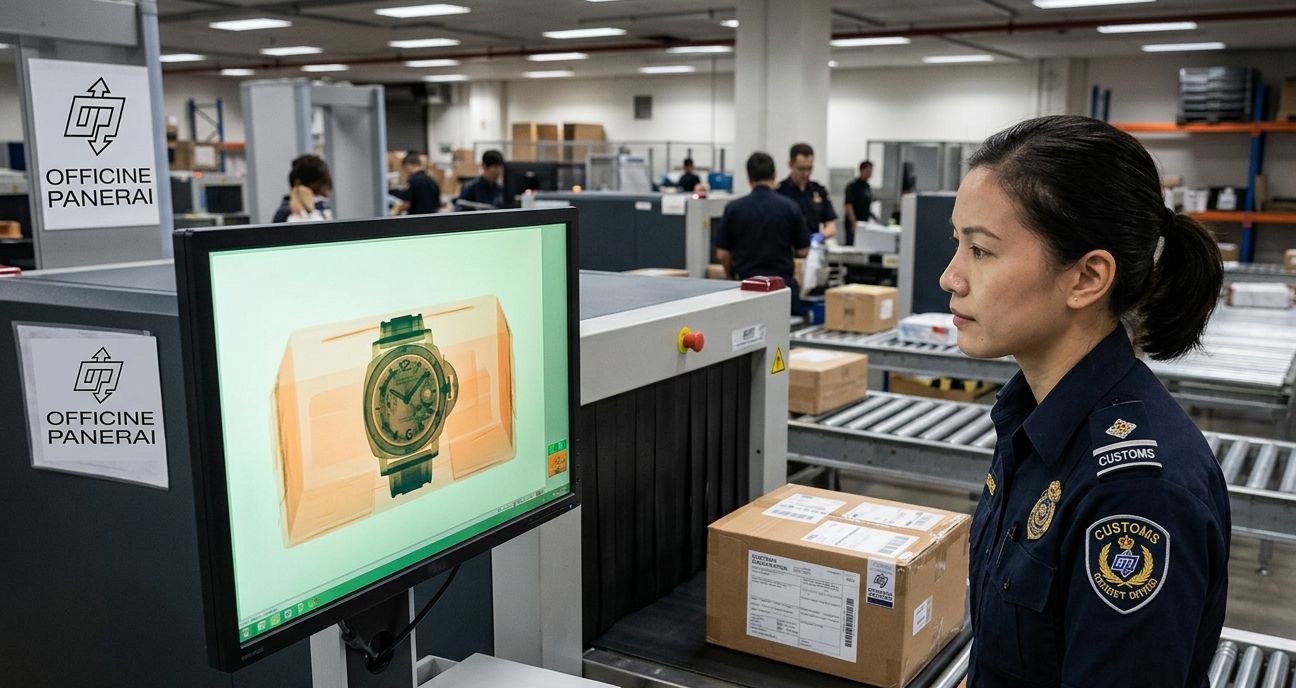
Customs agencies aren’t randomly picking packages. They employ sophisticated technologies and methodologies to profile “risky” parcels. X-ray machines provide detailed images of contents, revealing shapes and materials that don’t match declared descriptions. Manifest analysis involves cross-referencing sender, recipient, declared contents, and value against known patterns of illicit trade. Increasingly, AI and machine learning algorithms are used to identify suspicious patterns based on huge datasets of past seizures. These systems look for inconsistencies.
For replica watches, specific indicators can trigger a closer look: a package originating from a known manufacturing hub in China, declared as a “fashion accessory” or “metal craft” but weighing significantly more than a typical accessory, or having dimensions consistent with a watch box. The declared value, if unusually low for a luxury item, also raises a red flag. Customs also tracks sender history; if a sender address has been associated with previous seizures, all subsequent parcels from that origin face heightened scrutiny. It’s a game of statistical probability, where your package’s profile is constantly being assessed against a vast database of what’s “normal” and what’s “suspicious.”
The “Super Clone” Factor: Increased Scrutiny for High-Quality Replicas
The very sophistication that makes VS/XF Panerai super clones so desirable paradoxically increases their risk profile. These top-tier replicas are designed to replicate specific Panerai models with astonishing fidelity, often matching dimensions, weight, and even movement aesthetics closely. While this is great for the buyer’s wrist, it means that if a super clone is flagged for physical inspection, its quality makes it easier for a customs officer to definitively identify it as a counterfeit.
A poorly made replica might be dismissed as a cheap knock-off, but a high-quality super clone, with its accurate case, dial, and even clone movement, presents a clear and unambiguous case of IP infringement. The higher the perceived value and authenticity of the replica, the more severe the IP infringement in the eyes of customs. This doesn’t mean a super clone is more likely to be flagged* by automated systems (which primarily look for generic suspicious patterns), but once flagged, it is far more likely to be *seized* rather than merely delayed or re-routed.
Expert Authentication Insight
Interpreting a customs hold notification can be confusing. If your tracking status says “Inbound into Customs” or “Held by Customs,” it doesn’t immediately spell disaster. A routine check might be for duty assessment, especially if the declared value seems low but not egregiously so. In such cases, you might receive a letter requesting proof of purchase or payment of duties. A “return-to-sender” status often indicates incorrect documentation, a prohibited item that isn’t counterfeit (like certain food products), or an inability to contact the recipient for duty payment. However, if you receive an official “seizure letter” (e.g., CBP Form 6051D in the U.S.), or if the tracking clearly states “Seized by Customs,” that’s the definitive sign of an IP infringement flag. At that point, the item is almost certainly gone, and attempting to claim it is generally ill-advised.
The Declared Value Dilemma: Strategy, Risk, and Reality
One of the most common pieces of advice in the replica watch community revolves around declared value. It’s a double-edged sword: lower declarations aim to reduce scrutiny and duties, but they come with their own set of risks. Navigating this dilemma requires understanding the actual mechanics of customs declarations and their downstream implications.
Lowering the Bar: Strategic Declared Value and Item Descriptions
The practice of under-declaring the value of a replica watch and using generic item descriptions is a cornerstone of “stealth shipping.” Trusted Dealers (TDs) typically declare values ranging from $50 to $150 for a super clone Panerai that might retail for $400-$600. The item description is often vague, such as “fashion accessory,” “metal craft,” “machinery components,” or even “gift.” The goal is twofold: first, to minimize any potential import duties, and second, to make the package appear less interesting to automated customs systems looking for high-value items.
A package declared as a $50 “fashion accessory” is statistically less likely to trigger a manual inspection than one declared as a $500 “luxury watch.” This strategy plays on the sheer volume of parcels processed daily by customs. By blending in with low-value, innocuous shipments, the replica watch parcel aims to slip through undetected. However, customs algorithms are constantly evolving, and overly generic or consistently low declarations from certain origins can themselves become a red flag over time.
The Insurance Paradox: Declared Value vs. Actual Value for Seized Goods
While a low declared value might help a parcel clear customs, it creates a significant problem if the item is seized or lost. Many TDs offer some form of shipping insurance or a reship guarantee. However, the compensation or reshipment terms are often tied to the declared* value, not the actual price you paid. If your $500 Panerai super clone is declared at $70 and then seized, your recourse might be limited to a refund or reshipment based on that $70 declared value, or the TD’s specific guarantee policy. This is the insurance paradox: the very tactic used to reduce customs risk can severely limit your financial recovery in the event of a loss.
It’s crucial to clarify your TD’s policy on seizures and losses before* ordering. Does their “seizure guarantee” mean a full reshipment, a partial refund, or is it contingent on the declared value? Understanding this trade-off is vital for managing your expectations and financial exposure. A low declared value is a calculated risk that sacrifices potential recovery for a higher chance of initial clearance.
HS Codes & Tariffs: Avoiding Red Flags Through Classification
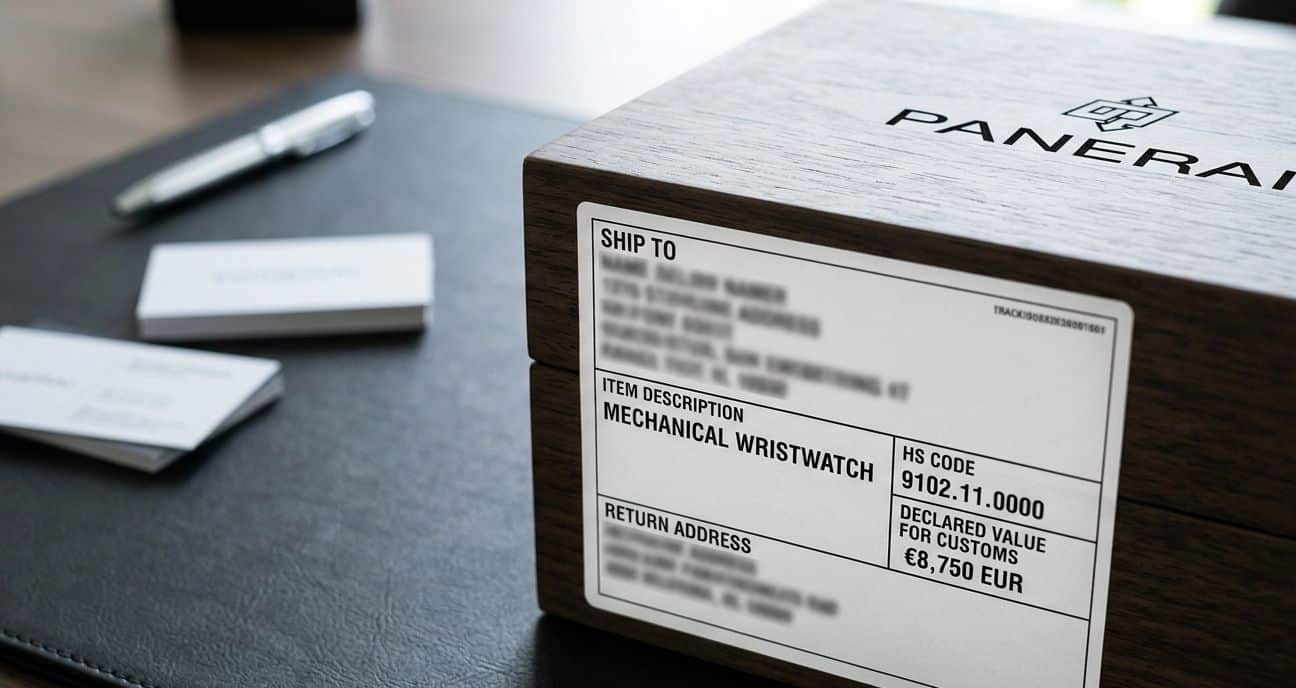
Beyond the declared value and item description, Harmonized System (HS) codes play a role in customs processing. HS codes are standardized numerical classifications for traded products, used worldwide to categorize goods and assess tariffs. While TDs usually handle the HS code assignment, an inappropriate or inconsistent code can trigger manual review. For instance, using an HS code for “other watches” (likely to have higher duties and scrutiny) versus a more generic code for “jewelry” or “metal articles” (which might have lower duties and less scrutiny) can impact a parcel’s journey.
The goal is to use an HS code that aligns believably with the generic item description provided. An HS code for “electronic components” for a package described as a “fashion accessory” would be an obvious inconsistency. While buyers rarely have direct control over the HS code, understanding its importance helps in evaluating a TD’s shipping professionalism. A TD that consistently uses logical and low-risk HS codes, even for generic descriptions, demonstrates a better grasp of customs regulations and risk mitigation.
Expert Authentication Insight
When your TD provides tracking information, they should also be able to confirm the declared value and item description used on the customs manifest. Take a moment to verify this information. Does the declared value seem reasonable for the generic description? For example, a “fashion accessory” declared at $100 might be less suspicious than one declared at $10. Also, consider the consistency. If the TD consistently uses the same generic description and declared value for all watch shipments, it might eventually stand out to customs’ pattern recognition systems. Beyond shipping declarations, a thorough Panerai super clone QC checklist is crucial for verifying product quality. Look for TDs who show a degree of variation or adaptability in their declarations, suggesting a more dynamic approach to risk management rather than a rigid, easily detectable pattern.
Triangle Shipping & Stealth Tactics: The Logistics Playbook
For buyers of high-value replicas like Panerai super clones, direct shipping from China carries inherent risks. This is where “triangle shipping” and other stealth tactics come into play, attempting to obscure the origin and reduce direct customs scrutiny. While not foolproof, these strategies are a key part of the logistics playbook for many TDs.
Triangle Shipping Explained: How It Works and Why It’s Used
Triangle shipping is a multi-leg logistics process designed to obfuscate the true origin of a package, typically to bypass direct customs scrutiny from a high-risk country (like China) to a final destination (like the U.S. or Europe). Here’s how it generally works: The replica watch is first shipped from the factory in China to an intermediary country or hub, often in a region with less stringent customs enforcement or different trade agreements, such as Dubai or certain EU countries. From this intermediary location, the package is then relabeled and shipped to the final buyer’s address. The key is that the final shipping label will list the intermediary country as the origin, effectively “resetting” the customs profile.
The primary reason for using this method is to avoid the heightened scrutiny that parcels directly from China often receive, especially those containing items that could be counterfeits. By presenting a more “trusted” or lower-risk origin country to the final destination customs, the package aims to appear less suspicious. For Panerai super clones, which originate in China, this method attempts to add a layer of plausible deniability regarding the true source of the goods, thereby theoretically reducing the probability of a customs flag.
Carrier Choice & Route Selection: Premium vs. Standard Shipping
The choice of shipping carrier significantly impacts the speed, cost, and risk profile of a replica watch shipment. Different carriers have varying levels of customs compliance, scanning technology, and brokerage services. Premium carriers like DHL and FedEx are known for their speed and advanced tracking, but they also tend to be more stringent with customs declarations and often work closely with customs agencies. This can mean faster processing for legitimate goods but higher scrutiny for anything suspicious. They also typically charge higher brokerage fees if duties are assessed.
Standard postal services (e.g., EMS, China Post, USPS) are often slower and offer less detailed tracking, but they sometimes process a higher volume of packages with less individual scrutiny, especially for lower-value items. They may also have different relationships with destination customs. Some TDs use specific, less-known regional carriers or freight forwarders that specialize in high-risk shipments, leveraging their specific knowledge of customs loopholes or less-scrutinized routes. The “best” carrier isn’t universal; it depends on the destination country’s customs environment and the TD’s specific experience and success rates with different routes. What works for a U.S. bound parcel might not be effective for a European one.
Discreet Packaging & “Gift” Designations: Effectiveness and Pitfalls
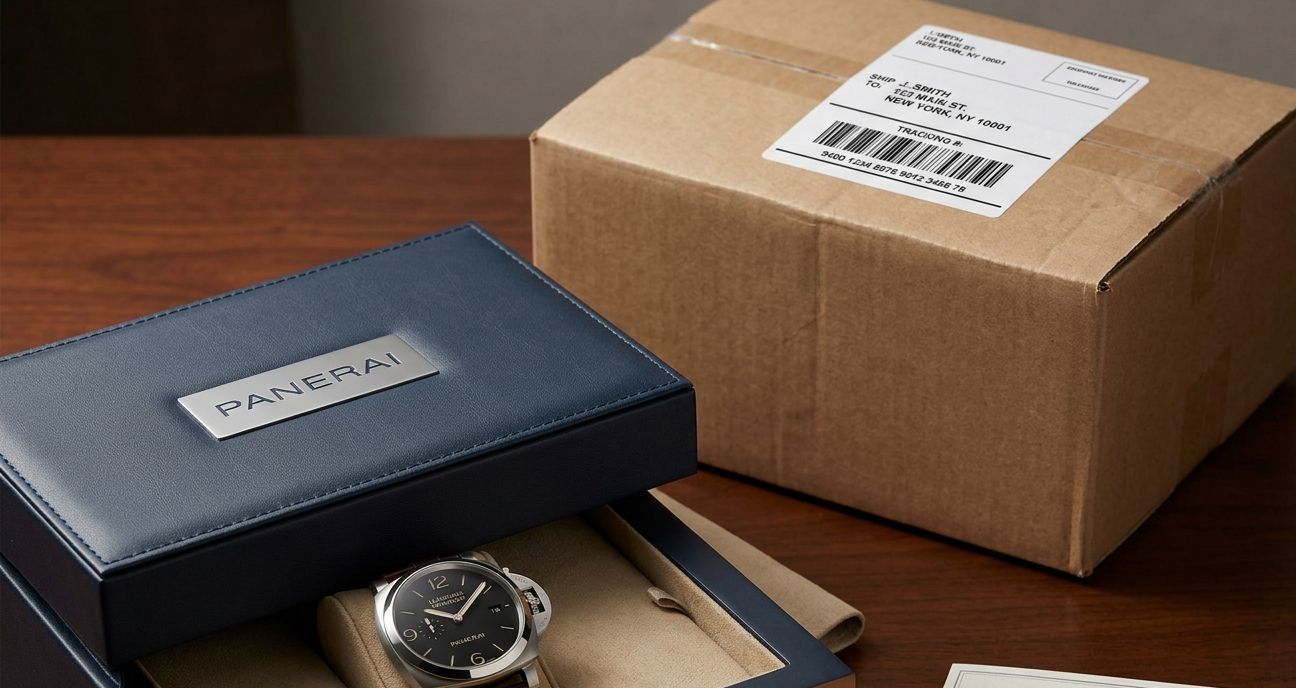
Beyond declared value and triangle shipping, TDs employ various discreet packaging techniques. This often involves using plain, unassuming outer packaging, avoiding any branding that might hint at luxury goods, and often including false sender names or addresses. The “gift” designation is another common tactic, implying that the item is a non-commercial shipment and therefore might be subject to less scrutiny or lower duties.
The effectiveness of these tactics is debatable and often marginal. While a plain box might initially blend in, sophisticated customs scanners and profiling algorithms can still detect the contents. A “gift” designation, if applied to a package with a suspicious weight, origin, or content profile, can actually attract more* scrutiny, as it suggests an attempt to circumvent regulations. Customs officers are well aware of these common ploys. The marginal benefit of these tactics must be weighed against the risk of appearing deceptive, which can elevate a package from a routine check to a targeted inspection. It’s about reducing obvious red flags, not eliminating detection entirely.
Expert Authentication Insight
If your TD uses triangle shipping, you should expect to receive at least two different tracking numbers, possibly more. The first will track the package from China to the intermediary country, and the second will track it from the intermediary country to your final destination. Carefully monitor both. Verify that the origin country on the second tracking number indeed reflects the intermediary country, and not China. Also, pay attention to transit times. If a package from a supposed EU origin takes an unusually long time to reach you, it might indicate a different, less direct route or a longer-than-expected stay in the intermediary hub, potentially increasing its exposure time to customs inspection at various points.
Package Profile & Order Strategy: Minimizing Exposure
Navigating customs with a replica watch often feels like a game of chance, but buyers have more influence than they realize. Optimizing the physical characteristics of your package—its size, weight, and contents—can significantly alter its profile in the eyes of customs agents. This isn’t about eliminating risk, but about reducing the statistical probability of your parcel being flagged for manual inspection.
The “One Watch Rule”: Order Size and Seizure Probability
It’s a common temptation: you’re already paying for shipping, so why not add a second (or third) Panerai replica to the order? Resist this urge. The “one watch rule” is a cornerstone of prudent replica shipping for a simple reason: customs algorithms and human inspectors are trained to look for anomalies. A larger, heavier package, particularly one declared as containing multiple “luxury” items (even if generically described), immediately raises red flags. It suggests commercial intent or a higher-value shipment, both of which trigger increased scrutiny.
Think of it from a customs officer’s perspective: a small, lightweight package declared as a “fashion accessory” is less likely to warrant a detailed inspection than a bulkier box containing what appears to be several high-value goods. The statistical likelihood of a single-item parcel being pulled for inspection is considerably lower than that of a multi-item shipment. While shipping multiple items might save a few dollars on shipping per watch, it exponentially increases your seizure probability and potential financial loss.
Stealth Packaging Innovations: What Works and What Doesn’t
Trusted Dealers (TDs) have developed various “stealth” packaging techniques over the years, aiming to obscure the true nature of the contents. These can include disassembling watches, separating movements, or including non-watch items to create a more innocuous package profile. For example, a watch might be shipped without its bracelet, or with the movement removed and individually wrapped. Some parcels might even include a cheap pair of sunglasses or a small toy.
The actual impact of these innovations on evading detection is mixed. While a disassembled watch might* look less like a complete timepiece on an X-ray, it also introduces complexity and potential risk. The watch could be damaged during transit, or during reassembly if the buyer isn’t experienced. For super clone Panerais, which are often delicate instruments, this added handling risk can be significant. Moreover, customs technology is constantly evolving; AI pattern recognition can often piece together seemingly disparate components. The marginal benefit of these techniques in bypassing detection must be weighed against the increased potential for damage or the hassle of reassembly.
Seasonal & Event-Based Risk: Timing Your Order
Customs operations are not static; they fluctuate with global shipping volumes and enforcement priorities. Timing your order can play a subtle but significant role. Peak shipping seasons, such as the holiday rush (November-December) or major sales events (e.g., Black Friday, Chinese New Year), present a double-edged sword.
- Increased Workload, Less Scrutiny: In some cases, the sheer volume of parcels during these periods can overwhelm customs facilities, leading to faster processing and potentially less granular scrutiny for individual packages. Agents might prioritize high-value commercial shipments or known high-risk routes.
- Increased Volume, Higher Scrutiny: Conversely, increased volume can also lead to more staffing and a heightened sense of vigilance, especially if enforcement agencies are aware of seasonal surges in counterfeit goods. Longer delays are almost guaranteed, and the probability of a random inspection can increase simply due to the higher number of packages flowing through the system.
Strategic buyers might consider ordering during off-peak times, typically early spring or late summer, when shipping volumes are lower and customs operations are more routine. This doesn’t guarantee success, but referencing a thorough Panerai replica buying guide removes one variable from the complex equation of customs risk.
Expert Authentication Insight
When your package is in transit, pay close attention to the tracking information provided by your Trusted Dealer. Compare the actual package weight and dimensions listed in the tracking data against the declared contents and what you expect for a single Panerai replica. A significant discrepancy—for instance, a package described as containing a “metal craft” weighing 2kg when a single Panerai is typically around 160-170g—could indicate either a poorly declared value/item description by the sender or internal packaging issues that might attract unwanted attention from customs. This data point offers a small window into how your parcel is being presented to authorities.
The Seizure Scenario: Outcomes, Communication, and Response
Despite all precautions, sometimes a replica watch parcel gets flagged. Understanding the potential outcomes, how to interpret official communications, and the appropriate response is crucial for managing expectations and minimizing further complications.
Delay, Return, or Seizure: Understanding the Outcomes
When a package encounters customs issues, there are generally three main outcomes:
- Temporary Delay/Hold: This is the most common and often the least severe outcome. Your package might be held for routine inspection, to verify documentation, or for duty and tax assessment. You might receive a notification requesting additional information or payment. In many cases, after a few days or weeks, the package is released and continues its journey. This is a common part of international shipping, even for legitimate goods.
- Return-to-Sender: In this scenario, customs deems the package unsuitable for import but doesn’t confiscate it. This can happen due to incorrect documentation, prohibited items (though less common for watches themselves), or if the sender initiated a recall. The package is sent back to the origin country. While disappointing, it means you haven’t lost the item outright, and the TD may be able to reship or offer a refund upon its return.
- Full Seizure: This is the most serious outcome. Customs identifies the item as counterfeit or illegal to import, confiscates it, and destroys it. This usually occurs when the item is clearly identified as a replica of a protected brand. Once seized, the item is gone, and recovery is virtually impossible.
The Seizure Letter: What It Means and What Not to Do
If your package is seized, you might eventually receive an official notification, often referred to as a “seizure letter.” In the U.S., this could be a CBP Form 6051D. This letter will typically inform you that your goods have been seized due to intellectual property infringement or other violations. It might outline your rights, including the option to petition for remission or mitigation of the forfeiture, or to pursue legal action.
Here’s the critical advice: Do not engage directly with customs to claim counterfeit goods. Attempting to reclaim a seized replica watch is akin to admitting guilt and can have severe legal implications. While purchasing a replica for personal use is generally not prosecuted as a federal crime, actively claiming a seized counterfeit item can escalate your personal legal exposure. It’s best to consider the item lost and rely on your Trusted Dealer’s policies for recourse.
Your Trusted Dealer (TD) plays a crucial role in the event of customs issues. Most reputable TDs offer some form of “customs guarantee,” which typically means they will reship the item once (or sometimes twice) if it is seized, or offer a refund if reshipping isn’t feasible. However, these policies vary significantly:
- Some TDs offer a full one-time reship if a package is seized.
- Others might offer a partial refund or require you to pay a percentage for a reship.
- Some guarantees only cover certain shipping methods or destination countries.
It is paramount to understand your TD’s specific policies on reshipping or refunds for seized items before* you place an order. Clear, documented communication with your TD is essential throughout the process. Provide them with any customs notifications you receive, and follow their guidance. Do not expect them to know about a seizure before you do, as customs typically notifies the recipient first.
Expert Authentication Insight
Should you receive a seizure notification, it’s wise to verify its authenticity. Scammers sometimes send fake customs letters to extract money. Cross-reference the sender details, reference numbers, and official contact information provided in the letter with publicly available government sources. For U.S. Customs and Border Protection (CBP), check their official website for contact details and information on seizure processes. An authentic letter will typically come from a legitimate government agency and provide verifiable contact information, not a generic email address or a phone number that asks for immediate payment via unusual methods.
Beyond the Transaction: Long-Term Risk Management & Buyer Prudence
Engaging with the replica watch market is inherently a calculated risk. True prudence extends beyond a single transaction to embrace a long-term strategy of informed decision-making, realistic expectations, and responsible engagement.
The “Cost of Doing Business”: Accepting Inherent Risk
The reality is that customs risk is an unavoidable component of the replica watch market. No matter how sophisticated the shipping methods or how reputable the TD, there’s always a non-zero chance of a package being seized. For seasoned collectors, occasional losses are often framed as an integrated “cost of doing business,” rather than a preventable failure. This perspective helps manage the emotional and financial impact when a shipment doesn’t make it through. Instead of viewing each seizure as a personal catastrophe, it’s understood as part of the market’s operational landscape. Budgeting for this possibility, perhaps by setting aside a small percentage of your watch fund, can help absorb these inevitable losses without undue stress.
Building a Relationship: The Value of a Reputable TD
The choice of your Trusted Dealer (TD) is arguably the most critical decision in managing customs risk. A TD’s experience with international shipping logistics, their network of reliable brokers, and their established post-seizure policies (like a one-time reship guarantee) are invaluable. Reputable TDs have refined their shipping strategies over years, understanding which routes and carriers perform best for different destinations. They also have a vested interest in customer satisfaction and repeat business, making them more likely to honor their guarantees. Before committing to a purchase, thoroughly research your prospective TD. Look beyond just price; investigate their reputation for customer service, communication, and, crucially, their track record in resolving customs issues.
The “Walk Away” Standard: Knowing When to Cut Your Losses
In the face of a problematic shipment, it’s essential to establish a “walk away” standard—a personal threshold for acceptable risk and effort. This means understanding when to abandon a problematic shipment rather than pursuing desperate measures that could escalate your legal exposure. If a package is stuck indefinitely, if the TD’s reship attempts fail repeatedly, or if you receive official warnings from customs, it’s often wiser to cut your losses. Chasing a lost cause, especially if it involves making false claims to authorities or engaging in increasingly risky behaviors, can lead to far greater problems than the value of the watch itself. Your peace of mind and legal safety are worth more than any replica Panerai.
Expert Authentication Insight
Before making a purchase, don’t just read a TD’s stated shipping policies on their website. Evaluate their real-world performance by checking community reviews and forums (like r/RepTime or RWI). Look for consistent positive experiences regarding how they handle customs issues and resolutions. Do other buyers report that the TD honored their reship guarantee without hassle? Was communication clear and prompt during a customs hold? This kind of peer-verified feedback offers a more reliable indicator of a TD’s trustworthiness than any marketing claim.
To conclude, navigating the world of Panerai replica shipping and customs is not an exact science, but it doesn’t have to be a blind gamble. Consider this a “Customs Clearance Decision Matrix” for your next order:
- What’s my risk tolerance? Am I prepared for a potential financial loss if the watch is seized?
- Does my TD offer reliable shipping methods (e.g., triangle shipping)? Have they demonstrated a strong track record with my destination country?
- What’s their explicit reship or refund policy if a seizure occurs? Is it clearly stated and backed by community feedback?
- Am I ordering a single watch or multiple items? Opting for the “one watch rule” significantly lowers the risk profile.
- Is this a peak shipping season? Consider if timing your order differently could reduce exposure.
- Am I prepared to “walk away” if the situation becomes too risky or problematic? Knowing your limit is crucial for long-term prudence.
While no strategy is foolproof and risk cannot be entirely eliminated, informed buyers can significantly shift the odds in their favor. By understanding the levers you control and accepting the realities of international shipping, you can transform a high-stakes gamble into a calculated risk, making your journey into the world of Panerai super clones a more confident one.