
The Anatomy of a Replica Watch Price: Beyond the Sticker Tag
When you see a price quoted by a Trusted Dealer (TD) for a VS Factory Panerai super clone, it’s easy to assume that number is largely arbitrary or heavily inflated. However, the sticker price for a VS Factory Panerai super clone, requiring careful used replica valuation, is a complex sum of several distinct components, each with its own cost drivers and margins. Understanding these layers is the first step toward smart negotiation, revealing where genuine flexibility exists and where pushing too hard can lead to trouble.
Factory Cost: The Foundation of a VS Factory Super Clone
The journey of a VS Factory Panerai super clone begins with a significant investment at the manufacturing level. Unlike budget replicas that use generic movements and basic materials, VS Factory commits to meticulously replicating specific Panerai calibers and aesthetic details. This means engineering movements like the VS320 for GMT models or the various P.9000 series variants to mimic genuine Panerai movements in function, appearance, and reliability. This complex reverse-engineering drives up the base cost significantly. For instance, the VS P.9000 clone movement alone can account for a substantial portion of the watch’s internal cost, often in the range of $180-$280 when integrated into a watch, compared to just $80-$120 for older, less accurate ETA-based alternatives.
Beyond the movement, VS Factory invests heavily in case finishing, ensuring the iconic Panerai cushion cases (like those found on a PAM111 or PAM441) have the correct proportions, brushing patterns, and precise engraving. Dial printing fidelity, lume application consistency, and the sourcing of materials like genuine 316L stainless steel (Panerai’s standard) and high-quality sapphire crystals also contribute to this foundational cost. This commitment to detail establishes a non-negotiable floor price. A true “super clone” cannot cut corners here; its quality demands a significant, fixed base cost.
Dealer Markup: Operational Overhead & Profit Margins
Once the watch leaves the factory, it enters the TD’s ecosystem, where additional costs and profit margins are layered on. A TD’s quoted price isn’t just the factory cost plus a simple profit. It covers a range of operational expenses: maintaining a secure website, navigating often-complex payment gateway fees (which can be substantial for international transactions), providing detailed Quality Check (QC) photo services, offering robust customer support, and managing warehousing and inventory. These are legitimate business costs that enable the TD to provide a reliable service.
The profit margin itself can vary. Some high-volume TDs operate on a lower per-unit margin, relying on sheer sales quantity. Others, more specialized or offering a premium service, might command a higher margin. Typically, TDs add an additional 25-50% markup over their factory acquisition cost. This markup isn’t just pure profit; it’s what sustains their business, covers unforeseen issues, and allows them to offer the services buyers rely on. Appreciating these operational realities provides context for the TD’s pricing and justifies why they can’t simply sell at factory cost.
Hidden Costs: Shipping, Payment Fees, & After-Sales Buffer
The final price you see often includes several variable costs that might not be immediately obvious. International shipping, for instance, can range significantly depending on speed (express vs. standard) and destination, often costing $30-$60 or more. Payment processing fees are another key factor; certain methods like credit cards or PayPal can incur substantial charges for the TD (sometimes 5-10% of the transaction value), while others like Wise or specific cryptocurrencies (e.g., USDT) are cheaper. These fees are almost always implicitly or explicitly passed on to the buyer.
Furthermore, reputable TDs often build in a small “after-sales buffer” into their pricing. This allows them to absorb costs associated with potential warranty claims, sourcing replacement parts, or managing repairs without having to charge exorbitant fees later. This buffer is a form of insurance, ensuring they can stand behind their products. Being aware of these embedded variable costs helps you understand that some “negotiable” items are simply ways to shift these charges, not necessarily a true discount on the watch itself.
The “Risk Premium”: Why Some Deals Are Too Good
Finally, a critical component of a TD’s pricing, especially for replica watches, is the “risk premium.” This accounts for the inherent uncertainties and potential losses in this gray market. TDs face risks like customs seizures (even with “customs guarantees,” the replacement watch costs money), payment chargebacks, and dealing with problematic customers. These are real, tangible risks that must be factored into their business model. A reputable TD, with a track record of successful deliveries and customer satisfaction, has effectively mitigated these risks, and that security is priced in.
When you encounter a deal that seems unusually low—say, a VS Factory Panerai super clone priced significantly below the $380-$650 range typically seen from established TDs—it’s often because this “risk premium” has been omitted. This usually translates to higher buyer risk: a greater chance of receiving a lower-quality product, enduring a bait-and-switch, or simply losing your money if the deal goes south. A healthy skepticism towards prices that significantly undercut the established market average is your best defense against potential scams and ensures you’re dealing with a vendor who can actually deliver.
Expert Authentication Insight
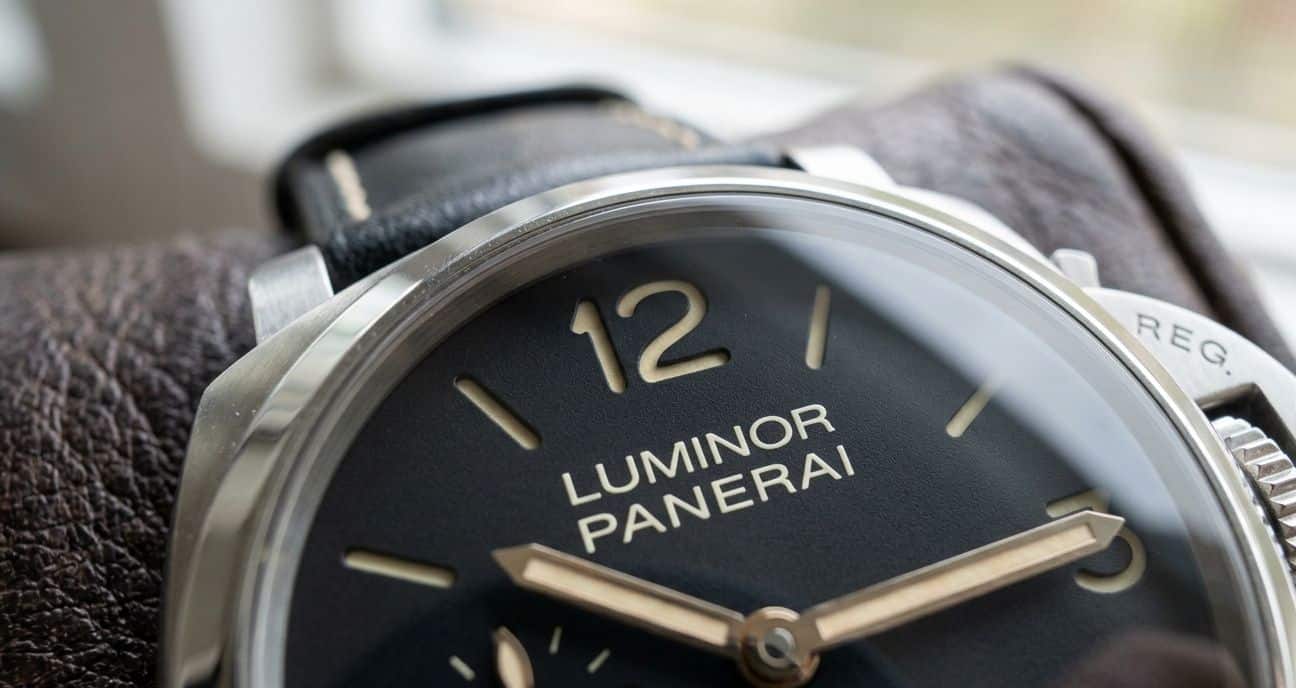
When analyzing the detailed QC photos provided by your TD, pay meticulous attention to specific Panerai details. For example, scrutinize the sharpness of the dial printing, the consistency of the lume application (ensure no bleeding or unevenness), and the precise action of the crown guard lever. If the movement is visible through a display caseback, examine its decoration—look for perlage, Geneva stripes, and specific engravings like “P.9000” or “VS320.” Any significant deviation from known VS Factory standards or inconsistencies in these critical areas, especially if the quoted price is unusually low, should raise a red flag. It could indicate that the watch is not a genuine VS Factory product or that a bait-and-switch might be in play.
Deconstructing the TD Markup: Where the Real Profit Lies
To effectively negotiate, you need to understand the Trusted Dealer’s profit structure. Not all parts of a TD’s markup are equally flexible. Some represent fixed costs or essential services, while others—particularly the pure profit margin—can sometimes be adjusted. Identifying these flexible components is key to finding genuine negotiation room without inadvertently eroding the quality of service or the product itself.
Variable Margins: From High-Demand to Niche Models
The specific Panerai model you’re interested in significantly impacts a TD’s pricing flexibility. High-demand, popular models like the Luminor Marina PAM005 or the PAM441 GMT from VS Factory often have tighter margins. Competition among TDs for these sought-after pieces, combined with their consistent sales volume, means there’s less incentive for deep discounts. The market essentially sets a firm price floor for these “NWBIG” (Not Worth Buying In Genuine) models, as they will sell quickly even at full price. Conversely, less popular Radiomir models, older Luminor references, or models that are simply slower-moving inventory might offer more flexibility. TDs are often more willing to shave a few percentage points off their profit to clear stock on these niche pieces. Understanding this inverse relationship between model popularity and margin flexibility provides a strategic perspective on which watches offer the best potential for a discount.
The “Service Layer”: What You’re Paying For (QC, Warranty, Support)
A significant portion of a reputable TD’s markup isn’t just about selling a watch; it’s about providing a comprehensive “service layer” that mitigates risk and enhances the buying experience. This includes essential services like providing detailed QC pictures and videos, conducting pre-shipment testing (e.g., timegrapher readings, water resistance checks), ensuring discreet and secure packaging, and offering reliable international shipping with tracking. This often involves a specialized super clone parcel strategy. Crucially, it also encompasses crucial after-sales support: troubleshooting, facilitating repairs, and sometimes even sourcing replacement parts. These services provide immense peace of mind in a market fraught with uncertainty. While they contribute to the overall price, they are often indispensable for a smooth, low-stress transaction. Cutting too deep into the markup might force a TD to compromise on these essential services, leaving you vulnerable if an issue arises. Recognizing the value of this service layer means you’re paying for more than just the watch itself—you’re paying for a trusted intermediary.
Volume vs. Individual Sales: Impact on Pricing Flexibility
A TD’s overall business model and sales volume also play a role in their pricing flexibility. High-volume TDs often have stronger relationships with factories like VS Factory, allowing them to secure better wholesale pricing. This can translate to slightly lower baseline prices for consumers or more room for negotiation on single purchases. For individual buyers, negotiating power on a single watch is inherently limited compared to bulk purchasers. However, multi-watch orders can effectively mimic a volume purchase from the TD’s perspective. Buying two or three watches at once reduces their per-unit administrative, shipping, and handling costs, making them more amenable to offering a discount. This is a practical strategy that benefits both parties: the buyer gets a better deal, and the TD streamlines their operations. It’s a clear example of how understanding the TD’s business incentives can unlock negotiation opportunities.
Expert Authentication Insight
Before committing to a purchase, cross-reference the TD’s quoted price for your chosen VS Factory Panerai model (e.g., a PAM1312 with a VS P.9010 movement) across at least three to five other reputable TDs. This establishes an average market price. If a TD’s price is significantly lower—by 15-20% or more—than this average, consider it a major red flag. This substantial price disparity warrants immediate, thorough investigation into that TD’s reputation, their QC process, and the security of their payment methods. A deal that sounds too good almost always carries hidden risks, and this cross-referencing step helps you identify potential bait-and-switch tactics or unreliable sellers.
The VS Factory Advantage (and Its Pricing Implications)
VS Factory Panerai super clones command a premium in the replica market, and for good reason. Their reputation for quality, accuracy, and reliability is well-earned, but this superiority inherently limits negotiation potential. Understanding what makes VS Factory stand out helps explain why their prices are higher and less flexible than other factories.
Super Clone Movements: The Cost of Authenticity
The most significant factor driving the cost of a VS Factory Panerai is their proprietary “super clone” movements. VS Factory invested heavily in reverse-engineering genuine Panerai calibers like the P.9000, P.9010, and P.3000 series. This is not merely a cosmetic modification of an existing movement; it involves ground-up replication to match the genuine in appearance, function, and reliability. For instance, the VS P.9000 clone was revolutionary for its true dual mainspring barrels, achieving an accurate 70-72 hour power reserve, and the P.9010 variant for its quick-set hour hand, mimicking the genuine traveler GMT function. This level of technical prowess and investment in complex engineering drives up the base cost significantly compared to lower-tier replicas that use less accurate or less reliable movements. For a true “super clone,” compromising on movement quality is simply not an option, making this a non-negotiable cost component.
Material & Finishing Standards: Panerai-Specific Details
Beyond the movement, VS Factory’s meticulous attention to material selection and finishing standards further justifies its premium pricing. They focus on replicating the distinctive Panerai aesthetic and tactile experience down to fine details. This includes using correct 316L stainless steel for cases, ensuring precise machining, and achieving accurate brushing and polishing patterns. The quality of their sapphire crystals, the precise application of lume, the functionality and feel of the crown guard mechanism, and even the quality of the included straps are all carefully considered. For example, VS Factory’s replication of Panerai’s iconic sandwich dial construction, with its deep luminous layer and crisp cutouts, requires significant manufacturing precision. These details, while seemingly small, are costly to replicate accurately and contribute to the overall authenticity and desirability of a VS Factory piece. This craftsmanship commands a higher, less negotiable price point because it delivers a significantly more authentic experience.
Market Demand & Scarcity: How Popularity Affects Price Floor
The consistent high demand for VS Factory Panerai models also plays a crucial role in maintaining their relatively high price floor. VS Factory has earned a reputation for producing some of the most accurate and reliable Panerai replicas, leading to strong market desire, particularly for popular models that are often considered “NWBIG” (Not Worth Buying In Genuine) by the replica community. This strong demand, occasionally coupled with limited production runs or specific releases, means TDs have less incentive to deeply discount these models. When a product is highly sought after and reliably sells at a certain price, there’s little motivation for a vendor to lower it. This external market pressure, driven by brand popularity and VS Factory’s sterling reputation, means that negotiation room for in-demand, top-tier replicas from this factory will naturally be tighter than for less popular or lower-quality alternatives.
Expert Authentication Insight
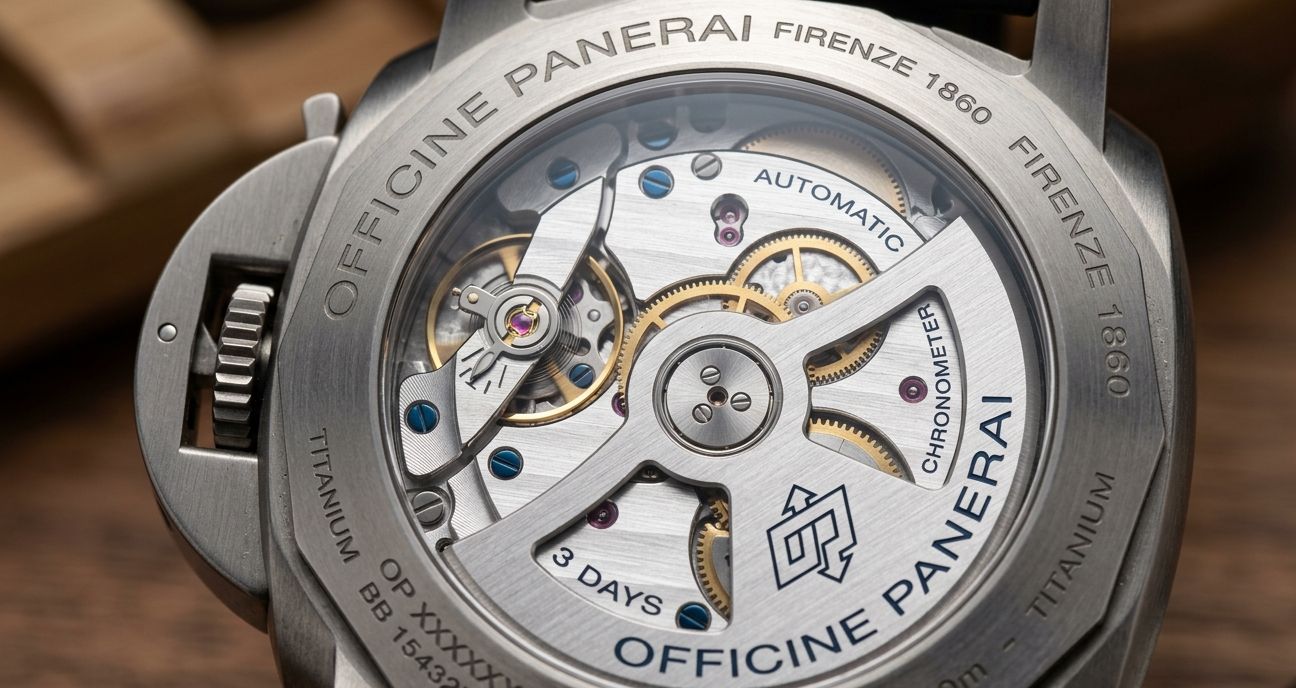
When reviewing QC photos for a VS Factory Panerai, pay particular attention to the balance wheel bridge and the engravings on the movement, especially if it’s a display caseback model. For a true VS P.90XX or VS320 movement, the balance wheel should be correctly positioned relative to its bridge, and all movement engravings should appear sharp, deep, and precisely spaced, faithfully mirroring the genuine Panerai caliber. Any signs of blurry engravings, an incorrect balance wheel position, or generic-looking movement plates—even if the TD claims it’s a VS Factory watch—are strong indicators of a non-VS movement or a lower-tier product. This visual inspection of the movement’s fidelity is a critical step in verifying you are indeed receiving the super clone quality you are paying for.
When to Negotiate: Identifying Genuine Discount Opportunities
While the market for high-quality replica watches, especially VS Factory Panerai super clones, doesn’t operate like a bazaar, there are legitimate scenarios where a savvy buyer can secure a discount without compromising quality or service. Understanding these opportunities means knowing where the TD’s margin is flexible and where they can genuinely reduce costs without taking a loss or cutting corners. The goal isn’t to squeeze every last dollar, but to identify win-win situations.
Repeat Buyer Status & Loyalty Discounts
Trusted Dealers (TDs) thrive on repeat business and positive word-of-mouth. Building an established relationship with a single TD is one of the most reliable ways to unlock discounts. After a few smooth transactions, a reputable TD will often be willing to offer 5-10% off subsequent purchases. This isn’t charity; it’s a strategic investment in long-term customer retention. They value your continued business, your prompt payments, and the trust you’ve built. This negotiation lever carries minimal risk, as the TD already knows you’re a serious buyer and will likely maintain their high standards of service.
Multi-Watch Orders: Economies of Scale
Purchasing multiple watches in a single transaction presents a clear opportunity for negotiation. TDs incur fixed costs for each shipment, including packaging, customs declarations, and the base shipping fee. Consolidating orders reduces their per-watch handling and shipping expenses. This cost saving can often be passed on to the buyer. Discounts ranging from 5-15% are common for orders of two or three watches, particularly if they originate from the same factory (like VS Factory) which simplifies sourcing for the TD. This is a practical way to maximize value if you’re planning to buy more than one piece.
Less Popular Models or Clearance Items
Not every VS Factory Panerai model flies off the shelves at the same rate. TDs, like any retailer, manage inventory. Slower-moving stock, less popular Panerai references, or discontinued factory runs represent legitimate opportunities for discounts. These aren’t necessarily “flawed” watches; they simply haven’t found a buyer yet. A TD might offer a 10-20% discount to clear these items, freeing up capital and warehouse space. This is a transparent way for TDs to manage their business, and for buyers, it’s a chance to acquire a high-quality VS Factory piece, perhaps a less common Radiomir or an older Luminor model, at a more attractive price.
Payment Method Incentives: Avoiding High Processing Fees
The method you choose to pay can significantly impact a TD’s bottom line. Payment processors like PayPal and credit card gateways charge TDs substantial fees, sometimes 3-5% or more per transaction. Alternative payment methods, such as Wise (formerly TransferWise) or specific cryptocurrencies like USDT, often carry much lower fees for the seller. By offering to pay via one of these preferred, lower-cost methods, you’re directly reducing the TD’s overhead. This provides a clear justification for a small discount, typically 2-5%, as the TD saves money on their end. It’s a straightforward, low-friction negotiation point that benefits both parties.
Expert Authentication Insight
When a discount is offered, especially on a “clearance” item or less popular model, immediately request additional, fresh QC photos and a timegrapher reading, consulting a Panerai replica buying guide to authenticate that the discounted item still meets the full VS Factory quality standards for its movement (e.g., a VS P.9000 or VS320) and finishing, ensuring the discount isn’t a cover for a B-stock or flawed product. For example, check for crispness of dial printing, consistency of lume application, and the rotor’s movement on the timegrapher to confirm it’s not a lower-tier movement.
The Perils of Over-Negotiation: Risks to Avoid
While seeking a fair deal is smart, pushing too hard for discounts in the replica watch market can backfire significantly. TDs operate on specific profit margins that cover their operational costs, shipping risks, and the essential after-sales support they provide. Aggressively driving down the price below a sustainable point can lead to a range of undesirable outcomes, ultimately compromising the quality of your purchase or the reliability of your service.
The Bait-and-Switch: Downgraded Factory or Movement
This is arguably the most significant risk of over-negotiation. If a TD agrees to an unsustainably low price for a VS Factory Panerai, they might fulfill the order by substituting it with a lower-tier replica. This could mean a watch from a less reputable factory (e.g., PF or KW) or one fitted with a cheaper, incorrect movement (like an Asian 2824 instead of a VS P.9000 super clone). The watch might still carry the “Panerai” branding, but the quality, accuracy, and longevity will be substantially inferior. They might even claim it’s the original VS Factory piece, banking on the buyer’s inability to spot the subtle differences. This scam directly results from pushing a TD below their viable profit margin, forcing them to cut costs in the most detrimental way for the buyer.
Compromised QC and After-Sales Support
A TD who feels excessively squeezed on price may be less inclined to provide the meticulous service that justifies their markup. This can manifest in several ways: the Quality Check (QC) process might be rushed, with fewer photos, less thorough inspection, or a reluctance to address minor flaws. Crucially, after-sales support, which includes troubleshooting, sourcing replacement parts, or facilitating repairs, can become unresponsive or even non-existent. A good TD builds in a buffer for these services; if that buffer is eroded by aggressive negotiation, the buyer might find themselves with an unaddressed issue or no recourse if a warranty claim arises. Good service has a cost, and it’s often worth paying for.
Shipping “Upgrades” That Never Arrive
During negotiation, a TD might promise expedited, more secure, or “triangle” shipping methods to reassure a buyer. However, if the final agreed price leaves little to no profit, the TD might default to cheaper, riskier, or slower shipping options once the payment is made. This can lead to significantly longer delivery times, increased risk of customs seizure, or packages that are harder to track and recover if lost. The discrepancy between the promised and actual shipping service can be a frustrating consequence of a heavily discounted deal, leaving the buyer with an anxious wait or even a lost package.
Blacklisting & Trust Erosion with Reputable TDs
The replica watch community, especially among TDs, operates on reputation and relationships. Reputable TDs value their time and the respect of their clients. Repeated, aggressive, or unrealistic negotiation attempts can lead to a buyer being blacklisted or simply ignored. These dealers have a wide client base and don’t need to entertain unreasonable demands. Burning bridges with a trusted source means losing access to reliable products, priority service, and valuable insights for future purchases. Maintaining respectful and realistic communication is key to fostering a long-term, beneficial relationship.
Expert Authentication Insight
If a deal feels too good after heavy negotiation, request a video of the specific watch being packed. This video should clearly show its movement and external details, including a timegrapher reading immediately before sealing the package. This helps authenticate that the exact, quality-verified watch is indeed being shipped, reducing the risk of a last-minute bait-and-switch where a lower-quality piece is swapped in after QC photos were approved.
Your Negotiation Playbook: Strategies for a Win-Win Deal
Effective negotiation for a VS Factory Panerai super clone isn’t about aggressive haggling; it’s about informed communication, building trust, and understanding the market dynamics. A win-win deal means you get a high-quality product at a fair price, and the TD earns a reasonable profit for their services. This approach minimizes risk and maximizes satisfaction.
Research & Data: Knowing Your Price Points
Never negotiate blind. Before initiating any discussion, conduct thorough research on the average prices for your specific VS Factory Panerai model (e.g., PAM1312, PAM441) across multiple reputable TDs. Websites like RWI forums often have price discussions or threads where buyers share their experiences. Knowing the current market rate provides you with invaluable leverage. It helps you identify whether a quoted price is already competitive, whether your expectations are realistic, and if there’s genuine room for a small discount. This foundational knowledge is your first and most crucial step.
Clear Communication: Specifics Over Vague Demands
Vague requests like “Can I get a discount?” are rarely effective. Instead, be specific and demonstrate that you understand the TD’s operational costs. For instance, ask, “Would you be able to offer a 5% discount if I pay via Wise?” or “What’s the best price for this PAM1312 if I also order a PAM441?” This specificity shows you’ve done your homework, that you’re a serious buyer, and that you’re proposing a concrete way for the TD to save money or gain business. It shifts the conversation from generic haggling to a professional discussion about mutual benefit.
Patience & Timing: When to Push, When to Hold
The replica watch market is often fast-paced, but patience is a virtue in negotiation. TDs are often busy, managing numerous inquiries and orders. Expecting immediate responses or deep discounts on demand is unrealistic. Know when to follow up politely and when to give the TD space to respond. Furthermore, consider the timing: new factory releases might come with introductory offers, or holiday sales could present natural discount periods. Conversely, demanding discounts during peak periods or when a model is in high demand might be less fruitful. A strategic approach to timing can significantly improve your chances of success.
Building Rapport: The Long-Term Buyer Advantage
The most effective long-term strategy for securing favorable deals is to build a strong, respectful relationship with a single, trusted TD. Consistent, polite communication, prompt payments, and realistic expectations on your part will foster trust. Over time, this rapport can lead to numerous benefits: better baseline prices, priority access to new releases, more flexible payment terms, and even exclusive information about upcoming models or factory changes. Treating your TD as a valued partner, rather than just a vendor, yields the best overall value and experience in the replica watch community.
Expert Authentication Insight
After a negotiation is concluded and a price agreed upon, ask the TD for a final confirmation of the exact factory (e.g., “VS Factory”), specific model reference (e.g., “PAM1312”), and movement type (e.g., “VS P.9010”). This verbal or written confirmation serves as an “authentication of agreement,” providing a clear reference point against which the QC photos and eventual product can be cross-referenced, ensuring no subtle changes occurred post-negotiation. It locks in the details of the deal.