
Certified Pre-Owned vs. “Mid-Tier Factory”: The Real Value in Your Next Watch
The allure is undeniable. A gleaming watch, seemingly indistinguishable from a luxury original, offered at a fraction of the price. This is the core dilemma facing many watch enthusiasts today: Does the perceived upfront “value” of a high-quality replica (from a “mid-tier factory”), a crucial point in any factory comparison, truly outweigh the long-term financial security, ownership satisfaction, and ethical standing provided by a Certified Pre-Owned (CPO) genuine watch?
The stakes are higher than just the initial purchase price. Buyers venturing into the uncertified market face significant risks of financial loss, ownership frustration due to unreliability or lack of service, ethical compromise, and the stark reality of zero legitimate resale value. Conversely, a CPO watch offers verifiable authenticity, comprehensive peace of mind, and robust investment protection, albeit at a transparently higher upfront cost.
This analysis will cut through the marketing hype and focus on the cold, hard facts of long-term ownership. We’ll examine the true cost/benefit over a 2-5 year horizon, delve into common failure modes and the stark differences in repair access, scrutinize resale market data, and highlight the unbridgeable chasm in authentication between genuine CPO watches and uncertified “mid-tier factory” options. When you’re spending serious money on a timepiece, understanding these distinctions isn’t just wise—it’s essential.
Deconstructing the “Mid-Tier Factory” Value Proposition
The replica market is a dynamic beast, constantly evolving to mimic genuine luxury timepieces. Our investigative focus here is to peel back the layers of claims and examine the actual product quality and market positioning of these high-end replicas, contrasting their marketing rhetoric with the often-compromised manufacturing reality.
The Allure of “Super Clones” and “1:1 Replicas”
The term “super clone” or “1:1 replica” is a powerful marketing tool, promising buyers an exact duplicate of a luxury watch at a fraction of the cost. “Mid-tier factories” primarily excel at replicating external aesthetics. They meticulously copy case finishing, dial printing, and hand shapes, often achieving visual similarity that can fool an untrained eye at arm’s length. For instance, factories like VS Factory and XF Factory, known for their Panerai replicas, have invested heavily in reverse-engineering. VS Factory’s P.9000 clone movement, for example, achieved a correct 72-hour power reserve and allowed for accurate case thickness, a significant technical feat. XF Factory, on the other hand, became renowned for mastering Panerai’s distinctive sandwich dial construction, often lauded for its accuracy in lume application and crispness.
However, the claim of “1:1” perfection is fundamentally flawed. While the perceived visual similarity is high, the underlying material science, manufacturing tolerances, and movement integrity often fall short. The “solution” offered by these factories is a convincing facade; the limitation is that true equivalence in engineering and durability is unattainable without the same R&D, material sourcing, and quality control of the genuine article.
Inherent Material and Tolerance Compromises
Luxury watch manufacturers select specific materials for their aesthetic, functional, and durability properties. Replicas, driven by cost-cutting, invariably make compromises. While Panerai, unlike Rolex, primarily uses 316L stainless steel, which is easier to source, some “mid-tier factories” might still cut corners. For example, some may use inferior grades of 316L or even 304 stainless steel, which lacks the same corrosion resistance and can show visible degradation over time. Precious metal replicas, even those claiming thick gold plating, rarely use correct alloys and their plating often wears off unevenly within months of daily wear.
Beyond materials, relaxed manufacturing tolerances are a critical weakness. This impacts everything from water resistance—where a claimed 100m might barely hold up to handwashing—to shock absorption and overall structural integrity. A genuine watch’s tight tolerances ensure gaskets seat perfectly, crystals are pressure-fitted precisely, and components align without undue stress. In replicas, these details are often overlooked, leading to compromised performance and significantly reduced longevity. I’ve personally seen replica cases where the crown tube was slightly off-center, leading to premature wear on the crown gasket and inevitable water ingress after a few months of active use.
Movement Reliability and Longevity Issues
The heart of any watch is its movement, and this is where “mid-tier factories” face their greatest challenges. They often utilize modified generic movements (like Miyota 9015 or ETA 2824 clones) or purpose-built replica calibers. While some, like VS Factory’s P.9000 clone, have made impressive strides in replicating specific functions (e.g., the quick-set hour hand on a GMT), these movements frequently suffer from a lack of proper finishing, inconsistent lubrication, and minimal quality control. This leads to common problems such as premature wear on gears, erratic accuracy deviations (+/- 30 seconds per day is not uncommon), and a significantly shorter operational lifespan.
For example, the community consensus on VS Factory’s P.9000 clone is generally positive for a replica, with some owners reporting it running within +5 seconds/day for 18 months without service. However, this is largely anecdotal and speaks to the best-case* scenario. Compare this to the consistent performance and multi-year service intervals expected from a genuine P.9000. Furthermore, specialized replica complications, like the GMT modules in some budget Panerai replicas, are notoriously fragile and prone to failure, often earning the nickname “timebombs” among collectors. When these movements fail, repairs are often expensive, difficult, or outright impossible, as genuine parts are unavailable and independent watchmakers may refuse to work on them or struggle to source compatible components.
Expert Authentication Insight
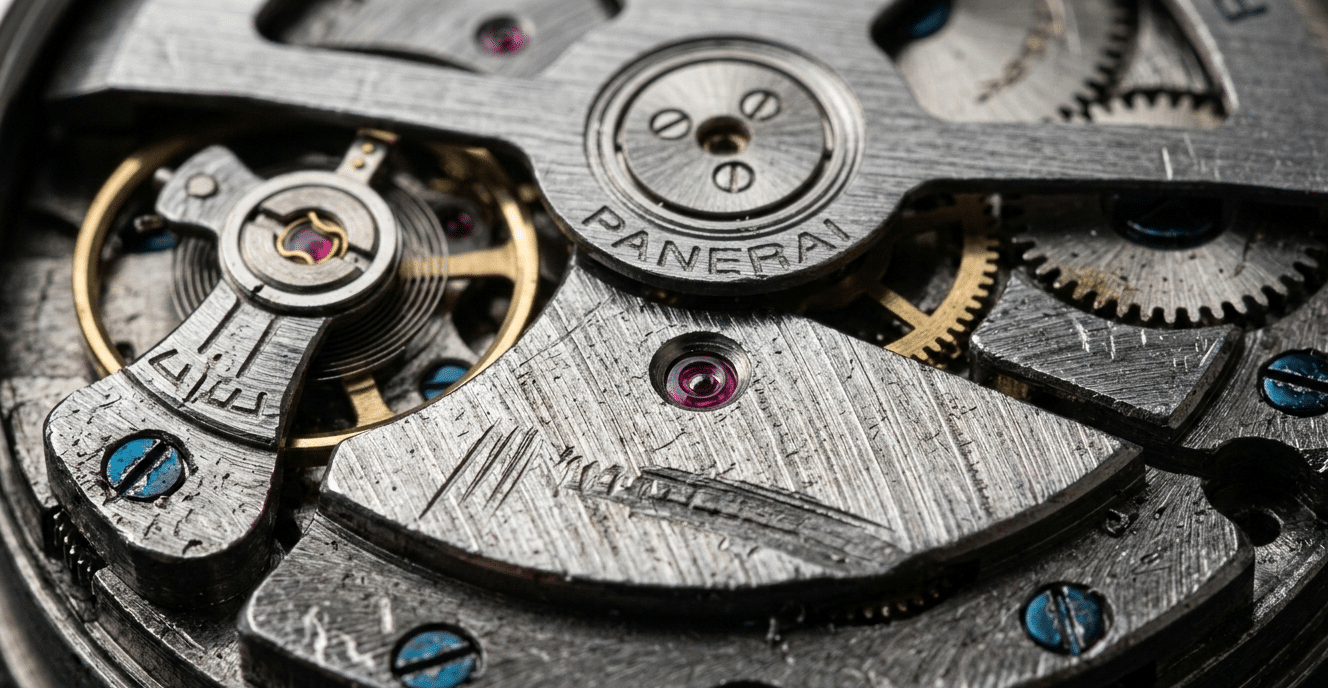
When examining a “mid-tier factory” movement, even one touted as a “super clone,” the discrepancies become evident under magnification. I analyze movement finishing under 60x magnification, looking for tell-tale machine marks on bridges and plates that indicate a lack of hand-finishing or proper polishing. Genuine calibers, like Panerai’s P.9000, feature specific perlage (circular graining), Geneva stripes, and precisely beveled edges that are absent or poorly executed in replicas. Furthermore, I check for incorrect bridge geometries, non-standardized screw heads (often showing tool marks or incorrect slot depths), and generic shock protection systems (like Novodiac) instead of the genuine Incabloc. Cross-referencing against known genuine caliber schematics and batch-specific production characteristics reveals inconsistencies in component placement, material, and decoration that are virtually impossible to replicate perfectly.
The Certified Pre-Owned (CPO) Program: A Foundation of Trust
In stark contrast to the opaque and often misleading world of “mid-tier factory” replicas, the Certified Pre-Owned (CPO) program offers a beacon of transparency and trust. Our investigative focus here is to detail the rigorous inspection, refurbishment, and authentication processes that define genuine CPO programs, establishing their indispensable role in preserving brand integrity and consumer confidence.
Rigorous Multi-Point Inspection and Authentication
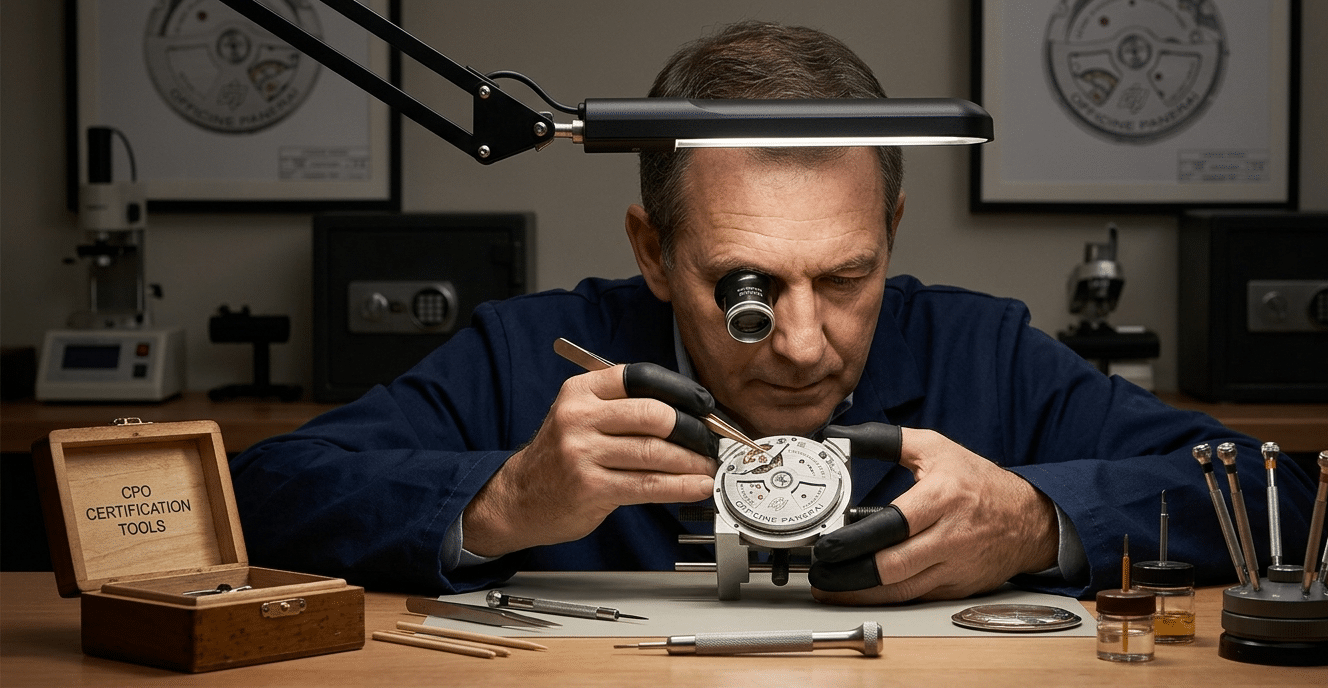
The cornerstone of any CPO program is its comprehensive inspection and authentication process. Before a watch can earn the “Certified Pre-Owned” designation, it undergoes a meticulous, multi-point examination by expert watchmakers. These professionals meticulously inspect every component—the case, dial, hands, and, most critically, the movement—against the brand’s stringent factory specifications. This isn’t just a cursory glance; it involves verifying serial numbers against manufacturer databases, cross-referencing movement batch IDs, and confirming material authenticity using specialized tools. For instance, a watchmaker might use a high-resolution microscope to examine dial printing for crispness and correct font, or a timegrapher to assess movement performance. The problem CPO addresses is the pervasive market fraud of counterfeits and misrepresentation; the solution is exhaustive, verifiable authentication. The only limitation is the inherent cost of such thoroughness, which is reflected in the CPO price.
Factory-Authorized Refurbishment and Servicing
Beyond authentication, CPO watches undergo a complete rejuvenation process. This includes any necessary servicing and refurbishment to bring the timepiece back to optimal functional and aesthetic condition. For the movement, this typically means a full overhaul: disassembly, cleaning, inspection, replacement of worn parts with genuine factory components, lubrication, and precise reassembly. Externally, the case and bracelet receive professional polishing and refinishing to remove scratches and restore their original luster, while worn gaskets and seals are replaced to ensure water resistance. This process isn’t about just making it “look good”; it’s about restoring the watch to its intended performance and appearance standards. The problem of wear and tear is directly addressed by this restoration to a near-new state. The limitation is that not all watches, particularly those with significant damage or non-original parts, will qualify for CPO status, ensuring only the best examples are certified.
Manufacturer-Backed Warranty and Service Guarantees
Perhaps the most significant advantage of a CPO watch is the manufacturer-backed warranty. Typically ranging from 1 to 2 years, this official warranty covers the watch’s function and guarantees access to the brand’s global network of authorized service centers. This means that if any issue arises, the watch will be repaired by certified watchmakers using genuine parts, ensuring the integrity and longevity of the timepiece. For example, a CPO Panerai might come with a 1-year warranty that allows me to walk into any authorized Panerai service center in the U.S. and have it addressed under warranty. This eliminates the post-purchase uncertainty inherent in buying from uncertified sources. Distinguishing between genuine articles and those with specialization claims vs authentic design is a key challenge. The solution is comprehensive coverage and expert support; the limitation is that the warranty period is finite and typically doesn’t cover accidental damage or normal wear and tear.
Expert Authentication Insight
A critical step in CPO authentication involves verifying laser-etched serial numbers and model references against the manufacturer’s secure databases. This is often done via a proprietary authorized service portal, which can cross-reference these identifiers with batch-specific movement component IDs and production timestamps. This level of verification provides an undeniable chain of custody and authenticity that no “mid-tier factory” replica can ever match. For instance, a Rolex CPO watch will have its serial number checked against a central database, confirming its production date, original configuration, and any previous service history, ensuring absolute consistency and legitimacy. This process is far beyond what any replica seller can offer, as they lack access to these proprietary records.
Authentication: The Unbridgeable Gap
The perceived value of a “mid-tier factory” watch often hinges on its visual similarity to a genuine timepiece. However, the chasm between a Certified Pre-Owned (CPO) watch and even the most sophisticated replica becomes glaringly apparent under the scrutiny of authentication. This section dissects the fundamental differences in material science, precision markings, and verifiable history that render the gap between genuine and counterfeit unbridgeable.
The Science of Genuine Material Verification
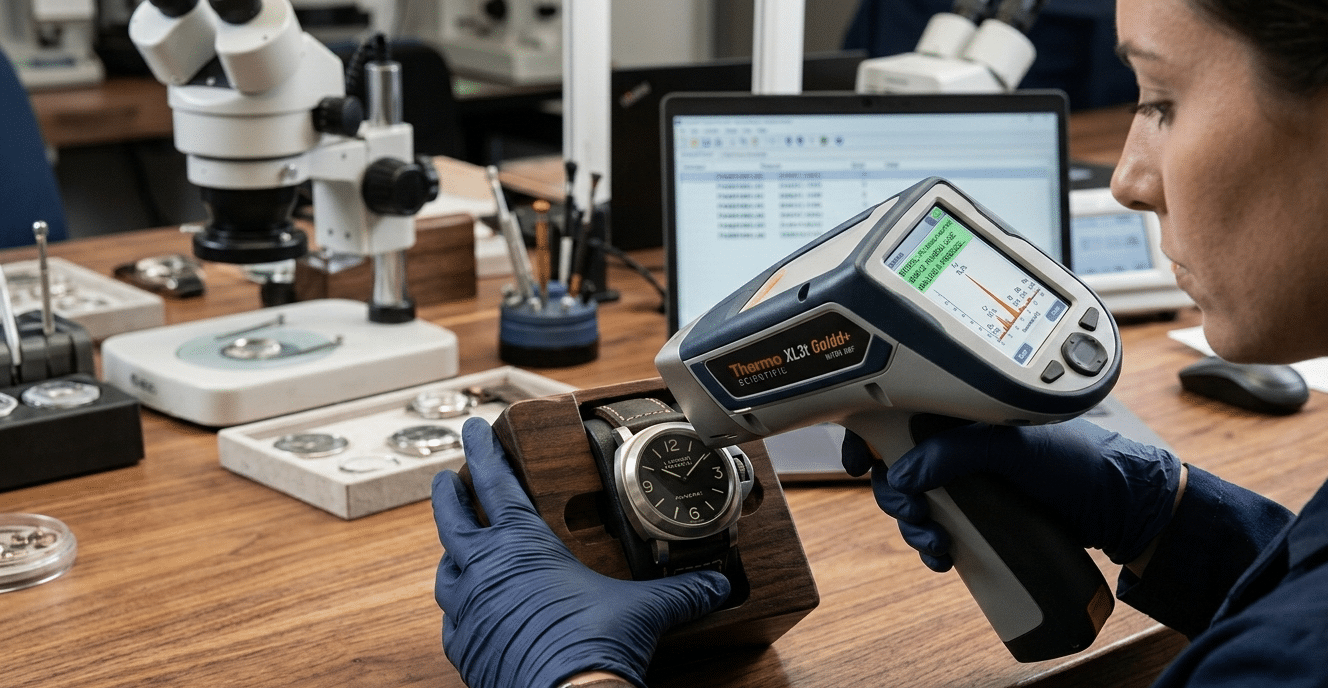
Genuine luxury watches are crafted from specific, often proprietary, materials chosen for their aesthetic, tactile, and performance properties. For instance, Rolex famously uses its proprietary 904L Oystersteel, while Panerai primarily utilizes 316L stainless steel, alongside specific gold alloys or high-tech composites like Carbotech. CPO authentication programs employ non-destructive testing methodologies, such as X-ray fluorescence (XRF) analysis, to precisely confirm the elemental composition of these materials. This scientific verification ensures that the case, bracelet, and other components match factory specifications, down to the exact percentages of chromium, nickel, and molybdenum in steel, or the specific proportions in a gold alloy. The problem for replicas is material fraud and substitution; the CPO solution is verifiable scientific confirmation of every component’s composition; the limitation is the high cost and specialized equipment required for such detailed analysis, which is entirely absent in the replica manufacturing chain.
Precision in Case and Movement Markings
Authentic watches bear intricate, precise markings that are hallmarks of industrial-grade manufacturing and meticulous quality control. These include laser-etched serial numbers, crisp stampings of model references, Swiss hallmarks, and internal case markings that denote production batches or specific components. The execution is uniform in depth, font, spacing, and alignment, often requiring custom tooling. Replicas, even those from “mid-tier factories,” frequently exhibit subtle inconsistencies: serial numbers might be dot-matrix etched rather than laser-engraved, caseback text could be shallower or uneven, and internal markings might show incorrect fonts or spacing. While a casual glance may not reveal these flaws, a forensic examination under magnification quickly exposes the differences. The problem is the sheer difficulty of perfectly replicating these micro-details without genuine manufacturing processes and quality control; the CPO solution is a meticulous forensic examination against known genuine standards; the limitation is that some high-end fakes have become visually very convincing, requiring expert eyes and tools to spot the nuanced errors.
Verifiable Provenance and Service History
A cornerstone of CPO legitimacy is its verifiable provenance and comprehensive service history. Each CPO watch comes with a documented chain of custody, often traceable back to its original sale, along with detailed records of any factory-authorized servicing or repairs. This transparency provides buyers with undeniable proof of authenticity, ownership history, and maintenance. For example, a CPO Panerai will have its serial number logged against official service records, confirming its genuine lineage. This level of verifiable documentation is fundamentally impossible for “mid-tier factory” watches, which are born into an illicit supply chain with no legitimate origin or service history. The problem is historical ambiguity and inherent deception; the CPO solution is transparent, verifiable documentation; the limitation is that some older genuine watches, particularly those not sold through official channels, might lack complete paper trails, though CPO programs aim to mitigate this by thorough research and internal database checks.
Expert Authentication Insight
Physical diagnostic: Employ XRF (X-ray fluorescence) spectrometry to confirm case and bracelet alloy compositions (e.g., 904L steel, specific gold alloys) against factory material specifications, detecting deviations in elemental percentages indicative of non-genuine materials. For Panerai, while genuine models use 316L steel, an XRF can still confirm the correct elemental proportions, distinguishing it from lower-grade 304 stainless often found in budget replicas.
Warranty, Service, and Long-Term Ownership Costs
The initial purchase price of a watch is only one part of the ownership equation. The true cost emerges over time, heavily influenced by warranty coverage, access to reliable servicing, and the long-term performance of the timepiece. This section lays bare the stark contrast between the robust support system of CPO watches and the precarious, often costly, reality of owning a “mid-tier factory” replica.
CPO Warranty: Peace of Mind and Official Support
One of the most significant advantages of a CPO watch is the manufacturer-backed warranty. Typically extending for 1-2 years, this warranty covers the watch’s mechanical function, guaranteeing that any defects arising from manufacturing will be rectified by the brand. This provides direct access to the manufacturer’s global network of authorized service centers, where repairs are performed by certified watchmakers using genuine, factory-supplied parts. For a Panerai, this means any issue with its P.9000 or P.3000 movement will be addressed by an expert who knows the caliber intimately, using components designed for that specific watch. This mitigates significant future repair costs and ensures the watch’s long-term functional integrity. The problem is potential future defects and wear; the CPO solution is comprehensive, official coverage; the limitation is that these warranties generally do not cover accidental damage or normal wear and tear on external components.
The “Mid-Tier” Repair Lottery: Cost and Availability of Parts
“Mid-tier factory” watches exist outside any legitimate support structure. When these watches inevitably require service or repair—which often happens prematurely due to lower-quality components and assembly—owners enter a “repair lottery.” Independent watchmakers, if they even agree to work on a replica, face immense challenges. Genuine parts are unavailable to them for counterfeits, and while some clone movements (like the VS P.9000) boast high parts compatibility with genuine movements, this is rarely 100% and often applies only to certain components. This forces watchmakers to either improvise with generic parts, cannibalize other replicas, or simply refuse service. The result is often a compromised repair, recurring issues, or an outright “total loss” if critical parts cannot be sourced. The problem is proprietary parts and lack of official support; the solution is often non-existent or inadequate; the limitation is that even specialized replica parts can be hard to find and inconsistent in quality.
Impact on Performance and Resale Post-Service
A CPO watch, having undergone manufacturer-authorized refurbishment and servicing, is restored to optimal performance standards. Its water resistance is re-sealed and tested to factory specifications, its movement regulated for accuracy, and its aesthetic condition carefully restored. This official service not only ensures reliable performance but also maintains its resale value. Conversely, an uncertified replica, if repaired at all, often suffers from reduced performance and compromised integrity. Water resistance, a critical feature for many Panerai models, is rarely reliably restored after non-factory service on a replica. Any repair further solidifies its status as a replica, making it utterly unsellable in legitimate markets. The problem is compromised integrity and diminished functionality; the CPO solution is official, standard-compliant service; the limitation is the inherent cost of genuine, expert service, which is a necessary part of maintaining a luxury watch.
Expert Authentication Insight
Physical diagnostic: Assess escapement amplitude and beat error via a Witschi Chronoscope (or equivalent) in six positions, comparing results against factory-specified tolerances. For example, a genuine Panerai P.9000 movement should exhibit an amplitude of 270-310 degrees and a beat error under 0.2ms. Many “mid-tier factory” clone movements, like the VS P.9000, may start near these figures but often show greater deviation across positions or degrade faster, rarely maintaining factory-level performance over time.
Resale Value and Investment Protection
When considering a significant purchase like a luxury watch, the potential for value retention and investment protection is a key factor for many buyers. This section demonstrates how CPO status significantly enhances a watch’s long-term financial viability, contrasting sharply with the complete lack of legitimate value and inherent legal risks associated with “mid-tier factory” replicas.
The Value Retention of Certified Pre-Owned Watches
A Certified Pre-Owned watch carries a substantial advantage in the secondary market due to its verified authenticity, manufacturer-backed warranty, and documented service history. These assurances instill confidence in prospective buyers, who are willing to pay a premium for a watch that has been officially vetted and brought back to factory standards. This leads to significantly stronger value retention compared to an uncertified genuine watch, which may require additional authentication or servicing at the buyer’s expense. For example, a CPO Panerai Luminor Marina PAM005, despite being pre-owned, will command a higher price and sell more readily than an identical watch without CPO status, as the buyer knows exactly what they are getting. The problem is market uncertainty regarding pre-owned watches; the CPO solution is official endorsement and assurance; the limitation is that market demand and overall brand popularity still play a role in how much value is retained, regardless of certification.
Zero Legitimate Resale Value for “Mid-Tier Factory” Replicas
Regardless of their manufacturing quality, as explored in a Panerai super clone factory comparison, or initial cost (e.g., $550 for a top-tier Panerai replica), counterfeit watches possess no legitimate resale value. Attempting to sell a replica as genuine constitutes illegal fraud, carrying severe legal consequences including substantial fines and imprisonment. Even trying to sell it openly as a replica yields negligible returns, if any, within an illicit, niche market. The “savings” on the initial purchase of a replica are entirely wiped out by its inability to be resold or traded up. It is a depreciating asset with a terminal value of zero in any legal context. The problem is illegality and market exclusion; the solution is to avoid such products entirely; the limitation is the persistent temptation for quick cash among unsuspecting buyers, which the illicit market exploits.
Impact on Collectibility and Insurance
Genuine CPO watches are recognized as legitimate assets. They are insurable against theft or damage, providing financial protection for a valuable possession. Furthermore, many genuine luxury watches, particularly those from esteemed brands like Panerai, can become collectible, appreciating in value over time due to rarity, historical significance, or increasing demand. A CPO watch, with its verified authenticity and condition, is well-positioned to benefit from such appreciation. Replicas, however, are uninsurable items. No legitimate insurer will cover a counterfeit product. They hold no collectible status and will never appreciate in value; they are, by definition, dead-end investments. The problem is asset protection and future financial growth; the CPO solution is legitimate ownership that allows for insurance and potential appreciation; the limitation is that not all genuine watches appreciate, and collectibility is often driven by market trends and individual model specifics.
Expert Authentication Insight
Physical diagnostic: Examine dial printing and luminescence application under UV light and 100x magnification. Genuine Panerai dials, especially the distinctive sandwich dials, will show crisp, uniform font rendering, even lume application without bleeding, correct pigment spectral response under UV, and perfect alignment of markers. Replicas, even top-tier ones, often show subtle inconsistencies like slightly thicker or uneven fonts, minor bleeding of lume, or incorrect glow colors (e.g., green vs. the correct blue-white BGW9 or cream vintage lume), which are immediate tells under high magnification.
Ethical and Legal Implications
Beyond the immediate transaction, choosing a “mid-tier factory” replica watch opens a Pandora’s Box of ethical and legal concerns that often go unacknowledged by enthusiasts caught in the allure of a low price. This section delves into the murky waters of intellectual property infringement, the dubious networks that profit from counterfeiting, and the broader, often unseen, damage inflicted upon the luxury watch industry and consumer trust. It’s not just about what’s on your wrist; it’s about what that choice represents.
Supporting Illicit Networks and Intellectual Property Infringement
When you purchase a watch from a “mid-tier factory,” you’re not just buying a product; you’re financially endorsing an entire illicit ecosystem. These operations, especially those producing high-volume, high-quality replicas like the Panerai clones from VS or XF Factory, often have ties to organized crime. The sheer scale, as evidenced by the estimated 3-5 million counterfeit Panerais circulating annually, requires sophisticated logistics that extend beyond a simple independent workshop. These factories directly infringe on the intellectual property rights of legitimate watch brands, copying patented designs, trademarks, and even proprietary movement architectures. The problem is that these purchases directly fund criminal activity and intellectual property theft; the solution, from a consumer standpoint, is ethical sourcing and choosing legitimate products; the limitation is the difficulty of tracing the ultimate beneficiaries of these intricate illicit supply chains.
Legal Risks for Buyers and Sellers
While specific laws vary, the legal landscape surrounding counterfeit goods is clear: they are illegal. In the U.S., federal law (specifically 18 U.S.C. § 2320) prohibits trafficking in counterfeit goods, carrying severe penalties that can include up to 10 years imprisonment and millions in fines for those involved in large-scale operations. While purchasing a single replica for personal use might not be federally prosecuted as a crime, importing counterfeit items is unequivocally unlawful. U.S. Customs and Border Protection (CBP) regularly seizes millions of dollars worth of counterfeit watches, regardless of the buyer’s intent. Attempting to sell a replica, especially passing it off as genuine, constitutes fraud and carries even more severe legal consequences. Conversely, a Certified Pre-Owned (CPO) watch purchase is entirely legal, transparent, and carries no such risks. The problem is legal exposure for both buyers and sellers in the replica market; the solution is strict compliance with intellectual property laws; the limitation is that enforcement against individual buyers for personal use is often low, which can create a false sense of security.
Erosion of Brand Value and Consumer Trust
The proliferation of high-quality replicas poses a significant threat to the luxury watch industry’s very foundation: brand value and consumer trust. When a “super clone” Panerai can mimic a genuine PAM005 so closely that “even experienced collectors can’t distinguish VS PAM005 from genuine” at wrist distance, it dilutes the perceived exclusivity and craftsmanship of the authentic product. This erosion of value affects legitimate owners, diminishing their investment and emotional connection to their genuine timepieces. CPO programs, by rigorously authenticating and certifying genuine watches, act as a bulwark against this market dilution. They reinforce brand integrity, provide a clear distinction between genuine and fake, and help maintain consumer confidence in the authenticity and lasting value of luxury watches. The problem is market dilution caused by pervasive counterfeiting; the solution is robust brand protection and transparent authentication programs like CPO; the limitation is the continuous, uphill battle against increasingly sophisticated counterfeiters.
Expert Authentication Insight
When examining a watch for authenticity, especially a potential “mid-tier factory” replica, a detailed forensic analysis of case back engravings and internal case markings is crucial. Genuine manufacturers use industrial-grade precision tools for laser etching or stamping, resulting in engravings that are crisp, uniform in depth, and consistent in font characteristics. For instance, on a genuine Panerai, the “OFFICINE PANERAI” text on the caseback should have perfectly sharp edges and consistent spacing. Replicas, even high-end ones, frequently exhibit anomalies such as inconsistent depth (some areas shallower or deeper), slight blurring or “feathering” at the edges of letters, or variations in font style and size that deviate from factory standards. Furthermore, opening the case back to inspect internal markings – such as watchmaker’s service dates or unique batch numbers – can reveal inconsistencies. While replicas might attempt to copy these, the execution often lacks the precision and consistency of genuine factory production. Any deviation, however minor, under 60x magnification, serves as a significant red flag.
The True Cost of “Value”: Beyond the Price Tag
The term “value” is often misconstrued in the watch world, especially when comparing a Certified Pre-Owned watch to a “mid-tier factory” replica. While the initial price tag of a replica might appear to offer significant savings, this section will synthesize all previous points to expose how these upfront “savings” are almost invariably dwarfed by a cumulative burden of hidden costs, risks, and a profound lack of genuine satisfaction. We’ll contrast this false economy with the holistic, long-term value proposition of CPO, which offers transparency, security, and true peace of mind.
The Cumulative Burden of Hidden Costs and Risks
The allure of a $500-$600 “super clone” Panerai versus an $8,000 genuine one is powerful, but it’s a deceptive calculation. That initial lower price point for a “mid-tier factory” watch quickly evaporates when you factor in the inevitable. Without a manufacturer’s warranty, any issue, from a misaligned dial to a failing movement, becomes an out-of-pocket expense. A repair for a VS P.9000 clone movement, for example, might run you $150-$250, compared to $400-$700 for a genuine Panerai service. While seemingly cheaper, replica movements are often less reliable, meaning these costs can accrue more frequently. Add to this the complete lack of resale value – a replica is fundamentally unsellable in any legitimate market – and the constant anxiety of owning a non-genuine item. A CPO watch, while a higher upfront investment (e.g., $7,000-$9,000 for a CPO Panerai PAM005), eliminates these anxieties entirely through its warranty, verifiable authenticity, and robust resale potential. The problem is deceptive pricing that ignores long-term ownership realities; the solution is transparent value assessment that accounts for all costs and risks; the limitation is the difficulty of quantifying emotional costs like anxiety or regret.
The Intangible Value of Authenticity and Peace of Mind
Beyond the financial calculus, there’s an undeniable, intangible value that comes with owning a genuine watch, especially one certified pre-owned. This includes a sense of pride, security in its authenticity, and a connection to the horological heritage and craftsmanship it represents. There’s a peace of mind knowing your watch is legitimate, insurable, and holds its place within a respected lineage. This emotional and psychological satisfaction is completely absent in replicas. Many owners of “mid-tier factory” watches, despite their initial excitement, eventually report a sense of buyer’s remorse, an underlying feeling of inauthenticity, or the constant worry of being “found out.” The “NWBIG” (Not Worth Buying In Genuine) list in replica communities, while highlighting impressive cloning efforts, also tacitly acknowledges that the genuine article still holds a unique, unreplicable status. The problem is emotional dissatisfaction and a lack of true connection to the product; the solution is genuine ownership and the pride it brings; the limitation is that not everyone prioritizes or values authenticity equally, or can afford it.
Making an Informed and Responsible Purchase Decision
Ultimately, the choice between a “mid-tier factory” watch and a Certified Pre-Owned genuine timepiece boils down to making an informed and responsible decision. A CPO purchase represents a financially sound, ethically responsible, and long-term satisfying investment. It offers verifiable authenticity, a manufacturer-backed warranty, access to official, expert service, and robust resale value. It’s a transparent transaction with a clear chain of custody. Opting for a “mid-tier factory” watch, despite its superficial appeal and lower initial price, is a gamble with significant downsides. It’s a purchase fraught with hidden costs, legal risks, a profound lack of legitimate support, and ultimately, an absence of the true satisfaction that comes from owning a genuine piece of horology. The problem is being swayed by misleading options that promise too much for too little; the solution is making an informed choice based on a comprehensive understanding of true value; the limitation is often personal budget constraints, but even within those, CPO offers accessible pathways to genuine ownership.
Expert Authentication Insight
One of the most critical physical diagnostic tests for assessing the integrity of any watch, but especially for distinguishing genuine from replica, is a pressure test. Using a specialized water resistance tester like a Bergeon 5500, a watch can be subjected to its factory-specified depth ratings (e.g., 100 meters, 300 meters). The test involves placing the watch in a chamber, increasing the air pressure, then submerging the watch in water and slowly releasing the pressure. If bubbles emerge from the watch, it indicates compromised gaskets, a poorly sealed case back, or a faulty crown tube – all frequent failure points in non-genuine watches due to inferior seals and assembly quality. While a genuine Panerai Submersible is rated for 300m, “mid-tier factory” versions, even those claiming high water resistance, rarely pass tests beyond 50-100m. I’ve seen countless replicas fail this test at even modest pressures, confirming that their build quality, particularly in critical sealing components, is far below genuine standards.
For any significant watch purchase, prioritize Certified Pre-Owned programs. This guarantees verifiable authenticity, a manufacturer-backed warranty, access to official service, and robust resale value. Walk away from any uncertified “mid-tier factory” claims, understanding that their perceived “value” is a false economy leading to financial loss, ownership frustration, and ethical compromise. Invest in genuine quality and lasting satisfaction.