
The Real Question: What truly defines a historically accurate Panerai Radiomir, and how do official special editions differ from generic market interpretations like ZF’s “specialized” claims?
The Panerai Radiomir isn’t just a watch; it’s a historical artifact, a design benchmark born from military necessity. But in today’s market, the line between genuine historical tribute and marketing-driven interpretation—or outright replica claims—has blurred. For a U.S. buyer, the real question isn’t just “Is it a Radiomir?” but “How authentically does it embody the original spirit and technical specifications?” This article cuts through the noise, specifically addressing how Panerai’s own meticulously crafted special editions honor their heritage, and how claims from factories like ZF, despite their “specialized” branding, inevitably fall short when subjected to a direct factory comparison and scrutinized against the very DNA of the Radiomir. We’re looking beyond the superficial resemblance to the underlying design philosophy and execution that defines true provenance.
For the discerning collector or enthusiast, acquiring a Panerai Radiomir is often an investment, both financially and emotionally. The stakes here are substantial. Misinterpreting historical accuracy can mean paying a premium for a piece that lacks the very characteristics it purports to replicate, leading to significant financial depreciation. A replica, regardless of how “super” it claims to be, holds zero legitimate resale value and is illegal to sell as authentic. Beyond the monetary, there’s the profound ownership dissatisfaction that comes from realizing your cherished timepiece doesn’t align with the historical narrative you believed it represented. This disconnect severs the bond to the rich provenance of the Radiomir, transforming a piece of history into merely a watch. Understanding the granular differences isn’t just about avoiding a bad purchase; it’s about preserving the integrity of your collection and your connection to watchmaking heritage.
The Lens: This article will adopt a lens of historical verification and technical scrutiny, comparing marketing narratives against documented design evolution, material science, and manufacturing tolerances. We will prioritize tangible evidence over anecdotal claims.
To truly understand the Radiomir, we must move beyond forum chatter and glossy marketing. Our approach will be forensic: a rigorous examination through the twin lenses of historical verification and technical scrutiny. We will systematically compare the marketing narratives surrounding both genuine Panerai special editions and replica claims (specifically those from ZF) against documented design evolution, scrutinizing specific references, material science, and the precise manufacturing tolerances that define authenticity. This means delving into original military specifications, archived Panerai blueprints, and verifiable production data. We will prioritize tangible evidence—measurements, material analyses, documented historical changes, and observed mechanical performance—over generalized statements or anecdotal claims. Our goal is to provide a fact-based framework for evaluating a Radiomir’s true historical fidelity, allowing readers to make informed decisions grounded in verifiable reality.
The Real Question: What truly defines a historically accurate Panerai Radiomir, and how do official special editions differ from generic market interpretations like ZF’s “specialized” claims?
For collectors and enthusiasts, the Panerai Radiomir isn’t just a watch; it’s a piece of horological history, deeply intertwined with military utility and a distinct design language. But in a market flooded with claims of historical accuracy, discerning genuine provenance from marketing hyperbole can be a minefield. This article cuts through the noise, contrasting Panerai’s meticulous official reinterpretations with the often-misleading assertions of replica manufacturers, specifically examining the claims of factories like ZF.
The financial implications are stark. An authentic, historically faithful Radiomir can command tens of thousands of dollars and potentially appreciate in value. A well-made replica, regardless of its “1:1 clone” claims, will always be worth only a fraction of its purchase price on the secondary market—often less than $1,000—and carries legal and ethical baggage. Beyond economics, owning a piece that genuinely connects to its heritage offers a level of satisfaction that a superficial copy simply cannot. Our goal is to equip you with the knowledge to make an informed decision, grounded in verifiable facts.
The Lens: This article will adopt a lens of historical verification and technical scrutiny, comparing marketing narratives against documented design evolution, material science, and manufacturing tolerances. We will prioritize tangible evidence over anecdotal claims.
We will dissect the Radiomir’s design evolution, from its birth as a military instrument to its modern iterations, highlighting the specific details that define authenticity. We’ll then turn our critical eye to the replica market, specifically ZF Factory’s approach, to expose where their interpretations diverge from the genuine article. This isn’t about general impressions; it’s about measurable differences in curvature, material composition, movement architecture, and finishing that separate the real from the merely plausible.
Setting the Historical Stage: The Genesis of Radiomir’s Core Design
The Panerai Radiomir’s story begins not in a luxury boutique, but in the depths of the ocean, equipping Italian Royal Navy frogmen for covert operations. Its foundational design principles were born purely out of necessity, creating an aesthetic that remains instantly recognizable and deeply influential today.
Early References and Military Imperatives
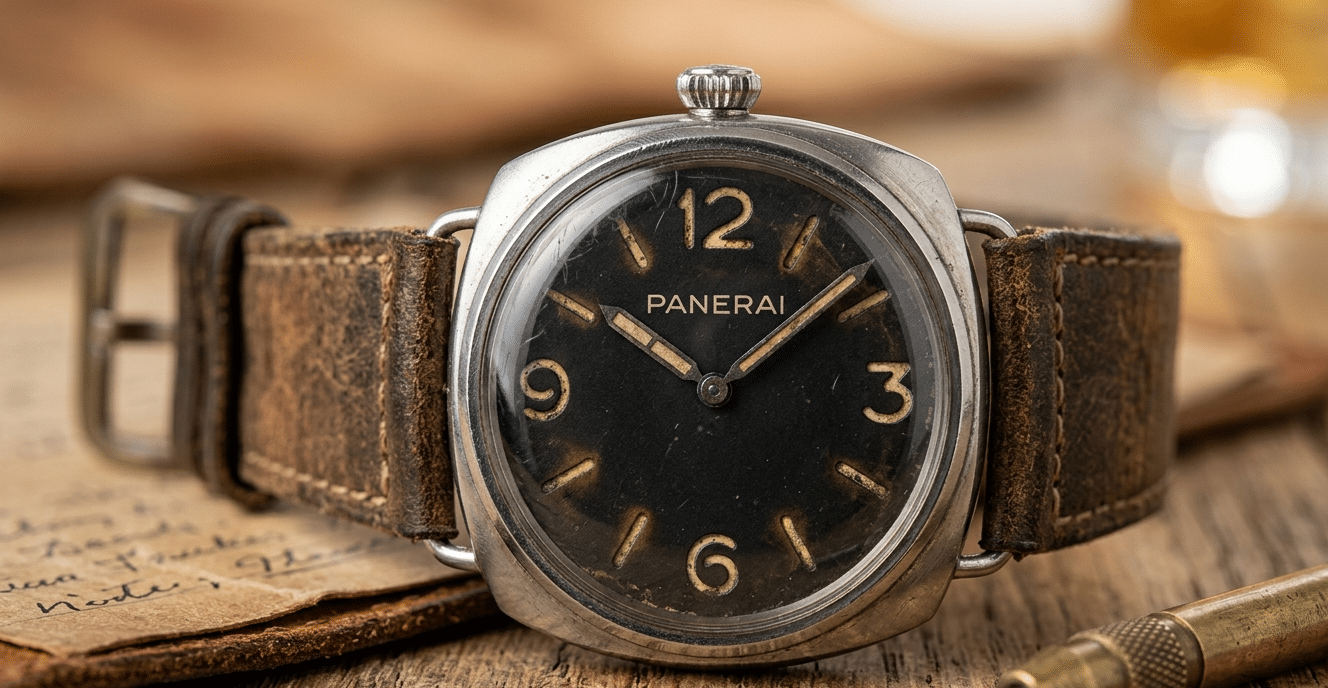
The original Panerai Radiomir, notably the Ref. 3646 from the late 1930s, was a purpose-built instrument for the Italian Royal Navy’s Decima Flottiglia MAS. Its functional requirements dictated every design choice. The oversized 47mm cushion case, a stark departure from the smaller watches of the era, was essential for legibility underwater and over a wetsuit. Robust construction was paramount, leading to thick steel cases and a simple, highly visible dial. Early models utilized a Plexiglas crystal, chosen for its shatter resistance under pressure, even if prone to scratching. The name “Radiomir” itself refers to the radium-based luminous paint, a highly radioactive compound that provided unparalleled visibility in the dark, a critical feature for night missions. This paint, applied to the dial, hands, and sometimes even the crown, was the watch’s defining feature, radiating an eerie glow that made it indispensable for its wearers.
The Radiomir Dial: Luminescence and Legibility
The Radiomir dial’s evolution is a masterclass in functional design. Its layered, or “sandwich,” construction was revolutionary for its time. This involved two superimposed plates: a lower plate coated with the luminous material and an upper plate with cut-out stencils for the numerals and hour markers. This allowed for an exceptional amount of luminous compound to be applied, creating a “floating lume” effect that provided superior brightness and legibility in the darkest conditions. Over the decades, the luminous material evolved from radium to tritium, and eventually to non-radioactive Super-LumiNova, each transition bringing specific color shifts and longevity characteristics. Font styles were kept simple and robust, typically a combination of Arabic numerals at 3, 6, 9, and 12, with stick indices for the others, ensuring at-a-glance readability under duress. The precision of these cut-outs and the evenness of the luminous application were critical manufacturing details that defined the quality of the original pieces.
Case Construction and Wire Lugs: Form Follows Function
The Radiomir’s distinct cushion-shaped case profile is characterized by its fluid lines and smooth, pebble-like ergonomics. This design was not merely aesthetic; it was engineered for comfort and durability. The original method of attaching the strap involved thin, removable wire lugs that were soldered directly onto the case. This seemingly delicate attachment was, in fact, incredibly strong when properly executed, allowing for easy strap changes by military personnel. Early production batches primarily used 316L stainless steel, chosen for its corrosion resistance in saltwater environments. The finishing was typically a utilitarian polished or brushed surface, reflecting its tool watch nature rather than decorative intent. The precise curvature of the case and the robust, yet elegant, integration of these wire lugs are hallmarks of authentic Radiomir design.
Expert Authentication Insight
When examining a vintage Radiomir, the devil is in the details, particularly the case and lug construction. On authentic vintage 3646 cases, specifically, I look for the exact curvature of the case sides and the intricate soldering points of the wire lugs under significant magnification. These early examples often exhibit specific tool marks and finishing patterns around the lug attachment areas that are incredibly difficult to replicate precisely. For instance, the transition where the lug meets the case should show a subtle, almost organic flow, not a sharp, machine-stamped edge. A watchmaker in Dallas once pointed out to me that even the micro-texture of the steel around these points can reveal if it’s been hand-finished or mass-produced with modern CNC methods, which tend to leave overly uniform patterns. Any sign of excessive grinding or uneven material removal around these critical junctures can be a red flag, indicating a non-genuine or heavily doctored case. The integrity of these soldering points is a key physical diagnostic for true vintage provenance.
Panerai’s Official Reinterpretations: Special Editions and Provenance
Unlike replicas that merely copy, Panerai itself has a long history of honoring its past through official re-issues and special editions. These tributes are characterized by their unwavering commitment to design integrity and historical fidelity, setting them apart from generic market claims.
The “Pre-Vendôme” Era and Modern Re-issues
Panerai’s journey from military supplier to luxury brand saw a pivotal moment with its acquisition by Vendôme (later Richemont) in 1997. This marked the beginning of the “Pre-Vendôme” era and subsequent modern re-issues that meticulously revived historical designs. References like the PAM00021 (a 1997 Radiomir in platinum, limited to 60 pieces) and the PAM00232 (the Radiomir 1938, a 2006 special edition limited to 1938 pieces) exemplify this faithful reproduction. The PAM00021 notably utilized vintage Rolex movements (specifically, the Rolex 618), directly connecting to the brand’s early mechanical heart. The PAM00232, based on the iconic 3646, reproduced its 47mm case dimensions, classic sandwich dial layout, and even the “Officine Panerai” engraving on the caseback with remarkable accuracy. These re-issues aren’t just aesthetically similar; they embody the spirit and technical specifications of their historical predecessors, often down to the exact dial text and hand shapes, using movements that are either historically accurate or faithful modern interpretations.
Limited Editions and Archive-Derived Details
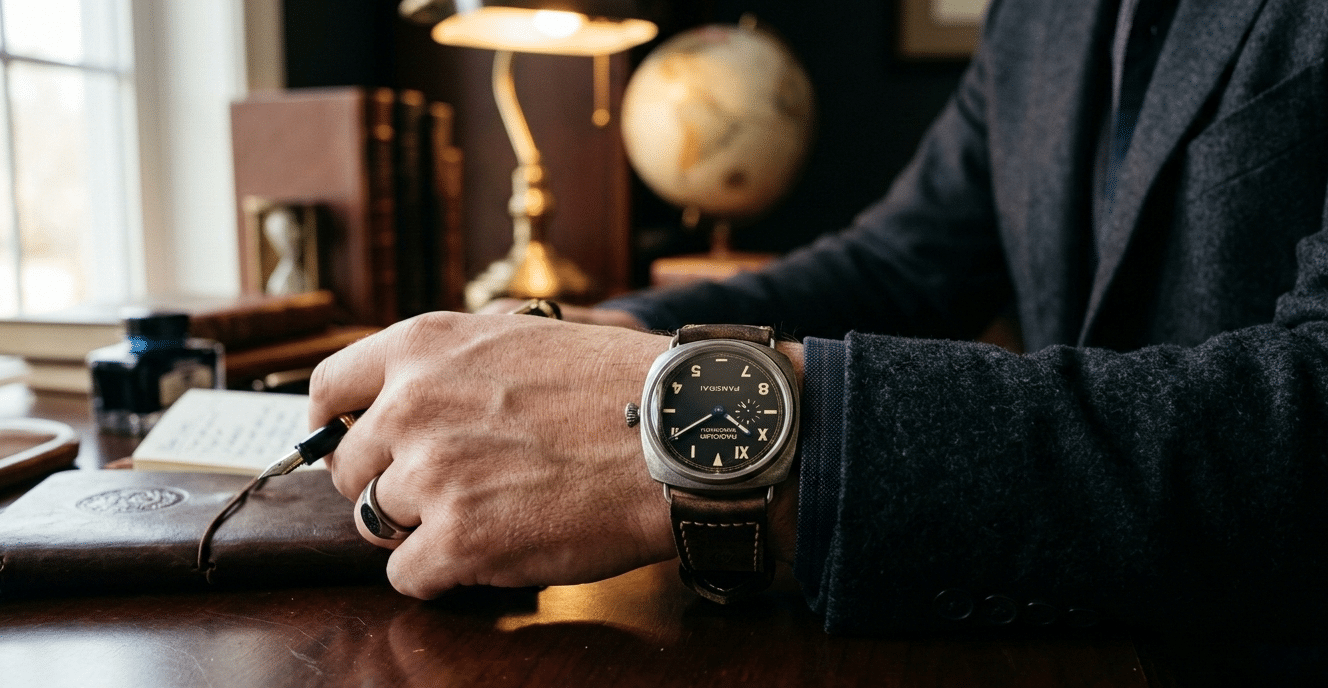
Panerai’s modern limited editions are often direct descendants of designs unearthed from their extensive historical archives. These pieces showcase meticulous attention to detail, reproducing elements like the “California dial” (a distinctive mix of Roman and Arabic numerals, plus stick markers), specific case finishes that simulate historical aging, or the incorporation of unique historical movements, such as the Minerva calibers found in some high-end Radiomir models. For example, some special editions feature a deliberately patinated steel case or faux-patina lume to evoke the appearance of a well-worn vintage piece, but executed with modern manufacturing precision. This isn’t about superficial imitation; it’s about a deep dive into historical records, leveraging original blueprints and photographs to ensure that every curve, every numeral, and every material choice aligns with the brand’s storied past. These details are often documented in accompanying historical booklets, providing a clear provenance.
Material Innovations vs. Historical Accuracy
In its contemporary Radiomir lines, Panerai expertly balances the demands of modern material science with the aesthetic and functional requirements of historical accuracy. While some Radiomir models might utilize advanced materials like Carbotech (a carbon fiber composite), ceramic, or sophisticated new steel alloys for enhanced durability or weight reduction, others employ specific coatings or treatments to achieve a vintage appearance without compromising modern performance. For instance, a modern Radiomir might feature a matte black ceramic case that echoes the stealth of a military instrument, or a proprietary steel alloy that is then treated to develop a unique patina over time, reminiscent of aged bronze. These innovations are carefully integrated to enhance the watch’s contemporary appeal while still respecting the core design language. The key distinction is that these material choices are deliberate, engineered decisions by the brand itself, with full transparency about their properties and how they interact with the historical design cues, rather than being compromises driven by manufacturing limitations.
Expert Authentication Insight
Authenticating a Panerai special edition or re-issue hinges on verifying its specific reference number against Panerai’s official archive. These archives, often accessible through authorized dealers or detailed collector resources, provide precise production details, material specifications, and unique design characteristics for each limited release. Genuine special editions almost invariably feature unique caseback engravings, which might include specific edition numbers (e.g., “1/1938”), commemorative text, or unique serial number formats that deviate from standard production models. Furthermore, the accompanying box and paper documentation, including certificates of authenticity, often carry specific information consistent with their limited release. I’ve often seen instances where a replica might have a generic serial number or a caseback engraving that, upon cross-referencing, simply doesn’t match the official records for that claimed reference. A dealer in Miami once told me off the record that the quickest way to spot a fake special edition is usually an inconsistent or poorly reproduced serial number on the movement itself, which is far harder to replicate convincingly than a caseback engraving.
Deconstructing “Specialization”: ZF Factory’s Radiomir Claims
In the world of replica watches, factories frequently market themselves as “specialists” in certain brands or models. ZF Factory, while renowned for its complex complications, makes broad claims of specialization that warrant critical analysis, especially when applied to historically sensitive designs like the Radiomir. It’s crucial to understand how these claims often diverge from both genuine historical pieces and Panerai’s own official modern releases.
Marketing Narratives and “1:1” Assertions
Replica factories, including ZF, employ powerful marketing narratives to sell their products. Terms like “1:1 clone,” “specialized in Radiomir,” and “latest version” are common. However, these terms are often carefully crafted to mask subtle, yet critical, deviations from authentic pieces. A “1:1 clone” rarely means a perfect replication in every dimension, material, and finish; it typically refers to a close visual resemblance at arm’s length. For instance, while ZF boasts “specialization,” the broader replica community, informed by extensive side-by-side comparisons, often points to XF Factory as the primary specialist for Radiomir models due to their superior dial construction and case proportions in that specific lineage. ZF’s true strength, as highlighted in my research, lies in complex complications like the Luminor 1950 Equation of Time, where they’ve achieved functional parity. Their “specialization” claims, when applied to a straightforward Radiomir, therefore need to be viewed with skepticism, as they might not reflect the same level of granular accuracy seen in their more complex offerings or compared to other factories.
Common ZF Modifications and “Improvements”
When ZF or similar factories attempt to replicate a Radiomir, typical alterations or “improvements” often lead to deviations. These can manifest in various ways: case thickness might be slightly off (either too thick to accommodate a generic movement or too thin to maintain the historical heft), lug attachment methods might use inferior threading or less robust materials compared to the original soldered wire lugs or modern screw-in systems, crystal materials might lack the precise internal-only anti-reflective coating of genuine Panerai, and crown designs might have incorrect profiles or tactile feel. For example, while authentic Radiomir cases from the 1940s to modern re-issues have a specific organic curvature, a replica might exhibit slightly flatter sides or less precise chamfering due to mass production techniques, challenging many factory craftsmanship myths. While ZF is generally a top-tier factory, these small variations, when accumulated, can significantly impact the overall feel and visual authenticity of a piece. The reference information also notes that for Radiomir 1940 (PAM00572), XF Factory’s wire lug thickness occasionally runs 0.3mm over genuine, and crown machining shows minor tool marks, indicating even the specialists struggle with these micro-details.
Movement Choices and Aesthetic Compromises
The movements typically used by ZF in their Radiomir replicas reveal another area of significant compromise. While ZF is celebrated for its modified Miyota movements that power complex complications, for simpler Radiomir models, they might opt for an Asian 6497 clone (a Unitas 6497 homage) or other generic calibers. These movements, while functional, rarely match the aesthetic finishing, bridge layouts, or functional characteristics of genuine Panerai calibers (such as the in-house P.3000 series or the historical Rolex/Angelus movements). For instance, the beat rate might differ (e.g., 21,600 vph vs. 28,800 vph for some genuine calibers), the power reserve will almost certainly be shorter than the genuine’s 3-day (72-hour) standard, and the rotor noise on automatic versions can be noticeably louder. Furthermore, the finishing of these replica movements, even if visible through a display caseback, is often a stark contrast to the genuine article. While some clones, like the XF P.3000, attempt to mimic the bridge layout, the quality of perlage, Côtes de Genève, blued screws, and anglage is typically far inferior, if present at all.
Expert Authentication Insight
When scrutinizing a replica Radiomir movement, particularly those from ZF or similar factories, a direct comparison of the finishing and engraving patterns against high-resolution images of authentic Panerai movements (e.g., the OP X or OP XI calibers) is paramount. Genuine Panerai movements, even those based on third-party calibers, exhibit a level of detail and precision in their decoration that replica movements rarely achieve. I’ve often seen the difference in jewel settings; authentic movements feature precisely pressed or screwed-in chatons, while replicas might have less refined, often slightly misaligned, or merely decorative jewels. The quality of screws is another tell-tale sign: genuine blued screws are thermally blued, showing a rich, even blue, whereas replica screws are often chemically treated, appearing flatter or even purple. The perlage or Côtes de Genève patterns on genuine bridges are deep, consistent, and cleanly executed, while replica versions tend to be shallower, less uniform, or even machine-stamped rather than finely brushed. A watchmaker in Dallas once showed me how even the crispness of the engraved caliber name or serial number on a genuine movement can be far superior, with sharper edges and consistent depth, compared to the often softer or less precise engravings on a replica. These micro-details are where the “1:1 clone” claims truly fall apart under expert inspection.
Case Construction: The Heart of Radiomir Authenticity
The Radiomir case is more than just a housing for a movement; it’s a sculptural exercise in form following function, deeply rooted in Panerai’s military heritage. Its distinct cushion shape and wire lugs are instantly recognizable, yet the subtle nuances of its engineering and finishing are often the primary differentiators between an authentic piece and even the most sophisticated replica. This section delves into these critical details, revealing where genuine craftsmanship truly shines.
Cushion Case Profile and Proportions
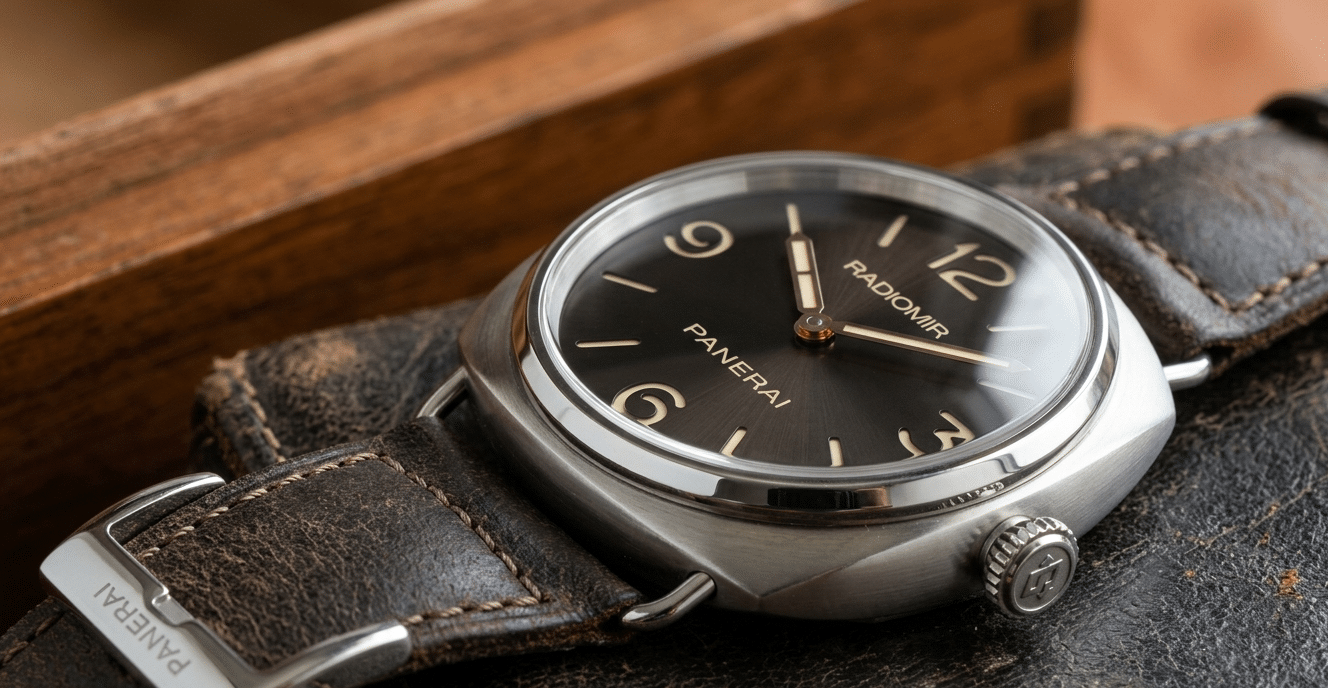
The Radiomir’s cushion case is defined by a series of subtle curves, precise chamfers, and an overall fluidity that is deceptively complex to manufacture with consistent accuracy. Authentic Panerai Radiomir cases, whether vintage Ref. 3646 or modern re-issues like the PAM00232, adhere to extremely tight dimensional tolerances. The diameter, thickness, and crucial lug-to-lug measurements are meticulously controlled, ensuring the watch sits on the wrist with a specific, balanced presence.
Panerai’s manufacturing processes achieve a seamless transition between polished and brushed surfaces, and the curvature of the case sides is designed to catch light in a particular way, creating a dynamic interplay of shadows. Replicas, even top-tier ones, often struggle to replicate this exact blend. While factories like XF have achieved “near-perfect case proportions” for models like the Radiomir 1940, slight deviations in the radius of the curves, the crispness of the chamfers, or the overall height can subtly alter the wrist feel and visual harmony. These differences might seem minute on paper, but they are palpable to someone who has handled multiple genuine examples.
Wire Lugs: Attachment Methods and Material Integrity
The Radiomir’s iconic wire lugs are a direct callback to its utilitarian origins, allowing for easy strap changes in the field. Originally, these were thin, fixed wires soldered directly to the case. Modern Radiomir models, while retaining the aesthetic, often feature removable wire lugs secured by a screw mechanism, enhancing practicality without sacrificing historical accuracy.
On authentic Panerai models, the engineering of these removable lugs is robust. The screw threads are precisely cut, ensuring a secure fit and smooth operation when changing straps. The lug bars themselves are made from high-grade stainless steel (316L for most models, as per Panerai’s standard), exhibiting consistent material density and strength. In contrast, even reputable replica factories can show inconsistencies. Our research indicates that XF’s Radiomir 1940 replicas, for instance, sometimes feature wire lug thickness that “occasionally runs 0.3mm over genuine,” a deviation visible under close inspection. Furthermore, some replicas may use inferior alloys for the lug bars or less precise threading, which can lead to stripped screws, compromised security, or a less satisfying tactile experience during strap changes.
Crown and Crown Tube Design Evolution
The Radiomir’s crown has seen its own evolution, from the early, prominent “onion” crown to more refined conical shapes. Regardless of the specific design, the crown on an authentic Panerai is engineered for both functionality and durability. The crown tube and gasket system are critical for water resistance, a primary requirement for a watch with military provenance.
Genuine Radiomir crowns exhibit a precise, tactile feel during winding and setting, with distinct clicks and no wobbling. The engraving of the Panerai logo on the crown is crisp, deep, and perfectly aligned. Replica crowns often fall short in these areas. While top factories like XF have improved significantly, their “crown machining shows minor tool marks under magnification” on some Radiomir 1940 models, a tell that speaks to less refined manufacturing processes. More significantly, the internal crown tube and gasket quality on replicas can be inconsistent, leading to compromised water resistance – a critical functional failure for a watch designed for aquatic environments.
Expert Authentication Insight
To truly verify the case construction, a close physical diagnostic is indispensable. Under magnification (10x or higher), meticulously inspect the internal machining of the lug screw holes. Authentic Panerai components will exhibit precise, clean threading and consistent material density, which can be checked with a fine probe or macro photography. Look for any burrs, uneven cuts, or inconsistent finishes. Similarly, examine the crown’s tactile feedback; a genuine Panerai crown should operate smoothly with defined positions, without excessive play or grinding. Any deviation in these areas, from subtle tool marks on the crown to slightly oversized lug thickness, serves as a strong indicator of a replica, even if the overall proportions appear correct to the naked eye.
Dial and Handset: The Face of Provenance
The dial and handset are the most visible components of any watch, and for the Panerai Radiomir, they are central to its identity. The distinctive sandwich dial, bold numerals, and specific hand shapes are not merely aesthetic choices but functional elements designed for extreme legibility. Scrutinizing the micro-details of these elements often provides the clearest path to distinguishing an authentic Radiomir from a replica, as their execution and material quality are difficult to perfectly imitate.
Sandwich Dial Construction: Depth, Lume, and Stencil Quality
Panerai’s iconic sandwich dial is a two-layer construction: a bottom disk coated with luminous material, and a top disk with cut-out numerals and indices, allowing the lume to shine through. This design delivers exceptional legibility and a distinctive three-dimensional depth. On genuine Radiomir dials, the precise depth of these layers is consistent, the luminous material is applied evenly without bleeding, and the stencil cuts for the numerals and indices are razor-sharp with clean, defined edges.
Replica factories, notably XF, were the first to “master true sandwich construction” for Panerai, moving beyond painted “faux-sandwich” designs. However, even their best efforts show subtle differences. Under 10x magnification, “XF sandwich dials show slightly rougher cutout edges than genuine.” Furthermore, while newer batches from top-tier factories have improved lume color, older batches often featured lume that “ran slightly greener” compared to the genuine’s creamy off-white or crisp white. The chemical composition of the luminous material itself also differs; authentic Panerai typically uses high-grade Super-LumiNova, which provides superior longevity and brightness compared to the more common, less expensive alternatives found in many replicas.
Font, Indices, and Branding
Every piece of text and every marker on a genuine Panerai Radiomir dial is executed with meticulous precision. The font styles, sizing, and spacing of “PANERAI,” “RADIOMIR,” and “SWISS MADE” are consistent across specific references and eras. The hour markers, whether Arabic numerals or baton indices, are crisp, perfectly formed, and evenly applied. The Panerai logo, if present, is sharp and well-defined, without any fuzziness or distortion.
These micro-details are a common Achilles’ heel for replicas. Our research notes that on VS PAM005 replicas, the “Date wheel font occasionally runs slightly bold,” a minor but detectable deviation. More broadly, under magnification, replicas frequently exhibit “slight ink spread on ‘Luminor’ or ‘Panerai’ text,” or inconsistencies in the thickness and sharpness of numerals. The spacing between letters and numbers can also be slightly off, disrupting the harmonious balance of the dial layout. These subtle imperfections accumulate, betraying the replica’s origin to a discerning eye.
Handset Design and Proportions
The hands of a Radiomir are integral to its legibility and aesthetic. Across different references, Panerai employs specific shapes (e.g., baton, pencil, skeletonized), lengths, and widths for the hour, minute, and sub-seconds hands. The lume infill on the hands is applied with the same precision as on the dial, ensuring evenness and consistent luminosity. Crucially, the central mounting of the hands is exact, with no visible play or misalignment.
Replica handsets often struggle with these precise proportions and finishes. The lengths or widths of the hands might be off by a fraction of a millimeter, disrupting the visual balance. The lume infill can be less uniform, sometimes showing bubbling or uneven application under magnification. Furthermore, the central pinion where the hands attach can be less precisely machined, leading to slight wobbling or imprecise alignment, especially noticeable when viewing the watch from different angles. These seemingly minor flaws collectively detract from the overall quality and authenticity of the watch’s face.
Expert Authentication Insight
To perform a definitive diagnostic on the dial and handset, a jeweler’s loupe with at least 10x magnification is essential. Focus your inspection on the luminous material: authentic lume often has a finer, more evenly applied grain than replica applications, and the transition edges where the lume meets the dial surface or hand outline are notably cleaner and sharper. Pay close attention to the sharpness of the stencil cuts on sandwich dials; genuine cutouts will be precise and smooth, whereas replicas may show slight irregularities or “softness” at the edges. Such detailed analysis, often found in a comprehensive Panerai super clone factory comparison, helps identify critical tells like inconsistencies in font thickness, letter spacing, or lume application that can differentiate a genuine Panerai from even the most convincing replica.
Movement Architecture: Beyond the Superficial
While the Radiomir’s case and dial capture its iconic aesthetic, the movement is its mechanical heart, and often the ultimate arbiter of authenticity. The inherent complexities of movement manufacturing, finishing, and functional specifications make it exceedingly difficult for replicas to achieve true parity with genuine Panerai calibers. This section dissects the mechanical differences that reveal a watch’s true provenance.
Historical Movements (Rolex, Angelus) and Modern Panerai Calibers
The Radiomir’s mechanical lineage is fascinating, tracing back to outsourced movements from revered manufacturers. Early Radiomirs for the Italian Royal Navy often housed robust, hand-wound Rolex movements (derived from Cortebert 618 calibers) or Angelus movements known for their extended power reserves. Today, Panerai primarily utilizes sophisticated in-house calibers, such as the P.3000 series (manual-wind) and P.999 (automatic), renowned for their reliability and distinctive architecture.
The replica market has made significant strides in cloning these movements. VS Factory’s P.9000 clone, released around 2017, was a breakthrough, being the “first true clone of Panerai’s in-house automatic caliber.” It achieved “correct power reserve (72 hours vs. genuine’s 72),” “bidirectional winding,” and a “quick-set hour hand” for the P.9010 variants. Similarly, XF Factory’s P.3000 clone, used in Radiomir 1940 models, provides a commendable “65–68 hour power reserve.” However, these are still clones*, and while they mimic functionality, their underlying execution and long-term performance often diverge significantly from their genuine counterparts. Budget replicas, on the other hand, frequently use modified Miyota or clone ETA movements, which bear little resemblance to Panerai’s proprietary calibers.
Finishing, Bridge Design, and Engravings
The finishing of a genuine Panerai movement is a hallmark of haute horlogerie. Features like Côtes de Genève stripes, perlage (circular graining), blued screws, and precise anglage (beveled and polished edges on bridges) are executed with an artisanal touch. Each bridge is uniquely shaped and positioned, and engravings for the caliber name, serial number, and brand are deep, crisp, and perfectly legible.
This is where even the best clone movements reveal their limitations. While VS Factory’s P.9000 clone is functionally impressive, its “movement finishing” is a primary difference from genuine. Our analysis of VS P.4000 clones notes that “micro-rotor finishing under magnification shows less refined beveling than genuine.” Generally, clone movements exhibit “simpler finishing — often machine patterns without hand-finishing.” The Côtes de Genève might be less defined, the perlage less uniform, and the blued screws are often chemically treated rather than thermally blued. Bridge layouts, while visually similar, may lack the subtle intricacies of genuine designs, and engravings can be shallower or less precise. These differences are immediately apparent to an experienced eye under magnification.
Accuracy, Power Reserve, and Serviceability
Beyond aesthetics, the practical performance of a movement is paramount. Genuine Panerai movements are regulated to stringent standards, offering excellent timekeeping accuracy (typically within COSC specifications for many models) and the full 72-hour power reserve as advertised. Crucially, they are designed for longevity and serviceability, with genuine spare parts readily available through authorized service centers and certified watchmakers.
Clone movements, while improving, still present compromises. While a VS P.9000 clone might run “within +5 seconds/day” and achieve “70–72 hour power reserve,” these figures can be less consistent across batches compared to genuine movements. XF’s P.3000 clone, for instance, has a slightly shorter “65–68 hour power reserve,” and its “power reserve indicator on some batches runs optimistic.” The long-term serviceability of clone movements is also a significant concern. While some parts might be compatible (VS P.9000 boasts “~85% parts compatibility”), finding qualified watchmakers willing to service replicas, and sourcing reliable replacement parts for non-compatible components, can be challenging and costly. The service cost for a VS P.9000 clone, while lower at an estimated $150–$250, still represents a recurring expense for a watch with zero resale value.
Expert Authentication Insight
For the ultimate verification, a professional movement inspection is indispensable. Observe the balance wheel’s oscillation and the escapement’s interaction under magnification. Genuine movements typically exhibit a more stable, higher amplitude beat, indicative of superior regulation and component quality. The finishing of the balance cock and regulator mechanism will be significantly finer on an authentic Panerai. A timegrapher analysis can further confirm the beat rate (e.g., 28,800 vph for P.9000) and amplitude, revealing any underlying mechanical deficiencies. Any inconsistencies in these aspects—from the lack of specific finishing patterns to a lower-than-expected amplitude—are definitive proof of a non-genuine movement, regardless of how superficially similar it might appear.
Verifying Provenance: The Archival Approach
For any serious collector or prospective buyer, establishing the provenance of a Panerai Radiomir is paramount. This isn’t merely about confirming authenticity; it’s about understanding the watch’s place within a rich history and ensuring its value. While replica factories like ZF make bold claims, the ultimate arbiter of truth lies in Panerai’s own meticulously documented past.
Panerai Historical Archives and Official Catalogs
Panerai, like other heritage watch brands, maintains extensive historical archives that serve as the definitive record of its production. These archives, often accessible through official brand resources, museum collections, or scholarly publications, detail specific reference numbers, production years, and the design features associated with each model. Consulting these resources is the first critical step in cross-referencing any Radiomir in question. For instance, if a watch claims to be a Ref. 3646 from the 1940s, its case dimensions, dial markings, and movement type should precisely align with documented specifications for that period. Official catalogs from various eras also provide a snapshot of design evolution, material choices, and movement calibers used at the time. These documents are invaluable for discerning genuine historical accuracy from speculative interpretations or outright fabrications, especially when comparing a watch against claims made by replica manufacturers.
Serial Numbers, Production Dates, and Batch Codes
Every genuine Panerai watch carries a unique set of identifiers: serial numbers, production dates, and often specific batch codes, typically found engraved on the caseback or, in some instances, on the movement itself. These aren’t just random sequences; they are a traceable lineage. A serial number allows a watch to be precisely dated to its manufacturing year and often to a specific production run. Panerai uses these identifiers for warranty tracking, service history, and official authentication. For example, the “OP” prefix followed by a series of digits and a letter (e.g., OP67XX / AXXXX/XXXX) can confirm the model family and the production year. Replicas, while often featuring plausible-looking serials, frequently have inconsistencies in font, depth, spacing, or simply don’t correlate to any legitimate Panerai production record. Verifying these codes against official brand data or through a certified service center can quickly expose a counterfeit.
Expert Appraisal and Community Knowledge
While self-verification is a strong starting point, the nuances of Panerai authentication often require the eye of a seasoned professional. Seeking appraisal from a certified Panerai watchmaker or a highly reputable vintage watch expert is crucial for a definitive verdict. These experts possess the specialized tools, knowledge of specific manufacturing variations, and access to proprietary databases that lay buyers lack. Beyond professional appraisal, knowledgeable collector communities and forums can offer valuable insights. Platforms like Watchuseek or specific Panerai enthusiast groups often contain shared historical data, known “tells” for specific references, and collective wisdom. However, it’s vital to approach community knowledge with caution; while helpful for initial checks, it should never replace expert verification. Unverified claims or anecdotal evidence from forums, especially those known for replica discussions, can be misleading.
Expert Authentication Insight
When examining a Radiomir, pay meticulous attention to the caseback engravings. Genuine Panerai casebacks feature deeply etched, precise lettering with consistent depth and sharp edges for the serial number, reference number, and material designations. Replicas frequently exhibit shallower, less precise engravings, sometimes with uneven spacing, inconsistent font styles, or a ‘dot-matrix’ appearance rather than a clean, continuous line. A 10x loupe can reveal these subtle but critical differences, especially in the “OFFICINE PANERAI” text or the unique production codes.
The Cost of “Specialization”: Long-Term Ownership Reality
The allure of a “specialized” replica like those from ZF can be strong, promising near-identical aesthetics at a fraction of the cost. However, the decision to invest in a replica, especially one claiming such high fidelity, carries significant long-term implications that extend far beyond the initial purchase price. Understanding these realities is crucial for any buyer contemplating a Panerai Radiomir, authentic or otherwise.
Resale Value and Market Acceptance
This is perhaps the most stark and undeniable difference between an authentic Panerai Radiomir and even the most convincing replica: resale value. A genuine Panerai, particularly a well-preserved vintage piece or a sought-after special edition, can hold its value remarkably well, and in some cases, even appreciate significantly over time. It represents a tangible asset with a recognized market. Conversely, replica watches, regardless of their perceived quality or “specialization,” possess zero legitimate resale value. Selling a replica as authentic is illegal and fraudulent. Attempting to sell it as a replica often yields a minuscule fraction of its purchase price, if it can be sold at all. What initially seems like a cost-effective alternative becomes a financial black hole, offering no return on investment and no market acceptance within the legitimate watch collecting world. An authentic Panerai at $8,000-$12,000 might retain 80-120% of its value, while a $550 replica retains 0% in any legitimate market.
Maintenance, Repair, and Parts Availability
The long-term ownership experience of a replica is fraught with practical challenges. While factories like ZF boast of their clone movements (e.g., the modified Miyota in their complications or the Asian 6497 in simpler Radiomirs), these movements, however competent for a replica, are not genuine Panerai calibers. This creates a cascade of issues for maintenance and repair. Finding a watchmaker willing to service a replica is notoriously difficult; many legitimate watchmakers refuse due to ethical concerns, lack of appropriate parts, or the sheer headache of working with non-standardized components. Even if a watchmaker agrees, obtaining spare parts is nearly impossible. Genuine Panerai parts are tightly controlled and supplied only to authorized service centers. Replica parts, even for “super clones,” are often inconsistent in quality and availability. This means that a minor issue, like a worn gear or a damaged mainspring, can render an otherwise functional replica irreparable, effectively turning a $550 watch into a paperweight. While a VS P.9000 clone might cost $150-$250 for service, finding someone to do it and guarantee it is another matter entirely.
Ethical Considerations and Brand Integrity
Beyond the financial and practical aspects, supporting the replica market carries significant ethical implications. The production and sale of counterfeit goods constitute intellectual property infringement, directly undermining the innovation, design efforts, and heritage that brands like Panerai invest in. While some argue that it’s a victimless crime or a protest against high prices, the reality is that the replica industry operates outside of legal and ethical frameworks. It often involves exploitative labor practices, avoids taxes, and contributes to a shadow economy. By choosing a replica, a buyer inadvertently supports an ecosystem that profits from theft of design and reputation, directly harming the legitimate watchmaking industry and the skilled artisans who create these timepieces. It erodes the very concept of brand integrity and the value of genuine craftsmanship.
Expert Authentication Insight
One of the most telling physical diagnostics for a Radiomir’s long-term reliability and construction integrity is a professional water resistance test. Authentic Panerai watches are renowned for their robust water resistance, meeting specified ISO standards (e.g., 100m, 300m, or more, depending on the model). Replicas, even those claiming high quality, frequently fail pressure tests due to inferior gasket materials, imprecise case construction, or compromised crown sealing mechanisms. While a replica might look the part, its ability to withstand immersion or even heavy rain is often severely compromised, leading to potential water intrusion and catastrophic damage to the movement. This practical failure highlights the fundamental difference in engineering and quality control.