
The “In Stock” Illusion: Initial Order Processing & Factory Queues
You’ve just hit “buy” on that coveted Panerai replica, perhaps a VS Factory Luminor Marina. The dealer’s website or chat message says “in stock.” A wave of excitement, then perhaps a nagging thought: what does that actually mean when dealing with a replica watch from a factory in China? The reality is far more nuanced than a typical retail purchase, as explored in a Panerai quick release strap review. “In stock” in the replica world rarely means a specific, ready-to-ship watch is sitting on a shelf, waiting for a shipping label. It’s the beginning of a complex, multi-stage journey through various queues.
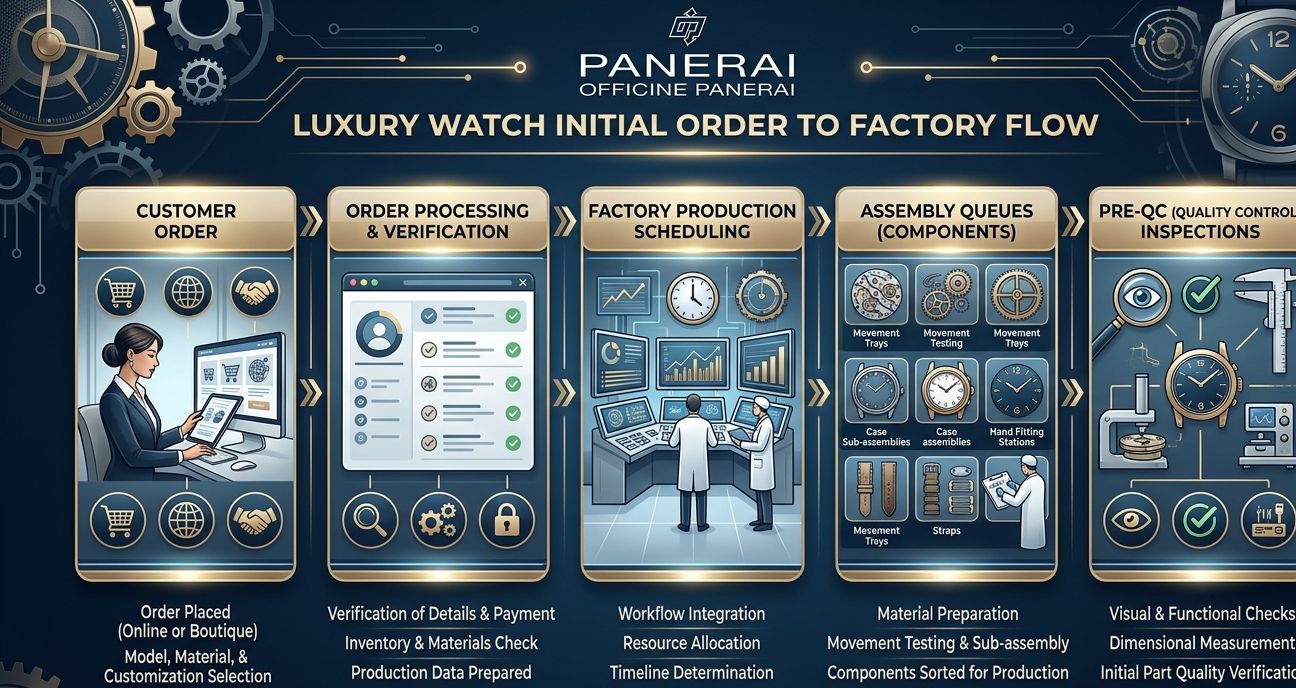
Payment Confirmation & Internal Order Placement
Once you send payment, your Trusted Dealer (TD) processes it. This isn’t just about confirming funds; it’s about initiating a chain reaction with the factory. For a high-demand model like a VS Factory Panerai, the TD will typically place an order directly with the factory’s sales agent. The internal lead time for a watch to be pulled or assembled can vary significantly. Factories like VS often operate on a batch production cycle. They don’t build watches one-by-one to fulfill individual orders. Instead, they produce a certain model in quantities, perhaps hundreds at a time, then release them to distributors. Your order slots into this cycle, meaning you might be waiting for the next batch to be completed, or for a watch to be allocated from a recently finished one. This initial allocation is where the first “queue” truly begins.
The “Pre-QC” Holding Pattern: What “In Stock” Really Signifies
When a TD states a watch is “in stock,” it often translates to one of three scenarios: the factory has the raw materials and components ready for assembly; a production batch for that specific model is currently scheduled or underway; or, less commonly, a watch from a previous batch is indeed physically available but still requires internal processing. It almost never means a specific watch has been fully assembled, undergone quality checks, and is waiting for your QC photos. Instead, your order enters a “pre-QC” holding pattern. The factory needs to either assemble your watch from components or pull one from a fresh batch, then prepare it for its own internal quality control and subsequent presentation to the TD.
Initial Factory Inspection & Pre-QC Checks
Before a watch is even presented to your TD for QC photos, it typically undergoes a preliminary inspection at the factory level. This isn’t the detailed QC you’ll perform, but a basic sanity check. Factory technicians will perform fundamental functional tests: ensuring the movement runs, the hands set correctly, and the date changes. They’ll also conduct a quick visual scan for any glaring defects—a major scratch on the crystal, a grossly misaligned dial, or a non-functioning crown. This stage is crucial for filtering out obvious duds before they consume resources later in the process. It also confirms that the correct model and movement (e.g., a VS P.9000 clone for a Luminor Marina) have been assigned to the order.
Buyer’s Process Clarity Checkpoint
At this early stage, manage your expectations for the term “in stock.” It’s a relative term, not a guarantee of immediate readiness. A practical step is to ask your TD for an estimated timeframe for when you can expect QC photos. Understand that this is an estimate, subject to factory production schedules and queue lengths. If a TD quotes an unusually short timeframe (e.g., “QC in 1-2 days” for a newly released or high-demand model), exercise a healthy dose of skepticism.
The QC Photo Gauntlet: Inspection, Approval, and Rejection Cycles
The Quality Control (QC) photo stage is arguably the most critical juncture for a buyer. It’s your one chance to virtually inspect the watch before it leaves China, and your decision here profoundly impacts the subsequent timeline.
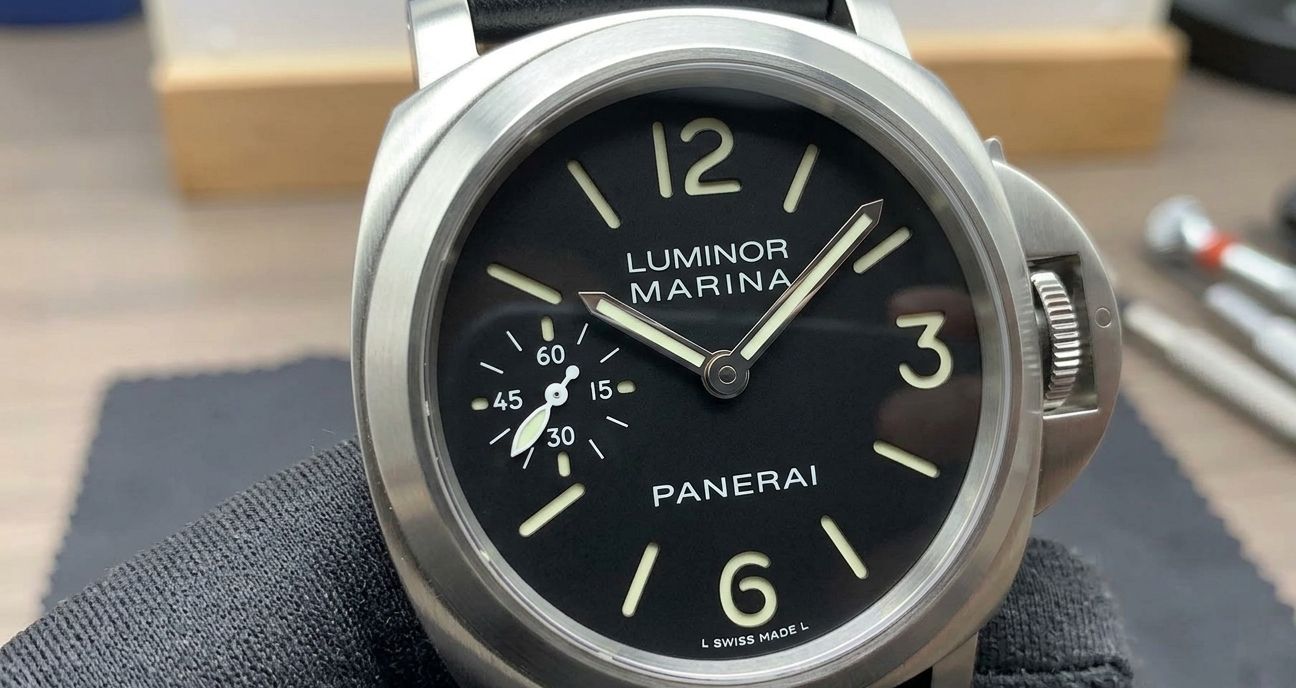
The Role of QC Photos: Buyer’s Virtual Inspection
Once your watch clears the factory’s initial checks, your TD will receive a comprehensive set of QC photos and often a video from the factory. For VS Factory Panerai models, this typically includes clear, high-resolution images of the dial (front and angled), case, caseback, crown guard, clasp, and a video showcasing the movement’s operation, date change, and time setting. Crucially, a timegrapher reading will be provided, displaying the watch’s accuracy (rate, amplitude, beat error). As the buyer, this is your virtual inspection. You need to scrutinize details like dial alignment (are the hour markers perfectly centered?), hand stack (are the hands installed correctly and at the right height?), date wheel font and alignment, movement aesthetics (if it has a display caseback), and the timegrapher numbers. Learning what constitutes acceptable parameters for a replica is key here.
Common QC Issues & The Rejection Process
Buyers often reject watches for a range of issues, some minor, some significant. Frequent culprits include dust or debris trapped under the crystal, misaligned dial markers or rehaut, visible flaws on the dial printing, poor timegrapher numbers (e.g., high beat error or very low amplitude), or noticeable imperfections on the case, bezel, or hands. If you identify a flaw that’s unacceptable, you communicate your rejection to the TD, detailing the specific issues. The TD then relays this back to the factory. What happens next depends on the severity of the issue: the factory might attempt a repair (e.g., cleaning dust, realigning a date wheel), or they might source an entirely new watch for you. Either option significantly impacts your timeline.
The “Re-QC” Loop: Delays After Rejection
Rejecting a watch initiates what’s colloquially known as the “Re-QC” loop, and it’s a major source of timeline extension. If the factory repairs the original watch, it goes back through their internal processes, then new QC photos must be generated. If a new watch is sourced, your order effectively goes back to the beginning of the factory queue, potentially waiting for another batch to be completed, then through factory inspection, and finally, new QC photos. This entire cycle can add anywhere from a few days for a quick fix to several weeks or even a month or more for a complete replacement, especially for popular VS Factory models where demand is high. Patience is critical here, as rushing the process can lead to accepting a watch with compromises.
Buyer’s Process Clarity Checkpoint
To navigate the QC stage effectively, develop a personal QC checklist before* you even place an order. Research common tells for your chosen Panerai model and factory (e.g., VS Factory PAM005 date wheel font). Communicate clearly and concisely with your TD about any concerns, referencing specific photos. Most importantly, understand that rejecting a watch is your right, but it comes with a definite timeline penalty. Factor this potential delay into your overall expectations, especially if the watch is for a specific event.
Shipping Preparations & The Label Lottery: From QC Approval to Export
Once you give your final approval on the QC photos, the watch is officially “yours.” However, it still has a significant journey ahead. This stage covers the crucial steps from your approval to the moment the package physically leaves the TD’s sphere of influence.
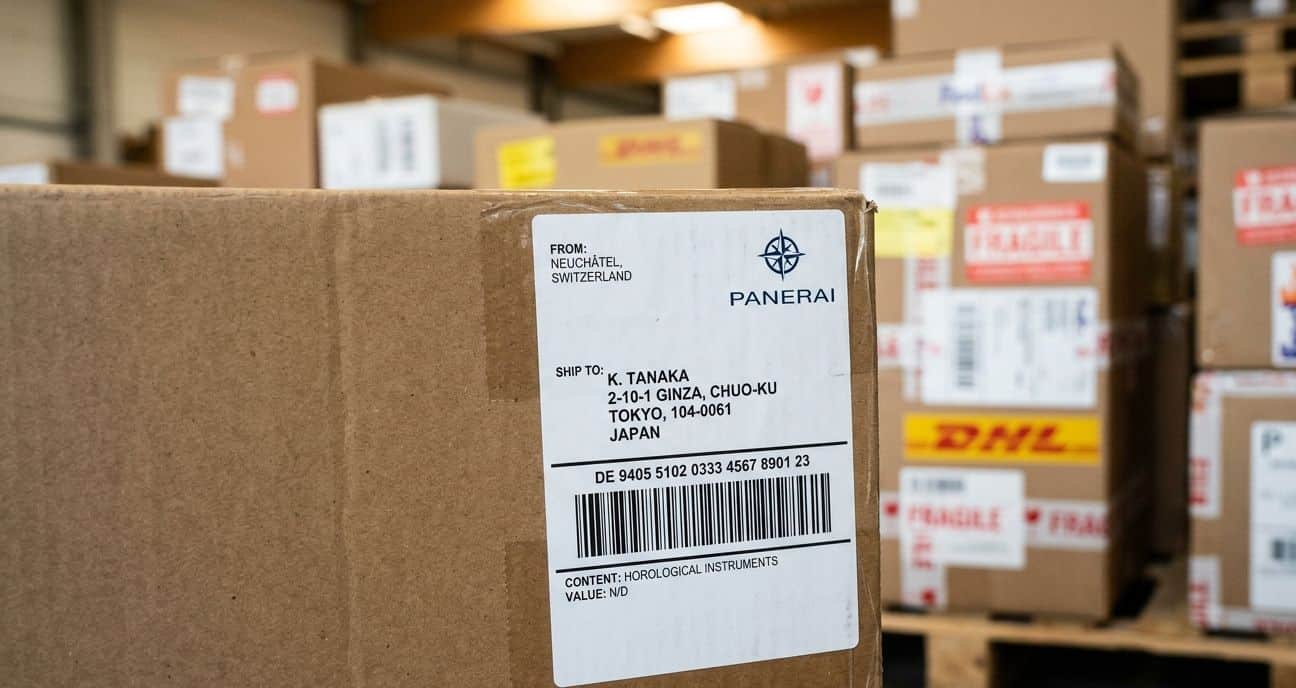
Final QC & Packaging for Shipment
After your approval, the TD or their appointed agent performs a final, quick visual check to ensure no new damage occurred during handling and that the watch matches the approved QC photos. The watch is then carefully packaged for international transit. This often involves wrapping the watch head in protective film or foam, securing it within a small box, and then placing that box inside a larger, discreet shipping box. TDs prioritize discretion to avoid customs scrutiny, so expect minimal branding on the outer packaging. The goal is to protect the watch from impacts and vibrations during its long journey, while also making it appear as innocuous as possible.
Shipping Label Generation & Initial Logistics Handoff
Following packaging, a shipping label is generated. This is often done through third-party logistics providers who specialize in international shipments from China. It’s critical to understand that “shipping label created” does not equate to “package shipped.” This is a common point of anxiety for buyers. The label simply means the carrier has been notified, and a tracking number has been assigned. There’s typically a delay—ranging from a few hours to several days—between the label being generated and the package physically being handed over to the carrier or a consolidator. During this period, your tracking information may show “label created” or “pre-shipment info sent to USPS,” but no actual movement.
The “Export Queue”: Waiting for Carrier Pickup
After the label is generated and the package is prepared, it enters what can be called the “export queue.” This is the period where the package is ready for pickup but awaiting the international shipping carrier or their local agent to physically collect it from the TD’s facility or a logistics hub. The length of this queue can fluctuate wildly. Factors include the carrier’s pickup schedule (some pick up daily, others less frequently), the volume of packages being processed, especially those related to resolving TDs Panerai movement failures, and the geographical location of the TD relative to major logistics centers in China. During peak seasons, such as immediately after Chinese New Year or during major shopping festivals, this queue can lengthen significantly, adding unexpected days to the timeline.
Buyer’s Process Clarity Checkpoint
Be vigilant about monitoring your tracking updates, but understand the nuance. Don’t panic if you see “label created” for a few days without further movement. The crucial update to watch for is “picked up,” “in transit,” or “received by carrier.” This signifies that the package has physically moved into the logistics network. Using universal tracking sites (like 17Track or ParcelsApp) can sometimes provide more detailed or earlier updates than carrier-specific sites, as they aggregate data from multiple sources.
The International Transit Labyrinth: Air Freight, Hubs, and Tracking Blackouts
Once your Panerai replica clears the initial shipping preparations, it embarks on the most complex leg of its journey: international transit. This stage is a maze of air freight, logistical hubs, and often, periods where tracking information seems to vanish. Understanding this labyrinth is key to managing your expectations and avoiding unnecessary anxiety.
Air Cargo & Consolidation Points
The vast majority of replica watches travel via air freight. This isn’t a direct flight from the factory to your doorstep; rather, it involves a series of consolidations and transfers. Packages are often grouped with countless others from various sellers to fill cargo planes, a cost-efficient strategy for logistics companies. These planes typically route through major international hubs, such as Hong Kong or specific European cities, before heading to their final destination countries. Your watch might spend time in one of these hubs, awaiting the next leg of its journey or undergoing preliminary sorting, before it even leaves the continent of origin.
Tracking Blackouts & “No Update” Periods
A common source of buyer concern is the “tracking blackout” – periods where your tracking information goes quiet, sometimes for days or even weeks. This is a normal, albeit frustrating, part of international shipping, especially for items in this market. Such silences often occur when a package is physically on an airplane, in transit between major hubs, or sitting in a processing queue at an intermediate facility. Before it’s scanned by customs in the destination country, or by the next carrier, there’s simply no new data to report. It doesn’t necessarily mean your package is lost or stuck; it’s just moving through a phase where digital updates aren’t generated.
The Impact of Geopolitics & Logistics Disruptions
The international transit timeline is highly susceptible to external factors. Global events, shifts in trade policies, and even specific country regulations can significantly impact air cargo routes and processing times. For instance, increased scrutiny on certain shipping lanes, or sudden changes in customs procedures, can create bottlenecks. In response, Trusted Dealers (TDs) often employ “stealth shipping” methods. This can involve mislabeling packages (e.g., “watch parts,” “gift,” or “machinery components”), declaring a low value ($50-$150), or routing packages through an intermediate country (known as “triangle shipping”) to obscure the true origin and reduce direct customs risk. These methods aim to mitigate risks but can also add layers to the journey, occasionally leading to longer transit times.
Buyer’s Process Clarity Checkpoint
During this stage, the most important thing is to understand that tracking blackouts are a standard occurrence. Avoid panicking if your tracking doesn’t update for several days. For broader visibility, consider using universal tracking sites like 17track.net, which can often pull data from multiple carriers and provide a more comprehensive, albeit sometimes delayed, picture than a single carrier’s website.
Customs Clearance: The Unpredictable Gatekeeper
Customs clearance is arguably the most unpredictable and critical stage of your replica watch’s journey. It’s the point where your package transitions from international transit to domestic delivery, and it’s where delays, inspections, and even potential seizures can occur. Managing this stage effectively requires understanding its nuances and preparing for various outcomes.
Arrival at Destination Country & Customs Entry
When your package lands in the destination country, it’s first scanned and entered into the local customs system. This initial entry is typically swift. However, what happens next depends on a variety of factors that influence whether your package is flagged for further inspection. These triggers can include the declared value (often intentionally low on replica shipments to minimize duties), the package description (e.g., “watch parts” instead of “luxury watch”), the country of origin, and even random selection. While TDs use methods to minimize scrutiny, customs authorities are increasingly sophisticated in identifying suspicious packages.
Customs Inspection, Holds, and Potential Seizures
Customs scrutiny varies from a quick scan to a thorough physical inspection. Common reasons for delays include general backlogs at customs facilities, random checks, or specific intelligence targeting certain types of shipments. In rare but significant cases, a package might be held for further investigation or, in the worst-case scenario, seized. Seizures are uncommon for individual replica watch shipments, especially when shipped discreetly, but the risk is always present. To mitigate this, many TDs utilize “triangle shipping,” where a package is first sent to an intermediate country (often in the EU) to clear customs there, then re-labeled and shipped to the final destination. This strategy breaks the chain of origin, making it harder for destination customs to identify the package as originating directly from China.
If customs does flag your package, there are a few possible outcomes. Occasionally, they might send a letter requesting additional information or payment of duties. In such cases, it’s crucial to follow your TD’s advice, as attempting to claim the package as a replica could lead to legal issues. More commonly, if a package is seized, you’ll receive a notification. This is where your TD’s reshipment policy becomes paramount. Most reputable TDs offer some form of “customs guarantee,” ranging from 100% loss coverage (meaning they’ll reship a new watch at no extra cost) to partial coverage. A reshipment, if necessary, will restart the entire timeline from the factory sourcing stage, potentially adding several weeks or even months to your wait.
Buyer’s Process Clarity Checkpoint
Before placing an order, meticulously review your TD’s reshipment policy regarding customs seizures. Understand what their guarantee covers and any conditions attached. While direct customs inquiries to buyers are rare for well-shipped replicas, be aware of what to do if you receive any official communication. Patience is key here; a customs hold doesn’t automatically mean seizure, but it does mean an indefinite delay.
Last-Mile Delivery: The Home Stretch and Final Arrival
After navigating the international transit labyrinth and clearing the unpredictable gatekeeper of customs, your Panerai replica enters the final, often fastest, stage of its journey: last-mile delivery. This is the home stretch, bringing your coveted timepiece from the local distribution center directly to your doorstep.
Handoff to Local Carrier & Domestic Tracking Activation
Once your package is cleared by customs, it’s typically handed off to a local national postal service (like USPS in the United States) or a private courier (such as FedEx or UPS). At this point, a new, domestic tracking number may activate, providing more granular and frequent updates than the international tracking. This transition usually signals that the watch is physically within your country and moving through the standard delivery network. The speed of this final stage is generally much quicker than international transit, often taking just a few days.
Delivery Attempts, Signature Requirements, and Pickup Points
Local carriers follow standard delivery protocols. This typically includes one or more delivery attempts to your specified address. While some replica shipments are sent without signature requirements for added discretion, others may require one, depending on the carrier and the TD’s instructions, which are often detailed within a comprehensive Panerai replica buying guide. If you’re not home during a delivery attempt, the package might be left in a secure location, or a notice will be left with instructions for re-delivery or pickup at a local post office or depot. It’s crucial to closely monitor your domestic tracking updates during this phase to anticipate delivery and ensure you can receive the package promptly, especially if a signature is required or if you need to arrange a pickup.
Confirming Delivery & Post-Arrival Checks
The moment your package arrives is a mix of excitement and relief. Immediately upon receiving it, take a moment to inspect the outer packaging for any obvious signs of damage during transit. Then, carefully unbox your watch. Verify that the contents match your order—the correct Panerai model, movement, and any accessories. Perform a quick visual check for any shipping damage to the watch itself, such as a loose crystal, a scratched case, or a misaligned dial. This initial inspection is your final quality control opportunity, ensuring the watch arrived in good condition and as expected. If there are any discrepancies or damage, document them immediately with photos and contact your TD.
Buyer’s Process Clarity Checkpoint
To ensure a smooth final delivery, make sure someone is available to receive the package, especially if a signature is required. Closely track your domestic shipping updates, as these are often real-time. Most importantly, inspect the watch thoroughly immediately upon arrival. This quick post-delivery check can help you identify any issues that might have occurred during the final leg of its long journey.
Variable Factors & Realistic Expectations: What Influences Your Timeline
Understanding the typical journey of a Panerai replica from VS Factory to your wrist is one thing; navigating the real-world variables that can stretch that timeline is another. This section explores the external and internal factors that frequently impact delivery, providing a framework for more realistic expectations.
New Release Demand & Factory Backlogs (e.g., VS Factory Specifics)
The replica watch market, much like the genuine one, is driven by hype and demand. When VS Factory announces a highly anticipated new Panerai model, or when an existing model achieves “NWBIG” (Not Worth Buying In Genuine) status, a surge of orders inevitably follows. This creates immediate backlogs. What “in stock” means for a new VS Factory Panerai might be that the factory has the components, but the actual assembly, initial factory inspection, and queue for quality control (QC) photos can extend significantly. Instead of a few days, you might wait weeks just for those initial QC images, as the factory works through hundreds, if not thousands, of orders for the same popular reference.
Holiday Seasons & Global Events (e.g., Chinese New Year, 11.11, COVID-19)
Certain periods in the calendar are almost guaranteed to cause delays. Major Chinese holidays such as Chinese New Year (CNY) and Golden Week see factories and shipping operations shut down for extended periods, often two to three weeks. If your order falls just before or during these times, expect a complete standstill. Similarly, massive shopping events like “11.11” (Singles’ Day) in China can overwhelm logistics networks, causing bottlenecks even for non-retail shipments. Beyond predictable holidays, global events like pandemics, natural disasters, or even significant political tensions can disrupt supply chains, ground air cargo, and delay customs processing worldwide. These are often unpredictable but have far-reaching effects on transit times.
Raids, Supply Shocks, and Factory Closures
The replica industry operates in a legal grey area, making it inherently vulnerable to enforcement actions. Factory raids, like those that have impacted major players such as VS and XF in the past, can bring production to a sudden halt. These events aren’t just about factory shutdowns; they can also lead to component shortages (supply shocks) if key suppliers are affected or if a specific part becomes scarce. Factories might close down temporarily, rebrand, or reorganize, creating immense uncertainty and potentially forcing dealers to source from less reliable alternatives. Such disruptions can add weeks or even months to a timeline with little to no prior warning.
Buyer’s Process Clarity Checkpoint
Before placing an order, take a moment to research upcoming Chinese national holidays. Keep an eye on replica watch forums or reputable news sources for any reports of factory raids or significant supply chain disruptions. If your watch is for a specific event or travel, assume these variables will come into play and build in a substantial buffer to your expected delivery date.
Delays are an almost inevitable part of the replica watch buying process. Your approach to these delays, and how you communicate with your Trusted Dealer (TD), can significantly reduce stress and help manage expectations effectively.
Effective Communication with Your Trusted Dealer
Your TD is your primary point of contact, but they are not always privy to every internal detail of factory operations or international logistics. Patience and respectful communication are paramount. Avoid daily inquiries. Instead, consider reaching out at logical intervals – for example, if the estimated QC photo turnaround time has passed by a few days, or if your tracking hasn’t updated for over a week after the typical “blackout” period. When you do inquire, be specific: reference your order number and ask for an update on the current stage (e.g., “Has the watch cleared factory QC yet?” or “Is there an update on the export status?”). Understand that “no news” from a TD often means they also have no new information from their upstream suppliers.
Setting Realistic Personal Deadlines (Event-Based Purchases)
If you’re buying a Panerai replica for a special occasion – a birthday, an anniversary, or a trip where you envision wearing it – you must set your personal deadlines far in advance. A good rule of thumb is to order at least 2-3 months before the absolute latest date you need the watch. Even if a TD quotes a 3-4 week total timeline, adding a 4-6 week buffer for unforeseen delays is a wise decision. This allows for potential re-QC loops, customs hold-ups, or shipping disruptions without causing undue stress or disappointment.
Understanding “Worst-Case” Scenarios and Mitigation
While most orders proceed without major incident, it’s prudent to understand what a “worst-case” scenario looks like. An order that takes 2-3 months from payment to delivery, involving a QC rejection and a customs reshipment, is not unheard of in the replica world. To mitigate this risk, thoroughly understand your TD’s reshipment policy before* ordering. Some offer 100% loss coverage, while others have partial policies or require additional payment for a second shipment. Having a backup plan for event-critical purchases, such as a secondary gift, can also alleviate pressure. Remember, the goal is to enjoy the process, not to be held hostage by unpredictable timelines.
Buyer’s Process Clarity Checkpoint
Keep a clear record of all your order details, payment confirmations, and communications with your TD. Establish an internal “panic threshold” – a specific date or lack of update that triggers a polite, structured inquiry to your TD, rather than reacting to every minor delay. This disciplined approach will serve you well.
The journey of a Panerai replica from VS Factory to your wrist is rarely a straight line. It’s a complex dance of factory queues, meticulous quality control, international logistics, and unpredictable external factors. By adopting a “Buyer’s Expectation Framework” – one built on informed patience, proactive communication, and realistic personal deadlines – you can navigate this process with confidence. Order early, communicate clearly, and enjoy the anticipation – the journey is part of the story, and the watch at the end will be worth the wait.