
Pricing in the Vacheron Constantin Overseas replica ecosystem is not a market story. It is an engineering outcome. What separates entry, mid, and high tiers is not polish, dial color, or how bright the case looks under studio light. Cost rises because rework collapses and tolerance control improves. Entry pieces remain assembly-driven, mid-tier builds become system-controlled, and high-tier output finally moves into geometry-regulated production. Once you see Overseas pricing through this lens, every dollar maps back to how much error the system allows to survive.
Price Band Architecture: Why Overseas Stratifies by Execution, Not Parts
Entry Tier: Assembly-Driven Outcomes
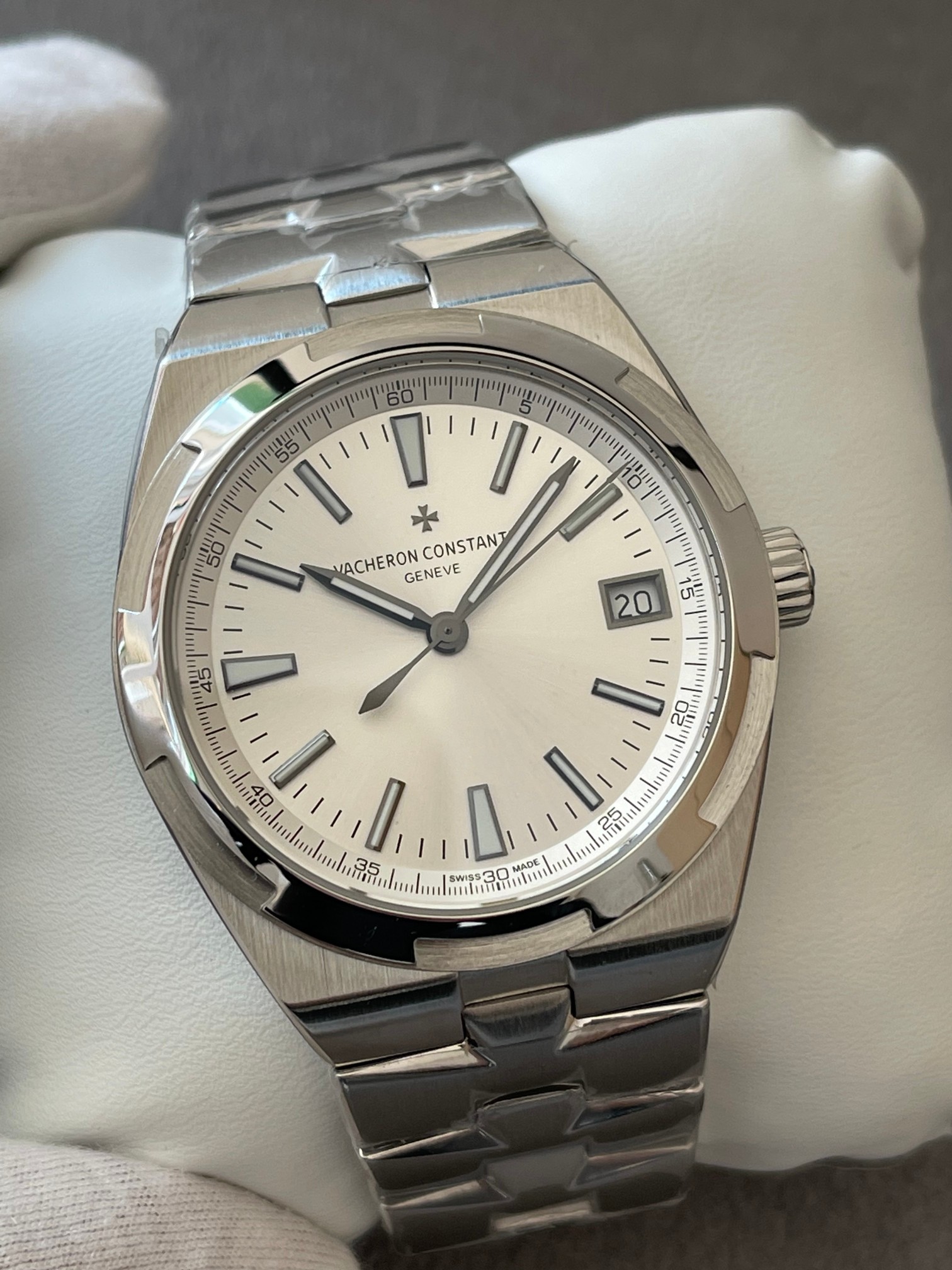
The entry band is defined by manual assembly without governing fixtures. Dials are seated by feel, hands are pressed by eye, and bezels are aligned through visual judgment rather than indexed stops. In this environment, tolerance stacking remains unmanaged, so every operation compounds the last. One unit leaves the bench visually balanced, the next carries a subtle center drift that only appears after a week on the wrist.
This is why entry pricing always reflects variability rather than value. Two watches from the same batch can age differently under identical wear because outcomes depend on individual hands, not repeatable geometry. You are not paying for a regulated system here. You are paying for a build attempt, and alignment behavior becomes a matter of luck.
Mid Tier: System-Controlled Assembly
Mid-tier production introduces partial control. Dial pin jigs set seating depth, hand-height presets reduce collisions, and basic bezel indexing limits rotational error. These steps narrow variance across units and create a baseline of consistency that entry builds cannot sustain. Watches leave the line looking more uniform, and obvious failures drop.
But geometry is still not fully governed. Center-axis drift remains unresolved because fixtures control placement, not alignment. Mid-tier pricing buys repeatability across batches, not immunity from visual exposure. Under real wear, small axis offsets still surface as horizon tilt or minute-track imbalance. System assembly discipline stabilizes outcomes, yet structural sensitivity remains.
High Tier: Geometry-Regulated Production
High-tier Overseas replicas cross the threshold from assembly to regulation. Here, center-axis verification precedes hand installation. Dial plane parallelism is measured, not assumed. Hand-stack height becomes repeatable rather than approximate, and bezels are pressed through indexed fixtures with rotational stops. The system no longer reacts to defects after they appear; it prevents them upstream.
This is where cost actually lives — high-tier pricing reflects controlled geometry that survives Overseas’ visual sensitivity, and the watch holds its balance across lighting changes, strap swaps, and daily motion because tolerances are governed before cosmetics enter the process, a dynamic of real-world use, balance transition, and system behavior detailed in the Overseas wearing behavior, styling logic, system balance, strap transitions and real world use judgment analysis; surface finish matters, but it is secondary, because geometry carries the load.
Practical Judgment Tip: Three-Point Dial Horizon Check
Lay the watch flat under neutral light and compare minute-track distance at 12, 4, and 8. Do not chase perfection; look for symmetry. When spacing varies across these three points, you are seeing center-axis drift expressed at the perimeter. That imbalance rarely stays invisible. Unequal spacing today predicts visual instability once the watch lives on a wrist.
Cost Inputs Explained: Rework Rate Is the Real Price Driver
Where Rework Starts: Dial Seating Variance
Rework begins with dial seating. Dial foot tolerance, adhesive thickness, and plane parallelism determine whether the face sits true to the movement axis. When this first decision is loose, every downstream operation inherits the error. Hands must be corrected, bezels need re-pressing, and finished cases return to benches that should already be building the next unit.
Small seating errors cascade because they force correction instead of prevention. Each correction adds time, increases scrap risk, and destabilizes the sequence. High-tier builds cost more because they remove this variability at the start. Once dial geometry is fixed, the entire assembly path shortens.
Hand Stack as a Multiplier
Vertical tolerance multiplies visual error faster than any other subsystem. Clearance between hour, minute, and seconds hands must balance friction, height, and visual layering. Cannon pinion drift changes that balance quietly, and when it does, the stack amplifies even minor axis deviations.

On Overseas, this amplification is unforgiving. A slightly high minute hand or uneven spacing between layers turns subtle misalignment into something the eye reads immediately. Hand stack tolerance does not merely affect function. It reshapes perception. This is why regulated stack height belongs to the high tier and why mid-tier builds, despite improved consistency, still reveal themselves over time.
Bezel Indexing and Maltese Geometry
The Maltese cross bezel does not tolerate rotational ambiguity. Its symmetry forces alignment into discrete states, so any mis-indexing becomes obvious at cardinal points. Without indexed presses, bezels require multiple seating attempts, and each re-press risks surface damage or case distortion.
Top-tier production absorbs fewer of these cycles because alignment is fixed by tooling, not corrected by hand. Fewer re-presses mean lower scrap, tighter acceptance thresholds, and more predictable output. This is a primary reason why high-tier pricing reflects process control rather than aesthetic refinement.
Practical Judgment Tip: Bezel Cardinal Alignment Test
Align the bezel points against dial markers at 12, 3, 6, and 9. Do not rotate the watch; move your eye. Any rotational bias across these positions indicates upstream fixture drift. When the bezel refuses to sit evenly at all four cardinals, you are looking at a system problem, not a cosmetic one.
Price tracks rework collapse, not shine, and Overseas makes that truth visible faster than most designs.
Entry Band Mechanics: Assembly Speed Over Geometric Control
Manual Fitment and Variable Outcomes
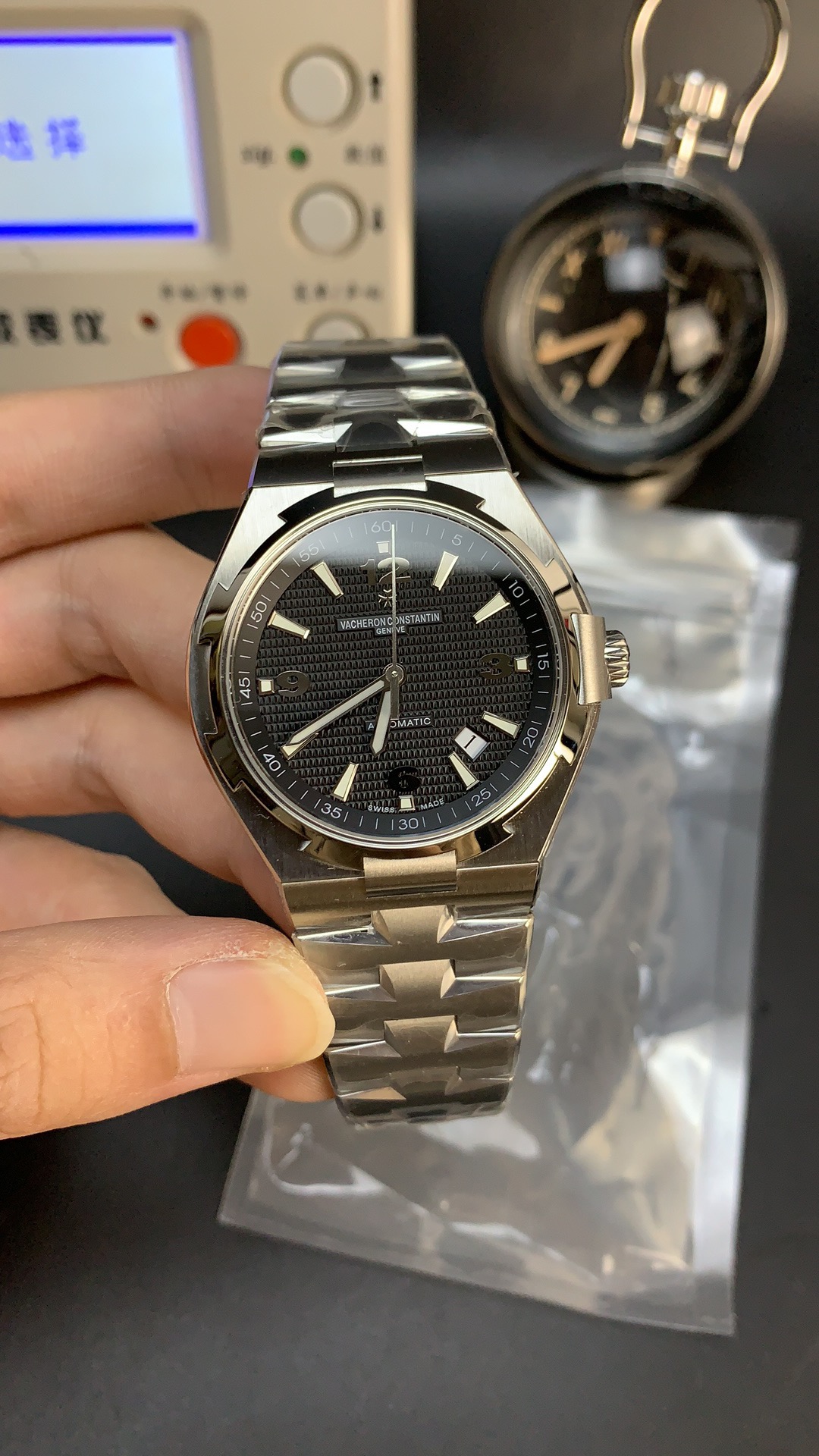
At the entry band, speed replaces structure. Components are pressed by hand without indexed stops, so dial seating, hand alignment, and bezel orientation rely on visual judgment rather than fixed references. This approach moves units out the door quickly, but it also guarantees variability. Every press introduces a new opportunity for angular drift, vertical offset, or uneven seating, and none of those deviations are formally captured or corrected before the next step begins.
What this produces in practice is inconsistency that only becomes obvious in use. One watch sits flat and reads clean under changing light, while another from the same batch develops a faint horizon tilt after a few days of wear. Entry pricing reflects this reality. You are not buying a regulated system. You are buying a build attempt whose outcome depends on who happened to seat the dial and how steady their hands were that afternoon.
System assembly discipline does not exist here as a governing framework — there is labor, there is repetition, and there is experience, but there is no geometry enforcement, which means alignment behavior varies unit to unit even when surface appearance looks acceptable at first glance, a core distinction between superficial finish checks and true system output that the replica vs genuine visual signals: reading system output in Vacheron Constantin super-clones analysis makes explicit.
Surface Finish Without Structural Backing
Entry builds often lean on polish to carry visual credibility. Cases come back bright, bevels catch light cleanly, and brushed planes look uniform under inspection lamps. None of that guarantees structural alignment. A reflective surface can hide center-axis drift for weeks, sometimes months, until real wear introduces new lighting angles and wrist positions.
Polish does not stabilize dial geometry. It does not correct a slightly canted dial plane or a hand stack that sits a fraction too high. These watches can look impressive in isolation and still fall apart visually once they leave controlled conditions. The mistake many first-time buyers make is assuming that surface refinement implies internal order. On Overseas designs, that assumption collapses quickly because the layout exposes even minor geometric errors.
Bright cases cannot mask drift. They only delay its discovery.
Practical Judgment Tip: Strap Rotation Stability
Rotate the watch across steel, rubber, and leather over several days and pay attention to the dial horizon each time. Do not rush this. Different straps load the lugs and caseback differently, which subtly changes how the case sits on the wrist.
If the horizon appears stable across all three, the underlying assembly likely holds. If alignment shifts as you change straps, you are seeing lug seating variance or dial plane inconsistency expressing itself through wear. That behavior does not improve with time. It signals an assembly-driven outcome rather than a controlled structure.
Mid Band Mechanics: Partial Control, Residual Exposure
Fixture-Assisted Dial Placement
Mid-band production introduces fixtures, and that alone changes the distribution of outcomes. Pin jigs define dial location, seating depth becomes repeatable, and gross misalignment drops sharply. Watches leaving this tier look more consistent across batches because the largest sources of randomness have been constrained.
But fixture assistance is not the same as geometric regulation. These systems place components; they do not verify axes. Center alignment still depends on tolerances upstream, and when those tolerances stack unfavorably, the result is a watch that appears correct in isolation but reveals imbalance under movement and light. Mid-tier pricing buys predictability across units, not immunity from exposure.
Dial geometry improves here, yet it remains permissive. Variance narrows, but axis errors persist because nothing in this band actively measures or corrects them.
Preset Hand Heights
Preset hand heights reduce collisions and improve functional reliability. Spacer gauges define acceptable windows, and installers work within those ranges rather than guessing clearances. This lowers the risk of hands touching and prevents obvious failures that plague entry builds.
What presets do not solve is visual balance. A hand stack can meet clearance specifications and still amplify minor axis deviations. On Overseas layouts, even small vertical inconsistencies change how light moves across the dial, making imperfections easier to perceive. Collision risk drops at this tier, but perceptual drift remains.
Hand stack tolerance is managed, not mastered. The watch works more reliably, yet its visual center of gravity still floats.
Practical Judgment Tip: Crown Return Consistency
After setting the time, release the crown slowly and observe how it returns. Feel for rebound, backlash, or uneven resistance. Repeat this several times, not just once.
Consistent return suggests stable stem alignment and predictable seating. Variability in feel usually points to subtle axis mismatch or uneven internal tension. That inconsistency often precedes visible drift because it reflects how well the movement, dial, and case are cooperating as a system. When crown feel changes from one adjustment to the next, seating errors are already present, even if the dial still looks acceptable today.
High Band Mechanics: Geometry Regulation as the Differentiator
Center Axis Verification
High-band Overseas builds begin with a step that lower tiers never formalize: center axis verification before any hands are installed. This is the core control loop. The movement is probed relative to the dial seat, and the axis is confirmed while correction is still cheap. If offset exists, the build pauses until alignment is brought back within tolerance.
This single intervention reshapes everything downstream. Once the axis is locked, hand installation becomes predictable, dial symmetry holds under rotation, and later operations stop compensating for invisible errors. Axis control is why high-tier Overseas survives scrutiny in real use. Not because it looks cleaner on day one, but because the visual center remains stable as lighting, wrist angle, and daily motion change.
Dial geometry lives or dies here. Without this verification step, every subsequent improvement becomes cosmetic. With it, the entire assembly gains a reference point that does not drift.
Parallelism Across Dial, Rehaut, Crystal
Axis control alone is not enough. High-tier production extends regulation across planes, enforcing parallelism between dial, rehaut, and crystal. Each layer is seated against measured tolerances so that no surface tilts independently of the others. This prevents light from breaking unevenly across the face.
When planes remain parallel, reflections move smoothly as the watch rotates. Markers stay visually anchored, minute tracks hold their distance, and the horizon does not wander under oblique angles. When parallelism is absent, even a perfectly centered axis can still feel wrong because one layer introduces its own bias.
This is where alignment behavior becomes experiential. Parallel planes prevent light-induced asymmetry, which is why top-tier pieces feel calm on the wrist instead of restless. The watch stops fighting its own geometry.
Indexed Bezel Pressing
Bezel installation at this level is no longer an iterative adjustment. Indexed presses with rotational stops define a single valid seating position, and the bezel is driven there once. Index pins eliminate guesswork, so alignment does not depend on visual correction after the fact.
The practical impact is a collapse in rework. There are fewer re-press cycles, fewer cosmetic scars, and fewer cases diverted for correction. Regulated presses eliminate most downstream intervention because the bezel enters the system already aligned with the dial’s cardinal structure.
This is system assembly discipline expressed mechanically. Accuracy becomes a property of the fixture, not a skill test for the installer.
Practical Judgment Tip: Oblique Light Sweep
Hold the watch under a single light source and sweep it slowly across the dial and bezel at a shallow angle. Do not rotate the watch quickly. Let shadows travel.
On a geometry-regulated build, shadows move continuously and predictably. On compromised assemblies, breaks appear where planes are no longer parallel, and highlights jump instead of flowing. Those shadow fractures reveal dial geometry errors long before they become obvious in normal wear.
Why Guangzhou Outcomes Diverge: Discipline Beats Components
Sequencing Over Sourcing
Within the Guangzhou replica watch production environment, outcomes diverge long before parts enter the case. The decisive variable is sequence. High-performing lines follow a fixed order—dial, then axis, then hands, then bezel—because each step depends on the stability of the one before it. When that order collapses, installers compensate locally, and those compensations accumulate.
Install the hands before the axis is verified, and every later correction becomes a workaround. Seat the bezel before dial geometry is locked, and rotational bias gets baked into the case. The same components move through different sequences and emerge as fundamentally different watches. This is why sourcing alone explains almost nothing. Two builds can share identical parts bins and still diverge dramatically once sequencing discipline breaks.
Same parts, different outcomes is not a slogan here. It is a repeatable manufacturing reality. Process order defines geometry. Geometry defines behavior.
Feedback Loops and Scrap Thresholds
High-tier production draws its line not at appearance, but at acceptance. Axis drift beyond a narrow limit triggers rejection. Bezel rotation outside indexed tolerance forces rework or scrap. These thresholds create feedback loops that push defects upstream instead of allowing them to accumulate downstream.
Lower tiers absorb error. Higher tiers refuse it. That refusal is expensive because it interrupts flow, discards partially finished cases, and slows throughput. Yet it is precisely this intolerance that stabilizes results. When the system learns from rejected units, alignment improves batch by batch. When it does not, variability persists indefinitely.
System assembly discipline lives inside these thresholds. High-tier pricing reflects lower tolerance for defects, not higher enthusiasm for refinement. The cost is carried by what gets stopped, not by what gets polished.
Practical Judgment Tip: Micro-Play After Lock
Set the time, push the crown back in, and gently test the minute hand for micro-movement. Do not force it. Just feel for play.
A stable assembly holds position. Any perceptible slack usually traces back to upstream sequencing errors, most often in hand stack installation relative to axis verification. That play rarely disappears with wear. It grows. Treat it as an early warning that structural order was compromised.
Closing Judgment: Price Tracks Rework Collapse, Not Shine
Entry vs Mid vs High: A Behavior Map
Across all three bands, the pattern remains consistent. Entry builds depend on manual assembly. Mid-tier introduces partial control. High-tier enforces geometry regulation. These are not aesthetic categories. They are system states.
Entry watches fluctuate because nothing governs alignment. Mid-tier watches stabilize because fixtures narrow variance. High-tier watches endure because geometry is verified before it can fail. When viewed this way, china super clone vacheron pricing stops being mysterious. You are not choosing between finishes. You are choosing between tolerance regimes.
Select by tolerance governance, not surface finish.
Where Tolerance Exposure Begins on Overseas
On Overseas layouts, exposure starts at the center axis and compounds through the hand stack. These are the first failure points because they define both radial symmetry and vertical balance. Once either drifts, the entire composition destabilizes.
Overseas punishes small errors immediately. A fraction of a millimeter at the axis becomes visible at the minute track. A slight hand height imbalance reshapes how light moves across the dial. There is no visual buffering in this design. Geometry either holds or it does not.
Understanding this gives you a practical mental model. Watch the axis. Watch the stack. Everything else follows.
Practical Judgment Tip: Two-Day Wear Drift Check

Wear the watch normally for two days, then place it flat and reassess the dial horizon under neutral light. Compare what you see now with your first impression.
Early drift—whether in perceived level, marker balance, or hand alignment—almost always predicts long-term dissatisfaction; stability across those two days suggests regulated geometry, while change suggests latent assembly variance that daily motion has already begun to expose, an early-stage alignment and inspection principle outlined in the Vacheron Constantin Overseas replica guide with geometry-based inspection methods.
Price follows rework collapse, not shine, and only geometry regulation earns its cost over time.