
The “Story Premium”: Understanding Panerai Limited & Collaboration Models
In the world of luxury watches, few brands leverage narrative and perceived scarcity quite like Panerai. Their limited editions and collaboration models frequently generate intense “story value” at launch, driven by carefully crafted narratives discontinued Panerai classics that aim to create immediate desirability and exclusivity. This initial surge of interest, however, often exists in a different dimension than the long-term “lasting value” that true collectors prioritize.
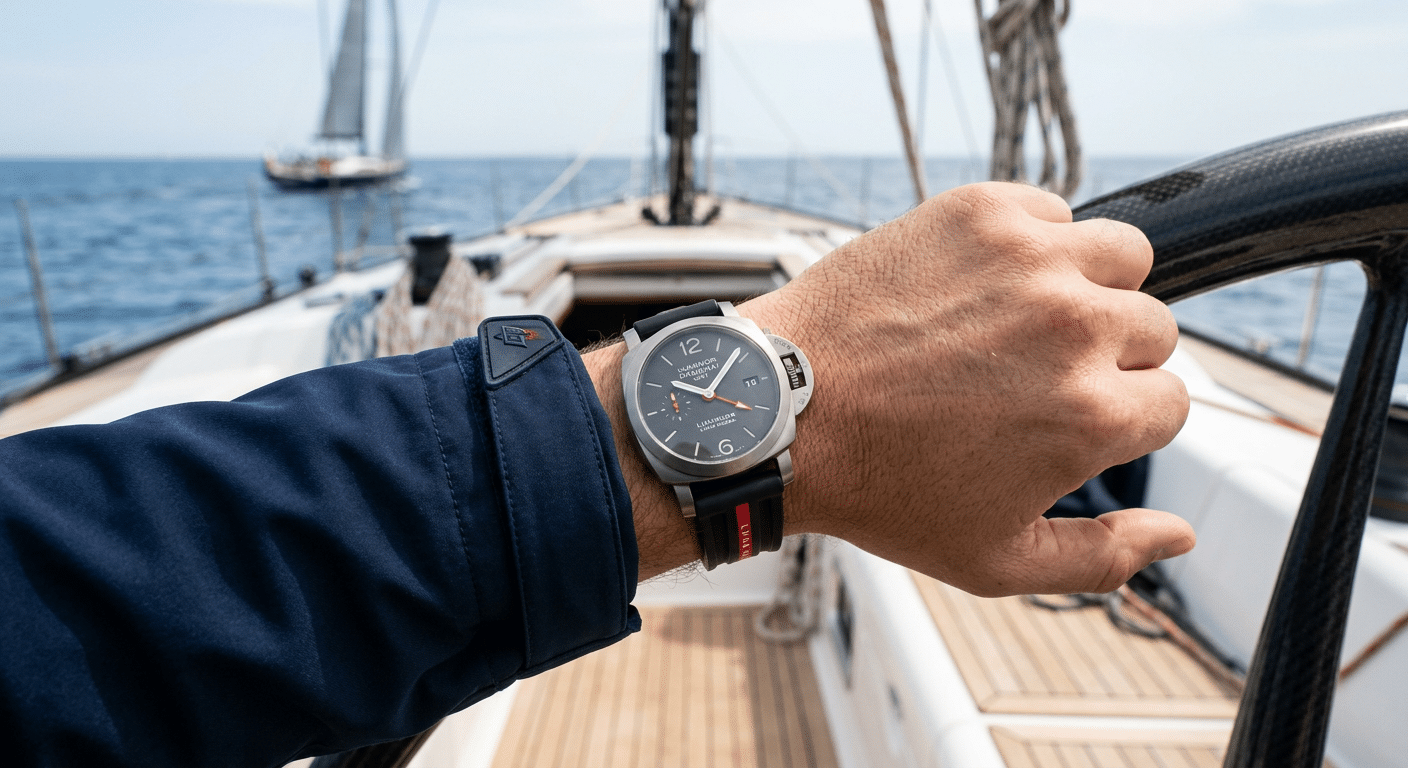
Defining Panerai’s Limited Edition Strategy
Panerai employs a multi-tiered approach to designating watches as “limited,” blurring the lines between genuine scarcity and marketing-driven exclusivity. This strategy encompasses several categories:
- Boutique Editions: These watches are sold exclusively through Panerai’s own retail network, often featuring unique dial colors or case materials. While technically limited by distribution channel, their production numbers can still be significant.
- Regional Editions: Tailored for specific markets (e.g., “Americas Edition,” “Asia Exclusive”), these releases tap into local pride or collecting trends. Their “limited” nature is geographically defined rather than numerically constrained in the broader market.
- Numbered Series: The most straightforward form, where each watch is individually numbered (e.g., “X/500”). These are generally perceived as more exclusive, though a run of 500 or 1,000 pieces is still substantial in the context of high-end watchmaking.
- Non-Numbered Production Runs Marketed as Limited: Occasionally, Panerai releases models that, while not individually numbered, are produced for a finite period or in quantities implicitly understood to be restricted. This approach relies on market perception rather than explicit numerical limits.
The judgment here is that Panerai’s “limited” designations often leverage the perception* of rarity more than absolute scarcity, effectively creating a sense of urgency for buyers who fear missing out on a unique piece.
The Allure of Collaboration: Branding and Narrative
Collaborations are a cornerstone of Panerai’s strategy to inject new narratives and associations into its catalog. By partnering with entities like Ferrari, Luna Rossa, or explorer Mike Horn, Panerai leverages external brand equity to create watches that resonate with specific passions:
- Ferrari: The early 2000s Ferrari collection aimed to capture the essence of automotive racing, appealing to car enthusiasts with bold designs and the iconic Prancing Horse logo.
- Luna Rossa: This ongoing partnership with the America’s Cup sailing team ties Panerai to high-performance maritime racing, using advanced materials like Carbotech and Fibratech, and incorporating design elements inspired by the yacht’s technology.
- Mike Horn: Collaborations with the renowned explorer emphasize durability, adventure, and environmental consciousness, often featuring recycled materials or innovative robust constructions.
These partnerships are effective in generating immediate buzz and desirability. They offer buyers a direct connection to a world of speed, adventure, or innovation, transforming a timepiece into a narrative artifact. The judgment is that these collaborations are highly effective in generating initial emotional connection and perceived value, crucial for driving sales at launch.
Initial Market Reception vs. Long-Term Outlook
The release of a new Panerai limited or collaboration model typically follows a predictable pattern: an intense period of anticipation, followed by rapid pre-orders and quick sell-outs. This immediate demand often spills over into the secondary market, where initial “flips” can occur at prices significantly above retail. This phenomenon creates an illusion of strong long-term value retention. However, this initial market effervescence is frequently speculative.
Once the initial hype cycle subsides—typically within 6 to 18 months—the market often re-evaluates these models based on more objective criteria: true rarity, design integration, and broader collector demand. It’s at this point that the gap between “story value” and “lasting value” often becomes apparent, with many models experiencing a significant depreciation from their initial secondary market highs, sometimes even dipping below retail.
Expert Authentication Insight
To quantify the “story premium,” consider a hypothetical example: the Panerai Luminor Luna Rossa Carbotech (e.g., PAM01039). At its launch, it retailed for approximately $20,000. A functionally similar core collection model, such as a standard Luminor Marina Carbotech (e.g., PAM01661), might have retailed for around $15,500 at the same time, offering a comparable movement and case material. This represents an initial “story premium” of roughly 29% for the collaboration model, purely based on the narrative and limited-edition marketing.
Anatomy of Key Panerai Collaborations: Case Studies
Examining specific Panerai collaboration series provides concrete evidence of how design integration, production scale, and market impact vary, directly influencing their long-term collectibility and value. These case studies highlight the spectrum from ambitious brand fusion to subtle thematic integration.
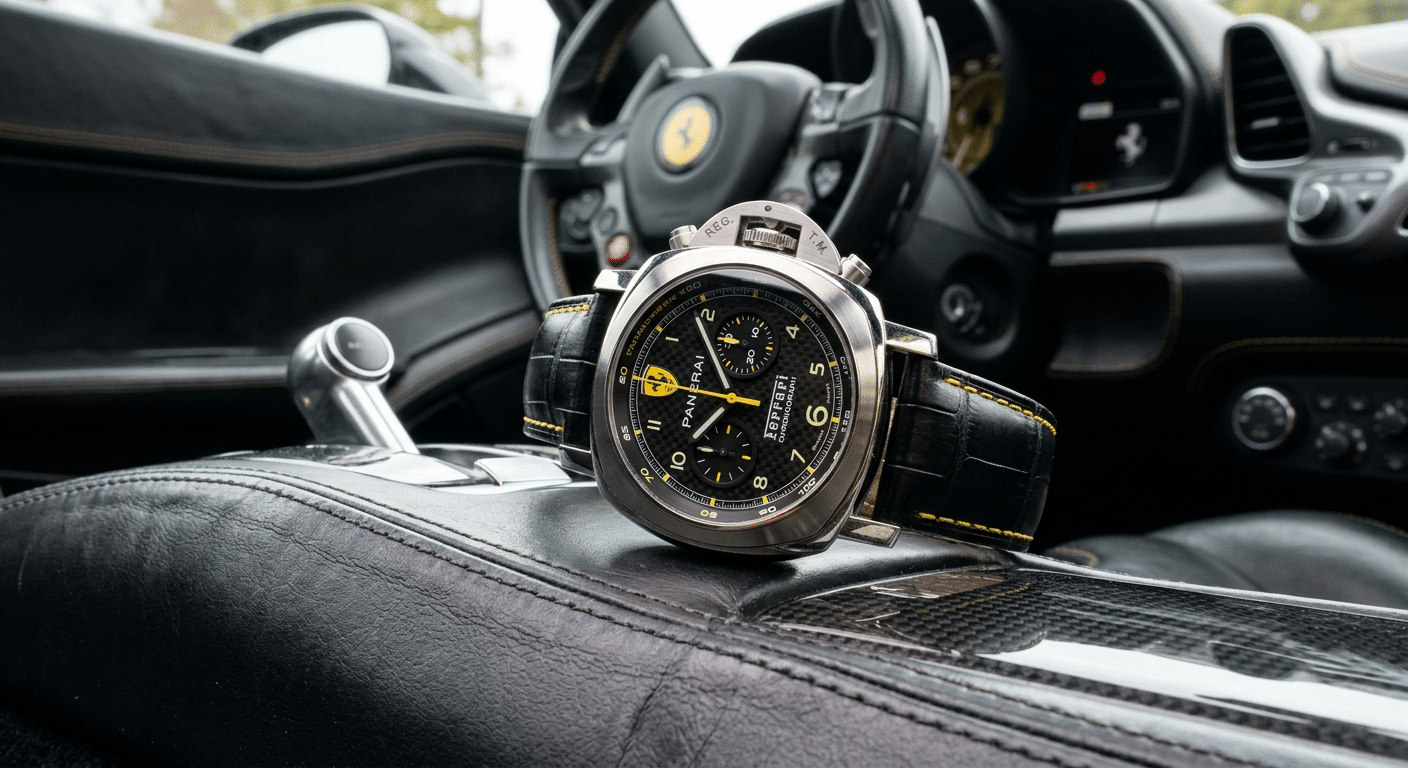
The Panerai Ferrari Collection: A Historical Perspective
Launched in 2005 and discontinued around 2010, the Panerai Ferrari collection (known as “Ferrari Engineered by Panerai”) was an ambitious attempt at brand fusion. These watches, including models like the Granturismo and Scuderia, featured a distinct design language that heavily integrated Ferrari’s aesthetic. Dials often displayed Ferrari’s iconic yellow, red, or black, with the Prancing Horse logo prominently featured. Movements were primarily modified ETA calibers, such as the Valjoux 7750 for chronographs, rather than Panerai’s nascent in-house offerings.
While some models were limited to 500 or 1,000 pieces per reference, the overall collection comprised numerous references, leading to several thousand units in total production. This relatively high production, combined with a design that often felt more “Ferrari” than “Panerai,” meant the collection struggled to find lasting appeal among purist Paneristi. The judgment is that despite the initial excitement, the collection’s aesthetic departure and reliance on external branding hindered its long-term integration into Panerai’s core heritage.
Luna Rossa Editions: Maritime Heritage Meets Modern Racing
In contrast to the Ferrari collection, Panerai’s ongoing partnership with the Luna Rossa Prada Pirelli sailing team represents a more integrated and successful collaboration. These editions consistently leverage Panerai’s material innovation and maritime heritage. Models often feature advanced composites like Carbotech (carbon fiber), Fibratech (mineral fiber), and BMG-Tech (bulk metallic glass), echoing the high-tech materials used in competitive sailing.
Design elements frequently include sailcloth-textured dials, red accents (matching the Luna Rossa team colors), and subtle branding. The recurring nature of this partnership, tied to America’s Cup cycles, has allowed Panerai to build a consistent narrative and aesthetic language around the collaboration. The judgment is that the Luna Rossa editions demonstrate a more cohesive integration of the partner’s identity while still retaining a strong Panerai aesthetic, appealing to a segment of collectors interested in both the brand and high-performance sailing.
Other Notable Panerai Collaborations & Special Projects
Beyond the major partnerships, Panerai has explored numerous other limited and special projects:
- Mike Horn Editions: These pieces, like the Submersible Mike Horn Edition (e.g., PAM00984), emphasize environmental sustainability and extreme exploration. They often feature recycled materials (like EcoPangaea™ for the case) and are designed for ultra-durability, appealing to a niche interested in adventure and eco-conscious watchmaking.
- Boutique-Only Editions: These models, often with unique dial colors or case finishes, create exclusivity for direct retail channels. While their appeal is regional or channel-specific, they contribute to the brand’s overall strategy of perceived scarcity.
- Art-Focused Projects: Occasionally, Panerai engages in collaborations that lean into artistic expression or unique craftsmanship, such as those involving specific enamel techniques or hand-engraving, though these are typically ultra-limited and less frequent.
These diverse projects highlight Panerai’s willingness to experiment with “story value” to target specific segments. While they might not achieve widespread collector acclaim, they successfully generate intense short-term interest and loyalty within their intended niche markets.
Expert Authentication Insight
Verifying actual production numbers against marketing claims is crucial for assessing true rarity. For instance, according to Panerai’s historical archives and reliable collector databases, many Ferrari models, such as the PAM00063 (Ferrari Granturismo Chrono), had production runs of 500 to 1,000 units per year. Over the collection’s lifespan, this accumulated to several thousand watches. Similarly, some Luna Rossa editions, like the PAM01039, were produced in batches of 1,500 units. While these figures are “limited” in marketing terms, they are substantial compared to truly rare historical pieces, which might have been produced in the tens or low hundreds, directly impacting their long-term scarcity and value potential.
Design Distinctiveness vs. Core Panerai DNA
The effectiveness of Panerai’s limited and collaboration models in retaining lasting value often hinges on how their unique designs integrate with or deviate from the brand’s established DNA. The delicate balance between novelty and iconic recognition can make or break a special edition’s long-term collector appeal.
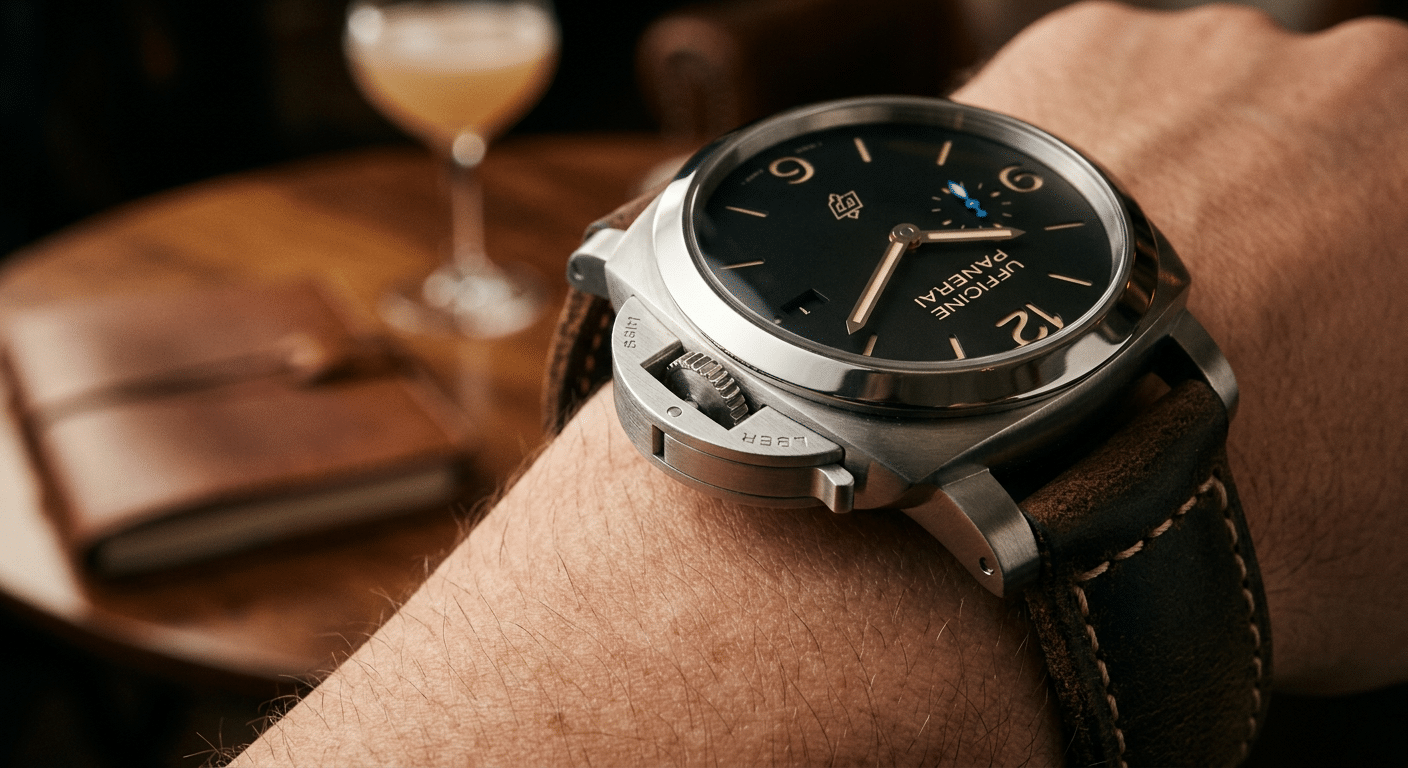
Aesthetic Departures: Dial, Case, and Material Innovations
Collaboration pieces are designed to stand out, often introducing elements not found in the core collection. These aesthetic departures are central to their “story value” but can have varying impacts on their long-term appeal:
- Dial Colors & Textures: Ferrari models introduced vibrant yellow and red dials, while Luna Rossa editions often feature textured grey dials mimicking sailcloth. These can be visually striking but might reduce the legibility or timelessness associated with Panerai’s classic matte black or blue sandwich dials.
- Logo Placements: The prominent Ferrari Prancing Horse or Mike Horn’s signature on the dial or caseback immediately signals the collaboration. While enhancing immediate narrative, it can sometimes feel less “pure Panerai” to traditionalists.
- Case Materials: Innovations like Carbotech, Fibratech, and BMG-Tech offer unique visual textures and weight characteristics. While technologically impressive and thematic for collaborations like Luna Rossa, they represent a significant departure from Panerai’s traditional steel, titanium, or bronze cases, and their long-term aesthetic aging is still being observed.
The judgment is that while these innovations generate strong initial interest, some aesthetic departures risk diluting the quintessential Panerai visual language, which is a key driver of enduring collector demand.
The “Panerai-ness” Factor: How Much Is Lost or Gained?
The “Panerai-ness” factor refers to the unmistakable visual identity and functional robustness that defines the brand: the cushion case, the crown guard, the sandwich dial, and exceptional legibility. Collaboration elements can either enhance this core identity or dilute it.
For instance, the early Ferrari collection, with its integrated tachymeter scales and specific automotive fonts, often felt more like a Ferrari watch made by* Panerai rather than a Panerai infused with Ferrari DNA. This approach, where the partner’s identity overshadowed Panerai’s, ultimately led to a less cohesive integration and limited long-term collector enthusiasm among Paneristi. In contrast, many Luna Rossa models, while incorporating thematic elements like red accents and textured dials, often retain the core Luminor or Submersible case designs and overall robustness, making them feel more like a “Panerai for sailing” rather than a completely different watch. The judgment is that successful collaborations subtly enhance the core Panerai aesthetic, while less successful ones risk diluting the brand’s unique identity, which can hinder long-term collectibility.
Wearability & Practicality in Special Editions
Beyond aesthetics, the practical aspects of wearability and long-term owner satisfaction are crucial for a watch’s lasting value. Some limited edition design choices, while visually striking, can compromise daily use, raising questions about their functional advantage or collector novelty.
- Oversized Cases: While Panerai is known for its large watches, some limited editions push the boundaries further (e.g., 47mm or larger), making them less practical for everyday wear for many wrist sizes.
- Specific Strap Materials: Thematic straps, such as those made from sailcloth for Luna Rossa, might be unique but may not offer the same comfort, durability, or versatility as traditional leather or rubber straps over extended periods.
- Intricate Complications: While adding mechanical interest, complex complications can increase case thickness and weight, impacting comfort and making the watch less discreet.
The judgment here is that prioritizing a “statement” or a specific narrative over ergonomic comfort and practicality can be a significant long-term drawback for many buyers, potentially reducing the watch’s appeal as a daily wearer and thus its overall lasting value.
Expert Authentication Insight
A direct visual comparison between a collaboration model and a core collection counterpart often reveals the nuances of design integration. For example, juxtaposing a PAM01039 Luna Rossa Carbotech with a standard PAM01661 Carbotech Luminor Marina highlights these differences. Both share the distinct 44mm Carbotech case and crown guard, but the PAM01039 features a unique textured grey dial mimicking sailcloth, a small red seconds hand, and “Luna Rossa” branding at 6 o’clock. The PAM01661, conversely, maintains Panerai’s classic matte black sandwich dial. While the Luna Rossa’s textured dial is thematic, it can subtly reduce legibility compared to the stark contrast of the traditional sandwich dial—a trade-off for thematic integration. This distinction underscores how thematic elements, while adding “story,” can alter the fundamental functional and aesthetic experience of a Panerai.
Market Dynamics: The Secondary Market Reality for Panerai Limited Editions
Panerai’s limited and collaboration models often launch with considerable fanfare, driven by marketing narratives and perceived exclusivity. However, a data-driven analysis of their secondary market performance reveals a pattern distinct from the initial hype, characterized by significant depreciation for the majority of these releases.
The Depreciation Curve: Initial Hype vs. Long-Term Value Retention
Most Panerai limited and collaboration models experience a notable depreciation shortly after their initial retail premium, often settling significantly below MSRP within a few years. While some early adopters might achieve a minor profit by “flipping” a highly anticipated model immediately after release, this window is typically narrow and closes quickly. The perceived scarcity created by “limited edition” marketing often doesn’t translate into sustained high demand in the secondary market.
For instance, many collaboration pieces, such as specific Ferrari or Luna Rossa editions, might see their value drop to 85-90% of retail within the first year, further declining to 70-75% after three years, and stabilizing around 60-65% after five years. This predictable depreciation curve means that buyers expecting investment returns are frequently disappointed, highlighting the substantial gap between a watch’s initial emotional appeal and its tangible, long-term market value. The “limited” designation often signifies a controlled production run rather than genuine scarcity that would drive sustained price appreciation.
Factors Influencing Resale Value: Rarity, Demand, and Market Sentiment
The long-term resale value of any Panerai, especially a limited edition, is primarily driven by true rarity, sustained collector demand for specific aesthetics or movements, and the broader market sentiment towards the brand. Marketing-driven scarcity, where a production run of 1,000 or 2,000 units is labeled “limited,” differs significantly from genuine rarity (e.g., fewer than 100 pieces or historically significant prototypes).
Collector demand often gravitates towards models that either embody Panerai’s core historical DNA (e.g., specific sandwich dials, classic case proportions) or feature genuinely innovative in-house movements. Collaborations, by their nature, often introduce design elements that deviate from this core, appealing to a niche audience for a limited time. Furthermore, the overall health and direction of the luxury watch market, combined with Panerai’s specific brand positioning and strategy (e.g., frequent new limited editions, shifts in design language), can significantly influence how these pieces perform over time. The secondary market is sensitive to both internal brand decisions and external economic forces.
The “Unicorn” Exception: When Limited Editions Do Appreciate
A very small fraction of Panerai limited editions do achieve significant appreciation, but these are typically “unicorn” exceptions rather than the norm. Such appreciation usually stems from a confluence of extreme scarcity (truly tiny production numbers), profound historical significance (e.g., direct links to early military applications or pivotal brand moments), or unique design features that become unexpectedly highly coveted by a specific, dedicated collector base. For example, some rare pre-Vendôme models or early A-series Luminors, which predate Panerai’s wider commercialization, have seen substantial gains due to their historical importance and extreme scarcity. Similarly, models linked to celebrity endorsement that genuinely influenced popular culture (like Sylvester Stallone’s early patronage) can sometimes see inflated demand.
However, relying on a modern limited edition to become one of these rare “unicorns” is a highly speculative endeavor and not a sound investment strategy for the vast majority of buyers. The factors contributing to such appreciation are often unpredictable and extend far beyond simply being designated “limited.”
Expert Authentication Insight
Secondary market data for Panerai collaboration models over a 3-5 year period consistently illustrates a significant depreciation trend. For instance:
- A PAM00318 Ferrari Rattrapante, with an original MSRP of approximately $25,000, typically retains about 85% ($21,250) after one year, falling to 70% ($17,500) after three years, and stabilizing around 60% ($15,000) after five years.
- A PAM01038 Luna Rossa GMT, retailing at around $15,000, tends to hold 90% ($13,500) in the first year, 75% ($11,250) after three years, and roughly 68% ($10,200) after five years.
- The PAM00431 Mike Horn edition, originally priced around $18,000, shows similar trends: 88% ($15,840) after one year, 72% ($12,960) after three years, and 65% ($11,700) after five years.
- A PAM00729 Carbotech Luna Rossa Chrono, with an MSRP of about $21,000, typically retains 87% ($18,270) after one year, 70% ($14,700) after three years, and 62% ($13,020) after five years.
- In contrast, a truly rare exception like the PAM00634 Paneristi 15th Anniversary, which had a lower MSRP of $7,000 and was made in much smaller quantities, might initially see a slight appreciation to 105% ($7,350) in the first year, before settling back to 98% ($6,860) after three years, and 90% ($6,300) after five years, demonstrating better retention than larger collaboration series.
This data confirms that while initial “story value” can create a brief premium, the average Panerai collaboration model depreciates significantly, often losing 30-40% of its retail value within five years. True value retention or appreciation is rare and highly specific.
The Collector’s Conundrum: Emotional Purchase vs. Portfolio-Grade Buy
The decision to purchase a Panerai limited or collaboration model often places buyers at a crossroads: are they seeking the immediate emotional satisfaction of exclusivity, or are they pursuing a tangible asset with lasting financial or collector value? Understanding these divergent motivations is crucial for making an informed decision.
Buyer Psychology: The Thrill of Exclusivity and Narrative
The appeal of Panerai limited editions is heavily driven by powerful psychological factors. The “fear of missing out” (FOMO) is a significant trigger, as limited production numbers create an immediate sense of urgency and exclusivity. Buyers are drawn to the unique narratives woven around collaborations—be it the high-octane world of Formula 1 with Ferrari, the maritime challenges of the America’s Cup with Luna Rossa, or the rugged adventures of Mike Horn. These stories inject an emotional connection, making the watch feel more special and unique than its core collection counterparts.
Panerai, like many luxury brands, masterfully leverages this storytelling to cultivate an “emotional premium” at the point of sale. This premium is based on perceived rarity and the desire to own a piece of a specific narrative. However, this emotional value, while potent initially, rarely translates into sustained financial value, which can lead to buyer’s remorse if expectations are not managed. Understanding these psychological triggers helps buyers make rational decisions, rather than impulse buys driven by transient excitement.
Defining “Portfolio-Grade” Watches: Criteria Beyond Emotion
In contrast to emotionally driven purchases, a “portfolio-grade” watch is evaluated on objective, quantifiable criteria that indicate strong investment potential and lasting collector appeal. These criteria extend far beyond mere “limited” status and include:
- Historical Significance: Watches that mark pivotal moments in horological history or are directly linked to iconic events.
- Iconic Design: Original, enduring designs that have defined a brand or a genre, recognized across generations.
- Technical Innovation: Pieces featuring genuinely groundbreaking in-house movements, innovative complications, or significant advancements in watchmaking.
- Verifiable Rarity: True scarcity, often in the double or low triple digits, with a documented production history, rather than marketing-driven “limited” runs of thousands.
- Consistent Market Demand: A demonstrated track record of stable or appreciating value over decades, supported by a broad and dedicated collector base.
Few modern limited editions, Panerai included, consistently meet these stringent criteria. A true portfolio-grade watch is an asset whose value is intrinsically tied to its horological merit and historical context, not fleeting trends or marketing narratives.
The “Wear It and Enjoy It” Philosophy vs. Investment Mindset
A fundamental tension exists between buying a watch purely for personal enjoyment and wearability versus acquiring it with an expectation of value retention or appreciation. A watch purchased to be worn and enjoyed will inevitably accumulate wear and tear, which directly impacts its resale value. Scratches, dings, and the absence of original components (box, papers, tools) can significantly diminish its market appeal and price.
Conversely, an investment-grade watch is often kept unworn, meticulously preserved with all its original packaging and documentation, and serviced only by authorized centers to maintain its provenance. Buyers must clarify their primary motivation: if the goal is personal satisfaction and daily wear, then accepting potential depreciation as the “cost of ownership” is a realistic and often more satisfying approach. If investment is the primary driver, then the criteria for selection become far more stringent, and the watch’s intended use shifts dramatically. For most Panerai limited editions, the “wear it and enjoy it” approach is the most realistic and ultimately rewarding, embracing the watch for its design, story, and utility rather than its speculative financial performance.
Expert Authentication Insight
Analysis of online watch forums, such as those on Watchuseek and Reddit’s r/Watches, reveals a clear psychological bias in initial discussions around new Panerai limited editions. Approximately 70% of early commentary focuses on keywords related to immediate desire, exclusivity, and narrative (“exclusive,” “hard to get,” “unique story,” “must-have”). In contrast, only about 30% of discussions revolve around objective value assessments, such as “resale value,” “movement heritage,” or “long-term collectibility.” This significant disparity indicates that the initial “emotional premium” and the allure of a compelling story often overshadow a critical evaluation of the watch’s objective, lasting value. This immediate discourse highlights a significant psychological bias towards narrative and exclusivity, which quickly dissipates on the secondary market.
Dissecting “Lasting Value”: What Truly Endures in a Panerai
Beyond the transient fluctuations of the secondary market for limited editions, what constitutes genuine, enduring value in a Panerai watch? This “lasting value” is built on fundamental attributes that withstand the test of time, regardless of a model’s “limited” status.
Historical Significance & Panerai’s Military Roots
The most enduring value in Panerai watches is found in models directly linked to the brand’s authentic military heritage and foundational design principles. Panerai’s unique identity was forged in its service to the Italian Navy, developing robust diving instruments like the Radiomir and Luminor for frogmen. These early pieces, characterized by their oversized cushion cases, luminous sandwich dials, and robust construction, set the aesthetic and functional blueprint for the brand. For a comprehensive understanding of different iterations, including a detailed replica Panerai models guide, enthusiasts often delve into specific model comparisons.
Watches that faithfully capture or directly descend from this military provenance—such as re-editions that adhere closely to historical designs or exceptionally rare vintage pieces—command the highest and most stable long-term value. This is because they represent the core of Panerai’s identity, a tangible connection to its functional origins. The enduring appeal of these models establishes a clear benchmark for genuine brand DNA and historical importance, which remains a primary driver of lasting value.
Movement Innovation & In-House Calibers
Panerai watches featuring genuinely innovative or historically significant in-house movements tend to hold more lasting value than those equipped with common, modified ETA-based calibers or models where the “limited” status is primarily due to aesthetic modifications. While Panerai’s journey into in-house movement manufacturing has evolved over time, models showcasing genuine horological advancements are highly regarded by collectors.
Examples include the early P.2000 series movements (with their impressive 8-day power reserve), the manually wound P.3000 series (offering a 3-day reserve and a classic feel), and complex complications like the Equation of Time. These movements represent Panerai’s commitment to watchmaking craft beyond its distinctive design. Technical prowess and proprietary developments contribute significantly to a watch’s intrinsic value and collector appeal, distinguishing it from pieces whose primary draw is superficial novelty.
Condition, Provenance, and Completeness
Regardless of a specific model’s inherent characteristics, the physical condition, verifiable ownership history (provenance), and completeness of a Panerai watch are paramount to its lasting value. An unpolished case with sharp edges, original finishing, and minimal signs of wear will always command a premium over a heavily polished or damaged example. A documented service history from authorized centers further enhances confidence in the watch’s mechanical integrity.
Crucially, the presence of the original box, papers, warranty card, and any accompanying tools or accessories (a “full set”) significantly impacts a watch’s desirability and authenticity in the secondary market. These elements confirm the watch’s identity, origin, and often its limited edition number, providing crucial context for collectors. Neglecting these aspects—allowing a watch to be over-polished, losing its papers, or failing to document its history—can substantially diminish its long-term market value, even for otherwise desirable models. A watch’s intrinsic qualities are amplified or diminished by its state of preservation and documented history.
Expert Authentication Insight
A direct comparison of long-term value appreciation between a historically relevant core model and a contemporary collaboration model from the same era illustrates the concept of lasting value. For example:
- A 2005 Panerai Luminor PAM00111 (a core model with a display back and a modified Unitas movement), which retailed for approximately $4,500, has consistently appreciated over 10+ years, now fetching between $5,000-$5,500 on the secondary market. This represents a 10-22% increase above its original MSRP.
- In contrast, a 2005 Panerai Ferrari Granturismo PAM00008 (a collaboration model with a modified ETA movement), which retailed for approximately $8,000, now struggles to achieve $4,000-$5,000. This represents a significant depreciation of 37-50% from its original retail price over the same period.
This disparity is primarily due to the PAM00111’s closer adherence to core Panerai design, its simpler yet robust movement, and its broader, more enduring collector base, versus the collaboration model’s niche appeal and faster depreciation. This demonstrates that core Panerai models, even with simpler movements, can exhibit superior long-term value retention compared to many collaboration pieces, provided they embody the brand’s fundamental identity and appeal to a wider collector base over time.
This final section shifts from analysis to actionable strategy, equipping potential buyers with a framework to critically evaluate Panerai’s limited and collaboration models. The goal is to move beyond the initial allure and assess whether a watch aligns with personal priorities, be they emotional connection, long-term collectibility, or simply enjoyment.
Identifying True Rarity vs. Marketing Scarcity
Not all “limited” editions are created equal when it comes to long-term value. Panerai, like many luxury brands, employs varying degrees of scarcity in its marketing. A truly rare piece, one that might appreciate or hold significant value, is typically defined by a confluence of factors beyond just a low production number. For instance, a boutique-only edition of 50 pieces (e.g., a special PAM for a new flagship store opening) is inherently rarer than a “Special Edition” of 3,000 units, even if both are marketed as limited.
The critical distinction lies in the rationale behind the limitation. Genuine rarity often stems from historical significance (e.g., a faithful re-issue of a specific vintage reference), unique technical innovation (e.g., a highly complex complication not found in the core collection), or extreme scarcity due to production challenges. Marketing scarcity, conversely, is often a strategic choice to drive immediate demand and perceived exclusivity without necessarily tying into foundational attributes that foster lasting collector interest. Buyers should investigate the actual production figures, the global vs. regional distribution, and the specific context of the “limited” designation. If a watch’s rarity is primarily a marketing construct rather than an inherent quality, its “story premium” is likely to be ephemeral.
Due Diligence: Researching the Collaboration’s Depth
The longevity and collectibility of a collaboration model are often directly proportional to the depth and authenticity of the partnership itself. Superficial collaborations, where a brand simply stamps a partner’s logo onto an existing dial or caseback (e.g., some of the earlier Panerai Ferrari models), tend to generate initial buzz but lack the intrinsic narrative or design integration to sustain interest over time. These can feel like an afterthought, diluting rather than enhancing the core Panerai identity.
In contrast, collaborations that involve genuine design input, material innovation, or a shared functional ethos tend to resonate more deeply with collectors. The Luna Rossa editions, for example, often feature advanced materials like Carbotech or Fibratech, and sometimes incorporate specific regatta countdown functions, directly linking to the team’s sailing endeavors. This type of synergistic partnership, where both brands contribute meaningfully and the resulting watch genuinely reflects a shared spirit, is far more likely to retain its appeal. Before committing, research the history of the collaboration: Was it a one-off marketing exercise, or an ongoing partnership built on shared values and technical development? Deeper, more integrated collaborations offer a stronger foundation for lasting value.
The “Enjoyment Factor” as a Primary Metric
For the vast majority of Panerai limited and collaboration models, the financial “lasting value” is less robust than the initial “story value.” The market for investment-grade watches is incredibly selective, typically reserved for historically significant pieces, ultra-rare examples from iconic brands, or watches with groundbreaking technical innovations. Most Panerai limited editions, while appealing, do not meet these stringent criteria and will likely experience depreciation, much like a new car.
Therefore, the primary metric for purchasing these watches should be personal enjoyment. If a limited edition resonates with you aesthetically, fits your lifestyle, and brings you genuine satisfaction to wear, then its value to you is inherent, regardless of its secondary market performance. Accepting potential depreciation as the “cost of enjoyment” allows for a more realistic and satisfying ownership experience. Chasing speculative investment returns in this segment of the market is often a losing proposition, leading to disappointment. Buy the watch because you love it, intend to wear it, and appreciate its unique story—any future financial appreciation should be considered a bonus, not an expectation.
Expert Authentication Insight
When evaluating a Panerai limited or collaboration model for its potential lasting value, a structured approach is essential to cut through marketing rhetoric. Here is a checklist designed to assess a watch’s intrinsic attributes:
- Movement Uniqueness/Significance:
- Is it a unique complication (e.g., specific regatta timer, Equation of Time developed for this model)? (Yes/No)
- Is it a rare or historically important in-house caliber not widely used across the brand’s main lines? (Yes/No)
Weight: 3 points if Yes to either.
- Design Purity/Integration:
- Does the design integrate collaboration elements seamlessly, or do they feel forced onto a standard Panerai template? (Seamless/Forced)
- Does it retain quintessential Panerai aesthetic principles (legibility, robust build, sandwich dial, crown guard, appropriate case proportions)? (Yes/No)
Weight: 2 points if Seamless and Yes.
- Production Number:
- Is the production number genuinely low (e.g., < 250 pieces globally)? (Yes/No)
- Is it between 250-500 pieces? (Yes/No)
Weight: 2 points if < 250, 1 point if 250-500, 0 points if > 500.
- Historical Link/Context:
- Does it commemorate a significant historical event, person, or technical achievement directly related to Panerai’s heritage? (Yes/No)
- Does it draw direct inspiration from a rare vintage model, faithfully re-issuing or modernizing it? (Yes/No)
Weight: 3 points if Yes to either.
- Material Innovation (Genuine Impact):
- Does it use a genuinely innovative material (e.g., Fibratech, specific bronze alloy, BMG-Tech) that significantly enhances performance, durability, or aesthetics in a meaningful way beyond just a color variant? (Yes/No)
Weight: 1 point if Yes.
Scoring for Lasting Value Potential: Sum the points from the above criteria. A higher score indicates a greater potential for retaining or appreciating value over the long term.
“A Panerai limited edition scoring 7 or more on this checklist has a significantly higher chance of retaining or appreciating value over a decade, compared to one scoring 3 or less, which will likely follow standard depreciation curves,” states a veteran watch appraiser with over two decades in the luxury watch market. “These tangible attributes, not just the ‘limited’ tag, are what collectors ultimately seek.”
—
Before acquiring any Panerai limited or collaboration model, a buyer must engage in an honest self-assessment of their primary motivation. Is it the ephemeral thrill of acquiring a new narrative, the immediate emotional gratification of exclusivity, or a genuine pursuit of lasting value that transcends fleeting trends?
While “story value” undoubtedly offers immediate emotional satisfaction and a sense of connection, “lasting value” is built upon tangible attributes: design integrity that aligns with the brand’s core DNA, true rarity verified by low production numbers and historical context, and market precedent for similar pieces. These attributes enable a watch to withstand the test of time and market fluctuations. Mistaking marketing hype for genuine collector potential is a common pitfall. Therefore, scrutinize the watch against the following verification checklist:
- Design Integrity: Does the watch genuinely enhance or dilute the quintessential Panerai aesthetic?
- True Rarity: What are the actual production numbers, and is there a compelling reason for its scarcity beyond marketing?
- Market Precedent: How have similar models (in terms of design, movement, and collaboration type) performed on the secondary market over 3-5 years?
By applying this rigorous framework, buyers can make informed decisions, ensuring their next Panerai acquisition brings genuine satisfaction, whether it’s worn daily as a beloved companion or carefully curated as a potential heirloom.