
Choosing between a Royal Oak-style super clone and an Offshore-style super clone is less about which one looks more impressive in photos and more about how the watch will sit on your wrist in real life, where Audemars Piguet super clone costs can also depend on bracelet fit, movement stability, and long-term servicing expectations. The Royal Oak usually makes more sense for buyers who want a cleaner AP look that can work with office wear, travel, dinners, and smart-casual outfits. Even so, its integrated bracelet, bezel finishing, screw alignment, and flat case profile make fit and QC especially important.
The Offshore is a different kind of decision. It suits buyers who already enjoy large, thick sports watches and casual styling, especially on rubber straps. The tradeoff is added case height, more wrist presence, chronograph complexity, and extra checks around pushers, subdials, strap fit, and movement behavior. This comparison helps narrow the choice by wrist size, wardrobe, daily comfort, and the compromises each AP style makes more visible.
Replica watches should be clearly understood as replica-market products, not genuine watches from the original luxury brands. In this article, Royal Oak and Royal Oak Offshore names are used to identify the genuine Audemars Piguet reference designs that replica buyers commonly compare; they do not imply authorization, endorsement, or affiliation with Audemars Piguet.
| Decision Point | Royal Oak-Style Choice | Offshore-Style Choice |
|---|---|---|
| Best starting point | Safer for first AP-style replica buyers | Better for buyers used to large sports watches |
| Wrist fit concern | Bracelet flare, case width, and flat wrist support | Thickness, case mass, strap drop, and height |
| Daily wardrobe fit | Works more easily with office, travel, and smart casual use | Fits casual outfits and bold wrist presence better |
| Main QC focus | Bezel shape, screws, bracelet finishing, dial alignment | Pushers, subdials, date behavior, strap fit, case thickness |
| Movement and service risk | Simpler models usually mean fewer operating concerns | Chronograph versions need closer function and service checks |
| When to pause | If the bracelet does not wrap your wrist cleanly | If you expect slim comfort or effortless chronograph ownership |
Quick Questions Before You Read
Q: Is the Royal Oak the safer choice for most buyers?
Usually yes, especially for first-time AP-style buyers who want a thinner, more versatile daily watch.
Q: When does the Offshore make more sense?
Choose it if you already like large, thick sports watches and wear mostly casual clothing.
Q: Should factory name decide the choice?
No. The exact reference, version, movement, QC photos, bracelet or strap fit, and recent updates matter more.
Q: What photos should buyers request before deciding?
Ask for wrist, side profile, clasp, bracelet or strap connection, and close-up dial or pusher photos.
Editorial Perspective: For this Royal Oak versus Offshore comparison, the useful question is not which AP-style replica has the louder factory reputation or the most attractive seller photos. At cleanvsfactory.com, this type of choice is treated as a wrist-fit and ownership decision first. A Royal Oak may be more versatile, but only if the bracelet drapes correctly and the case does not flare across the wrist. An Offshore may look more exciting, but the buyer should accept the thickness, strap behavior, chronograph checks, and movement tradeoffs before choosing it as a daily watch.
Evidence and Claim Boundary: This guide discusses imitation watches and buyer decision logic, not authorized Audemars Piguet products. Where the article refers to Royal Oak or Royal Oak Offshore design language, it is using those names to describe the visual families that replica buyers compare. It does not claim that any replica is authorized, identical to an authentic watch, built to the same specification, or supported by the original brand.
Factory names, movement labels, version names, and material descriptions in the replica market should be treated as seller-side claims unless the exact watch is supported by clear QC photos, movement photos, and a credible inspection basis. A well-known factory name can help organize research, but it cannot prove bracelet quality, water resistance, movement identity, case thickness, or long-term reliability by itself.
For this reason, the recommendations below focus on what a buyer can evaluate before purchase: wrist fit, case height, bracelet articulation, strap drop, dial alignment, pusher behavior, seller transparency, and whether the watch’s compromises match the buyer’s lifestyle. This is more useful than relying on broad statements such as “best factory,” “same as genuine,” or “latest version” without model-specific evidence.
Start With the Real Decision: Royal Oak and Offshore Wear Like Different Watches
The Royal Oak vs Offshore super clone decision should not start with the question, “Which one is more accurate?” For most buyers, the better question is: “Which AP style can I actually wear without feeling like the watch is fighting my wrist, clothes, and daily routine?” A Royal Oak super clone and a Royal Oak Offshore super clone may share the same Audemars Piguet design reference family, but they do not solve the same wearing problem.
Choose the Royal Oak if you want the cleaner, thinner, more architectural AP look. It works better with shirts, jackets, office wear, dinners, and smart-casual outfits. The integrated bracelet is the whole point of the watch; it gives the Royal Oak its sharp, continuous line from case to clasp. But that elegance has a cost in replica form: the bracelet flow, bezel shape, dial texture, and finishing are exposed. There is less visual noise to hide small flaws.
Consider the Offshore if you want a larger, more casual, more obvious sports-watch presence. It usually feels more at home with hoodies, polos, T-shirts, sneakers, and weekend clothing. The rubber strap, thicker case, pushers, and bolder dial give it a different personality. The Offshore is not “worse” because it is louder. It is worse only if the buyer secretly wants a slim daily watch but gets pulled into the Offshore because it looks impressive in photos.
A buyer with a 6.5-inch wrist who wears dress shirts five days a week may find the Royal Oak easier to live with, even if the case still wears broad because of the bracelet flare. A buyer with a larger or flatter wrist who already likes big sports watches may find the Offshore more natural and less precious. This is where many AP replica comparison discussions miss the point: the right watch is not only the one with the better spec sheet, but the one whose shape and attitude match your real life.
Visual accuracy should also be judged through specific details rather than broad marketing language. Case thickness, lug behavior, dial texture, bezel tone, hand length, date position, bracelet construction, and strap integration can all change how convincing a Royal Oak-style or Offshore-style replica feels in normal use. A strong front-facing photo may show the dial well, but it cannot prove wrist comfort, side profile, movement behavior, or long-term ownership experience.
The Fast Answer for Most Buyers
For clean daily wear, the Royal Oak is usually the safer aesthetic choice. It has a sharper silhouette, a thinner visual profile, and a more versatile style range. If you want one AP replica to wear with office clothes, travel outfits, dinners, and casual weekends, the Royal Oak is usually easier to integrate into a wardrobe.
The Offshore is better for buyers who intentionally want a bigger and more casual AP presence. It is not trying to disappear under a cuff. It is a sportier case with more mass, more dial activity, and more wrist impact. If you already enjoy larger chronograph-style watches or rubber-strap sports watches, the Offshore can feel more honest than forcing yourself into a Royal Oak just because it is the “classic” choice.
The practical judgment is simple: Royal Oak is the better first AP super clone for buyers who want versatility and restraint. Offshore is the better choice for buyers who already know they like size, thickness, and casual presence. If you are unsure, leaning Royal Oak is usually less risky. If you are excited by the Offshore only in close-up photos but dislike thick watches in real life, pause before buying.
Why Size Alone Is the Wrong Comparison
Diameter does not explain how these watches wear. A Royal Oak can look wide on the wrist because the integrated bracelet does not drop straight down like a soft strap. The first links extend the visual footprint of the case, so even a moderate Royal Oak size can feel broader than expected on a round or smaller wrist.
The Offshore creates the opposite problem. It may be large on paper, but the rubber strap can sometimes make it easier to tolerate than a full steel bracelet watch of similar visual size. The issue is not just diameter; it is thickness, strap drop, lug behavior, caseback height, and how much the watch sits above the wrist. A thick Offshore that does not wrap well can feel top-heavy. A well-shaped Offshore on rubber can feel more wearable than its listed dimensions suggest.
Dial complexity also changes the impression. The Royal Oak’s cleaner dial makes the watch look flatter, sharper, and more formal. The Offshore’s chronograph layout, larger tapisserie pattern, pushers, and rubber strap make it look more athletic and less dress-oriented. So the real comparison is not small versus large. It is refined integrated-bracelet architecture versus bold sport-case presence.
Royal Oak Super Clone Strengths: Thin Profile, Sharp Lines, and Integrated-Bracelet Appeal
The Royal Oak super clone appeals to buyers who want the most recognizable AP shape without moving into oversized sports-watch territory. Its strength is not loudness. Its strength is proportion: the octagonal bezel, flat case, sharp brushing, polished bevels, tapisserie dial, and integrated bracelet all work together as one visual system. When done well, a Royal Oak replica can feel cleaner and more mature than many larger luxury sports replicas.
This is the AP style that makes the most sense for a buyer who wants an office-friendly AP replica or an elegant AP super clone for daily wear. It has enough presence to feel special, but it does not automatically dominate the outfit the way an Offshore can. With a button-down shirt, knit polo, sport coat, or simple travel wardrobe, the Royal Oak usually looks intentional rather than forced.
The important caveat is that the Royal Oak is not a soft-wearing round watch. The case edges are sharp, the bracelet starts wide, and the visual line from case to bracelet can make the watch wear broader than its diameter suggests. Buyers with smaller wrists should not assume that “Royal Oak” automatically means easy. It is easier than an Offshore for many people, but it still needs fit discipline.
Why the Integrated Bracelet Changes the Wearing Experience
On a Royal Oak, the bracelet is not just an attachment. It is part of the case architecture. The watch does not end at the lugs in the way a Submariner-style or Speedmaster-style watch does. The first bracelet links continue the shape outward, which gives the Royal Oak its famous flowing silhouette but also increases its perceived width.
This matters more in daily wear than many buyers expect. A good integrated bracelet should drape smoothly, sit flat enough on the wrist, and avoid a stiff “metal cuff” feeling. If the first links flare outward instead of dropping naturally, the watch may look too wide even if the case diameter sounds reasonable. This is one reason wrist photos are more useful than catalog dimensions when judging a Royal Oak replica.
The bracelet also changes comfort. A full steel Royal Oak has more continuous weight around the wrist than a rubber-strap Offshore. Some buyers like that solid feel; others find it less forgiving during long days, especially if the clasp position or link sizing is not ideal. For a smaller wrist AP buyer, bracelet articulation is not a minor detail. It can decide whether the watch feels refined or awkward.
Cleaner Dial, Cleaner Lifestyle Signal
The standard Royal Oak dial gives a calmer impression than most Offshore dials. The tapisserie texture adds depth, but the layout is still relatively clean. There are no large chronograph pushers fighting for attention, no heavy rubber strap changing the tone, and no oversized case thickness announcing itself from the side.
That cleaner design makes the Royal Oak more versatile. It can work as a daily wear Royal Oak for buyers who move between office settings, casual dinners, travel days, and weekend errands. It still looks like a distinct AP-style watch, but it does not require the rest of the outfit to be sporty. This is where the Royal Oak has a real lifestyle advantage over the Offshore.
The tradeoff is scrutiny. A simpler, sharper watch gives replica flaws fewer places to hide. Bezel screw alignment, brushing quality, polished bevels, bracelet taper, dial texture, and marker placement matter more because the eye has less distraction. The Royal Oak is often the more wearable choice, but it is also less forgiving if the finishing is weak.
Case and Bracelet Fit Checks
Before choosing a Royal Oak replica, pay attention to how the case and bracelet behave together. The most useful checks are not glamour photos; they are practical fit and construction views.
- Bracelet articulation: The first links should move naturally rather than sticking out stiffly from the case.
- End-link transition: The bracelet should look integrated, not like an afterthought attached to a sharp case.
- Clasp comfort: A clasp that feels bulky or lands poorly under the wrist can make the watch annoying after a few hours.
- Bezel screw alignment: Small visual inconsistencies stand out more on a clean Royal Oak than on a busier Offshore.
- Flatness on wrist: A Royal Oak should sit composed. If it flares at the bracelet or rocks on the wrist, the elegance is lost.
The Royal Oak is the better choice if you value thinness, clean lines, and integrated-bracelet design. Avoid choosing it only because it is the iconic AP shape. If the bracelet does not fit your wrist well, the whole watch loses the quality that makes the design appealing in the first place.
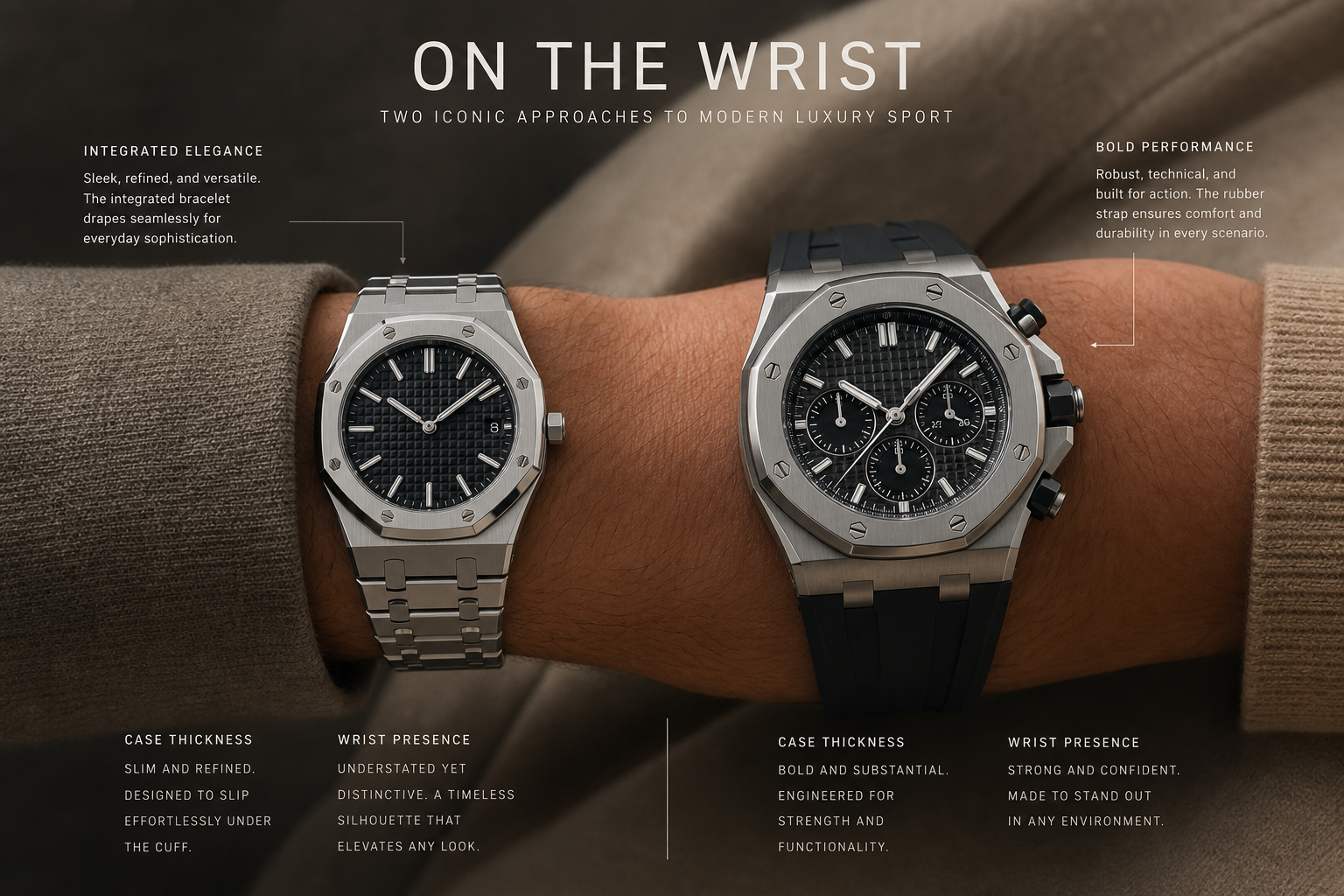
Royal Oak Offshore Super Clone Strengths: Bigger Case, Rubber Strap Comfort, and Casual Wrist Presence
The Royal Oak Offshore super clone is for buyers who want AP design with more volume, more sport attitude, and less formality. It is not simply a Royal Oak made larger. The Offshore changes the message of the watch. The case is thicker, the strap is often rubber, the dial is busier, and the whole object feels more like a performance-style sports watch than an architectural bracelet watch.
This makes the Offshore a sensible choice for buyers who already wear larger watches comfortably. If your wardrobe leans toward polos, hoodies, fitted T-shirts, sneakers, travel wear, or weekend casual outfits, the Offshore can look more natural than a Royal Oak. It does not need to slide quietly under a cuff. It is supposed to have presence.
The mistake is buying an Offshore because it looks more impressive in photos, then discovering that the size is not your style. A bold AP replica is only satisfying if you actually want a bold watch. If you prefer slim cases, quiet dials, and easy sleeve clearance, the Offshore will probably feel like too much. If you like larger sports watches and want the AP shape in a more relaxed format, the Offshore becomes much easier to justify.
Why Rubber Strap Comfort Matters
A rubber strap changes how a large watch feels. It reduces the continuous metal weight around the wrist and can make a thick watch easier to tolerate during casual wear. Compared with a full integrated bracelet, rubber usually feels less rigid, less formal, and more forgiving when the wrist expands during heat, travel, or long days outside.
This is one reason the Offshore can work better than expected for some buyers. A large steel bracelet watch can feel heavy and wide from every angle. A large Offshore on rubber may still be thick, but the strap can help the watch settle more naturally, especially if the strap drops sharply from the case rather than projecting outward.
Strap shape matters. A rubber strap that is too stiff near the case can make the Offshore wear larger than the dimensions suggest. A strap that bends properly can make the same watch feel far more manageable. For an Offshore replica, comfort is not just about softness; it is about whether the strap helps control the mass of the case.
When the Offshore Looks More Natural Than the Royal Oak
The Offshore often looks better on buyers whose style already supports a larger sports watch. On a bigger or flatter wrist, the case mass can appear balanced rather than excessive. With casual clothing, the rubber strap and chronograph-style case look intentional. The watch becomes part of a relaxed, athletic, weekend-ready look instead of trying to be a slim dress-adjacent piece.
It also suits buyers who want stronger wrist presence from their AP replica. The Royal Oak draws attention through shape and finishing. The Offshore draws attention through size, texture, pushers, strap contrast, and dial depth. Neither approach is automatically better, but they attract different personalities.
The Offshore is the better choice if you want a casual AP watch that feels bold on purpose. It is not the better choice if you are trying to find the easiest AP replica for every setting. For a first AP buyer who is unsure about size, the Royal Oak is usually safer. For a buyer who already knows that thin watches feel underwhelming and rubber-strap sports watches fit their lifestyle, the Offshore may be the more satisfying option.
Wrist Size and Case Shape: The Fit Test That Matters Before Factory Choice
The first mistake many buyers make in a Royal Oak versus Offshore decision is starting with the factory name before asking a simpler question: will this shape actually sit well on my wrist? In practical terms, AP super clone ownership reality is not just a factory comparison but a size guide issue that becomes clearer after real wear. AP replica wrist size is not only about case diameter. The Royal Oak can wear wider than expected because the integrated bracelet leaves the case with very little downward drop. The Offshore can look larger on paper, but a rubber strap may curve around the wrist more naturally if the strap construction is good.
This is why a smaller-wrist buyer should not automatically assume every Royal Oak super clone is safe, and a larger-wrist buyer should not dismiss every Offshore as oversized. The real fit test is how the watch crosses the wrist from edge to edge, how tall the case sits, and whether the bracelet or strap pulls the case down or lets it float.
Why Diameter Does Not Tell the Whole Story
Case diameter is the easiest number to advertise and the easiest number to misunderstand. A watch with a moderate listed diameter can still feel broad if the case is flat, the bezel is wide, and the bracelet flares outward before wrapping down. That is often the Royal Oak wearing experience. The octagonal case and integrated bracelet create a strong horizontal line across the wrist, so the watch may feel more present than the number suggests.
With the Royal Oak Offshore fit, the concern shifts. The Offshore usually feels less like a flat steel plate and more like a tall sports case. Case thickness, pusher guards, bezel height, and strap angle matter more than the headline diameter. A rubber strap that drops quickly can make a large Offshore feel surprisingly manageable. A stiff strap that projects outward can make the same style feel bulky and disconnected from the wrist.
The practical judgment is simple: Royal Oak fit is mostly about width and bracelet flare; Offshore fit is mostly about height, strap drop, and case mass. If you only compare case diameter, you are comparing the least useful part of the wearing experience.
Small Wrist, Flat Wrist, Large Wrist: Different Outcomes
For a smaller wrist, the Royal Oak is usually the better starting point, but it still needs caution. A small wrist with a round profile may struggle with bracelet flare because the first links may not curve down soon enough. The result is not just “too big”; it can look like the watch is sitting on top of the wrist instead of wrapping around it. If you are shopping for a small wrist AP replica, real wrist photos are more useful than factory glamour shots.
A flat wrist often handles both styles better than the measurement suggests. Someone with a 6.5-inch flat wrist may carry a Royal Oak more naturally than someone with the same circumference but a rounder wrist. The flat surface gives the case somewhere to sit, and the bracelet can spread across the wrist without overhanging as dramatically.
Larger wrists open the door for the Offshore, especially if the buyer already wears thicker sports watches. The Offshore looks most natural when the wrist can support the case height and the strap has enough room to curve down without forcing the case upward. If you are asking “will it fit my wrist?” and you already dislike thick watches, the Offshore is probably not the style to gamble on first.
At Clean VS Factory, we usually treat wrist shape as part of the model decision, not an afterthought. A better factory version will not fix a watch style that is wrong for your wrist geometry.
Fit Details to Confirm Before Buying
Before choosing between factories or versions, ask for the fit details that actually affect daily comfort. The most useful checks are not complicated, but they are often skipped because buyers focus too heavily on dial color or factory reputation.
- Case thickness: A side-profile photo tells you more about wearability than a straight dial photo. This matters especially for Offshore models.
- Bracelet flare: On a Royal Oak super clone, check how the first bracelet links leave the case. If they project outward before bending down, the watch will wear broader.
- Strap drop: On an Offshore replica, check whether the rubber strap curves down quickly or stays stiff and straight.
- Clasp comfort: A clasp that sits awkwardly under the wrist can ruin an otherwise good fit, especially during long wear.
- Wrist-style QC photos: Even if the photo is not perfect, an angled wrist shot can reveal whether the case sits flat or floats.
Do not treat factory-listed dimensions as a complete answer unless they are tied to the exact model and version you are buying. In the AP super clone market, a few millimeters in thickness or bracelet behavior can change the entire wearing experience.
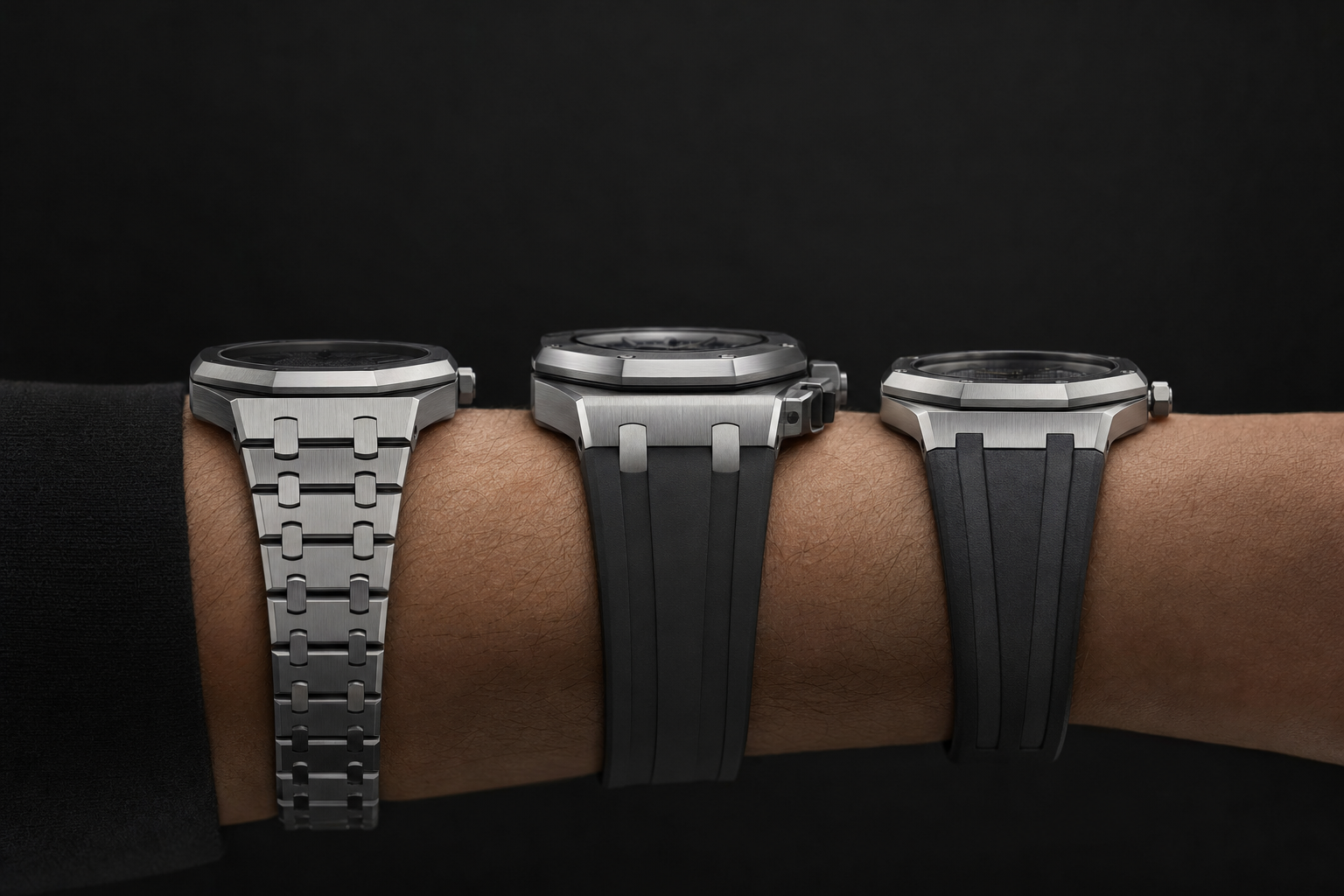
Lifestyle Match: Office, Weekend, Travel, and Daily Wear
The better daily wear AP super clone is not always the one with the most impressive specification sheet. It is the one that fits the way you dress, move, and use a watch. Royal Oak lifestyle fit leans toward clean design, shirt-cuff compatibility, and smart-casual versatility. Offshore lifestyle fit leans toward rubber-strap comfort, casual clothing, and deliberate wrist presence.
If your week involves button-down shirts, jackets, client meetings, dinners, and travel days where you want one watch to blend into several outfits, the Royal Oak is usually easier to manage. If your normal rotation is polos, hoodies, T-shirts, sneakers, gym-adjacent casual wear, or larger sports watches, the Offshore can look more natural than a thinner integrated-bracelet watch trying to play subtle.
The purpose of this comparison is to help buyers understand comfort, style, and ownership risk, not to suggest that a replica watch should be presented as a genuine Audemars Piguet watch. If disclosure matters in your social, resale, or collection context, the replica status should remain clear.
For Office and Smart-Casual Wear
For office wear, the Royal Oak is generally the safer AP replica choice. The thinner visual profile works better under sleeves, and the integrated bracelet reads more like a refined steel watch than a sport accessory. It still draws attention because the Royal Oak design is sharp and recognizable, but the attention usually comes from shape and finishing rather than size.
This matters if you want the best AP replica for office use or a first AP daily watch. A Royal Oak can sit between a Rolex-style sports replica and a dressier watch without feeling out of place. It pairs well with a shirt cuff, knitwear, a blazer, or smart-casual clothing because the case and bracelet look intentional rather than bulky.
The caution is that the Royal Oak is not invisible. The bracelet flashes, the bezel catches light, and the case shape is distinctive. If your workplace is conservative or you prefer watches that disappear under a cuff, choose a more restrained dial color and avoid assuming every Royal Oak will feel understated.
For Weekend and Sport-Casual Wear
The Offshore works better when the outfit supports the watch. Rubber strap, larger case, visible pushers, and chronograph styling make more sense with casual clothing than with a tight dress cuff. With a polo, T-shirt, hoodie, bomber jacket, or sneakers, the Offshore looks intentional rather than oversized.
This is where buyers often misjudge the Offshore. It is not automatically a worse or less tasteful choice; it is a less flexible one. If you want an AP replica for everyday use but your everyday life is casual, the Offshore may feel more comfortable and more honest than a Royal Oak that you only like in photos.
The Offshore also suits buyers who already enjoy stronger wrist presence. If you regularly wear larger Omega-style, Panerai-style, or modern sports-watch replicas, the Offshore will probably feel familiar. If your current comfort zone is 36mm to 40mm watches that slide under sleeves easily, the Offshore may feel like too much watch after the first week.
For Travel and Long Days
Travel exposes comfort issues quickly. A watch that feels exciting for ten minutes in a mirror can become irritating after eight hours in airports, cars, restaurants, and hotel rooms. For long days, the decision is less about which AP style looks better and more about which one you forget about when wearing it.
The Royal Oak has the advantage of a slimmer case and a bracelet that can feel balanced when sized well. The downside is that integrated bracelets have limited micro-adjustment compared with some sport clasps, and poor bracelet sizing can make the watch feel either loose and sharp-edged or tight and unforgiving. A good Royal Oak super clone should feel secure without biting the wrist.
The Offshore has a different comfort profile. Rubber can reduce perceived weight and handle heat better than a full steel bracelet, but the case height remains part of the experience. If the case is too tall or the strap is too stiff, the watch may shift around during the day. For travel, a comfortable Offshore is one where the strap curves naturally and the case does not constantly remind you it is there.
For most first-time buyers who want one AP-style replica to cover office, dinner, travel, and casual use, the Royal Oak is the more versatile path. The Offshore is the better choice when the buyer knowingly wants a casual sports AP and is not expecting it to behave like a slim daily bracelet watch.
Replica Accuracy Tradeoffs: Royal Oak Finishing Is Unforgiving, Offshore Thickness Is Hard to Hide
AP super clone accuracy should be judged differently for Royal Oak and Offshore models. The Royal Oak exposes flaws because the design is clean, flat, and architectural. The Offshore hides some small surface imperfections behind a busier sports design, but it exposes mass, case thickness, strap integration, and chronograph layout more aggressively.
This is the main visual tradeoff: Royal Oak exposes finishing; Offshore exposes construction. A Royal Oak replica can look wrong because the brushing is soft, the polished bevels are rounded, or the bracelet does not flow from the case. An Offshore replica can look wrong because the case sits too tall, the pushers look oversized, or the rubber strap does not meet the case cleanly.
A strong super clone may look convincing in normal wear, but close inspection can still reveal differences in finishing, movement architecture, case proportions, bracelet feel, dial details, or service compatibility. Buyers should avoid judging a replica by claims that it is “perfect” or equivalent to an authentic watch.
Royal Oak: Bracelet, Bezel, and Dial Precision
The Royal Oak gives replica flaws fewer places to hide. The octagonal bezel is broad and flat, so bezel screw seating, screw alignment, bezel shape, and brushing direction become obvious in normal viewing. The polished bevels need to be crisp enough to create the Royal Oak’s sharp light line. If those bevels look rounded or the brushing looks cloudy, the whole watch loses its architectural character.
The bracelet is even more important. On a Royal Oak replica, the bracelet is not just a strap; it is part of the case design. Bracelet links should taper naturally, articulate smoothly, and continue the alternating brushed and polished finish without looking like a separate attachment. A stiff bracelet or uneven link transition can make a technically “good” watch feel cheaper on the wrist.
The dial is another unforgiving area. Tapisserie texture, marker alignment, date positioning, and printing weight all matter because the Royal Oak dial is open and balanced. Small errors are not hidden by subdials or heavy color contrast. This does not mean every buyer needs macro-level perfection, but it does mean a Royal Oak replica lives or dies by precision in simple details.
Offshore: Thickness, Pushers, Strap Fit, and Chronograph Layout
The Offshore is more visually forgiving in some areas because the design is busier and more aggressive. A slightly less perfect brushed surface may not bother the buyer as much when the watch has a rubber strap, bold bezel, visible pushers, and a more rugged case architecture. But the Offshore creates a different problem: the physical mass is hard to disguise.
Offshore replica thickness is one of the first things to check. A tall case does not automatically make the watch bad, because the genuine Offshore family is already sportier and thicker than the classic Royal Oak. The issue is proportion. If the case side looks slab-like, the bezel sits too high, or the chronograph pushers look bulky compared with the case, the watch can feel less convincing even from normal viewing distance.
Strap integration matters more than many buyers expect. A rubber strap should meet the case cleanly and drop around the wrist without awkward gaps. If the strap projects outward, the watch wears larger and less stable. If the end connection looks crude, the Offshore loses the casual comfort advantage that makes it attractive in the first place.
Chronograph layout also affects the visual result. Subdial spacing, date placement, hand length, and pusher alignment need to look coherent together. A busy dial can absorb some imperfections, but it cannot fix a layout that feels crowded, stretched, or mismatched to the case. More complicated looking does not always mean harder to judge; sometimes complexity gives you more places to find problems.
QC Photos That Matter Most
For Royal Oak and Offshore super clones, the most useful AP QC photos are not always the prettiest photos. You want angles that reveal proportion, finishing, and fit. Straight-on dial photos help, but they are only the beginning.
- Front dial photo: Check marker alignment, date centering, dial texture, hand placement, and overall symmetry.
- Bezel close-up: Look at screw seating, brushing direction, polished bevels, and whether the bezel shape looks even.
- Side-profile photo: Essential for judging case thickness, crystal height, bezel height, and whether the case looks too slab-sided.
- Bracelet or strap connection: On Royal Oak, check bracelet flow and first-link behavior. On Offshore, check rubber strap fit and gap control.
- Clasp or buckle photo: Comfort and finishing here affect daily use more than many buyers expect.
- Angled wrist-style photo when available: This can show whether the watch sits flat, flares, or floats above the wrist.
Lighting and camera angle can exaggerate or hide flaws. Strong reflections may make bevels look sharper than they are, while a low side angle can make any watch look thicker. The goal is not to inspect a replica watch as if every microscopic detail carries equal weight. The goal is to catch the flaws that will change how the watch feels and looks during real wear.
QC photos can reduce uncertainty, but they do not guarantee perfection. They also do not prove water resistance, official brand origin, long-term movement reliability, or that the watch would satisfy professional authentication standards. Use QC images as practical buyer evidence, not as a certificate of authenticity or a promise of performance.
Before making a decision, buyers should review real QC photos where available, including dial printing, hand alignment, bezel position, datewheel centering, bracelet fit, clasp engraving, case thickness, strap connection, and overall finishing. Factory labels and stock photos alone are not enough for a reliable judgment.
Movement and Maintenance Risk: Simple Royal Oak Choices vs Offshore Chronograph Complexity
The most important AP replica movement question is not “which one sounds more advanced?” It is “which one creates fewer ownership surprises?” For most buyers who want a daily-wear AP super clone, a simpler Royal Oak-style model is usually the safer mechanical path than an Offshore chronograph. Fewer functions mean fewer things to verify, fewer operating mistakes, and less dependence on complicated movement modifications.
This does not mean every Offshore chronograph movement is a bad choice. Some versions are genuinely appealing because the chronograph layout is part of the Offshore identity. The problem is that the Offshore asks more from the replica: thicker case construction, more dial registers, pushers, date behavior, and sometimes a movement route that is doing more than a simple three-hand Royal Oak movement. The buyer is not just choosing a sportier look; they are accepting a more complicated ownership profile.
Why Simpler Layouts Often Make Better Daily Replicas
A time-and-date Royal Oak-style replica is easier to live with because the AP replica movement has a narrower job. It needs to wind, keep time, change date correctly, and support a case thickness that looks reasonable for the model. If those basics are well executed, the watch can be worn without the owner constantly thinking about what not to press, how often to reset it, or whether the movement architecture is fighting the case design.
This is why buyers asking “which AP replica is more reliable?” often receive the less exciting answer: the simpler one. A low-maintenance AP clone is not always the most technically impressive watch in photos. It is the one that lets the buyer enjoy the Royal Oak shape, bracelet, dial, and wrist presence without making the movement the center of every concern.
Power reserve claims should also be treated carefully. A factory may advertise a long reserve, but real-world performance can vary by version, regulation, lubrication, and how the watch is worn. For daily use, consistent winding feel, stable date change, and acceptable rotor noise often matter more than a headline power-reserve number. A watch that runs predictably for normal daily wear is more useful than one with an impressive specification that only holds on selected samples.
At Clean VS Factory, we usually separate visual accuracy from ownership experience at this point. A Royal Oak replica can look less dramatic than an Offshore chronograph, but if the movement route is simpler and the case thickness makes sense, it may be the better watch to own rather than just the more interesting watch to photograph.
Chronograph Appeal Versus Chronograph Risk
The Offshore chronograph has a real attraction. The pushers, subdials, rubber strap, and thicker case make the watch feel active and muscular in a way a classic Royal Oak does not. For a buyer who already likes large sports watches, that energy is exactly the point. The mistake is assuming the chronograph look and chronograph function are the same buying issue.
Some Offshore replicas are built primarily to create the correct visual layout. Others offer functional chronograph behavior, but that adds more moving parts, more adjustment points, and more potential service concerns, so a super clone Audemars Piguet guide can help frame the movement trade-offs before expectations become unrealistic. Even when the chronograph works, buyers should ask how often they actually plan to use it. Many owners are happier treating the chronograph as part of the design language rather than as a tool they operate constantly.
Case thickness is tied closely to this movement choice. A chronograph movement usually needs more vertical space than a simple automatic movement. If the replica uses a thicker or modified movement route, the case may sit taller than expected. On an Offshore, some thickness is visually acceptable because the original design is already chunky, but there is still a limit. A case that becomes too tall can make the watch feel top-heavy, less comfortable, and less convincing in side profile.
Winding feel and rotor sound also deserve more attention than many buyers give them. A noisy rotor does not always mean immediate failure, but it can make an expensive-looking watch feel cheaper in use. A stiff or gritty crown can also reduce confidence quickly, especially on a watch that may require more setting and interaction. These are ownership details, not macro-photo details.
Movement Route to Verify
Before choosing an Offshore chronograph replica, confirm what the movement actually is, not just what the dial looks like. Ask whether the chronograph is functional, how the subdials operate, how the date changes, and whether the claimed case thickness matches the specific version being sold. If the seller cannot explain the movement route clearly, that is a warning sign for buyers who care about long-term use.
For a simpler Royal Oak, the questions are different but still important: movement type, expected power reserve, rotor noise, date-change behavior, and whether the movement supports the correct case profile. For an Offshore chronograph, add chronograph operation, pusher feel, reset behavior, and serviceability. The more complicated the watch, the more these details should influence the decision before payment.
- Choose the simpler Royal Oak route if you want fewer maintenance concerns, cleaner daily wear, and less anxiety about chronograph function.
- Choose the Offshore chronograph route if you specifically want the sportier layout and accept that movement verification matters more.
- Pause before buying if the watch is sold only on factory name, photos, or vague claims like “upgraded movement” without clear explanation.
The practical judgment is straightforward: for most first-time AP super clone buyers, simple beats complicated. Offshore chronographs can be rewarding, but they are better for buyers who understand the added movement concerns and are comfortable verifying the version before purchase.
Movement Transparency Note: Movement references in this article describe replica-market movement types, layouts, or configurations. Buyers should not treat terms such as clone movement, upgraded movement, or chronograph movement as proof of an official Audemars Piguet caliber, Swiss manufacture, or brand-supported serviceability unless there is clear, verifiable evidence for the exact watch being evaluated.
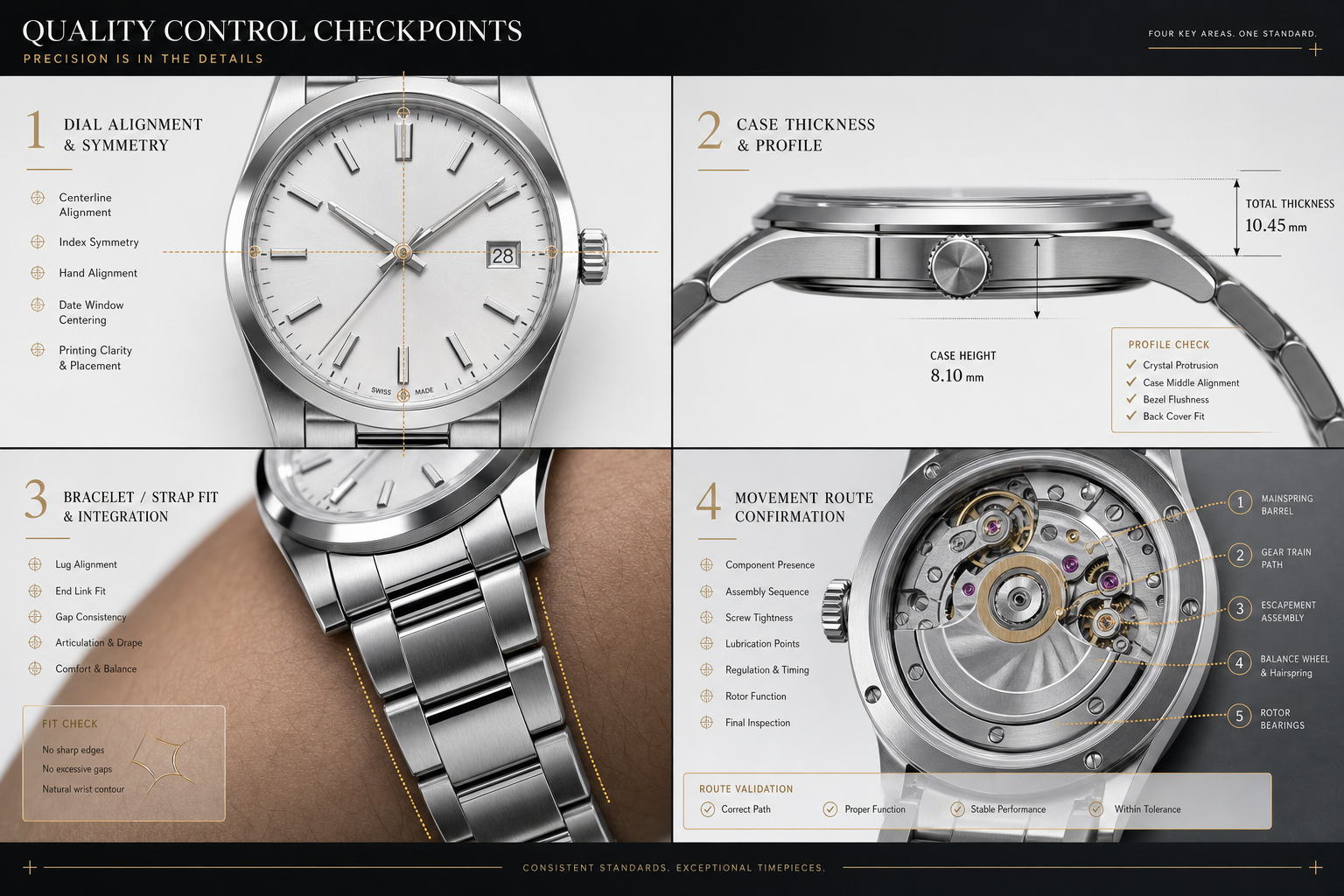
Factory and Version Logic: Do Not Choose by AP Factory Reputation Alone
The phrase “best AP replica factory” is useful only as a starting point. It is not a final buying answer. AP super clone factory performance changes by model, version, dial color, movement route, bracelet or strap design, and batch. A factory that looks strong on a classic Royal Oak reference may not be the safest choice for a thick Offshore chronograph, and a factory known for one version may have an older or weaker execution in another.
This matters because Royal Oak and Offshore replicas stress different parts of production. The Royal Oak depends heavily on bracelet finishing, bezel geometry, tapisserie texture, case thinness, and dial balance. The Offshore depends more on case architecture, pusher construction, strap integration, chronograph layout, and whether the movement route keeps the watch within a believable thickness range. One broad factory reputation cannot solve both sets of problems.
Why Model-Specific Evidence Beats Factory Name
A buyer asking “which factory for Royal Oak?” is asking a different question from “which factory for Offshore?” The Royal Oak should be judged by how the bracelet drapes, whether the bezel screws sit cleanly, how sharp the brushed and polished transitions look, and whether the movement supports the right profile. The Offshore should be judged by side thickness, pusher shape, strap fit, dial spacing, and the chronograph movement logic behind the watch.
Names such as APSF, ZF, APF, and other market-known factories can help narrow the search, but they should not replace version evidence. A seller may use a respected factory name to make a watch sound safe, yet the actual piece may be an older batch, a different movement route, or a model where that factory is not strongest. This is one of the easiest factory comparison mistakes to make because the buyer feels they have done research when they have only chosen a label.
A better question is more specific: which factory, for which AP reference, in which current version, with which movement, and with what QC evidence? That sounds less convenient, but it prevents the common mistake of buying an Offshore only because it carries a familiar factory name, or buying a Royal Oak without checking whether the bracelet and case finishing justify the price.
A factory comparison is most useful when it is tied to the specific reference, version, movement, and visible execution details rather than treated as a universal ranking. In practical terms, that means checking whether the claimed factory is known for this exact Royal Oak case size or this exact Offshore chronograph layout, not simply whether the factory name appears frequently in forum discussions or seller listings.
Version Updates Can Change the Better Choice
Version updates can change the recommendation more than factory reputation suggests. A newer batch may improve dial color, bracelet articulation, case thickness, clasp feel, datewheel alignment, or movement layout. It may also introduce a new compromise. Better dial texture does not automatically mean better bracelet feel. A more attractive movement decoration does not automatically mean better serviceability. A corrected case profile does not guarantee better QC consistency.
This is why buyers should treat “V2,” “V3,” or “latest version” as a claim to verify, not a benefit to assume. Ask what changed. Was the update to the dial, the case, the bracelet, the movement, or only the marketing description? If the answer is vague, the version label has limited value.
For this Royal Oak versus Offshore decision, factory logic should stay secondary to suitability. If your wrist and lifestyle point clearly toward a Royal Oak, do not force an Offshore because a particular factory is praised that month. If you genuinely want the Offshore presence, do not assume the best-known Royal Oak factory automatically makes the best Offshore for your expectations. The right factory matters, but only after the right AP style has been chosen.
Factory Name Clarification: Factory names in the replica watch market are buyer-facing reference labels, not official Audemars Piguet affiliations or audited manufacturer guarantees. They can help organize research, but buyers should still judge each Royal Oak or Offshore version by visible QC details such as bracelet articulation, bezel finishing, case thickness, strap fit, dial alignment, date position, and movement configuration.
Price, QC Photos, and Seller Claims: What They Can and Cannot Prove
Price differences between Royal Oak and Offshore super clones should be read carefully. A higher price may reflect a more expensive movement route, better bracelet finishing, lower availability, newer batch, seller margin, or greater after-sale risk. It does not automatically prove that the watch will fit better, wear more comfortably, or be the better daily choice. A Royal Oak with a well-finished bracelet and stable simple movement may be more useful to one buyer than a more expensive Offshore chronograph with impressive photos but unclear movement information.
QC photos are useful signals, but they are not final proof. A straight-on dial photo can show marker alignment and date position, but it will not show whether the bracelet pulls flat across the wrist or whether the Offshore strap is stiff near the case. A side photo can reveal thickness, but lighting can make polished bevels appear sharper or hide slab-like case walls. For AP-style replicas, buyers should ask for photos that match the actual risk of the model: bracelet flow and bezel finishing for Royal Oak, side height and pusher/strap integration for Offshore.
Seller descriptions also need narrowing. Phrases such as “best factory,” “latest version,” or “upgraded movement” are only useful when attached to specific evidence. The better follow-up is not “is this the best?” but “what changed in this version, what movement is inside, how thick is this exact watch, and can the bracelet or strap fit be shown from the side?” A seller who can answer those details clearly gives the buyer more practical information than a listing that relies only on factory labels and polished studio photos.
Claims such as “perfect,” “same as genuine,” or “guaranteed to pass inspection” should be treated with caution. A more reliable comparison looks at the actual model version, movement configuration, finishing details, and available QC evidence. The safest use of factory and movement information is to avoid overpaying or misunderstanding quality, not to misrepresent a replica watch as genuine.
Prices can change by factory label, version, movement, seller channel, and availability, so exact comparisons should be verified at the time of purchase. Buyers should also confirm return terms, repair options, shipping expectations, payment process, and after-sales support directly with the seller instead of assuming those policies from the model name, factory label, or price level.
How to Treat Material, Water-Resistance, and Movement Claims
Material claims should be handled with the same caution as factory claims. A listing may mention stainless steel grade, sapphire crystal, ceramic parts, plated surfaces, rubber quality, lume, or decorated movement parts, but those words do not automatically prove the exact material, finishing standard, or durability of the individual watch. When these details matter to you, ask for close photos and keep expectations practical rather than assuming that a marketing term equals authentic-brand specification.
Water resistance should not be assumed on either Royal Oak-style or Offshore-style replicas. The Offshore may look more rugged because of its case size, rubber strap, and chronograph styling, but appearance is not a pressure test. If you intend to wear any replica around water, treat resistance as unverified unless the individual watch has been tested after purchase by someone qualified to test that specific case, crown, crystal, gasket, and pusher setup.
Movement descriptions also need restraint. A seller may use terms such as clone movement, decorated movement, upgraded movement, Asian automatic, or chronograph movement, but those labels are not enough to establish serviceability or reliability. The practical evidence is more specific: movement photos when available, clear explanation of date behavior, chronograph operation, crown feel, rotor noise, case thickness, and whether a local watchmaker would be willing to service the movement if a problem appears.
Buyer Scenarios: Which AP Style Fits Which Person?
If you are still asking “which AP replica should I buy, Royal Oak or Offshore?” the fastest way to decide is to match the watch to your actual life, not your saved photos. The Royal Oak usually suits buyers who want cleaner daily wear, slimmer styling, and a more versatile AP look. The Offshore suits buyers who already enjoy bigger sports watches, casual outfits, rubber straps, and a stronger wrist statement.
| Buyer Type | Better Starting Point | Reason | Main Caution |
|---|---|---|---|
| Small or medium wrist | Royal Oak | Thinner profile and cleaner case shape usually wear more naturally | Bracelet flare can still make it feel wider than expected |
| Office or smart-casual wearer | Royal Oak | Works better with cuffs, jackets, and less sporty clothing | Finishing flaws are easier to notice on the clean design |
| Bold casual style | Offshore | Rubber strap, larger case, and chronograph look fit relaxed outfits | Thickness and movement route need closer checking |
| First AP super clone buyer | Royal Oak | More versatile and usually easier to understand as a daily watch | Do not ignore bracelet comfort and QC details |
| Low-maintenance buyer | Simple Royal Oak-style model | Fewer complications usually mean fewer ownership concerns | Movement claims still need version-specific verification |
Small Wrist or Shirt-Cuff Wearer
If you have a smaller wrist or wear shirts and jackets often, lean Royal Oak first. It is usually the best AP for a small wrist because the overall style is thinner, cleaner, and less top-heavy than most Offshore chronographs. It also gives you the signature AP integrated-bracelet look without the full bulk of a sport chronograph case.
The warning is bracelet flare. A Royal Oak can still wear broad because the bracelet leaves the case as part of the watch shape, not as a soft strap that drops immediately. If your wrist is round rather than flat, the first links may sit wider than expected. For this buyer, wrist photos and side-angle QC images matter more than diameter numbers alone.
Bold Casual Style or Larger Wrist
If your wardrobe is mostly polos, T-shirts, hoodies, sneakers, travel casual, or sport-casual clothing, the Offshore may look more natural than a Royal Oak. It is the better AP replica for a bold look because the size, rubber strap, and chronograph styling are intentional parts of the design. On a larger wrist, that presence can feel balanced rather than excessive.
Avoid the Offshore if you only like it in isolated photos but dislike thick watches in real life. The watch will not become subtle once it is on your wrist. The Offshore works best when the buyer wants the size, not when the buyer is trying to tolerate it because the model looks exciting online.
First AP Super Clone Buyer
For a first AP replica, the Royal Oak is usually the easier recommendation. It is more versatile, more recognizable as the classic AP shape, and easier to wear across office, dinner, travel, and weekend situations. It also gives new buyers a clearer sense of what makes AP-style replicas different: the octagonal bezel, integrated bracelet, tapisserie dial, and sharp case geometry.
The Offshore is a better first choice only if you already know you enjoy large sports watches. If your current comfort zone is Rolex Submariner-style, Omega Seamaster-style, or other moderate sports replicas, an Offshore may feel like a bigger jump than expected. If you already wear thick chronographs or rubber-strap sports watches comfortably, the Offshore becomes much more sensible.
Low-Maintenance Preference
If your priority is a low-maintenance choice, choose the simpler layout before choosing the louder style. A time-and-date Royal Oak-style super clone usually creates fewer concerns than an Offshore chronograph because there are fewer functions to operate, fewer layout issues to check, and less chance that movement complexity will affect case thickness or daily confidence.
This is not about fear; it is about fit. Some buyers enjoy checking movement routes, chronograph behavior, and version differences. Others simply want a watch they can wear without thinking about it. If you are in the second group, the more rational AP super clone is usually the cleaner Royal Oak, not the most complicated Offshore you can find.
The final buyer judgment is simple: choose the Royal Oak if you want versatility and a cleaner daily-wear path; choose the Offshore if your wrist, wardrobe, and tolerance for thickness support a bigger sport-watch personality. Regret usually comes from choosing the watch you admire in photos instead of the one you can comfortably wear for a full day.
Final Decision Matrix: Choose Royal Oak If, Choose Offshore If
The Royal Oak vs Royal Oak Offshore replica decision should not end with “which one looks closer in photos.” It should end with a more practical question: which AP super clone decision will still make sense after the first week, when the watch is on your wrist for work, dinner, travel, or a long casual day?
For most buyers, the Royal Oak is the safer AP replica choice if they want one watch that can move between office, smart casual, and daily wear without feeling oversized. The Offshore is the better choice if the buyer already likes large sports watches and wants the watch to be noticed as part of the outfit. Neither path is automatically better. The mistake is buying the Offshore because it looks exciting in close-up photos, or buying the Royal Oak because it seems more “classic,” without accepting the fit and finishing tradeoffs.
| Buyer Priority | Lean Royal Oak | Lean Offshore |
|---|---|---|
| Wrist fit | Better for many small to medium wrists, but bracelet flare still matters | Better for larger wrists or buyers comfortable with taller cases |
| Clothing style | Office, shirt cuffs, jackets, smart casual, cleaner daily wear | T-shirts, polos, hoodies, sneakers, weekend and sport-casual outfits |
| Visual personality | Sharper, thinner, more architectural | Louder, sportier, more aggressive |
| Main replica risk | Bracelet finishing, bezel geometry, dial precision | Case thickness, strap fit, chronograph complexity |
| Best buyer type | Buyer who wants versatility and classic AP design | Buyer who wants bold wrist presence and accepts size |
Choose Royal Oak If
Choose Royal Oak if your idea of the best AP style for you is clean, sharp, and wearable rather than loud. This is usually the better direction for buyers with smaller or medium wrists, buyers who wear button-down shirts or jackets, and buyers who want a super clone watch that can move naturally through more situations without dominating the wrist.
- You want classic AP design first. The octagonal bezel, tapisserie dial, and integrated bracelet are the point of the Royal Oak. If that full bracelet-to-case architecture is what attracted you to AP, the Offshore will not scratch the same itch.
- You care about sleeve clearance. A thinner Royal Oak-style case is easier to live with under cuffs and jackets. Even if the bracelet makes it wear broad, it usually feels more controlled than a thick chronograph case.
- You prefer a cleaner daily signal. The Royal Oak still draws attention, but it does so through shape and finishing rather than bulk. That makes it easier to wear in restaurants, offices, airports, and mixed social settings.
- You are buying your first AP super clone. For many first-time buyers, the Royal Oak is the more versatile starting point because it teaches you whether you actually enjoy AP’s case shape and bracelet feel before moving into louder Offshore territory.
- You accept that finishing matters. The Royal Oak is visually unforgiving. If bracelet brushing, polished bevels, bezel screw seating, and dial alignment will bother you, you need to inspect QC carefully rather than assume the simpler-looking watch is easier to clone.
A Royal Oak replica is not the low-risk choice because it is simple; it is the lower-lifestyle-risk choice because it fits more wardrobes. The tradeoff is that small finishing flaws have fewer places to hide. If you are sensitive to bracelet feel or sharp case transitions, do not buy only from front-facing dial photos.
Choose Offshore If
Choose Offshore if you want the watch to feel like a large, casual sports object from the beginning. The Royal Oak Offshore super clone is not trying to be the quiet version of AP. It works best for buyers who wear larger watches comfortably, prefer rubber straps, and want the watch to carry more wrist presence with casual clothing.
- You already like bigger watches. If you are used to larger Rolex, Panerai, Omega, or chronograph-style replicas, the Offshore may feel natural rather than excessive.
- Your wardrobe is casual or athletic. Hoodies, polos, T-shirts, sneakers, and weekend clothing support the Offshore better than formal shirts and tight cuffs.
- You prefer rubber strap comfort. A good rubber strap can make a large watch easier to tolerate than a heavy bracelet watch, especially during long days or warm weather.
- You want obvious AP presence. The Offshore announces itself through case mass, pushers, bezel size, and dial energy. If that is the appeal, do not compromise into a Royal Oak and then wish it had more impact.
- You can live with greater complexity. Offshore-style chronographs and thicker cases require more realistic expectations. The visual drama often comes with more points to verify before buying.
The Offshore is a poor choice for someone who secretly wants a slim daily watch. It may look exciting in seller photos, but if you dislike tall cases, exposed pushers, or a watch that sits high on the wrist, the appeal can fade quickly. Buy it because you want the size, not because you think bigger automatically means more impressive.
Pause Before Buying If
Pause before buying either style if your expectations are built around perfection. AP super clone watches can be visually strong, but the two collections expose different compromises. The Royal Oak asks you to accept close scrutiny of bracelet finishing and dial detail. The Offshore asks you to accept size, case mass, and often more mechanical caution.
- Pause if you dislike thick watches. Do not assume you will “get used to” Offshore thickness. If side profile bothers you, it will keep bothering you.
- Pause if bracelet finishing flaws irritate you. The Royal Oak bracelet is part of the watch, not an accessory. Rough edges, stiff articulation, uneven brushing, or poor clasp feel can ruin the ownership experience faster than a tiny dial flaw.
- Pause if you expect guaranteed water resistance. Treat water resistance claims carefully on any replica watch. Even a sportier Offshore look does not mean it should be trusted for swimming without proper testing.
- Pause if you want a complicated chronograph with no maintenance concern. Chronograph appeal and chronograph ownership risk are not the same thing. If you want low anxiety, a simpler layout is usually the more rational choice.
- Pause if the factory name is doing all the convincing. A known AP super clone factory may be useful, but the exact model, version, batch, case thickness, bracelet or strap fit, and QC evidence matter more than the label alone.
A replica watch should be evaluated with realistic ownership expectations. Even a strong super clone can have limits in water resistance, long-term movement stability, servicing convenience, and close inspection compared with a genuine reference. Buyers should also confirm return, repair, shipping, and after-sales terms before ordering, because those terms can vary by seller and should not be assumed from a product description alone.
The cleanest final rule is simple: choose the Royal Oak if you want classic AP design in a more versatile daily form; choose the Offshore if you want a bold casual AP style and are comfortable with the size and complexity. The best AP super clone is not the one with the loudest recommendation. It is the one whose compromises match your wrist, wardrobe, and patience after the novelty wears off.
Disclosure: This article is for general educational and comparison purposes only. Replica watches are not genuine products from the original luxury brands, and brand names are used only to identify reference designs or comparison topics. Factory names, movement descriptions, prices, availability, QC details, seller policies, and version information can change, so readers should verify important details with the seller before making a purchase decision. Replica watches should not be represented, resold, or used as genuine watches.