
An AP Royal Oak-style super clone can look attractive at the advertised price, but this article focuses on the ownership cost that often appears after payment. The design is less forgiving than many simpler replica watches because the flat brushing, bezel screws, integrated bracelet, display back, and thin case profile make small flaws easier to notice, which is why the idea of a perfect Audemars Piguet super clone depends heavily on case finishing standards, bracelet integration, and movement consistency rather than appearance alone. A lower upfront price may become less appealing if the watch needs bracelet work, water-resistance testing, movement attention, or repeated QC decisions before it feels suitable for daily wear.
The practical question is not only whether the watch looks good in photos, but whether the full ownership path makes sense for the buyer. This guide helps judge when a higher-tier AP super clone may justify its price, what mechanical and bracelet issues deserve attention, and why buyers should treat resale, service access, and lifestyle visibility as real parts of the decision.
| Ownership Area | What to Check First | Why It Affects the Real Cost |
|---|---|---|
| Movement route | Rotor noise, winding feel, date behavior, power reserve | Decorated movements can still be hard to service or source parts for |
| Royal Oak case and bezel | Case profile, bezel screws, brushing, edge finishing | Flat surfaces and exposed screws make small alignment flaws more visible |
| Integrated bracelet | Screw security, link fit, clasp comfort, sizing needs | Poor fit can create daily irritation or require immediate adjustment |
| Water resistance | Pressure test before exposure to water | Claims should not be treated as protection without independent testing |
| QC decision | Reject only serious flaws such as misalignment or mechanical issues | Extra QC rounds can reduce risk but add delay and stress |
| Long-term exit | Assume limited resale value and uncertain buyer trust | The watch is safer to view as a personal expense, not recoverable value |
Quick Questions Before You Read
Q: Is the listed price the main cost of an AP super clone?
No. Bracelet sizing, QC delays, shipping risk, testing, and possible service can add meaningful cost.
Q: Why are Royal Oak-style replicas less forgiving?
The flat case, bezel screws, integrated bracelet, and display back expose details that are easier to overlook on simpler designs.
Q: Does a decorated movement mean better ownership?
Not always. Reliability, service access, parts availability, and seller support matter more than decoration alone.
Q: Who should think twice before buying one?
Beginners expecting no maintenance, guaranteed water resistance, easy resale, or a low-attention daily watch should be cautious.
Editorial Perspective: For an AP super clone, the useful buying question is not “which factory is best” in a general sense. The better question is whether the specific reference, movement route, bracelet execution, case thickness, QC sample, and intended use make sense together. A watch that photographs well may still be a poor daily choice if the bracelet is uncomfortable, the movement is difficult to service, or the buyer is not prepared for the attention that a Royal Oak-style design attracts.
Evidence Boundaries for This AP Super Clone Guide
This article discusses imitation watches and practical ownership risk. It does not claim that any AP super clone is authorized by Audemars Piguet, equivalent to an authentic watch, or guaranteed to match the genuine model in materials, movement construction, finishing, water resistance, service support, or long-term durability. Official brand information can help identify what the authentic design is known for, but it cannot prove the quality of a replica unit.
Factory names, seller descriptions, and community reputation should be treated as decision signals rather than verified technical proof. A factory label may help a buyer compare options, but it does not confirm the exact condition of the movement, the sealing quality of the case, the comfort of the bracelet, or the reliability of the specific watch being shipped. This is why QC photos, seller transparency, and realistic after-sales expectations matter more than broad claims such as “best factory” or “1:1.”
Movement claims deserve the same caution. A decorated movement visible through a caseback may look closer to the target design, but decoration alone does not prove mechanical equivalence, serviceability, or long-term reliability. Buyers should ask for the stated movement route, movement photos where possible, and practical support terms, while still understanding that photos cannot guarantee future performance.
Water resistance, import risk, resale, and disclosure should also be handled conservatively. A seller claim should not be treated as permission to swim or shower with the watch unless the individual unit has been pressure-tested after delivery. Replica watches can also raise trademark, customs, platform, resale, and disclosure issues depending on jurisdiction and use, so this guide avoids broad legal reassurance and frames the watch as a personal-use purchase with ownership limits.
Brand names are used in this article for identification and comparison of the genuine reference design only. An AP super clone or Royal Oak-style replica is not a genuine Audemars Piguet watch, is not produced or approved by Audemars Piguet, and should not be represented, listed, or described as an authentic brand-manufactured watch.
How to Trace a Claim Before Treating It as Value
A useful AP super clone comparison should connect every claim to something the buyer can actually check. If a listing says the case is improved, the buyer should look for side-profile photos, bezel height, lug shape, mid-case thickness, and brushing transitions. If a listing says the bracelet is upgraded, the check should move to link articulation, clasp closure, screw quality, edge finishing, and whether the bracelet drapes naturally from the case. If a listing says the movement is better, the buyer should ask whether that means layout, decoration, power reserve, rotor behavior, date function, or serviceability.
This traceability matters because replica-market language is often broad while ownership problems are specific. “High quality” does not tell the buyer whether the datewheel is centered. “Latest version” does not confirm the individual watch has clean bezel screws. “Factory version” does not prove that the bracelet will fit comfortably on the buyer’s wrist. A more reliable decision starts with the factory and version name, then narrows down to the exact reference, movement route, visible QC details, and the buyer’s intended use.
CleanVSFactory’s editorial approach is to make replica watch decisions more traceable by connecting factory claims to visible details, movement behavior, version differences, and practical QC checks. That approach does not remove the limits of replica ownership, but it helps buyers avoid paying for language that cannot be verified on the actual watch being offered.
The Real Price Starts After the Advertised AP Super Clone Price
A buyer sees an AP Royal Oak super clone listed at an attractive price and assumes the decision is simple: choose the best-looking version within budget, approve QC, and wait for delivery. That is the first mistake. The AP super clone cost is not only the number on the listing. The real cost starts once the watch has to be sized, checked, shipped, worn, and possibly corrected.
This article is about replica watch ownership cost, not genuine Audemars Piguet ownership and not resale authentication. A Royal Oak replica may look impressive in photos, but it is still a product with practical risks. The buyer is paying not just for the watch, but for the chance that the bracelet needs adjustment, the QC process takes longer than expected, shipping becomes stressful, water resistance needs independent testing, or the movement later needs attention from someone willing to work on it.
Many AP super clone watches are advertised across different price tiers depending on factory label, model, movement route, seller, shipping arrangement, QC standard, and current availability. Those figures are not fixed and should be verified before purchase. More important, they should not be treated as the full ownership number. A buyer who can afford the advertised price but would be annoyed by any extra maintenance, delay, or setup cost is not budgeting realistically.
Prices can change by factory label, version, movement, seller channel, availability, finishing quality, and after-sales support. Exact comparisons should be verified at the time of purchase, and a lower listed price should not be treated as better value unless the buyer is comparing the same reference, same movement route, same version evidence, and similar seller terms.
Why the First Price Can Be Misleading
The Audemars Piguet super clone price shown in a listing usually covers the watch itself and whatever the seller includes in that specific transaction. It normally does not include local bracelet sizing, independent inspection, water-resistance testing, rejected QC delays, shipping complications, or future service work. Those are not rare luxury add-ons. They are normal ownership variables in the replica watch market.
This matters more with a Royal Oak-style watch because the design is less forgiving than many buyers expect. A slightly uncomfortable bracelet, a sharp clasp edge, a delayed date change, or a noisy rotor may not make the watch unusable, but each one changes the ownership experience. The watch may still be worth buying, but it is no longer the same deal the buyer imagined when only comparing listing prices.
The misleading part is that the first price feels precise. It gives the buyer a clean number to compare against another seller or another factory version. Ownership cost is messier. It includes time, risk, patience, and the possibility of spending more after delivery. That is why the cheapest listing is not automatically the best value, and the most expensive version is not automatically the safest choice.
The Ownership-Cost Mindset
The practical rule is simple: budget for the watch plus maintenance risk, not just the listed price. That does not mean every AP super clone will become a problem. It means the buyer should enter the purchase knowing that a super clone watch is not a one-time checkout item in the same way as a simple fashion watch.
A better question is not only “Is it worth the price?” but “Can I tolerate the real cost to own it if something small needs attention?” If the answer is no, an AP super clone may feel more stressful than satisfying. If the answer is yes, the buyer can judge the purchase more clearly and avoid treating normal replica-watch uncertainty as a surprise failure.
At Clean VS Factory, we usually encourage buyers to separate visual excitement from ownership reality. A Royal Oak replica can look strong in photos and still require a more careful budget than a simpler daily-wear replica watch. That gap between appearance and ownership is where many bad purchases happen.
Factory Name Does Not Remove Ownership Risk
Factory reputation can help narrow the shortlist, but it should not be treated as final proof of value. A factory may be strong on one Royal Oak reference and less convincing on another because the case thickness, dial texture, bracelet construction, movement layout, and available batch are different. This matters with AP-style replicas because small exterior details are harder to hide than on many round-case sports watches.
For this category, a “best factory” claim is only useful when it is tied to a specific model and use case. A buyer looking for a photo-friendly display-back version may care more about movement decoration and case profile. A buyer planning regular wear may care more about rotor behavior, bracelet comfort, screw security, and whether a local watchmaker can handle basic service. Those two buyers may not make the same choice, even if they are considering the same AP reference.
Seller descriptions and QC photos are useful signals, but they are not final proof. A factory label does not confirm the exact movement condition, water resistance, clasp feel, or long-term reliability of the individual watch being shipped. At cleanvsfactory.com, this type of AP decision is treated as a model-specific ownership question rather than a simple factory ranking: the label starts the comparison, but the movement route, unit-level QC, bracelet fit, and buyer’s tolerance for maintenance decide whether the purchase makes sense.
Factory Name Clarification: Factory names in the replica watch market are commonly used buyer-facing labels. They should be treated as practical market references, not as official brand affiliations, audited manufacturer identities, or guarantees of identical quality across every model.
Visible Costs Buyers Usually Notice Before Purchase
The easiest costs to understand are the visible ones: the base watch price, the version tier, the movement option, dealer shipping, bracelet resizing, and any water-resistance test the buyer chooses after delivery. These are not necessarily warning signs. They are the predictable parts of a proper Royal Oak super clone budget.
The mistake is comparing two listings as if they are identical products because the photos look similar. In the AP replica market, two watches can share the same case shape and dial color but differ in movement route, bracelet finishing, case thickness, dial texture, clasp feel, or QC consistency. The buyer is often not only paying for better appearance. Sometimes the extra cost is paying for fewer obvious compromises.
Base Watch Price and Version Tier
The base price tells you where the watch sits in the market, but it does not tell you enough by itself. A lower-cost AP-style replica may use a simpler movement, less refined bracelet finishing, rougher brushing, weaker clasp action, or a thicker case. A higher-tier AP super clone may offer a more accurate movement layout, better dial execution, cleaner case finishing, or more consistent QC. The upgrade is only valuable if it improves something that matters in use.
This is where buyers often overpay for the wrong reason. “Upgraded movement” sounds attractive, but the better question is what the upgrade actually changes. Does it help the case profile? Does it improve reliability? Does it make the display-back layout more believable for that reference? Does it reduce rotor noise or date issues? If the answer is vague, the word “upgrade” may be more marketing than value.
A sensible buyer should ask what do I pay for upfront, not just which version sounds most premium. On an AP Royal Oak clone, paying more can be justified when it improves the movement route, bracelet feel, dial execution, or dimensional accuracy. Paying more only because a seller uses stronger language is not a buying strategy.
Bracelet Resizing and Fit Adjustment
Bracelet resizing is one of the first visible post-delivery costs buyers underestimate. The Royal Oak-style integrated bracelet is part of the appeal, but it also makes fit more demanding. If the bracelet is too loose, the watch can slide around and feel top-heavy. If it is too tight, the angular case and clasp can become uncomfortable quickly.
Unlike a simple strap watch, a Royal Oak-style bracelet depends on link balance, clasp position, and how the first links articulate from the case. Removing or adding one link can change how the watch sits on the wrist. A watch that looks excellent in QC photos may still need careful local adjustment before it becomes comfortable enough for real daily wear.
Local bracelet adjustment cost varies, and buyers should check with the actual watchmaker or repair shop before assuming it will be simple or cheap. Some shops may be cautious with replica watches, and some AP-style bracelets use small screws that require the right tools and patience. This is not a major hidden disaster, but it is a real setup item that belongs in the initial budget.
Water-Resistance Testing Before Real Use
Water resistance is another visible cost because it should be treated as a separate decision, not a promise from a listing. Even if a seller claims a watch is water resistant, a buyer should not assume it is ready for swimming, showering, or repeated water exposure. Gaskets, caseback sealing, crown fit, and assembly quality can vary from unit to unit.
If water exposure matters, independent pressure testing is the practical step after delivery. Local costs vary, and even a successful test is not a permanent guarantee. It only tells you how the watch performed at that moment under that test condition. A later crown issue, caseback opening, or gasket problem can change the result.
The clear judgment here is conservative: if you do not plan to test it, treat the watch as splash-cautious rather than water-ready. That mindset prevents one of the most avoidable ownership mistakes. A Royal Oak super clone may be visually convincing on the wrist, but water damage can turn a good-looking purchase into an expensive repair question very quickly.
Why AP Super Clones Can Cost More to Maintain Than Simpler Replica Watches
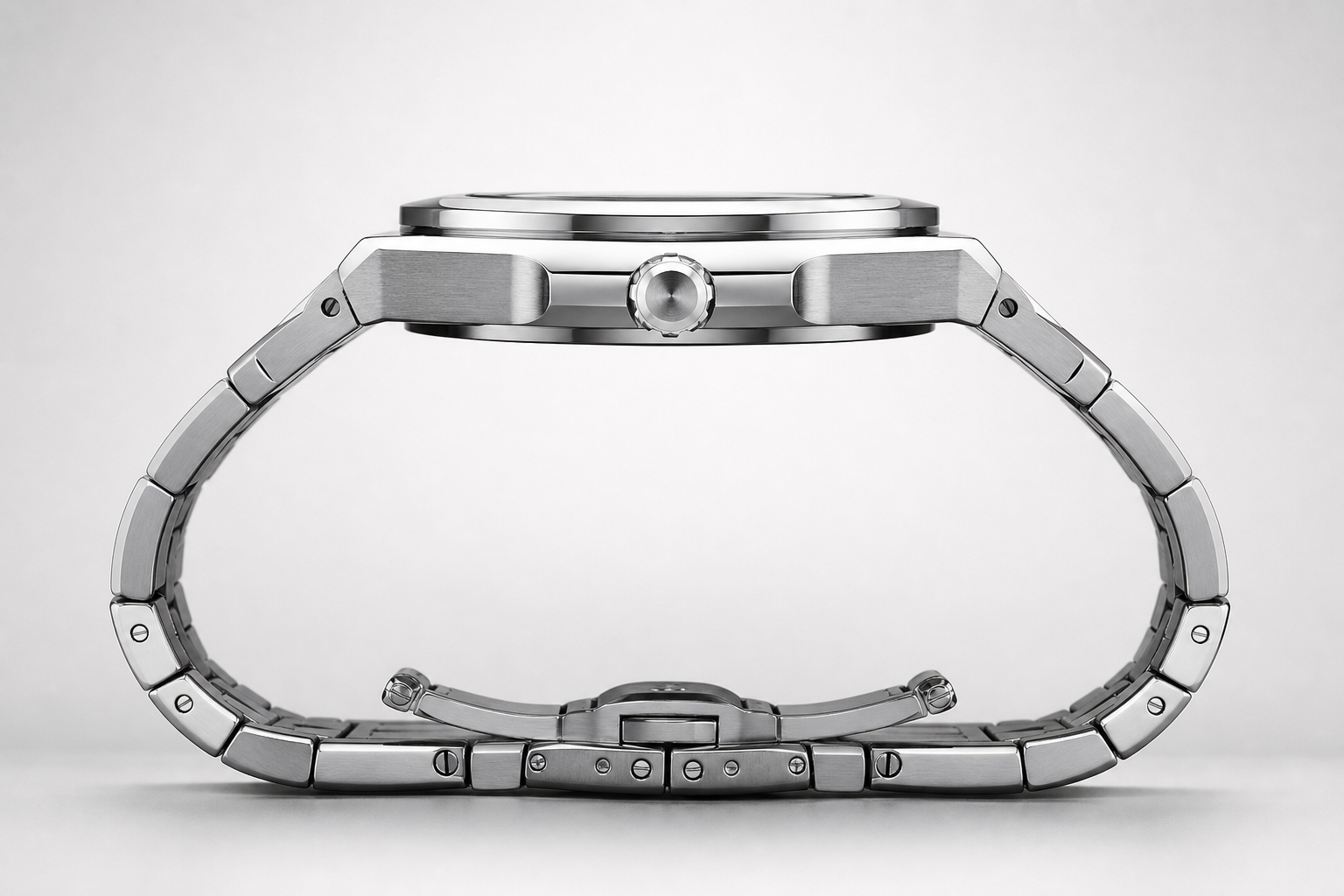
An AP super clone can be more demanding to own because the Royal Oak design exposes everything. The octagonal bezel, flat brushed surfaces, polished bevels, visible screws, integrated bracelet, and display caseback all create the expensive look buyers want. They also leave very little room for sloppy finishing, rough handling, or casual maintenance.
This is the key difference between Audemars Piguet replica maintenance and maintenance on many simpler replica watches. A more rounded sports watch can hide light wear better. A basic three-hand watch on a strap has fewer fit and finishing pressure points. A Royal Oak-style watch puts its most fragile visual signatures on the outside, where scratches, uneven brushing, bracelet stiffness, and bezel marks are easy to notice.
That does not mean every AP super clone is unreliable. It means the design gives the buyer fewer margins for error. The same small flaw that might be tolerable on a simpler replica can become annoying on a Royal Oak clone because the whole design depends on sharp geometry and clean transitions.
The Royal Oak Case Does Not Hide Imperfections Well
The Royal Oak case is built around flat planes and hard lines. The bezel is broad and exposed. The brushing direction is obvious. The polished bevels frame the case and bracelet. The bezel screws sit in plain view. This is why AP Royal Oak clone complexity is not only about the movement; the exterior architecture itself raises the standard.
Scratches stand out more on large brushed surfaces than they do on curved polished cases. A small mark on the bezel can become the first thing the owner sees every time the watch catches light. Uneven brushing or softened bevels can also make the watch feel less crisp, even if the dial and case dimensions are good.
Screw alignment is another detail buyers often judge too harshly in macro photos but too casually in real ownership. A tiny photo-angle issue may not matter. A visibly crooked, uneven, raised, or damaged bezel screw can matter because the bezel is one of the main visual anchors of the Royal Oak design. The practical advice is to be selective, not obsessive.
The Integrated Bracelet Raises the Fit Standard
The integrated bracelet is not just a visual feature. It controls comfort, wrist balance, and repair difficulty. A Royal Oak-style bracelet should flow from the case rather than feel like an attached afterthought. If the first links are too stiff, the watch may sit awkwardly. If the link tolerance is too loose, it can feel cheap or rattly. If the clasp does not close securely, confidence drops immediately.
This is where many buyers are surprised. They expected the dial or bezel to decide whether the watch felt premium, but the bracelet often decides whether they actually wear it, especially in a Royal Oak vs Offshore comparison. A visually strong AP super clone can still disappoint if the bracelet pulls hair, feels sharp at the edges, lacks fluid articulation, or leaves the clasp sitting in the wrong place on the wrist.
For daily wear, bracelet comfort is not a small issue. It is one of the main reasons an expensive-looking replica becomes a drawer watch. A buyer who wants an AP-style super clone should treat bracelet quality as part of the cost equation, not as a secondary detail after dial color and factory name.
Display-Back Expectations Add Pressure
Many AP super clones use a display caseback, which means buyers naturally look at the movement more closely. Decorative bridges, rotor engraving, jewel placement, and visible finishing can make the watch feel more complete. But movement appearance should not be confused with ownership quality.
A nicely decorated movement is less useful if the rotor is noisy, the winding feels rough, the date behavior is inconsistent, or local service is difficult. The display back creates expectations because the buyer can see more, but the practical priority is still whether the movement route supports the watch reliably and keeps the case proportions believable.
This is why AP super clones can feel more expensive to maintain than simpler replica watches. The design asks for crisp exterior finishing, comfortable bracelet engineering, and a presentable visible movement at the same time. If one of those areas falls short, the watch may still look impressive in photos, but the ownership experience becomes less forgiving in daily use.
Why Simpler References Are Often More Forgiving
Not every AP-style replica carries the same ownership risk. A simpler three-hand Royal Oak-style model is usually easier for a buyer to evaluate than a chronograph, perpetual calendar-style layout, openworked design, or very thin complication-inspired piece. Fewer subdials, fewer hands, and fewer calendar displays mean fewer alignment points to check and fewer functions that can fail or feel wrong in use.
This is especially relevant for first-time buyers. A complicated dial may look more impressive in seller photos, but it also gives the watch more ways to disappoint: non-working or weakly implemented functions, misaligned subdial hands, extra thickness, harder movement service, and more obvious differences under close inspection. A simpler reference can still have flaws, but the buyer has fewer variables to manage.
For many practical buyers, the better AP super clone decision is not the most complicated watch within budget. It is the version whose case shape, dial layout, movement behavior, and bracelet comfort are easiest to live with. Visual ambition and daily reliability are separate priorities, and the Royal Oak design makes that separation more important than many beginners expect.
Movement Service, Rotor Noise, and Date Problems Are the Biggest Hidden Risks
The biggest hidden cost in an AP super clone is usually not a visible finishing flaw. It is the movement. A Royal Oak-style watch can look strong in QC photos and still become expensive or frustrating if the rotor is noisy, the winding feels rough, the date does not sit correctly, or the movement route is harder to service than the listing suggests.
This is where buyers often misjudge the value of an upgrade. A decorated movement that looks closer through the display caseback is not automatically the safer ownership choice. The better question is whether the movement is appropriate for that exact AP reference, whether it supports the correct case thickness, whether the date behavior is acceptable, and whether a local watchmaker is likely to touch it if something goes wrong. AP super clone movement problems are rarely discussed with the same enthusiasm as dial texture or case finishing, but they are more likely to create real post-purchase cost.
Rotor Noise and Winding Feel
Rotor noise is one of the first mechanical issues buyers notice because it changes how the watch feels, not just how it photographs. A noisy rotor does not always mean the movement is about to fail. Some Miyota-based or modified movement routes are naturally more audible than buyers expect, especially when the rotor free-spins in one direction. The problem is that the sound can make the watch feel cheaper on the wrist, even if the case and dial look convincing.
Rough winding is more serious. A crown that feels gritty, uneven, or unusually stiff may point to dry lubrication, poor assembly, stem alignment issues, or a movement that needs attention sooner than expected. Some buyers dismiss this because the watch is running, but winding feel is one of the few mechanical signals the owner experiences every time the watch is handled. If the winding feels wrong on arrival, the buyer should not assume it will “break in” safely.
A noisy rotor fix can be minor if it only needs lubrication or adjustment, but that assumes the buyer has access to someone willing to work on a replica watch movement. If no local service option is available, even a small noise becomes a practical problem. This is why replica watch movement service should be considered before purchase, not after the first annoying sound appears.
Datewheel and Calendar Behavior
Date problems are especially important on AP Royal Oak super clones because the dial layout leaves little room to hide misalignment. If the date sits visibly high, low, left, or right in the window, it will bother many owners more in daily wear than a tiny caseback engraving flaw. A slightly imperfect movement decoration is mostly hidden on the wrist. A bad date window is visible every time the watch is checked.
Buyers should separate three different issues: datewheel alignment, date-change timing, and calendar reliability. Datewheel alignment is visual. Date-change timing is mechanical behavior, such as whether the date changes cleanly around midnight or drags over a long period. Calendar reliability is whether the date advances consistently without sticking. A watch can pass one of these checks and still fail another.
The common mistake is accepting a poorly centered date because the rest of the QC photos look good. On a less dial-focused watch, that might be tolerable. On a Royal Oak-style dial, the date window sits inside a very geometric design, so misalignment stands out. If the date is obviously off in straight-on QC photos, accepting it usually means accepting permanent irritation or paying later for correction, if correction is even practical.
Serviceability Matters More Than Movement Decoration
Display-back AP super clones create a strange buying trap. The movement decoration matters because the owner can see it, but it should not outrank serviceability. A movement with attractive bridges, gold-tone rotor decoration, and AP-style engraving can still be a poor ownership choice if parts are hard to source or if local watchmakers refuse to service it.
Clone movements, decorated base movements, and modified movements carry different risks. A purpose-built clone route may help with case thickness and movement layout, but it can also depend on specialized parts. A decorated Miyota-based route may be less visually accurate through the back, but in some cases it may be easier to understand and service. Neither route is automatically better in every AP reference. The decision depends on the model, version, movement execution, and the buyer’s tolerance for service uncertainty.
At Clean VS Factory, we usually encourage buyers to separate “movement appearance” from “movement ownership.” A movement that looks impressive in photos is only useful if it winds acceptably, keeps reasonable time, changes date reliably, and has a realistic service path if it develops a problem.
Movement Transparency Note: Movement references in this article describe replica-market movement types, decoration routes, or configurations, not official Audemars Piguet calibers unless explicitly supported by verifiable evidence. Buyers should judge the specific version by winding feel, rotor behavior, date performance, power reserve expectations, and realistic service access rather than movement decoration alone.
Movement Route to Verify
Before buying, the buyer should confirm the stated movement route for the exact watch, not just the factory name. For example, two AP-style replicas may both be described as super clone watches, but one may use an integrated clone-style movement while another may use a decorated or modified base movement. That difference can affect thickness, rotor sound, power reserve, service options, and long-term confidence.
The useful questions are simple: What movement is being used? Is the beat rate appropriate for the reference if that matters for the model? What power reserve is realistically expected, not just advertised? Does the date change cleanly? If the movement fails after delivery, what is the seller’s practical response? A seller does not need to promise perfection, but vague answers are a warning sign.
Movement photos can confirm some visible claims, such as rotor shape, bridge layout, or decoration style. They cannot prove long-term reliability. A buyer who treats the movement photo as a guarantee is overreading the evidence. The safer judgment is to see movement choice as a risk category: acceptable when understood, expensive when ignored.
Movement Claim Traceability Checklist
When a seller describes an AP super clone movement, the buyer should identify what the claim is actually describing. It may refer to a clone-style architecture, a decorated base movement, a modified Asian movement, a Miyota-based configuration, an ETA-style configuration, or simply a market name used to separate one version from another. These are not the same thing, and they do not create the same service risk.
The most useful movement questions are practical rather than promotional. Does the stated movement allow the correct case thickness for the reference? Is the rotor behavior known to be quiet or naturally audible? Is the date position correct in the actual QC photos? Are the functions real, decorative, or simplified? Can a local watchmaker understand the movement if basic service is needed? A movement that looks more accurate through the display back may still be less suitable for a buyer who prioritizes low-maintenance daily wear.
Buyers should also be careful with language that sounds too absolute. Claims such as “same movement as genuine,” “perfect clone,” or “guaranteed accuracy” should be treated with caution unless there is clear, verifiable support. In the replica market, movement trust depends on understanding what the movement claim actually describes: architecture, decoration, layout, reliability expectation, or serviceability risk.
Bracelet Screws, Clasp Fit, and Bezel Wear Can Create Small but Annoying Expenses
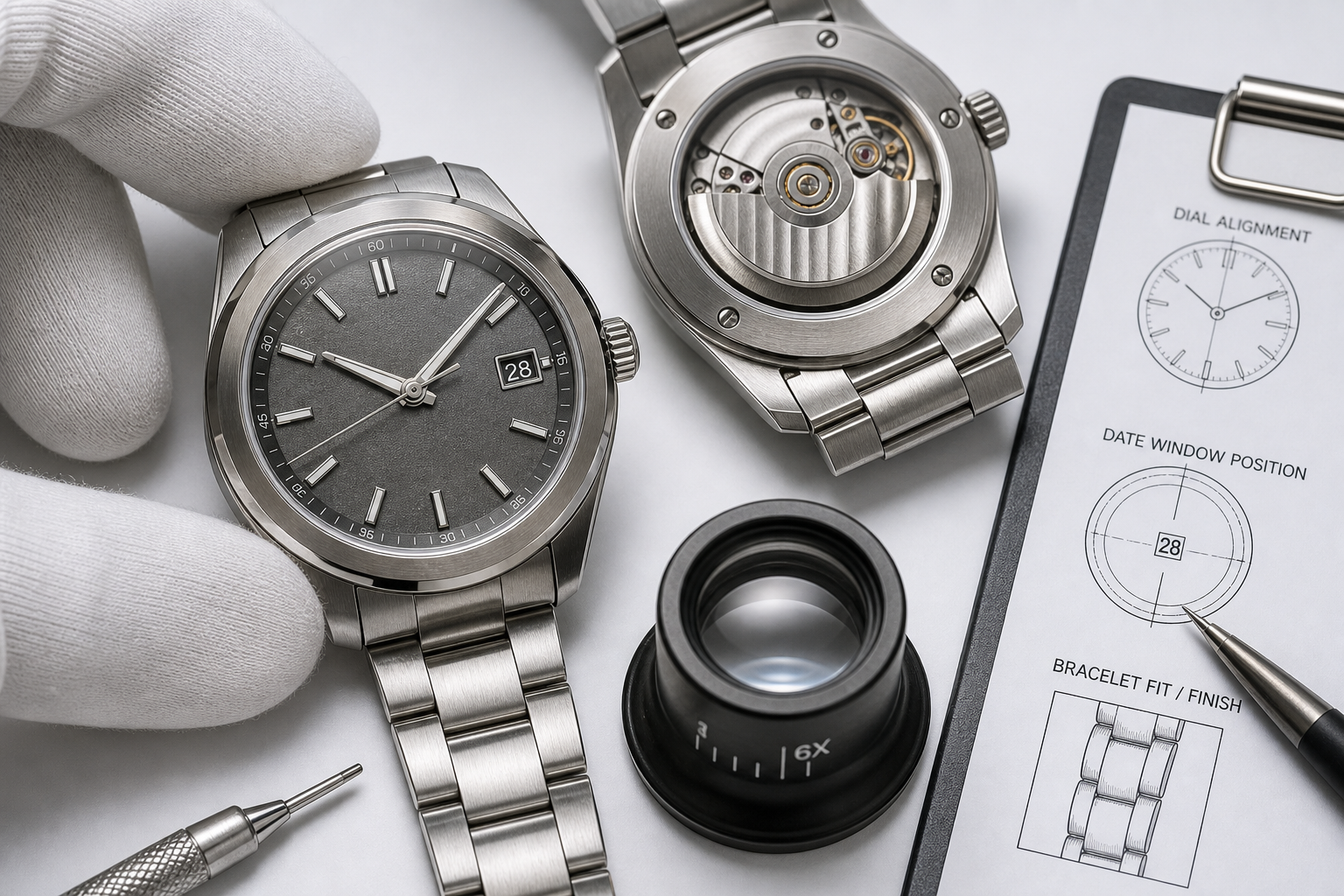
Not every ownership cost is dramatic. Some of the most frustrating AP replica bracelet problems are small: a screw that backs out, a clasp that feels weaker than expected, a bracelet that looks good but wears stiffly, or a bezel scratch that becomes impossible to ignore. None of these issues necessarily ruins the watch, but together they can turn an exciting Royal Oak clone into a maintenance project.
The Royal Oak-style exterior is unforgiving because it is built around flat brushed surfaces, polished bevels, sharp geometry, and an integrated bracelet. That design gives the watch its appeal, but it also makes minor exterior problems feel more obvious than they would on a rounder sports watch. Buyers should not expect an AP super clone to wear like a simple oyster-style bracelet watch. The tolerances, edges, and clasp behavior matter more here.
Loose Screws and Bracelet Security
AP-style bracelets usually use screws rather than simple push pins, and that detail matters after delivery. A loose bracelet screw is not just an annoyance. If it backs out far enough, the bracelet can separate, and a dropped watch can create a far more expensive problem than the screw itself.
The most sensible approach is to check bracelet screws early, especially after resizing. Resizing often disturbs screws that were stable during shipping, and not every local shop will handle these bracelets carefully. The buyer should make sure the correct screwdriver size is used and that the screw heads are not chewed up during adjustment. Damaged screw slots make later work harder and can make an otherwise good bracelet look abused.
This is one reason the cheapest AP-style replica can become irrational even if it looks acceptable in photos. Poorly cut screws, soft metal, and inconsistent threading are small manufacturing shortcuts that only become obvious when the bracelet needs real adjustment.
Clasp Feel and Comfort Over a Full Day
Clasp fit is another area where photos can mislead. A clasp can look correct when closed on a table but feel weak, sharp, or poorly balanced during a full day of wear. On a Royal Oak-style bracelet, comfort depends on more than link count. It depends on articulation, link tolerance, clasp thickness, wrist shape, and how the bracelet drapes from the case.
An uncomfortable bracelet is not always a QC failure. Sometimes it is the result of the Royal Oak design itself, especially for buyers between link sizes. But there is a difference between a naturally firm integrated bracelet and one that feels rough, stiff, or poorly finished. If the clasp feels weak or the bracelet pulls hair aggressively because of rough gaps, the buyer may need adjustment, smoothing, or may simply wear the watch less than expected.
The clear judgment here is that bracelet feel should carry more weight than many buyers give it. A visually strong AP super clone that sits badly on the wrist is not a good daily watch. It becomes a watch the owner admires in photos and avoids in real life.
Scratched Bezels Are Not Just Cosmetic
Royal Oak clone bezel scratches are more painful than normal sports-watch scratches because the bezel is the face of the design. The octagonal bezel, brushed top surface, polished bevels, and visible screw positions draw the eye immediately. A scratch across that flat brushed surface can change the owner’s satisfaction even if the watch still functions perfectly.
Some wear is unavoidable if the watch is worn regularly. The mistake is assuming refinishing is easy. Poor refinishing can soften the bezel edges, blur the brushing direction, round the polished bevels, or make the bezel look less precise than before. On an AP-style case, aggressive polishing is often worse than living with light wear.
Buyers who are sensitive to marks should think carefully before choosing a Royal Oak-style super clone as a carefree daily watch. This is not a design that hides rough use well. If every new hairline scratch will bother the owner, the hidden cost is not only repair money; it is the constant attention paid to keeping the bezel perfect.
QC Rejection and Shipping Risk Add Time, Stress, and Sometimes Extra Cost
Hidden cost does not begin only after the watch arrives. With an AP super clone, the buying process itself can become part of the cost. QC photos may reveal a problem. A replacement unit may take time. Shipping may be slower than expected. Dealer communication may require patience. None of this is unusual in the replica watch market, but it should be considered before spending money, not after frustration begins.
AP replica QC rejection is sometimes the right decision. The Royal Oak design makes certain flaws hard to ignore, especially date misalignment, obvious dial tilt, poor screw placement, or bad case profile. The problem is that rejecting a watch also costs time and mental energy. Buyers who expect a smooth one-click retail experience are often surprised by how much patience the process can require.
QC Rejection Has a Cost Even When It Is the Right Decision
Rejecting QC is not failure. It is part of risk control. If the date is visibly off-center, the dial markers are clearly misaligned, or the case profile looks wrong from the side, waiting for another unit may be smarter than accepting a watch that will bother the buyer every time it is worn.
The cost is delay. A replacement unit may not be immediately available, and the next watch may fix one issue while introducing another minor variation. This is where buyers need discipline. Reject serious red flags, but do not chase imaginary perfection from tilted photos, harsh lighting, or tiny angle distortions. Overcorrecting can turn QC into an endless loop.
The practical standard should be daily-wear acceptability, not macro-photo perfection. If a flaw is visible in straight, clear photos and affects the main geometry of the watch, it deserves attention. If it only appears in one angled shot and disappears in other views, it may not be worth delaying the purchase over.
Batch Variation Can Change the Buying Experience
Factory name and version do not guarantee identical execution across every unit. Two watches from the same factory, same model, and same advertised batch can still differ in dial alignment, date position, clasp feel, movement noise, brushing consistency, or case finishing. This is why a factory comparison is useful, but it does not replace unit-level QC.
Batch variation matters more on an AP-style watch because the design is so symmetrical. Small alignment differences are easier to notice when the dial pattern, hour markers, date window, bezel screws, and case edges all create strong visual reference points. A buyer who assumes “same factory” means “same watch” is ignoring one of the real ownership risks in this market.
Replica watch shipping risk also belongs in the total cost calculation. Delivery timing, customs uncertainty, and replacement logistics vary by seller, route, and destination. No responsible buyer should treat shipping as guaranteed or risk-free. The better mindset is simple: if a delay or shipping complication would create serious stress, that stress is part of the purchase decision.
QC Photos to Request
For an AP super clone, QC photos should cover more than a single attractive dial shot. A buyer should request a straight front dial photo, side-profile photos, a close view of the date window, bezel and screw alignment views, clasp and bracelet photos, and movement-route confirmation where available. These images do not eliminate risk, but they reduce the chance of accepting an obvious problem.
The front dial photo helps judge marker alignment, dial centering, hand position, and date placement. Side-profile photos help show whether the case thickness and crystal height look reasonable for the model. Date close-ups matter because a miscentered date can be one of the most irritating daily-use flaws. Bracelet and clasp photos help identify rough finishing, poor closure, or obvious fit issues before the watch ships.
QC photos are a filter, not a promise. They cannot prove long-term movement reliability, water resistance, or how the bracelet will feel after eight hours on the wrist. The buyer’s goal is not to remove all uncertainty. The goal is to avoid accepting the kind of visible or mechanical issue that would have been obvious before shipment with better review.
Before making a decision, buyers should review real QC photos where available, including dial printing, logo placement, marker alignment, hand alignment, bezel screw position, datewheel centering, case thickness, bracelet fit, clasp engraving, and caseback finishing. Factory labels and stock photos alone are not enough for a reliable judgment.
Stock Photos Versus Actual Watch Evidence
Stock photos can be useful for understanding the general model, dial color, and advertised version, but they are weaker evidence than photos of the actual watch being supplied. A stock image may show the factory’s intended execution, while the delivered unit may have a different datewheel position, slightly different brushing, a noisier rotor, a stiffer bracelet, or a clasp that does not feel the same as the sample.
For AP-style replicas, actual watch evidence matters because the design is built from alignment cues. The tapisserie-style dial, applied markers, date window, bezel screws, case bevels, and bracelet links all create a grid that makes small errors easier to notice. A buyer should not reject a watch because of one harshly lit macro image, but straight, well-lit QC photos are more useful than edited showroom-style images when judging real ownership suitability.
QC photos reduce uncertainty, but they do not remove every risk. They help buyers judge visible execution before shipment, especially when factory names or stock photos do not show the exact watch being supplied, and a super clone Audemars Piguet guide can provide a useful reference for comparison. The most responsible use of QC is to avoid obvious mismatch, not to chase a claim that any replica watch is flawless.
Seller Promises Should Be Confirmed Before Payment
Because shipping, replacement, repair, water-resistance testing, and after-sales handling can vary by seller, buyers should not assume those terms from general listing language. A careful buyer should ask what happens if QC is rejected, whether the exact watch or a replacement unit will be supplied, how shipping risk is handled, and what practical support is available if the movement, clasp, bracelet screws, or crown show problems after arrival.
These questions are not meant to demand unrealistic guarantees. They are meant to make the purchase clearer before money changes hands. A seller who gives specific, consistent answers about QC process, movement route, parts availability, and support limits is easier to evaluate than one who relies only on broad phrases such as “top quality,” “factory direct,” or “perfect version.”
Replacement Parts and Local Watchmaker Access Are Often Overlooked
An AP super clone can look like a complete purchase on delivery day, but repairability is where many buyers underestimate the real ownership cost. The question is not only “can it be repaired?” It is “can it be repaired without waiting weeks for a small part, sending the watch back overseas, or paying a local watchmaker who may not want the job?” That question should be asked before buying, not after a bracelet screw backs out or a crown tube starts to feel loose.
AP replica replacement parts are more model-specific than many buyers expect. A Royal Oak-style case, bracelet, bezel, crystal, crown, and clasp are not generic components that every watchmaker keeps in a drawer. Even two watches that look similar in photos may use different screw sizes, link tolerances, clasp designs, crystal dimensions, or movement holder layouts depending on the factory version and production batch. This is one reason a cheaper listing can become expensive later: the upfront saving may disappear if the watch needs a part that is difficult to source.
Parts That Matter Most on AP-Style Super Clones
The most important AP replica replacement parts are not always the most dramatic ones. Buyers tend to worry about a full movement failure, but smaller parts often create the first ownership headache. Spare bracelet screws, extra links, clasp components, bezel screws, crown parts, and crystals matter because they affect whether the watch remains wearable.
Bracelet links and screws deserve special attention. The Royal Oak-style integrated bracelet depends on precise link fit, and losing one screw is not the same as losing a standard spring bar on a simpler sports watch. If the screw thread, length, or head shape does not match, the bracelet may not sit securely or may look visibly wrong. For buyers with larger wrists, spare links should be confirmed before purchase, because finding matching links later can be harder than expected.
Crystals and bezels are another practical concern. A scratched or chipped crystal can make the whole watch feel tired, but crystal replacement is only realistic if the correct size and gasket arrangement are available. Bezel damage is even more sensitive on a Royal Oak-style watch because the octagonal bezel is the face of the design. A replacement bezel that has slightly different brushing, screw seating, or bevel shape may solve the damage but create a new visual mismatch.
Crown and crown tube issues should not be ignored. A loose crown, rough threading, or poor seal can affect winding, time setting, and any realistic water-resistance expectation. On a super clone watch repair, a crown problem may sound minor, but if the matching crown tube is not available, the repair becomes less straightforward. This is why buyers should ask whether the seller can support small parts, not only whether the full watch is in stock.
Movement parts are the most complicated category. Some replica movements are based on more familiar architecture, while others use clone or modified layouts that fewer local watchmakers know well. A decorated movement that looks attractive through a display back is less valuable if a simple calendar problem or winding issue cannot be handled locally. The practical judgment is clear: serviceability matters more than decoration once the watch is on your wrist.
Why Local Service Access Is Not Guaranteed
Many U.S. buyers assume that any mechanical watch can be taken to a local watchmaker. In practice, some watchmakers will refuse to work on replica watches, even for basic adjustment or cleaning. Others may accept bracelet sizing but decline movement service. Some may work on the movement only if it uses a familiar base caliber and no proprietary-looking parts are involved. The result is uneven access, not a predictable service path.
This does not mean an AP super clone is automatically unrepairable. It means repair access should be treated as part of the buying decision. Before purchase, a careful buyer should ask direct, practical questions: are spare links available, can bracelet screws be supplied, what happens if the movement stops after delivery, and can the seller confirm the movement route clearly? None of those answers should be treated as a guarantee, but vague answers are a warning sign.
At Clean VS Factory, we usually encourage buyers to separate “looks good in QC photos” from “can be supported after use.” A visually strong Royal Oak replica may still be a poor fit for a buyer who has no local watchmaker access and no patience for parts delays. This is especially true for buyers who plan to wear the watch frequently rather than keep it as an occasional statement piece.
The non-obvious cost here is time. Waiting for a small screw, compatible clasp piece, or replacement crystal can be more frustrating than the price of the part itself. If daily wear is the goal, repairability should carry real weight in the decision. A watch that cannot be maintained easily is not a bargain just because it was attractive on the listing page.
Poor Resale Liquidity Is a Hidden Financial Cost
An AP super clone should be treated as a personal-use expense, not a liquid asset. This is one of the simplest ways to avoid a bad financial expectation. If the buyer’s justification is “I can always resell it later,” the math is already weak. Replica watch resale risk is real because platform rules, legal restrictions, buyer trust, condition concerns, and disclosure requirements all reduce liquidity.
The watch should never be represented as genuine. Beyond that basic boundary, the practical issue is that even a properly disclosed used replica has a narrow audience. Many buyers prefer to buy new from a seller who can provide QC photos, movement confirmation, and some form of communication before shipping. A used AP super clone with unknown wear, no parts support, and possible movement history is simply less attractive.
The Safer Assumption: Treat It as a Personal Expense
The safer financial assumption is that AP super clone value comes from wearing and enjoying the watch, not from recovering money later. If the watch gives the buyer the design experience they wanted, fits comfortably, runs acceptably, and matches their lifestyle, then the expense may feel justified. If the buyer needs future resale to make the purchase feel safe, they should think twice.
This is especially important with recognizable models like Royal Oak replicas. Demand may look strong online, but a used replica market is not the same as a normal pre-owned luxury watch market. There is no stable trade-in logic, no predictable residual value, and no broad pool of buyers willing to absorb condition risk. The exit cost should be considered part of ownership from the start.
Condition Problems Reduce Any Exit Option
Small condition issues that seem tolerable during ownership can heavily reduce desirability later. A scratched bezel, missing bracelet link, noisy rotor, weak clasp, rough crown action, or datewheel problem makes the watch harder to place even in a disclosed private context. The buyer who says “I will fix it before selling” may run into the same parts and service problems discussed earlier.
This is why resale should not be used to soften the real cost. An AP super clone is better judged as a sunk personal purchase: buy it only if the design, wearability, and risk level make sense without counting on a clean exit. That judgment is not anti-replica; it is simply more realistic than treating a super clone watch like a recoverable investment.
The Emotional Cost of Wearing a Very Recognizable Luxury Watch Design
The Royal Oak is not a quiet design. The octagonal bezel, integrated bracelet, exposed screw layout, and wide brushed surfaces make it recognizable even to people who do not follow watch forums closely. That is part of the appeal, but it is also part of the cost. Wearing an AP super clone can create more social attention than a buyer expected, and not every buyer enjoys that feeling once the watch leaves the photo screen and enters real daily life.
This emotional cost is easy to dismiss before purchase because online photos make the watch feel like an object. On the wrist, it becomes part of how people read your style, income signals, and comfort with attention. Some buyers like the presence. Others become self-conscious at work, at dinner, or around friends who know enough about watches to ask questions. The issue is not morality or performance; it is whether the watch fits the buyer’s actual life.
When the Watch Gets More Attention Than Expected
A Royal Oak replica daily wear plan can sound reasonable until the buyer realizes how visible the watch is under normal conditions. The bracelet catches light. The bezel shape is unusual. Blue dials and larger Offshore-style cases are especially noticeable. Even someone who cannot identify the reference may recognize that the watch is meant to look expensive.
This can be enjoyable if the buyer wants a statement watch. It can also become tiring if the buyer wanted a low-key daily piece. A person who wears casual clothes, works in a conservative office, or prefers not to discuss watches may find that the Royal Oak design feels louder than expected. In that case, the hidden cost is not money; it is hesitation. A watch that stays in the drawer because it feels too bold is not serving its purpose.
Why Lifestyle Fit Matters More Than Photos
Photos often exaggerate the appeal of AP-style super clones because the watch photographs well from the front. The sharp bezel, tapisserie-style dial, and integrated bracelet look impressive in a controlled image. Daily wear is different. Size, thickness, bracelet drape, dial color, and wrist presence decide whether the watch feels natural or forced.
A 41mm Royal Oak-style watch may look balanced in product photos but feel broad and angular on a smaller wrist. A rose-gold tone may look exciting online but feel too flashy for daily use. A chronograph or Offshore design may deliver presence, but it can also become the watch equivalent of speaking too loudly in a quiet room. Buyers should be honest about whether they want that effect.
The better decision is not always the most dramatic version. For some buyers, a steel case, darker dial, and standard Royal Oak profile will be easier to wear than a louder color or oversized case. For others, the whole point is to own a bold statement piece, and the attention is part of the enjoyment. The mistake is buying for photo excitement while ignoring personal comfort.
If the question is “will people notice,” the answer is that some probably will. The more useful question is whether you are comfortable wearing a recognizable luxury design without needing the watch to explain itself. If the answer is no, a quieter replica watch may provide more actual enjoyment, even if it looks less impressive in a listing.
A Practical Ownership Budget Rule for AP Super Clone Buyers
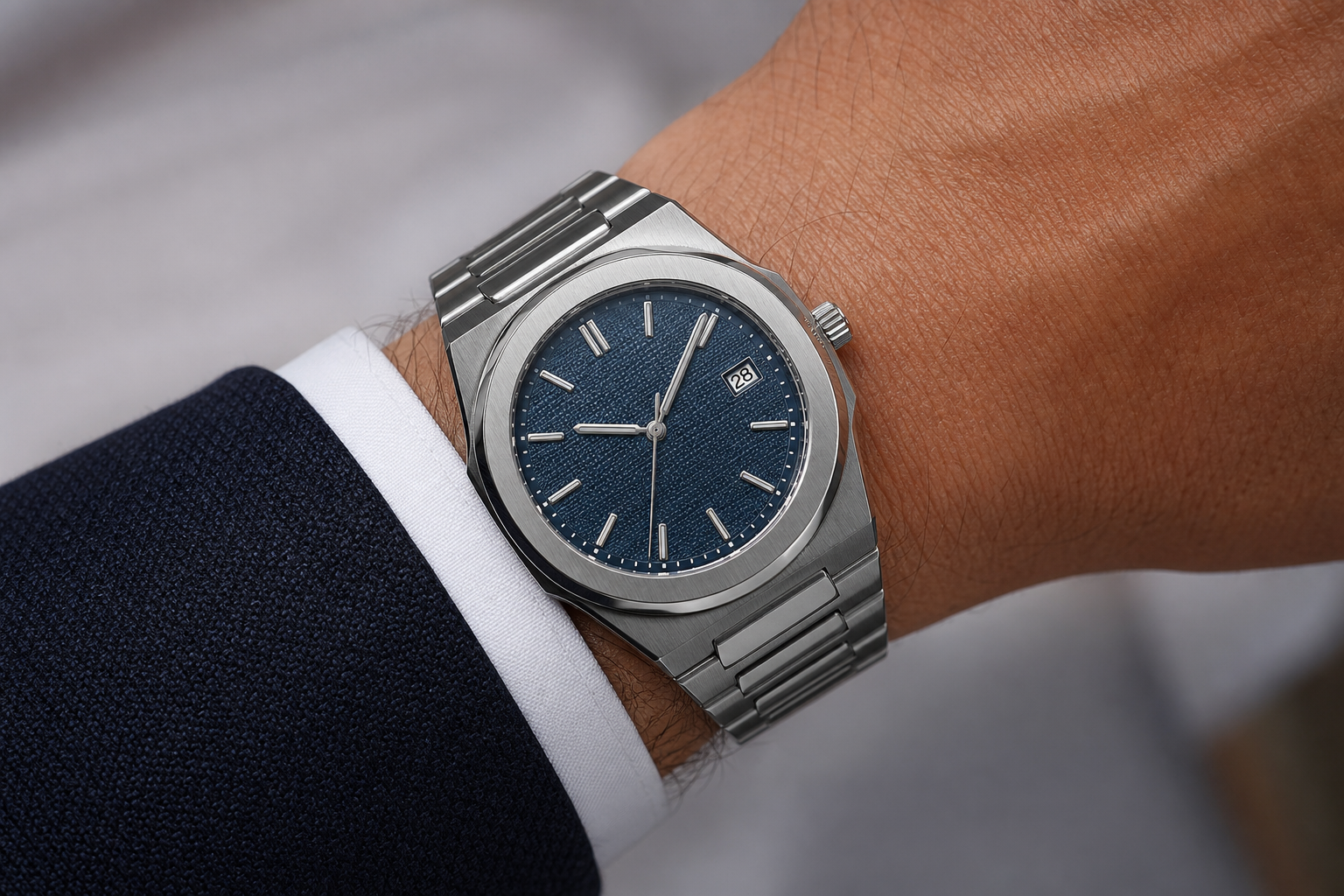
The safest way to make an AP super clone buying decision is to stop treating the listing price as the full budget. Treat it as the first line item. The real replica watch ownership budget should include three separate buckets: the purchase price, the immediate setup cost, and a risk reserve for future problems. If that sounds too cautious, it is probably because most AP replica listings are written to sell the watch, not to prepare the buyer for ownership.
A practical rule is simple: if the advertised AP super clone price is the maximum amount you are comfortable losing or spending, do not buy yet. A Royal Oak-style watch is not the best place to stretch a budget to the limit. Bracelet adjustment, QC delay, water-resistance testing, movement issue correction, or a future service cost can change the experience quickly. The buyer who leaves no room for those possibilities is more likely to feel trapped if the watch needs attention after delivery.
This does not mean an AP super clone is automatically a bad purchase. It means the watch should be bought with ownership tolerance, not only visual excitement. The Royal Oak design is attractive because it feels sharp, expensive, and recognizable. Those same qualities make the watch less forgiving. A buyer who understands that tradeoff can still enjoy it. A buyer expecting a trouble-free luxury shortcut is more likely to regret it.
The Three-Part Budget
The first part is the purchase cost. This is the number buyers compare most often, but it is also the easiest number to misunderstand. Two AP super clone watches may be priced close together while carrying different movement routes, bracelet quality, finishing consistency, and after-sales uncertainty. The cheaper option is not always worse, and the more expensive option is not automatically safer. The price only makes sense when it is judged together with version, movement, QC quality, and seller support.
The second part is the setup cost. This includes anything needed to make the watch wearable and less risky after arrival: bracelet sizing, checking screws, inspecting clasp behavior, and testing water resistance if the watch will be exposed to moisture. These are not dramatic repairs. They are the practical steps that turn a watch from “received” into “ready to wear.” Skipping them saves money upfront but can create bigger frustration later.
The third part is the risk reserve. This does not need to be a fixed number in the article or a formal savings plan. It is a mental allowance for the possibility that something will need correction: rotor noise, date alignment, loose bracelet hardware, weak clasp feel, or a service question that appears months later. If the idea of spending more after purchase would make the watch feel like a mistake, the budget is too tight for this category.
| Budget Area | What It Covers | Why It Matters |
|---|---|---|
| Purchase price | Watch, version tier, movement route, factory-level finishing | This gets the watch into your hands, but it does not guarantee a smooth ownership experience. |
| Immediate setup | Bracelet adjustment, screw check, clasp check, water-resistance testing if needed | This is where many buyers discover whether the watch is comfortable and usable in real life. |
| Risk reserve | Possible service cost, movement issue, parts search, future correction | This protects the buyer from treating every small problem as a crisis. |
At Clean VS Factory, we usually encourage buyers to separate appearance value from ownership cost. A watch can be visually strong in QC photos and still require patience once it becomes a daily object. That distinction matters more with AP-style super clone watches than with many simpler replica watches.
A Short Pre-Purchase Checklist
Before approving an AP super clone purchase, the buyer should be able to answer a few practical questions without relying only on the seller’s strongest wording. What exact movement route is being supplied? Are there clear straight-on QC photos of the dial, date window, bezel screws, side profile, bracelet, clasp, and caseback? Are extra links available if wrist size requires them? Is the buyer planning to pressure test the watch before water exposure, or will it be treated as splash-cautious only?
The buyer should also decide which flaws matter for the intended use. For a daily-wear AP-style replica, bracelet comfort, clasp security, screw stability, winding feel, and date behavior may matter more than a small caseback decoration difference. For an occasional photo-focused piece, visual case profile and display-back appearance may carry more weight. Neither priority is wrong, but mixing them up leads to poor decisions.
The final check is emotional rather than technical: would the watch still feel worthwhile if it needed bracelet work, arrived after a delay, or developed a minor movement issue later? If the answer is no, the purchase is too dependent on everything going smoothly. A Royal Oak-style super clone can be enjoyable, but it rewards buyers who accept tradeoffs before payment, not buyers who discover them afterward.
Traceable Decision Matrix: What Matters by Buyer Type
| Buyer Type | Highest-Priority Checks | Lower-Priority Details | Main Hidden Cost |
|---|---|---|---|
| Daily wearer | Bracelet comfort, clasp security, screw stability, rotor noise, winding feel | Minor caseback decoration differences | Adjustment, wear marks, movement service access |
| Photo-focused buyer | Case profile, dial texture, bezel screw presentation, datewheel centering | Long-wear comfort if used rarely | QC rejection time and disappointment from visible flaws |
| Movement-sensitive buyer | Movement route, date behavior, power reserve expectation, serviceability | Small exterior differences that do not affect use | Parts sourcing and watchmaker access |
| First-time replica buyer | Simpler reference, clear QC photos, realistic water-resistance plan, budget reserve | Complex complications or rare dial variants | Unexpected maintenance and emotional stress |
This matrix is not a ranking of factories or a promise that one style of buyer will avoid problems. It is a way to make the decision traceable. The right AP super clone choice depends on how the buyer will use the watch, which flaws they are likely to notice, and whether the actual version being offered supports those priorities. A buyer who wants daily comfort should not choose mainly by caseback decoration, and a buyer who cares about movement behavior should not rely only on dial photos.
The final pre-purchase step is to compare the seller’s claims against the exact evidence available. If the evidence is only a factory name and edited stock photos, uncertainty is higher. If the buyer can review the actual dial, date, case side, bracelet, clasp, and movement information, the decision is more grounded. Better traceability does not make a replica watch equivalent to an authentic AP, but it does make the ownership risk easier to understand before payment.
Who Should Think Twice
A cautious beginner should think carefully before choosing an AP super clone as a first replica watch. The issue is not that every AP replica is unreliable. The issue is that the Royal Oak design gives the buyer fewer places to hide imperfections. If the bracelet feels stiff, the bezel is scratched, the date sits poorly, or the movement sounds rough, the problem tends to stay in the buyer’s mind because the watch is so visually exposed.
Buyers expecting zero maintenance should also pause. A super clone watch is not a sealed consumer product with predictable long-term support. Even a strong example can need adjustment, and even a well-reviewed version can vary from unit to unit. If the buyer wants to wear it immediately without checking screws, testing water resistance, or thinking about movement behavior, a less demanding model may be a safer decision.
Anyone expecting guaranteed water resistance should be especially careful. A listing may mention water resistance, but that should not be treated as permission to swim, shower, or expose the watch casually to water. If water exposure matters, testing is a separate step, and even a passed test does not make future protection permanent.
Buyers who care deeply about easy resale should also reconsider. An AP super clone should be treated as a personal-use expense, not a recoverable asset. It should never be represented as genuine, and condition issues such as bezel wear, missing links, noisy movement, or bracelet looseness can reduce any private exit option further. If the purchase only feels acceptable because the buyer assumes they can resell it later, the value calculation is already weak.
The same caution applies to someone who wants a quiet daily watch. A Royal Oak-style design does not disappear under the cuff in the same way as a simpler steel sports watch or a small Cartier-style piece. It carries status signals even when the wearer says nothing. If unwanted attention would make the buyer uncomfortable, that emotional cost belongs in the budget too.
Who May Still Enjoy an AP Super Clone
The buyer most likely to enjoy an AP super clone is not the buyer looking for perfection. It is the buyer who genuinely likes the Royal Oak design, understands the maintenance risk, reviews QC carefully, and accepts that this is a personal-use watch with limits. That buyer is less likely to panic over every small issue and more likely to judge the watch by daily enjoyment rather than fantasy-level expectations.
A style-focused buyer may find the tradeoff acceptable if the goal is wrist presence, bracelet architecture, and the distinctive AP case shape. For this buyer, the key is choosing a version with a sensible movement route and good exterior execution rather than chasing the most complicated reference available. A clean 15400 or 15500-style piece is usually easier to live with than a high-complication model that creates more mechanical and visual pressure.
A mechanically sensitive buyer can still consider an AP super clone, but only with stricter expectations. Movement decoration through the caseback should not be the deciding factor by itself. Serviceability, winding feel, rotor behavior, date performance, and seller response if a problem appears matter more than an attractive bridge engraving. If the movement route is unclear or the seller cannot explain it, that is a reason to slow down, not a reason to gamble.
A daily-wear user should be honest about routine. If the watch will be worn at a desk, during travel, and in normal social settings, comfort and durability matter more than macro-photo perfection. Bracelet fit, clasp security, screw stability, and tolerance for visible wear should carry more weight than a tiny dial-printing difference that only appears under magnification.
The best final test is direct: if you can afford the watch, the setup, and the possibility of a future issue without feeling misled or financially stretched, an AP super clone may still make sense as a statement piece. If you can only afford the advertised price and would be frustrated by delay, adjustment, service, or attention, it is probably not the right first choice. The smarter purchase is not the one with the loudest factory claim. It is the one that matches your budget, patience, lifestyle, and tolerance for ownership risk.
Disclosure: This article is for general educational and comparison purposes only. Replica watches are not genuine products from the original luxury brands, and brand names are used only to identify reference designs or comparison topics. Factory names, movement descriptions, prices, availability, QC details, seller policies, and version information can change, so readers should verify important details with the seller before making a purchase decision. Replica watches should not be represented, resold, or used as genuine watches.